The Science-Backed Way to Choose a Sound Machine That Actually Works
July 25, 2025
White Noise Machine Buying Guide: Analog vs Digital
Your Brain Can’t Ignore Repeating Sounds — But It Can Ignore This
Written by Dr. Lycan Dizon, Slumbelry Chief Sleep Consultant · Updated 2025
⚡ Core Takeaway: How to Choose a Sound Machine That Actually Works
The Standard: Mechanical sound (real fan in acoustic housing) beats digital loops every time — your brain cannot fixate on organic, randomized noise.
The Frequency Match: Pink noise is the biological sweet spot for deep sleep; avoid harsh white noise for long-term use.
The Placement Rule: Keep the machine 3–6 feet from your bed, between you and the noise source. Never on your nightstand.
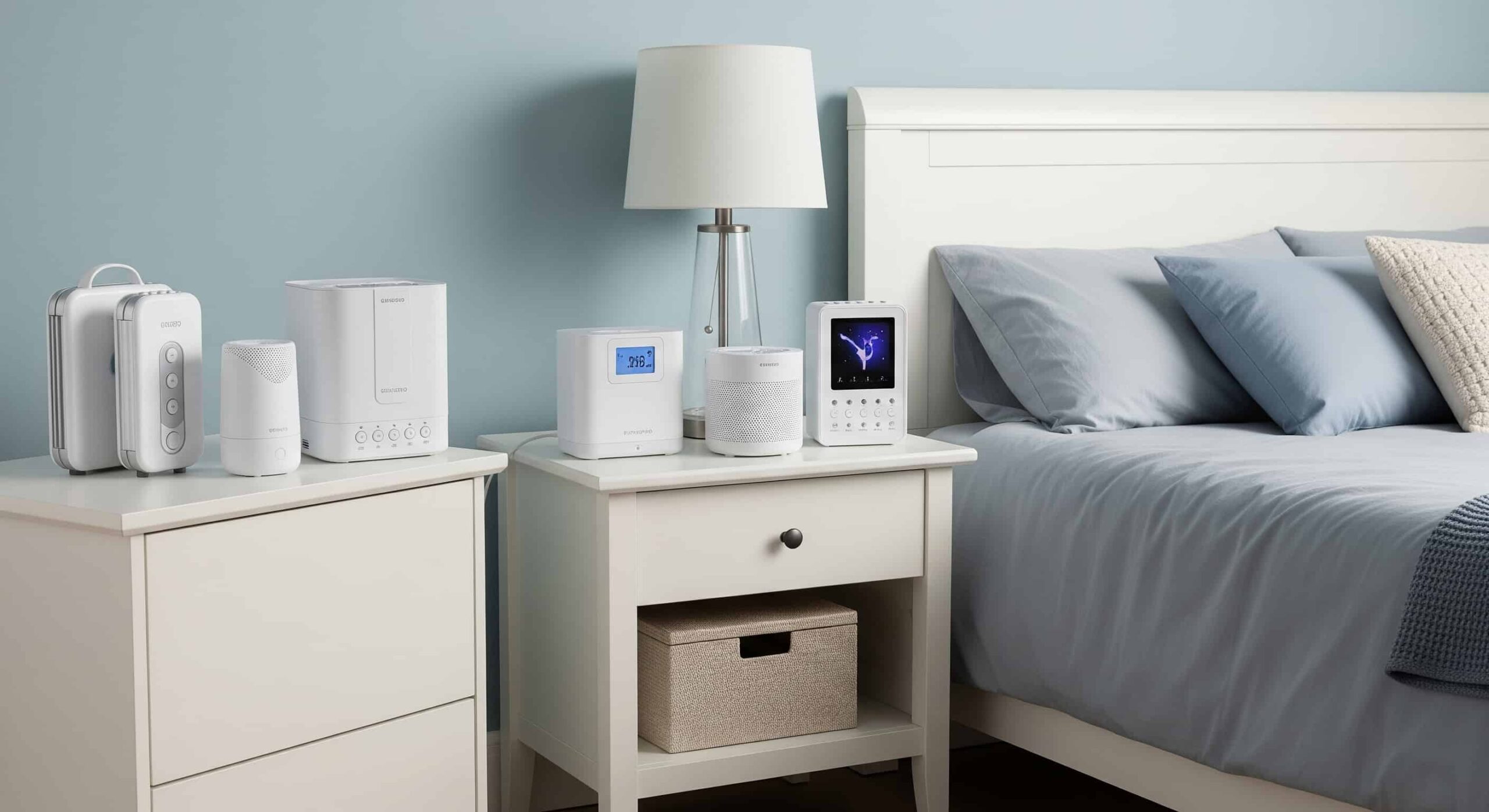
A mechanical sound machine positioned on a nightstand — the first line of defense in acoustic sleep optimization.
The Ultimate Sound Machine Guide: How to Buy Acoustic Armor for Your Bedroom
Prompt: A sleek, modern mechanical sound machine resting on a minimalist wooden nightstand…
If you’re serious about sleep optimization, you already know that absolute darkness is non-negotiable. But what about sound? Your auditory cortex is the only sensory system that stays fully online while you sleep, constantly scanning the environment for predators.
Quick Answer: What is the best sound machine for deep sleep?
The best sound machines use mechanical acoustic masking (like a physical fan inside an acoustic housing) rather than digital looping tracks. Mechanical sound is organic, randomized, and impossible for your brain to fixate on, allowing your auditory cortex to power down completely without micro-arousals.
Why Do Digital Sound Machines Sabotage Sleep?
Before you buy a cheap $15 noise generator off Amazon, you need to understand the stark difference between true acoustic masking and looping digital garbage.
The Science: The Digital Loop Trap
Your brain is the most advanced pattern-recognition engine on Earth. Most cheap digital sound machines use compressed audio files that loop every 10 to 30 seconds. While you might not notice the loop consciously while falling asleep, your sleeping brain will.
Around 3 AM, during lighter stages of sleep, your brain subconsciously anticipates the exact moment the track repeats. This pattern-recognition triggers micro-arousals, pulling you out of restorative Deep Sleep without you even realizing it.
What is the Mechanical Advantage? (Analog vs. Digital)
The gold standard of acoustic masking is mechanical sound. Machines like the Marpac Dohm don’t use speakers or microchips. They use an actual physical fan enclosed in an acoustic housing to generate rushing air.
Actionable Advice: Buying Your Acoustic Armor
Opt for Analog: Look for sound machines that use physical fans inside a vented housing.
If Going Digital, Demand Non-Looping: If you must buy digital, ensure it uses algorithmically generated, non-looping audio, or has high-fidelity tracks that are at least 60 minutes long before repeating.
Focus on Pink/Brown Noise: Avoid harsh, high-pitched white noise. Pink and Brown noise frequencies better match human slow-wave sleep.
Where Should You Place a Sound Machine?
Placement is just as critical as the machine itself. The goal is to create a diffuse wall of sound, not a directed beam of noise.
Protocol: The 3-Foot Rule
Never place a sound machine right next to your head on the nightstand. The decibel level will cause auditory fatigue.
The Hack: Place the machine at least 3 to 6 feet away, ideally between your bed and the primary source of outside noise (like a window or a shared wall). This creates a physical acoustic barrier that intercepts external sound waves before they reach your ears.
Should I use White Noise, Pink Noise, or Brown Noise?
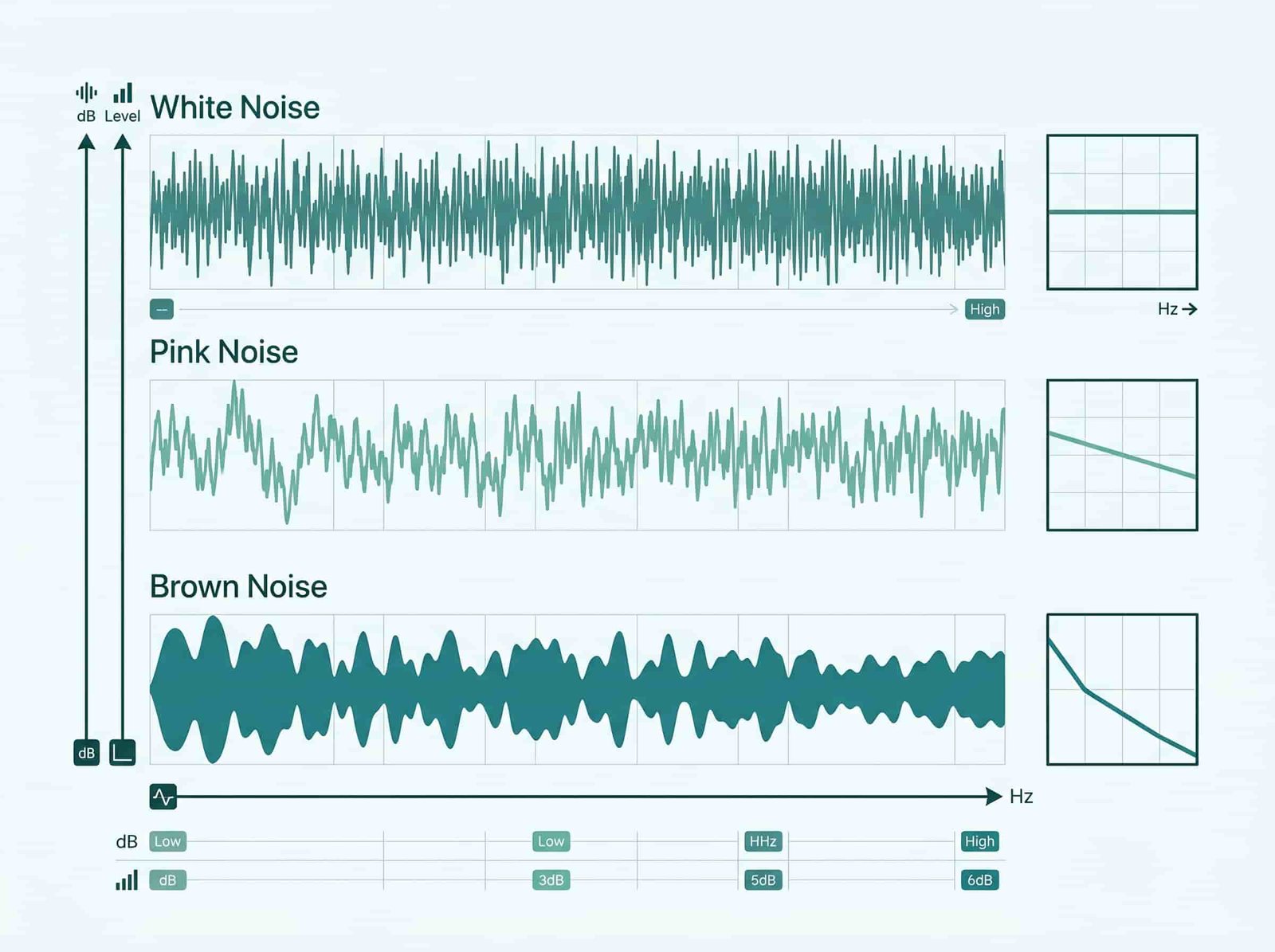
White noise is often too high-pitched and harsh for long-term sleep. Pink noise is the biological sweet spot—it has more power in the lower frequencies and perfectly mimics the frequency of human slow-wave sleep. Brown noise is even deeper (like a heavy waterfall) and is excellent if you need to block out heavy, low-frequency thuds like footsteps or bass from neighbors.
Is it safe to use sound machines for babies?
Yes, but with strict volume limits. The American Academy of Pediatrics recommends placing the machine at least 7 feet away from the crib and keeping the volume below 50 decibels (about the volume of a quiet shower). Using mechanical sound machines (which naturally lack harsh, high-frequency digital peaks) is highly recommended for nurseries.
Medical References:
1. Stanchina, M. L., et al. (2005). The influence of white noise on sleep in subjects exposed to ICU noise. Sleep Medicine, 6(5), 423-429.
2. Hugh, S. C., et al. (2014). Infant sleep machines and hazardous sound pressure levels. Pediatrics, 133(4), 677-681.
White noise packs energy evenly across frequencies — too harsh for sustained sleep. Pink noise concentrates power in lower frequencies, matching the rhythm of deep sleep. Brown noise is deepest, best for blocking low-frequency disturbances like footsteps or bass.Placement matters as much as the machine itself. Position your sound machine 3–6 feet away — between your bed and the primary noise source — to create a diffuse acoustic barrier.
Frequently Asked Questions About Sound Machines
What’s the difference between mechanical and digital sound machines?
Mechanical sound machines use a real physical fan inside an acoustic housing to generate organic, randomized rushing air. Digital machines play compressed audio files from speakers. The critical difference: mechanical sound never loops, never fatigues your auditory cortex. Digital loops — even at 30-second intervals — trigger micro-arousals around 3 AM when your brain anticipates the repeat.
Why does white noise hurt deep sleep more than pink noise?
White noise distributes energy evenly across all frequencies, including harsh high-frequency peaks that trigger auditory vigilance. Pink noise shifts the power toward lower frequencies, mimicking the natural frequency signature of human slow-wave (deep) sleep. Most people find pink noise more sustainable for all-night use.
How does the ‘digital loop trap’ sabotage sleep?
Your brain is a pattern-recognition engine. Most cheap digital sound machines loop compressed audio every 10–30 seconds. While you fall asleep unaware, your sleeping brain learns the loop timing. Around 3 AM — during lighter sleep stages — your cortex subconsciously anticipates the repeat moment, triggering micro-arousals that fragment deep sleep without you remembering waking up.
Is brown noise better than pink noise for sleeping?
Brown noise is deeper than pink noise, resembling the sound of a heavy waterfall or distant thunder. It excels at masking low-frequency disturbances like footsteps, bass from neighbors, or traffic rumble. If your main sleep disruptors are low-frequency sounds, brown noise may outperform pink. Many users rotate between the two based on their dominant noise environment.
Can sound machines damage hearing?
Yes — if used improperly. Keep volume below 50–65 dB (roughly the volume of a normal conversation). The American Academy of Pediatrics recommends below 50 dB for infant rooms. Place machines at least 3–6 feet from the bed rather than on the nightstand to avoid prolonged direct exposure. Auditory fatigue from excessive volume can negate sleep benefits.
Are sound machines safe for babies and infants?
Yes, with strict precautions. The AAP recommends placing sound machines at least 7 feet from the crib and keeping volume below 50 dB. Mechanical sound machines are preferred for nurseries because they lack the harsh high-frequency digital peaks that can affect developing ears. Consistent white or pink noise during the first year has been associated with better sleep consolidation in infants.
How many hours of sound should I play — all night or just at bedtime?
For most adults, running the machine all night maintains consistent acoustic masking as external noise levels change through the night (traffic at 2 AM, neighbors returning at 11 PM). For infants, 7–8 hours of consistent sound during naps and nighttime sleep helps prevent spontaneous awakenings from sudden environmental noise.
Can I use headphones or earplugs instead of a sound machine?
Headphones worn while sleeping restricts movement and can create pressure points. Earplugs can be effective but may push earwax deeper with prolonged use. A room-filling sound machine creates shared acoustic space — you do not need anything on your body, and partners can benefit equally.
What’s the ideal decibel level for a sound machine?
Aim for 50–65 dB at ear level. This is roughly the volume of a quiet conversation. Below 50 dB is sufficient for light sleepers in relatively quiet neighborhoods. Above 70 dB sustained is equivalent to heavy traffic and can cause auditory fatigue. Many machines have a volume dial — use a smartphone sound meter app to calibrate.
Do I need a sound machine if I already use earplugs?
Earplugs block direct noise but do not provide acoustic masking — your brain still processes silence as a potential threat signal when it cannot hear expected environmental sounds. A sound machine provides continuous acoustic masking that prevents the startle response entirely, which is why combining earplugs + sound machine is the highest level of auditory protection for shift workers and light sleepers.
Ready to Transform Your Sleep Environment?
If you are serious about acoustic optimization, do not rely on looping digital tracks. Discover the mechanical sound technology that shift workers and deep sleepers depend on.
Sleep is the most vulnerable state of human existence. It is where we heal, reset, and grow.
At Slumbelry, we do not just sell sleep products; we advocate for your physiological right to rest. From ergonomic support to light management, every solution we offer is designed with one obsession: Respecting your Biology.
Science is our language, but your recovery is our purpose. You take care of everything else in your life — let us take care of your sleep.
Rest Deeply, The Slumbelry Team
Medical References:
1. Stanchina, M. L., et al. (2005). The influence of white noise on sleep in subjects exposed to ICU noise. Sleep Medicine, 6(5), 423–429.
2. Hugh, S. C., et al. (2014). Infant sleep machines and hazardous sound pressure levels. Pediatrics, 133(4), 677–681.