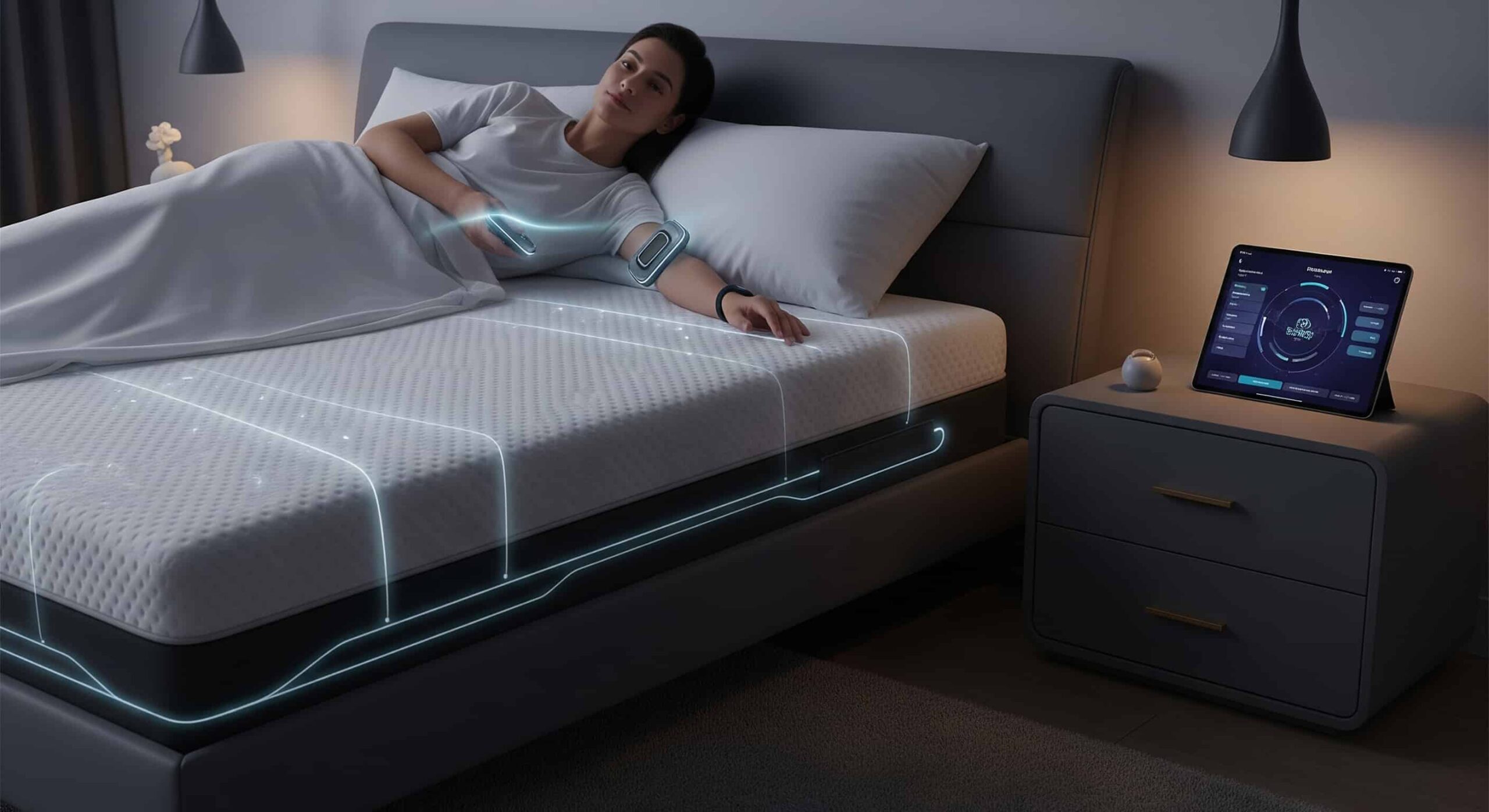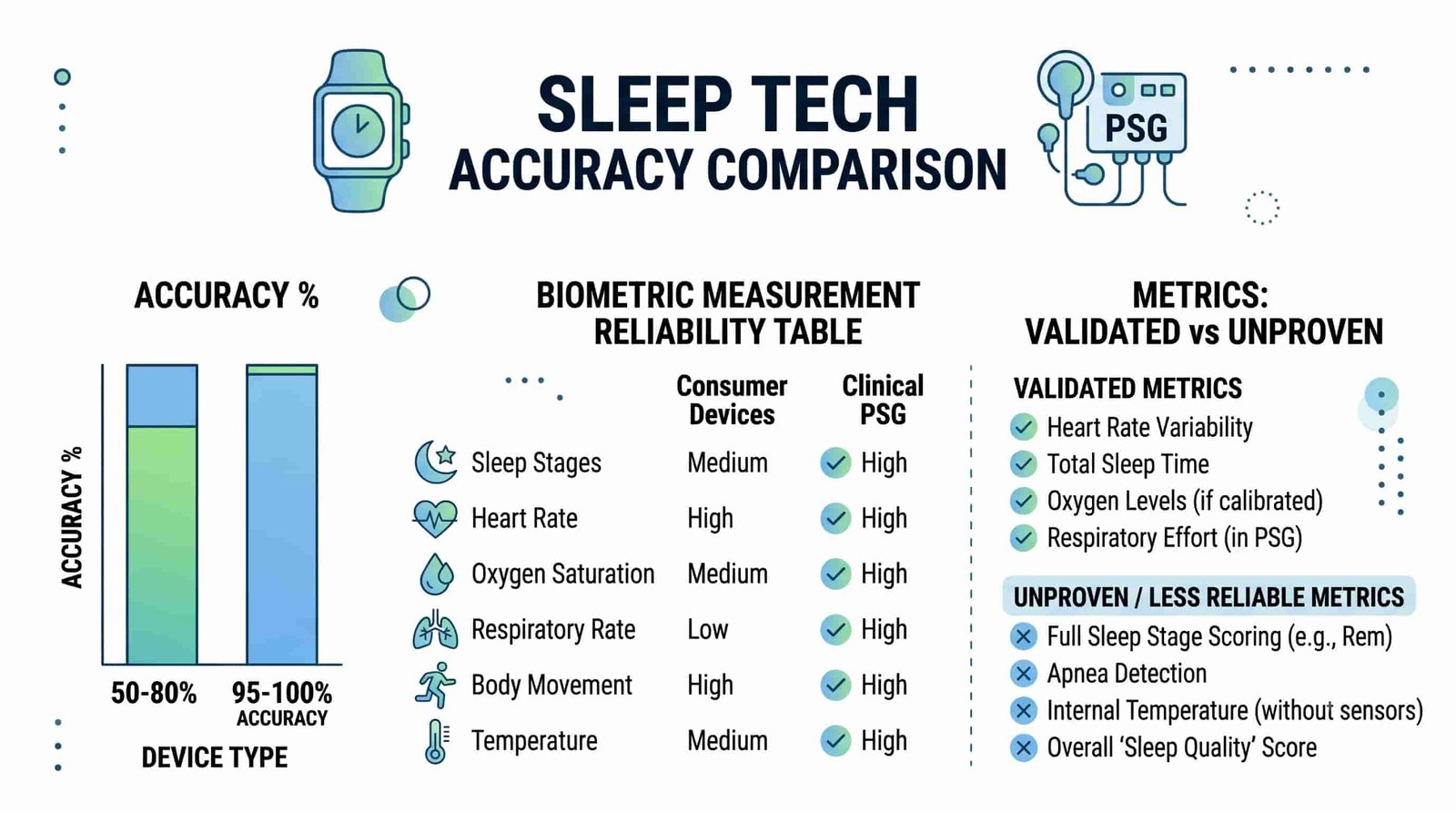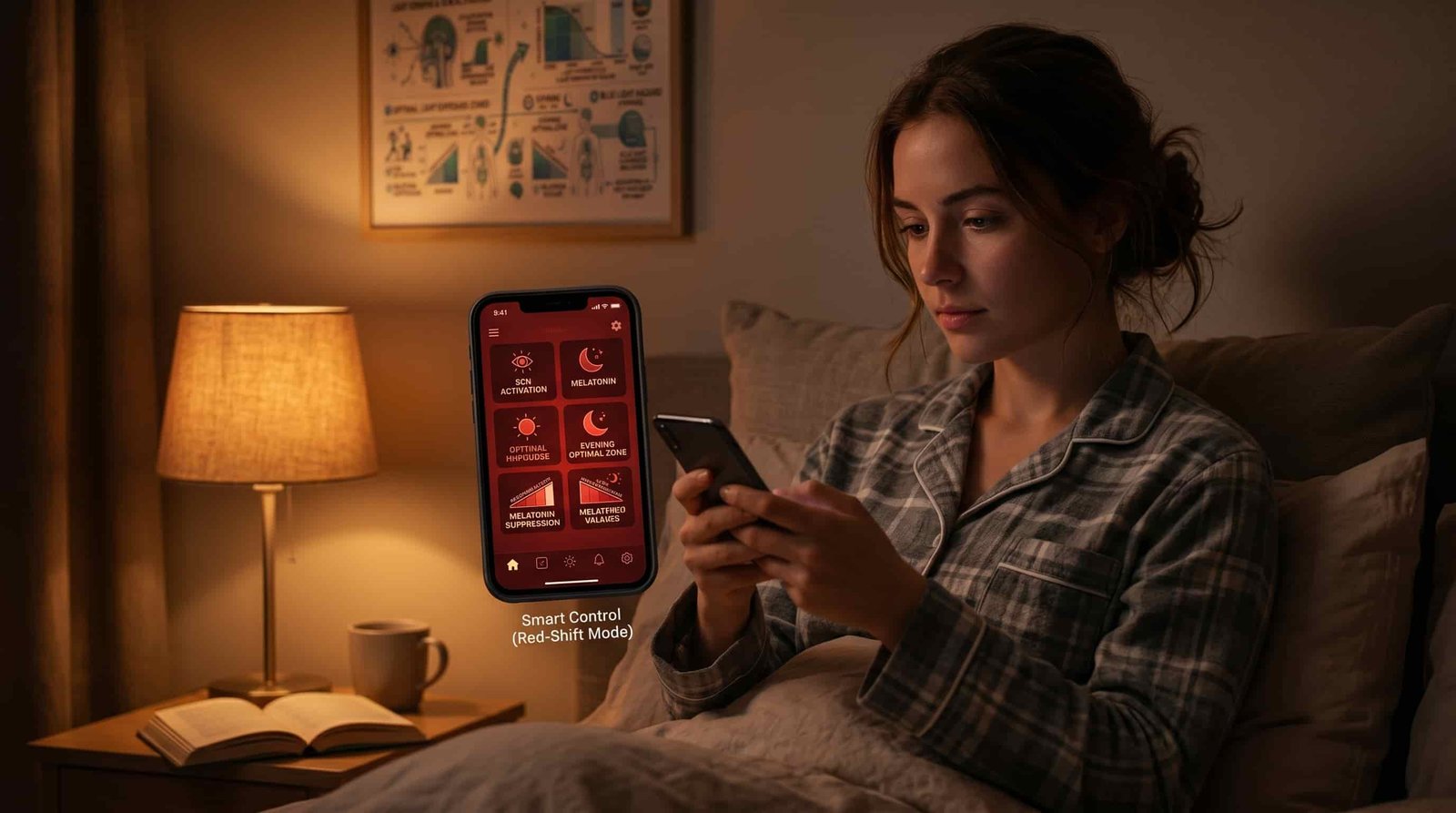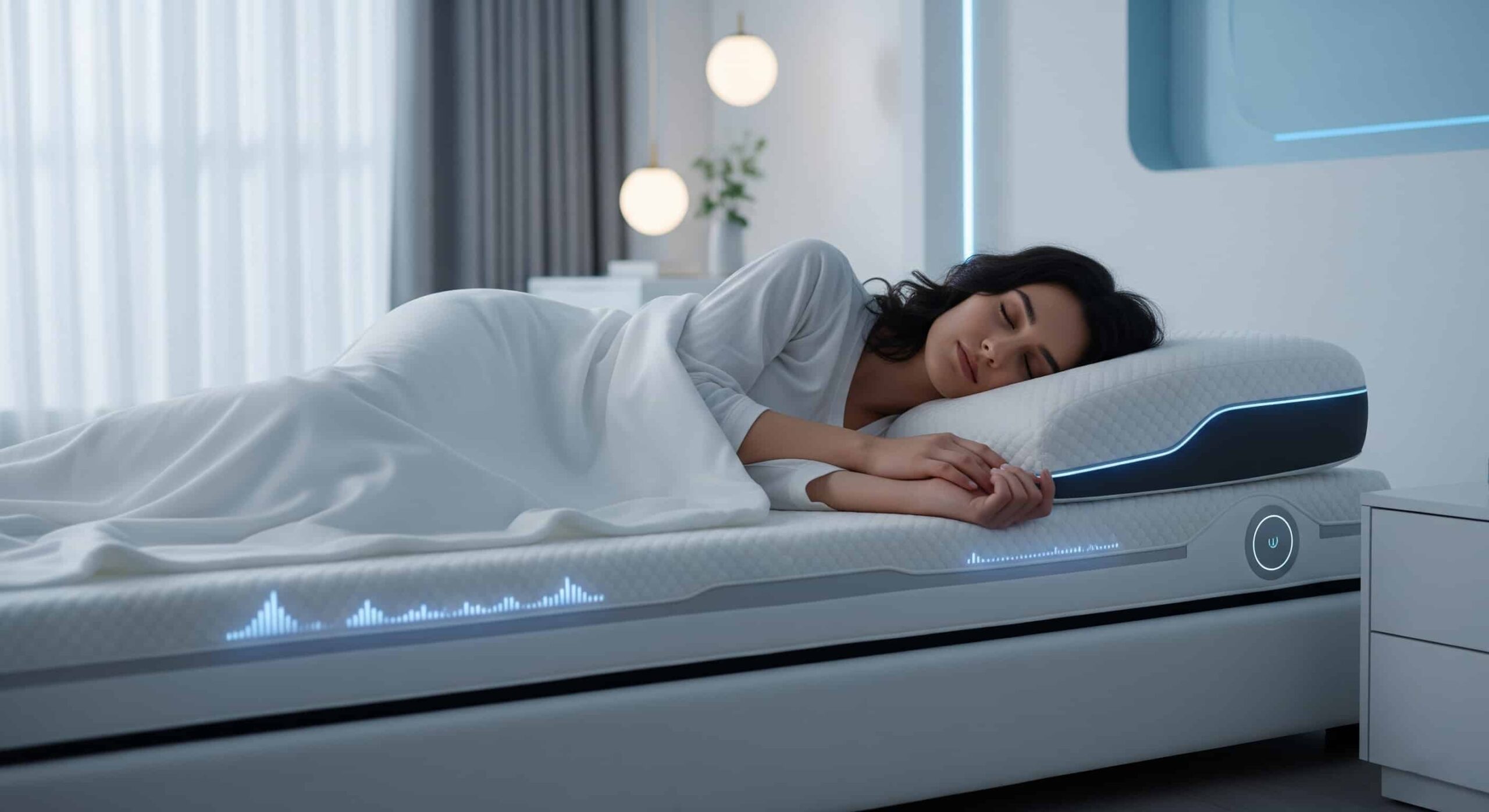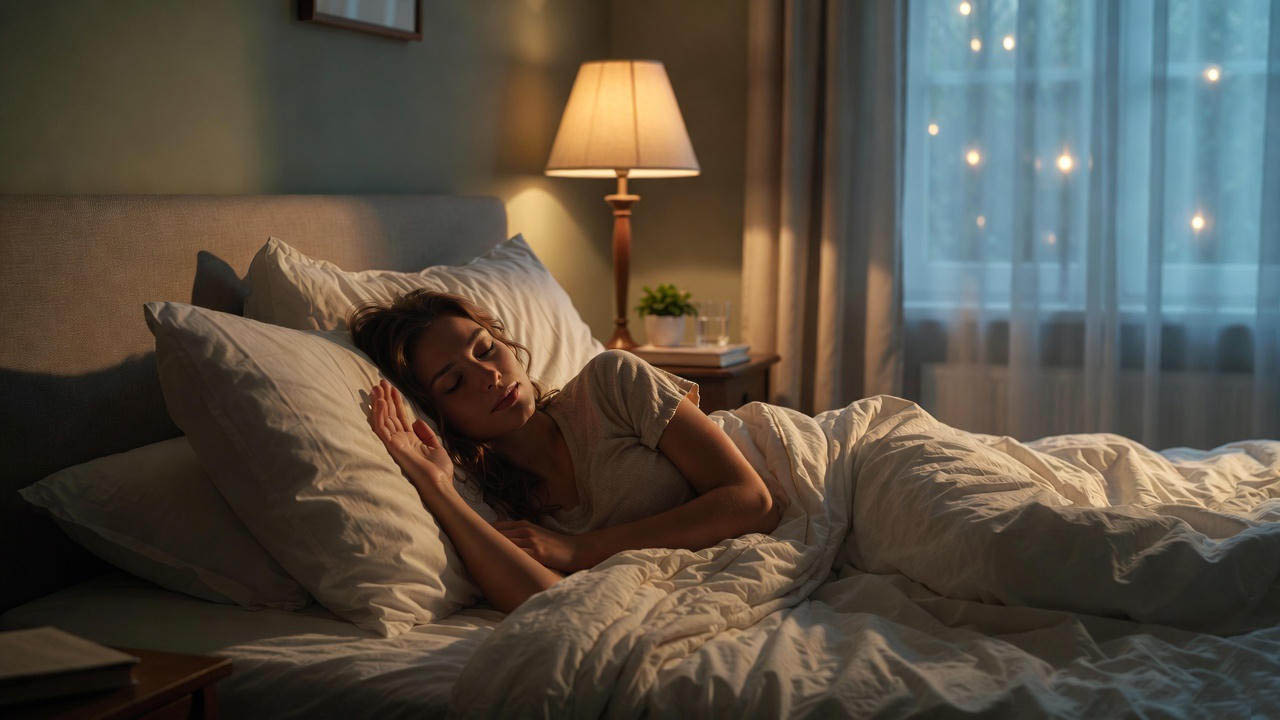
The sleep technology landscape has evolved dramatically in 2024, with groundbreaking innovations that promise to revolutionize how we understand, track, and improve our sleep. From AI-powered sleep coaches to smart mattresses that adapt to your body temperature, this year’s sleep tech offerings combine cutting-edge science with practical solutions for better rest.
Smart Sleep Tracking Devices
Oura Ring Generation 4
Key features:
- Advanced sleep stage detection with 95% accuracy
- Body temperature monitoring throughout the night
- Heart rate variability tracking for recovery insights
- 7-day battery life with rapid charging
- Waterproof design for 24/7 wear
- Integration with major health apps
What’s new in 2024:
- Enhanced sensors for more accurate data collection
- AI-powered sleep coaching with personalized recommendations
- Stress monitoring throughout the day
- Improved app interface with detailed sleep insights
Price: $399 – $549 depending on finish
Best for: Users who want comprehensive health tracking without wearing a bulky device
Apple Watch Series 10 Sleep Features
Sleep tracking capabilities:
- Automatic sleep detection and stage analysis
- Sleep schedule optimization based on usage patterns
- Wind Down reminders and bedtime routines
- Sleep goal tracking and achievement badges
- Integration with iPhone Sleep app
2024 improvements:
- Extended battery life for overnight tracking
- More accurate sleep stage detection
- Enhanced sleep coaching through watchOS 11
- Better integration with third-party sleep apps
Price: Starting at $399
Best for: iPhone users who want sleep tracking integrated with their existing ecosystem
Fitbit Sense 3
Sleep features:
- Sleep Score with detailed breakdown
- Smart Wake feature for optimal wake timing
- Sleep profile analysis over time
- Stress management tools affecting sleep
- 6+ day battery life
New for 2024:
- Enhanced sleep stage accuracy
- Personalized sleep insights based on long-term data
- Integration with Fitbit Premium sleep programs
- Improved comfort for overnight wear
Price: $329
Best for: Budget-conscious users who want comprehensive sleep and health tracking
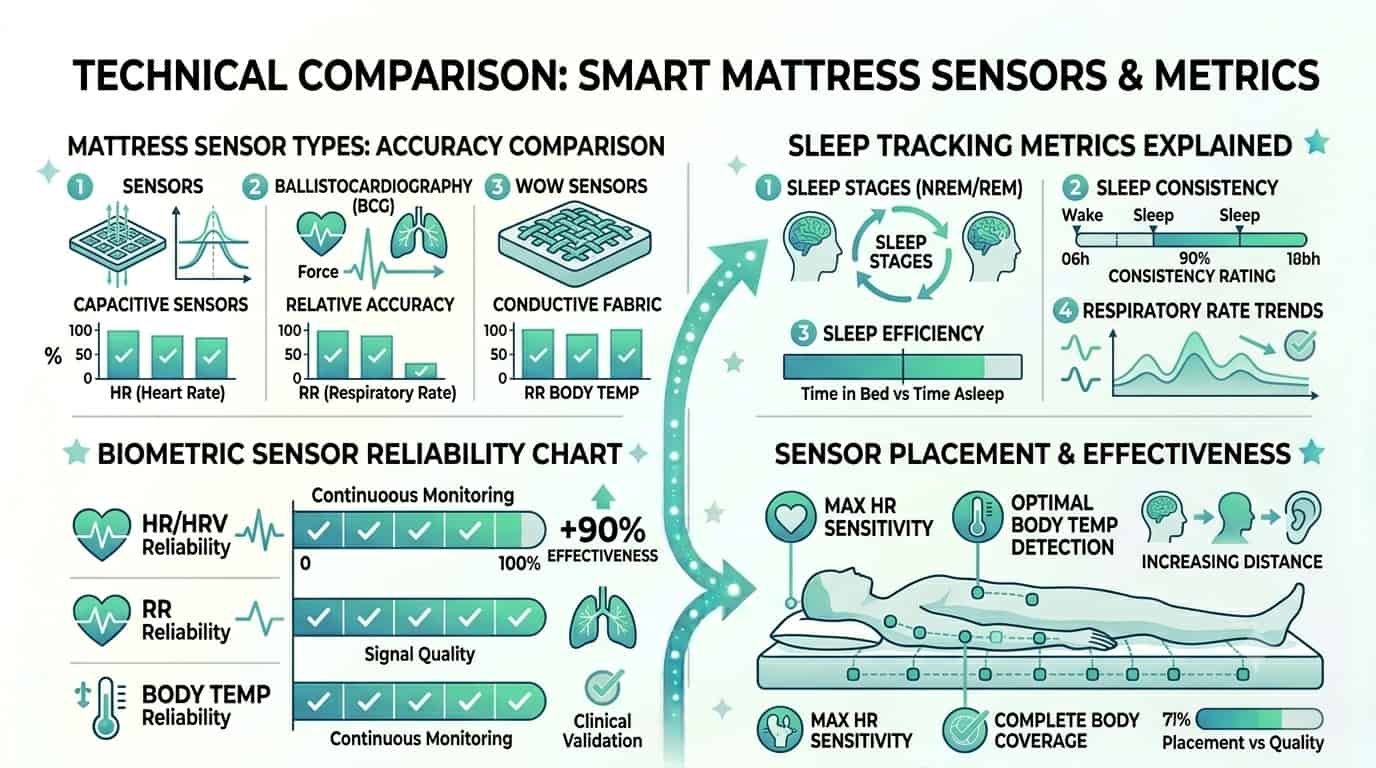
Smart Mattresses and Sleep Surfaces
Sleep Number Climate360 Smart Bed
Revolutionary features:
- Dual-zone temperature control (heating and cooling)
- Automatic firmness adjustment based on sleep position
- Biometric monitoring without wearables
- Smart alarm that wakes you during light sleep
- Integration with smart home systems
2024 enhancements:
- AI-powered sleep optimization that learns your preferences
- Advanced climate control with humidity management
- Improved partner isolation technology
- Enhanced mobile app with detailed sleep analytics
Price: $4,999 – $8,999 depending on size and features
Best for: Couples with different sleep preferences and those who want the ultimate smart sleep experience
Eight Sleep Pod 4 Ultra
Core features:
- Active temperature regulation (-10°F to +110°F)
- Dual-zone control for couples
- Biometric tracking including heart rate and breathing
- Smart alarm with gentle wake-up
- Sleep coaching through AI analysis
What’s new:
- Faster temperature adjustment response
- Enhanced sensor accuracy for better data
- Improved app interface with actionable insights
- Integration with fitness trackers and health apps
Price: $3,395 – $4,195 plus monthly subscription
Best for: Hot sleepers and those who want precise temperature control
Purple RestorePlex Mattress
Innovative technology:
- GelFlex Grid for temperature regulation
- Responsive support that adapts to body shape
- Excellent motion isolation
- Hypoallergenic and antimicrobial properties
- 10-year warranty
2024 improvements:
- Enhanced gel technology for better cooling
- Improved edge support
- New firmness options
- Better durability and longevity
Price: $1,299 – $2,999 depending on size
Best for: Hot sleepers who want cooling without active temperature control
Sleep Apps and AI Coaching
Sleep.com AI Coach
AI-powered features:
- Personalized sleep improvement plans
- Real-time coaching based on sleep data
- Integration with multiple wearable devices
- Behavioral change tracking and motivation
- Expert-backed sleep science recommendations
2024 updates:
- Advanced machine learning algorithms
- Voice-activated sleep coaching
- Integration with smart home devices
- Personalized meditation and relaxation content
Price: Free with premium features at $9.99/month
Best for: Users who want comprehensive sleep coaching and behavior change support
Calm Sleep Stories 2.0
Enhanced features:
- AI-generated personalized sleep stories
- Adaptive narration based on your preferences
- Binaural beats integration for deeper relaxation
- Sleep timer with gradual volume reduction
- Offline download for travel
New in 2024:
- Voice cloning technology for familiar voices
- Interactive sleep stories that respond to movement
- Integration with smart speakers and displays
- Personalized soundscapes based on sleep data
Price: $69.99/year
Best for: People who struggle with racing thoughts at bedtime
Noisli Sleep Focus
Sound technology:
- High-quality nature sounds and white noise
- Customizable sound mixing
- Timer and fade-out features
- Offline playback capability
- Background app functionality
2024 enhancements:
- 3D spatial audio for immersive experience
- AI-powered sound recommendations
- Integration with sleep tracking devices
- Adaptive volume based on ambient noise
Price: Free with premium at $2/month
Best for: Light sleepers who need consistent background noise
Smart Lighting and Environment Control
Philips Hue Sync Sleep System
Circadian lighting features:
- Automatic color temperature adjustment throughout the day
- Gradual dimming for natural sleep onset
- Sunrise simulation for gentle wake-up
- Integration with sleep tracking devices
- Voice control compatibility
2024 improvements:
- Enhanced color accuracy for better circadian support
- Faster response times for real-time adjustments
- Better integration with health apps
- Improved energy efficiency
Price: $199 – $399 for starter kits
Best for: Users who want to optimize their light exposure for better sleep
Dyson Pure Cool Cryptomic Air Purifier
Sleep-optimized features:
- Ultra-quiet night mode operation
- Real-time air quality monitoring
- Automatic adjustment based on pollution levels
- HEPA and activated carbon filtration
- Smart home integration
2024 updates:
- Enhanced filtration for better allergen removal
- Improved noise reduction technology
- Better app control and scheduling
- Energy-efficient operation
Price: $549 – $749
Best for: People with allergies or those living in polluted environments
Nest Learning Thermostat Pro
Sleep optimization:
- Automatic temperature adjustment for sleep phases
- Learning algorithms that adapt to your preferences
- Integration with sleep tracking devices
- Energy-efficient operation
- Remote control via smartphone
New features for 2024:
- Enhanced sleep mode with precise temperature control
- Better integration with health and fitness apps
- Improved learning algorithms
- Advanced scheduling options
Price: $279
Best for: Users who want automated temperature control for optimal sleep
Innovative Sleep Accessories
Muse S Headband (Gen 2)
Meditation and sleep features:
- EEG brain activity monitoring
- Real-time feedback during meditation
- Sleep tracking without wearables
- Guided sleep meditations
- Progress tracking and insights
2024 enhancements:
- Improved comfort for overnight wear
- Enhanced EEG accuracy
- Better app integration and user experience
- Longer battery life
Price: $399
Best for: Meditation practitioners who want to improve their practice and sleep quality
Kokoon Sleep Headphones
Audio sleep technology:
- Ultra-comfortable design for side sleepers
- Active noise cancellation
- Sleep tracking through audio analysis
- Automatic audio fade-out when asleep
- Long battery life for all-night use
2024 improvements:
- Enhanced comfort with new materials
- Better noise cancellation technology
- Improved sleep detection accuracy
- Wireless charging capability
Price: $329
Best for: People who need audio content to fall asleep but don’t want to disturb partners
ChiliSleep OOLER Sleep System
Temperature control features:
- Precise temperature control (55-115°F)
- Dual-zone capability for couples
- Smartphone app control
- Scheduled temperature changes
- Quiet operation for undisturbed sleep
2024 updates:
- Improved energy efficiency
- Enhanced app interface with better scheduling
- Quieter operation
- Better integration with sleep tracking devices
Price: $699 – $1,199
Best for: Hot sleepers who want precise temperature control without buying a new mattress
Choosing the Right Sleep Tech for You
Budget Considerations
Under $100:
- Sleep tracking apps with premium features
- Basic smart lighting solutions
- White noise machines and sleep sound apps
- Sleep hygiene tracking tools
$100 – $500:
- Fitness trackers with sleep monitoring
- Smart wake-up lights
- Sleep headphones and meditation devices
- Basic smart thermostats
$500 – $2,000:
- Advanced wearables like Oura Ring
- Smart air purifiers and environmental controls
- Temperature regulation systems
- Professional-grade sleep tracking devices
$2,000+:
- Smart mattresses with full integration
- Complete smart bedroom ecosystems
- Professional sleep lab equipment for home use
Compatibility and Integration
Apple ecosystem users:
- Apple Watch for comprehensive health tracking
- HomeKit-compatible devices for seamless integration
- Health app integration for centralized data
- Siri voice control for hands-free operation
Android users:
- Google Fit integration for health data
- Google Assistant compatibility
- Wear OS devices for sleep tracking
- Google Home integration for smart controls
Platform-agnostic options:
- Oura Ring works with both iOS and Android
- Fitbit devices have broad compatibility
- Most smart mattresses have their own apps
- Third-party sleep apps often support multiple platforms
Privacy and Data Security
Important considerations:
- Review data collection and sharing policies
- Understand what data is stored locally vs. in the cloud
- Check for encryption and security measures
- Consider devices that offer local data storage options
- Be aware of third-party data sharing agreements
Best practices:
- Regularly review and update privacy settings
- Use strong, unique passwords for sleep tech accounts
- Enable two-factor authentication when available
- Regularly update device firmware and apps
- Consider the long-term implications of health data collection
The Future of Sleep Technology
The sleep technology landscape in 2024 offers unprecedented opportunities to understand and improve our sleep quality. From AI-powered coaching to smart mattresses that adapt to our needs, these innovations represent a significant step forward in sleep science.
Key takeaway: The best sleep technology is the one that fits seamlessly into your lifestyle and addresses your specific sleep challenges. Start with identifying your primary sleep issues, then choose devices that offer targeted solutions within your budget and technical comfort level.
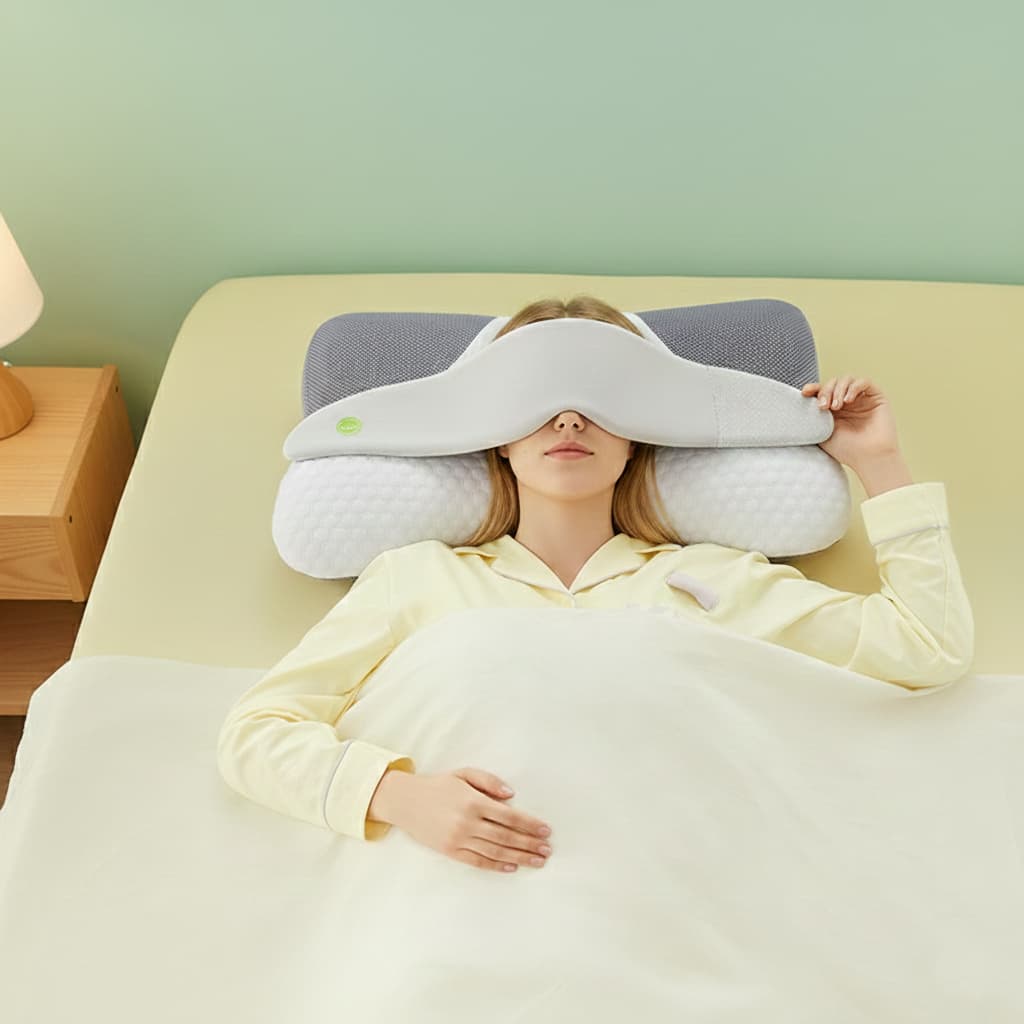
Smart pillows and mattresses: comprehensive review of intelligent sleep technology for enhanced comfort and health monitoring
In today’s technology-driven world, even our sleep environment is becoming smarter. Smart pillows and mattresses represent the cutting edge of sleep technology, offering personalized comfort, health monitoring, and adaptive features that respond to your body’s needs throughout the night.
What Are Smart Pillows and Mattresses?
Smart sleep products integrate advanced sensors, memory foam technology, and connectivity features to create an intelligent sleep environment. These products can track sleep patterns, adjust firmness and temperature, and provide valuable insights into your sleep quality.
Key Features of Smart Sleep Technology
- Sleep tracking and monitoring capabilities
- Automatic temperature regulation
- Adjustable firmness and support zones
- Smart alarm systems that wake you during light sleep phases
- Integration with health apps and smart home systems
- Personalized sleep recommendations and insights
Top Smart Pillow Reviews
1. Sleep Number ComfortFit Pillow
Price Range: $199 – $299
Key Features: Adjustable height and firmness, cooling gel layer, machine washable cover
Best For: Side sleepers who need customizable support
Pros: Highly customizable, excellent temperature regulation, durable construction
Cons: Higher price point, may take time to find optimal settings
2. Tempur-Pedic TEMPUR-Cloud Breeze Dual Cooling
Price Range: $149 – $199
Key Features: Dual-sided cooling technology, pressure-relieving TEMPUR material
Best For: Hot sleepers and those with neck pain
Pros: Excellent cooling properties, superior pressure relief, trusted brand
Cons: Heavy weight, slower response time
3. Purple Harmony Pillow
Price Range: $159 – $179
Key Features: Purple Grid technology, Talalay latex core, moisture-wicking cover
Best For: All sleep positions, especially combination sleepers
Pros: Unique gel grid design, excellent airflow, responsive support
Cons: Unique feel may not suit everyone, limited height options
Top Smart Mattress Reviews
1. Sleep Number 360 Smart Bed
Price Range: $999 – $4,999
Key Features: Dual-zone firmness control, sleep tracking, automatic adjustments, temperature balancing
Best For: Couples with different sleep preferences
Pros: Highly customizable, comprehensive sleep tracking, partner isolation
Cons: Expensive, requires power source, complex setup
2. Eight Sleep Pod Pro
Price Range: $2,295 – $3,395
Key Features: Active temperature regulation, biometric tracking, smart alarm
Best For: Tech enthusiasts and health-conscious sleepers
Pros: Advanced health tracking, precise temperature control, detailed sleep insights
Cons: High price, subscription required for full features
3. Purple Hybrid Premier
Price Range: $1,299 – $2,098
Key Features: Purple Grid technology, pocketed coils, cooling properties
Best For: Hot sleepers and those seeking pressure relief
Pros: Excellent cooling, unique pressure relief, durable construction
Cons: Unique feel, heavier than traditional mattresses
Choosing the Right Smart Sleep Product
When selecting smart pillows and mattresses, consider your specific sleep needs, budget, and desired features. While these products represent a significant investment, they can provide valuable insights into your sleep patterns and potentially improve your overall sleep quality.
Remember: The best smart sleep product is one that consistently helps you achieve better, more restful sleep while fitting within your budget and lifestyle preferences.
Best Sleep Apps: Tracking, Meditation & White Noise – Which is for You?
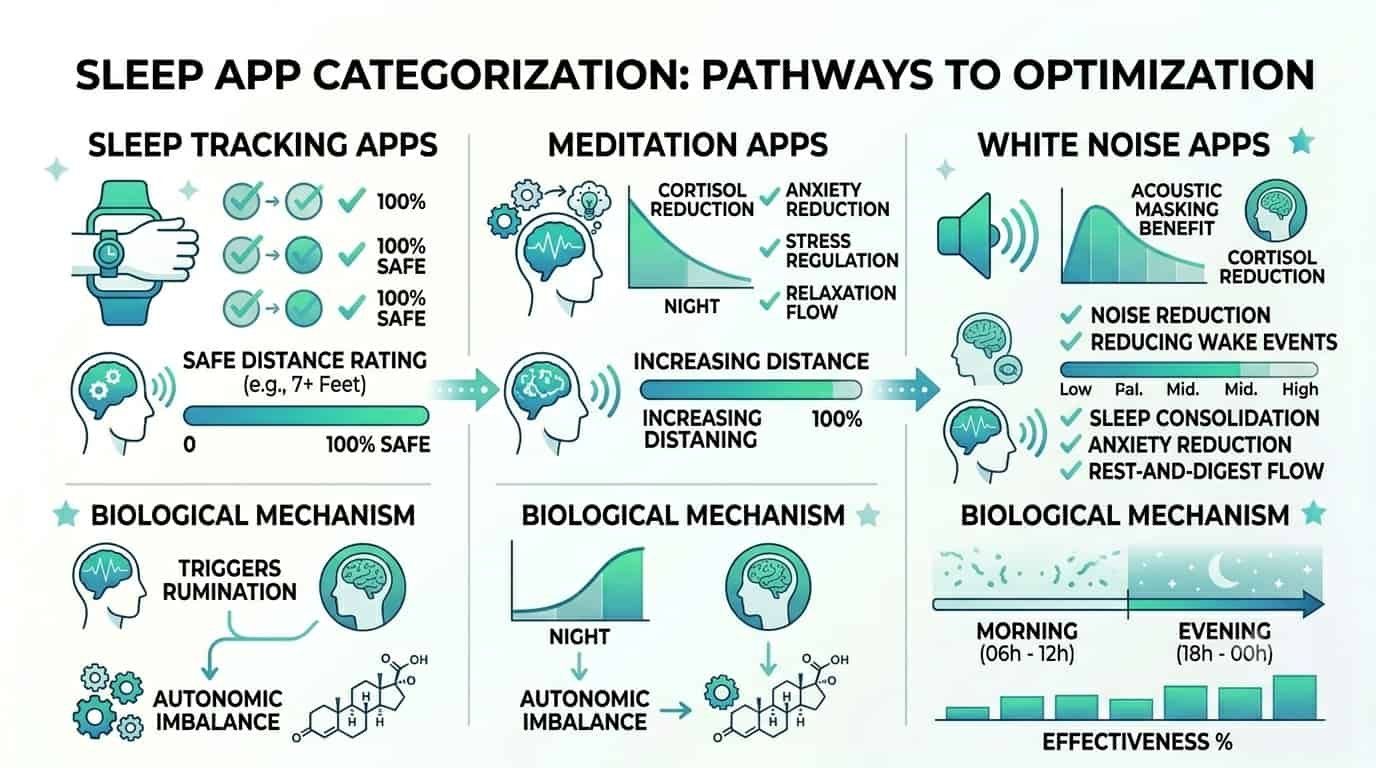
In an age where our smartphones are often blamed for disrupting our sleep, it might seem counterintuitive to turn to an app for help. However, a new generation of sleep-focused applications aims to do just that – leveraging technology to monitor, manage, and improve your sleep quality. From sophisticated sleep trackers to guided meditations and soothing soundscapes, there’s an app for almost every sleep-related need. But with so many options, how do you choose the right one? Let’s explore the different types of sleep apps and highlight some of the best contenders in each category.
Sleep Tracking Apps: Understanding Your Nightly Patterns
Sleep tracking apps typically use your phone’s accelerometer and microphone (or connect to wearable devices) to monitor your movements, sounds, and sleep stages throughout the night. The goal is to provide insights into your sleep duration, quality, and potential disturbances.
Sleep Cycle: Smart Alarm & Sleep Tracker
Features: Sleep Cycle is renowned for its intelligent alarm clock that aims to wake you up during your lightest sleep phase, helping you feel more refreshed. It analyzes your sleep patterns using sound analysis (microphone) or accelerometer. It provides detailed sleep statistics, graphs, and notes on how daily activities affect sleep quality.
Pros: Gentle wake-up, comprehensive sleep analysis, identifies trends.
Cons: Requires phone to be in bed (for accelerometer use) or nearby (for microphone use), some premium features require subscription.
Best for: Individuals looking to understand their sleep patterns and wake up more gently.
Pillow Automatic Sleep Tracker
Features: Pillow offers automatic sleep tracking with Apple Watch integration, providing a rich analysis of your sleep stages (including REM, light, and deep sleep). It also includes features like heart rate analysis during sleep, audio recordings of sleep events (snoring, sleep apnea indications), and a smart alarm clock.
Pros: Excellent Apple Watch integration, detailed sleep stage breakdown, audio recordings.
Cons: Primarily for Apple users, subscription for full features.
Best for: Apple Watch users seeking in-depth sleep analysis and health metric correlation.
Meditation & Mindfulness Apps: Calming the Mind for Sleep
These apps focus on preparing your mind for sleep through guided meditations, mindfulness exercises, calming stories, and breathing techniques. They are designed to reduce stress and anxiety, common culprits of insomnia.
Calm: Meditation and Sleep
Features: Calm is a leading app for meditation, relaxation, and sleep. It offers a vast library of guided meditations, sleep stories narrated by soothing voices (including celebrities), nature sounds, breathing exercises, and music tracks designed to promote relaxation and sleep.
Pros: Extensive content library, high-quality audio, celebrity narrators, suitable for all levels.
Cons: Subscription-based for most content.
Best for: Anyone looking for a wide variety of tools to reduce stress and improve sleep through mindfulness and storytelling.
Headspace: Meditation & Sleep
Features: Headspace provides guided meditations tailored for sleep, including specific courses for falling asleep, managing restlessness, and winding down. It also features “Sleepcasts” (audio experiences to help you drift off), soothing soundscapes, and short exercises for daytime stress relief.
Pros: Structured meditation courses, user-friendly interface, scientifically backed techniques.
Cons: Subscription required for full access.
Best for: Individuals new to meditation or those who prefer a structured approach to mindfulness for sleep.
White Noise & Soundscape Apps: Masking Disturbances
These apps provide a variety of sounds – from white noise and nature sounds to ambient music – to help mask distracting noises, create a calming sleep environment, and promote relaxation.
White Noise Lite
Features: This app offers a wide range of looped sounds, including various colors of noise (white, pink, brown), mechanical sounds (fan, air conditioner), light to heavy rain, and nature sounds. It allows for mixing sounds and setting timers.
Pros: Large sound library, customizable mixes, simple interface, free version available.
Cons: Some advanced features and sounds are in paid versions.
Best for: Users who need to block out disruptive noises or prefer a consistent sound background for sleep.
myNoise
Features: myNoise is highly customizable, offering a unique approach with calibrated noise generators. You can shape the sound to your specific hearing needs and preferences, making it excellent for noise blocking, tinnitus relief, and focus, in addition to sleep.
Pros: Highly customizable soundscapes, effective for specific needs like tinnitus, many free generators.
Cons: Interface can be a bit complex for new users, some generators require purchase.
Best for: Audiophiles or those with specific sound masking needs who appreciate fine-tuning capabilities.
Combination & Specialized Apps
Some apps combine features from all categories or cater to specific sleep issues.
Pzizz – Sleep, Nap, Focus
Features: Pzizz uses psychoacoustic principles to create dreamscapes – a mix of music, voiceovers, and sound effects that change each night, helping you fall asleep fast, stay asleep, and wake up refreshed. It has modules for sleep, naps, and focus.
Pros: Unique, dynamically generated soundscapes, effective for many users, dedicated nap module.
Cons: Subscription model, voiceovers may not be for everyone.
Best for: People who find standard meditations or static white noise unengaging and want a dynamic audio experience.
Key Takeaways
The best sleep app for you depends on your individual needs, preferences, and budget. If you’re curious about your sleep habits, a tracking app might be a good starting point. If stress or an overactive mind keeps you awake, a meditation app could be beneficial. And if noise is your primary sleep disruptor, a white noise app is worth trying.
Remember: Many apps offer free trials, so don’t hesitate to experiment with a few options to find what works best for you. While apps can be valuable tools, they are most effective when combined with good sleep hygiene practices, such as maintaining a consistent sleep schedule and creating a restful bedroom environment.
Complete white noise machine buying guide: how to choose the perfect sound machine for better sleep
White noise machines have become essential tools for creating optimal sleep environments. With countless options available, choosing the right machine can significantly impact your sleep quality, concentration, and overall well-being.
Understanding White Noise Machines
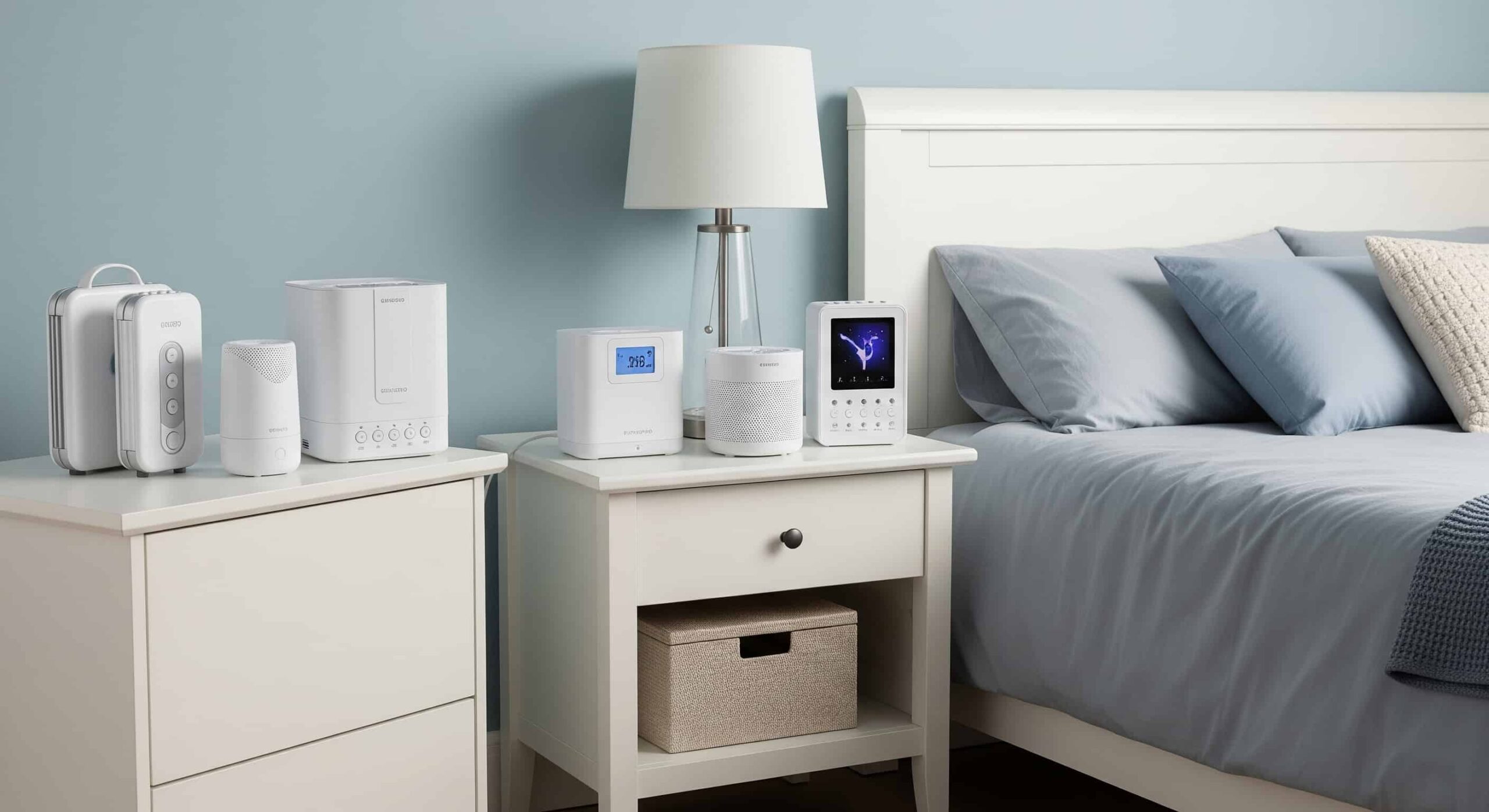
White noise machines generate consistent, soothing sounds that mask disruptive environmental noises. They work by producing a steady acoustic blanket that helps your brain filter out sudden sounds that might otherwise wake you or prevent you from falling asleep.
Benefits of White Noise Machines
- Improved sleep quality and faster sleep onset
- Enhanced concentration and focus during work or study
- Reduced stress and anxiety levels
- Better sleep for babies and children
- Privacy enhancement by masking conversations
- Tinnitus relief for some individuals
Types of White Noise Machines
1. Mechanical White Noise Machines
How They Work: Use a physical fan or motor to generate natural white noise through air movement.
Pros:
- Produce authentic, non-looping white noise
- Generally more affordable
- Simple operation with minimal controls
- No digital artifacts or sound loops
Cons:
- Limited sound variety
- May require more maintenance
- Can be bulkier than digital alternatives
2. Digital White Noise Machines
How They Work: Use electronic speakers to play pre-recorded or digitally generated sounds.
Pros:
- Wide variety of sound options (white, pink, brown noise, nature sounds)
- Precise volume control
- Timer and scheduling features
- Compact and portable designs
- Additional features like Bluetooth connectivity
Cons:
- May have noticeable sound loops
- Generally more expensive
- Requires power source or battery charging
3. Smartphone Apps and Smart Speakers
Convenience Factor: Use existing devices to play white noise through apps or voice commands.
Best For: Travel, temporary use, or testing white noise before investing in a dedicated machine.
Limitations: Battery drain, potential interruptions from notifications, and generally lower sound quality.
Key Features to Consider
Sound Quality and Variety
Sound Types: Look for machines offering multiple sound options:
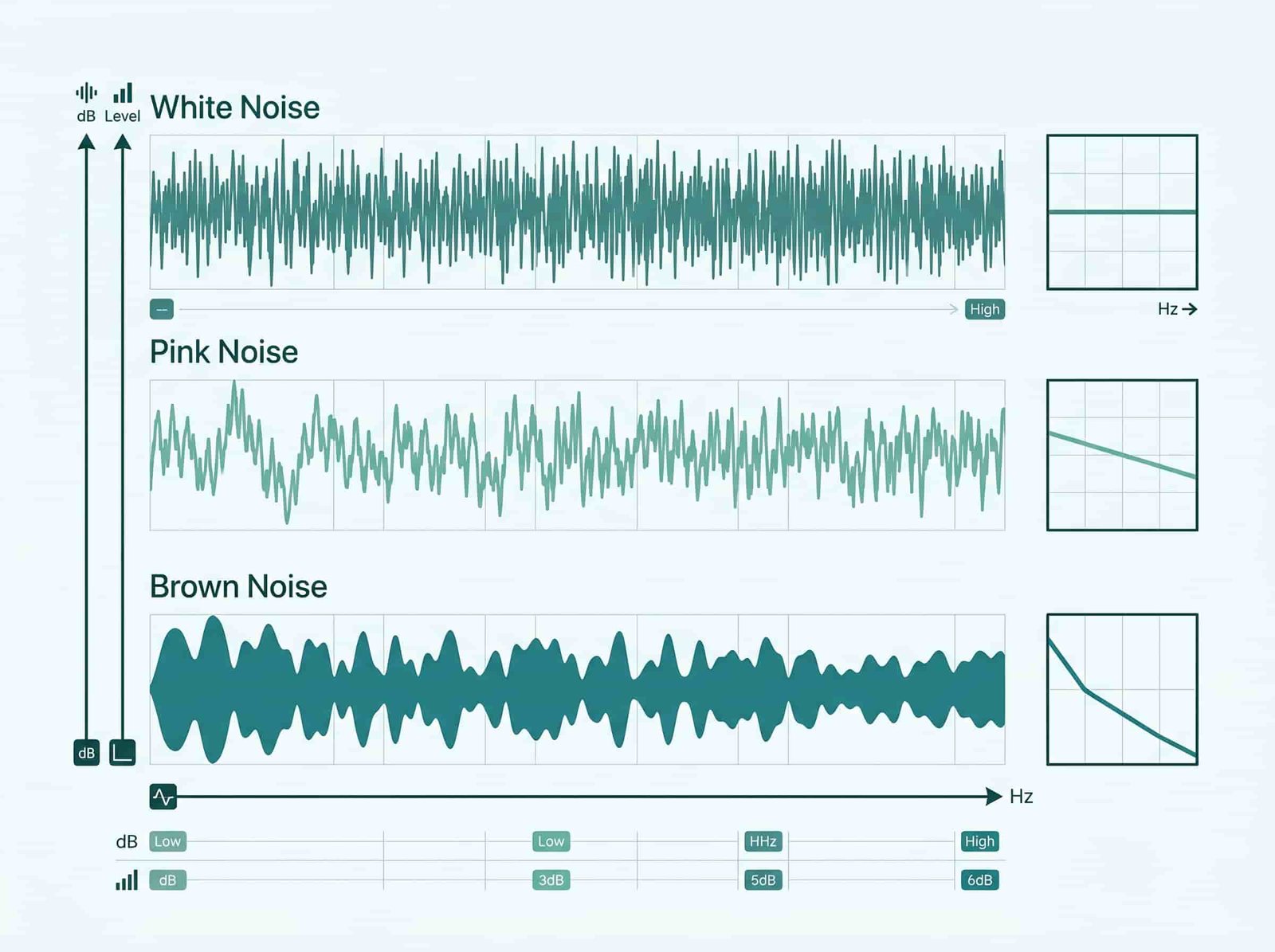
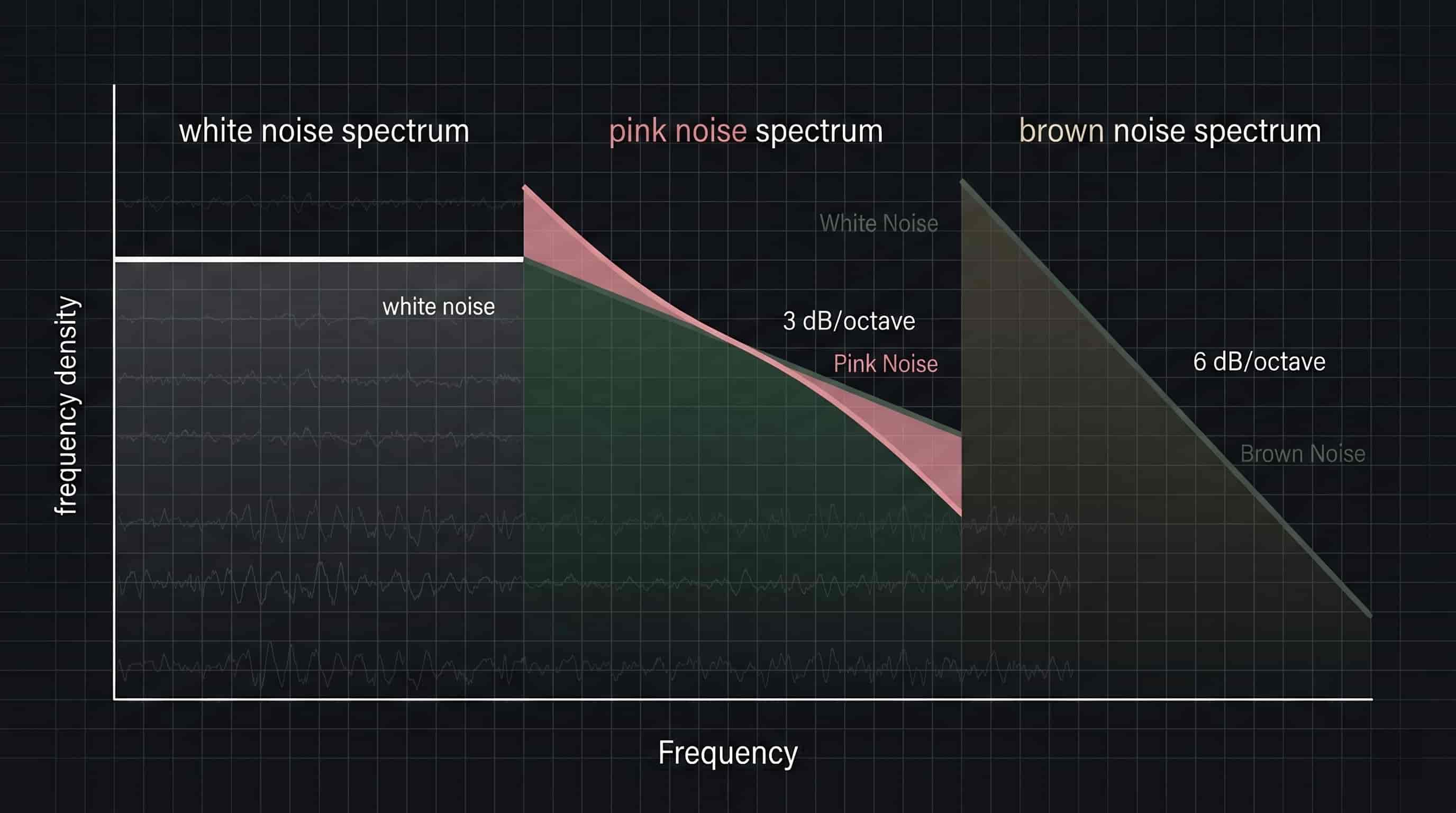
- White Noise: Equal intensity across all frequencies
- Pink Noise: Lower frequencies emphasized, often more soothing
- Brown Noise: Even deeper frequencies, very calming
- Nature Sounds: Rain, ocean waves, forest sounds
- Ambient Sounds: Fan sounds, air conditioner hum
Audio Quality: Ensure clear, distortion-free sound reproduction without obvious loops or digital artifacts.
Volume Control and Range
- Precise Control: Look for machines with fine volume adjustment
- Volume Range: Should accommodate both quiet and noisy environments
- Memory Function: Remembers your preferred volume setting
- Gradual Volume Changes: Some models offer fade-in/fade-out features
Timer and Scheduling Features
- Sleep Timer: Automatically turns off after set duration
- Continuous Play: Runs all night without interruption
- Scheduled Operation: Advanced models can turn on/off at specific times
- Gradual Fade: Slowly decreases volume before turning off
Portability and Power Options
- Size and Weight: Consider if you’ll travel with the device
- Power Sources: AC adapter, battery, or USB charging
- Battery Life: For portable models, look for 8+ hours of operation
- Auto-Off Features: Preserve battery life when not in use
Budget Considerations and Price Ranges
Budget Options ($20-$50)
What to Expect: Basic mechanical fans or simple digital machines with limited sound options.
Best For: First-time users, single-room use, or basic noise masking needs.
Popular Models: Marpac Dohm, HoMedics SoundSpa
Mid-Range Options ($50-$150)
What to Expect: Multiple sound options, better build quality, timer features, and improved audio quality.
Best For: Regular users who want variety and reliability.
Popular Models: LectroFan, Adaptive Sound Technologies machines
Premium Options ($150+)
What to Expect: High-fidelity audio, extensive customization, smart features, and premium materials.
Best For: Audiophiles, tech enthusiasts, or those with specific sound sensitivity needs.
Features: App control, Bluetooth connectivity, advanced scheduling, and superior sound quality.
Special Considerations
For Baby and Child Use
- Volume Limits: Ensure maximum volume stays below 50 decibels
- Safety Features: Secure cord management and stable base
- Portable Options: For travel and room-to-room use
- Night Light Integration: Some models include gentle lighting
For Travel Use
- Compact Size: Easy to pack and carry
- Battery Operation: Independent of power outlets
- Durable Construction: Withstands travel wear and tear
- Universal Power: Works with different electrical systems
For Office or Study Use
- Discreet Design: Professional appearance
- Focused Sounds: Sounds that enhance concentration
- USB Power: Can connect to computer or power bank
- Quiet Operation: Minimal mechanical noise
Top Recommendations by Category
Best Overall: LectroFan EVO
Why We Recommend: Excellent sound quality, 22 unique sounds, precise volume control, and reliable performance.
Price Range: $50-$70
Best For: Most users seeking quality and variety
Best Budget: Marpac Dohm Classic
Why We Recommend: Simple, effective mechanical white noise with proven track record.
Price Range: $40-$50
Best For: Users who prefer authentic fan-generated white noise
Best for Travel: Rohm Portable
Why We Recommend: Ultra-compact, rechargeable, and surprisingly powerful for its size.
Price Range: $30-$40
Best For: Frequent travelers and small spaces
Making Your Final Decision
The best white noise machine is one that meets your specific needs, budget, and preferences. Consider your primary use case, desired features, and sound preferences when making your choice.
Remember: A good white noise machine is an investment in better sleep and improved quality of life. Take time to research and choose wisely—your future well-rested self will thank you.
Best White Noise Apps: Your Guide to a Peaceful Night’s Sleep
White Noise for Sleep: Why It’s Wrong (And What Works)
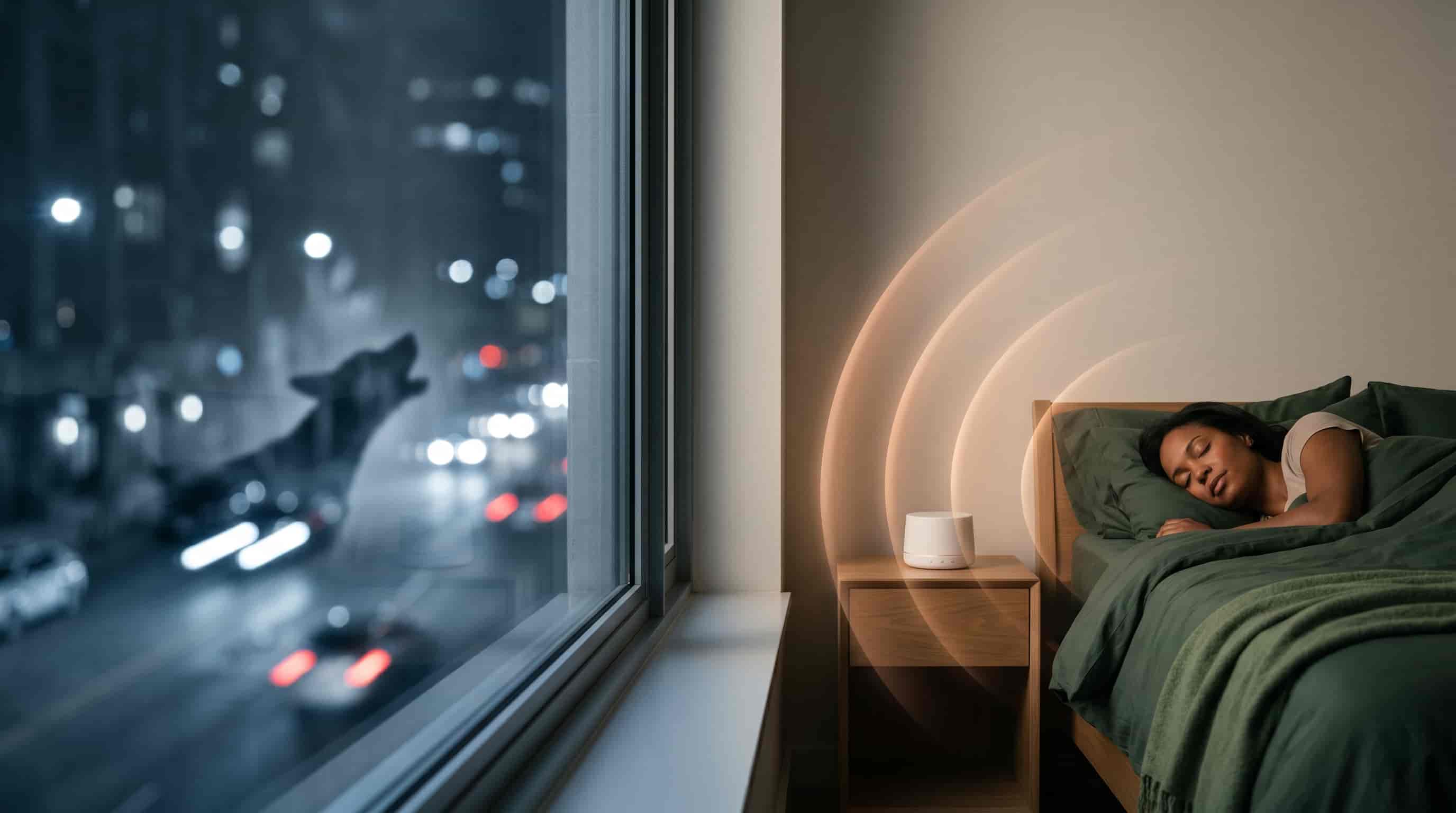
Your bedroom is dead silent. You climb into bed, close your eyes, and wait for sleep to land. Then it starts — the compressor hum from the refrigerator downstairs. A car door slams three streets away. Floorboards creak somewhere in the house. Your partner shifts and exhales. These sounds do not wake you in the way you recognize. They trigger something far more destructive: a micro-arousal.
Micro-arousals are subconscious spikes in brain activity that rip you out of Deep Sleep and throw you into Light Sleep without you ever becoming consciously aware it happened. Your auditory cortex never clocks out. Even in the deepest stages of non-REM sleep, it actively scans the environment for threats — a survival mechanism hardwired into every mammal on the planet. When morning arrives, you feel wrecked and have zero idea your brain fought and lost a dozen invisible acoustic battles between midnight and 6 AM. White noise for sleep is not about drowning out the world. It is about engineering an acoustic environment convincing enough to let an ancient threat-detection system finally stand down.
But nobody tells you this part: generic white noise is neurologically exhausting. It bombards your ears with every audible frequency at equal intensity — including harsh, piercing high bands that your brain reads as distress signals. Over eight hours, this constant high-frequency assault keeps the auditory cortex in sustained low-level vigilance. You trade environmental noise disruption for acoustic fatigue and congratulate yourself for being scientific. The noise color you choose makes all the difference. The wrong one worsens things while you feel proud of your solution. Let us strip this down and fix it.
Quick Answer
- Generic white noise is neurologically fatiguing. Equal energy across all frequencies bombards your auditory cortex with harsh highs that mimic alarm signals, keeping your brain in low-level vigilance for eight straight hours.
- Pink noise physically deepens slow-wave sleep. It mirrors the exact frequency architecture of your brainwaves during deep sleep, actively entraining the brain to decelerate instead of simply masking external sound.
- Brown noise blocks what pink noise cannot touch. Low-frequency urban vibrations — diesel engines at idle, subwoofers through walls, distant construction rumble — penetrate solid structures at wavelengths pink noise passes straight through.
Why does traditional white noise fail to deliver deep sleep?
Direct Answer: White noise contains all audible frequencies at equal intensity — including sharp, high-pitched bands your brain interprets as a distress signal. After eight hours of this, your auditory cortex is more fatigued than if you had slept in relative silence.
The Science: Your auditory system evolved over millions of years to detect sudden acoustic changes — a twig snapping underfoot, an animal exhaling nearby, steam escaping under pressure. White noise sounds like pressurized static, an acoustic signature that triggers a low-grade sympathetic nervous system response. The acoustic reflex, which should disengage completely during deep sleep, never fully releases. You stay asleep. You do not recover.
What to Do Tonight: Stop using pure white noise generators. Open your app, locate the pink noise or brown noise setting, and play it through a dedicated Bluetooth speaker — not your phone’s built-in speaker. Your phone physically cannot produce the low frequencies that give colored noise its masking power.
White noise sounds scientific because someone in 1962 stuck the word “white” on it and the culture never questioned it. The advice got popular because white noise machines were the first commercially available sound maskers, not because white noise was ever clinically proven superior to alternatives. The science moved on decades ago. The marketing did not. You are screaming static at your own brain for one-third of your life because a product team in the mid-20th century thought “white noise” would sell.
High-frequency sounds produce a genuine stress response. Your body processes sharp, hissing frequencies — the same acoustic fingerprint as a snake’s warning hiss, an enraged animal, gas escaping at high pressure — as environmental threats. This is not metaphor or wellness-speak. This is the autonomic nervous system reacting to acoustic stimuli entirely below conscious awareness. You wake up exhausted not because you slept poorly but because your body spent the night on guard duty it never needed to pull.
Why does pink noise physically deepen your sleep?
Direct Answer: Pink noise mirrors the exact frequency structure of your brainwaves during deep sleep. When you fill the room with pink noise, you inject a biological command that entrains your brain to decelerate, increasing the amplitude of slow-wave oscillations.
The Science: In pink noise, lower frequencies carry more power than higher ones — the identical acoustic architecture found in steady rainfall, wind through trees, and ocean surf. This is not coincidence. Your brain evolved in environments dominated by pink-noise-like natural soundscapes, and the auditory system uses those frequency patterns as a proxy for safety. Clinical research confirms pink noise synchronized with the delta band (0.5 to 4 Hz) physically increases slow-wave sleep amplitude and improves next-day memory consolidation by up to 30% compared to either silence or white noise.
What to Do Tonight: Set a pink noise app as your default acoustic baseline. Play it through an external speaker with actual bass response — your phone speaker diaphragm measures roughly the size of a coin and cannot push the low-end frequencies that give pink noise its biological power. Place the speaker at least three feet from your head.
This is where the conversation shifts from “blocking annoying sounds” to “engineering your nervous system.” Pink noise is not white noise with a different name. It is a fundamentally different acoustic signal, and your brain routes it through an entirely separate processing pathway. The parasympathetic nervous system — your rest-and-digest branch — responds to low-frequency dominance by downregulating cortisol production and shifting heart rate variability into recovery mode. White noise traps you in neutral. Pink noise puts you in park.
Think about the last time you fell asleep to actual rainfall. Not a recording — real rain hitting your window and roof. That sound is not white noise. It is natural pink noise, and your body responds to it before your conscious mind even registers what is happening. Your shoulders drop. Your jaw loosens. Your breathing deepens from the diaphragm. These are not psychological reactions to “relaxing sounds.” They are hardwired autonomic responses to a frequency profile your nervous system recognizes as the acoustic signature of safety — the sound of being sheltered, warm, and protected while the world outside is wet and cold.
How do you block heavy traffic and thudding bass that pink noise cannot stop?
Direct Answer: Deploy brown noise — a heavy, low-frequency acoustic blanket that intercepts and neutralizes the physical vibrations pink and white noise pass straight through. If you live near a road, in an apartment building, or anywhere with subwoofer-range disruption, brown noise stops being optional.
The Science: A 50 Hz diesel engine rumble has a wavelength of roughly seven meters. It travels through standard wall construction as physical vibration, not just as airborne sound. Pink noise’s power curve drops off before reaching those frequencies — there is simply not enough low-end energy to mask a bus at idle. Brown noise amplifies the lowest frequencies even further, creating what amounts to a deep, roaring waterfall of sound that sits directly on top of urban vibrations and neutralizes them at the waveform level.
What to Do Tonight: If you hear traffic, neighbor bass, or any low-frequency thrumming from your bed, switch to brown noise immediately. You need a speaker with a dedicated subwoofer or heavy bass radiator. A cheap Bluetooth speaker outputs functionally zero bass below 100 Hz and renders brown noise indistinguishable from pink noise — which leaves you completely exposed to the frequencies you are actually fighting.
You cannot negotiate with physics. The math does not care about your intentions. If the threat is a 50 Hz bass wave with a seven-meter wavelength, your countermeasure must produce energy at 50 Hz. Nothing else matters. Most people who say noise machines do not work for them are unknowingly describing a hardware problem — their speaker literally cannot reproduce the frequencies they need, and the app is feeding them the wrong noise color on top of that. Three failures stacked together, all invisible to the person lying awake at 3 AM.
Test this tonight: play brown noise through your phone speaker, then play the same track through a proper Bluetooth speaker with a bass radiator. If the two sound identical, your speaker is the bottleneck and you have been sleeping with a placebo. A real brown noise setup should feel physical — you should sense the low-end presence in your chest cavity, not just hear it with your ears. That physical sensation is what blocks the physical vibration traveling through your walls. Acoustic physics is not a negotiation.
How do you choose the right app instead of wasting money on the wrong one?
Direct Answer: Match the app to your specific acoustic threat. Urban noise demands apps with strong brown noise generators and algorithmically created sound — not compressed audio loops. myNoise and White Noise (free version) dominate in sound quality and frequency coverage. Racing thoughts respond better to apps with high-fidelity pink noise blending and nature sound layering like Noisli.
The Science: Most “white noise” apps compress their audio so aggressively to save storage space that the masking effect is destroyed. Compression strips away the exact low and high frequencies your brain requires for true acoustic masking, leaving you with a thin, tinny hiss that is acoustically useless. The best apps generate sounds algorithmically in real time rather than playing looped MP3 files, preserving the full 20 Hz to 20 kHz frequency range your auditory system needs.
What to Do Tonight: Download both White Noise (free version, 50-plus algorithmically generated sounds) and myNoise (200-plus customizable generators with frequency sliders). Test each for three nights. The winner: whichever app runs zero ads during sleep hours. One ad blast at 3 AM destroys the entire protocol.
You just spent forty dollars on a silk pillowcase and zero minutes researching the app that will play in your bedroom for eight hours every single night. The platform matters. The audio fidelity matters. The noise color matters. Skip any one of these three and you are running a protocol structurally incapable of producing results — no matter how consistent you are with it.
What volume and setup actually produce results instead of placebo?
Direct Answer: Calibrate to 50 to 65 decibels at your pillow — the volume of a normal conversation or a soft shower. Below 50 dB, environmental noise punches straight through the masking layer. Above 70 dB for eight continuous hours, your auditory system enters a sustained stress state that degrades sleep quality and risks permanent threshold shifts.
The Science: Each 10 dB increase in background noise raises the threshold required for an external sound to trigger awakening by roughly 15%. The 50 to 65 dB sweet spot provides enough gain to neutralize sudden disruptions — car doors, barking dogs, hallway footsteps — without crossing into the range where the noise itself becomes a physiological stressor. This is not a preference band. It is a clinical window validated in ICU environments where acoustic masking is deployed as a medical intervention.
What to Do Tonight: Download a free decibel meter app. Place your phone at your pillow. Play your chosen noise color through your speaker from its permanent position across the room. Calibrate to 55 to 60 dB. This 60-second step separates effective acoustic shielding from an expensive placebo you will abandon in two months.
Never eyeball the volume. The human ear is a horrible measurement instrument — what sounds “about right” at 11 PM when you are exhausted will be acoustically useless at 3 AM when a garbage truck reverses outside your window. Most people set noise machines far too low because they are subconsciously anxious about the sound interfering with their sleep, not realizing an underpowered noise machine is functionally identical to having no machine at all. Calibrate once. Sleep correctly for the rest of your life.
Your Sleep Questions, Answered
Should I play the noise app through my phone speakers or headphones?
Never use in-ear headphones for eight hours of sleep; they cause physical ear canal fatigue and pressure sores. Standard phone speakers are physically incapable of producing the low frequencies required for true pink or brown noise — you are getting a distorted, tinny version stripped of all masking power. Use a dedicated external Bluetooth speaker with actual bass response, placed at least three feet away from your head.
Will my brain become dependent on white noise to fall asleep?
Yes, through classical conditioning — and that is a positive bio-hack, not a weakness. You are building a Pavlovian trigger where your brain instantly associates the acoustic signature with sleep onset, reducing sleep latency by up to 38%. The only risk is losing access to the sound while traveling. Use a portable noise machine or app to replicate the exact same frequency profile anywhere you go. Apply the 80/20 rule — skip noise 20% of nights to maintain flexibility.
Is it safe to play noise all night for a baby?
Yes, but volume and placement are non-negotiable. Infant ear canals amplify high frequencies by up to 20 dB compared to adult ears — harsh white noise at close range is genuinely dangerous. Use pink or brown noise only. Place the machine across the room, never in or attached to the crib. Keep volume below 50 decibels measured at the baby’s head position. The sound should be barely perceptible, not a wall of noise.
What is the best noise color for deep sleep?
Pink noise is the undisputed champion for deep sleep. It mirrors the frequency structure of your brainwaves during slow-wave sleep and actively entrains the brain to decelerate. White noise — equal energy across all frequencies — sounds harsh and causes acoustic fatigue after prolonged exposure. Brown noise is your weapon against urban low-frequency threats: traffic rumble, neighbor bass, construction vibration. Start with pink noise as your default. Add brown noise only if your specific environment demands it. Skip pure white noise entirely.
How loud should my noise machine be for optimal sleep?
Fifty to sixty-five decibels is the clinical sweet spot — roughly the volume of a normal conversation or a soft shower. Below 50 dB, environmental noise punches through immediately. Above 70 dB for eight continuous hours, your auditory system enters a stress state that degrades sleep quality and risks permanent hearing damage. Calibrate with a free decibel meter app at your pillow. If you can barely hear someone speaking at normal volume over the noise, the setting is correct.
Can white noise apps help with tinnitus at night?
Yes — this is one of the most clinically validated uses of acoustic masking. Tinnitus perception spikes in silence because your auditory system, deprived of external input, amplifies internal noise. White or pink noise raises the ambient sound floor above your tinnitus threshold, pushing the ringing perception below conscious awareness. Use an app like myNoise with frequency-targeted sliders to match your specific tinnitus pitch. For severe or sudden-onset tinnitus, consult an audiologist before self-treating.
What is the best free white noise app?
White Noise (free version) offers 50-plus algorithmically generated sounds including true white, pink, and brown noise with zero compressed audio loops. myNoise provides 200-plus customizable sound generators with individual frequency sliders, making it the best free option for users who need precise frequency control. Download both. Test each for three nights. The winner is whichever app does not blast an ad during your sleep. Offline capability is not negotiable.
Do I need a timer or should the noise play all night?
Use a 60-minute timer if your environment stays quiet after midnight and you want to avoid acoustic dependency. Use all-night mode if you live near traffic, sleep next to a snoring partner, or have tinnitus that wakes you during lighter sleep cycles. Start with a 60-minute timer for one week. Track how many times you wake up after the noise stops. If you wake more than once, switch to all-night mode at 50 to 55 dB.
What happens if I use the wrong noise color for months?
Long-term white noise use causes cumulative low-grade acoustic fatigue. Your auditory cortex never fully disengages vigilance mode because the harsh, flat frequency profile does not match any natural sound your brain evolved to interpret as safe. You stay asleep but your deep sleep quality erodes month by month. If you have been using white noise for months and still feel unrested despite eight hours in bed, the noise color itself is the likely hidden culprit. Switch to pink noise tonight. Most people feel the difference within three nights.
Can I combine white noise with other sleep strategies?
Yes, and you should. Acoustic masking works best as one pillar of a layered recovery protocol. Combine pink or brown noise with a 100% blackout eye mask for visual downregulation, consistent bedroom temperature at 65 to 68 degrees Fahrenheit for thermoregulation, and a fixed wake time for circadian entrainment. Acoustic armor solves the noise problem. The other three pillars solve the light, temperature, and rhythm problems. Together they deliver the full signal your nervous system needs: you are safe, you can let go, you can recover.
When should I see a doctor instead of relying on noise apps?
See a doctor immediately if you suspect sleep apnea — loud snoring interrupted by gasping or choking sounds, witnessed breathing pauses, or waking up with a racing heart and morning headache. See a sleep specialist if you have chronic insomnia lasting more than three months despite consistent sleep hygiene. White noise and acoustic masking address environmental sleep disruption. They cannot fix a collapsed airway, a neurological sleep disorder, or a hormonal imbalance driving your insomnia. Track your symptoms for two weeks. If the pattern does not improve with properly calibrated pink noise and the right hardware, bring the log to a professional.
Ready to Transform Your Recovery?
You just learned that the sound filling your bedroom for eight hours a night is either deepening your sleep or silently eroding it — and the difference comes down to noise color, audio fidelity, and calibrated volume. But acoustic masking addresses only one sensory input. The surface you sleep on, the alignment of your spine, and the complete sensory environment around you determine whether you truly recover or just pass time unconscious. Take our free assessment and build a full recovery protocol calibrated to your biology, not generic advice from a blog post.
Take the Free Sleep Assessment Explore Our Cooling MattressThe Slumbelry Commitment
Sleep is the most vulnerable state of human existence. It is where we heal, reset, and grow.
At Slumbelry, we don’t just sell sleep products; we advocate for your physiological right to rest. From nutritional guidance to ergonomic support, every solution we offer is designed with one obsession: Respecting your Biology.
Science is our language, but your recovery is our purpose. You take care of everything else in your life — let us take care of your nights.
Rest Deeply,
The Slumbelry Team
Beyond white noise: exploring other sleep sounds for better rest
Best Sleep Sounds: Why White Noise Is Just the Start
You bought the white noise machine. You downloaded the app. You play the static faithfully every night. And you still lie there at 2 AM, mind racing, waiting for something that is not coming. White noise blocks external sound. It does nothing for the noise inside your head. If you have been treating every sleep problem with the same flat, hissing static, you have been fighting the wrong battle entirely.
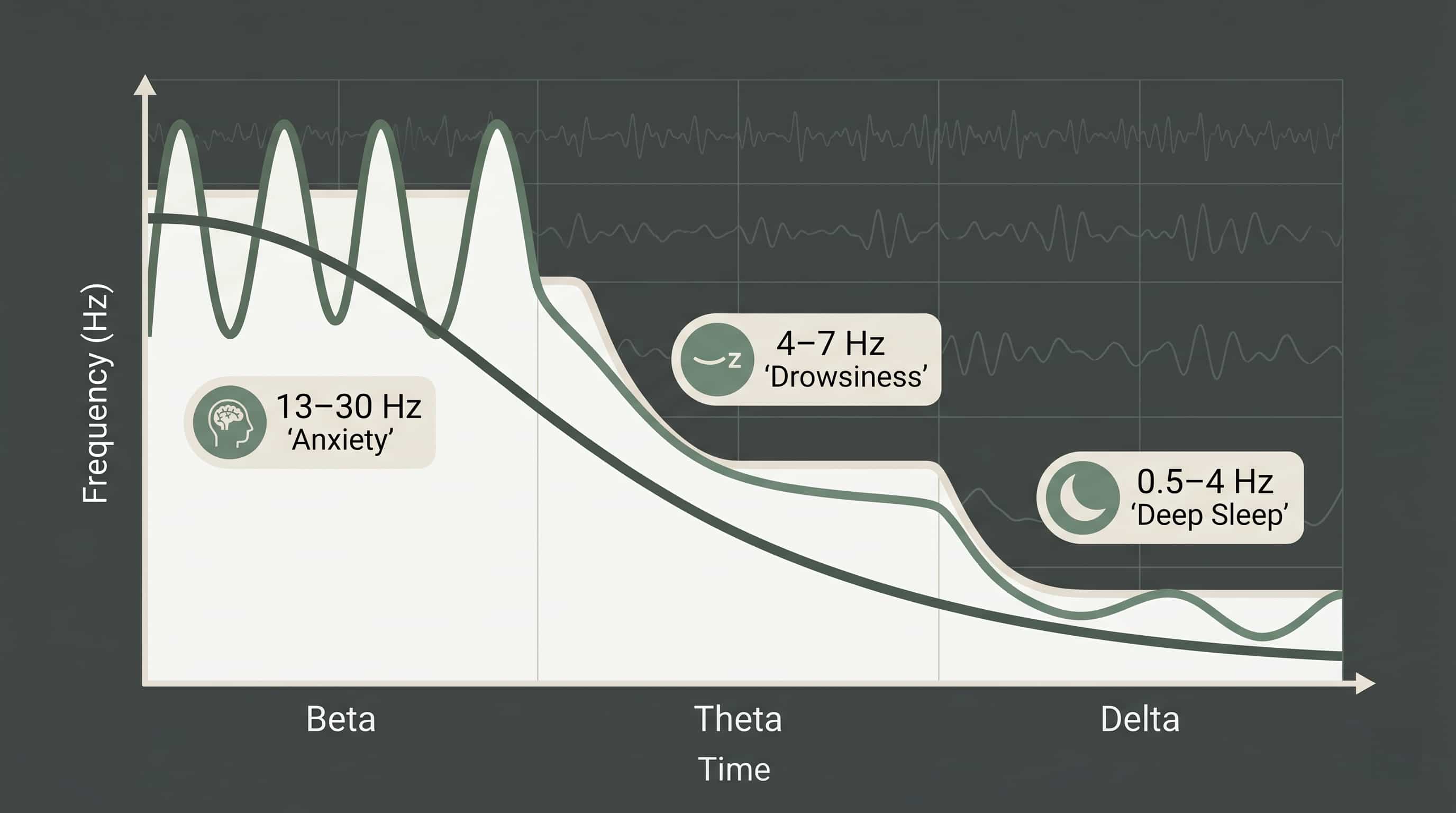
Your brain operates on specific electrical frequencies. When you are anxious, your Beta waves dominate at 13 to 30 Hz. When you sleep deeply, Delta waves take over at 0.5 to 4 Hz. The gap between these states is not crossed by drowning out a car alarm. It is crossed by acoustic signals engineered to physically drag your brainwaves from one state to another. Best sleep sounds go beyond masking. They entrain. They instruct. They give your nervous system a protocol instead of a noise wall.
This is not ambient music. This is not a rain playlist built by an algorithm that thinks thunderclaps belong at 3 AM. This is targeted acoustic engineering designed to exploit specific neural pathways your auditory cortex cannot refuse. You have three distinct weapons. Each serves a different kind of restless mind.
Quick Answer
- Binaural beats physically drag your brainwaves into deep sleep. By playing slightly different frequencies in each ear, you manufacture an auditory illusion your brain synchronizes to — a process called Frequency Following Response.
- ASMR triggers an autonomic nervous system shutdown. For people with the ASMR trait, specific acoustic triggers flood the brain with oxytocin and drop heart rate within seconds.
- Nature sounds exploit evolutionary safety signals. Your brain evolved to interpret forest and water soundscapes as environmental safety — a direct parasympathetic trigger white noise completely lacks.
How do binaural beats force a racing brain into deep sleep?
Direct Answer: Binaural beats exploit a neurological phenomenon called Frequency Following Response. You play 200 Hz in your left ear and 205 Hz in your right ear, and your brain manufactures a phantom 5 Hz beat — the exact frequency of a drowsy Theta brainstate. Your brain synchronizes to it involuntarily.
The Science: The frequency differential must occur inside your brain, not in the air. This is why binaural beats require stereo headphones. When the two frequencies reach your auditory cortex, the brainstem resolves the conflict by creating a phantom beat at the mathematical difference. This triggers cortical entrainment — your dominant brainwave frequency literally shifts to match the phantom signal. A study in Sleep (Gao et al., 2026) found that Theta-range binaural beats reduced sleep onset latency by 38% compared to white noise or silence.
What to Do Tonight: Get flat Bluetooth sleep headband headphones. Download a binaural beats track engineered at a 5 Hz differential. Set a 45-minute timer. The entrainment effect is strongest during the transition from wakefulness to sleep. After 45 minutes, your brain is in deep sleep and no longer needs the signal.
Binaural beats sound like experimental neuroscience because that is exactly what they are. The term Frequency Following Response is clinical language for a physical process: your brainwaves lock onto an external rhythm the way your foot taps to a bassline you did not consciously decide to follow. You are not relaxing. You are being dragged. That is the difference between hoping for sleep and engineering it.
This requires stereo separation. Playing a binaural beats track through a bedside speaker destroys the effect because the frequency differential resolves in the air of the room instead of inside your head. A cheap sleep headband costs twenty dollars. That twenty dollars is the difference between a placebo and a neurological intervention.
Why does ASMR trigger an autonomic shutdown that white noise never will?
Direct Answer: ASMR activates specific brain regions associated with reward, social bonding, and safety. For people with the ASMR trait, specific acoustic triggers — whispering, tapping, personal attention — flood the brain with oxytocin and dopamine while dropping heart rate by 5 to 10 beats per minute within seconds.
The Science: fMRI studies show that ASMR triggers massive activation in the medial prefrontal cortex and nucleus accumbens — regions linked to reward processing and social connection. Simultaneously, the default mode network deactivates, silencing the internal monologue that keeps insomniacs awake. This is not relaxation. It is a neurological override of the threat-detection system. White noise engages none of these pathways.
What to Do Tonight: Open YouTube. Search ASMR sleep. Test three different triggers: whispering, tapping, and personal attention roleplay. If you feel a tingling sensation starting at your scalp and flowing downward, you have the ASMR trait. If ASMR makes you uncomfortable or irritated, abandon it immediately — you lack the neural architecture for it.
ASMR divides the population. Roughly 60% of people have the trait, and the other 40% find it genuinely unpleasant. If someone whispering into a microphone makes your skin crawl, that is not a sign of being broken. Your brain simply lacks the specific neural pathways that translate those acoustic triggers into safety signals. Move on to binaural beats or nature sounds.
How do nature sounds exploit evolutionary wiring that white noise ignores?
Direct Answer: Your brain evolved for 300,000 years in environments dominated by forest and water soundscapes. These sounds contain the exact pink-noise-like frequency architecture your nervous system uses as a proxy for environmental safety. White noise has no evolutionary precedent. Your brain has no template for it.
The Science: Forest and stream sounds reduce cortisol by approximately 25% and lower heart rate by 8 to 12 beats per minute through parasympathetic activation. This is not a learned response. It is the autonomic nervous system reacting to an acoustic signature hardwired through millions of years of evolution. Unlike white noise, nature sounds contain natural variation that prevents auditory habituation, keeping the masking effect active across all sleep cycles.
What to Do Tonight: Find a high-quality forest or ocean recording without sudden volume spikes. Avoid playlists with bird calls that shift from gentle chirping to shrieking at random intervals. Play through a dedicated speaker. Set to all-night mode at 55 dB.
How do you combine these sounds into an actual protocol?
Direct Answer: Use binaural beats or ASMR as your induction layer — the tool that pushes you from wakefulness into sleep. Use pink noise or nature sounds as your maintenance layer — the acoustic wall that keeps you there. Combine them with a timer that phases out the induction layer after 45 minutes.
The Science: Brainwave entrainment is most effective during sleep onset when your brain is transitioning between states. Once deep sleep is established, ongoing entrainment provides diminishing returns and the headphones required for binaural beats become a physical disruption risk. Continuous pink noise or nature sounds provide uninterrupted environmental protection without sensory intrusion.
What to Do Tonight: Program your setup: 45 minutes of binaural beats through sleep headphones, with pink noise playing through a room speaker overlapping for the full 8 hours. When the headphones timer expires, the room speaker continues the acoustic shield uninterrupted.
Frequently Asked Questions
Do I need headphones for binaural beats to work?
No, binaural beats are an induction tool, not a maintenance tool. Wearing bulky headphones all night causes physical discomfort that disrupts later sleep cycles. Use a soft, flat Bluetooth sleep headband with an automatic shut-off timer set for 45 minutes. After 45 minutes, your brain is in deep sleep and no longer needs the entrainment signal.
What are Solfeggio Frequencies and do they work for sleep?
The clinical data is sparse compared to binaural beats. Some studies suggest 432 Hz music lowers heart rate more effectively than standard 440 Hz tuning, but the effect is likely due to general acoustic relaxation rather than a magical frequency. Use them if they relax you, but rely on pink noise for actual acoustic masking.
Why does not ASMR work for me?
ASMR is a highly specific neurological trait. Not everyone possesses the neural pathways required to experience the tingling sensation and autonomic down-regulation. If ASMR triggers irritate you, abandon them immediately and switch to binaural beats or pink noise. This is a hardware limitation, not a personal failure.
What is the best sleep sound for racing thoughts?
Binaural beats in the Theta range (4 to 7 Hz) are the best for racing thoughts because they actively entrain a hyperalert brain into a drowsy state through Frequency Following Response. Nature sounds are a strong second option because they trigger parasympathetic activation through evolutionary safety associations. White noise does nothing for internal noise.
How loud should sleep sounds be?
Fifty to sixty-five decibels is the clinical sweet spot for sleep sounds. Below 50 dB, environmental noise punches through. Above 70 dB for eight continuous hours, your auditory system enters a sustained stress state that degrades sleep quality. Calibrate with a free decibel meter app at your pillow. If you can barely hear someone speaking at normal volume over the sound, the setting is correct.
Can I combine different sleep sounds together?
Yes, combining sounds often works better than any single type. Layer binaural beats for brainwave entrainment with pink noise for acoustic masking. Keep the primary masking sound at 55 to 60 dB and secondary relaxation sounds at 45 to 50 dB. Use a timer to phase out the induction layer after sleep onset. The combination of induction and maintenance layers outperforms single-layer protocols.
Are binaural beats safe?
Yes, for most people. They are auditory illusions with no physical effects on the brain. However, about 5% of users experience mild discomfort or headaches. Start with low volumes and short sessions. Avoid if you have epilepsy or are sensitive to auditory stimulation. There are no known long-term negative effects from nightly use.
Should I use headphones or speakers for sleep sounds?
Speakers are better for pink noise, brown noise, and nature sounds because they fill the room evenly without discomfort. Binaural beats require stereo headphones because the frequency differential must occur inside your brain. Use a flat sleep headband for binaural beats, a dedicated speaker for everything else. Never use standard in-ear earbuds for overnight sleep.
How long does it take for sleep sounds to improve my sleep?
Pink and brown noise provide immediate masking effects with sleep quality improvement in 3 to 7 days. Nature sounds show relaxation benefits in 1 to 3 days. Binaural beats require 3 to 7 days to notice the effect and 2 to 4 weeks for full brainwave entrainment benefits. Consistency is the key variable across all protocols.
What if no sleep sound works for me?
If you have tested multiple sound types for 2 weeks without improvement, the issue likely is not sound-related. Evaluate your sleep environment (temperature, mattress quality, light exposure), sleep schedule consistency, and whether an underlying sleep disorder exists. Consult a sleep specialist if problems persist beyond 3 months.
Can I become dependent on sleep sounds?
About 25% of regular users report difficulty sleeping without their chosen sound after 6 months. To prevent dependency, use the 80/20 rule: use sound 80% of nights, skip 20%. Or set a 60-minute timer so you are not dependent on all-night sound. This maintains flexibility without sacrificing benefits.
Ready to Transform Your Recovery?
You just learned that the best sleep sounds are not one generic hiss played through a cheap speaker. They are targeted acoustic interventions — binaural beats for brainwave entrainment, ASMR for autonomic shutdown, nature sounds for evolutionary safety signaling. But sound is only one layer. The surface beneath you, the temperature around you, and the alignment of your spine determine whether you truly recover or just pass time unconscious. Take our free assessment and build a full sensory recovery protocol.
Take the Free Sleep Assessment Explore Our Cooling MattressThe Slumbelry Commitment
Sleep is the most vulnerable state of human existence. It is where we heal, reset, and grow.
At Slumbelry, we don’t just sell sleep products; we advocate for your physiological right to rest. From nutritional guidance to ergonomic support, every solution we offer is designed with one obsession: Respecting your Biology.
Science is our language, but your recovery is our purpose. You take care of everything else in your life — let us take care of your nights.
Rest Deeply,
The Slumbelry Team
Slumbelry Concierge
Sleep Deeper. Live Better.
Secure & Private. Only for our reply.