
The ‘Thin Person’s Apnea’
UARS: The Hidden Sleep Disorder That's Not Sleep Apnea and Not Chronic Fatigue
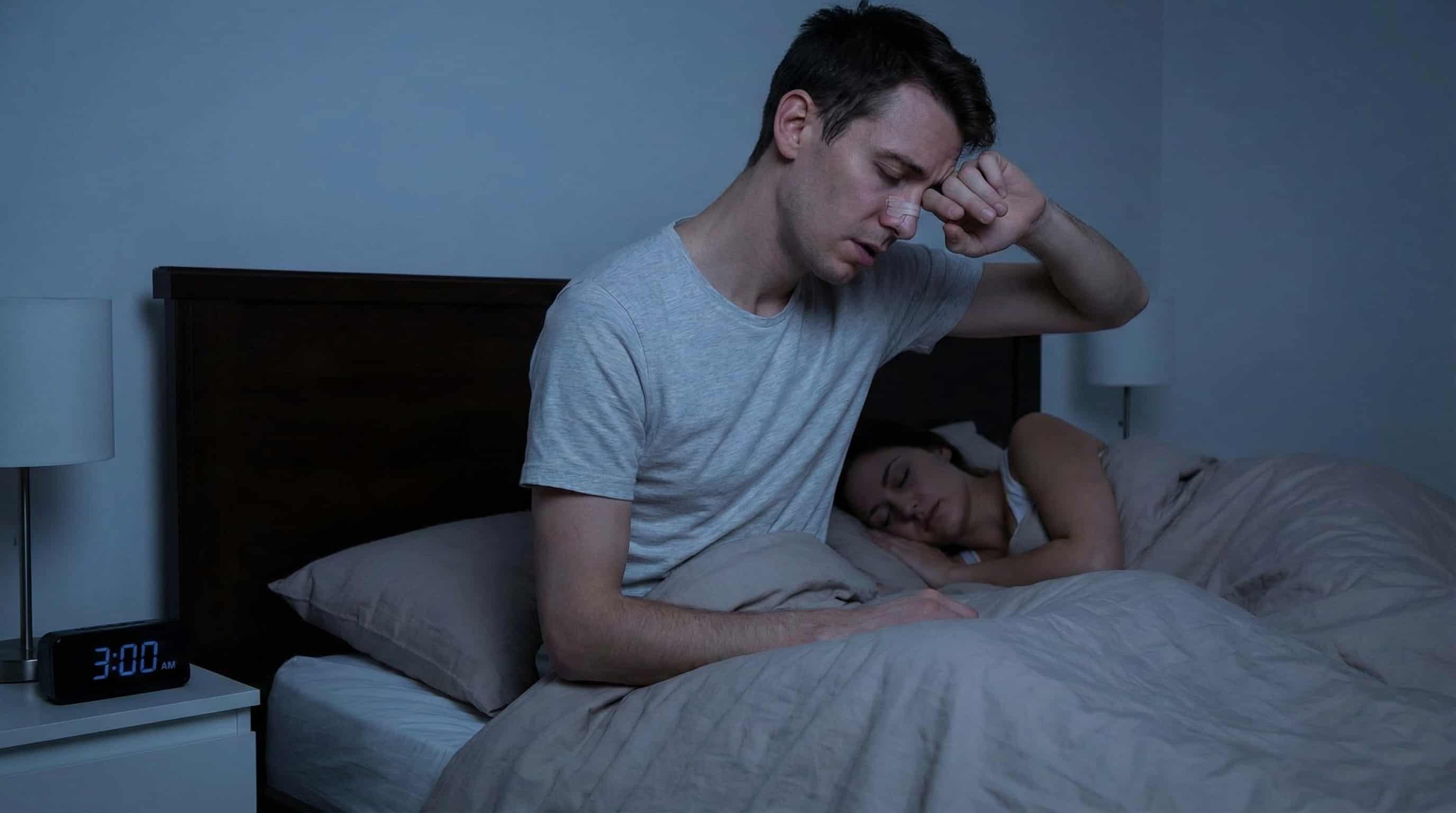
You are young. You are fit. Your BMI is normal. You do not snore loud enough to wake the neighbours.
So why are you so exhausted that you have considered quitting your job, ending a relationship, and Googling "why am I so tired all the time" at 3 AM? The answer may not be in your blood tests. It may not be in your心理评估. It may be in the way your airway behaves when you fall asleep — and the name for that is upper airway resistance syndrome — a condition that does not show up on the standard sleep study your doctor ordered.
Upper airway resistance syndrome (UARS) is one of the most commonly missed diagnoses in modern medicine, particularly in young, high-achieving women who do not fit the typical sleep apnea profile. This is the guide that should have been written years ago.
⚡ Core Takeaway: UARS Is Sleep Apnea Without the Snore
- The Problem: UARS causes sleep fragmentation through increased airway resistance that does not meet the threshold for apnoea — it is invisible to standard diagnostic criteria but devastating to sleep quality
- The Signature: Young, fit, female, normal BMI, severe daytime fatigue, morning headaches, cold hands/feet, no loud snoring — a group that is systematically misdiagnosed as depression or chronic fatigue syndrome
- The Solution: UARS requires RDI (Respiratory Disturbance Index) measurement, not AHI alone; treatment with nasal surgery or oral appliances is often more effective than CPAP in this population
What Is UARS and Why Is It Called the 'Thin Person's Sleep Apnea'?
Direct Answer: Upper Airway Resistance Syndrome (UARS) is a sleep-disordered breathing condition in which the upper airway narrows during sleep, creating increased respiratory resistance that fragments sleep — without reaching the apnoea or hypopnoea threshold of obstructive sleep apnea.
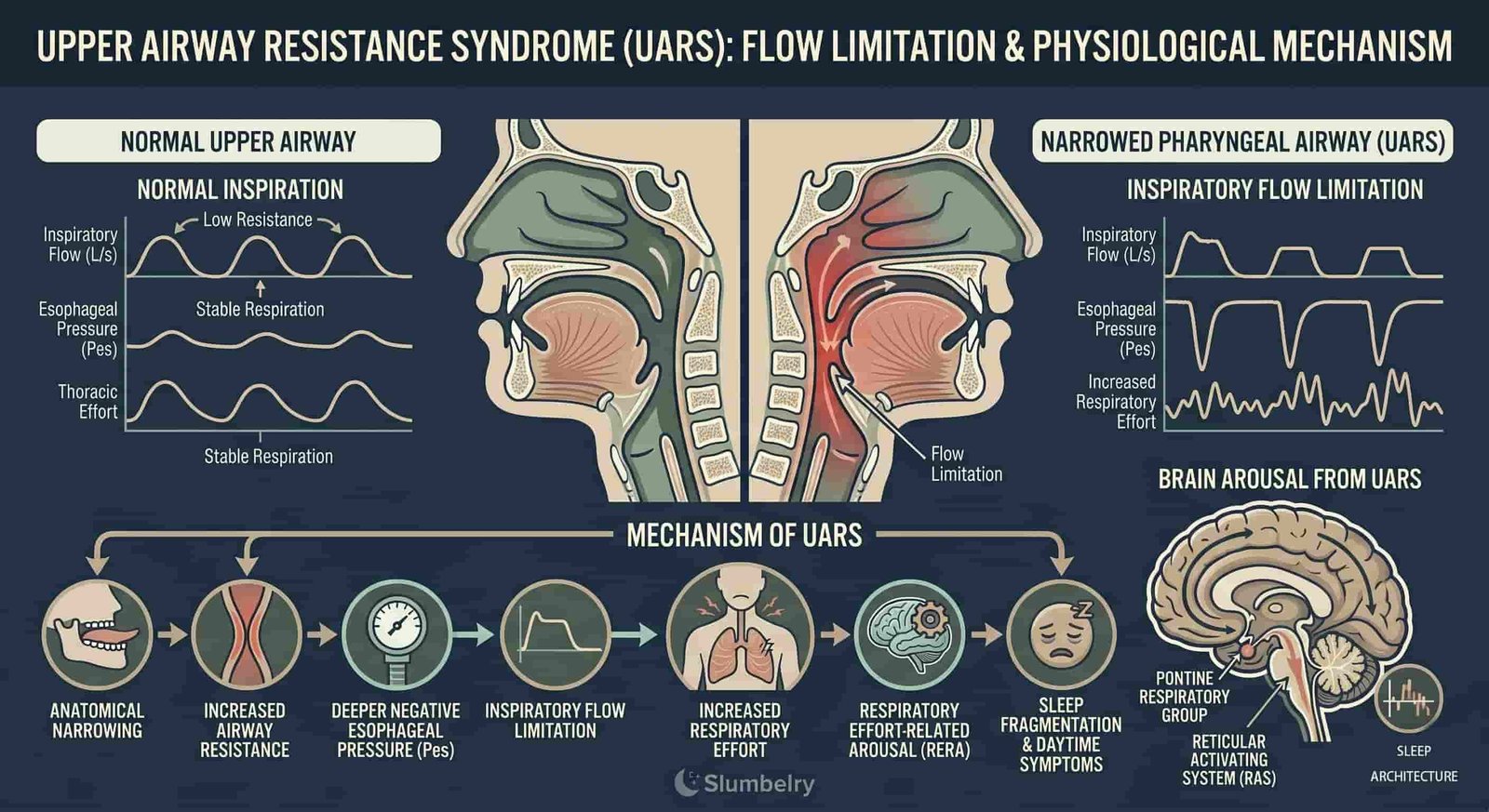
Mechanism: Guilleminault et al. (1994) first described UARS as a distinct clinical entity in the New England Journal of Medicine. The critical difference between UARS and OSA is severity: in UARS, airway resistance increases during sleep but does not cause complete collapses (apnoeas) or significant reductions in airflow (hypopnoeas) — meaning the oxygen desaturation seen in OSA is absent or minimal in UARS. However, the increased respiratory effort generates repetitive micro-arousals (RESA — Respiratory Effort Related Arousals), which fragment sleep dozens of times per night without the patient being aware of it. S2-1 of the whitepaper distinguishes UARS as sitting on the same spectrum as OSA, differentiated primarily by the absence of oxygen desaturation and the presence of a distinct clinical phenotype: young, female, normal BMI, high Achiever personality profile, and disproportionate daytime fatigue relative to objective sleep duration.
Actionable Advice: If you are young, female, slim, exhausted despite 7–8 hours of sleep, and have been told your sleep study is normal — you have not been evaluated for UARS. Standard sleep studies measure AHI (Apnoea-Hypopnoea Index), not RDI (Respiratory Disturbance Index). UARS requires RDI measurement and specific respiratory flow limitation analysis.
How Does Upper Airway Resistance Syndrome Differ From Obstructive Sleep Apnea?
Direct Answer: Both are sleep-disordered breathing conditions on the same spectrum. The key difference is severity: OSA involves complete airway collapses (apnoeas) or significant airflow reductions (hypopnoeas) that cause measurable oxygen desaturation. UARS involves increased airway resistance that causes sleep fragmentation through micro-arousals without the same degree of oxygen desaturation.
Mechanism: S2-1 of the whitepaper describes the pathophysiological continuum: the upper airway in susceptible individuals is structurally narrow or prone to collapse under the negative pressure of inspiration during sleep. In mild to moderate cases, this manifests as UARS (increased resistance + RESA). In severe cases, it manifests as OSA (complete or partial collapses + desaturation). The AASM ICSD-3 diagnostic criteria for OSA require an AHI ≥ 5 events/hour. UARS is defined by a elevated RDI (≥ 5 events/hour) even when AHI is below threshold, with flow limitation visible on the nasal pressure cannula signal even in the absence of traditional apnoea events. UARS patients may have an AHI of zero and an RDI of 20 — completely missed by a standard report that only cites AHI. The clinical significance is identical: both conditions cause sleep fragmentation, daytime somnolence, and cardiovascular strain from repeated sympathetic activation.
Actionable Advice: When you receive a sleep study report, look for both the AHI and the RDI. If your AHI is low but your RDI is not reported, ask specifically whether flow limitation was observed in the nasal pressure channel and whether your RDI was elevated.
Why Does UARS Cause Severe Daytime Fatigue Without the Oxygen Desaturation Seen in Apnoea?
Direct Answer: Because it is not the oxygen drops that cause daytime fatigue in sleep-disordered breathing — it is the sleep fragmentation. Each micro-arousal resets the sleep cycle, preventing the brain from reaching and maintaining deep sleep and REM.
Mechanism: Walker (2017), Why We Sleep, documents the sleep architecture disruption mechanism: the brain requires uninterrupted cycles through N1, N2, N3 (slow-wave deep sleep), and REM to complete its restorative functions. Each micro-arousal — even one the sleeper does not consciously experience — interrupts this progression and forces a restart from lighter sleep stages. In UARS, patients may experience 30–60 micro-arousals per hour, meaning their brain is restarting the sleep cycle every 1–2 minutes throughout the night. This prevents accumulation of N3 and REM, which are responsible for physical restoration, immune function, memory consolidation, and emotional regulation. The daytime fatigue is identical to severe sleep deprivation — because structurally, the patient has experienced severe sleep fragmentation, which is functionally equivalent. Importantly, because the arousals are subcortical (not consciously perceived), patients often report they "slept through the night" and do not understand why they are so exhausted — a clinical presentation that frequently leads to misdiagnosis as depression or chronic fatigue syndrome.
Actionable Advice: The cardinal clinical clue is fatigue that is disproportionate to objective sleep duration and a sleep study that appears "mostly normal" despite severe symptoms. This combination should trigger a specific request for RDI analysis and nasal pressure flow limitation assessment.
What Are the Specific Anatomical Features That Make a Narrow Airway in UARS Patients?
Direct Answer: UARS patients typically have a cluster of craniofacial features that create a structurally narrow upper airway: high-arched hard palate, narrow maxillary arch, retrognathia (receding jaw), long face syndrome, and/or enlarged lymphoid tissue (tonsils, adenoids).
Mechanism: S2-1/S2-2 of the whitepaper describes the anatomical predisposition: the critical airway dimension in UARS is the lateral dimension of the pharynx — a narrow lateral dimension creates a higher critical closing pressure even at normal weight. In slender patients who are often marathon runners or yoga practitioners, the typical OSA risk factors (obesity, large neck circumference) are absent — but a high-arched palate and narrow maxilla create a tube-shaped pharynx that is more prone to flow limitation under the negative pressure of inspiration. The low body fat percentage in these patients also means less soft tissuepadding around the airway, which can paradoxically make them more susceptible to airway collapse at lower pressures because there is less tissue mass to hold the airway open. S2-2 documents how ENT examination and cephalometric imaging can identify these structural risk factors in patients whose airway appears normal on standard examination.
Actionable Advice: If you are thin and fatigued, look in a mirror: a high, narrow hard palate (visible as a "vaulted" roof of the mouth), a narrow smile, or a visibly recessed chin are anatomical markers associated with UARS. An ENT specialist can evaluate these structurally.
Why Does UARS Disproportionately Affect Young, Female, and Normal-BMI Patients?
Direct Answer: Because the mechanism is anatomical, not primarily metabolic. UARS is driven by craniofacial structure rather than adipose tissue deposition around the airway — making it independent of body weight.
Mechanism: S2-1 and Guilleminault (1994) document the epidemiology: UARS occurs in a distinctly different population than OSA. While OSA risk increases with BMI, age, and male sex, UARS is most common in young women (20–40 years), patients with normal BMI, high-achieving personality profiles (often perfectionists or high-stress occupations), and those with specific craniofacial structures. The gender difference may be related to sex hormones affecting upper airway muscle tone and the typically smaller absolute airway dimensions in women even when normalized for height. The absence of obesity in this group means they do not present the obvious clinical red flag that triggers OSA testing — which is why they are frequently dismissed or misdiagnosed. These patients often have been to multiple specialists, tried multiple antidepressants, and been told "your tests are fine" — while the actual pathophysiology remains undetected.
Actionable Advice: If you are a young, slim woman with severe fatigue and a normal sleep study, your next step is specifically to request evaluation for UARS, not to accept "it's probably stress" or "your sleep study is normal" as a final answer.
What Are the Physical Markers That Suggest UARS Rather Than Depression or CFS?
Direct Answer: UARS has a specific cluster of clinical signs that differentiate it from mood disorders and chronic fatigue syndrome: morning headaches (due to overnight CO2 retention), cold extremities (peripheral vasoconstriction from respiratory effort), history of childhood growing pains or orthodontic intervention, and ADHD-like concentration symptoms.
Mechanism: S2-1 of the whitepaper identifies the clinical markers: UARS patients often have a history of childhood orthodontic treatment (expander, retainer) and childhood growing pains — reflecting a developmental craniofacial syndrome that predisposes to airway collapse. The morning headaches (classically present upon waking and resolving within an hour) are caused by CO2 retention overnight, which triggers cerebral vasodilation and intracranial pressure changes — a marker not seen in depression or CFS. The cold hands and feet reflect the overnight sympathetic activation from repeated respiratory effort. Stanley (2018), How to Sleep Well, notes that mood disturbance in UARS is secondary to sleep fragmentation and resolves when the breathing disorder is treated, unlike primary depression which does not resolve with sleep optimization. This distinguishes UARS from both CFS and depression: the daytime symptoms have a specific mechanical cause that is measurable and treatable.
Actionable Advice: Keep a symptom diary noting morning headache severity (0–10), energy levels throughout the day, and cold extremities. If your fatigue follows a pattern of morning worst/slight afternoon improvement, this is more consistent with UARS than with primary depression (which tends to show afternoon decline).
How Does Sleep Fragmentation From Respiratory Effort Cause Memory and Mood Impairment?
Direct Answer: The same mechanisms by which OSA causes cognitive impairment apply in UARS — the problem is not oxygen, it is sleep architecture destruction. Even without desaturation, the micro-arousals prevent N3 and REM from accumulating, which are essential for memory consolidation and emotional regulation.
Mechanism: Walker (2017) documents the cognitive neuroscience: N3 (slow-wave sleep) is the stage responsible for declarative memory consolidation — the transfer of experiences from the hippocampus to the cortical long-term memory network. REM sleep is responsible for emotional memory processing and next-day mood regulation. When N3 is fragmented by repeated micro-arousals, the hippocampus does not have sufficient uninterrupted time to complete its memory transfer function, resulting in impaired next-day recall of newly learned information. When REM is fragmented, the overnight emotional processing that gives the brain the ability to respond to emotionally charged situations the next day without being overwhelmed is disrupted — resulting in emotional dysregulation, anxiety, and mood instability. UARS causes both because each micro-arousal interrupts the progressive deepening of sleep, preventing most sleep cycles from reaching the full N3 and REM durations needed. The cognitive profile of UARS is identical to attention deficit presentations: difficulty concentrating, forgetfulness, emotional lability, and fatigue — and is frequently misdiagnosed as ADHD in children and adults.
Actionable Advice: If your concentration and memory problems began or worsened in your 20s or 30s alongside worsening fatigue, consider whether a sleep disorder rather than a primary psychiatric condition may be driving the symptoms. Treating UARS measurably improves cognitive function in ways that psychiatric medication does not.

What Diagnostic Tools Confirm UARS When a Standard Sleep Study Is Normal?
Direct Answer: UARS requires specialized measurement beyond standard in-lab polysomnography (PSG): nasal pressure cannula for flow limitation detection, measurement of RDI (not just AHI), and potentially ambulatory home sleep testing with the right equipment.
Mechanism: S2-1 and AASM ICSD-3 diagnostic criteria for UARS: (1) Excessive daytime sleepiness or unrefreshing sleep, (2) RDI ≥ 5 events/hour (including RERAs — Respiratory Effort Related Arousals), (3) AHI < 5 events/hour (distinguishing UARS from OSA), (4) Evidence of increased upper airway resistance demonstrated by: flow limitation on nasal pressure cannula signal (the characteristic "flattening" of the inspiratory flow curve), snoring, and/or respiratory effort. The critical limitation of standard sleep studies is that many labs do not report RDI, do not use nasal pressure cannulae, and only report AHI. Patients must specifically ask: "Was a nasal pressure cannula used? Was RDI measured? Was flow limitation documented?" Without nasal pressure recording, the flow limitation that characterizes UARS is invisible on standard thermal sensors. An ENT evaluation with nasendoscopy (awake and possibly sedated) is also important: identifying the specific anatomical site of airway narrowing guides treatment decisions (nasal surgery vs oral appliance vs weight management).
Actionable Advice: When requesting a sleep study, specifically ask for: (1) Nasal pressure cannula (not just thermal sensor), (2) RDI measurement including RERAs, (3) Flow limitation analysis. If the lab says they don't do this, seek a sleep-disordered breathing specialist.
Why Is Nasal Surgery or an Oral Appliance Often More Effective Than CPAP for UARS?
Direct Answer: Because UARS patients have a structurally narrow airway that CPAP over-inflates rather than corrects — whereas nasal surgery and oral appliances physically enlarge the airway, addressing the root cause rather than just pneumatic pressure.
Mechanism: S2-1 and Stanley (2018) describe the treatment hierarchy: UARS treatment differs from OSA because the pathology is airway narrowing rather than collapse from obesity or soft tissue redundancy. CPAP works in OSA by pneumatically stentting the airway open, but UARS patients (often young, slim, and high-achieving) frequently cannot tolerate CPAP — the mask claustrophobia, pressure intolerance, and lifestyle disruption lead to poor adherence rates comparable to or worse than medication. Nasal surgery (septoplasty, turbinate reduction, adenoidectomy) removes the resistance at the nasal level, allowing normal airflow without a device. Oral appliances (mandibular advancement devices) physically reposition the mandible to enlarge the lateral pharyngeal dimension — particularly effective in UARS patients with retrognathia or high-arched palate. For UARS patients with significant nasal obstruction, addressing the nasal pathology alone can be curative, because it removes the initial resistance point that triggers the cascade of increased respiratory effort and micro-arousals.
Actionable Advice: See an ENT surgeon for evaluation of nasal airway obstruction before accepting CPAP as the only option. Many UARS patients who were CPAP-intolerant become symptom-free after nasal or oral structural correction.
When Should You Suspect UARS and Request a Specialized Sleep Study?
Direct Answer: Whenever you have persistent, severe daytime fatigue despite adequate sleep duration, especially if you are a young, slim woman with a normal BMI, and especially if other diagnoses (depression, CFS, anxiety) do not fully explain the symptom cluster.
Mechanism: Stanley (2018), How to Sleep Well, and S2-1 describe the clinical red flags for UARS: (1) Severe daytime fatigue present most days for more than 3 months, (2) Unrefreshing sleep despite 7+ hours in bed, (3) Morning headaches (especially if resolving within an hour of waking), (4) Cold hands and feet, (5) History of childhood orthodontic treatment or growing pains, (6) Normal BMI, (7) Female gender, (8) Previously normal sleep study (or told "it's probably stress/depression"). When these features cluster together, UARS should be the leading diagnostic hypothesis — not a diagnosis of exclusion. A specialized sleep study with nasal pressure monitoring and RDI analysis is the appropriate next step. UARS is treatable and the improvement in quality of life can be dramatic — which is why missing this diagnosis has significant clinical consequences.
Actionable Advice: If this clinical picture resonates with you: schedule with a sleep-disordered breathing specialist (not a general practitioner), specifically request nasal pressure monitoring and RDI measurement, and see an ENT for structural airway evaluation. Do not accept "your sleep study was normal" without asking what parameters were actually measured.
Frequently Asked Questions
What is UARS (Upper Airway Resistance Syndrome)?
Direct Conclusion: UARS is a sleep-disordered breathing condition where the upper airway narrows during sleep, causing increased respiratory resistance and sleep fragmentation through micro-arousals — without reaching the apnoea threshold of OSA. It is invisible on standard sleep studies that only measure AHI, and requires nasal pressure flow limitation analysis and RDI measurement to diagnose.
How is UARS different from obstructive sleep apnea?
Direct Conclusion: The key difference is severity: OSA involves complete or near-complete airway collapses that cause oxygen desaturation. UARS involves increased resistance that causes sleep fragmentation but without significant desaturation. Both disrupt sleep architecture and cause daytime fatigue, but UARS is more common in young, slim women with no obvious physical risk factors.
Why am I exhausted but my sleep study came back normal?
Direct Conclusion: Because standard sleep studies measure AHI (Apnoea-Hypopnoea Index), not RDI (Respiratory Disturbance Index). UARS causes elevated RDI through micro-arousals even when AHI is below the diagnostic threshold. You must specifically request nasal pressure flow limitation analysis and RDI measurement to have UARS evaluated.
Who is most at risk for UARS?
Direct Conclusion: Young, slim women aged 20–45 with normal BMI, high-achiever personality profiles, history of childhood orthodontic treatment or growing pains, morning headaches, and disproportionate daytime fatigue relative to objective sleep duration.
What physical signs suggest UARS rather than depression or CFS?
Direct Conclusion: Morning headaches (resolving within an hour of waking), cold hands/feet, history of childhood orthodontic treatment, high-arched palate, retrognathia, and fatigue that is worst upon waking but slightly improves through the morning. Depression and CFS typically show different daily energy patterns.
Does UARS cause the same health risks as sleep apnea?
Direct Conclusion: UARS causes the same sleep architecture disruption as OSA, which has downstream effects on cardiovascular risk (elevated sympathetic tone overnight), cognitive function (impaired memory consolidation), and mood (emotional dysregulation). The long-term cardiovascular risks of untreated UARS are not as well studied as OSA, but the mechanisms suggest similar risk.
How is UARS diagnosed when standard sleep tests miss it?
Direct Conclusion: UARS requires a specialized sleep study with: (1) nasal pressure cannula for flow limitation detection, (2) RDI measurement including RERAs, (3) AHI below threshold but elevated RDI. Ask specifically whether these parameters were measured — many labs do not include them in their standard report.
What is the difference between AHI and RDI in diagnosing UARS?
Direct Conclusion: AHI (Apnoea-Hypopnoea Index) counts apnoeas and hypopnoeas with significant oxygen desaturation. RDI (Respiratory Disturbance Index) adds Respiratory Effort Related Arousals (RERAs) — micro-arousals triggered by respiratory effort without meeting apnoea criteria. UARS patients can have AHI < 5 but RDI ≥ 15, which standard reports often miss.
Is CPAP the best treatment for UARS or are there better options?
Direct Conclusion: CPAP is less well-tolerated in UARS than in OSA and has poor long-term compliance in this young, slim population. Nasal surgery (septoplasty, turbinate reduction) and oral appliances (mandibular advancement devices) are often more effective and better tolerated because they correct the anatomical narrow airway rather than pneumatic splinting.
When should I ask my doctor for a UARS evaluation?
Direct Conclusion: Whenever you have severe daytime fatigue plus any of the UARS red flags: young/slim/female, morning headaches, cold extremities, childhood orthodontic history, normal BMI, and a previous sleep study that was reported as 'normal.' Request a specialized study with nasal pressure monitoring and RDI analysis.
Stop Being Dismissed — Get Evaluated
If you recognise yourself in this article, the answer is not another antidepressant. It is a specialised sleep breathing assessment.
Take the Sleep Assessment Optimise Your Sleep EnvironmentThe Slumbelry Commitment
Sleep is the most vulnerable state of human existence. It is where we heal, reset, and grow.
At Slumbelry, we do not just sell sleep products; we advocate for your physiological right to rest. From ergonomic support to light management, every solution we offer is designed with one obsession: Respecting your Biology.
Science is our language, but your recovery is our purpose. You take care of everything else in your life — let us take care of your nights.
Rest Deeply,
The Slumbelry Team