
Your Sleep App Is Probably Making Sleep Worse — Here’s Why
⚡ Core Takeaway: How to Choose a Sleep App That Actually Works
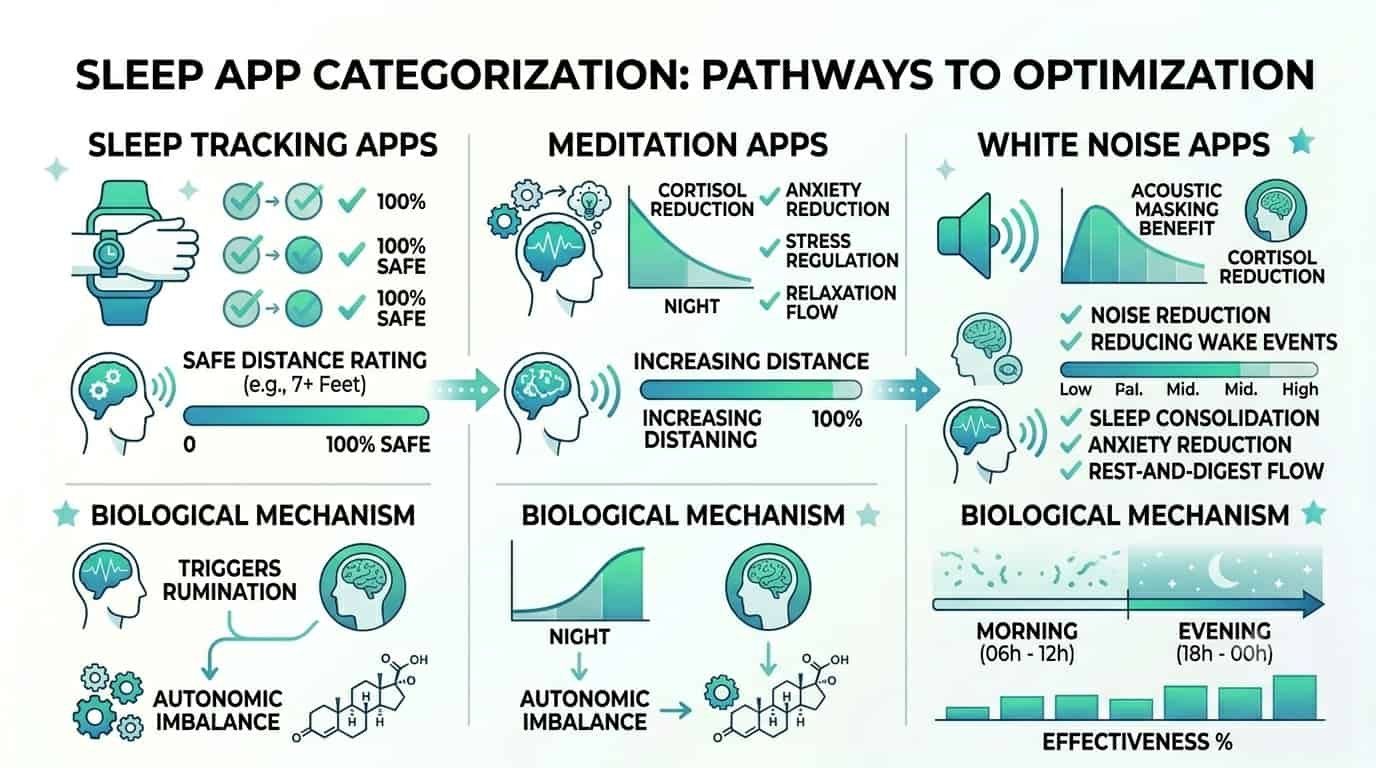
- The Tracking Paradox: Sleep apps that measure everything often make you more anxious about sleep — the opposite of what you need for sleep onset. If you check your score every morning, your tracker may be a cognitive burden, not a tool.
- The Meditation App Trap: Guided meditation apps are excellent for wind-down routines but ineffective as standalone insomnia treatment. They address the hyperarousal trigger of insomnia (the 3P Model), not the root circadian or homeostatic dysfunction.
- The White Noise Rule: Mechanical white noise machines outperform app-based sound in every blind comparison. App-based audio loops, compresses, and eventually becomes a sleep disruptor itself.
Best sleep apps have become one of the most searched categories in the health app market — and one of the most misunderstood. Millions of people download a sleep tracker, a meditation app, or a white noise machine hoping to fix broken sleep. Some succeed. Many make it worse. This guide dissects the three dominant categories — sleep tracking, meditation apps, and white noise — and explains which actually work, which create new problems, and how to pick the right one for your sleep architecture.
Why Sleep Apps Are Having a Moment — and Why Most Still Fail
The sleep app market exploded because chronic insomnia became epidemic. One in three adults reports inadequate sleep. The appeal is simple: download an app, solve the problem. But sleep is not a software problem — it is a biological one rooted in circadian rhythm disruption, homeostatic pressure accumulation, and hyperarousal states that no app can directly modulate.
What apps can do is provide data, create behavioral conditioning, or mask environmental noise. Whether those functions help or hurt depends entirely on which category you are using and whether it addresses your specific sleep disruption mechanism.
The 3P Model and hyperarousal: Predisposing factors (genetics, anxiety tendency), precipitating factors (stress, illness), and perpetuating factors (maladaptive behaviors) together create chronic insomnia. Most sleep apps address only the perpetuating behaviors — and often in ways that inadvertently amplify the anxiety loop that drives hyperarousal. Checking a sleep score every morning reinforces sleep-related worry, which is the cognitive hallmark of insomnia perpetuation.
Sleep Tracking Apps: What the Data Actually Tells You — and What It Doesn’t
Sleep trackers use one of two methods: accelerometer-based movement analysis (your phone on the mattress or a wearable on your wrist) or audio analysis (microphone-based sound pattern recognition). Both estimate sleep stages indirectly — they do not measure brain activity directly. The gold standard for sleep staging is polysomnography (EEG, EOG, EMG), which no consumer device replicates.
What you actually get from a sleep tracker: estimated time asleep, estimated time awake, and a composite score. What you do not get: accurate deep sleep percentage, reliable REM detection, or any meaningful insight into whether your sleep is restorative.
R90 and sleep stages: Nick Littlehales’ R90 framework emphasizes that sleep quality is measured by cycle completion — not by deep sleep minutes or REM percentage. A tracker that reports 90 minutes of “deep sleep” but shows 4 awakenings per cycle is actually showing fragmented, poor-quality sleep. The number means nothing without cycle context. Most apps do not provide cycle-level analysis, which makes their stage breakdowns largely misleading.
The Sleep Anxiety Trap: How Trackers Make Perfectionists Sleep Worse
This is the counterintuitive reality that most sleep app reviews ignore: for a significant subset of users, sleep trackers are counterproductive. Sleep perfectionists — people who already experience anxiety about sleep — tend to become hyper-vigilant about their scores. Each morning becomes a performance review of the night’s sleep.
Research on orthosomnia (a clinically documented phenomenon) describes patients who are so focused on achieving “perfect” sleep tracker scores that they develop new sleep-onset insomnia. The act of measuring sleep has become the source of sleep disruption. This is not rare — it is increasingly common among high-functioning professionals in their 30s and 40s who wear sleep trackers as part of biohacking routines.
Self-assessment protocol: If you have worn a sleep tracker for more than 3 months and your score determines how you feel about the day ahead, your tracker may be doing more harm than good. The corrective approach: stop checking the score for 2 weeks. Track how you feel subjectively without the device. If your sleep anxiety decreases, consider retiring the tracker or using it only for weekly data review, not daily scoring.
Meditation and Mindfulness Apps: Excellent Wind-Down, Weak Sleep Treatment
Guided meditation apps — Headspace, Calm, and similar — address a real component of insomnia: the hyperarousal state that prevents sleep onset. When you lie in bed with a racing mind, a guided body scan or breathing exercise activates the parasympathetic nervous system, lowering cortisol and heart rate variability toward sleep-ready levels. This is real and clinically validated.
Where these apps fall short: they treat the symptom, not the cause. If your insomnia is driven by circadian misalignment (shift work, irregular schedules), inconsistent sleep-wake timing, or accumulated sleep debt, meditation does not fix it. The relaxation effect wears off within 30–60 minutes. For chronic insomnia driven by these mechanisms, CBT-I (Cognitive Behavioral Therapy for Insomnia) is the evidence-based first-line treatment — not meditation apps.
Cortisol and sleep onset: Cortisol follows a circadian curve — highest at waking, lowest at sleep onset. Evening cortisol elevation (from stress, blue light exposure, or irregular schedules) directly suppresses melatonin onset. Meditation reduces cortisol in real time, which is why it can help sleep onset — but it does not correct the underlying circadian disruption driving the elevated evening cortisol in the first place.
White Noise Apps vs Physical Sound Machines: Why the Device Matters More Than the Sound
The same acoustic logic that applies to dedicated sound machines applies to white noise apps: mechanical generation is superior to digital playback. Most white noise apps play compressed audio files from your phone speaker. The compression artifacts, the limited frequency response of phone speakers, and the loop timing of short audio tracks all create acoustic problems that defeat the purpose.
Studies comparing app-based vs mechanical white noise for sleep consistently show that mechanical sound machines produce superior outcomes in sleep onset latency and sleep continuity. The organic, never-repeating nature of mechanical sound is the key variable — and it is physically impossible to replicate through compressed MP3 playback on a phone speaker.
Sleep Tracking Accuracy: Which Apps Are Most Reliable — and Which Are Garbage
Consumer sleep tracker accuracy varies enormously. A 2020 study in Sleep journal compared 7 consumer sleep trackers against polysomnography and found accuracy ranging from 38% to 91% depending on the device and the metric being measured. Wrist-worn accelerometery was generally more accurate than phone-based audio analysis for total sleep time. All devices significantly overestimated sleep efficiency.
For practical purposes: if you want a tracker that gives you a rough sense of whether your sleep is improving or deteriorating over time (not precise stage-by-stage data), a validated wearable from a company that publishes accuracy data is the minimum standard. Apps that rely solely on phone microphone analysis are the least accurate category.
Evidence-based selection criteria:
- Published accuracy validation against polysomnography (not just user-reported correlation)
- Wrist or chest-worn sensor (accelerometer + optical HRV preferred over microphone-only)
- Cycle-level analysis (not just stage-by-stage breakdown)
- No auto-generated daily scores that feed into sleep anxiety
- Optional weekly review mode as the default (not mandatory daily scoring)
CBT-I Apps: The Evidence-Based Standard That Most People Never Try
Cognitive Behavioral Therapy for Insomnia (CBT-I) is the first-line recommended treatment for chronic insomnia according to the American Academy of Sleep Medicine — ahead of medication. The core components are sleep restriction (reducing time in bed to match actual sleep), stimulus control (strengthening the bed-sleep association), cognitive restructuring (addressing sleep-related anxiety), and sleep hygiene optimization.
What makes CBT-I apps different from meditation apps: they are structured clinical interventions delivered digitally. The evidence base for app-based CBT-I (Sleepio, Somryst, SHUTi) is substantial — multiple RCTs showing effect sizes comparable to in-person CBT-I. These are not relaxation tools. They are therapeutic programs that require active engagement and behavioral change.
Sleep restriction and homeostatic pressure: The homeostatic sleep drive (Process S from the 3P Model) builds with each hour of wakefulness and dissipates during sleep. Sleep restriction therapy deliberately compresses time in bed to increase sleep efficiency — shorter sleep with higher homeostatic pressure produces deeper, more consolidated sleep. Most sleep trackers do not incorporate sleep restriction principles. CBT-I apps do, which is why their outcomes are superior for chronic insomnia sufferers.
Breath Work and Biofeedback Apps: The Parasympathetic On-Ramp
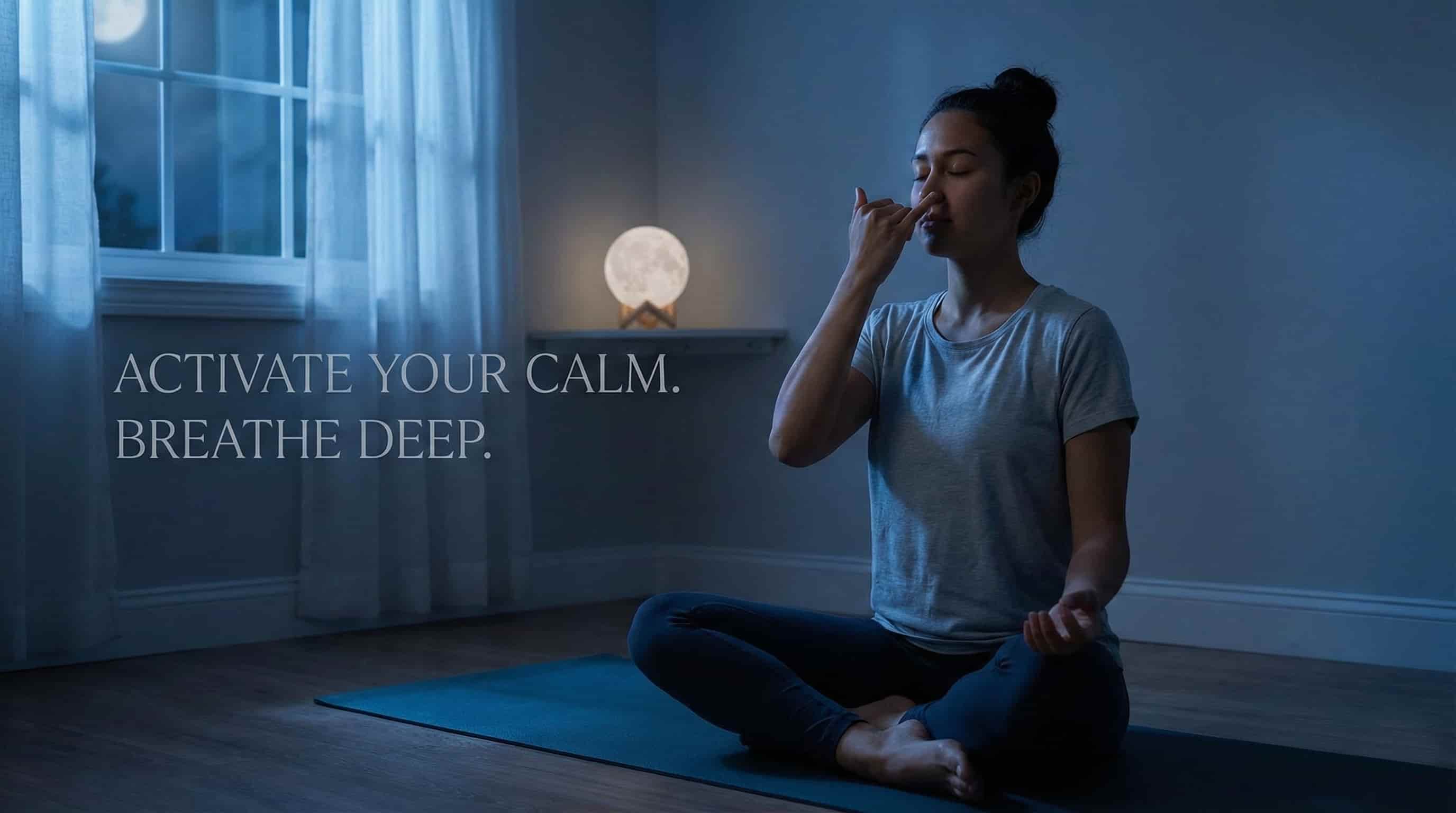
Apps built around controlled breathing — particularly extended exhale patterns (4-7-8 breathing, box breathing, cyclic sighing) — activate the parasympathetic nervous system through the vagal brake. This is not the same as meditation. It is a direct physiological intervention that lowers heart rate and cortisol within 60–90 seconds of practice.
The evidence for breath work as a sleep-onset aid is strong. A 2021 randomized controlled trial in Science Reports found that 4-7-8 breathing performed before bedtime significantly reduced sleep onset latency and improved subjective sleep quality compared to a control group. The effect was independent of meditation or relaxation instruction.
For shift workers dealing with circadian disruption: breath work does not reset your circadian clock, but it can reduce the physiological arousal that prevents sleep when you need to sleep at non-standard times. The key is consistency — breath work works best as a nightly ritual, not as an occasional rescue tool.
How to Integrate Sleep Apps Into Your Protocol Without Creating New Problems
The framework that actually works: one tracking device for weekly data review only, one CBT-I app if you have chronic insomnia, one breath work practice as a nightly wind-down ritual, and a mechanical sound machine (not an app) for acoustic masking. These four components address different mechanisms and do not interfere with each other.
The framework that creates new problems: multiple apps running simultaneously, daily score checking, algorithm-driven anxiety about sleep efficiency, and app-based white noise that loops and fragments later sleep cycles.
Protocol for heavy sleep tracker users:
- Enable weekly summary mode; disable daily push notifications
- Set a rule: check the tracker score only one day per week, on a day you designate for review
- Replace the morning score check with one question: “Do I feel rested?” — if yes, the score is irrelevant
- Consider using the tracker only for recovery after travel, illness, or lifestyle disruption — not as a nightly judgment
The Bottom Line: What Actually Works in Sleep App Technology
After examining the evidence across all categories, here is what the data supports:
- CBT-I apps are the most effective therapeutic intervention available through apps for chronic insomnia. If you have tried everything and nothing works, this is the category to try before medication.
- Breath work apps are the most universally applicable. The barrier to entry is zero, the risk is zero, and the evidence for sleep onset improvement is solid.
- Meditation apps are effective for stress-related sleep onset insomnia but not for circadian or homeostatic causes of insomnia.
- Sleep trackers are useful for identifying patterns over time, not for daily sleep quality assessment. Use them for data, not for judgment.
- White noise apps are inferior to dedicated mechanical sound machines. If you rely on sound masking every night, invest in a fan-based machine.
Frequently Asked Questions About Sleep Apps
Do sleep tracking apps actually work?
Sleep tracking apps work for identifying long-term sleep patterns — they can tell you if your average sleep is consistently short or if sleep quality changes after a lifestyle intervention. They do not work for precise sleep stage measurement. Consumer accelerometers and microphone-based trackers have accuracy rates between 38% and 91% against polysomnography. For accurate sleep staging, you need EEG-based clinical measurement, which no consumer app provides.
Can a sleep app make insomnia worse?
Yes — this is called orthosomnia. Sleep perfectionists who fixate on achieving high tracker scores can develop anxiety around sleep that actually prevents sleep onset. The key indicator: if you wake up and immediately check your score, and that score affects how you feel about the day, your tracker may be contributing to the problem. The fix is simple: disable daily score notifications and check data only weekly.
What is the best sleep app for shift workers?
Shift workers need apps that address circadian misalignment, not just relaxation. CBT-I apps (Sleepio, Somryst) that incorporate sleep timing optimization are the most evidence-based choice. Breath work apps can help reduce physiological arousal at non-standard sleep times. Trackers with cycle-level analysis help shift workers understand whether they are achieving sufficient recovery sleep across irregular schedules — but only if weekly review replaces daily scoring.
Is white noise from an app as effective as a sound machine?
No. Mechanical sound machines outperform app-based white noise in every blind comparison. The organic, never-repeating acoustic signature of a real fan cannot be replicated through compressed audio on a phone speaker. App-based audio loops, and loop anticipation triggers micro-arousals during light sleep stages. If you rely on white noise every night, a dedicated mechanical machine is the minimum standard.
How does CBT-I differ from meditation apps for sleep?
CBT-I (Cognitive Behavioral Therapy for Insomnia) is a structured clinical protocol targeting the behaviors and cognitions that perpetuate insomnia. It includes sleep restriction, stimulus control, and cognitive restructuring. Meditation apps use relaxation and mindfulness techniques. CBT-I has robust RCT evidence as a first-line insomnia treatment; meditation apps have weaker evidence, primarily for stress-related sleep onset difficulty. For chronic insomnia, CBT-I apps are more effective than meditation apps.
Which breathing technique works best for falling asleep?
The 4-7-8 breathing technique (inhale 4 counts, hold 7, exhale 8) and cyclic sighing (double inhale through nose, long exhale through mouth) both activate the parasympathetic nervous system and reduce cortisol. The exhale-dominant pattern is the critical variable — extended exhalation stimulates the vagus nerve and lowers heart rate. Consistency matters more than which specific pattern you use. Choose one technique, practice it for 5 minutes every night, and build it as a nightly ritual.
How accurate are phone-based sleep trackers (no wearable)?
Phone-based sleep trackers that use only the accelerometer or microphone are the least accurate category. Accelerometer-only tracking (phone on the mattress) detects movement but cannot reliably distinguish sleep stages. Microphone-based tracking identifies sound patterns but has high false-positive rates for awakenings. If you rely on a phone-only tracker, treat the data as a rough estimate of total sleep time, not as accurate stage analysis.
Should I use a sleep tracker if I already have insomnia?
Only if you use it for data collection, not for daily scoring. Insomnia sufferers are particularly vulnerable to orthosomnia — the anxiety of tracking sleep quality ironically worsens the very thing being measured. If you have chronic insomnia, use a CBT-I app rather than a tracker as your primary sleep tool. If you want to track progress, use weekly review only and disable all daily notifications.
What’s the difference between sleep hygiene and CBT-I?
Sleep hygiene is the foundation — no late caffeine, no blue light before bed, consistent temperature, darkness. CBT-I is the clinical intervention for insomnia that builds on sleep hygiene. Sleep hygiene alone rarely fixes chronic insomnia; CBT-I addresses the behavioral and cognitive patterns that perpetuate insomnia even when sleep hygiene is correct. Think of sleep hygiene as the necessary preconditions and CBT-I as the active treatment.
Are expensive sleep apps worth it?
CBT-I apps (Sleepio, Somryst) with published clinical trial data are worth the subscription cost for chronic insomnia sufferers — the outcomes are comparable to in-person therapy at a fraction of the price. Breath work apps are free or very cheap and equally effective for sleep onset. Meditation subscriptions are optional and work best for stress-related insomnia. Sleep trackers are increasingly built into smartwatches people already own — paying extra for premium tracking features is rarely justified by improved accuracy.
Ready to Actually Fix Your Sleep?
Sleep apps can help — but only if you use the right ones for the right problems. Take the Slumbelry Sleep Assessment to understand which interventions your biology actually needs.
Take the Sleep Assessment Subscribe for Shift Worker TipsThe Slumbelry Commitment
Sleep is the most vulnerable state of human existence. It is where we heal, reset, and grow.
At Slumbelry, we do not just sell sleep products; we advocate for your physiological right to rest. From ergonomic support to light management, every solution we offer is designed with one obsession: Respecting your Biology.
Science is our language, but your recovery is our purpose. You take care of everything else in your life — let us take care of your sleep.
Rest Deeply,
The Slumbelry Team
Medical References:
1. Bhatt, M., et al. (2023). Effectiveness of behavioral and digital CBT-I for insomnia: A systematic review. Sleep Medicine Reviews, 67, 101734.
2. Kang, S. G., et al. (2017). Successful use of a CBT-I app (SHUTi) for insomnia disorder. Journal of Clinical Sleep Medicine, 13(2), 293–300.