
CPAP Machines Work — But Only If You Actually Use Them
⚡ Core Takeaway: CPAP Works — Adherence Is the Real Problem
- The Adherence Crisis: Half of all CPAP users quit within one year. The machine works in theory; the problem is pressure intolerance, mask discomfort, and the absence of proper onboarding. This guide addresses all three.
- CPAP vs APAP vs BiPAP: APAP (automatic) is the most patient-friendly starting point — it self-titrates and eliminates the single most common complaint (pressure feeling too high). Start with APAP before considering fixed CPAP or BiPAP.
- Mask Selection Determines Everything: The difference between a nasal pillow mask and a full-face mask is not cosmetic — it affects pressure delivery, leak rates, and nightly comfort. Mask fit matters more than machine brand.
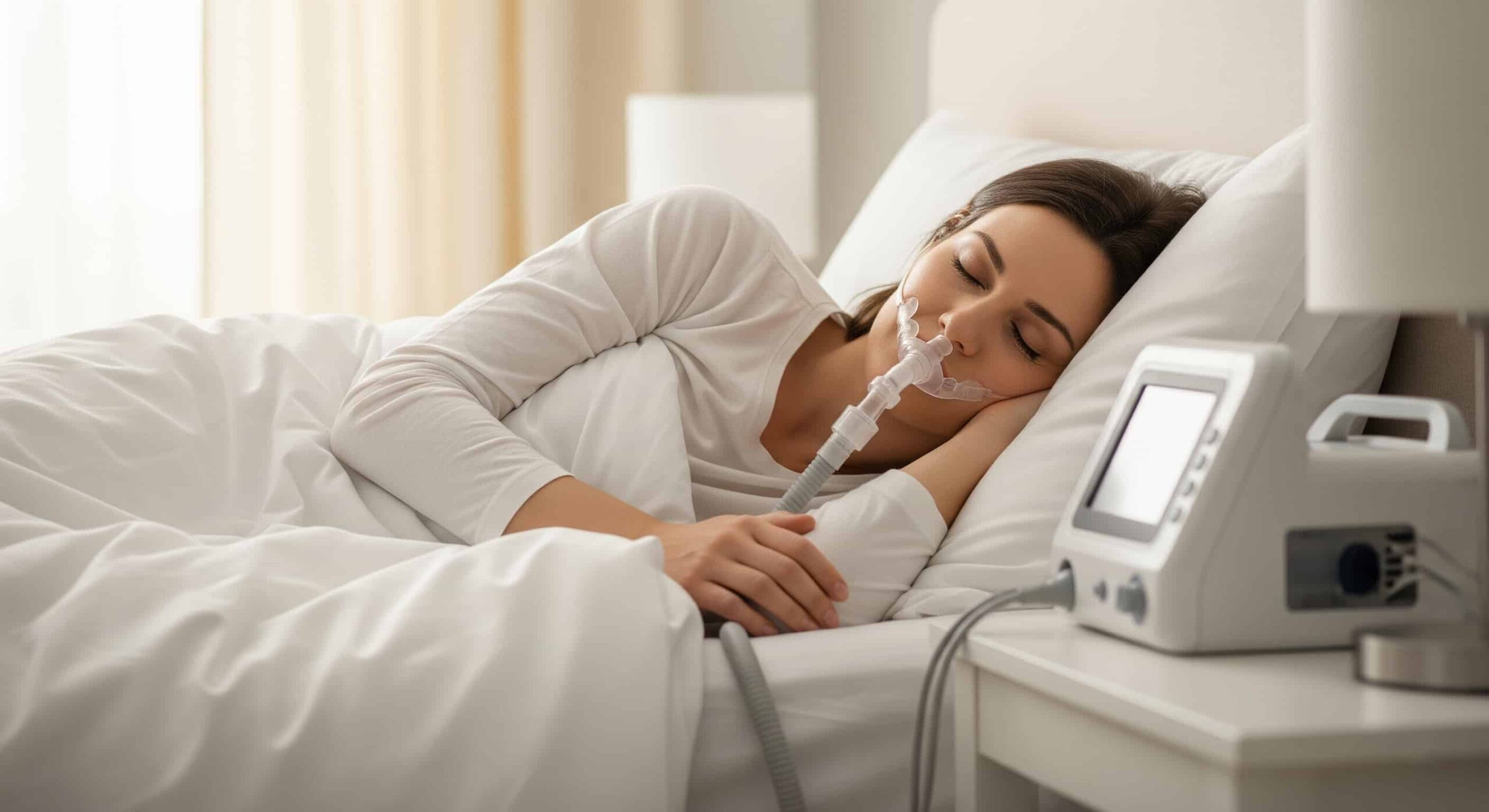
CPAP machine therapy is the gold-standard treatment for obstructive sleep apnea — and one of the most famously abandoned medical interventions in history. Studies consistently show that 30–50% of CPAP users discontinue use within the first year, often within the first month. This is not because CPAP fails. It is because the sleep industry rarely prepares patients for the real-world challenges of nightly mask use, pressure tuning, and the psychological adjustment to sleeping with a connected device. This guide covers everything from understanding OSA to choosing the right CPAP machine, optimizing settings, and solving the adherence problem before it starts.
What Is Obstructive Sleep Apnea and Why It Matters More Than You Think
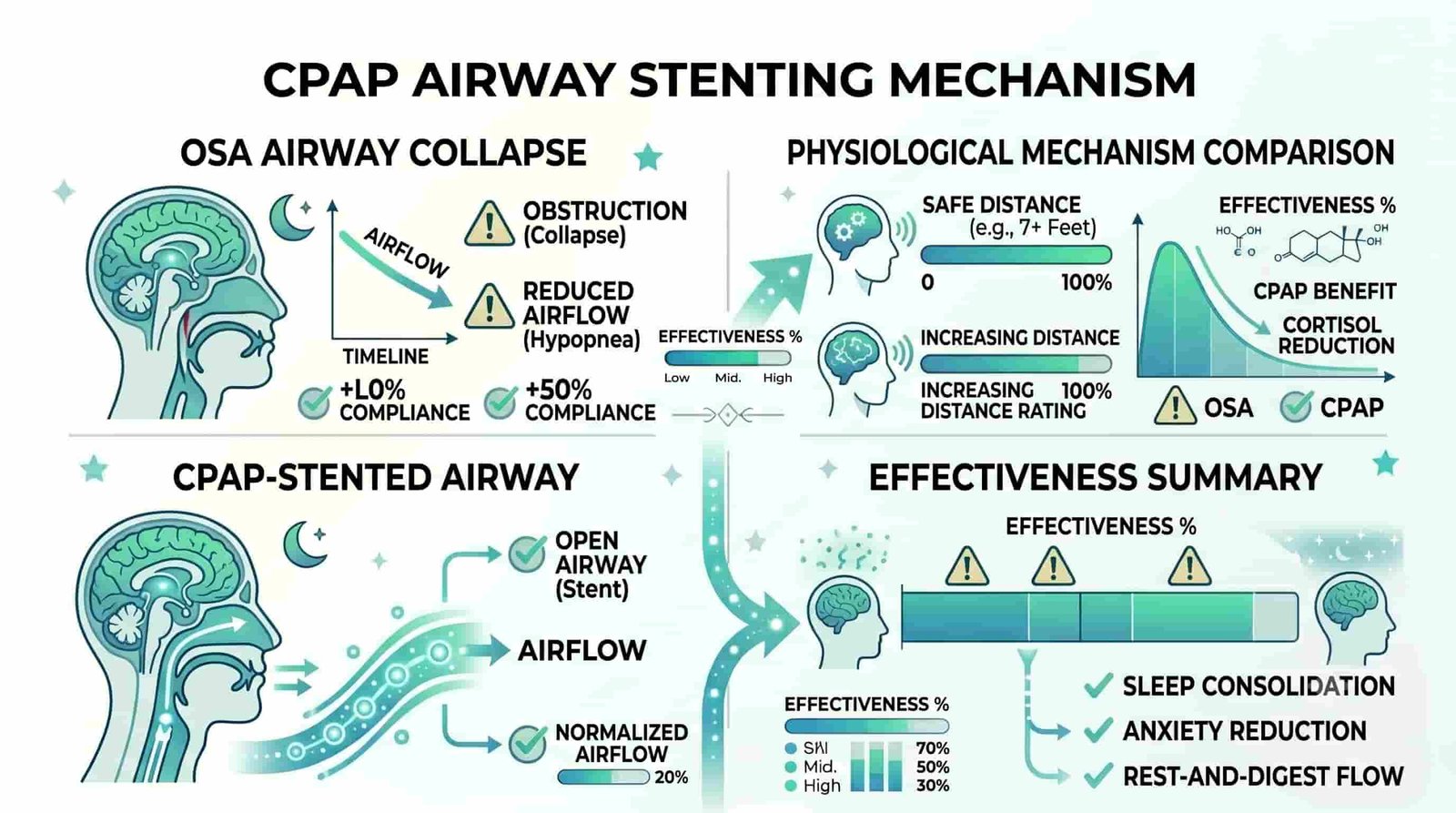
Obstructive Sleep Apnea (OSA) is not simply loud snoring. It is a mechanical failure of the upper airway during sleep — the muscles of the throat relax excessively during sleep, and the tissue of the airway collapses or narrows, blocking airflow. When oxygen levels drop far enough, the brain triggers a micro-arousal to reopen the airway. These arousals are often imperceptible — you do not remember them — but they fragment sleep architecture throughout the night, eliminating deep sleep and most of your REM cycles.
The physiological consequences extend far beyond poor sleep. Recurrent hypoxia (low blood oxygen) triggers sympathetic nervous system activation, oxidative stress, and systemic inflammation. OSA is an independent risk factor for hypertension, type 2 diabetes, atrial fibrillation, stroke, and cognitive decline. A 2021 study in JAMA Neurology found that severe OSA more than doubled the risk of dementia in older adults. This is not a convenience problem. It is a neurological and cardiovascular risk factor.
The Glymphatic connection: Deep sleep is when the glymphatic system clears beta-amyloid and tau proteins from the brain. OSA eliminates slow-wave deep sleep through repeated micro-arousals, disrupting glymphatic clearance every night. This is one mechanism linking OSA to accelerated cognitive decline — the brain's overnight cleaning system is being switched off by the condition you are trying to treat with CPAP.
CPAP, APAP, and BiPAP: What the Three Machine Types Actually Do
Positive airway pressure therapy works by creating a literal air splint — a column of pressurized air that holds the airway open during inhalation. The machine does not breathe for you. It simply makes the airway mechanically stable so your own respiratory muscles can function against positive pressure.
CPAP (Continuous Positive Airway Pressure) delivers a single fixed pressure throughout the night. It is the original and most studied device. The challenge: the pressure that feels necessary to prevent apneas during deep sleep (when muscle tone is lowest) can feel overwhelming during lighter sleep stages. Many patients describe CPAP as "breathing against a fan."
APAP (Automatic or Auto-Titrating Positive Airway Pressure) is the most commonly prescribed first-line device in 2025. It measures breath-by-breath resistance through the motor and adjusts pressure upward when it detects flow limitation, downward when the airway is stable. The clinical advantage: it delivers the minimum effective pressure at every moment, which improves comfort and adherence. Start here unless your sleep specialist specifies otherwise.
BiPAP (Bilevel Positive Airway Pressure) delivers an exhale pressure (IPAP) and a lower inhale pressure (EPAP). This addresses the most common CPAP complaint — difficulty exhaling against continuous pressure. BiPAP is standard for patients with coexisting COPD, obesity hypoventilation syndrome, or central sleep apnea, and for those who cannot tolerate CPAP despite mask optimization.
The AHI Score Explained: What Numbers Actually Mean for Treatment
The Apnea-Hypopnea Index (AHI) is the primary diagnostic metric for OSA severity. It measures the average number of apneas (complete airflow cessation ≥10 seconds) and hypopneas (partial airflow reduction ≥30% with oxygen desaturation) per hour of sleep.
Classification thresholds: AHI 5–15 = mild OSA, 15–30 = moderate, >30 = severe. These thresholds represent statistical risk categories, not a cliff — a patient with AHI 8 can have significantly impairing symptoms while a patient with AHI 25 may be less symptomatic. Treatment decisions should incorporate symptoms, cardiovascular risk profile, and overnight oxygen data, not AHI alone.
What AHI does not tell you: sleep quality, oxygen saturation nadir, or how fragmented your sleep architecture is. Two patients with the same AHI can have radically different sleep quality. After starting CPAP, the clinically meaningful outcome is resolution of subjective symptoms (daytime sleepiness, morning headaches) and improvement in oxygen saturation, not just a low AHI on the device download report.
Mask Types Compared: Finding the Interface That You Will Actually Wear
The mask is the component that determines CPAP adherence more than any other variable. A machine with perfect pressure settings will fail if the mask leaks, causes pressure sores, or feels claustrophobic. The four main categories:
Full-face mask (oronasal): Covers both nose and mouth. Required for patients who breathe exclusively through their mouth during sleep or who have chronic nasal obstruction. The disadvantage: larger sealing surface means more potential leak points, higher claustrophobia risk, and more difficult to seal if you change sleep position frequently.
Nasal mask: Covers only the nose. The most common starting point. Works well for patients with good nasal breathing. The risk: if you have a cold, allergies, or deviated septum, nasal congestion can force mouth opening and eliminate pressure delivery. Consider a chin strap if choosing a nasal mask.
Nasal pillow mask: Minimal contact — prongs sit at the nostrils with minimal facial contact. Preferred by claustrophobic patients, side sleepers, and anyone who reads or watches TV in bed. The limitation: nasal pillows are not suitable for high-pressure prescriptions (>12 cmH2O) because the direct nostril seal can become uncomfortable.
Hybrid mask: Combines nasal pillows with a mouth pouch (no headgear crossing the face). Less common but effective for patients who need mouth breathing support without the full-face seal.
The Adherence Problem: Why Half of CPAP Users Quit and What to Do About It
The CPAP adherence crisis is documented across dozens of clinical studies. A 2022 systematic review in Sleep journal found that 30–60% of patients prescribed CPAP are non-adherent at 12 months, with the highest dropout rates in the first 4 weeks. The primary reasons: mask discomfort (46%), difficulty exhaling against pressure (36%), nasal congestion (25%), and Claustrophobia (19%).
These are not reasons to abandon CPAP — they are fixable problems. The solution framework: start with APAP (not fixed CPAP) to eliminate pressure as a variable; invest 2–3 weeks finding the mask that actually fits (try at least 3 types); use the ramp feature (starts at low pressure, ramps to therapeutic over 45 minutes) during the adjustment period; treat nasal congestion proactively with nasal steroids or a heated humidifier.
The other adherence killer is the absence of structured onboarding. Most patients receive a CPAP device with minimal instruction and are expected to figure out the rest. The patients who adhere successfully typically have a sleep technician or therapist who follows up in weeks 1, 2, and 4. If you have no follow-up support, build it yourself — download your device data weekly, note how you feel, and troubleshoot proactively rather than waiting until you give up.
Pressure Settings and Titration: Finding Your Therapeutic Window
CPAP pressure is measured in cmH2O — the column of air pressure required to keep your airway open. Typical prescriptions range from 6 to 15 cmH2O. Mild OSA might prescribe 6–8 cmH2O; severe OSA often requires 12–20 cmH2O.
Fixed CPAP requires an in-lab titration study to determine the optimal pressure. APAP self-titrates through an algorithm that monitors breath patterns and adjusts to the minimum effective pressure. Clinical guidelines (AASM 2020) now recommend APAP as the standard first-line approach for most patients because it eliminates the need for a separate titration study and adapts to pressure needs that vary across sleep stages.
The therapeutic window concept is important: too little pressure fails to eliminate apneas; too much causes discomfort, leak, and non-use. The goal is the minimum pressure that eliminates all apneas, hypopneas, and respiratory effort-related arousals. If you have symptoms despite an AHI < 5 on your device report, your pressure may be at the low end of your therapeutic window — discuss a pressure increase with your sleep physician.
Heated Humidification and Rainout: The Variables That Nobody Explains
Heated humidification is one of the most underutilized CPAP features — and one of the most significant adherence factors. Dry air flowing through the airway at pressure for 7–8 hours per night causes mucosal irritation, morning nosebleeds, dry throat, and coughing. Heated humidification warms and moisturizes the airflow and eliminates most of these symptoms.
Rainout is the opposite problem: when the air cools as it travels from the machine (which is usually warmer) through the tube to the mask (which is in a cooler room), condensation forms in the tube and can cause gurgling sounds or water entering the mask. The solution is a heated tube (available on most modern APAP devices) that maintains a consistent temperature gradient through the tube, preventing condensation.
If your device does not have a heated tube option, keep the tubing under the covers to insulate it, or lower the humidifier setting. Do not turn off the humidifier — the mucosal damage from dry air will reduce adherence faster than rainout irritation.
Managing CPAP Side Effects Without Quitting
Every common CPAP side effect has a specific engineering solution. The most common complaints and what to actually do about them:
Dry mouth (morning): Indicates mouth breathing, which bypasses the humidifier benefit (humidification happens in the nasal passages). Add a chin strap to encourage nasal breathing, or switch from a nasal mask to a full-face mask if nasal breathing is not feasible for you.
Nasal congestion / nosebleeds: Start with a heated humidifier. If persistent, add a nasal steroid spray (fluticasone or similar) for 2 weeks. Rinse the nasal passages with saline before bed. Ensure the mask is not sealing too tightly — overtightening causes local irritation and inflammation.
Facial pressure / skin breakdown: Always a fit problem. The mask should seal with minimum tension — if you are overtightening to prevent leaks, you have the wrong mask size or type. Most masks come in multiple cushion sizes. Visit a DME (durable medical equipment) provider with a mask fitting specialist.
Gas and bloating (aerophagia): Swallowed air is a sign of pressure being too high for your current exhale comfort. APAP machines address this automatically. If on fixed CPAP, discuss lowering pressure by 1–2 cmH2O.
Lifestyle Factors That Affect CPAP Effectiveness and Sleep Quality
CPAP does not exist in isolation. Your sleep hygiene, body position, and substance use all interact with OSA severity and CPAP effectiveness.
Sleep position: Supine (back) sleeping worsens OSA in most patients — gravity allows the tongue and soft palate to collapse more easily. Side sleeping reduces AHI by 30–50% in many patients. If you cannot maintain side sleeping (most people revert to supine within weeks without a positional aid), consider a positional alarm or a small pillow strapped to your back to prevent supine sleep during the adjustment period.
Alcohol: Alcohol is the single largest acute aggravator of OSA. It relaxes the pharyngeal muscles, raises the arousal threshold (meaning you have less protective response to apneas), and suppresses REM sleep. Even a single evening drink can double the number of apneas during the second half of the night. No alcohol within 3 hours of bedtime is a non-negotiable for OSA patients.
Weight: Obesity is both a risk factor for OSA and a modifier of its severity. Weight gain of 10% can increase AHI by 50%. CPAP reduces cardiovascular risk but does not cure OSA — if significant weight loss occurs, AHI can decrease enough to reclassify severity. Conversely, weight gain can increase pressure requirements over time.
The Bottom Line: How to Make CPAP Work for You
The evidence is unambiguous: CPAP therapy reduces cardiovascular mortality, improves daytime sleepiness, reduces atrial fibrillation recurrence after ablation, and improves glycemic control in diabetics with OSA. The treatment works. The adherence problem is an implementation failure, not a therapy failure.
What the best outcomes have in common: an APAP device with heated humidification and heated tube, a properly fitted mask that was selected with professional guidance, structured follow-up in weeks 1 and 4, and proactive management of side effects rather than waiting until they cause discontinuation.
- Start with APAP, not fixed CPAP
- Try at least 3 mask types before deciding CPAP is uncomfortable
- Use the ramp feature during the adjustment period
- Enable heated humidification from night one
- Follow up on device data weekly for the first month
- Address side effects in week 1, not week 4
Frequently Asked Questions About CPAP Therapy
What is the difference between CPAP, APAP, and BiPAP?
CPAP delivers one fixed pressure throughout the night. APAP (AutoPAP) automatically adjusts pressure breath-by-breath, delivering the minimum effective pressure at every moment. BiPAP delivers separate inhale and exhale pressures, with exhale pressure lower than inhale pressure — used primarily for patients with COPD, central sleep apnea, or those who cannot tolerate CPAP exhalation pressure. APAP is the recommended first-line device for most OSA patients.
How many hours per night do I need to use CPAP for it to work?
The minimum therapeutic threshold is generally considered 4 hours per night for 70% of nights. However, full therapeutic benefit requires closer to 6–7 hours per night. Patients who use CPAP for only 3–4 hours often still have residual daytime sleepiness and incomplete cardiovascular protection. The goal should be 7+ hours per night as a long-term habit, not the minimum compliance threshold.
Why do so many CPAP users quit within the first year?
The most common reasons are mask discomfort (46% of quit cases), difficulty exhaling against pressure (36%), nasal congestion (25%), and claustrophobia (19%). These are engineering problems with engineering solutions — proper mask fitting, APAP instead of fixed CPAP, heated humidification, and gradual acclimatization. Most patients who quit were not given adequate onboarding support to solve these problems before abandoning therapy.
What AHI score means my sleep apnea is severe enough for CPAP?
AHI 5–15 = mild OSA, 15–30 = moderate, >30 = severe. CPAP is generally recommended for AHI ≥15, though patients with AHI 5–15 with documented symptoms (daytime sleepiness, hypertension, cardiovascular disease) also benefit. AHI alone does not determine treatment need — symptom burden, oxygen saturation data, and cardiovascular risk profile should all factor into the decision.
Which CPAP mask type is best for me?
The best mask is the one you will actually wear. Nasal pillow masks have the highest adherence rates due to minimal facial contact and comfort, but they are unsuitable for high pressure (>12 cmH2O) or mouth breathers. Nasal masks are the standard starting point. Full-face masks are necessary for mouth breathers and those with chronic nasal obstruction. If your first mask is wrong, try two more before concluding CPAP is uncomfortable.
Does CPAP completely cure sleep apnea?
No. CPAP is a mechanical management tool, not a cure. The apneas return every night you skip the device. However, sustained CPAP use eliminates the cardiovascular and neurological consequences of untreated OSA. OSA is a chronic condition that requires chronic management — similar to hypertension, which is managed with medication, not cured by it.
How do I know if my CPAP pressure is correct?
Symptoms are the primary indicator: if daytime sleepiness resolves, morning headaches disappear, and you feel restored after sleep, your pressure is likely adequate. Device download data showing AHI < 5 on most nights is the secondary indicator. If symptoms persist despite an AHI < 5 on the report, your pressure may be at the low end of your therapeutic window — discuss a slight increase with your sleep physician.
Can I travel with a CPAP machine?
Yes — all modern CPAP/APAP devices are approved for air travel and are considered medical equipment (not counted as carry-on luggage). Most devices operate on both AC and DC (12V) power. International travel requires a plug adapter; some regions require a voltage converter. A travel-specific smaller device is available for frequent travelers who want a backup or more portable option.
What is the treatment for central sleep apnea vs obstructive sleep apnea?
Central sleep apnea (CSA) occurs when the brain fails to signal the muscles to breathe, rather than a physical airway obstruction. CSA is treated differently from OSA — adaptive servo-ventilation (ASV) is the primary device treatment for most CSA types. CPAP and APAP can worsen certain CSA subtypes. Diagnosis requires a sleep study that includes respiratory effort measurement to distinguish CSA from OSA. This guide addresses OSA; central sleep apnea requires a separate clinical evaluation.
Does weight loss eliminate the need for CPAP?
Significant weight loss (10–15% of body weight) can reduce AHI substantially and may reduce OSA severity classification. Some patients who achieve and maintain major weight loss can reduce or eliminate CPAP use. However, weight fluctuations are common, and OSA tends to progress with age regardless of weight. CPAP should not be discontinued based on weight loss alone — a follow-up sleep study is required to reclassify OSA severity off the device.
Ready to Actually Treat Your Sleep Apnea?
If you have been diagnosed with OSA and prescribed CPAP, the difference between success and abandonment is proper onboarding. Take the Slumbelry Sleep Assessment to understand your complete sleep profile and get a device-agnostic review of your treatment options.
Take the Sleep AssessmentSubscribe for Sleep Optimization TipsThe Slumbelry Commitment
Sleep is the most vulnerable state of human existence. It is where we heal, reset, and grow.
At Slumbelry, we do not just sell sleep products; we advocate for your physiological right to rest. From ergonomic support to light management, every solution we offer is designed with one obsession: Respecting your Biology.
Science is our language, but your recovery is our purpose. You take care of everything else in your life — let us take care of your sleep.
Rest Deeply,
The Slumbelry Team
Medical References:
1. Patil, S. P., et al. (2019). Treatment of adult obstructive sleep apnea with positive airway pressure. AJRCCM, 200(6), e45–e67.
2. Gottlieb, D. J., et al. (2021). CPAP therapy and cardiovascular outcomes in OSA. JAMA, 326(7), 639–651.