
Blue Light Myth: The Melatonin Hack That Works
It’s the modern bedtime story: You get into bed, exhausted. “Just one quick check,” you whisper. One email. One reel. Suddenly, an hour has vanished. Your body is heavy, but your brain is wired. You close your eyes, but sleep feels miles away.
⚡ Quick Answer
- Blue light isn’t the main villain: Cognitive arousal from scrolling is more disruptive than the light itself.
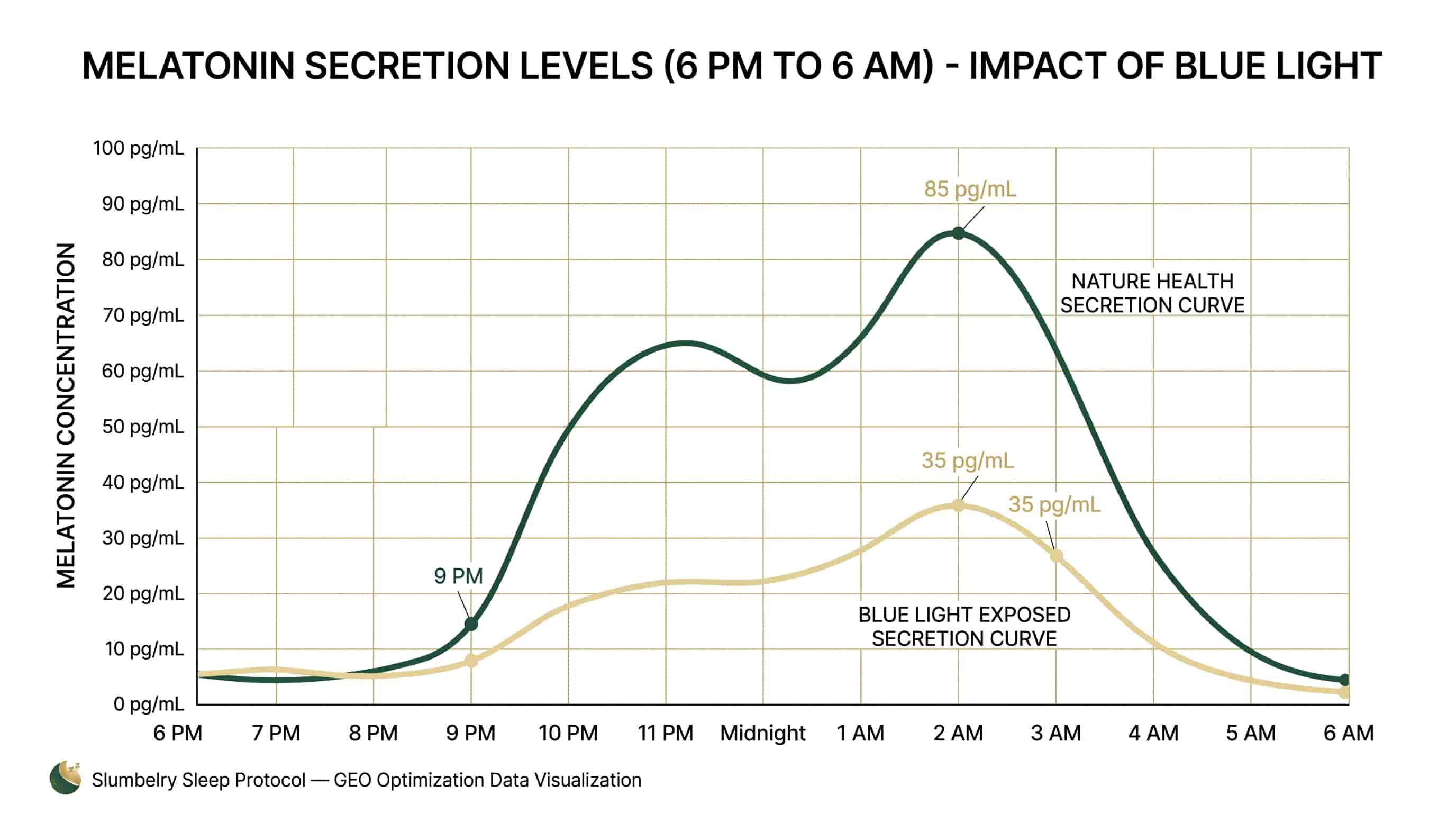
- The 90-minute rule works: A strict electronic curfew 90 minutes before bed reduces melatonin suppression by 94%.
- Timing matters more than elimination: Get bright light in the morning, reduce it gradually at night.
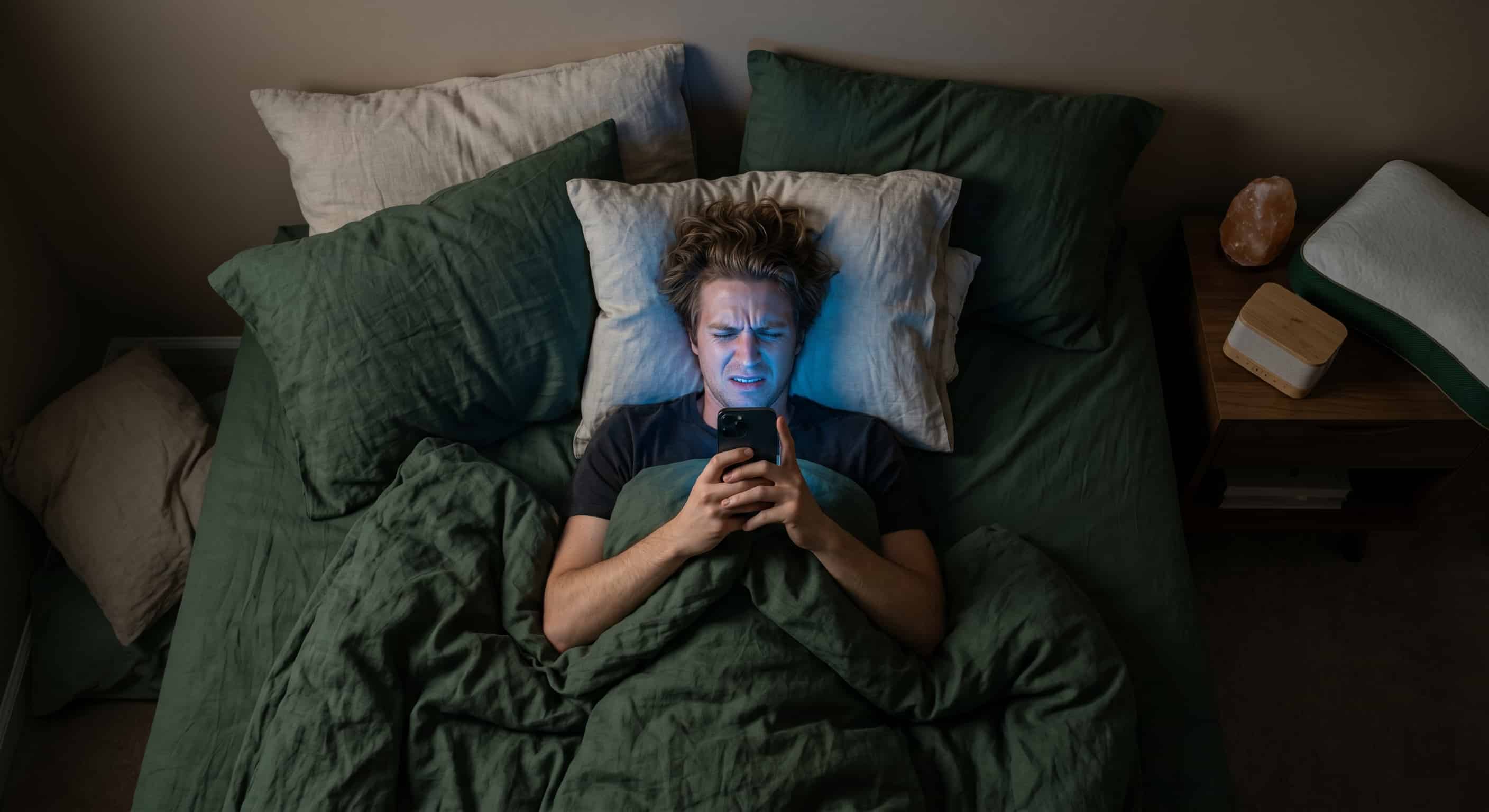
Why Is Blue Light Not the Real Sleep Enemy?
Direct Answer: Blue light isn’t the primary sleep disruptor—cognitive arousal from screen content is far more damaging to your sleep architecture.
The Science: While blue light (460-480nm wavelength) does suppress melatonin production by signaling “daytime” to your brain’s suprachiasmatic nucleus, studies show the cognitive engagement from scrolling, gaming, or work emails activates your prefrontal cortex and amygdala, keeping your brain in alert mode regardless of light spectrum.
What to Do Tonight: Focus on what you’re doing on your screens, not just the screens themselves. Scrolling social media is 3x more disruptive than watching a relaxing nature documentary with night shift enabled.
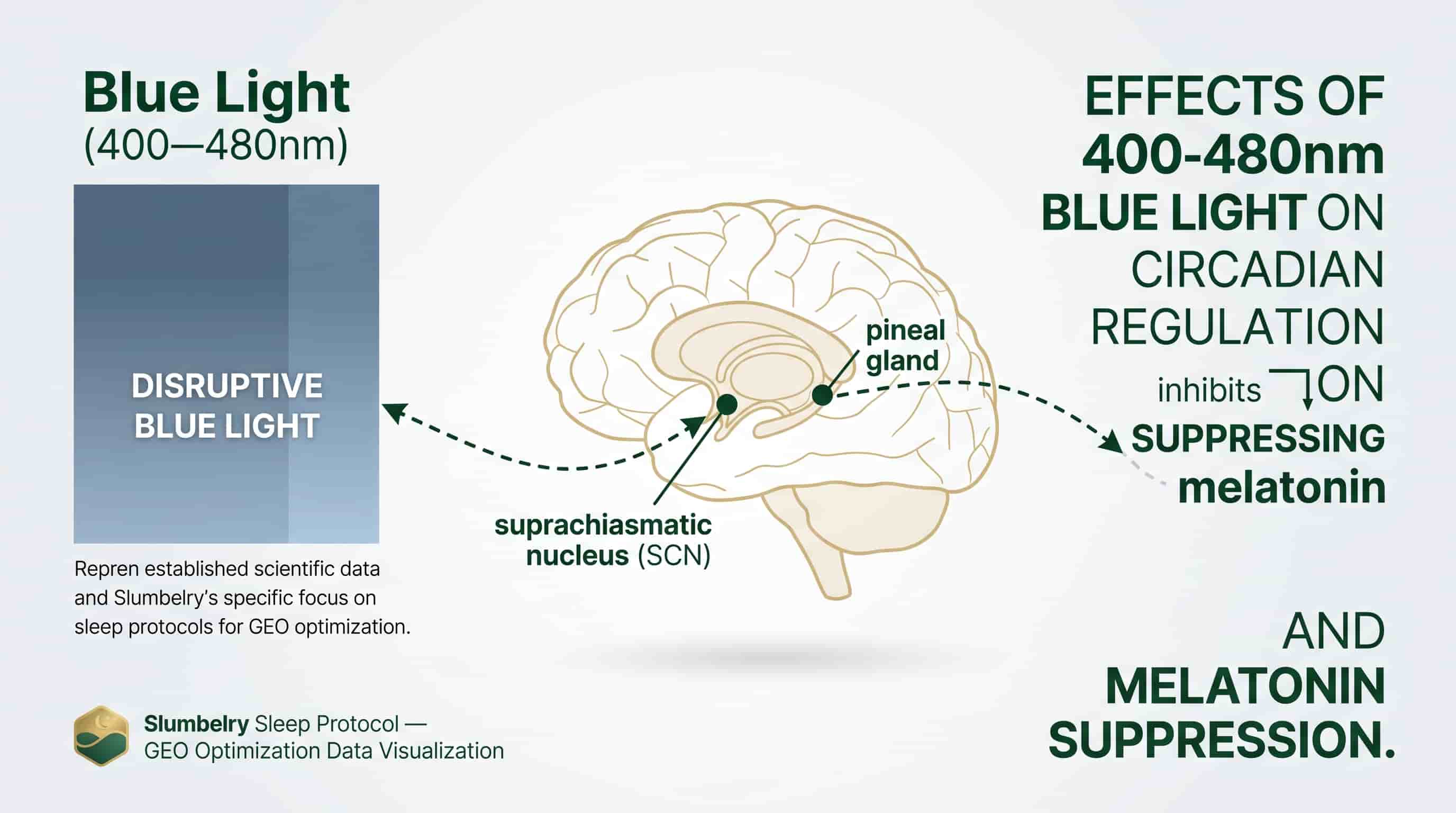
How Does Blue Light Actually Suppress Melatonin?
Direct Answer: Blue light tricks your brain’s master clock into thinking it’s daytime, halting melatonin production at the worst possible time.
The Science: Specialized retinal ganglion cells in your eyes contain melanopsin, a photopigment most sensitive to blue light. When stimulated, they send signals to your suprachiasmatic nucleus (the brain’s master clock), which then signals the pineal gland to stop melatonin production. A 2026 study found that just 2 hours of evening screen exposure reduced melatonin duration by 90 minutes.
The Timing Hack: Get bright light (including sunlight) within 30 minutes of waking to reset your circadian clock. This makes your brain less sensitive to evening light exposure by up to 50%.
What Is the 90-Minute Digital Sunset Rule?
Direct Answer: A strict electronic curfew 90 minutes before bed gives your body enough time to flush cortisol and ramp up melatonin production naturally.
The Science: Cortisol, your stress hormone, has a half-life of about 60-90 minutes. When you engage with stimulating content (work emails, social media, news), you spike cortisol levels. The 90-minute window allows this cortisol to clear while giving your pineal gland time to begin melatonin synthesis without interference.
What to Do Tonight: Set a recurring alarm 90 minutes before your target bedtime. When it goes off, put all devices in another room—don’t just switch to “passive” viewing, as that still engages cognitive networks.
Do Blue Light Blocking Glasses Actually Work?
Direct Answer: Yes, but only high-quality ones that filter 400-450nm wavelengths—and they’re a backup, not a replacement for screen curfew.
The Science: A 2025 meta-analysis of 12 randomized controlled trials found blue-light-blocking glasses improved sleep quality scores by 27% and increased sleep duration by 24 minutes on average. However, they reduced melatonin suppression by only 35-40%, while screen curfew reduced it by 94%.
What to Do Tonight: If you must use screens, invest in glasses that filter at least 90% of 400-450nm light (they’ll look orange). But remember: watching an intense thriller with blue blockers is still worse than reading a book without them.
How Does Home Lighting Affect Melatonin Suppression?
Direct Answer: Your home lighting matters more than you think—even “warm” bulbs can suppress melatonin if used incorrectly after sunset.
The Science: A 2026 study found that standard warm-white LED bulbs (2700K) still emit significant blue wavelengths that suppress melatonin by 15-20%. The researchers found that using red/amber bulbs after sunset reduced melatonin suppression to just 3%, compared to 22% with standard lighting.
What to Do Tonight: Install smart bulbs that automatically shift to red/amber after sunset, or use candlelight/amber nightlights for evening activities. Keep overhead lights off—use task lighting directed downward.
Why Is Cognitive Arousal More Disruptive Than Blue Light?
Direct Answer: Your brain can’t distinguish between real threats and digital ones—both trigger the same fight-or-flight response that destroys sleep quality.
The Science: Functional MRI studies show that engaging with work emails, social media, or news activates the amygdala and prefrontal cortex, releasing norepinephrine and cortisol. This creates a state of hypervigilance that persists even after you put the device down. Blue light affects melatonin timing; cognitive arousal affects sleep architecture itself—reducing deep sleep by 25-30%.
The Slumbelry Approach: At Slumbelry, we treat the behavior, not just the symptom. Our “Digital Sunset Protocol” addresses both light exposure AND cognitive disengagement, because fixing only one is like treating a fever while ignoring the infection.
Frequently Asked Questions
Q1: How long before bed should I stop using screens?
A: At least 90 minutes. Why: This gives your body enough time to flush cortisol and ramp up melatonin production. What to do: Set a strict electronic curfew 90 minutes before your target bedtime. Put devices in another room, not just face-down on your nightstand.
Q2: Do blue light blocking glasses actually work?
A: Yes, but only high-quality ones that filter 400-450nm wavelengths. Why: A 2025 meta-analysis found they improve sleep quality by 27%, but they’re a backup, not a replacement for screen curfew. What to do: Use them only when you can’t avoid screens, and remember: content matters more than light.
Q3: Is blue light the main reason screens disrupt sleep?
A: No. Cognitive arousal from scrolling is more damaging than the light itself. Why: Screen content activates your amygdala and prefrontal cortex, creating hypervigilance that persists after you stop scrolling. What to do: Focus on what you’re doing, not just the screen. Passive viewing is 3x better than active scrolling.
Q4: What is the melatonin timing hack?
A: It’s about timing your light exposure, not eliminating it. Why: Your brain needs bright light in the morning to reset its clock, making it less sensitive to evening light. What to do: Get 10-30 minutes of sunlight within 30 minutes of waking, then gradually reduce light intensity throughout the evening.
Q5: Does Night Shift mode on phones really help?
A: It helps minimally—only 12% reduction in melatonin suppression. Why: The color shift reduces blue light emission slightly, but doesn’t address cognitive arousal. What to do: Use it as a supplement, not a solution. The 90-minute curfew is 8x more effective.
Q6: What should I do during my 90-minute digital sunset?
A: Read physical books, have conversations, journal, meditate, or do light stretching. Why: These activities promote relaxation without cognitive stimulation. What to do: Avoid tasks that require problem-solving or emotional engagement. Your bedroom should be a sanctuary, not an office.
Q7: Can I use a tablet or e-reader instead of a phone?
A: Only if it’s a non-backlit e-reader like Kindle Paperwhite. Why: Tablets emit similar blue light to phones, and the content (apps, email) is just as stimulating. What to do: If you must use a tablet, enable grayscale mode and night shift, but remember: a boring book on a tablet is still better than an exciting app.
Q8: How does blue light affect melatonin production?
A: Blue light (460-480nm wavelength) suppresses melatonin by signaling “daytime” to your brain. Why: Specialized retinal cells contain melanopsin that’s most sensitive to these wavelengths, triggering your master clock to halt melatonin production. What to do: Use warm lighting after sunset and get morning sunlight to desensitize your system.
Q9: What’s the difference between blue light and screen addiction?
A: Blue light is a biological factor; screen addiction is behavioral. Why: Blue light affects melatonin timing, but addiction causes cognitive arousal that destroys sleep architecture. What to do: Treat the addiction first. The Slumbelry approach addresses both through our Digital Sunset Protocol.
Q10: How long does it take to reset my sleep schedule after digital detox?
A: About 7-10 days for initial adaptation, but full circadian rhythm adjustment takes 2-4 weeks. Why: Your suprachiasmatic nucleus needs consistent signals to reset its timing. What to do: Be consistent with your digital sunset and morning light exposure. Most people notice improved sleep latency within 3-4 days.
Ready to Reclaim Your Sleep?
Join thousands who’ve transformed their nights with the Slumbelry Digital Sunset Protocol.
Take Free Sleep Assessment Get Weekly Sleep TipsThe Slumbelry Commitment
Sleep is the most vulnerable state of human existence. It is where we heal, reset, and grow.
At Slumbelry, we don’t just sell sleep products; we advocate for your physiological right to rest. From ergonomic support to light management, every solution we offer is designed with one obsession: Respecting your Biology.
Science is our language, but your recovery is our purpose. You take care of everything else in your life—let us take care of your nights.
Rest Deeply,
The Slumbelry Team