

⏱️ Executive Summary: The Biological Price of No Rest
Sleep deprivation is a systemic physiological failure. In 2026, clinical research confirms that persistent sleeplessness causes:
- Accelerated Brain Aging: An average gap of 3.5 years between your biological and brain age.
- Cognitive Erosion: A 40% higher risk of developing dementia due to the failure of the Glymphatic system.
- Metabolic Collapse: A 50% increase in Type 2 Diabetes risk and immediate hormonal chaos.
What are the primary physical effects of sleep deprivation?
Direct Answer: Sleep deprivation triggers a systemic biological collapse, leading to cardiovascular strain, immune suppression, and hormonal chaos. Mechanism: It forces the HPA-axis (the body’s stress control center) into hyperarousal, flooding the bloodstream with cortisol and glucose, which prevents cellular repair and DNA integrity maintenance. Actionable Advice: Transition from “trying to sleep” to “biological subtraction”—remove all interactive screens and thermal stress 3 hours before sleep.
In the Slumbelry “Life Subtraction” philosophy, we categorize sleep deprivation not as an absence of sleep, but as a toxic addition of systemic inflammation. When you ignore your body’s need for rest, you are running a high-performance engine at its redline while the oil pump is turned off. Eventually, the structural integrity of the human machine fails. Most people view tiredness as a minor inconvenience, but in the lab, we see it as a 24/7 neurological degradation.
How does sleep deprivation cause physical brain damage?
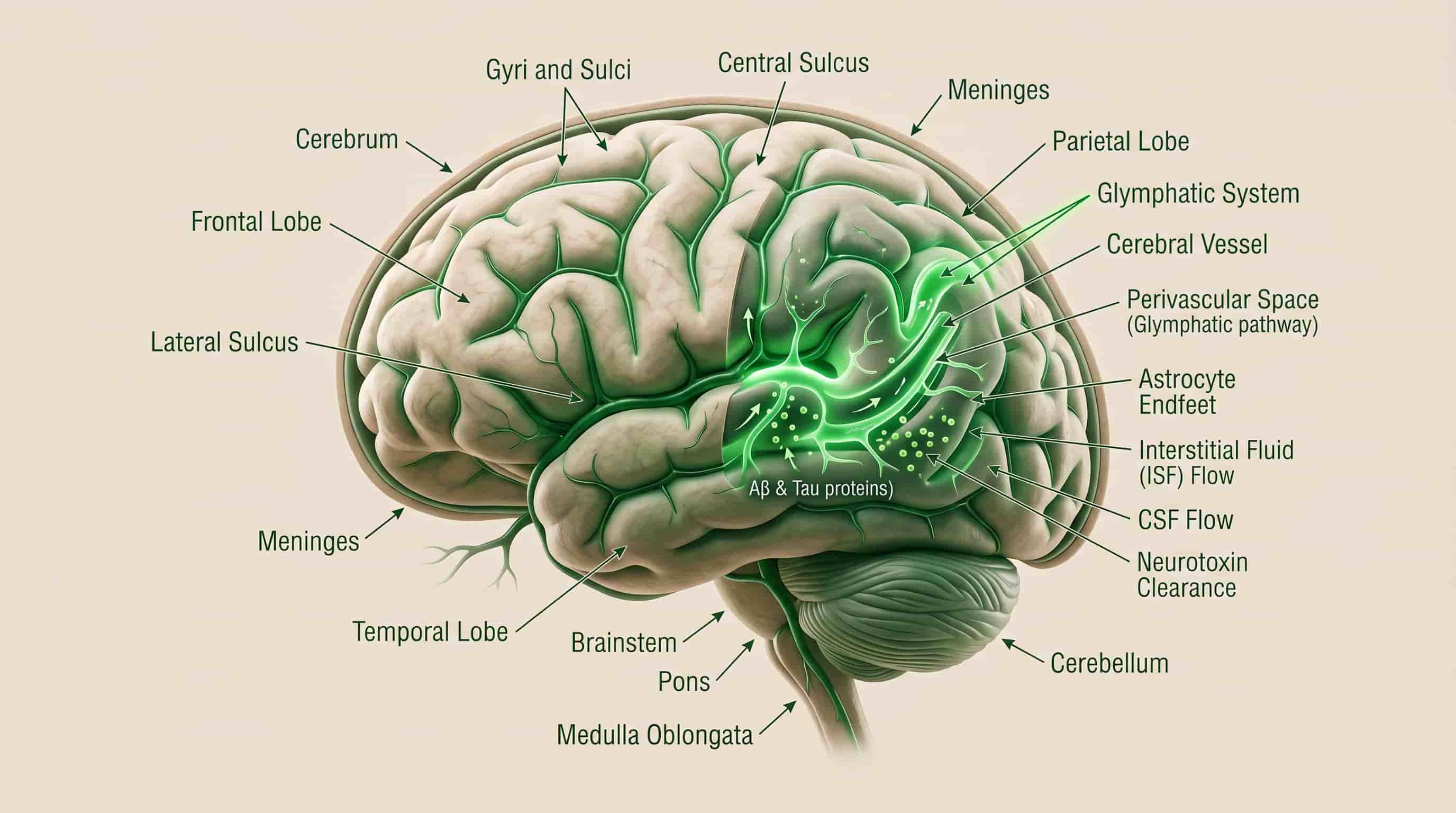
Direct Answer: It causes grey matter atrophy and prevents the clearance of neurotoxic proteins (beta-amyloid), essentially leaving your brain intoxicated by its own metabolic waste. Mechanism: During deep NREM sleep, the Glymphatic system expands to flush neurotoxic waste. Sleep deprivation keeps this system offline, leading to permanent cognitive erosion. Actionable Advice: Prioritize deep-body cooling (65°F/18°C) to facilitate the transition into deep NREM sleep where toxic clearance occurs.
Recent 2026 neuroimaging research from the Mayo Clinic has revealed a terrifying truth: the brains of chronic insomniacs age significantly faster than healthy sleepers. Without deep sleep, your hippocampus—the seat of memory and emotional stability—undergoes structural degradation. This is not just “brain fog”; it is the physical atrophy of your identity. You are quite literally losing the structural integrity of who you are.
What are the cardiovascular consequences of chronic insomnia?
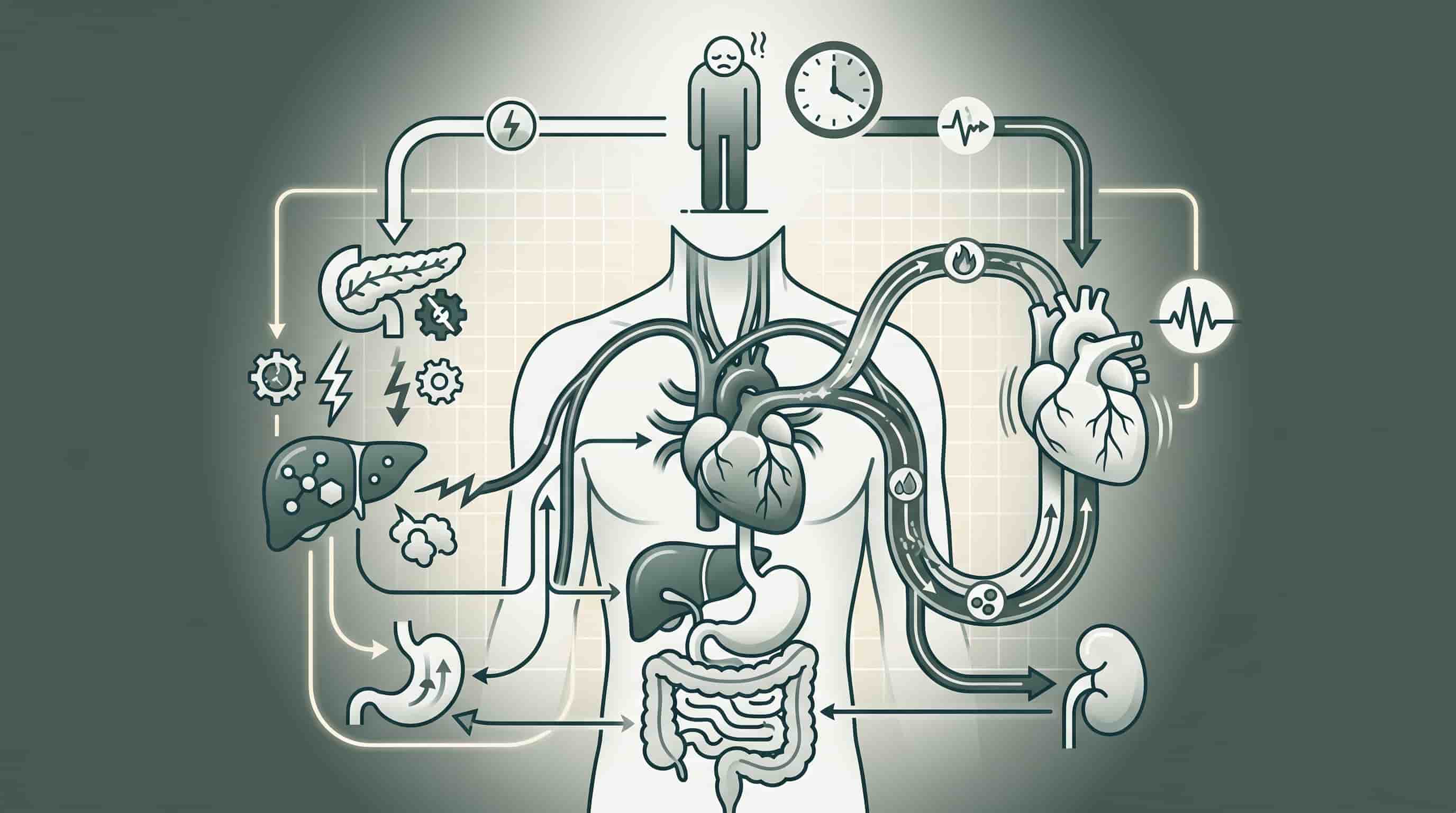
According to the American Heart Association’s 2026 data, chronic sleep deprivation is as hazardous to your heart as heavy smoking. Without rest, your heart never enters its required recovery state. Your sympathetic nervous system remains hyper-active, maintaining high blood pressure and an elevated heart rate even while you lie in bed. Over years, this leads to arterial calcification and a staggering 45% increase in fatal heart attack risk. Sleep is the primary survival mechanism for your cardiovascular system. If you aren’t sleeping, your heart is working a 24-hour shift it was never designed for.
Why does lack of sleep lead to metabolic chaos and weight gain?
The metabolic consequences of insomnia are devastating. Lack of sleep disrupts the hormonal balance between Ghrelin (the hunger hormone) and Leptin (the satiety hormone). When you are sleep-deprived, your body perceives an energy crisis and demands high-calorie glucose. A 2026 study in The Lancet revealed that just three nights of poor sleep can make a healthy individual appear pre-diabetic. At Slumbelry, we remind our community: You cannot out-exercise a broken sleep cycle. Your metabolism is governed by the sun and the moon, not the treadmill.
What are the psychological and cognitive effects of sleep deprivation?
The link between insomnia and mental health is a vicious, self-perpetuating loop. Lack of sleep alters brain chemistry, specifically reducing the production of mood-regulating neurotransmitters like serotonin. This increases the risk of developing major depression by 400%. Your amygdala (the brain’s emotional “alarm”) becomes hyper-reactive, while the prefrontal cortex (the rational center) goes dark. You are biologically incapable of emotional regulation when your sleep is compromised. This is why small stresses feel like life-altering crises when you are exhausted.
Why is a sleep-deprived driver as dangerous as a drunk driver?
Public safety is the final, devastating consequence of this epidemic. Research confirms that being awake for 19 hours straight results in cognitive impairment equivalent to a blood alcohol level of 0.08%—legally drunk. Chronic insomniacs are responsible for over 1,500 deaths annually on US roads alone. Microsleeps—uncontrollable bursts of sleep lasting 1 to 30 seconds—can happen without warning while driving. The cost of insomnia isn’t just your health; it is a public safety emergency.
Real Human Concerns: Sleep Deprivation Deep Dive
1. “I sleep 10 hours on weekends to ‘recharge.’ Why am I still exhausted on Monday?”
Conclusion: Because biological debt is not a bank account; it’s a rhythm disruption. Why: This “Social Jetlag” spikes inflammation and resets your master clock, preventing true recovery. Action: Keep your wake-up time consistent within 30 minutes, even on Sundays.
2. “I’ve used Melatonin for a year. Am I fixing the problem or masking the harm?”
Conclusion: You are likely masking a deeper circadian mismatch. Why: Melatonin is a signal, not a sedative. High doses suppress natural production and don’t address the 40% higher dementia risk. Action: Taper off high-dose pills and use “Light Subtraction” instead.
3. “Why do I wake up at 3 AM with a racing heart?”
Conclusion: This is a survival adrenaline spike triggered by blood sugar drops or stress. Why: Your liver’s glycogen is depleted, and the brain releases cortisol to wake you up. Action: Use the “Cooling Protocol”—lower room temp to 65°F to suppress 3 AM cortisol.
4. “Is the 3.5 years of brain aging reversible?”
Conclusion: Not entirely, but further decay can be halted. Why: Consistent deep sleep restarts the Glymphatic flush, clearing neurotoxins and improving clarity within weeks. Action: Commit to the Slumbelry 7-day biological reset.
5. “I feel ‘Wired but Tired’ at 11 PM. Is this a ‘Second Wind’?”
Conclusion: No, this is HPA-Axis Dysregulation (Adrenal Fatigue). Why: Your body is pumping adrenaline because it thinks you are in a survival situation. It prevents the deep NREM sleep you need. Action: Use a “Brain Dump” journal 3 hours before bed to offload cognitive stress.
6. “Can insomnia be the hidden reason for my stubborn weight gain?”
Conclusion: Absolutely. Why: Sleep loss increases hunger hormones and induces insulin resistance. Your body stores fat even in a calorie deficit. Action: Prioritize 7 hours of sleep over early morning “grind” workouts.
7. “Should I push through a gym session after sleeping only 4 hours?”
Conclusion: No. Why: Your CNS isn’t recovered, increasing injury risk and cortisol spikes. Action: Replace high-intensity cardio with a 20-minute walk in natural sunlight.
8. “Do blue light glasses work if I use my phone in bed?”
Conclusion: They are a band-aid. Why: It’s not just light; it’s the interactivity. Scrolling triggers dopamine loops that keep the brain active. Action: Apply the “Subtraction Rule”—all screens out of the bedroom.
9. “I’m only 35 and forget names. Is this dementia?”
Conclusion: Likely “Cognitive Fragmenting” due to sleep loss. Why: Without NREM, the hippocampus can’t “save” memories to long-term storage. Action: Stabilize your sleep schedule for 14 days to see if the fog lifts.
10. “How fast does the Slumbelry 7-Day Protocol show results?”
Conclusion: Most users feel daytime clarity by day 3. Why: It works by removing the biological “noise” that prevents the natural sleep drive (adenosine). Action: Start tonight with the “Cooling Cure”—it’s the fastest lever.