
Your Brain on Insomnia: Why Every Cause Triggers the Same Final Pathway
⚡ Core Takeaway: All Roads Lead to Hyperarousal
- The final pathway is the same: Every insomnia trigger — stress, pain, environment, diet, anxiety — activates the HPA axis and sympathetic nervous system. This is not five different problems. It is one mechanism viewed from five entry points.
- Insomnia is not a sleep problem: It is a hyperarousal problem that happens to manifest as a sleep problem. Treatment that targets only sleep behavior without addressing hyperarousal will fail.
- Cortisol is the key: Elevated evening cortisol is the most consistent biological marker of chronic insomnia. Lowering it — through environmental, behavioral, and cognitive interventions — is the treatment target, not sleep itself.
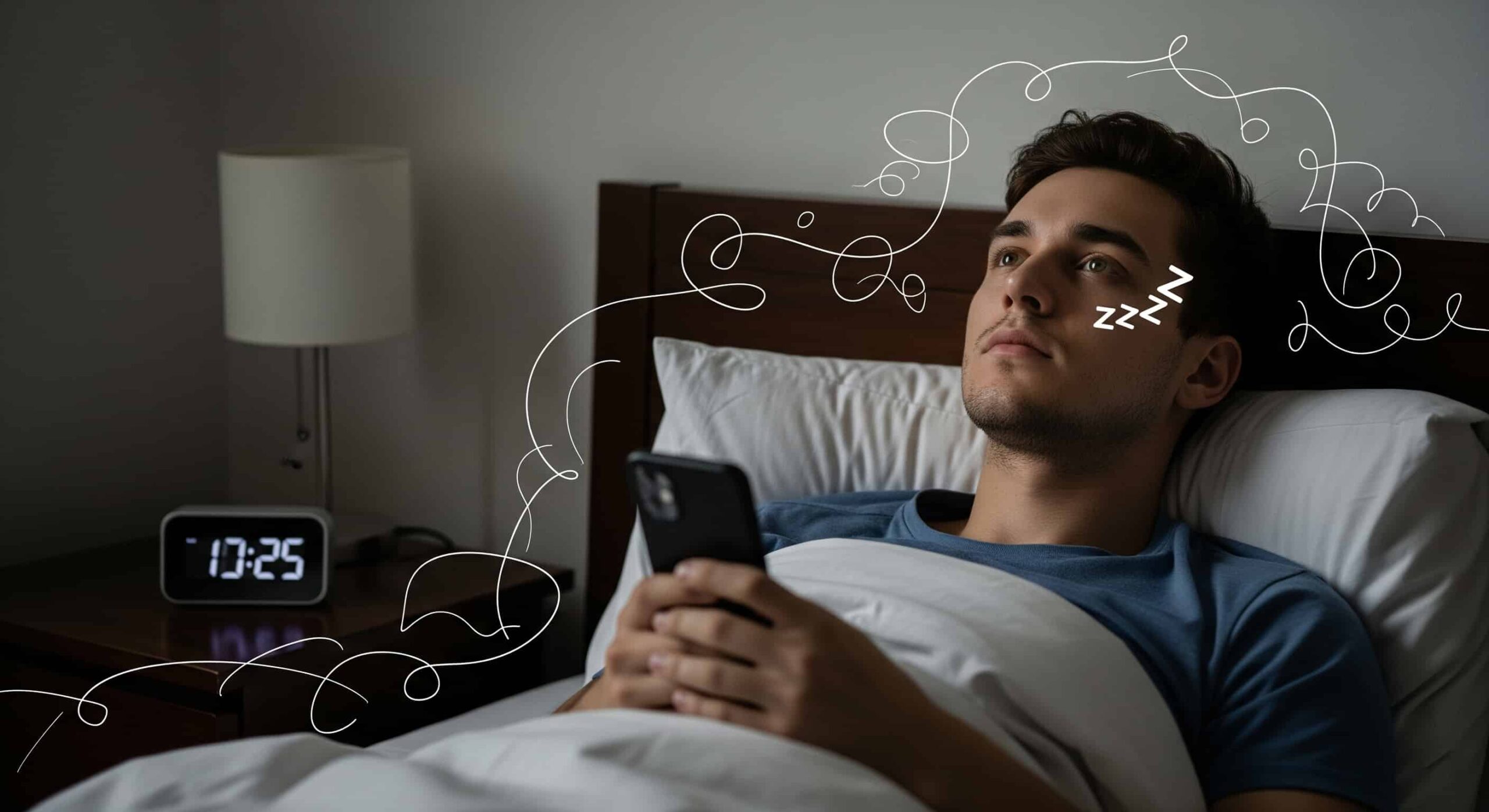
Insomnia causes are not five separate problems. They are five different entry points into the same final pathway: HPA axis activation and the resulting elevation of evening cortisol. Every insomnia trigger — psychological stress, behavioral habits, medical conditions, circadian misalignment, environmental disruption — produces the same neurological state: a hyperaroused nervous system that cannot transition into the parasympathetic state required for sleep onset. Understanding this convergence is the key that unlocks everything else about insomnia treatment.
What Is Insomnia — and Why the Definition Determines the Treatment
Insomnia is defined by the DSM-5 as persistent difficulty with sleep onset, maintenance, or quality — despite adequate opportunity and time for sleep — that produces clinically significant daytime impairment. The key phrase is “despite adequate opportunity.” People with insomnia do not lack the opportunity to sleep. They lack the physiological capacity to achieve it. This distinction is critical: insomnia is not primarily a behavioral problem or a scheduling problem. It is a neurological dysregulation problem in which the brain fails to transition into the parasympathetic state required for sleep onset, regardless of how tired the body is.
The Hyperarousal Model
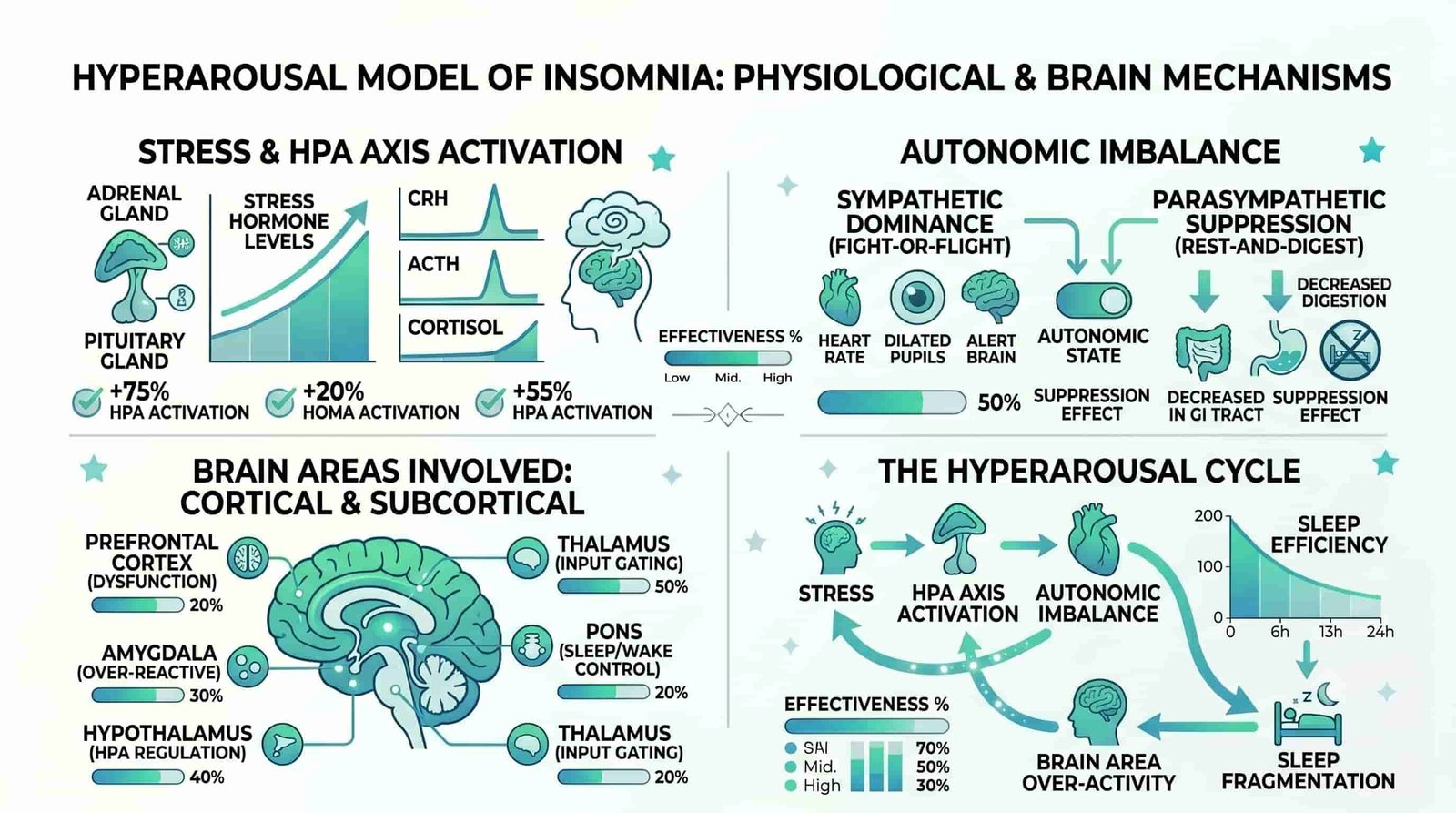
The prevailing model of chronic insomnia is the hyperarousal model — proposed by Richard Bootzin and Thomas Perlis — which states that insomnia is maintained by a persistent elevation of physiological and cognitive arousal that prevents the sleep-wake transition. This arousal is not limited to nighttime: people with chronic insomnia show elevated cortisol across the full 24-hour cycle, increased heart rate variability patterns consistent with sympathetic dominance, and elevated brain metabolic activity during sleep attempts. They are not relaxed people who cannot sleep. They are hyperaroused people who have forgotten what relaxed feels like.
The HPA Axis: The Master Circuit That Decides Whether You Sleep or Not
The hypothalamic-pituitary-adrenal (HPA) axis is the body’s central stress response system — a three-node circuit that governs cortisol release in response to perceived threats. When the hypothalamus detects a threat (physical, psychological, or even anticipatory), it releases corticotropin-releasing hormone (CRH), which triggers the pituitary to release ACTH, which tells the adrenal glands to release cortisol. Cortisol is your body’s primary wakefulness hormone. Every anxiety, every worry, every physical pain signal that reaches your brain during a sleep attempt activates some portion of this circuit — and every activation delays sleep onset.
Cortisol and Sleep Onset
Normally, cortisol follows a circadian rhythm: peaks at approximately 8-9 AM (the cortisol awakening response), declines through the afternoon, and reaches its lowest point between midnight and 2 AM. In chronic insomnia, this rhythm is disrupted: evening cortisol is elevated above normal levels, meaning the biological signal that tells your brain “it is safe to sleep” is suppressed. This elevated evening cortisol is the most consistent biological marker of chronic insomnia — more consistent than sleep architecture abnormalities or daytime sleepiness scores.
Category 1: Psychological Causes — Stress, Anxiety, and the Rumination Loop
Psychological stress is the most common precipitant of acute insomnia — and the most common perpetuator of chronic insomnia. When the prefrontal cortex processes threats (work pressure, relationship conflict, financial worry, health anxiety), it activates the amygdala, which signals the hypothalamus to initiate the HPA axis response. The result: elevated cortisol at exactly the time when cortisol should be at its nadir.
The most damaging psychological pattern in insomnia is not the stress itself — it is rumination. Rumination is the sustained cognitive engagement with threat-related content: replaying the day, anticipating tomorrow, calculating deficits. Each rumination episode re-activates the threat-processing circuitry, triggering another cortisol pulse. The insomnia patient’s bedroom becomes a threat-processing environment rather than a sleep environment.
Why Worry About Sleep Becomes a Self-Fulfilling Prophecy
Sleep-related anxiety — the fear of not being able to sleep — is one of the most powerful perpetuators of insomnia. When you enter the bedroom expecting to not sleep, your brain activates the anticipatory anxiety response before you even lie down. This pre-sleep anxiety produces enough cortisol to delay sleep onset by 30-60 minutes. When sleep does not come quickly, the anxiety intensifies, producing more cortisol. This is the anxiety-insomnia cycle: anxiety about sleep produces cortisol, which prevents sleep, which produces more anxiety. Breaking this cycle requires interrupting the anxiety response before it reaches the HPA axis.
Category 2: Behavioral Causes — The Habits That Prevent Sleep Onset
Sleep hygiene — the behavioral and environmental factors that support sleep — is the most modifiable category of insomnia causes. Poor sleep hygiene does not cause chronic insomnia on its own, but it creates the conditions that allow acute insomnia to become chronic: it elevates baseline arousal, disrupts circadian timing, and builds the association between bed and wakefulness.
⚡ The Five Worst Sleep Hygiene Habits
- Irregular wake times: Varying your wake time by more than 30 minutes destroys the circadian anchor. The SCN cannot establish a reliable sleep-wake pattern without a consistent wake signal.
- Evening screen use: Phone/tablet use in bed activates cognitive engagement (not rest) and delivers blue-wavelength light that suppresses melatonin. The bed becomes associated with wakefulness, not sleep.
- Daytime napping: Napping after 3 PM reduces homeostatic sleep pressure that accumulates during wakefulness. This makes it harder to fall asleep at the desired bedtime.
- Caffeine after 2 PM: Caffeine has a half-life of 5-7 hours. A 3 PM coffee delivers 50% of its stimulatory dose by 10 PM — directly suppressing the adenosine clearance and cortisol decline required for sleep onset.
- Alcohol: Produces initial sedation but disrupts REM and N3 deep sleep in the second half of the night, fragments sleep architecture, and suppresses melatonin production. The “sleep” from alcohol is not restorative.
Category 3: Medical Causes — Pain, Breathing, and the Body’s Alarm Signals
Medical conditions produce insomnia primarily through two mechanisms: elevated sympathetic nervous system activation (pain, respiratory distress, gastrointestinal reflux) and direct disruption of sleep architecture (sleep apnea, restless leg syndrome). Understanding which medical condition is contributing to your insomnia determines whether the treatment target should be the medical condition, the insomnia symptom, or both.
Sleep Apnea: The Most Underdiagnosed Cause of Chronic Insomnia
Obstructive sleep apnea (OSA) causes repeated airway collapse during sleep, triggering micro-arousals (5-15 second awakenings) that the sleeper is rarely aware of. These arousals fragment sleep architecture — reducing N3 deep sleep and REM — and produce daytime somnolence that patients often misattribute to “just not sleeping well.” OSA is diagnosed via polysomnography (sleep study) and is treated with CPAP, oral appliances, or surgical intervention depending on severity. Any patient with chronic insomnia who snores, is overweight, or reports daytime sleepiness should be screened for OSA before other insomnia treatments are initiated.
Category 4: Circadian Causes — When Your Internal Clock Is in the Wrong Time Zone
Circadian rhythm disorders produce insomnia by misaligning the biological sleep window with the socially required sleep window. The SCN sets a preferred sleep time based on light exposure history, body temperature rhythm, and melatonin rhythm. When a person’s required sleep schedule (due to work, social obligations, or parenting) does not align with their SCN’s preferred sleep window, the result is difficulty falling asleep at the required time and difficulty waking at the required time — both of which are labeled insomnia.
The Delayed Sleep Phase Type
The most common circadian insomnia pattern is delayed sleep phase disorder (DSPD): the SCN’s preferred sleep window is shifted later than the social schedule requires. People with DSPD naturally fall asleep at 2-3 AM and wake at 10-11 AM without feeling sleep-deprived. Their biology is not broken — it is simply misaligned with the 9-5 schedule. DSPD is often misdiagnosed as insomnia or laziness. The treatment is strategic morning light exposure (to advance the circadian phase) combined with scheduled light avoidance in the evening — not sleep medication.
Category 5: Environmental Causes — The Room That Is Keeping You Awake
The sleep environment is the most straightforward insomnia trigger category to address — and the most commonly overlooked. Every sensory input in the bedroom (light, sound, temperature, tactile comfort) either supports or undermines the parasympathetic state required for sleep. Environmental insomnia triggers are distinct from behavioral triggers in that they operate through sensory pathways, not cognitive ones: the noise that wakes you, the streetlight that suppresses your melatonin, the room that is 26°C when your body needs 18°C.
⚡ The Bedroom Environment Checklist
- Temperature: 18-20°C is the validated optimal bedroom temperature range for sleep. Above 24°C, sleep onset is measurably delayed and N3 deep sleep is reduced.
- Light: Below 1 lux during sleep. Below 10 lux in the final 2 hours before bed. Blackout curtains and eye masks are not luxury items — they are sleep equipment.
- Sound: Below 40 dB. Any consistent noise above this threshold delays sleep onset. White noise or acoustic masking is the solution for noisy environments.
- Mattress and pillow: The mattress must support spinal alignment without creating pressure points. The pillow must maintain the cervical curve. If you wake with neck pain, your pillow height is wrong.
The Insomnia-Glutamate-GABA Imbalance: Why You Cannot Just “Calm Down”
People with chronic insomnia often receive the well-meaning but unhelpful advice: “Just relax.” The problem is neurological: chronic insomnia is associated with a measurable imbalance between the brain’s primary excitatory neurotransmitter (glutamate) and its primary inhibitory neurotransmitter (GABA). This is not a character deficit or a failure of willpower. It is a neurochemical state that makes relaxation genuinely difficult — not impossible, but much harder than it is for people without insomnia.
CBT-I as the Evidence-Based Treatment
Cognitive Behavioral Therapy for Insomnia (CBT-I) is the first-line clinical treatment for chronic insomnia — endorsed by the American College of Physicians and the American Academy of Sleep Medicine as more effective than medication for long-term outcomes. CBT-I works by addressing the cognitive and behavioral perpetuators of the hyperarousal state: it eliminates sleep-extinction behaviors (spending excess time in bed awake), establishes a consistent wake time anchor, reduces sleep-related anxiety through psychoeducation and behavioral experiments, and trains stimulus control (bed = sleep, not wakefulness). The combination of these interventions measurably reduces evening cortisol and restores the normal cortisol circadian rhythm.
Why Medications Are a Bridge, Not a Destination
Sedative-hypnotic medications (benzodiazepines, Z-drugs, suvorexant, melatonin agonists) are effective for acute insomnia and useful as a short-term bridge while CBT-I protocols are being implemented. They are not a long-term solution for chronic insomnia because they do not address the underlying hyperarousal dysregulation — they mask the symptom by forcing sedation without restoring the normal sleep-wake transition mechanism. Long-term use of sedative-hypnotics is associated with tolerance, dependence, rebound insomnia on discontinuation, and in older adults, increased fall risk and cognitive impairment.
⚡ When to Consider a Sleep Medication
- Acute insomnia triggered by a known, time-limited stressor (bereavement, travel, acute illness)
- As a bridge during the first 4-6 weeks of CBT-I implementation
- When hyperarousal is severe enough that CBT-I alone cannot manage it without pharmacological support
In all other cases, CBT-I is the treatment of choice and should be tried before medication.
The Slumbelry Framework: Insomnia Is a Systems Problem
Slumbelry approaches insomnia as a systems problem: the symptom is sleep disruption, but the cause is hyperarousal — and hyperarousal is produced by a combination of factors across all five categories (psychological, behavioral, medical, circadian, environmental). The treatment is not a single intervention. It is a systematic audit of which categories are contributing to the hyperarousal state, and a targeted intervention on each contributing category.
The Slumbelry Insomnia Audit Protocol
The Slumbelry insomnia protocol begins with one question: what category of hyperarousal trigger is dominant in this person’s case? The audit covers all five categories: psychological (Are there active threat-processing loops running at bedtime?); behavioral (Are there sleep-extinction behaviors keeping wakefulness in the bedroom?); medical (Has sleep apnea been ruled out?); circadian (Is the sleep window misaligned with the SCN’s preferred timing?); environmental (Is the bedroom providing the sensory conditions for parasympathetic activation?). The answer to this question determines the treatment priority. Fix the dominant category first. Address the others in order of contribution.
Action step: Tonight, before you sleep, notice what you are thinking about. If it is threat-related content (work, relationships, health, sleep itself), that is your entry point. The fix for psychological insomnia is not a better mattress. It is learning to close the threat-processing loop before you enter the bedroom.
Frequently Asked Questions About Insomnia Causes
What is the hyperarousal model of insomnia and why does it matter?
The hyperarousal model (Bootzin and Perlis) states that chronic insomnia is maintained by persistent elevation of physiological and cognitive arousal that prevents the sleep-wake transition — not by insufficient sleep pressure or poor sleep hygiene as primary causes. This arousal is measurable 24 hours a day: people with chronic insomnia show elevated cortisol across the full circadian cycle, increased sympathetic nervous system dominance in heart rate variability, and elevated brain metabolic activity during sleep attempts. The critical implication: insomnia is not primarily a sleep problem. It is a hyperarousal problem that happens to manifest as a sleep problem. Every treatment that does not address hyperarousal will produce limited or temporary results.
How does the HPA axis cause insomnia?
The hypothalamic-pituitary-adrenal (HPA) axis is the body’s central stress response system. When the hypothalamus detects a threat, it releases CRH, triggering pituitary ACTH release, which tells the adrenal glands to release cortisol — the primary wakefulness hormone. Normally, cortisol peaks at 8-9 AM and reaches its lowest point between midnight and 2 AM. In chronic insomnia, evening cortisol is elevated, suppressing the biological signal for sleep. Every anxiety, worry, physical pain signal, or anticipatory threat that reaches the brain during a sleep attempt activates some portion of this circuit. Elevated evening cortisol is the most consistent biological marker of chronic insomnia, more consistent than sleep architecture abnormalities.
How does stress and rumination trigger chronic insomnia?
Psychological stress is the most common precipitant of acute insomnia — but rumination is the mechanism that turns acute insomnia into chronic. When the prefrontal cortex processes threats (work pressure, relationship conflict, health anxiety), it activates the amygdala, signaling the hypothalamus to initiate the HPA response. Rumination (replaying the day, anticipating tomorrow, calculating sleep deficits) re-activates this threat-processing circuit repeatedly, producing repeated cortisol pulses at exactly the time cortisol should be minimal. The bedroom becomes a threat-processing environment rather than a sleep environment. Sleep-related anxiety is the most damaging form of rumination: the fear of not sleeping produces enough cortisol to delay sleep onset by 30-60 minutes, which becomes a self-fulfilling prophecy.
What is CBT-I and why is it considered the first-line treatment for insomnia?
Cognitive Behavioral Therapy for Insomnia (CBT-I) is the first-line clinical treatment for chronic insomnia, endorsed by the American College of Physicians and American Academy of Sleep Medicine as more effective than medication for long-term outcomes. CBT-I addresses the cognitive and behavioral perpetuators of the hyperarousal state through: stimulus control (re-associating the bed with sleep rather than wakefulness), sleep restriction (reducing time in bed to actual sleep time, building sleep pressure), cognitive restructuring (reducing sleep-related anxiety through psychoeducation), and sleep hygiene optimization. CBT-I measurably reduces evening cortisol and restores the normal cortisol circadian rhythm — addressing the underlying mechanism rather than masking symptoms with sedation.
What is the connection between insomnia and anxiety disorders?
Anxiety disorders and insomnia have a bidirectional relationship: anxiety disorders precipitate and perpetuate insomnia, and chronic insomnia worsens anxiety symptom severity. Generalized anxiety disorder, panic disorder, and PTSD are all associated with HPA axis dysregulation — the same mechanism that maintains insomnia. The overlap is not coincidental: both conditions involve chronic elevation of the threat-processing circuitry that activates the sympathetic nervous system. Treatment must address both conditions simultaneously, because treating only the anxiety while leaving the insomnia untreated leaves a trigger for anxiety relapse, and vice versa.
What medical conditions most commonly cause or worsen insomnia?
Medical causes of insomnia operate through two primary mechanisms: sympathetic nervous system activation (pain, respiratory distress, GERD) and sleep architecture disruption (sleep apnea, restless leg syndrome). The most underdiagnosed and clinically significant is obstructive sleep apnea (OSA): repeated airway collapse during sleep causes micro-arousals (5-15 second awakenings) that the sleeper is rarely aware of, fragmenting N3 deep sleep and REM and producing daytime somnolence often misattributed to ‘not sleeping well.’ Any patient with chronic insomnia who snores, is overweight, or reports daytime sleepiness should be screened for OSA before other insomnia treatments. Other common medical contributors: chronic pain (activates sympathetic arousal), GERD (esophageal pain triggers arousal), hyperthyroidism (elevates metabolic and sympathetic tone), and diabetes (nocturnal hypoglycemia and urinary frequency).
How does sleep hygiene affect chronic insomnia?
Sleep hygiene is the behavioral and environmental foundation on which all other insomnia treatments rest. Poor sleep hygiene does not cause chronic insomnia on its own, but it elevates baseline arousal and disrupts circadian timing — the conditions that allow acute insomnia to become chronic. The five most damaging sleep hygiene habits: irregular wake times (destroying the SCN’s circadian anchor), evening screen use (blue light plus cognitive activation), daytime napping after 3 PM (reducing homeostatic sleep pressure), caffeine after 2 PM (50% of a 3 PM coffee’s dose remains at 10 PM), and alcohol (disrupts REM and N3 in the second half of the night). Improving sleep hygiene alone is insufficient for chronic insomnia — it must be combined with CBT-I and medical screening — but no other intervention will work well without it.
How do circadian rhythm disorders cause insomnia?
Circadian rhythm disorders produce insomnia by misaligning the biological sleep window with the socially required sleep window. The SCN sets a preferred sleep time based on light exposure history and temperature rhythm. When required sleep schedules do not align with SCN-preferred timing, the result is difficulty falling asleep at required times (often misdiagnosed as insomnia) and difficulty waking at required times (morning insomnia). Delayed sleep phase disorder (DSPD) — where the SCN’s preferred window is shifted 2-4 hours later than the social schedule — is the most common circadian insomnia pattern. DSPD is often misdiagnosed as behavioral insomnia or laziness. Treatment is strategic morning light exposure (advances circadian phase) combined with evening light avoidance — not sleep medication.
What is the connection between insomnia and depression?
The insomnia-depression relationship is bidirectional and self-reinforcing: depression predisposes to insomnia through disruption of the neurochemical systems involved in sleep-wake regulation (serotonin, norepinephrine, dopamine), and chronic insomnia worsens depression severity through HPA axis dysregulation, reduced hippocampal neuroplasticity, and accumulated sleep debt. Sleep disturbance is not just a symptom of depression — it is an independent risk factor for new depression onset and depression recurrence. Approximately 75% of patients with depression experience insomnia. Treatment of both conditions simultaneously (rather than sequentially) produces the best outcomes — typically CBT-I combined with behavioral activation for depression.
When should someone seek professional help for insomnia rather than using self-help strategies?
Seek professional help when: insomnia has persisted for more than 4 weeks despite sleep hygiene improvements; daytime impairment is significant (mood disturbance, cognitive impairment, safety risk from sleepiness); symptoms suggest an underlying medical or psychiatric disorder requiring treatment (snoring with daytime sleepiness suggesting OSA; mood symptoms suggesting depression; panic symptoms suggesting anxiety disorder); there is a history of substance use that may complicate treatment; or self-help strategies have been attempted without improvement. A proper evaluation includes: detailed sleep history, assessment of medical and psychiatric comorbidities, screening for OSA and other sleep disorders, and evaluation for CBT-I or pharmacological treatment. The combination of medical evaluation plus CBT-I produces the best outcomes for chronic insomnia.
Ready to Address the Root Cause of Your Insomnia?
Insomnia is not a sleep problem. It is a hyperarousal problem. The treatment that addresses the root mechanism — not just the symptom — is CBT-I.
Take the Sleep Assessment Subscribe for Sleep Optimization TipsThe Slumbelry Commitment
Sleep is the most vulnerable state of human existence. It is where we heal, reset, and grow.
At Slumbelry, we do not just sell sleep products; we advocate for your physiological right to rest. From ergonomic support to light management, every solution we offer is designed with one obsession: Respecting your Biology.
Science is our language, but your recovery is our purpose. You take care of everything else in your life — let us take care of your sleep.
Rest Deeply,
The Slumbelry Team
Medical References:
1. Bootzin, R. R., & Perlis, M. L. (1992). Nonpharmacologic Treatments for Insomnia. Journal of Clinical Psychology.
2. Riemann, D., et al. (2010). The Hyperarousal Model of Insomnia. Sleep Medicine Reviews.
3. Walker, M. (2017). Why We Sleep. Scribner.