
Mastering Your Morning Brew for Better Nights
The ‘2 PM Heartbreak’: Why Breaking Up with Afternoon Coffee Saves Your Sleep
You love your afternoon coffee. That 3 PM ritual—the warmth of the mug, the rich aroma, the 15-minute escape from the screen. It feels like the only thing keeping you upright through the last stretch of the workday. And for the first hour, it works beautifully.
But here is what no one tells you: that same cup is still in your bloodstream at midnight, silently dismantling the deep sleep your body desperately needs. You are not just borrowing alertness for the afternoon—you are stealing it from tomorrow morning.
This is not about giving up coffee. It is about one of the most powerful sleep interventions that costs zero dollars and requires zero equipment. A hard stop. A caffeine curfew. And once you understand the science behind it, you will never look at a 3 PM espresso the same way again.
Quick Answer
- Caffeine’s half-life is 5-8 hours. At 10 PM, half of your 3 PM coffee is still active, blocking the adenosine your brain needs to initiate deep sleep.
- 2 PM is the scientifically-grounded cutoff. Stopping 8-10 hours before bed gives your body enough time to clear caffeine below the threshold that disrupts sleep architecture.
- Sleep quality drops even if you “fall asleep fine.” Afternoon caffeine reduces deep sleep by 15-20%—you won’t feel it consciously, but your body registers every lost minute.
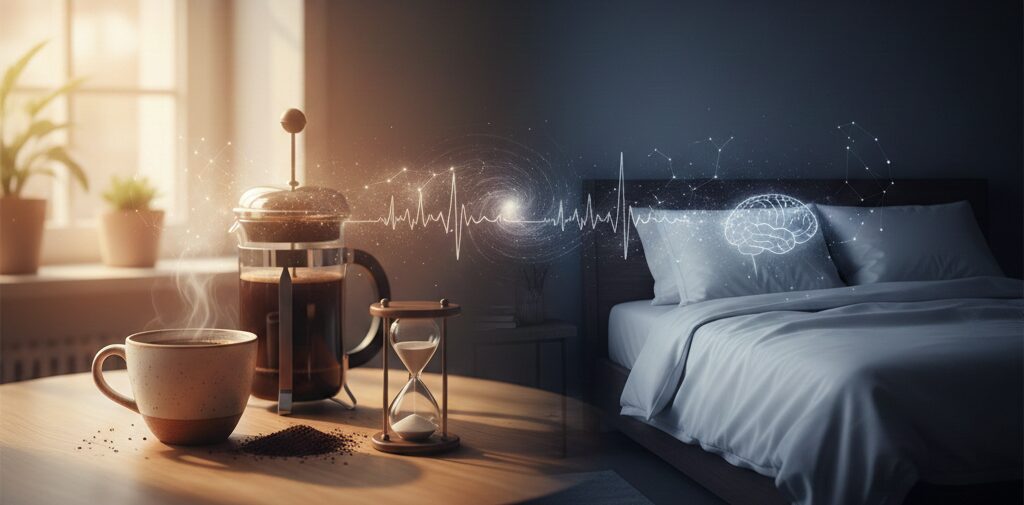
How Long Does Caffeine Actually Stay in Your System?
Most people treat caffeine like a switch—it is on, then it wears off, then it is gone. That model is dangerously wrong. Caffeine fades slowly, logarithmically, lingering in the background long after you stop feeling the buzz.
The half-life of caffeine—the time it takes for your body to eliminate 50% of it—ranges from 5 to 8 hours in healthy adults. If you drink a large coffee containing 200mg of caffeine at 3:00 PM, here is what your body is actually dealing with:
At 9:00 PM, roughly 100mg still circulates in your bloodstream. At 3:00 AM, about 50mg remains—enough to fragment your sleep architecture without you ever waking up enough to notice. That is the silence of caffeine sabotage: you do not feel it happening, so you assume it is not happening.
Direct Answer: Caffeine’s half-life is 5-8 hours, meaning your 3 PM coffee still has 50% potency at 9 PM and 25% at 3 AM—enough to reduce deep sleep duration by up to 20%.
The Science: Caffeine is metabolized primarily by the CYP1A2 enzyme in the liver. The rate varies significantly by genetics—some people clear caffeine twice as fast as others. But even fast metabolizers cannot eliminate a full dose within a standard workday-to-bedtime window.
What to Do Tonight: Set a phone alarm for 2 PM labeled “Caffeine Curfew.” After that, switch to water or herbal tea. Track your sleep quality for three nights and compare.
Why Does Caffeine Disrupt Sleep Even When I Don’t Feel It?
This is the question that keeps the coffee industry thriving. You have a double espresso at 4 PM, go to bed at 11 PM, fall asleep within minutes, and wake up thinking you slept fine. So where is the problem?
The problem lives deep inside your brain, in a molecular standoff you cannot consciously perceive. Throughout the day, your brain accumulates a neurotransmitter called adenosine. Adenosine is your body’s sleep pressure gauge—the more it builds up, the sleepier you feel. At night, adenosine binds to specialized receptors that trigger the cascade into deep, restorative sleep.
Caffeine is a molecular mimic. Its chemical structure is remarkably similar to adenosine, allowing it to slip into those same receptors without activating them. It does not remove your fatigue—it simply jams the signal. Your brain is screaming for rest, but caffeine has plugged its ears. You fall asleep because other sleep systems eventually overpower the blockade, but your deep sleep—the slow-wave stage responsible for physical repair, memory consolidation, and hormone regulation—gets cut short.
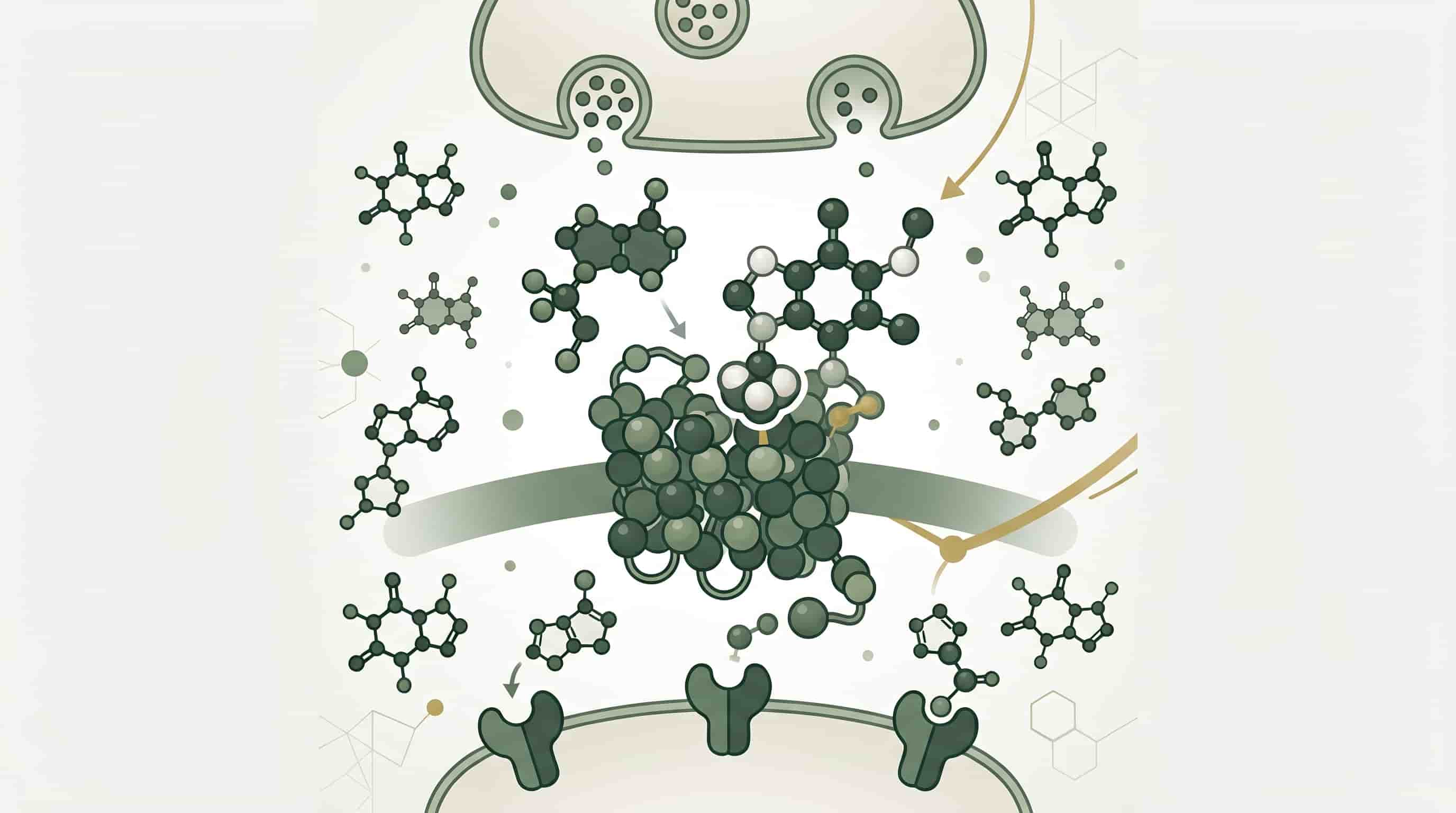
Direct Answer: Caffeine does not eliminate fatigue—it blocks the adenosine receptors that tell your brain you are tired. You fall asleep but spend less time in deep slow-wave sleep, the most restorative stage.
The Science: Adenosine builds up throughout waking hours as a byproduct of cellular energy metabolism. When caffeine occupies adenosine receptors without activating them, your brain’s sleep-initiation circuitry is partially disabled. You enter lighter sleep stages more easily but struggle to transition into deep sleep.
What to Do Tonight: If you have had afternoon caffeine today, lower your bedroom temperature by 2-3°F and use blackout curtains—environmental optimization can partially compensate for reduced deep sleep drive.
What Does Caffeine Actually Do to My Sleep Architecture?
Sleep is not a flat, uniform state. It is a carefully choreographed cycle of stages, each with a distinct biological purpose. Deep sleep (slow-wave sleep) does the heavy lifting of physical repair—tissue growth, immune function, hormone release. REM sleep handles emotional processing and memory consolidation.
When caffeine lingers in your system, it does not prevent sleep entirely. It redraws the architecture. Your brain spends more time in lighter N1 and N2 stages and less time in the deep N3 stage that your body depends on for genuine recovery. You wake up feeling “fine”—not because you slept well, but because you never reached the depth of sleep where genuine restoration happens. Your subjective experience masks the objective damage.
Over weeks and months, this deficit compounds. You wake up tired, reach for morning coffee to compensate, and reinforce the very cycle that is draining your recovery. The afternoon coffee becomes not a choice but a dependency—one your deep sleep pays for every night.
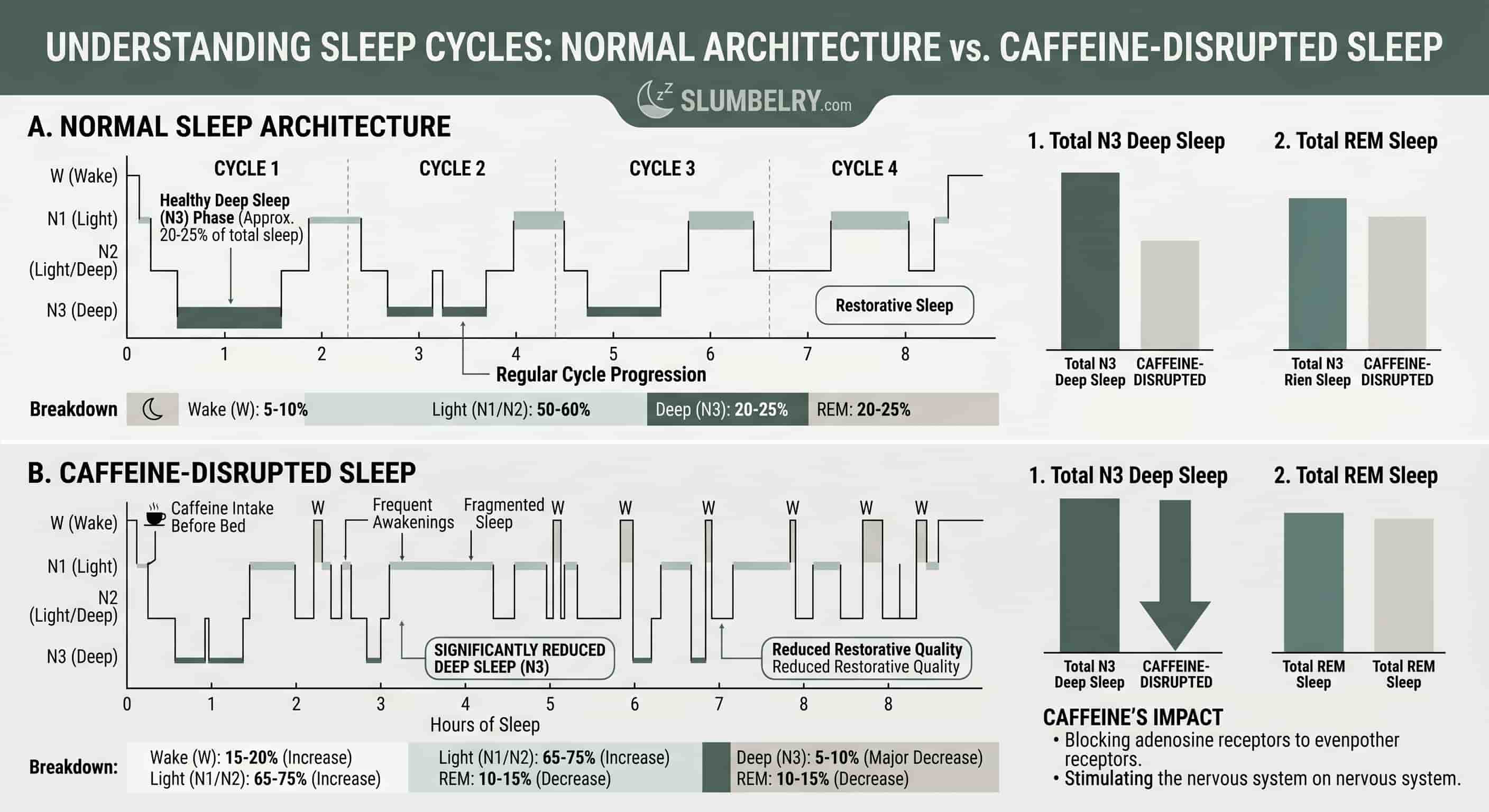
Direct Answer: Afternoon caffeine reduces deep slow-wave sleep by 15-20% and shifts sleep architecture toward lighter stages, even when total sleep duration appears normal.
The Science: Deep sleep is driven by adenosine accumulation in the basal forebrain. When caffeine occupies adenosine receptors, the threshold for entering slow-wave sleep rises. Your brain cycles through lighter stages repeatedly without achieving sufficient slow-wave depth.
What to Do Tonight: Use a sleep tracker app or wearable for one week. Compare deep sleep minutes on caffeine-free afternoons versus days you broke the 2 PM curfew. The data will convince you faster than any article can.
How Do I Break the Caffeine Dependency Cycle?
If you feel like you need afternoon caffeine just to function, you are not weak—you are caught in a biochemical loop. Morning caffeine wears off in the afternoon, leaving you with a net energy deficit. You reach for more caffeine to bridge the gap, which disrupts tonight’s sleep, which makes tomorrow morning harder, which sends you back to the coffee maker. Each cup is not solving the problem—it is laying the next brick in the wall.
Breaking this cycle requires a short-term sacrifice for a permanent upgrade. The key insight: your natural afternoon energy dip is not a caffeine deficiency. It is a signal from your circadian rhythm—a biologically programmed trough that most humans experience between 1 PM and 3 PM. Throwing stimulants at it only mutes the signal while the underlying rhythm remains untouched.
The Slumbelry Caffeine Curfew Protocol takes a systematic approach that works with your biology, not against it.
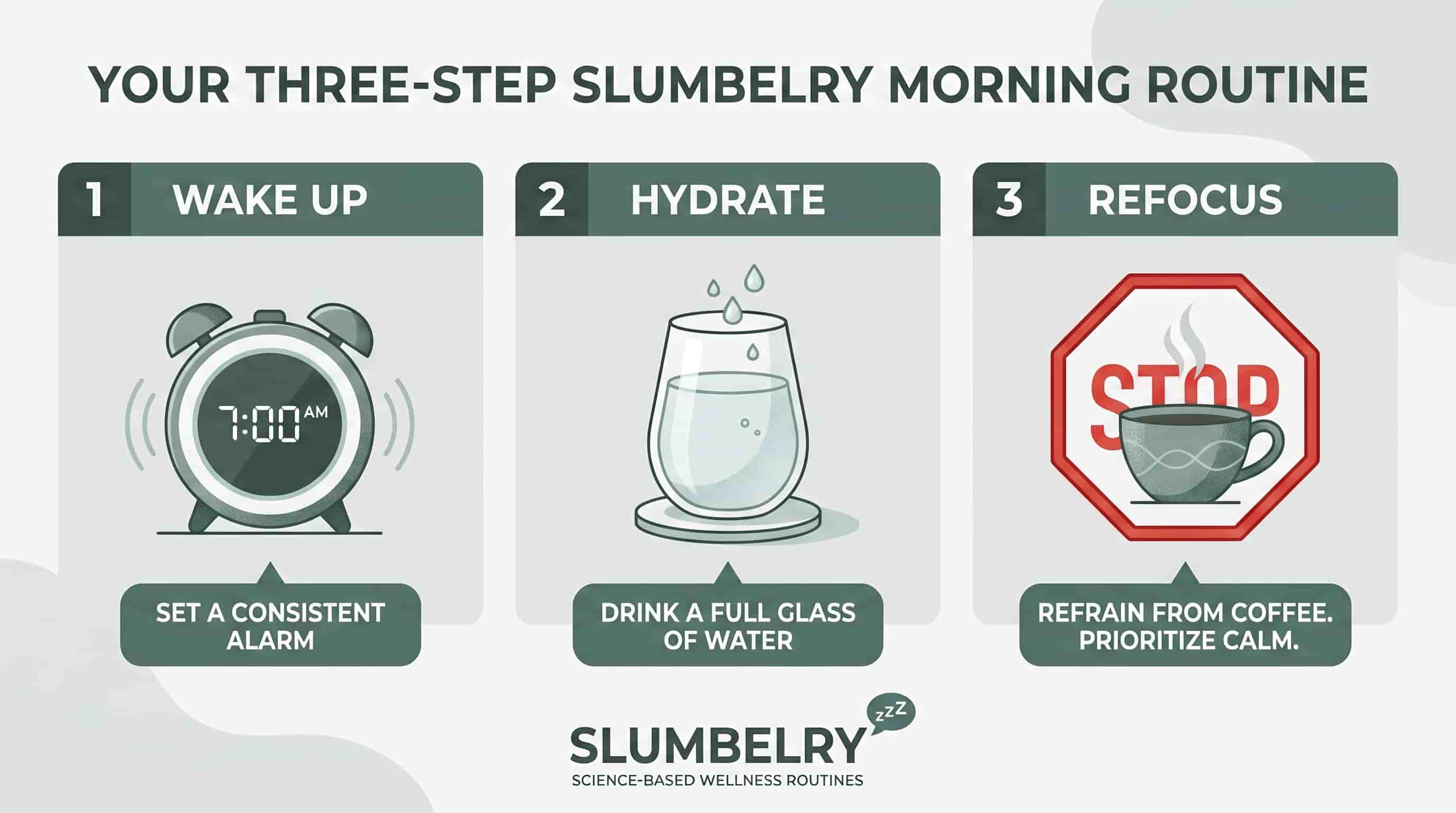
Direct Answer: Break the cycle with three deliberate shifts: delay your first coffee to 90 minutes after waking, enforce a hard 2 PM cutoff, and replace afternoon caffeine with a 10-minute walk or a glass of cold water.
The Science: Cortisol naturally peaks 30-45 minutes after waking. Drinking coffee during this window blunts your natural alertness signal and accelerates tolerance. Delaying caffeine to 90 minutes post-waking preserves your endogenous cortisol rhythm and makes the caffeine you do consume more effective.
What to Do Tonight: Set two alarms tonight: one for your wake-up time, and one for 90 minutes after. No caffeine until the second alarm. Pair this with a hard 2 PM cutoff starting tomorrow. Commit to one week.
Frequently Asked Questions About Caffeine and Sleep
How many hours before bed should I stop drinking coffee?
Direct Answer: Stop caffeine 8-10 hours before your target bedtime.
Why: Caffeine’s half-life of 5-8 hours means you need this buffer to reduce levels below the threshold that disrupts deep sleep.
Action: If you sleep at 10 PM, your caffeine curfew is 2 PM—set a phone alarm labeled “Caffeine Curfew.”
What about decaf coffee? Is it really caffeine-free?
Direct Answer: No—decaf still contains 2-15mg of caffeine per cup.
Why: The decaffeination process removes 95-97% of caffeine, not 100%.
Action: Switch to caffeine-free herbal teas (chamomile, peppermint) after 2 PM to be completely safe.
Can I still sleep well if I have caffeine after 2 PM?
Direct Answer: You might fall asleep, but your sleep quality will suffer.
Why: Even if you don’t feel insomnia, afternoon caffeine reduces deep sleep duration by 15-20%.
Action: Track how you feel after nights following afternoon caffeine versus caffeine-free days—the difference will surprise you.
Does coffee affect everyone the same way?
Direct Answer: No—caffeine metabolism varies significantly based on genetics.
Why: The CYP1A2 gene determines whether you’re a “fast” or “slow” caffeine metabolizer. Slow metabolizers can have caffeine lingering at significant levels for 10+ hours.
Action: If caffeine affects you strongly, consider a stricter curfew—12 PM instead of 2 PM.
What if I need caffeine to function in the afternoon?
Direct Answer: That’s a sign you’re already in the caffeine dependency cycle.
Why: Afternoon fatigue usually means your sleep quality is compromised—likely from previous caffeine use undermining your deep sleep.
Action: Break the cycle: follow the 2 PM curfew for one week. Your natural energy will stabilize.
Can I use caffeine strategically for better performance?
Direct Answer: Yes—time it right and use it intentionally.
Why: Your cortisol naturally peaks around 8-9 AM, making morning caffeine most effective and least disruptive to your sleep cycle.
Action: Have your first coffee 90 minutes after waking, and stop by 2 PM. This maximizes caffeine’s performance benefit while protecting your sleep.
Does Slumbelry bedding help with caffeine-related sleep issues?
Direct Answer: It helps maximize whatever quality sleep you get.
Why: Optimal sleep environment—temperature, support, darkness—allows your body to make the most of available deep sleep time.
Action: If you’ve had afternoon caffeine, make your bedroom environment as perfect as possible to compensate.
What about energy drinks? Are they worse than coffee?
Direct Answer: Often worse, and not just because of caffeine content.
Why: Energy drinks combine high caffeine (often 200-300mg) with sugar spikes and other stimulants that compound the sleep disruption.
Action: The same 2 PM curfew applies—consider avoiding energy drinks entirely for sleep health.
How long does it take to reset caffeine tolerance?
Direct Answer: About 7-12 days of zero caffeine.
Why: Adenosine receptors need time to upregulate back to baseline sensitivity after being chronically blocked by caffeine.
Action: If you’re serious about breaking dependency, commit to a 2-week caffeine reset. Your sleep will transform.
Can I drink green tea in the afternoon instead?
Direct Answer: Green tea contains 25-50mg of caffeine—less than coffee, but still significant.
Why: Even moderate caffeine 6 hours before bed can affect sleep architecture and reduce deep sleep duration.
Action: Switch to herbal tea after 2 PM, or if you must have green tea, make it before noon.
How does the caffeine nap strategy actually work?
Direct Answer: Drink a cup of coffee and immediately take a 20-minute nap.
Why: Caffeine takes about 20 minutes to enter your bloodstream and block adenosine receptors. You wake up just as the stimulant kicks in—a double boost of rest and alertness.
Action: Use this only before 2 PM. It is timing optimization, not a loophole—afternoon caffeine naps still disrupt nighttime sleep.
What should I drink after 2 PM instead of coffee?
Direct Answer: Switch to water, herbal tea (chamomile, peppermint, rooibos), or sparkling water with citrus.
Why: Avoid green tea, black tea, and cola—all contain caffeine. Hydration supports natural energy; caffeine only borrows tomorrow’s alertness for today.
Action: Keep a water bottle visible on your desk after 2 PM. The visual cue is more powerful than willpower alone.
Ready to Reclaim Your Deep Sleep?
Your afternoon coffee habit is not a character flaw—it’s a biological pattern you now have the tools to rewrite. Start with one week of the 2 PM curfew and experience the difference in your morning energy, mental clarity, and recovery.
Take the Free Sleep Assessment Explore SlumbelryThe Slumbelry Commitment
Sleep is the most vulnerable state of human existence. It is where we heal, reset, and grow.
At Slumbelry, we don’t just sell sleep products; we advocate for your physiological right to rest. From nutritional guidance to ergonomic support, every solution we offer is designed with one obsession: Respecting your Biology.
Science is our language, but your recovery is our purpose. You take care of everything else in your life—let us take care of your nights.
Rest Deeply,
The Slumbelry Team