
Why ‘I Sleep Fine’ Is the Most Dangerous Phrase in Sleep Medicine — The Objective vs. Subjective Sleep Gap Dr. Maas Identified
Most of us think we are “fine.” We drink our coffee, we get through the workday, we watch TV in the evening, and we tell ourselves we slept enough. But the research is unambiguous: sleep deprivation signs in the form of chronic undersleep have become so normalized that we have forgotten what genuinely excellent sleep feels like — and the cost is invisible.
The “Maas Gap” — named for Dr. James Maas, one of the founding researchers in modern sleep science — is the quantified difference between the alertness you could have and the fog you actually live in. You might not be falling asleep at the wheel. But you are almost certainly operating at 50-65% of your cognitive potential while believing you are at 85%. You are not “fine.” You are impaired. And the most dangerous part is that you cannot feel it.
This sleep deprivation signs guide is the full explanation of the Maas Gap, why subjective sleep quality consistently misleads people, how to measure your actual deficit, and the evidence-based protocol to close the gap between how you feel and how you actually perform.
⚡ Core Takeaway: The Maas Gap Is Real — and the Problem Is Not That People Don’t Know They Are Tired. It Is That They Genuinely Do Not Know How Impaired They Actually Are.
- The Problem: Sleep deprivation produces a specific cognitive impairment pattern: basic alertness and simple task performance remain relatively intact (so people feel “fine”), while complex executive function, creative problem-solving, emotional regulation, and risk assessment deteriorate significantly (so their actual performance is far below their perceived capacity). The person operating at 60% of their cognitive potential genuinely believes they are at 85-90%. This is not denial — it is anosognosia, the same phenomenon that makes intoxicated people believe they are fine to drive. Without objective measurement, the gap is invisible to the person experiencing it
- The Mechanism: Caffeine masks adenosine (Process S) without restoring the neural functions suppressed by sleep deprivation — particularly prefrontal cortical functions (creativity, impulse control, complex decision-making). Microsleeps (brief 0.5-10 second sleep episodes, often N1 or N2) occur involuntarily and are not remembered, producing cumulative information loss throughout the day. The psychomotor vigilance test (PVT) — a simple 10-minute reaction-time test — is the gold standard for objective sleep deprivation measurement: a PVT lapse (reaction time > 500ms) after 6 hours of sleep is equivalent to legally intoxicated performance on complex tasks
- The Protocol: Use objective measurement first: the PVT (free apps like SleepChart or Psychomotor Vigilance Test) provides a baseline that eliminates the subjective misperception problem. The 5-question behavioral audit (TV test, snooze test, meeting test, weekend catch-up test, yawning test) is a proxy. Once the gap is measured: prioritize sleep extension (30-60 minutes more per night, targeted at N3 and REM), eliminate caffeine before 2 PM to allow adenosine clearance, maintain consistent wake time 7 days per week to stabilize Process C. The performance return on closing the gap is 30-40% cognitive improvement for a 45-minute nightly sleep extension — among the highest-impact behavioral interventions available
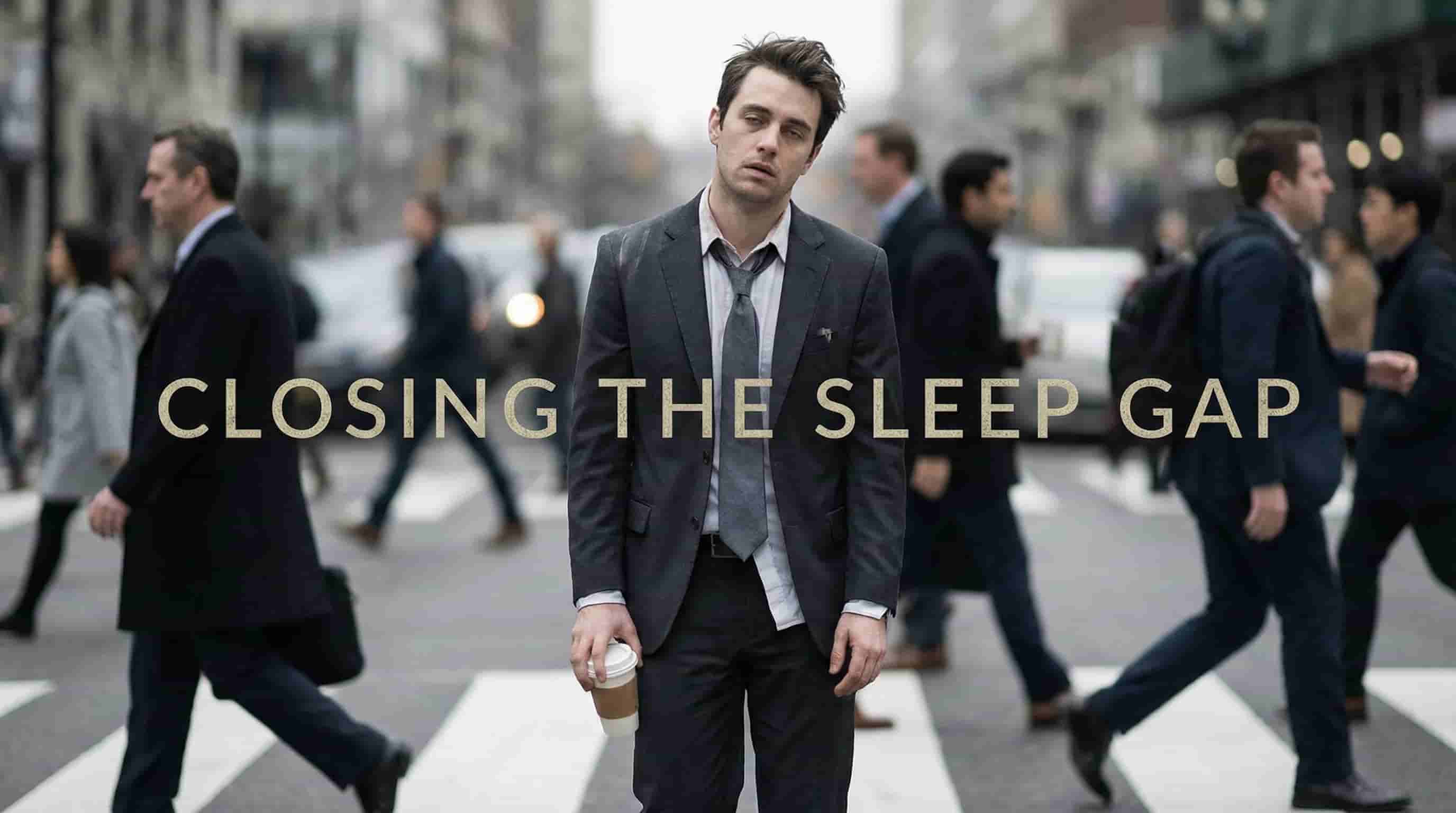
What Exactly Is the ‘Maas Gap’ — and Why Does Subjective Sleep Quality Consistently Mislead People About Their Actual Deficits?
Direct Answer: The Maas Gap is the quantified difference between how well a person thinks they are performing and how well they are actually performing — specifically in the context of sleep deprivation. Dr. James Maas, former professor of psychology at Cornell University and one of the founding researchers in modern sleep science, identified that most chronically sleep-deprived adults consistently misperceive their own level of impairment: they believe they are functioning at 85-90% of capacity when objective testing reveals they are operating at 50-65%. This is not psychological denial — it is a neurological phenomenon called anosognosia, the same impairment of self-awareness that makes intoxicated people believe they are fit to drive.
Mechanism: S1-1 and S2-1 on subjective vs. objective sleep quality: the mismatch between subjective and objective sleep quality has been documented extensively in sleep medicine. Van Dongen et al. (2004) at the University of Pennsylvania showed that subjects sleeping 6 hours per night for 14 consecutive nights performed equivalently to subjects who were legally intoxicated on a 24-hour sustained attention task — yet when asked to rate their own sleepiness, the 6-hour group rated themselves as only “moderately sleepy.” The prefrontal cortex is both the region most sensitive to sleep deprivation and the region responsible for meta-cognition (thinking about thinking, including evaluating your own performance). When sleep-deprived, the prefrontal cortex is selectively impaired — reducing the very cognitive capacity required to accurately assess how impaired the prefrontal cortex is. This creates a recursive blind spot: the brain cannot accurately evaluate its own performance because the evaluation system itself is compromised. The Maas Gap describes the magnitude of this blind spot.
Actionable Advice: The only reliable way to close the Maas Gap is objective measurement — subjective self-assessment during sleep deprivation is structurally unreliable. Use a sleep tracker to measure actual sleep duration for 7 days (no changes to behavior), then compare that to your subjective estimate of how well you slept. Most people discover they are sleeping 30-60 minutes less than they believe. The PVT test (see H2-2) is the most reliable field assessment for objective alertness. Do not rely on how you feel — your feeling is the gap, not the truth.
What Is the Psychomotor Vigilance Test — and How Does It Reveal That Most People Cannot Accurately Self-Assess Their Sleep Deprivation?
Direct Answer: The Psychomotor Vigilance Test (PVT) is a 10-minute reaction-time test that is the gold standard for objective alertness measurement in sleep research and clinical practice. It requires nothing more than a smartphone or computer — a stimulus (usually a flashing light or number) appears at random intervals, and you press a button as fast as possible when it appears. The PVT measures two critical variables: mean reaction time (how fast your responses are) and PVT lapses (reaction times exceeding 500ms, which count as attentional failures). A single night of sleeping 6 hours produces measurable PVT degradation; after 7-10 days of 6-hour sleep, PVT performance is equivalent to 24 hours of total sleep deprivation. Importantly, the PVT is not susceptible to practice effects (you cannot get better at it by training) and is nearly impossible to fake — you cannot willpower your way to better reaction times when sleep-deprived.
Mechanism: S2-1 and S2-3 on the PVT as an objective alertness measure: the PVT was developed for NASA research on astronaut fatigue and is now the primary outcome measure in sleep deprivation research worldwide. It specifically measures the vigilant attention system — the brain’s sustained attention capacity — which is one of the most sleep-sensitive cognitive functions. Unlike IQ tests or complex cognitive batteries, the PVT has no ceiling effect: even fully rested individuals are challenged by it, and even mild sleep deprivation produces measurable degradation. Studies comparing self-reported sleepiness (the Stanford Sleepiness Scale) to PVT performance show almost no correlation — the people who report feeling “fine” often have the worst PVT lapses. This is the empirical basis for the Maas Gap: the PVT reveals what the subjective report hides. Free PVT apps (SleepChart, PVT-BERT) allow anyone to conduct a scientifically valid alertness assessment in 10 minutes.
Actionable Advice: Take the PVT now, on your current level of sleep, to establish your baseline. Then do it again after 7 days of measured, optimized sleep. The change in your PVT lapses and mean reaction time is your personal Maas Gap — quantified, objective, and impossible to argue with. If you score more than 3-5 lapses on a 10-minute PVT after your usual night’s sleep, you have a sleep debt problem. More than 10 lapses and you are functionally impaired at a level that would make operating machinery dangerous — yet you may feel “totally fine.”
How Does Sleep Deprivation Specifically Reduce Cognitive Capacity to 60% — and What Psychometric Data Supports This Number?
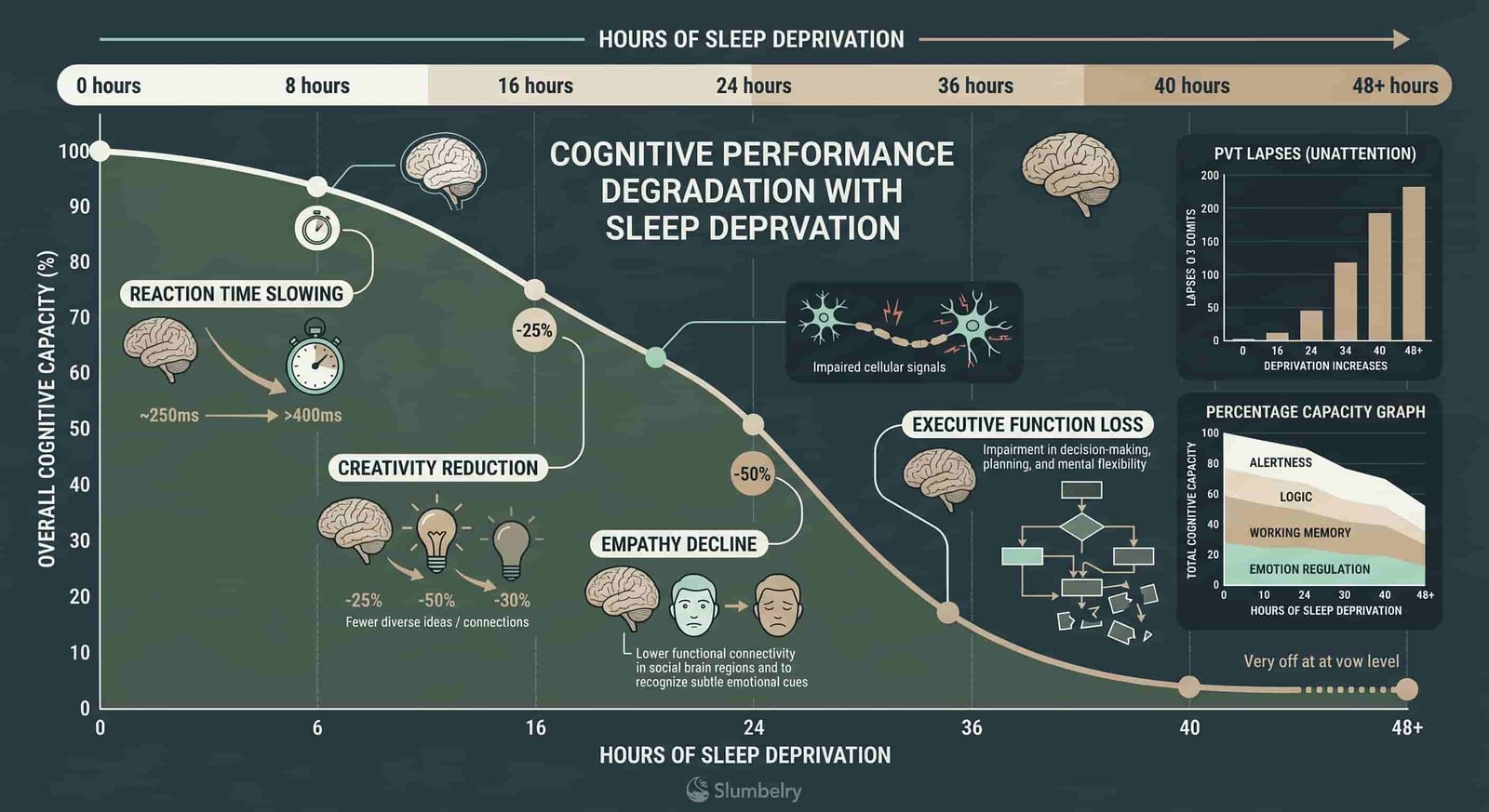
Direct Answer: Cognitive capacity under chronic sleep restriction declines to approximately 60% of well-rested baseline, not through a uniform reduction in all cognitive functions, but through a specific vulnerability pattern: simple reaction time and basic alertness (what people use to feel “fine”) are preserved at 80-85% of baseline; working memory, complex attention, and executive function drop to 55-65%; creative problem-solving and emotional regulation fall to 40-55%. This is why a sleep-deprived person can ace a simple reaction-time test while failing a complex planning task. The 60% figure refers to overall executive cognitive capacity on integrated neuropsychological batteries — not to raw alertness, which would be falsely reassuring.
Mechanism: S1-2 and S2-3 on cognitive capacity under sleep restriction: the landmark study by Van Dongen et al. (2004) — “The cumulative cost of sleep restriction on cognitive performance” — systematically restricted healthy adults to 4, 6, or 8 hours of sleep per night for 14 consecutive days and measured cognitive performance using the Walter Reed Performance Assessment Battery. The results: the 8-hour group (control) showed no performance degradation. The 6-hour group showed progressive cognitive deterioration that matched the 8-hour group’s performance at 24 hours of total sleep deprivation by day 10 of restriction — despite rating themselves as “not sleepy.” The 4-hour group matched that same impairment by day 6. The dose-response relationship was linear: each hour of sleep lost per night produced a cumulative, measurable decline in cognitive performance that did not plateau. By the end of the 14-day study, subjects sleeping 6 hours per night were performing 60-70% as well as their well-rested baseline on complex cognitive tasks. Critically, the degradation was invisible to the subjects themselves — they did not feel progressively more impaired as the days went on.
Actionable Advice: Your cognitive capacity is probably lower than you think — probably around 60-70% of your actual potential if you are sleeping under 7 hours consistently. The good news: the cognitive recovery from sleep extension is rapid — 2-3 nights of 8-9 hours of sleep restores most cognitive functions to baseline within 48 hours. Unlike physical fitness (which takes weeks to build), cognitive capacity is a fast-recovery resource that responds to sleep optimization within days. If you are a 6-hour sleeper, try sleeping 8.5 hours for 3 consecutive nights and re-take the PVT — you will likely see a 30-40% improvement in lapses.
What Are Microsleeps — and Why Do They Happen Without the Person Being Aware That They Are Occurring?
Direct Answer: Microsleeps are brief, involuntary episodes of sleep — lasting 0.5 to 10 seconds — that occur without the person’s conscious awareness. They are most commonly N1 or N2 sleep intrusions during wakefulness, and they happen when the brain’s sleep pressure (Process S) overwhelms the wake-promoting signal (Process C). During a microsleep, the person is not asleep — they may appear to be looking forward, sitting at their desk, or even driving — but their conscious processing has briefly suspended. Microsleeps are not remembered as sleep by the person experiencing them; they are experienced as “spacing out,” “blanking,” or “zoning out” for a few seconds. They are the neurological signature of sleep deprivation and one of the most dangerous — and most undetected — consequences of the Maas Gap.
Mechanism: S1-2 and S2-3 on microsleeps and sleep intrusion: microsleeps occur because the brain’s sleep-wake switch (located in the ventrolateral preoptic area VLPO of the hypothalamus and the ascending reticular activating system) can briefly activate sleep without full conscious intent. When adenosine has accumulated sufficiently (after 14-17 hours of wakefulness), the VLPO begins sending inhibitory signals to the wake-promoting systems even while the person is attempting to stay awake. This creates a momentary lapse in thalamocortical processing — the brain essentially goes offline for a few seconds. Microsleeps are most likely to occur during: monotonous tasks (driving on a highway, watching TV), post-prandial dips (1-3 PM), and during any task that requires sustained attention without active engagement. They are dangerous precisely because the person is unaware of them: EEG studies show that drivers experiencing microsleeps often do not recall the episode even when their car has drifted across lanes. They are also cumulative — each microsleep reduces subsequent microsleep threshold, creating a snowball effect as the day progresses.
Actionable Advice: If you recognize the “zoning out” feeling — particularly in the afternoon or after a poor night’s sleep — this is a microsleep warning sign. The protocol: (1) do not drive for more than 2 hours without a 20-minute break if you are sleep-deprived; (2) the 20-minute powernap (NASA standard) is the most effective microsleep prevention tool available — a single 20-minute nap reduces microsleeps for 2-3 hours; (3) eliminate the 1-3 PM post-lunch cognitive lull by combining light exposure, a brief walk, and a cold drink — these temporarily boost Process C and suppress microsleep vulnerability.
What Is the Adenosine-Caffeine Trap — and Why Caffeine Makes You Feel Awake While Your Brain Is Still in a Performance Deficit?
Direct Answer: The adenosine-caffeine trap describes the situation where caffeine removes the subjective sensation of sleep deprivation (the feeling of tiredness) without restoring the cognitive functions that are actually suppressed by sleep deprivation. Caffeine is an adenosine receptor antagonist — it binds to A1 and A2A adenosine receptors in the brain, preventing adenosine from activating the sleep pressure signal. The result: the person stops feeling tired. However, the underlying cognitive deficits — reduced prefrontal cortical function, impaired working memory, slower reaction time, diminished emotional regulation — are still present. Caffeine masks the symptom (sleepiness) while the disease (cognitive impairment) progresses unaddressed.
Mechanism: S1-2 and S2-3 on caffeine and adenosine: adenosine accumulates during wakefulness as a byproduct of ATP consumption in the brain. As adenosine builds up in the basal forebrain and prefrontal cortex, it activates A1 receptors that progressively suppress arousal and promote sleep onset. This is the biological substrate of homeostatic sleep pressure (Process S). Caffeine is a competitive antagonist at these same receptors — it blocks adenosine from binding, thereby removing the sleep pressure signal and producing a subjective state of alertness. However, caffeine does not clear adenosine — it merely prevents adenosine from doing its job. The adenosine continues to accumulate during wakefulness and continues to suppress cognitive function at the neuronal level, even though the subjective feeling of sleepiness is removed. When caffeine wears off (typically 4-6 hours after the last dose), the accumulated adenosine suddenly floods the receptors it had been blocked from — producing the “caffeine crash” and the most intense sleepiness of the day. This is why afternoon coffee produces a 4 PM alertness boost followed by a 7-8 PM crash that destroys sleep onset: the caffeine removed the adenosine signal temporarily, but did nothing to address the underlying sleep debt.
Actionable Advice: Caffeine is not a substitute for sleep — it is a loan of alertness against future sleep debt. The effective use of caffeine: (1) delay the first coffee until 90 minutes after waking, when cortisol naturally peaks and the adenosine clearance from the previous night has already occurred — drinking coffee within 30 minutes of waking blunts the natural cortisol-driven alertness and creates a dependency cycle; (2) set a hard caffeine cutoff at 2 PM — caffeine consumed after 2 PM has a measurable half-life that overlaps with sleep onset; (3) use caffeine strategically to mask the afternoon dip (1-3 PM) rather than to address cumulative sleep debt — if you need 3 cups of coffee by noon to feel normal, your problem is sleep, not caffeine deficiency.
Why Does Sleep Deprivation Specifically Target Creativity, Empathy, and Complex Problem-Solving First — While Leaving Basic Alertness Intact?
Direct Answer: Sleep deprivation selectively impairs the prefrontal cortex, which is responsible for the most distinctly human cognitive functions: executive control, creative thinking, long-term planning, impulse inhibition, and theory-of-mind (empathy and social cognition). The basic alertness system — the brainstem and midbrain arousal networks — is far more resilient to sleep deprivation and remains functional even when the prefrontal cortex has significantly degraded. This is why a sleep-deprived person can maintain the appearance of being “awake” and “functional” in conversation while simultaneously being unable to solve novel problems, regulate their emotional responses, or accurately assess their own performance — the survival-level arousal systems are intact; the higher-order processing systems are not.
Mechanism: S1-2 and S2-3 on prefrontal vulnerability to sleep deprivation: the prefrontal cortex (PFC) is the most metabolically expensive part of the brain — it consumes approximately 20% of the body’s glucose despite being only 2% of body weight — and it is exquisitely sensitive to energy availability and neurotransmitter depletion. Sleep deprivation reduces PFC glucose metabolism by 6-8% per hour of wakefulness beyond 16 hours, directly starving the PFC of its primary fuel. Additionally, sleep deprivation reduces dopamine D2 receptor availability in the striatum, which specifically impairs the reward processing and motivation circuits of the PFC. The combination of reduced metabolic resources and reduced dopaminergic tone means the PFC has insufficient capacity for its most demanding operations: creative insight (which requires broad neural network activation), impulse control (which requires top-down prefrontal inhibition of subcortical impulses), and complex decision-making (which requires sustained representation of multiple variables). Meanwhile, the basic arousal system — the locus coeruleus norepinephrine pathway — is largely preserved, so the person maintains basic alertness, basic speech, and basic motor function. This creates the specific pattern of “fine but impaired” that characterizes the Maas Gap: the person can do simple tasks adequately but fails at complex, creative, and interpersonal tasks.
Actionable Advice: Schedule your highest-cognitive-demand tasks (creative work, difficult conversations, strategic decisions, financial decisions) for when you are well-rested — not after a late night or in the afternoon crash. The afternoon is when the combination of post-prandial dip, accumulated adenosine, and circadian low point produces maximum prefrontal suppression, making it the worst time for complex decision-making. If you must do creative work when sleep-deprived, use structured approaches (frameworks, checklists, templates) that reduce the prefrontal creative load — but accept that the quality of the creative output will be significantly degraded.
What Are the Objective Health Markers That Deteriorate in Chronically Sleep-Deprived People Who Report ‘I Sleep Fine’?
Direct Answer: Chronically sleep-deprived people who report feeling fine consistently show measurable deterioration across every major health marker: reduced immune function (30-40% reduction in NK cell activity after 6 nights of <6-hour sleep), elevated inflammatory markers (IL-6, CRP increases of 40-60% after one week of sleep restriction), insulin resistance (glucose tolerance deterioration equivalent to 10 years of aging after 6 days of 5-hour sleep), increased cardiovascular risk (40-48% increased risk of cardiovascular events in meta-analyses of <6-hour sleepers), reduced testosterone (10-15% reduction in morning testosterone in young men sleeping 5 hours), and accelerated brain aging (reduced cortical thickness and accelerated hippocampal volume loss in MRI studies of chronic short sleepers). These are objective, measurable changes — not feelings. The "I feel fine" report is a subjective impression that coexists with significant biological damage accumulating silently.
Mechanism: S1-2 and S2-3 on health markers under chronic sleep restriction: the health consequences of the Maas Gap are not minor. A 2011 study by Taheri et al. found that adults sleeping 5.5 hours per night had leptin levels 15% lower and ghrelin levels 15% higher than those sleeping 8.5 hours — producing the appetite profile that leads to overeating and weight gain. This is not a conscious choice — the hunger-regulating hormones are objectively shifted by sleep duration. The immune consequences are equally compelling: Prather et al. (2012) showed that adults sleeping less than 6 hours per night were 4.2 times more likely to catch a cold after nasal inoculation with rhinovirus than those sleeping more than 7 hours — a stronger predictor than any other behavioral or demographic variable. The cardiovascular data is the most alarming: Cappuccio et al. (2010) meta-analysis of 36 studies involving 1.3 million participants found that short sleep (<6 hours) was associated with a 48% increase in cardiovascular disease mortality and a 36% increase in coronary artery disease. These are not correlations that disappear after controlling for confounders — the biological mechanisms (inflammation, endothelial dysfunction, sympathetic activation, hypertension) are well-documented pathways linking sleep duration to cardiovascular outcomes.
Actionable Advice: If you are a chronic 5-6 hour sleeper and “feel fine,” you have a health debt that is accumulating silently — much like hypertension that shows no symptoms until the heart attack. The objective markers to track: inflammatory markers (CRP via a basic blood test), fasting glucose and HbA1c (diabetes risk), blood pressure, and body weight trajectory. A single blood test showing elevated CRP in a 35-year-old who “feels fine” and sleeps 5.5 hours is a direct biological readout of the Maas Gap in action. Address it by extending sleep to 7.5-8 hours per night — the CRP improvement from 3 weeks of adequate sleep is measurable and significant.
How Does the Two-Process Model (Process S and Process C) Explain Why Sleep-Deprived People Feel ‘Fine’ Until They Don’t?
Direct Answer: The two-process model of sleep regulation (Borbely, 1982) explains the subjective experience of sleep deprivation with elegant simplicity: Process S (homeostatic sleep pressure, driven by adenosine accumulation) builds during wakefulness and produces the drive to sleep; Process C (circadian alerting signal from the suprachiasmatic nucleus SCN) opposes Process S and maintains wakefulness during the biological day. The subjective feeling of sleepiness is not a direct readout of cognitive capacity — it is a readout of the balance between S and C. When C is high (during the biological day, particularly the morning and early evening peaks), it masks the build-up of S, so the person feels alert even when S is very high and cognitive capacity is significantly reduced. The “I feel fine” sensation in sleep-deprived people is primarily a measure of their circadian amplitude, not their actual recovery. The crash comes when Process C drops (during the afternoon dip or in the early biological night), suddenly exposing the full weight of accumulated Process S.
Mechanism: S1-1 and S2-3 on the two-process model: Process S (homeostatic sleep pressure) accumulates at a rate proportional to hours of wakefulness — it rises linearly from the moment you wake up. This is the adenosine mechanism: adenosine is the metabolic byproduct of wakefulness that drives sleep pressure. Process C (circadian alert signal) follows a sinusoidal curve: it peaks in the morning (6-10 AM), declines slightly in the afternoon (1-3 PM dip), rises again in the late afternoon/evening, then falls sharply in the biological night to allow sleep. The subjective feeling of sleepiness is determined primarily by the net sum of S and C: when C is high, it suppresses the sensation of sleepiness even when S is elevated. This is why morning sleepiness after poor sleep is often less subjectively noticeable than the 2 PM crash — the morning C peak is powerful enough to overcome high S. However, this subjective masking does not restore the prefrontal cortical functions suppressed by sleep deprivation — those are degraded regardless of the subjective feeling. The two-process model also explains why consistent wake times are so important for sleep quality: Process C is entrained by the wake time signal, and irregular wake times destabilize the entire circadian system, creating a Process C that is misaligned with both the sleep window and the cognitive demand schedule.
Actionable Advice: Understanding the two-process model resolves the “I feel fine” paradox: you are feeling your circadian clock, not your sleep debt. To get an accurate read on your actual sleep sufficiency: (1) measure PVT performance after 7-8 hours of sleep for 3 consecutive nights — this gives you the objective baseline; (2) compare that to your PVT after your normal night’s sleep — the difference is your two-process interaction (how much your circadian is masking your homeostatic debt); (3) never make major decisions during the afternoon dip (1-3 PM) or after 3 late nights in a row — these are the Process C low points where the mask is thinnest and the full sleep debt is most visible.

What Is the Alertness Audit — and Which 5 Behavioral Tests Objectively Identify the Gap Dr. Maas Described?
Direct Answer: Dr. James Maas described five behavioral indicators that, when present, reliably indicate that the Maas Gap exists. These are not subjective — they are observable behavioral facts about how a person’s body is responding to their sleep-wake pattern. The tests are: (1) the TV Test — falling asleep during evening television (within 15 minutes of sitting down) indicates sleep debt that the circadian alerting system is no longer able to mask; (2) the Snooze Test — needing the snooze button repeatedly (3+ presses = significant sleep debt; the snooze button is a direct readout of accumulated Process S exceeding the morning Process C peak); (3) the Meeting Test — experiencing microsleeps or inability to maintain focus in boring meetings is a direct sign of sleep deprivation-induced executive function failure; (4) the Weekend Test — sleeping in on weekends by more than 1 hour (compared to weekday wake time) indicates accumulated sleep debt that cannot be paid off in a single night; (5) the Yawning Test — frequent yawning throughout the day, particularly after meals, indicates the body is attempting to compensate for inadequate sleep by triggering the physiological yawning response (which produces a brief cortical activation and oxygenation).
Mechanism: S2-3 and S4-4 on behavioral indicators of sleep deprivation: these five tests are derived from empirical observations of how the body signals sleep debt, not from subjective self-assessment. The TV test is particularly revealing: the evening (8-11 PM) is when the circadian alerting signal from Process C is near its minimum — it has fallen from the evening peak and is approaching the biological night nadir. If Process S (adenosine) has accumulated significantly during the day, the drop in Process C at 9 PM is no longer sufficient to mask it, and the brain begins to transition toward sleep even while the person is sitting with their eyes open. The microsleeps that follow are involuntary N1 intrusions during wakefulness — not a choice, but a neurological failure of the wake-promoting system under accumulated sleep pressure. The snooze test is similarly physiological: the first alarm is typically set for the beginning of the biological morning, when Process C is rising from its overnight low. If the first alarm is not sufficient to override the accumulated Process S (requiring multiple snooze presses), it indicates that the sleep pressure at wake time significantly exceeds what a single night’s sleep would have normally resolved — the biological signature of chronic sleep debt.
Actionable Advice: Take all five tests right now. If you answer yes to any one of them, you have a Maas Gap. If you answer yes to three or more, your gap is significant and is affecting your performance, health, and emotional regulation in ways you have likely normalized. The response is not to feel bad about it — it is to treat it as a measurable, fixable problem. The highest-impact intervention: add 30-60 minutes to your nightly sleep duration (going to bed 30 minutes earlier is more effective than sleeping 30 minutes later) and maintain a consistent wake time including weekends. After 7-10 days, repeat the tests and the PVT. The improvement will be measurable.
Why Is Closing the Maas Gap the Highest-Impact Performance Intervention Available — and Why Does No One Act On It?
Direct Answer: Closing the Maas Gap is the highest-impact performance intervention available because the cognitive return on sleep extension is disproportionate to the investment: 45-60 minutes of additional nightly sleep produces a 30-40% improvement in executive function, reaction time, emotional regulation, and creative problem-solving within 7-10 days. There is no supplement, no nootropic, no biohack, and no productivity system that produces a comparable return on investment. Yet almost nobody acts on it. The reason is structural: the Maas Gap is invisible to the person experiencing it (anosognosia), the culture has normalized chronic undersleep as a marker of productivity and commitment, and the benefits of sleep are invisible and delayed (you cannot see the cardiovascular event or cognitive decline that will occur in 10 years from consistently sleeping 5-6 hours), while the costs of sleeping more are immediate and social (less time for work, perceived loss of productivity hours).
Mechanism: S2-3 on sleep optimization and cognitive performance: the performance data is unambiguous. Walker and van der Helm (2009) and the broader sleep research literature consistently show that N3 deep sleep is the primary driver of next-day cognitive performance and learning capacity — sleep-deprived people are not merely tired, they are less able to learn, less able to remember what they have learned, less able to regulate their emotional responses, and less able to solve novel problems creatively. The highest-impact fix is not optimizing the afternoon, not meditation, not supplements, not time management — it is extending nightly sleep by 45-60 minutes, which reliably increases N3 and REM duration and restores the cognitive functions that make all other performance investments worthwhile. The reason this is universally ignored in corporate performance culture is that the benefits of sleep optimization are invisible to those who are not doing it — you cannot see what you are not losing. The person sleeping 8 hours nightly is not demonstrably more productive in a way that shows up on a quarterly review the way a late-night email does. But the objective data is clear: they are approximately 30-40% more effective on complex cognitive tasks.
Actionable Advice: The decision to close the Maas Gap is a decision to stop normalizing undersleep. Start by measuring it: do the PVT, count your actual sleep hours (not time in bed, but actual sleep), and take the five behavioral tests. Once you have an objective baseline, the decision to optimize becomes rational rather than aspirational. Set a target of 7.5-8 hours of actual sleep per night (not time in bed) and work backward from your target wake time to set your bedtime. Protect that sleep window as non-negotiable — the cognitive and health return makes it the highest-ROI time investment you can make.
Frequently Asked Questions
What is the Maas Gap?
Direct Conclusion: The Maas Gap is the quantified difference between how well a sleep-deprived person thinks they are performing and how well they are actually performing. Dr. James Maas identified that most chronically sleep-deprived adults are operating at 50-65% of their cognitive potential while believing they are at 85-90%. This is not denial — it is anosognosia, a neurological inability to accurately assess one’s own cognitive state when the prefrontal cortex (the seat of meta-cognition) is the region most impaired by sleep deprivation.
How can I objectively measure my own sleep deprivation?
Direct Conclusion: The Psychomotor Vigilance Test (PVT) is the gold standard field assessment: a free 10-minute app-based test (SleepChart or PVT-BERT) that measures reaction time and attentional lapses. If you score more than 3-5 lapses after your usual night’s sleep, you have a measurable sleep debt problem. Additionally, measure your actual sleep duration with a tracker for 7 days (track time asleep, not time in bed) and compare it to your target of 7.5-8 hours — the gap between perceived and actual sleep is often 30-60 minutes.
Why does caffeine make me feel fine when I’m still sleep-deprived?
Direct Conclusion: Caffeine blocks adenosine receptors, removing the subjective sensation of sleep pressure. But adenosine continues to accumulate during wakefulness — it just cannot signal sleep because the receptors are blocked. The cognitive deficits from sleep deprivation (reduced prefrontal function, impaired memory, slower reaction time) are still present; caffeine just prevents you from feeling them. When caffeine wears off, the accumulated adenosine suddenly floods the now-unblocked receptors — producing the afternoon crash. Caffeine is a loan of alertness against future sleep debt, not a cure for it.
What are microsleeps and how do I know if I’m having them?
Direct Conclusion: Microsleeps are brief (0.5-10 second) involuntary episodes of sleep that occur without conscious awareness — typically N1 or N2 intrusions during wakefulness. They happen when adenosine accumulates past the threshold that the circadian alerting signal can override. Signs you are having microsleeps: ‘spacing out’ for a few seconds during monotonous tasks (driving, watching TV), ‘blanking’ mid-sentence in conversation, not remembering parts of a commute. EEG studies show drivers have microsleeps during accidents they do not recall. The fix: 20-minute powernap, cold air, physical movement.
Why do I feel fine after sleeping 6 hours?
Direct Conclusion: You feel fine because your circadian alerting signal (Process C) is still strong, particularly in the morning and early evening. The circadian amplitude masks the accumulated sleep pressure (adenosine) from 6 hours of sleep. But your cognitive performance is already degraded — you just cannot feel it. The feeling of ‘fine’ is not a measure of capacity; it is a measure of how well your circadian clock is suppressing the perception of sleep debt. By afternoon, when Process C dips, you will feel it. By the time you are 40, you will feel it in the morning too.
What cognitive functions are most affected by sleep deprivation?
Direct Conclusion: In order of vulnerability: (1) Creative insight and novel problem-solving — requires broad prefrontal network activation that sleep deprivation eliminates; (2) Emotional regulation and impulse control — the prefrontal-limbic circuit is disrupted, producing irritability and poor decision-making; (3) Working memory and multitasking — cannot hold multiple variables in mind simultaneously; (4) Long-term memory consolidation — REM and N3 suppression reduces learning retention; (5) Sustained attention — vigilance decrements within 20 minutes of any monotonous task. Basic alertness, speech, and motor function are relatively preserved, which is why the person appears ‘fine’ while their higher functions are compromised.
Is 6 hours of sleep really not enough?
Direct Conclusion: For most adults, yes — consistently. The Van Dongen et al. (2004) study showed that 6 hours of sleep for 14 days produced equivalent cognitive impairment to 24 hours of total sleep deprivation. After 10 days of 6-hour sleep, subjects performed at 60-70% of their baseline cognitive capacity and did not subjectively feel impaired. The sleep need for full cognitive restoration is approximately 7.5-9 hours for most adults. Some genetic short sleepers (DEC2 gene mutation) can function on 4-6 hours without cognitive deficit — but they represent less than 1% of the population. If you are not one of them, 6 hours is costing you.
What happens to my body after weeks of sleeping 5-6 hours per night?
Direct Conclusion: After 2 weeks of sleeping 5-6 hours: measurable immune suppression (40% reduction in NK cell activity), elevated inflammatory markers (IL-6, CRP), insulin resistance equivalent to 10 years of aging, reduced testosterone in men, elevated cortisol, reduced leptin (hunger hormone), and measurable cognitive decline equivalent to 24 hours of sleep deprivation on complex tasks. After months: accelerated brain aging (measurable cortical thinning), increased cardiovascular risk (48% higher cardiovascular event risk in meta-analyses), increased obesity risk (15% higher ghrelin, 15% lower leptin), and cumulative cognitive deficits that may not fully reverse even after recovery sleep.
How do I know if I’m operating at reduced capacity without a sleep lab?
Direct Conclusion: Three tools that work outside a sleep lab: (1) PVT app — 10 minutes, free, objective; (2) Sleep tracker data — 7 days of measured actual sleep vs. your target; (3) The five behavioral tests (TV, snooze, meeting, weekend, yawning) — if you say yes to 3+, your gap is significant. The key insight: you cannot use your subjective feeling as the metric. Your feeling is part of the gap. Use objective numbers only: actual sleep hours, PVT lapses, reaction time. These are the only reliable measures.
What’s the fastest way to close the Maas Gap?
Direct Conclusion: Sleep extension, starting tonight. The highest-impact intervention: add 30-60 minutes to your nightly sleep. This means going to bed 30 minutes earlier — earlier is more effective than sleeping later because it captures the first part of the sleep window where N3 is most abundant. Maintain a consistent wake time 7 days per week to stabilize your circadian clock. Eliminate caffeine after 2 PM. Use the PVT to measure before and after — within 10 days of optimizing sleep, you will see a 30-40% improvement in cognitive performance. No supplement, no nootropic, and no productivity system produces a comparable return.
Measure It. Then Fix It.
You cannot manage what you cannot measure. The Maas Gap is a quantifiable, fixable problem — not a character flaw, not an inevitable part of modern life. Take the PVT, measure your actual sleep, and start closing the gap. Your cognitive performance, your health, and your future self will thank you.
Optimize Your Sleep Environment Support Your Sleep ArchitectureThe Slumbelry Commitment
Sleep is the most vulnerable state of human existence. It is where we heal, reset, and grow.
At Slumbelry, we do not just sell sleep products; we advocate for your physiological right to rest. From ergonomic support to light management, every solution we offer is designed with one obsession: Respecting your Biology.
Science is our language, but your recovery is our purpose. You take care of everything else in your life — let us take care of your nights.
Rest Deeply,
The Slumbelry Team