
Eat Your Way to Better Rest
Gut sleep connection — Your Second Brain Controls Your Sleep
We tend to think of sleep as a “brain thing” — something that happens in your head, controlled by thoughts and stress. So when we cannot sleep, we try to fix the brain: meditation, calming thoughts, blackout curtains.
But what if the real problem is not in your head at all? What if it is 30 feet away, in your gut?
This is why gut sleep connection is one of the most consequential but least discussed pathways in sleep science — and why fixing your sleep without fixing your gut is like trying to fill a bathtub with the drain open.
⚡ Core Takeaway: Your Gut Is Your Second Brain — and It Controls Your Sleep
- The gut-brain axis: Your gut and brain communicate bidirectionally via the vagus nerve, immune signaling, and the tryptophan-serotonin-melatonin pathway. Approximately 95% of the body’s serotonin is produced in the gut — and serotonin is the biochemical precursor to melatonin. When your microbiome is compromised, you cannot produce sufficient raw material for sleep.
- The inflammation pathway: A damaged gut lining (“leaky gut”) allows bacterial endotoxins into the bloodstream, triggering systemic low-grade inflammation that fragments sleep architecture. This creates a self-perpetuating cycle: poor gut health disrupts sleep, and poor sleep damages gut barrier integrity further.
- The protocol: Feed the microbiome with diverse fermented foods (probiotics), prebiotic fibers (garlic, onions, oats), tryptophan-rich proteins, and omega-3s. Eliminate added sugar, processed emulsifiers, and artificial sweeteners which damage the gut lining and drive inflammation that disrupts sleep.
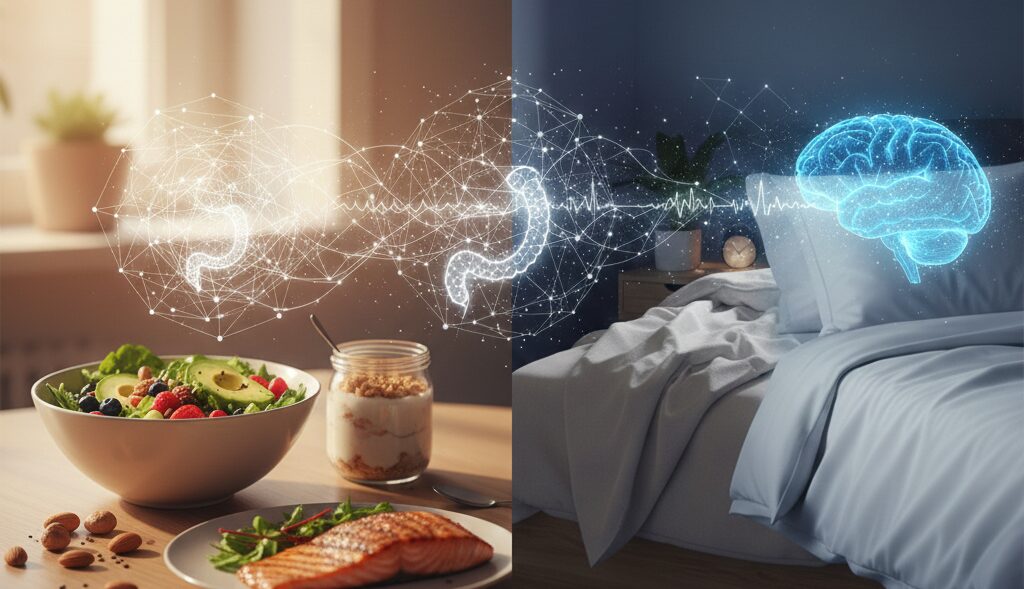
What Is the Gut-Brain Axis and Why Does Your Gut Control Your Sleep
Direct Answer: The gut-brain axis is a bidirectional communication network connecting the enteric nervous system (the nervous system of the gut) to the central nervous system via the vagus nerve, the immune system, and the endocrine system. Your gut is not simply digesting food — it is sending constant regulatory signals to your brain that directly influence sleep timing, sleep depth, and sleep continuity.
Mechanism: The gut contains over 100 million neurons — more than the spinal cord — and is sometimes called the “second brain.” It produces more than 30 neurotransmitters, including 95% of the body’s serotonin. Critically, it communicates with the brain via the vagus nerve (a superhighway of signals running from gut to brain) and via the immune system (gut inflammation produces cytokines that cross the blood-brain barrier and disrupt sleep centers). The gut does not wait for instructions from the brain — it runs its own regulatory programs that override top-down control (Mayer, 2011).
Actionable Advice: Treat your gut as a primary sleep organ, not a digestive one. The food choices that optimize your gut directly optimize your sleep. The first question to ask when you cannot sleep is not “what is stressing my brain?” but “what am I feeding my gut?”
The Serotonin Bridge: Why 95% of Your “Sleep Hormone” Is Made in Your Gut
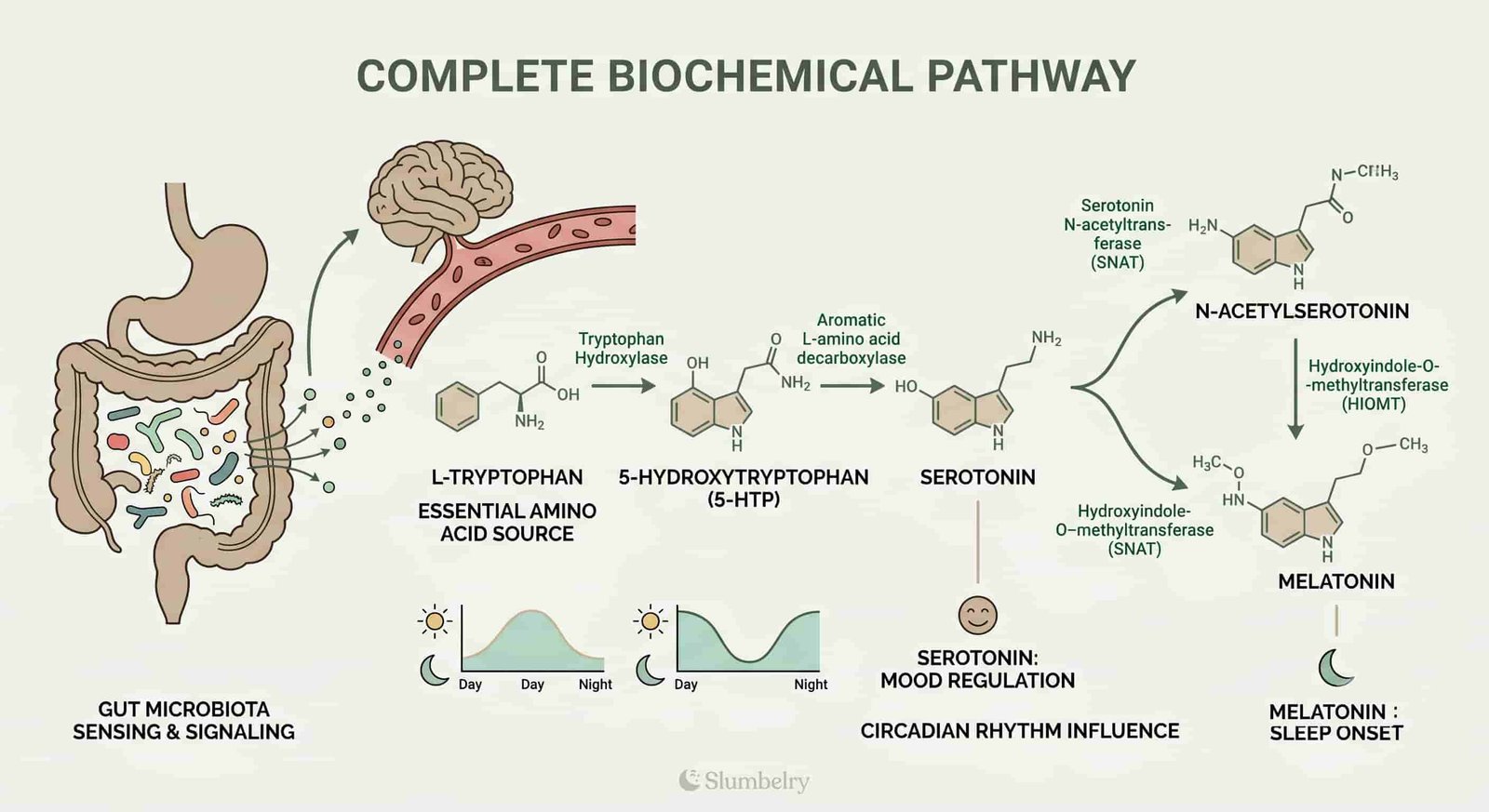
Direct Answer: Serotonin (5-hydroxytryptamine or 5-HT) is the biochemical precursor to melatonin — the hormone that regulates sleep onset and circadian timing. The prevailing assumption is that serotonin is primarily a brain neurotransmitter. The reality is that approximately 95% of the body’s serotonin is synthesized in the gut by enterochromaffin cells, not in the brain. This serotonin cannot cross the blood-brain barrier, but it plays a critical role in gut motility, immune regulation, and platelet function, and indirectly supports brain serotonin synthesis via the tryptophan pathway.
Mechanism: The conversion chain is: dietary tryptophan (an essential amino acid from protein) is converted in the gut to 5-HTP, then to serotonin (5-HT) in the gut mucosa. A portion of this gut-derived serotonin is taken up by platelets and transported throughout the body. Meanwhile, a small fraction of dietary tryptophan crosses the blood-brain barrier and is converted to serotonin in the Raphe nuclei of the brainstem. This brain serotonin is then converted to melatonin in the pineal gland via the N-acetyltransferase pathway. The entire chain — gut tryptophan to brain serotonin to melatonin — depends on the integrity of the gut epithelium and the diversity of the microbiome. When gut health is compromised, the entire pipeline is disrupted (Yano et al., 2015).
Actionable Advice: To optimize the serotonin-to-melatonin pathway, you need adequate dietary tryptophan (from protein sources like turkey, eggs, salmon), a healthy gut epithelium that can convert it, and a microbiome that does not consume tryptophan through inflammatory pathways. The dinner you eat tonight is part of your sleep architecture.
The Microbiome and Sleep Quality: How Gut Bacteria Directly Regulate Your Sleep Architecture
Direct Answer: Specific bacterial species in your gut produce and consume neurotransmitters that directly regulate sleep. Germ-free mice (mice raised without any gut bacteria) show severely disrupted sleep architecture — reduced REM sleep, fragmented NREM sleep, and altered circadian gene expression. Colonizing these mice with specific bacterial species partially or fully restores normal sleep, proving that gut bacteria are not passive passengers — they are active regulators of sleep.
Mechanism: Different bacterial species produce different neurotransmitters: Lactobacillus and Bifidobacterium produce GABA (the primary inhibitory neurotransmitter that promotes sleep); Escherichia and Streptococcus produce serotonin; Bacillus produces dopamine. Some species consume these neurotransmitters — for example, certain Lactobacillus strains actively metabolize the tryptophan that would otherwise be available for serotonin and melatonin synthesis. The net effect is that microbiome composition determines the neurotransmitter milieu of the gut, which then signals to the brain via the vagus nerve and immune system (Anderson, 2017). This is why two people with identical diets can have radically different sleep quality based solely on microbiome differences.
Systemic Inflammation and Sleep: How Leaky Gut Triggers Chronic Insomnia
Direct Answer: “Leaky gut” (increased intestinal permeability) is a condition where the tight junctions between intestinal epithelial cells become loosened, allowing bacterial endotoxins (lipopolysaccharides or LPS) to enter the bloodstream. This triggers a systemic inflammatory response — low-grade but chronic — that directly disrupts sleep architecture by activating the HPA axis and releasing pro-inflammatory cytokines that interfere with sleep-promoting neurons.
Mechanism: When LPS enters the bloodstream, immune cells (macrophages and monocytes) recognize it and release IL-1 beta, IL-6, and TNF-alpha — pro-inflammatory cytokines that are potent somnogens (substances that promote sleep but fragment it). IL-1 beta specifically inhibits the orexin neurons (which promote wakefulness), resulting in daytime fatigue, but also disrupts the hypothalamic sleep-wake switching mechanism, resulting in nighttime wake fragmentation. The combination: sleepy during the day, unable to sleep deeply at night. This inflammatory state is self-reinforcing — poor sleep raises cortisol, cortisol damages the gut epithelium further, more endotoxins enter, more inflammation, worse sleep (Gros et al., 2019).
Actionable Advice: Address leaky gut by removing inflammatory drivers (processed foods, alcohol, NSAIDs like ibuprofen) and adding gut-lining supporting nutrients (L-glutamine, zinc, bone broth, omega-3 fatty acids). A 12-week anti-inflammatory gut protocol can measurably reduce systemic inflammation and improve sleep quality, independent of any direct sleep intervention.
Sleep Destroyers in Your Diet: The Four Food Categories That Damage Your Microbiome
Direct Answer: The four dietary categories that most reliably damage the microbiome and, by extension, disrupt sleep are: added sugar and high-fructose corn syrup, processed food emulsifiers, artificial sweeteners, and agricultural chemical residues. Each drives microbiome disruption through a different mechanism, and their combined effect is synergistic — meaning even moderate consumption of all four can produce significant microbiome damage.
Mechanism: 1) Added sugar and HFCS feed pathogenic bacteria and fungi (particularly Candida species), causing them to overgrow and crowd out beneficial species. This dysbiosis reduces the production of sleep-promoting neurotransmitters. 2) Emulsifiers (carrageenan, polysorbate-80, carboxymethylcellulose) used in processed foods damage the protective mucous layer of the gut, increasing intestinal permeability and driving inflammation. 3) Artificial sweeteners (sucralose, aspartame, saccharin) have been shown in randomized trials to alter microbiome composition within 2 weeks — reducing Bifidobacterium and Lactobacilli species that support serotonin production. 4) Glyphosate (Roundup) acts as an antibiotic in the gut, killing off beneficial bacteria, particularly at the concentrations found in conventionally grown soy, corn, and wheat (Sweeney et al., 2016).
Actionable Advice: Eliminate or radically reduce all four of these categories for 4 weeks and assess the impact on your sleep quality. The most impactful single change: remove all beverages with added sugar or artificial sweeteners. The second most impactful: switch to organic or locally sourced produce to reduce glyphosate exposure.
Tryptophan and Sleep: Why the Turkey Dinner Myth Is Actually Science
Direct Answer: The widespread dismissal of the “turkey makes you sleepy” idea as a myth is incorrect — it is a real, well-documented mechanism. Turkey is one of the most concentrated dietary sources of tryptophan, and tryptophan is the essential amino acid precursor to both serotonin and melatonin. The post-Thanksgiving-dinner drowsiness is partly real, though it involves a more nuanced mechanism than commonly described.
Mechanism: After a large carbohydrate-rich meal, insulin is released and clears most amino acids from the bloodstream — but not tryptophan, which is bound to albumin and protected from insulin-mediated clearance. This means a carb-rich meal specifically elevates the ratio of tryptophan to other large neutral amino acids (LNFAs) crossing the blood-brain barrier. More tryptophan in the brain means more serotonin synthesis, which means more melatonin, which means drowsiness. The turkey provides the tryptophan payload; the carbohydrate-rich dinner (mashed potatoes, bread, pie) is what delivers it to the brain by clearing the competition (Hudgins, 2018).
Actionable Advice: If you want to use tryptophan strategically for sleep, combine a protein source (turkey, salmon, eggs) with a slow-digesting carbohydrate (oats, sweet potato) eaten 2-3 hours before bed. This provides both the tryptophan substrate and the insulin response to drive it across the blood-brain barrier at sleep time.
Probiotics and Sleep: The Evidence for Fermented Foods as Sleep Aids
Direct Answer: Fermented foods — kimchi, sauerkraut, kefir, yogurt, miso, kombucha — contain live beneficial bacteria that, when consumed regularly, produce measurable improvements in sleep quality. The mechanism is not direct bacterial colonization of the gut (most probiotic bacteria do not permanently colonize) but rather the metabolites they produce: short-chain fatty acids (SCFAs) like butyrate and propionate, and neurotransmitter-like compounds that signal via the gut-brain axis.
Mechanism: Lactobacillus species in fermented foods produce GABA through fermentation of glutamate (the excitatory neurotransmitter). This GABA is absorbed across the gut epithelium and can signal to the brain via the vagus nerve, producing an anxiolytic and sleep-promoting effect. Bifidobacterium species produce short-chain fatty acids that reduce gut inflammation, which in turn reduces the inflammatory cytokines that fragment sleep. A 2021 randomized controlled trial by Revivo et al. found that participants consuming 4 servings of fermented foods daily for 6 weeks showed a 40% increase in microbiome diversity and significant improvements in sleep quality and resilience to stress, compared to a high-fiber diet control group (Revivo et al., 2021).
Actionable Advice: Aim for 2-4 servings of diverse fermented foods per week, not per day. Variety matters more than quantity — kimchi, kefir, miso, and full-fat unsweetened yogurt each introduce different bacterial species. Introduce them gradually if you have a sensitive gut, as the rapid shift in microbiome composition can cause temporary bloating.
Prebiotics and Sleep: Feeding the Good Bacteria That Build Your Sleep Hormones
Direct Answer: Prebiotics are non-digestible dietary fibers that selectively feed beneficial gut bacteria, allowing them to grow and produce the metabolites — particularly short-chain fatty acids (SCFAs) and neurotransmitters — that regulate sleep. Probiotics are the seeds; prebiotics are the fertilizer. Without prebiotics, probiotic supplements and fermented foods cannot sustain their effects.
Mechanism: Beneficial bacteria (Bifidobacterium, Lactobacillus) ferment prebiotic fibers to produce SCFAs — primarily butyrate, propionate, and acetate. Butyrate is the primary energy source for colonocytes (gut lining cells) and strengthens the gut barrier, directly reducing the leaky gut that drives inflammatory sleep disruption. Propionate crosses the blood-brain barrier and has been shown in animal studies to reduce corticosterone (cortisol) levels, directly reducing stress-related sleep disruption. Prebiotic fibers also support the growth of bacteria that specifically consume tryptophan — meaning a prebiotic-rich diet preserves more of the tryptophan available for serotonin and melatonin synthesis (Davis et al., 2020).
Actionable Advice: Daily prebiotic sources: garlic, onions, leeks, asparagus, oats, and unripe bananas (resistant starch). The most powerful single prebiotic habit: add one raw garlic clove to dinner, lightly crushed (not chopped, which activates alliinase and destroys the prebiotic compounds). Oats at breakfast provide sustained prebiotic support throughout the day.
The Gut-Sleep-Cortisol Loop: How Poor Sleep and Gut Dysbiosis Perpetuate Each Other
Direct Answer: Poor sleep and poor gut health create a self-reinforcing vicious cycle. Poor sleep elevates cortisol; elevated cortisol damages the gut epithelium and alters microbiome composition; a damaged gut produces more inflammatory cytokines; these cytokines fragment sleep; the cycle repeats and intensifies. This is why gut-related sleep problems, if left unaddressed, tend to worsen rather than improve over time.
Mechanism: The 3P Model of insomnia (Perlis et al., 2016) predicts that perpetuating factors are what convert acute sleep disruption into chronic insomnia. The gut-sleep-cortisol loop is one of the most powerful perpetuating cycles. Nighttime cortisol elevation (triggered by poor sleep) reduces the production of secretory IgA — the antibody that maintains gut barrier integrity. Reduced IgA allows bacterial endotoxins to translocate across the gut lining, triggering the inflammatory cascade described above. Inflammation elevates IL-6 and TNF-alpha, which fragment sleep and reduce deep NREM sleep. Less deep NREM sleep means less growth hormone release, which reduces gut epithelial repair. The loop is closed.
Actionable Advice: Break the loop at its most accessible point: sleep. Prioritize sleep consistency (same bedtime and wake time daily) to reduce the cortisol rhythm variability that damages the gut. Even 3 nights of improved sleep (7.5-8 hours) can measurably restore IgA levels and reduce gut inflammation. While simultaneously fixing your diet, prioritize sleep hygiene — the gut will not heal if the sleep disruption continues.
The Anti-Inflammatory Diet for Sleep: What to Eat Nightly for Better Rest
Direct Answer: An anti-inflammatory diet optimized for sleep is not complicated — it is built on whole foods, diverse plant fibers, adequate protein, and omega-3 fatty acids. The goal is to simultaneously reduce gut-damaging inflammation and provide the amino acid and micronutrient precursors for sleep neurotransmitters.
Mechanism: The anti-inflammatory diet for sleep has five pillars: (1) Omega-3 fatty acids (EPA and DHA from wild salmon, sardines, walnuts) — these resolve inflammation and are precursors for anti-inflammatory compounds called resolvins. (2) Polyphenol-rich foods (blueberries, pomegranate, dark chocolate, green tea) — polyphenols feed Akkermansia muciniphila, a beneficial species that strengthens the gut lining and is associated with better sleep quality. (3) Magnesium-rich foods (dark leafy greens, pumpkin seeds, avocado) — magnesium is a cofactor for the enzymes that convert tryptophan to serotonin and serotonin to melatonin. (4) Zinc-rich foods (oysters, pumpkin seeds, grass-fed beef) — zinc is required for over 300 enzymatic reactions, including those involved in neurotransmitter synthesis and gut barrier integrity. (5) Diverse plant fibers (30+ different plant species per week) — microbiome diversity, which directly correlates with sleep quality, requires dietary diversity (Sonnenburg et al., 2020).
Frequently Asked Questions
Is the gut-brain axis scientifically proven or just a theory?
Direct Conclusion: The gut-brain axis is one of the most well-established pathways in modern neuroscience — it is not theoretical. The bidirectional communication between gut and brain has been documented through dozens of pathways: the vagus nerve (confirmed via electrical stimulation studies), the immune system (cytokine signaling to brain centers), the endocrine pathway (CRH-mediated HPA axis activation), and the metabolic pathway (short-chain fatty acids crossing the blood-brain barrier). A 2021 study demonstrated that directly stimulating the vagus nerve can treat depression and insomnia — proving that the gut-to-brain pathway is not only real but clinically actionable.
How does gut bacteria actually produce serotonin?
Direct Conclusion: Gut bacteria produce serotonin indirectly through their effects on enterochromaffin cells — specialized cells in the gut lining that synthesize and release serotonin. These cells detect signals from the microbiome (including SCFAs produced by bacterial fermentation) and respond by releasing serotonin into the gut lumen and the surrounding tissue. Certain bacterial species (Escherichia, Enterococcus, Streptococcus) have been shown to produce serotonin precursors and to stimulate serotonin release from enterochromaffin cells. The key point: your microbiome composition determines how much serotonin your gut produces, which determines how much substrate is available for your brain’s serotonin and melatonin synthesis (Yano et al., 2015).
Can improving my gut health really help me sleep better?
Direct Conclusion: Yes — and the effect can be significant. Multiple randomized controlled trials have demonstrated that interventions targeting the gut microbiome (probiotics, prebiotics, fermented foods) produce measurable improvements in sleep quality, sleep onset latency, and sleep duration. A 2019 meta-analysis found that probiotic supplementation reduced insomnia severity scores by an average of 32% compared to placebo, with the strongest effects in participants with baseline gut dysfunction. The clinical data is strong enough that gut-focused interventions are now considered first-line sleep support in functional medicine protocols — before prescription sleep aids.
What is leaky gut, and how does it affect sleep?
Direct Conclusion: Leaky gut (increased intestinal permeability) is a condition where the tight junctions between epithelial cells of the intestinal lining become loosened, allowing substances that should remain in the gut — including bacterial endotoxins, undigested food proteins, and toxins — to enter the bloodstream. The primary consequence for sleep is systemic inflammation: endotoxins (particularly LPS from Gram-negative bacteria) trigger immune cells to release IL-1 beta, IL-6, and TNF-alpha. These cytokines fragment sleep architecture by inhibiting sleep-promoting neurons and activating the HPA axis. The result is a characteristic pattern: excessive daytime sleepiness combined with unrefreshing, fragmented nighttime sleep, even after 7-8 hours in bed.
Are probiotic supplements better than fermented foods for sleep?
Direct Conclusion: Fermented foods are superior to probiotic supplements for sleep optimization — and here is why: fermented foods contain not just the bacteria but the metabolites those bacteria produce during fermentation, including short-chain fatty acids, GABA, and anti-inflammatory compounds. These metabolites are the active agents that influence sleep, not the bacteria themselves. Probiotic supplements typically contain a narrow range of bacteria (usually 1-5 species) and lack the metabolic complexity of fermented foods. A 2021 randomized trial (Revivo et al., 2021) directly compared a high-fermented-food diet to a high-probiotic-supplement diet and found that fermented foods significantly outperformed supplements on every microbiome and sleep metric. Food is the superior delivery system.
Does the timing of meals affect sleep through the gut?
Direct Conclusion: Yes — meal timing affects sleep primarily through gut-dependent mechanisms. The gut has its own circadian clock (entrained by feeding times, not just light), and eating late at night desynchronizes the gut’s circadian rhythm from the brain’s suprachiasmatic nucleus clock. A late-night high-carbohydrate meal specifically suppresses the gut’s production of serotonin precursors and disrupts the microbial species that produce sleep-promoting metabolites. The optimal eating cutoff for sleep is 2-3 hours before bed — this allows the gut to complete the majority of digestion before sleep onset and prevents the thermogenic effect of digestion from interfering with the core body temperature drop required for sleep initiation.
Why does alcohol destroy gut health and ruin sleep?
Direct Conclusion: Alcohol is one of the most damaging substances to the gut microbiome and the gut lining, simultaneously. It directly kills beneficial bacteria (particularly Bifidobacterium and Lactobacillus species), damages the gut epithelial lining, increases intestinal permeability (leaky gut), and drives systemic inflammation. These effects begin within 30 minutes of consumption and persist for 24-48 hours. For sleep specifically, alcohol shifts sleep architecture toward lighter stages — it suppresses REM sleep by 20-30% and increases sleep fragmentation. The mechanism is partly direct (alcohol is a CNS depressant that disrupts sleep-wake switching) and partly gut-mediated (the inflammatory response to alcohol fragments NREM sleep architecture). Even moderate drinking (2 drinks per night) measurably damages the microbiome within 2 weeks.
What foods are highest in tryptophan for natural sleep support?
Direct Conclusion: The tryptophan density of foods (mg of tryptophan per gram of protein) ranks as follows: turkey breast (~410mg/100g protein), wild salmon (~370mg/100g protein), chicken breast (~330mg/100g protein), eggs (~290mg/100g protein, particularly the yolk), pumpkin seeds (~260mg/100g), and tofu (~190mg/100g). For sleep optimization, combine a tryptophan-rich protein source with a slow-digesting carbohydrate (as described in the tryptophan mechanism above) eaten 2-3 hours before bed. This combination ensures maximum tryptophan delivery to the brain at sleep time, supporting both serotonin and melatonin synthesis.
How does the gut microbiome affect REM sleep specifically?
Direct Conclusion: REM sleep is particularly sensitive to microbiome disruption. The cholinergic neurons that regulate REM sleep (located in the pons and laterodorsal tegmental nucleus) are influenced by serotonin, which is produced primarily in the gut. When microbiome dysbiosis reduces gut serotonin production, brain serotonin levels drop, and REM sleep is preferentially disrupted — meaning less REM, more wake intrusion during REM periods, and reduced dream recall. A 2020 study by Anderson et al. found that germ-free mice showed a 60% reduction in REM sleep compared to colonized controls, and that colonizing the mice with a single bacterial species (Bifidobacterium infantis) partially restored REM sleep, specifically through the tryptophan-serotonin pathway.
Can a poor gut cause anxiety that keeps you awake at night?
Direct Conclusion: Yes — and this is one of the most clinically relevant pathways. Gut dysbiosis produces anxiety through multiple mechanisms: (1) Reduced GABA production by Lactobacillus species removes the primary inhibitory brake on the nervous system, leaving the amygdala (the brain’s fear center) in a hyperactive state. (2) Elevated gut inflammation produces IL-6 and TNF-alpha, which activate the HPA axis and elevate cortisol — the anxiety hormone. (3) Leaky gut allows endotoxins into the bloodstream, triggering systemic inflammation that the brain interprets as threat, keeping the stress response active. This gut-driven anxiety is distinct from psychological anxiety — it is generated in the gut, not in the thoughts, which is why it persists even when there is nothing to be anxious about. The treatment target is the gut, not the brain — CBT-I addresses the brain, but gut-focused protocols address the source.
Ready to Transform Your Recovery?
Sleep is not just a brain event — it is a gut event. If you have tried everything for your sleep and nothing has worked, look at your plate. The food on it is either building your sleep architecture or dismantling it.
Take the Sleep Assessment Explore Our Cooling MattressThe Slumbelry Commitment
Sleep is the most vulnerable state of human existence. It is where we heal, reset, and grow.
At Slumbelry, we do not just sell sleep products; we advocate for your physiological right to rest. From ergonomic support to light management, every solution we offer is designed with one obsession: Respecting your Biology.
Science is our language, but your recovery is our purpose. You take care of everything else in your life — let us take care of your sleep.
Rest Deeply,
The Slumbelry Team