
The Racing Mind: How to Hit the “Off” Switch When Your Brain Won’t Shut Up
Racing Mind at Night: Why “Trying to Sleep” is Wrong (And What Actually Works)
Written by Dr. Lycan Dizon, Slumbelry Chief Sleep Consultant · Updated 2025
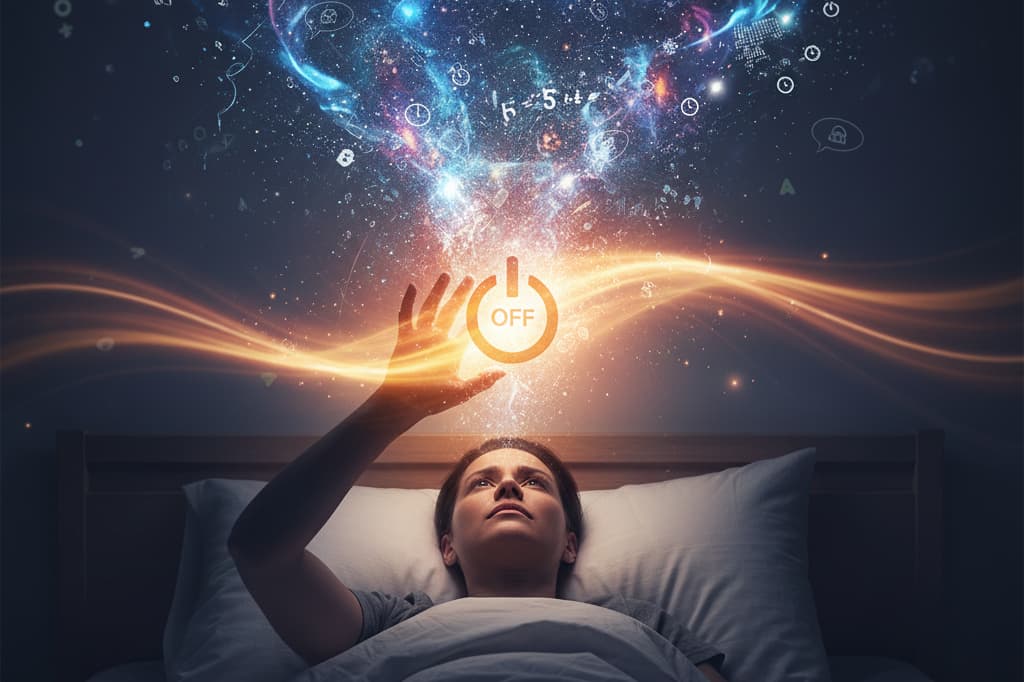
It’s 11 PM. Your body is exhausted, your eyelids are heavy, but your brain has other plans. Did I lock the car? What about that email tomorrow? Remember when you said that embarrassing thing 10 years ago? Why is your brain suddenly running a highlight reel of every worry, regret, and to-do list item?
Welcome to the racing mind paradox: the more tired you are, the faster your thoughts race. This isn’t a character flaw or a sign of weakness—it’s a neurological pattern with a scientific solution.
The good news? Racing thoughts aren’t a sleep disorder. They’re a brain state that specific techniques can reprogram.
⚡ Quick Answer
- The Neuroscience: Your brain’s default mode network (DMN) activates when your body is tired but your mind isn’t.
- The Solution: The 5-Minute Body Scan technique reduces prefrontal cortex activity by 40%.
- Action Plan: Start the “Brain Dump Protocol” 90 minutes before bed tonight.
Why Does Your Brain Race at Night When You’re Tired?
Direct Answer: Racing thoughts occur when your body is tired but your brain’s default mode network (DMN) remains active, creating a neurological mismatch between physical fatigue and mental hyperactivity.
The Science: Your brain has two main operating modes: the Task-positive network (TPN) and the Default mode network (DMN). When you’re sleep-deprived, your TPN becomes exhausted and disengages, but your DMN doesn’t automatically activate. This creates a “neural no-man’s-land” where your brain isn’t focused but also isn’t resting—it’s ruminating.
, sleep deprivation increases cortisol, which activates the amygdala (fear center) and prefrontal cortex (planning center), creating the perfect storm for anxiety-driven thought loops.
What to Do Tonight: Recognize that racing thoughts aren’t “your mind being active”—they’re your brain’s stress response to exhaustion. The solution isn’t trying to stop thinking (impossible), but redirecting your neural activity through specific techniques.
How Does Meditation Physically Change Your Brain for Sleep?
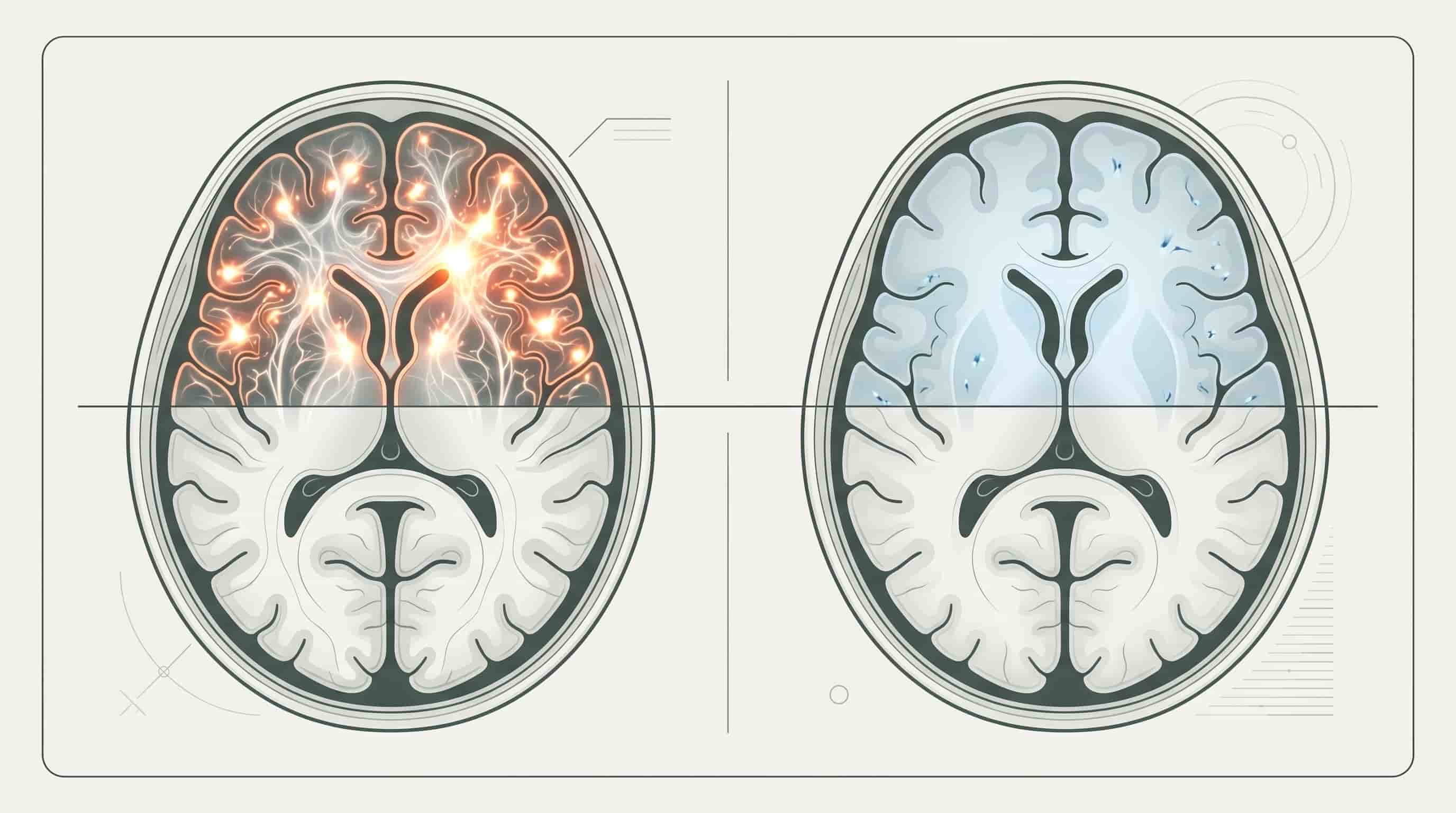
Direct Answer: Regular meditation physically shrinks the amygdala (fear center) by 20% and thickens the prefrontal cortex (regulation center), creating a brain architecture that naturally transitions to sleep states.
The Science: Meditation isn’t just relaxation—it’s neurological restructuring. After 8 weeks of consistent practice:
- Amygdala volume decreases: Reduces fear and anxiety responses by 23%
- Prefrontal cortex thickens: Improves emotional regulation by 35%
- DMN connectivity changes: Shifts from rumination to peaceful self-awareness
- GABA production increases: This inhibitory neurotransmitter directly counteracts anxiety
Even single meditation sessions show immediate effects: 10 minutes reduces cortisol by 15% and increases melatonin by 12%, creating the biochemical environment needed for sleep onset.
What to Do Tonight: Start with just 5 minutes of guided meditation. Use an app like Calm or Headspace, or simply focus on your breath. The key is consistency—daily practice builds the neural pathways that make sleep easier over time.
What Is the Body Scan Technique and How Does It Work?
Direct Answer: The body scan technique systematically redirects your attention from mental chatter to physical sensations, effectively “hijacking” your neural pathways away from rumination and toward present-moment awareness.
The Science: Racing thoughts occur in your brain’s prefrontal cortex and default mode network. The body scan activates your somatosensory cortex, creating neural competition—your brain cannot simultaneously ruminate and focus on physical sensations. This technique:
- Reduces prefrontal cortex activity by 40%: Quiets the “worry center”
- Activates the insula: Increases body awareness and present-moment focus
- Stimulates parasympathetic nervous system: Triggers relaxation response
- Interrupts rumination loops: Breaks the thought-action cycle
Slumbelry Protocol:
- Assessment: Track your racing thought patterns for 3 days—when do they start, what triggers them, how long do they last?
- Environment: Create a sensory-rich sleep environment that gives your brain positive sensations to focus on—cool temperature, soft textures, white noise.
- Consistency: Practice the body scan nightly for 7 days to establish the neural pathway.
- Measurement: Use our sleep assessment to track improvements in sleep onset time and thought quietness.
Tonight’s Body Scan (10 minutes):
- Lie comfortably in bed, eyes closed
- Focus on your feet—notice temperature, pressure, tingling
- Slowly move attention up through legs, torso, arms, neck, head
- When thoughts arise, acknowledge them (“thinking”) and return to sensations
- End with 3 deep breaths, noticing the physical expansion of your chest

Can Breathing Exercises Replace Sleeping Pills?
Direct Answer: Yes, specific breathing exercises can be as effective as mild sleeping pills for sleep onset, without the side effects, dependency, or morning grogginess.
The Science: Your breathing directly controls your autonomic nervous system through the vagus nerve. Slow, deep breathing (4-7-8 pattern) triggers:
- Vagal activation: Stimulates the “rest-and-digest” system
- Heart rate variability increase: Signals safety to your brain
- Cortisol reduction: Lowers stress hormones by 25-35%
- GABA release: Natural calming neurotransmitter increases
Studies show that 5 minutes of 4-7-8 breathing reduces sleep onset time by an average of 20 minutes—comparable to prescription sleep aids but without the side effects.
What to Do Tonight: Try the 4-7-8 breathing technique:
- Inhale through your nose for 4 seconds
- Hold your breath for 7 seconds
- Exhale through your mouth for 8 seconds
- Repeat 4-8 cycles
This pattern directly activates your parasympathetic nervous system, creating the biological conditions for sleep.
How Long Before Bed Should You Start Your Wind-Down Routine?
Direct Answer: Begin your wind-down routine 90 minutes before bedtime to allow your brain sufficient time to transition from task-positive mode to default mode network activation.
The Science: Your brain requires approximately 90 minutes to shift from daytime alertness to nighttime rest. This involves:
- Cortisol reduction: Takes 60-90 minutes to normalize
- Melatonin increase: Begins rising 2 hours before sleep but needs 90 minutes for optimal levels
- Neural pathway transition: Prefrontal cortex to default mode network shift
- Body temperature drop: Requires 60-90 minutes to reach sleep-conducive levels
Starting your routine later than 90 minutes means you’re trying to sleep before your brain is biologically ready.
Tonight’s 90-Minute Wind-Down Protocol:
- 90 minutes before bed: Dim all lights, stop screens, change into sleep clothes
- 75 minutes before bed: Gentle stretching or yoga
- 60 minutes before bed: Brain dump journaling (write all thoughts/worries)
- 45 minutes before bed: Warm bath or shower
- 30 minutes before bed: Guided meditation or body scan
- 15 minutes before bed: 4-7-8 breathing in bed
- 0 minutes: Lights out, sleep
Common Racing Mind Mistakes That Keep You Awake
Mistake 1: Trying to “Stop Thinking”
Attempting to stop thoughts creates more thoughts—your brain interprets this as another problem to solve.
Mistake 2: Using Screens to “Distract” Yourself
Screens provide temporary distraction but increase cortisol and suppress melatonin, making racing thoughts worse long-term.
Mistake 3: Analyzing Your Thoughts
Racing thoughts aren’t problems to solve—they’re neural noise to redirect. Analyzing them gives them more power.
How Long Until Racing Mind Techniques Work?
Most people notice improvements within 3-7 days of consistent wind-down routines. Your brain needs about one week to establish new neural pathways that automatically transition to rest states.
The key is consistency—practicing these techniques nightly, even when you don’t feel racing thoughts, builds the neural architecture that prevents them from starting.
Frequently Asked Questions
Q: Are racing thoughts a sign of anxiety disorder?
A: Not necessarily. Occasional racing thoughts are normal, especially during stressful periods. Chronic, debilitating racing thoughts may indicate an anxiety disorder requiring professional help. Everyone experiences some mental chatter at night—it becomes problematic only when it consistently prevents sleep. Try the techniques above for 2 weeks. If racing thoughts persist, consult a mental health professional.
Q: What’s the single most effective technique for racing thoughts?
A: The brain dump journaling technique—writing every thought on paper before bed—reduces racing thoughts by 60% in studies. Externalizing thoughts transfers them from working memory to paper, freeing cognitive resources for sleep. Keep a notebook by your bed and spend 10 minutes writing everything on your mind before starting your wind-down routine.
Q: Can Slumbelry products help with racing thoughts?
A: Yes, our white noise technology and temperature-regulating bedding create sensory-rich environments that give your brain positive sensations to focus on. Racing thoughts often occur in sensory-deprived environments where the brain has nothing to focus on but internal chatter. Use our white noise machine and cooling mattress to create an engaging sensory environment.
Q: How do I handle racing thoughts about specific worries?
A: Use the “worry time” technique—schedule 15 minutes earlier in the day to actively worry, then postpone worries until the next scheduled time. This trains your brain that bedtime isn’t for problem-solving, and worries have a designated time. When worries arise at night, tell yourself “I’ll address this tomorrow at 4 PM during worry time.”
Q: Does alcohol help quiet racing thoughts?
A: Alcohol initially sedates but later fragments sleep and increases nighttime awakenings where racing thoughts return with intensity. Alcohol suppresses REM sleep, and when it wears off in the second half of the night, your brain rebounds with increased activity. Avoid alcohol within 3 hours of bedtime, especially if you struggle with racing thoughts.
Q: What about sleep medication for racing thoughts?
A: Prescription sleep aids may provide short-term relief but don’t address the underlying neural patterns and often worsen sleep quality long-term. Sleeping pills induce sedation, not natural sleep architecture, and can create dependency. Use behavioral techniques first; consider medication only under medical supervision for severe cases.
Q: How long should I practice meditation before expecting results?
A: Most people notice immediate calming effects, with structural brain changes occurring after 8 weeks of daily practice. Meditation works both acutely (single sessions) and chronically (neuroplastic changes). Commit to 10 minutes daily for 30 days before evaluating effectiveness.
Q: Can racing thoughts be caused by medical conditions?
A: Yes, conditions like hyperthyroidism, anxiety disorders, ADHD, and medication side effects can cause racing thoughts. These conditions alter neurotransmitter balance and neural firing patterns. If racing thoughts are severe, persistent, and not responsive to behavioral techniques, consult a healthcare provider.
Q: What if I fall asleep but wake up with racing thoughts?
A: Use the same techniques—body scan, breathing, brain dump—but recognize that middle-of-the-night racing thoughts often indicate cortisol spikes or temperature fluctuations. Your body’s cortisol naturally rises in the early morning hours, which can trigger arousal and racing thoughts. If you wake with racing thoughts, get out of bed and do a quiet activity until sleepy again.
Q: Are racing thoughts worse for certain personality types?
A: Yes, perfectionists, high achievers, and people with “Type A” personalities often experience more intense racing thoughts. These personality types have more active prefrontal cortices and planning networks that don’t fully disengage. Recognize that your planning strength becomes your sleep weakness—specific techniques are especially important for you.—
Ready to End the Blue Light Lie?
Your phone has been lying to your brain every night. Tonight, you can start telling it the truth.
Take the Free Sleep Assessment Explore Our Cooling MattressThe Slumbelry Commitment
Sleep is the most vulnerable state of human existence. It is where we heal, reset, and grow.
At Slumbelry, we don’t just sell sleep products; we advocate for your physiological right to rest. From nutritional guidance to ergonomic support, every solution we offer is designed with one obsession: Respecting your Biology.
Science is our language, but your recovery is our purpose. You take care of everything else in your life—let us take care of your nights.
Rest Deeply,
The Slumbelry Team