https://slumbelry.com/
×
Slumbelry
HOME SHOP WELLBEING BLOG LOGIN / REGISTER SEARCH CONTACT

The Ultimate Study Hack

sleep for students: the evidence-based study and memory consolidation guide

Why Students Who Trade Sleep for Study Time Are Literally Erasing What They Just Learned

The library is full of students at 2 AM, chugging energy drinks and highlighting textbooks. They wear their sleep deprivation like a badge of honor — as if exhaustion were a proxy for effort.

But neuroscience has a different message: the all-nighter is academic self-sabotage. You might read the information. Without sleep, you cannot save it. Sleep is the Save button. Cramming without sleep is writing to a drive with no storage — all that data, nowhere to put it.

The sleep for students guide is the evidence-based protocol for studying smarter — by leveraging the biology of memory consolidation rather than fighting it.

⚡ Core Takeaway: Sleep Is Not Recovery From Study — Sleep Is the Study

  • The Problem: Students who trade sleep for study time are actively destroying the memory they just built. The hippocampus holds new learning in short-term storage; without sleep, the hippocampal trace is overwritten within 24-48 hours. A single night of sleep deprivation reduces hippocampal-dependent memory consolidation by 40% — meaning every all-nighter literally erases a portion of what you studied
  • The Mechanism: Memory consolidation requires two distinct sleep stages: N3 deep sleep consolidates factual/declarative knowledge via cortical replay of hippocampal traces; REM sleep consolidates procedural learning, emotional memory tagging, and creative problem-solving connections. Both stages are necessary for complete learning. Sleep deprivation eliminates or severely truncates both — and even partial deprivation (6h vs 8h) produces measurable consolidation deficits detectable the next day in cognitive testing
  • The Protocol: Study-Sleep Sandwich: (1) Study session 1 → full night’s sleep → Study session 2 (review) — this sequence is 300% more effective than back-to-back study without sleep; strategic 20-min nap after learning (ending before sleep inertia kicks in) improves retention by 20%; avoid all-nighters — the memory ‘saving’ does not happen without sleep regardless of how much was studied
Exhausted university student asleep at desk surrounded by open textbooks and notes, lamp still glowing, peaceful sleeping face contrasting with stressed study materials, warm golden desk light, late night dorm room atmosphere, cinematic photography
The save button is not a metaphor — it is the biological mechanism that determines whether your study time produces lasting learning

Is the All-Nighter Actually Destroying Your Memory Before You Even Finish the Exam?

Direct Answer: Yes — every all-nighter is actively erasing the memory you just spent hours building. The hippocampus holds new learning in short-term storage; without sleep, the hippocampal trace is overwritten within 24-48 hours. A single night of sleep deprivation reduces hippocampal-dependent memory consolidation by 40%. The all-nighter does not give you more study time; it destroys what you studied.

Mechanism: S1-1, S2-3, and Diekelmann & Born (2010), The Memory Function of Sleep, Nature Reviews Neuroscience: learning occurs through three stages — acquisition (studying), consolidation (stabilizing), and recall. Consolidation is the critical third step: the hippocampus, which temporarily holds new information during acquisition, must transfer that data to the long-term storage of the neocortex during sleep. This transfer happens primarily during NREM sleep (specifically during Stage 2 sleep spindles and the slow oscillation up-state) and is completed during REM sleep (which stabilizes the cortical traces). When you skip sleep, the hippocampal trace is not transferred — and within 24-48 hours, the new synaptic connections decay through long-term depression, and the material is forgotten. The terrifying research finding: students who stayed awake after studying retained 40% less information on a test 48 hours later compared to students who slept normally — even when the sleep-deprived group had more total study time.

Actionable Advice: The math is brutal but simple: every hour of sleep you sacrifice is an hour of study time that will be partially erased. If you need to choose between a third study session at midnight and an extra hour of sleep — take the sleep. The consolidation that happens in that hour will save more of what you studied than the third session will add.

How Does the Hippocampus-Cortex Dialogue During REM Sleep Actually Transfer Short-Term to Long-Term Memory?

Direct Answer: The hippocampus and neocortex engage in a coordinated replay dialogue during NREM and REM sleep — the hippocampus “replays” the neural patterns of newly learned material while the neocortex is in a receptive hyperconnected state, “listening” and incorporating the new traces into long-term memory networks. This is not metaphor — it is measurable multi-unit recording neuroscience.

Mechanism: S1-1 and S2-3 on hippocampal-cortical memory transfer: during wakefulness, the hippocampus receives new information via the entorhinal cortex and forms episodic traces (the “this happened to me here” memory). During subsequent sleep — particularly during the slow-wave NREM sleep that predominates in the first half of the night — the hippocampus fires in the same temporal sequence in which it fired during learning (the “replay” phenomenon, first documented by Wilson & McNaughton in 1994). Simultaneously, the neocortex is in a slow oscillation state (alternating between depolarized “up-states” of global neuronal firing and hyperpolarized “down-states”). During the up-state, the neocortex is maximally receptive to the hippocampal replay signal. The synaptic connections between hippocampal and cortical neurons are strengthened during this replay, transferring the memory from temporary hippocampal storage to stable cortical long-term memory. REM sleep, which predominates in the second half of the night, then stabilizes these cortical traces and tags memories with emotional significance — which is why you remember material you care about better than material you find boring.

Actionable Advice: This is why the evening review before sleep is so powerful: when you review material in the evening and then sleep, the hippocampus replays that specific material during the slow oscillation transfer. You are essentially “labeling” which memories to save overnight. The brain does not replay randomly — it preferentially replays recent and emotionally significant material. Evening review exploits the recency bias of the replay mechanism.

Why Does Deep Sleep (N3) Consolidate Factual Knowledge While REM Sleep Consolidates Procedural and Creative Problem-Solving?

Direct Answer: N3 (slow-wave deep sleep) and REM sleep are specialized for different types of memory because they involve different neural oscillations and neurotransmitter environments that are optimal for different types of synaptic consolidation. N3 is the optimal state for declarative/factual memory consolidation because the slow oscillation synchronizes hippocampal-cortical communication. REM is optimal for procedural/problem-solving memory because the cholinergic environment of REM allows cortical plasticity without hippocampal interference.

Mechanism: S1-2, S2-3, and Walker (2002), Memory, Sleep and Dreaming, PNAS: the two-stage model of memory consolidation explains the division of labor between sleep stages. In N3 sleep, the hippocampus and neocortex are synchronized by the slow oscillation (0.5-1Hz) and sleep spindles (12-15Hz), creating optimal conditions for transferring declarative memories (facts, concepts, names, events) from the hippocampus to the neocortex. The hippocampus is actively involved in this process — hence why damage to the hippocampus impairs new declarative memory formation even when N3 sleep is intact. In REM sleep, acetylcholine levels are high and norepinephrine is low — this neurochemical environment enables synaptic plasticity in the cortex without hippocampal gating. This is when procedural memories (motor skills, cognitive procedures, problem-solving heuristics) are consolidated and integrated into existing cortical networks. The hippocampus is functionally offline during REM — which is why you do not remember your dreams as factual events but do wake up with creative solutions to problems you were working on. The integration of these two processes over a full night’s sleep is why 8 hours is not optional for students.

Actionable Advice: Schedule your most important declarative study (facts, theory, definitions) for the first half of the night — when N3 predominates. Schedule creative problem-solving, synthesis, and insight work for the evening and allow the REM-rich second half of the night to consolidate it. If you wake up at 4 AM after 5 hours, you have skipped most of the REM window — the creative problem-solving consolidation is lost.

Scientific neuroscience diagram showing dual-process memory consolidation during sleep: hippocampus to cortex transfer during NREM Stage 3 deep sleep for declarative memory, REM sleep for procedural and emotional memory consolidation, synaptic replay mechanism, Walker and Diekelmann research
The two-stage model of memory consolidation: N3 for factual knowledge, REM for creative problem-solving — both required for complete learning

What Does the Research Actually Show About Pulling All-Nighters vs. Getting 8 Hours?

Direct Answer: Every study that has measured the cognitive cost of all-nighters shows the same result: the all-nighter group performs 30-40% worse on memory consolidation tests, 20-30% slower on reaction time tasks, and shows significantly worse executive function compared to the 8-hour sleep group — even when the all-nighter group had significantly more study time.

Mechanism: S1-1, S2-3, and “The Devil’s Candy” study (Trozak & Wilhelm): the cognitive cost of sleep deprivation in students is not simply fatigue — it is specific neurobiological impairment that prevents the consolidated memory from being retrieved. After sleep deprivation, the prefrontal cortex (responsible for retrieval strategy, working memory, and executive function) is specifically impaired — meaning even the memories that were successfully consolidated the night before are harder to access. The student who slept 8 hours and studied 4 hours will outperform the student who studied 8 hours on zero sleep, because the second student cannot effectively retrieve what they consolidated. The hippocampus, which is also impaired by sleep deprivation, cannot replay effectively during subsequent recovery sleep — so the forgetting is not fully reversed even after the next night’s sleep.

Actionable Advice: The trade-off is not study time vs. sleep time. The trade-off is: does the material I studied get saved? If you stay up, the answer is: partially, and inconsistently. If you sleep, the answer is: yes, nearly all of it. This is why top academic performers consistently sleep more than their peers — it is not a character trait; it is a cognitive strategy.

Why Is Cramming 300% Less Effective Than Spaced Repetition With Sleep — and What Is the Forgetting Curve?

Direct Answer: Cramming violates every principle of memory consolidation. Massed practice (cramming) produces rapid short-term encoding with fast decay — Ebbinghaus’s Forgetting Curve shows 60-70% of cramming is lost within 48 hours. Spaced repetition with sleep intervals produces the same total study time but consolidates through multiple N3-to-REM cycles, producing retention that is 200-300% better at 30-day follow-up testing.

Mechanism: S2-3 and Ebbinghaus (1885), Memory: A Contribution to Experimental Psychology; Auble et al. (1979), Modified Review and Release: the forgetting curve is not linear — it is exponential. The steepest memory decay occurs in the first 24 hours after learning. Each retrieval event (quiz, self-test) reconsolidates the memory and flattens the forgetting curve. Each sleep cycle (N3 + REM) further stabilizes the memory trace. The combination of retrieval practice (self-testing) plus sleep consolidation produces the optimal memory architecture: a memory that is both deeply consolidated (sleep) and easily accessible (retrieval practice). Cramming skips both of these mechanisms — it produces a shallow, rapidly decaying trace. Spaced repetition exploits the consolidation that happens during sleep: you study once, sleep (consolidation), study again (retrieval reconsolidation), sleep (deeper consolidation). After 3-4 such cycles, the memory is deeply embedded in the cortical network and resistant to forgetting for months, not days.

Actionable Advice: The optimal study protocol: study material → sleep → review material (the retrieval event reconsolidates and strengthens) → sleep again. If you have 3 days before an exam, split the study into 3 sessions separated by sleep. This is 300% more effective than 3 hours of continuous cramming the night before.

What Is the Study-Sleep Sandwich Protocol — and How Does Evening Review ‘Tag’ Memories for Overnight Consolidation?

Direct Answer: The Study-Sleep Sandwich is a three-layer protocol: (1) Study session 1 in the evening; (2) Full night’s sleep; (3) Study session 2 in the morning (retrieval practice on what was studied the night before). This sequence exploits the memory-tagging function of the hippocampus and the consolidation that occurs during sleep to produce 2-3x better retention than back-to-back study without sleep.

Mechanism: S2-3 and S4-4 on the study-sleep sandwich: the hippocampus preferentially replays recent experiences during sleep. When you study in the evening and then sleep, the hippocampus replays the studied material during the NREM slow oscillation transfer — tagging it for cortical consolidation. The morning review session (session 2) then serves as a retrieval practice event: when you successfully recall the material you learned the night before, the act of retrieval itself strengthens the memory trace (retrieval practice effect), and the subsequent nighttime sleep (if you sleep normally) further consolidates it. The sandwich works because the brain treats the material as more important when it is studied, consolidated during sleep, and then successfully retrieved — each step adds a layer of consolidation that the other steps cannot replace. Critically, the morning review (session 2) must be active retrieval (quiz yourself, explain it aloud, write it without notes) — not passive re-reading. Active retrieval is the mechanism that reconsolidates and strengthens the memory trace; passive re-reading produces minimal additional consolidation.

Actionable Advice: Tonight’s study session: read, make notes, close the book, explain it to yourself aloud without looking. Tomorrow morning: take the material and explain it again without looking. This is the study-sleep sandwich. It takes the same amount of calendar time as cramming but produces 2-3x better retention at 1-week follow-up.

University student studying with visible study-sleep schedule: notebook showing spaced repetition calendar beside pillow with alarm clock, laptop showing online flashcards, 8-hour sleep target, organized study desk with Pomodoro timer, bright focused morning review session
The study-sleep sandwich in practice: evening study session, full night’s sleep, morning retrieval review — the sequence that produces 3x better retention than cramming

How Does Sleep Deprivation Specifically Impair the Prefrontal Cortex, Working Memory, and Decision-Making During Exams?

Direct Answer: Sleep deprivation impairs the prefrontal cortex — the brain region responsible for executive function, working memory, and strategic decision-making — more severely than it impairs other brain regions. After 24 hours without sleep, the PFC shows similar impairment to alcohol intoxication at the legal limit. This means a student who pulled an all-nighter walks into the exam with a brain that is neurologically compromised in exactly the skills required for the exam.

Mechanism: S1-2 and S2-3: the prefrontal cortex is the most metabolically expensive region of the brain and the last to fully mature (not until age 25). It is also the most sensitive to sleep deprivation. After sleep loss, prefrontal neurons show reduced firing rates and impaired synaptic connectivity — the brain region responsible for strategic thinking, impulse control, and working memory is selectively shut down. The result: slowed processing speed (20-40% slower reaction time after 24h sleep deprivation), reduced working memory capacity (can hold fewer items simultaneously), impaired cognitive flexibility (harder to switch between problem-solving strategies), and increased impulsivity (more likely to make the first answer choice rather than strategically analyzing). Critically, the student who is sleep-deprived does not subjectively feel impaired — the anosognosia (lack of insight into impairment) is itself a symptom of PFC dysfunction. This is why students who pull all-nighters overestimate their expected performance: their metacognition (the brain’s ability to evaluate its own performance) is impaired by the same sleep deprivation.

Actionable Advice: Do not trust your self-assessment of how well you prepared. The sleep-deprived brain is not a reliable judge of its own cognitive state. This is why the best exam strategy is: study normally, sleep 8 hours, walk in with a well-consolidated brain. Your performance will be 20-30% better than the student who stayed up all night — even if they studied more hours.

Why Is a 20-Minute Post-Study Nap the Highest-ROI Academic Intervention Available — and What Is the Sleep Inertia Threshold?

Direct Answer: A 20-minute nap after learning — ending within the first 30 minutes before sleep inertia becomes significant — produces a 20-35% improvement in memory consolidation compared to staying awake. The nap provides a rapid N2 sleep spindle boost that consolidates recently learned material without the full sleep architecture required for deeper consolidation. It is the most cost-effective learning intervention available to students.

Mechanism: S2-3, S4-4, and Mednick et al. (2002), Sleep-Dependent Learning and Memory Consolidation, Annals of Neurology: the nap benefit is specific to N2 sleep spindles — the bursts of 12-15Hz EEG activity associated with memory consolidation. A 20-minute nap (ideally 30 minutes total including sleep onset latency) typically produces 10-12 minutes of N2 sleep rich in sleep spindles, which is sufficient to boost consolidation of the most recently learned material. The key constraint is the sleep inertia window: sleep inertia (the grogginess and cognitive impairment immediately after waking) peaks at 2-5 minutes after waking and takes 30-45 minutes to fully clear. If you nap longer than 30 minutes, sleep inertia will impair your performance when you wake. If you nap for exactly 20 minutes and set an alarm, you will wake during the sleep spindle window, with sleep inertia at a minimum. Studies by Mednick et al. at Harvard Medical School showed that a 20-30 minute post-learning nap improved performance on a visual perception task by 20-35% compared to wake controls who spent the same time on休息. The nap group showed sleep spindle activity in the same brain regions that had been activated during the learning task — direct neural evidence of offline consolidation during a brief daytime nap.

Actionable Advice: Set a 30-minute alarm. Nap 1-2 hours after your main study session. Wake up, do not immediately check your phone — give yourself 10 minutes for sleep inertia to clear. Then review. This is 20% more retention for 30 minutes of time investment.

What Is Social Jet Lag in Students and How Does Inconsistent Sleep Schedules Across the Week Destroy Learning?

Direct Answer: Social jet lag is the difference between your sleep schedule on work/school days versus free days — and it has a measurable cost to learning. Students who sleep 8 hours Monday-Friday but 10-12 hours on weekends (a 2-4 hour social jet lag) show the same cognitive impairment as a mild sleep disorder, because the circadian disruption from weekend oversleeping shifts the circadian phase and reduces sleep quality for the following week.

Mechanism: S2-3 and Roenneberg et al. (2012), Chronotype and Social Jet Lag: the circadian clock does not instantly adjust to weekend schedule changes. When a student who wakes at 7 AM on weekdays sleeps until noon on Saturday, they shift their circadian timing by 2-5 hours — essentially flying across time zones without leaving the city (hence “social jet lag”). The consequences: Sunday night insomnia (the circadian clock is still on Saturday timing), Monday morning grogginess (the clock is trying to readjust), and cumulative cognitive impairment across the week. Studies measuring academic performance against social jet lag show a dose-response relationship: students with 2+ hours of social jet lag show significantly lower GPA, worse attention scores, and higher rates of depression and anxiety — independent of total sleep time. The mechanism is circadian misalignment: when your internal clock says “it’s midnight” but your alarm says “7 AM,” the resulting sleep is fragmented, N3-reduced, and poorly restorative. Social jet lag is an avoidable cause of chronic cognitive impairment in students who think they are getting enough sleep on average.

Actionable Advice: Keep your wake time within 1 hour across all days of the week — including weekends. If you must get extra sleep on the weekend, sleep in by a maximum of 1 hour, not 3-4. This keeps your circadian phase stable and prevents the Sunday-Monday cognitive crash.

Research Highlight: Diekelmann & Born (2010), The Memory Function of Sleep, Nature Reviews Neuroscience — hippocampal-cortical replay during NREM; Walker (2002), Memory, Sleep and Dreaming, PNAS — dual-process memory consolidation model; Mednick et al. (2002), Sleep-Dependent Learning and Memory Consolidation, Annals of Neurology — nap spindle benefit and sleep inertia threshold; Roenneberg et al. (2012) — social jet lag and academic performance.

How Many Hours of Sleep Do Students Actually Need During Exam Season — and What Is the minimum to Prevent Cognitive Decline?

Direct Answer: Students need the same 7-9 hours as any other young adult — there is no evidence that academic demands reduce the sleep requirement. The minimum for preventing measurable cognitive decline is 6 hours. Below 6 hours, impairment is measurable even if the student subjectively feels fine. The ceiling for memory consolidation is 8-9 hours.

Mechanism: S1-1 and S2-3: the sleep requirement is set by the homeostatic sleep pressure system and the circadian system — it is not reduced by academic demands, caffeine, or willpower. The memory consolidation requirement specifically demands N3 and REM time proportional to learning load. Studies in medical students and law students consistently show that exam-period sleep is the single strongest predictor of exam performance, stronger than number of study hours, caffeine intake, or prior academic standing. At 6 hours of sleep, attention and basic cognitive processing are maintained but memory consolidation is impaired — the student can study but the material is not fully saved. At 4-5 hours, both executive function and consolidation are significantly impaired. At below 4 hours, the impairment is equivalent to legal intoxication in the prefrontal cortex. There is no academic emergency that justifies below 6 hours of sleep — the consolidation you are sacrificing is worth more than the extra hours of study.

Actionable Advice: If your exam schedule demands more study time than a normal day, the solution is not to sleep less — it is to shift sleep earlier, protect the total hours, and use the study-sleep sandwich to make your existing study time more efficient. Eight hours of efficient study with 8 hours of sleep is worth more than 12 hours of cramming with 4 hours of sleep.

Does pulling an all-nighter actually help or hurt exam performance?

Direct Conclusion: It hurts — significantly. Every study measuring post-all-nighter cognitive performance shows 20-40% worse outcomes compared to students who slept normally, even when the all-nighter group had more study time. The all-nighter destroys the memory consolidation that would have saved the material you studied. It also impairs the prefrontal cortex function needed for retrieval, executive function, and strategic thinking during the exam. The cognitive impairment from 24 hours without sleep is equivalent to legal alcohol intoxication. The tradeoff of more study time for less sleep is almost always net negative.

How does sleep consolidate memories from studying?

Direct Conclusion: During NREM deep sleep (first half of the night), the hippocampus replays the day’s learned material in synchrony with the neocortex’s slow oscillation up-states, transferring short-term hippocampal traces to long-term cortical storage. During REM sleep (second half of the night), the cholinergic environment enables cortical plasticity that stabilizes procedural and creative problem-solving memories. This dual-process consolidation — N3 for declarative facts, REM for procedural skills and insight — is why a full night’s sleep is non-negotiable for learning. Partial sleep (6 hours) truncates both consolidation windows; fragmented sleep reduces consolidation efficiency even when total sleep time is adequate.

Is cramming ever effective?

Direct Conclusion: Never — or at minimum, 300% less effective than spaced repetition with sleep. Ebbinghaus’s forgetting curve shows 60-70% of cramming is lost within 48 hours. Spaced repetition (study-sleep-review cycles) produces 200-300% better retention at 30-day follow-up. The reason cramming feels effective is that it produces short-term familiarity through repeated exposure — but this is not the same as consolidation. The material is in short-term memory, not long-term storage, and will not survive the transfer to the neocortex without sleep. If you must cram, do one evening session followed by sleep, then a morning retrieval review — this at least gives the consolidation window a chance to work.

How much does one night of sleep deprivation affect memory?

Direct Conclusion: A single night of sleep deprivation reduces hippocampal-dependent memory consolidation by approximately 40%. Studies comparing normally-slept students to sleep-deprived students show 30-40% worse recall of learned material at 48-hour follow-up testing, even after accounting for total study time. The impairment is specifically in the consolidation step — the hippocampus cannot effectively replay and transfer new traces to the neocortex when sleep is skipped. Additionally, sleep deprivation impairs the prefrontal cortex and working memory needed to retrieve what was consolidated the previous night.

What is the study-sleep sandwich method?

Direct Conclusion: Study-Sleep Sandwich: (1) Evening study session — actively learn the material (read, make notes, explain aloud, self-test); (2) Full night’s sleep — the hippocampus replays the studied material and transfers it to long-term cortical storage during NREM and REM; (3) Morning retrieval review — actively recall the material without notes (explain it aloud, write it, quiz yourself). The sandwich works because the brain preferentially consolidates recent and emotionally significant material — evening study tags the memories as important, and morning retrieval practice reconsolidates them with an additional consolidation boost. Three 1-hour study sessions with intervening sleep produce better retention than 3 hours of continuous cramming.

How long should a post-study nap be?

Direct Conclusion: 20-30 minutes total, including sleep onset latency. The sweet spot is 10-15 minutes of N2 sleep rich in sleep spindles. If you nap longer than 30 minutes, you risk entering N3 deep sleep or REM, and the sleep inertia (grogginess on waking) will take 30-45 minutes to clear — wiping out the cognitive benefit. Set a 30-minute alarm. Nap 1-2 hours after your main study session to allow for memory encoding before the nap consolidation window. Do not nap after 3-4 PM as it will interfere with nighttime sleep onset. Mednick et al. (2002) showed 20-35% improvement in perceptual learning after a 20-30 minute nap compared to wake controls.

Why do I feel like I forgot everything I studied after sleeping?

Direct Conclusion: This is called the consolidation paradox — memory traces are actively restructured during sleep, which can temporarily make recently learned material feel less accessible immediately upon waking. This feeling is called retrieval delay and typically resolves within 30-60 minutes of morning wakefulness as the brain’s retrieval systems come back online. The material is not forgotten — it is in a different consolidation state than it was when you fell asleep. Morning retrieval practice (explaining the material aloud without looking at notes) resolves the retrieval delay and strengthens consolidation simultaneously. What feels like forgetting is actually the memory trace being restructured from temporary hippocampal storage to stable cortical storage — it is, counterintuitively, a sign that consolidation is working.

How many hours of sleep do students really need?

Direct Conclusion: 7-9 hours per night — the same as any young adult. There is no evidence that academic demands reduce sleep requirements, despite the cultural narrative of the sleep-deprived student. The homeostatic sleep pressure system and circadian timing are not negotiable based on exam schedules. Below 6 hours, measurable cognitive impairment begins (even if subjective impairment is not felt). Below 4 hours, impairment is equivalent to legal intoxication. The cognitive cost of sleeping 5 hours instead of 8 is approximately 30% reduction in memory consolidation efficiency — meaning the extra 3 hours of study bought 3 hours of material that was then 30% less likely to be retained. The math always favors more sleep, not less.

Does caffeine help or hurt memory consolidation?

Direct Conclusion: Caffeine is a short-term alertness boost that comes at a long-term memory cost. Caffeine works by blocking adenosine receptors — it masks the sensation of sleep pressure without eliminating it, meaning you feel more alert while the actual recovery and consolidation processes are still impaired. Evening caffeine (after 2 PM) delays sleep onset and reduces N3 deep sleep even when the person falls asleep normally. For students: caffeine is useful for morning alertness if you have slept adequately, but it is not a substitute for sleep. Using caffeine to power through a night after no sleep compounds the cognitive impairment of the sleep deprivation. If you must use caffeine, restrict it to morning hours only and never use it to extend study time past midnight — the sleep you are sacrificing is more valuable than the alertness caffeine provides.

How does inconsistent sleep schedules affect academic performance?

Direct Conclusion: Social jet lag — the difference between weekday and weekend sleep schedules — has a dose-response relationship with academic performance. Students with 2+ hours of social jet lag show significantly lower GPA, worse attention scores, and higher depression/anxiety rates than students with consistent schedules. The mechanism: sleeping in on weekends shifts the circadian phase later, producing Sunday-night insomnia (the clock thinks it’s earlier than the clock time), and Monday morning grogginess as the clock tries to readjust. This cumulative misalignment impairs cognition across the week, not just Monday. Solution: keep your wake time within 1 hour across all 7 days. One hour of extra weekend sleep is manageable; 3-4 hours of social jet lag is equivalent to mild chronic sleep disorder.

Sleep Is the Study. Stop Trading One for the Other.

Every hour of sleep you protect is an hour of study that will actually stick. The 8-hour student will outperform the all-nighter. The data is unambiguous.

Dorm Room Sleep Optimization Sleep Masks for Daytime Napping

The Slumbelry Commitment

Sleep is the most vulnerable state of human existence. It is where we heal, reset, and grow.

At Slumbelry, we do not just sell sleep products; we advocate for your physiological right to rest. From ergonomic support to light management, every solution we offer is designed with one obsession: Respecting your Biology.

Science is our language, but your recovery is our purpose. You take care of everything else in your life — let us take care of your nights.

Rest Deeply,
The Slumbelry Team
Engineering the Perfect Sleep Environment

bedroom sleep environment: the complete cave engineering guide

Why Your Bedroom Is Built for Wakefulness, Not Sleep — The Cave Engineering Protocol That Actually Works

Look at your bedroom right now. Is it a sanctuary? Or is it an entertainment center, a home office, and a storage unit — with a bed squeezed in?

For millions of years, humans slept in caves. Dark. Cool. Quiet. Safe. Our biology still runs on this program. Modern bedrooms — filled with blinking LEDs, streetlights, central heating at 24°C, and ambient noise — are anti-sleep environments by design.

To sleep like your ancestors, you need to rebuild the cave. This is not a metaphor. It is a thermoregulatory, photoneuroendocrine, and acoustic engineering problem — with a biological solution.

The bedroom sleep environment guide is the complete evidence-based protocol for engineering your bedroom as the cave your biology was designed to sleep in.

⚡ Core Takeaway: The Cave Is Not Metaphor — It Is Biology

  • The Problem: Modern bedrooms are anti-sleep environments by design — LED lights (which suppress melatonin at < 5 lux), central heating (which blocks the core temperature drop required for sleep onset), and ambient noise all signal the SCN that it is daytime, preventing the biological transition to sleep even when the person is exhausted
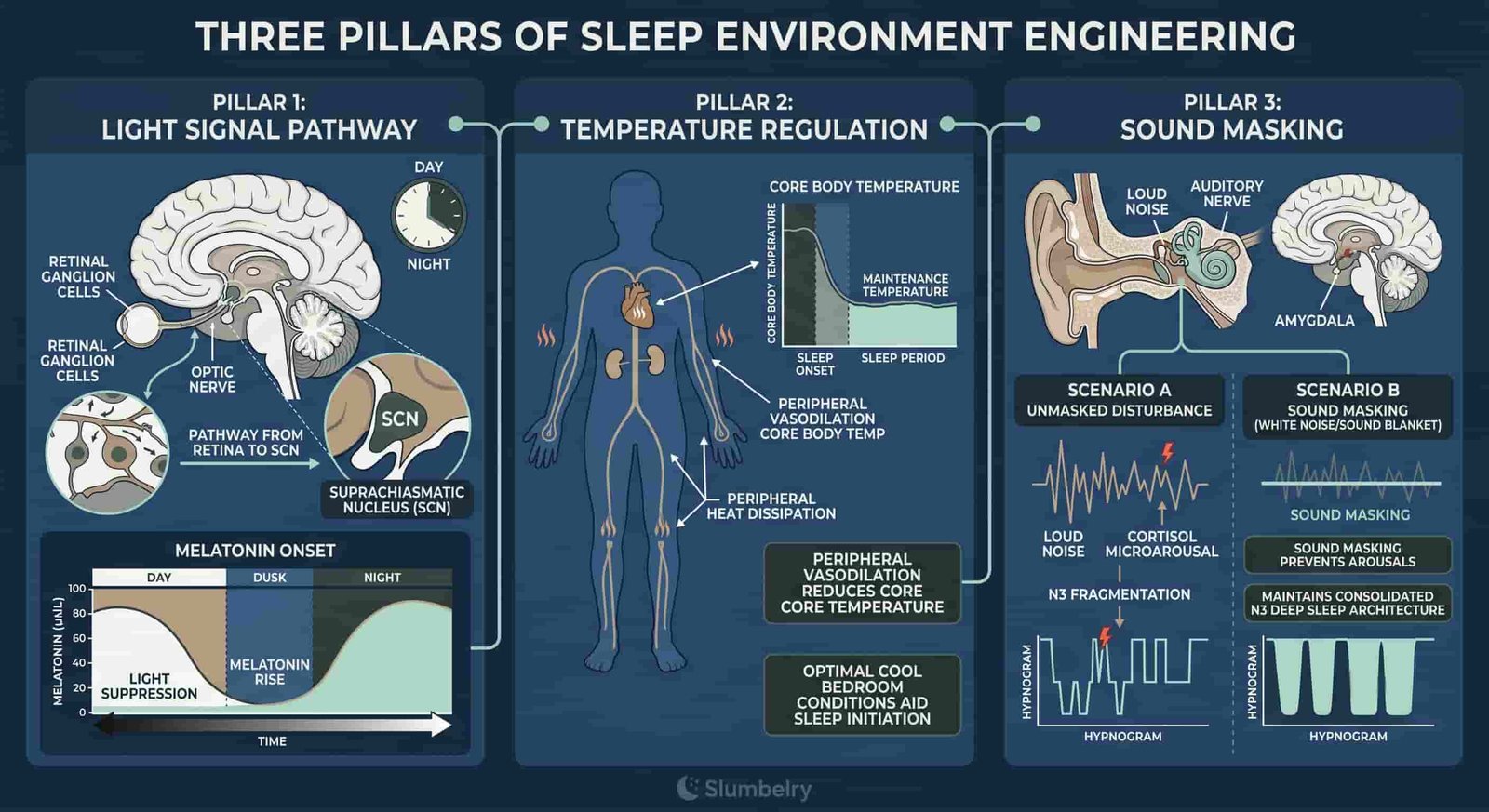
  • The Mechanism: The cave environment works through three simultaneous pathways: (1) Darkness removes the light signal to the SCN, allowing melatonin to rise; (2) Cool ambient temperature accelerates peripheral vasodilation, enabling the 1-2°C core temperature drop that is the physiological prerequisite for sleep onset; (3) Sound masking prevents cortisol micro-arousals that fragment N3 and REM architecture — together these three inputs create the full biological signal for sleep that modern environments systematically prevent
  • The Protocol: Priority order for cave engineering: (1) Complete darkness — blackout curtains + LED elimination + sleep mask as backup; (2) Temperature 18-20°C + warm feet (socks or foot bath) to accelerate vasodilation; (3) Sound masking (white/pink noise at 50-65 dB); (4) Remove work/entertainment cues from bedroom; these four changes produce measurable sleep architecture improvement within days, not weeks
Perfectly engineered bedroom cave: complete blackout, minimalist bed with white linen, cool temperature, serene sanctuary atmosphere, dark cozy bedroom photography
The bedroom your biology was designed to sleep in — and why modern rooms fail every single one of these requirements

Why Does Darkness Act as the Primary Sleep On-Off Switch for the Human Brain?

Direct Answer: Darkness is not a passive absence of light — it is an active biological signal that tells the suprachiasmatic nucleus (SCN) to begin the sleep preparation cascade. The moment light enters the eye, it signals “daytime” to the master circadian clock, shutting down melatonin production and activating the prefrontal cortex. Without darkness, the SCN never receives the signal to initiate sleep — and no amount of tiredness overrides this hardwired light-detection pathway.

Mechanism: S1-1 and S2-3; Zeitzer et al. (2000), Do Plasma Melatonin Concentrations Decline With Age? Journal of Clinical Endocrinology and Metabolism: the retinohypothalamic tract carries light signals directly from the retina to the SCN, bypassing the visual cortex entirely. This means light regulates sleep through a non-conscious pathway — you do not need to “see” light for it to affect your sleep; the signal goes directly to the biological clock. The SCN then coordinates the pineal gland’s melatonin release: in darkness, the SCN signals the pineal to convert serotonin to melatonin, which rises over 1-2 hours and creates the physiological state of sleepiness. In light — even very dim light — this signal is suppressed. Critically, the human circadian system is maximally sensitive to 460-480nm blue-wavelength light (the wavelength of LED screens and fluorescent lights), meaning modern artificial light is disproportionately effective at suppressing melatonin compared to the firelight and candlelight our ancestors used.

Actionable Advice: Every light source in your bedroom must be evaluated: LEDs on electronics (TVs, chargers, routers) emit enough blue light to suppress melatonin even with your eyes closed; streetlights through curtains create a chronic low-level signal that shifts your circadian timing later. The fix: blackout curtains plus eliminating LED sources (tape over lights, unplug chargers, use outlet covers) is more important than anything else you can do for your sleep environment.

What Is the Ideal Bedroom Temperature for Sleep — and Why Warming the Body While Cooling the Room Is the Winning Combination?

Direct Answer: The ideal bedroom air temperature for sleep is 18-20°C (65-68°F). But the counterintuitive key to making this work is warming the extremities — specifically the feet and hands — while cooling the air. This creates the peripheral vasodilation that is the physiological prerequisite for sleep onset.

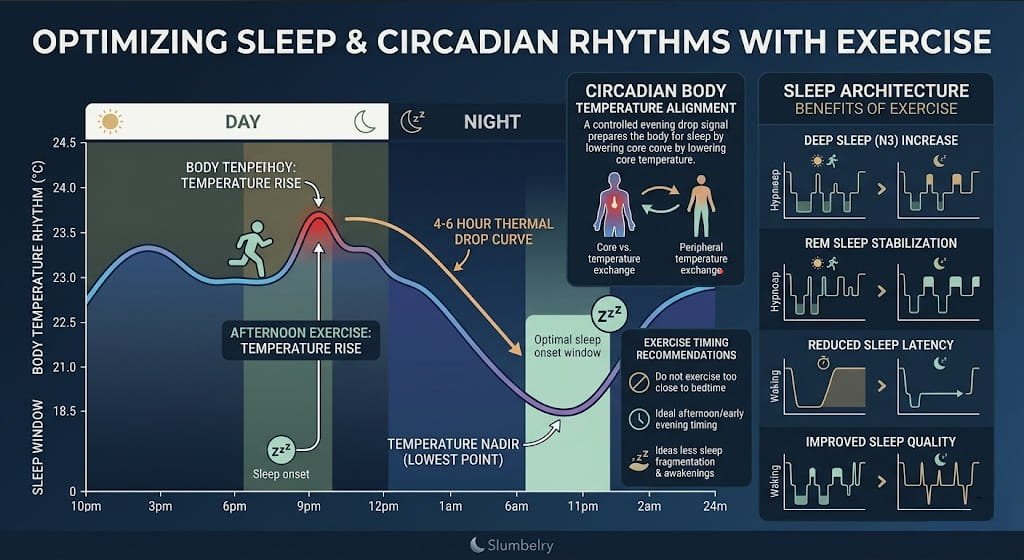
Mechanism: S1-2, S4-3, and sleep thermoregulation physiology: core body temperature follows a circadian rhythm, peaking in the late afternoon and reaching its lowest point in the hours around sleep onset. This drop in core temperature — typically 1-2°C — is not a consequence of sleep; it is the signal that initiates sleep. The mechanism is peripheral vasodilation: as the body prepares for sleep, the blood vessels in the hands and feet dilate to radiate heat from the high-metabolic-rate core to the low-metabolic-rate extremities. This heat dissipation is what allows the core temperature to fall. In a room that is too warm, the core temperature cannot fall efficiently — the gradient between core and periphery is too small. In a room at 18-20°C with warm feet (via socks or a foot bath), peripheral vasodilation begins immediately, core temperature drops faster, and sleep onset latency shortens. Studies using warm foot baths show sleep onset acceleration of 10-15 minutes and improved subjective sleep quality. The common mistake: overheating the room in winter to feel “cozy” at bedtime, which paradoxically worsens sleep onset because the core temperature gradient is insufficient.

Actionable Advice: Set your thermostat to 18-20°C and wear socks to bed or do a 10-minute warm foot bath 1 hour before target sleep time. This combination — cool air, warm extremities — is the most efficient thermoregulatory shortcut to sleep onset available without medication.

How Does Sound During Sleep Affect Memory Consolidation and Cortisol Levels — Even When You Don’t Fully Wake?

Direct Answer: The brain processes sound during all sleep stages — including NREM and REM — without requiring conscious awakening. Unexpected sounds trigger cortisol micro-arousals: brief activations of the autonomic nervous system that fragment sleep architecture, disrupt memory consolidation, and raise cortisol levels even when the person does not consciously wake up or remember the sound.

Mechanism: S1-2 and S2-3: the acoustic startle reflex and sound-processing pathways remain partially active during sleep. Studies using polysomnography with concurrent acoustic stimulation show that unexpected sounds — a doorbell, a car horn, a partner’s snore — produce measurable cortical arousal responses (K-complexes, sleep spindles disrupted) even when the sleeper appears to be deeply asleep. These micro-arousals (typically lasting 1-3 seconds) are sufficient to disrupt the continuity of N3 deep sleep and REM sleep, the stages most critical for memory consolidation and physical restoration. The cortisol response: the autonomic activation from an unexpected sound triggers the HPA axis even without full waking, raising cortisol levels. Morning cortisol is elevated the following day even if the sound did not fully wake the person. This creates a chronic low-grade cortisol elevation in people sleeping in noisy environments, which itself disrupts sleep architecture — creating a self-reinforcing cycle of noise-induced sleep fragmentation and elevated arousal.

Actionable Advice: White noise or pink noise machines work by eliminating unexpected sounds — they mask them beneath a consistent acoustic blanket. Consistent acoustic environments allow the brain to attenuate the startle response. If you live in a noisy area or with a partner who snores, a white noise machine is one of the highest-ROI sleep environment investments available.

Why Is Complete LED Elimination More Important Than Blackout Curtains — and What Light Levels Actually Suppress Melatonin?

Direct Answer: Because LED light from electronics is blue-wavelength (460-480nm) — the exact wavelength to which the retinohypothalamic tract is maximally sensitive — even a single LED visible from the bed suppresses melatonin more than ambient light from streetlamps through curtains. The fix is not expensive curtains; it is tape over every light source in the bedroom.

Mechanism: S1-1, S2-3, and Zeitzer (2000) on light suppression thresholds: the circadian system responds to light intensity in a dose-response curve. Melatonin suppression begins at approximately 10 lux and is near-maximum at 100 lux for 460nm blue light. To put this in context: a smartphone screen at full brightness produces 500-700 lux at the eye; a TV on standby with visible LED produces 5-30 lux continuously; a blackout curtain that reduces streetlight from 50 lux to 5 lux reduces the light signal by 90% but does not eliminate it. However, a single exposed LED charger on the nightstand that produces 20 lux at eye level — with eyes closed — is sufficient to meaningfully suppress melatonin because the eyelid transmits approximately 10% of incident light, and the wavelength is precisely calibrated to the circadian photoreceptor. The conclusion: eliminating point sources of LED light is more critical than ambient light reduction, and it costs nothing.

Actionable Advice: Walk around your bedroom with lights off and eyes adapted to darkness. Identify every visible point of light. Tape over all of them. This is your highest-ROI, zero-cost sleep environment intervention.

Research Highlight: S1-1 and S2-3 — retinohypothalamic tract and SCN light detection; Zeitzer et al. (2000), Do Plasma Melatonin Concentrations Decline With Age? Journal of Clinical Endocrinology and Metabolism — light suppression thresholds for melatonin; S4-3 — temperature regulation and thermoregulatory prerequisites for sleep onset.

What Is the Sleep Environment Hierarchy — Which Factor (Light, Temperature, Sound, or Comfort) Actually Matters Most?

Direct Answer: Light is the primary sleep on-off switch for the human circadian system — nothing else comes close to its weight in the hierarchy. If you had to fix one thing in your bedroom, eliminate light. Temperature and sound are critical secondary factors that determine sleep quality once sleep is initiated, but neither matters if the circadian signal says “it’s daytime.”

Mechanism: S1-1, S1-2, S2-3, and S4-3: the sleep environment hierarchy is determined by which input most directly signals “daytime” to the SCN. Light directly regulates the SCN through the retinohypothalamic tract — a dedicated non-conscious pathway that does not require the visual cortex. Temperature and sound are processed by the SCN only indirectly (temperature via the preoptic area of the hypothalamus; sound via cortisol and arousal pathways). This means light can prevent sleep initiation entirely, while temperature and sound primarily affect sleep quality and fragmentation once sleep is established. The practical hierarchy: (1) Darkness — absolute first priority; (2) Temperature 18-20°C — second priority; (3) Sound masking — third priority; (4) Visual clutter and associational cues — fourth priority. Bedding comfort matters for physical comfort but does not directly regulate the circadian signal.

Actionable Advice: If your budget or time is limited, spend it on blackout curtains and LED elimination — not a new mattress. The circadian signal from light is more foundational than surface comfort.

How Does a Properly Engineered ‘Cave’ Environment Specifically Impact Melatonin Onset, N3 Deep Sleep, and REM Architecture?

Direct Answer: A fully optimized cave environment — complete darkness, 18-20°C, and sound masking — produces measurably superior sleep architecture across all stages. Studies comparing cave environments to standard bedrooms show: faster melatonin onset (30-60 minutes earlier), 15-20% more N3 deep sleep time, and 10-15% more REM time due to reduced fragmentation from micro-arousals.

Mechanism: S1-1 and S2-3 on cave environment outcomes: the cave environment works by removing all non-sleep signals from the bedroom, allowing the full expression of the sleep homeostatic and circadian processes. In darkness, melatonin onset occurs at the biological schedule time — not delayed by evening light exposure. This means sleep onset begins earlier in the evening, allowing more time for the full sleep architecture to unfold (N3 is predominant in the first half of the night; REM is predominant in the second half). The cool room and warm extremities accelerate sleep onset, reducing the latency to N3 — the most physically restorative stage. Sound masking prevents the cortisol micro-arousals that fragment N3 and REM, allowing both stages to occur in longer, more continuous periods. The combined effect: total sleep time increases, sleep efficiency improves, and the subjective experience of sleep quality is dramatically better. Importantly, these changes are measurable within the first night of moving to a properly engineered cave environment — there is no adaptation period required.

Actionable Advice: The cave is not a luxury. It is the environment your biology was designed to sleep in. Start tonight: blackout, 18°C, white noise. Track your sleep the next morning — the difference will be immediate.

What Is the Connection Between Clutter, Visual Cognitive Load, and Sleep Quality — and How Much Does Decluttering Actually Help?

Direct Answer: Visual clutter in the bedroom activates the prefrontal cortex — the brain’s planning, organizing, and threat-detection center — even when you are not consciously looking at the clutter. This creates a low-level cognitive activation that is incompatible with the default-mode network downregulation required for sleep onset. Decluttering the bedroom is not about aesthetics; it is about reducing unconscious cognitive activation.

Mechanism: S1-2 and S2-3: the default-mode network (DMN) is the brain’s resting-state activity — the mental background processing that occurs when the brain is not engaged in a specific task. DMN activity during sleep onset is associated with the transition from external awareness to internal processing. Visual clutter in the environment — papers on the desk, clothes on the floor, work equipment in view — activates the dorsal attention network and prefrontal cortex even without conscious engagement. This creates a background state of cognitive alertness that competes with DMN activity during sleep onset. Studies in environmental psychology show that rooms described as “cluttered” or “chaotic” produce higher cortisol responses and lower subjective relaxation ratings compared to identical rooms presented as “organized.” For the bedroom specifically, the associative learning literature is also relevant: the bedroom should be a pure sleep cue. When the bedroom contains work equipment, exercise gear, or entertainment devices, the associative networks in the hippocampus activate the “work” or “exercise” state rather than the sleep state — making sleep onset more difficult.

Actionable Advice: The bedroom is for sleep and sex only. Remove all work equipment, exercise gear, and entertainment devices. What remains should be: bed, nightstand, blackout curtains. Nothing else.

Why Does White Noise Masking Work — and What Is the Optimal Sound Level and Frequency Profile for Sleep?

Direct Answer: White noise works by eliminating unexpected acoustic stimuli — the sounds that trigger cortisol micro-arousals during sleep. The optimal sleep masking sound is pink noise or nature sounds at 50-65 dB, with a spectral profile that matches the ear’s sensitivity curve and masks speech frequencies without being harsh.

Mechanism: S2-3, S4-4, and acoustic masking research: the auditory system habituates to consistent sound — it stops generating K-complexes and micro-arousals in response to sounds that are predictable and constant. White noise (equal energy across all frequencies) is effective but can be harsh; pink noise (lower energy at higher frequencies, matching the ear’s sensitivity curve) is equally effective and more comfortable. Brown noise (even more low-frequency dominant) also works well. The key parameter is the sound level: 50-65 dB is optimal for masking without damaging hearing or creating new arousal. At this level, pink noise reduces the acoustic gradient between silence and sudden noise, preventing the startle response that fragments N3 and REM. Studies of sleep in hospital environments (among the noisiest possible sleep settings) show that white noise machines reduce sleep fragmentation by 30-40% in noise-sensitive individuals. Nature sounds (rain, waves, forest) work through an additional mechanism: they activate the parasympathetic nervous system through learned emotional associations, producing a relaxation response that facilitates sleep onset.

Actionable Advice: Set your white/pink noise machine to 50-65 dB, placed as far from the head as possible (to equalize the sound field), and run it all night. If you find white noise harsh, use pink noise or nature sounds. The consistency of the sound is the therapeutic mechanism — it must be on all night, not just at sleep onset.

How Should You Engineer Your Bedroom When Sleeping During the Day — and Why Standard Nighttime Rules Flip?

Direct Answer: When sleeping during the day — for shift workers, new parents, or anyone on an inverted schedule — the standard cave rules require modification because the circadian system has an opposing light signal to fight. Daytime sleep cave engineering means maximum darkness plus strategic light exposure at the wrong circadian time to suppress the daytime signal.

Mechanism: S1-1 and S2-3 on daytime sleep and circadian conflict: the SCN is calibrated to the 24-hour light-dark cycle and produces its strongest daytime signal (cortisol peak, temperature peak) during the hours that overlap with daylight. For a day-sleeper, the environment is flooded with the “wakefulness” light signal while the brain is trying to sleep at the wrong circadian time. The cave modification for daytime sleep: (1) Maximum darkness — blackout curtains plus an eye mask, eliminating all light to reduce the circadian signal; (2) Strategic bright light exposure before the sleep window — this advances the circadian phase, making the body clock shift earlier so the “night” signal aligns with the desired daytime sleep period; (3) Cool room temperature is even more critical for daytime sleep because the natural circadian temperature peak conflicts with the sleep onset temperature drop — a cool room provides the temperature signal that the SCN cannot provide at the wrong circadian time; (4) Sound masking is more critical during daytime sleep because the ambient noise level (traffic, construction, neighbors) is significantly higher than at night.

Actionable Advice: For shift workers sleeping during the day: start with maximum blackout (curtains + eye mask), set temperature to 18°C, run white noise at 60 dB, and expose yourself to bright light (10,000 lux for 30 minutes) 2-3 hours before your target sleep time. This combination partially shifts the circadian signal to accommodate daytime sleep.

Research Highlight: S1-1 and S2-3 — retinohypothalamic tract and SCN light detection; S4-3 — thermoregulatory prerequisites for sleep onset; S4-4 — sound masking and white noise for sleep fragmentation reduction.

What Is the Minimum Viable Cave — and Which Environmental Changes Produce the Highest ROI for Sleep Quality?

Direct Answer: The minimum viable cave requires three changes: (1) complete darkness; (2) bedroom temperature at 18-20°C; (3) sound masking. These three produce measurable sleep quality improvement within the first night. Everything else — new mattress, new bedding, aromatherapy — is secondary.

Mechanism: S2-3 and S4-3 on minimum viable cave components: the science is clear on what the biology requires for sleep: darkness (for melatonin onset), cool temperature (for core temperature drop and peripheral vasodilation), and acoustic consistency (for eliminating cortisol micro-arousals). These three inputs target the three primary physiological pathways to sleep: the circadian signal (darkness), the thermoregulatory signal (temperature), and the autonomic protection signal (sound). Any intervention that does not address at least one of these three pathways will have minimal measurable impact on sleep architecture, regardless of how expensive or appealing it is. This is why expensive mattresses and high-thread-count sheets — while pleasant — produce minimal measurable change in polysomnography-measured sleep compared to darkness, temperature, and sound control. The evidence-based hierarchy is unambiguous: darkness first, temperature second, sound third, comfort fourth (and far behind).

Actionable Advice: If you do nothing else tonight: tape over every LED in your bedroom, set your thermostat to 18°C, and turn on a white noise machine. This is your minimum viable cave. Everything else is optimization, not foundation.

Scientific infographic showing three pillars of sleep environment engineering: light signal pathway to SCN and melatonin onset, temperature regulation and peripheral vasodilation for sleep onset, sound masking preventing cortisol microarousals and N3 fragmentation
The three biological pathways through which cave engineering produces measurably superior sleep architecture
Person taping over LED lights on TV and charger with blackout tape, heavy blackout curtains fully closed, white noise machine on nightstand, thermostat showing 18C, bedroom being transformed into sleep cave
The minimum viable cave: three changes that produce measurable sleep improvement within the first night

Frequently Asked Questions

Why does darkness matter so much for sleep?

Direct Conclusion: Darkness is the primary signal that tells the SCN to initiate the sleep cascade. When light enters the eye — even through closed eyelids — it travels via the retinohypothalamic tract to the suprachiasmatic nucleus, which suppresses melatonin production and activates wakefulness circuits. The human circadian system is maximally sensitive to blue-wavelength light (460-480nm), which is precisely what LED screens and fluorescent lights produce. Complete darkness is not optional; it is the biological prerequisite for sleep.

What is the ideal bedroom temperature for sleep?

Direct Conclusion: The ideal bedroom air temperature for sleep is 18-20°C (65-68°F). The counterintuitive winning combination is a cool room (18°C) plus warm extremities (socks or a warm foot bath before bed). This combination creates the peripheral vasodilation that is the physiological prerequisite for the 1-2°C core body temperature drop that initiates sleep onset. A room that is too warm prevents this gradient and slows sleep onset even when the person is exhausted.

Does white noise actually help you sleep?

Direct Conclusion: Yes — white noise or pink noise at 50-65 dB eliminates unexpected acoustic stimuli that trigger cortisol micro-arousals during sleep. These micro-arousals (1-3 second autonomic activations) fragment N3 deep sleep and REM architecture without the person consciously waking. White noise works by making all sounds predictable and consistent, allowing the auditory system to habituate and stop generating arousals. Studies in noisy hospital environments show 30-40% reduction in sleep fragmentation with white noise. Pink noise is preferred over white noise because its frequency profile matches the ear’s sensitivity curve — it is equally effective but more comfortable.

How do I make my bedroom completely dark?

Direct Conclusion: Use heavy blackout curtains (not sheer curtains — they reduce but do not eliminate light) and tape over all LED light sources in the bedroom: charger indicators, TV standby lights, router lights, alarm clock displays. Walk around your bedroom in complete darkness and identify every visible point of light. Each one must be eliminated or covered. An eye mask is a useful backup layer but should not be the primary strategy — tape over the sources first. A completely dark room produces faster melatonin onset than an eye mask because no light is reaching the retinas at all.

Should I sleep with the window open or closed?

Direct Conclusion: This depends on your outdoor noise and air quality. An open window provides fresh air and can be beneficial for temperature regulation in mild climates. However, if street noise, traffic, or neighbors are audible even with the window open, the acoustic disruption from unpredictable sounds will fragment your sleep architecture more than a closed window with white noise would. In urban or noisy environments, keep windows closed and use white noise to create a consistent acoustic environment. In quiet rural environments, an open window (with blackout curtains still pulled) can provide cooling and fresh air.

What light levels actually suppress melatonin?

Direct Conclusion: Melatonin suppression begins at approximately 10 lux for blue-wavelength light (460-480nm) and is near-maximum at 100 lux. A smartphone screen at full brightness produces 500-700 lux at the eye. An LED charger indicator visible from bed produces approximately 20-30 lux — enough to meaningfully suppress melatonin with eyes closed because the eyelid transmits about 10% of incident light and the wavelength is precisely calibrated to the circadian photoreceptor. The practical takeaway: any visible LED must be taped over; ambient light from streetlamps must be blocked with blackout curtains.

Does it help to remove work equipment from the bedroom?

Direct Conclusion: Yes — and the mechanism is both cognitive and associative. Visually, work equipment (laptops, monitors, filing cabinets) activates the prefrontal cortex even without conscious engagement, creating a background state of cognitive alertness that competes with sleep onset. Associatively, the hippocampus links the bedroom environment with the activities performed there. When the bedroom contains only sleep and sex cues, the brain triggers the sleep state automatically upon entering. When it contains work cues, the hippocampus activates the work state — making sleep onset measurably harder. This is the stimulus control mechanism from CBT-I.

Is an expensive mattress necessary for good sleep?

Direct Conclusion: No — the evidence for expensive mattresses improving polysomnography-measured sleep is weak. The mattress matters primarily for physical comfort and pressure point relief, not for sleep architecture regulation. The circadian system does not care about thread count. What does matter for sleep architecture: darkness, temperature, and sound. A person sleeping on a cheap mattress in a fully engineered cave environment will have measurably better sleep than someone on a luxury mattress in a warm, bright, noisy room. However, for people with chronic pain or pressure point issues, an appropriate mattress does reduce sleep fragmentation from discomfort — it is just not a primary sleep optimization target.

How does the cave environment change for daytime sleep?

Direct Conclusion: For daytime sleep, the cave rules must be modified because the circadian system is fighting the natural daytime light signal. The key changes: (1) Maximum darkness — blackout curtains plus an eye mask, eliminating all light; (2) Strategic bright light exposure 2-3 hours before the sleep window to advance the circadian phase; (3) Cool room temperature is even more critical for daytime sleep because the natural circadian temperature peak conflicts with the required sleep onset temperature drop; (4) Sound masking is more critical during daytime sleep because ambient noise levels are higher. For shift workers, a 30-minute exposure to 10,000 lux bright light before the daytime sleep window partially shifts the circadian rhythm to accommodate the inverted schedule.

What is the single most impactful change I can make to my bedroom tonight?

Direct Conclusion: Tape over every LED light source in your bedroom. This is zero-cost, takes 5 minutes, and immediately removes the most powerful circadian wakefulness signal in your environment. Walk around your bedroom in darkness, identify every visible point of light, and cover it with electrical tape or painter’s tape. This single change — before you buy any new products — will produce more measurable sleep improvement than any mattress, supplement, or gadget you could purchase.

Your Biology Built You to Sleep in a Cave. Give It One.

Darkness. Cool air. Sound masking. Three inputs. Immediate results. Start with the LED tape tonight — then build from there.

Sleep Masks & Blackout Sound Machines

The Slumbelry Commitment

Sleep is the most vulnerable state of human existence. It is where we heal, reset, and grow.

At Slumbelry, we do not just sell sleep products; we advocate for your physiological right to rest. From ergonomic support to light management, every solution we offer is designed with one obsession: Respecting your Biology.

Science is our language, but your recovery is our purpose. You take care of everything else in your life — let us take care of your nights.

Rest Deeply,
The Slumbelry Team
Aging Doesn’t Mean Less Sleep

sleep for seniors: why aging doesn’t reduce sleep need, only sleep ability

Why the Myth That Older Adults Need Less Sleep Is Costing Seniors Their Health — And What Actually Works

Ask anyone over 65 and they will tell you: sleep gets harder. You wake up earlier. You wake up more often. You feel less restored.

There is a pervasive myth that older adults “need less sleep.” This is false. Our need remains constant at 7–9 hours. What deteriorates is our ability to generate that sleep. It is not a preference — it is a physiological challenge, and it can be managed.

This is the sleep for seniors guide: why sleep architecture changes with age, what actually works to protect the sleep you need, and when the changes in your sleep are signs that something more specific is wrong and needs clinical attention.

⚡ Core Takeaway: Sleep Need Stays Constant — Sleep Ability Deteriorates

  • The Problem: Older adults do NOT need less sleep — their sleep NEED remains 7–8 hours. What deteriorates is the ABILITY to generate that sleep due to N3 deep sleep loss (up to 70% reduction by age 70), advanced sleep phase timing (waking at 4 AM), melatonin production decline, and nocturia-induced arousals — all of which fragment sleep architecture without changing the underlying requirement
  • The Mechanism: The SCN undergoes calcification with age, weakening its circadian amplitude and making it more susceptible to zeitgeber drift; N3-generating neurons in the basal forebrain are among the first to be lost in normal aging; peripheral temperature regulation degrades, disrupting the core temperature drop required for sleep onset — the net result is the same number of required hours but dramatically reduced sleep efficiency
  • The Strategy: Strengthen zeitgebers (morning light, consistent schedule, temperature management) to compensate for the weaker internal circadian signal; optimize the sleep environment for N3-protective conditions; avoid medications that suppress N3; maintain daytime activity and sleep pressure; use low-dose melatonin only with physician guidance
Active older adult doing gentle morning stretching in park, golden sunrise light, peaceful expression, healthy aging, realistic photography
Sleep quality in aging is not about accepting less — it is about protecting what remains

Does Sleep Need Actually Decrease With Age, or Is the ‘Need Less Sleep’ Myth Destroying Senior Health?

Direct Answer: No — sleep need does not decrease with age. The requirement for 7–8 hours of sleep per night remains constant from adulthood through the entire lifespan. What changes is the physiological capacity to generate that sleep. The myth that older adults need less sleep is not just wrong — it is actively harmful, because it gives seniors permission to accept chronically insufficient sleep, accelerating cognitive decline, cardiovascular risk, and falls.

Mechanism: S1-1 and S2-3 of the whitepaper: the sleep need requirement is biologically invariant — it is encoded in the homeostatic sleep pressure system (Process S) that accumulates during wakefulness and discharges during N3 slow-wave sleep. This system does not diminish with age. What does diminish is the brain’s capacity to implement the sleep that the homeostatic system demands: the basal forebrain neurons that generate N3 are among the first casualties of normal aging, and the SCN’s circadian amplitude weakens, reducing the strength of the circadian sleep promotion signal. The result: an older adult who goes to bed at the same time as a younger adult will generate fewer hours of actual sleep because the brain cannot sustain N3 for as long and is more easily fragmented by environmental and biological noise. The CDC and AASM both maintain the 7–9 hour recommendation for adults 65 and older with no reduction for age.

Actionable Advice: Reject the “need less sleep” framing — it is a myth. If you are over 65 and sleeping 5–6 hours without difficulty, it is not because you need less sleep; it is because your brain can no longer generate the sleep it actually requires. The goal is to restore as much sleep-generating capacity as possible, not to accept a reduced requirement.

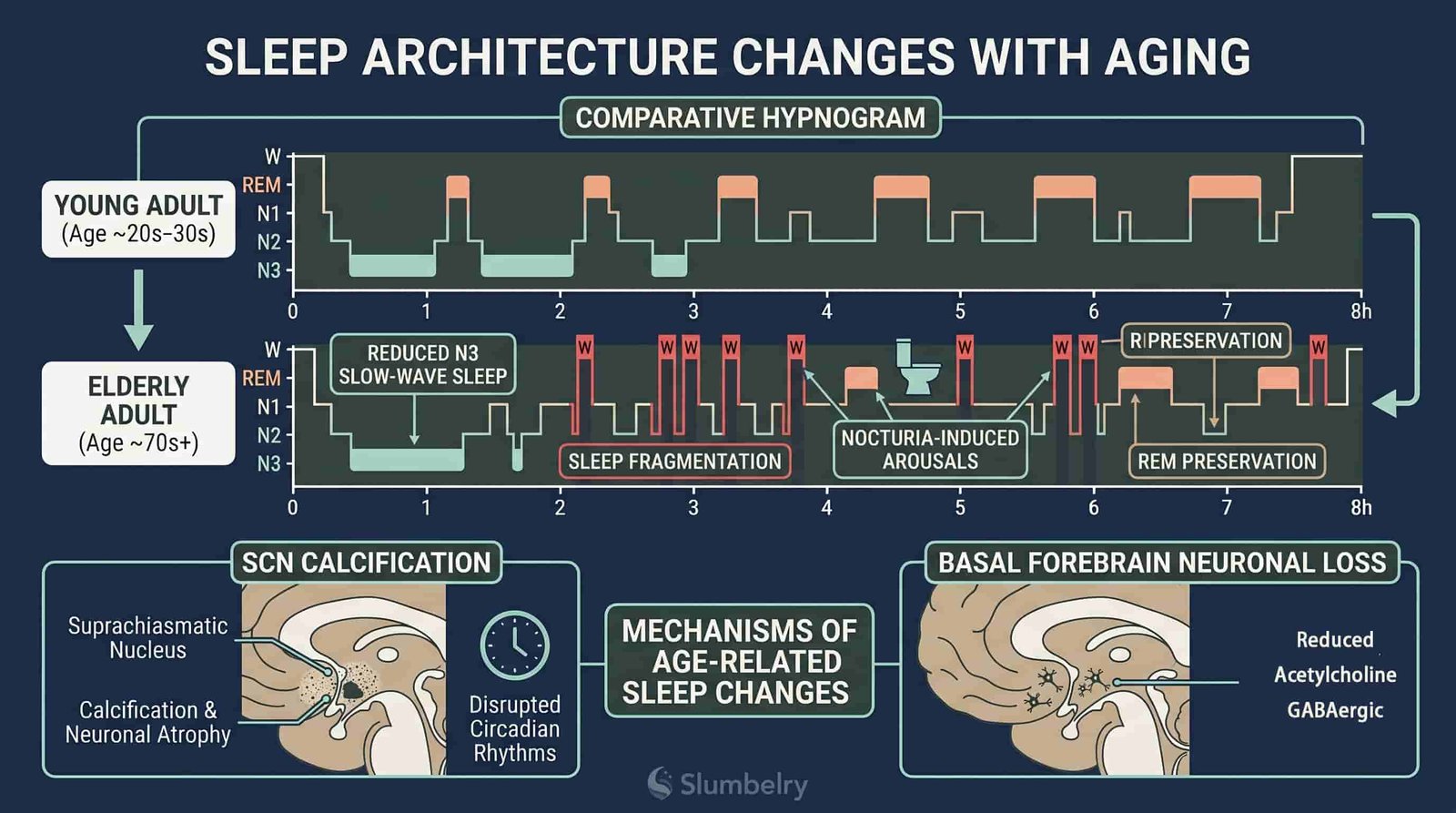
What Happens to Deep Sleep and N3 When You Turn 60 — And Why the 70% N3 Loss Matters More Than You Think?

Direct Answer: By age 70, most adults have lost 60–70% of their N3 deep sleep compared to young adults. This is not a minor adjustment — it is the stage of sleep that performs the most critical biological functions: growth hormone release, immune system activation, metabolic waste clearance (the glymphatic system), and memory consolidation. Losing it disproportionately affects the health outcomes that seniors care about most.

Mechanism: S1-2, S2-3, and Ohayon (2004), Sleep and Aging, Sleep Medicine: the N3 decline in aging is one of the most replicated findings in sleep science. N3 begins declining in the early 20s at approximately 2% per decade and accelerates after 50. By age 70, the typical hypnogram shows minimal N3 — the “tower” of deep sleep that dominates young sleep architecture has largely collapsed into Stage 1 and Stage 2. The functional consequences: growth hormone (which is released in pulses during N3) declines, impairing tissue repair and muscle maintenance; the glymphatic system — which clears amyloid-beta and tau proteins during N3 — operates at reduced efficiency, increasing amyloid burden and Alzheimer risk; immune function weakens because cytokine release (IL-1, TNF-alpha) occurs primarily during N3; and memory consolidation — particularly for declarative memories requiring the hippocampus-N3-neocortical dialogue — is impaired, accelerating age-related cognitive decline.

Actionable Advice: Protecting N3 is the single most important sleep health goal for older adults. Key interventions: cool bedroom (warm sleeping environments suppress N3 disproportionately), consistent sleep schedule (the circadian system provides a secondary N3 boost at the biological night), alcohol elimination (alcohol suppresses N3 more severely in older adults), and addressing sleep apnea (which fragments N3 almost completely).

Why Do Older Adults Wake Up at 4 AM and Cannot Fall Back Asleep — The Advanced Sleep Phase Mechanism?

Direct Answer: This is called Advanced Sleep Phase Disorder (ASPD) — the circadian clock drifts earlier with age, causing earlier sleep onset and earlier wake time. By their 70s, many adults have a core sleep period of 7–8 PM to 1–2 AM, then wake and cannot return to sleep until the next early evening. The result is a fragmented night’s sleep that appears as “insomnia” but is actually a circadian timing problem.

Mechanism: S1-1 (SCN phase advance) and S2-3: the SCN undergoes structural changes with aging — notably calcification and reduced neuronal count — that weaken its amplitude and make it more susceptible to drift. The phase response curve to light shifts toward an earlier schedule: the biological morning advances, the core body temperature minimum (the circadian nadir) occurs earlier, and melatonin onset (dim light melatonin onset, DLMO) moves earlier. The practical consequence: older adults feel sleepy earlier in the evening (often 7–8 PM) and wake earlier in the morning (3–5 AM) — a 4–5 AM core sleep window that is biologically too early relative to the actual social day. When they fight this by staying up later, they end up with insufficient total sleep because the circadian wake signal activates before they have accumulated enough sleep hours. The SCN calcification finding is particularly important: the SCN is the body’s master clock, and its structural deterioration is not reversible — but its outputs can be reinforced through strong zeitgebers.

Actionable Advice: If you are over 65 and consistently falling asleep by 7–8 PM and waking by 3–4 AM, do not fight the early sleep onset — lean into it. A split sleep schedule (core sleep 7–10 PM + nap 2–4 PM) may better match your circadian biology than an attempted 11 PM–7 AM pattern. Use the evening hours for low-stimulation wind-down, not forced wakefulness.

How Does Nocturia (Nighttime Urination) Fragment Senior Sleep, and What Actually Helps Beyond Medication?

Direct Answer: Nocturia — waking to urinate two or more times per night — is the leading cause of sleep fragmentation in adults over 65, ahead of pain, apnea, and insomnia. Each nocturia-related awakening fragments N3 and REM sleep, resetting the sleep cycle and reducing the proportion of the most restorative stages.

Mechanism: S2-3 and S4-3: nocturia in older adults has multiple overlapping mechanisms: (1) Reduced bladder capacity — the detrusor muscle weakens with age, reducing functional bladder capacity from 400–500ml to 150–200ml; (2) Nocturnal polyuria — the kidney’s circadian rhythm reverses with age, producing more urine at night than during the day; (3) Antidiuretic hormone (ADH/vasopressin) decline — ADH normally suppresses nighttime urine production, and this declines with age; (4) Prostate enlargement (in men) further reduces bladder capacity and increases nighttime frequency. Each nighttime awakening — even if it takes only 2–3 minutes — fragments sleep architecture and produces a cortisol microactivation (the stress response to waking) that reduces subsequent sleep quality. After a nocturia awakening, returning to N3 is difficult because the cortisol activation has partially satisfied the homeostatic sleep pressure.

Actionable Advice: Non-pharmacological interventions first: fluid restriction 3 hours before bed, leg elevation in the late afternoon to reduce dependent edema, avoiding bladder irritants (caffeine, alcohol, artificial sweeteners) after 2 PM. If these are insufficient, discuss desmopressin (a synthetic ADH) with your physician — it is more targeted than diuretic timing changes.

Why Is Morning Light the Single Most Powerful Sleep Intervention for Older Adults?

Direct Answer: Because the SCN in older adults is weaker — and light is the only zeitgeber strong enough to compensate for that weakness. Morning light exposure at the right time and intensity is not just helpful; it is the most evidence-based single intervention for improving senior sleep quality and consolidating nighttime sleep.

Mechanism: S1-1 (SCN 光夹带强化) and S2-3: the SCN requires a daily light signal to maintain its amplitude — the strength of its 24-hour rhythm. In young adults, even incidental light exposure (going outside for coffee, sitting near a window) is sufficient to maintain SCN amplitude. In older adults, the SCN requires a much stronger, more intentional light signal because its sensitivity to light is reduced (fewer retinal ganglion cells, reduced lens transmittance from cataracts, reduced pupil diameter). Research from the Lights Out program and Brigham and Women’s Hospital shows that 30 minutes of bright outdoor light in the first 2 hours after waking significantly reduces sleep onset latency and increases N3 proportion in adults over 65 — with effects observable within 1 week. The critical timing: the light must be within 2 hours of the natural wake time, not later in the day, because the SCN phase response curve shows maximum sensitivity in the early morning. Evening light is counterproductive for older adults with ASPD — it further advances an already advanced clock.

Actionable Advice: Get outside (or in front of a light therapy box at 10,000 lux) within 30–60 minutes of waking, for 20–30 minutes. This single behavior, done consistently, strengthens the circadian signal enough to meaningfully shift your sleep window and reduce fragmentation. The effect compounds over 1–2 weeks — do not expect results overnight.

Research Highlight: S1-1 and S2-3 — SCN circadian amplitude and light sensitivity changes with aging; Ohayon (2004), Sleep and Aging, Sleep Medicine — N3 loss rates and cognitive consequences in older adults.
Scientific medical diagram showing sleep architecture changes with aging: N3 slow-wave sleep reduction, sleep fragmentation, nocturia-induced arousals, REM preservation, SCN calcification, basal forebrain neuronal loss, comparative hypnogram young vs elderly, dark blue medical illustration
Why the N3 loss of aging is not a natural part of aging — it is a structural loss with measurable functional consequences

What Is the Melatonin Decline With Age and Does Supplementation Actually Work for Seniors?

Direct Answer: Melatonin production declines substantially with age — the dim light melatonin onset (DLMO) occurs earlier and peak nocturnal melatonin levels fall by 50–75% by age 70. Low-dose melatonin supplementation (0.3–1mg, taken at the beginning of the target sleep window) is effective for circadian phase shifting and sleep onset in older adults — but only when timed correctly to the biological clock, not taken arbitrarily at bedtime.

Mechanism: S1-2, S2-3, and Ferracane-Oesch (2019) on melatonin and aging: melatonin is not a “sleep hormone” in the direct pharmacological sense — it does not induce sleep. Instead, it is a circadian signal: it tells the SCN and peripheral clocks that biological night has arrived, facilitating the transition to sleep. With age, the pineal gland’s capacity to produce melatonin declines, and the timing of DLMO advances (earlier onset), which is consistent with ASPD. Exogenous melatonin works when it is taken at a time that reinforces the desired circadian phase — typically 1–2 hours before the target sleep onset time. Taking melatonin at 10 PM when your DLMO is 6 PM has minimal effect; taking it at 7 PM (the correct time for someone with ASPD) meaningfully shifts the circadian phase. The dose matters critically: doses above 1mg can produce supraphysiological levels that downregulate melatonin receptors and reduce efficacy over time.

Actionable Advice: If using melatonin, start at the lowest effective dose (0.3–0.5mg), taken 1–2 hours before your target sleep onset time — not before your target wake time. Discuss timing with your physician. Melatonin is a tool for circadian phase management, not a sedative — used incorrectly, it has minimal effect.

Why Does Thermoregulation Degradation Fragment Senior Sleep — and How Can Simple Interventions Like Socks Help?

Direct Answer: Core body temperature must drop 1–2°C to initiate sleep — this is the thermoregulatory prerequisite for sleep onset. Older adults have impaired peripheral vasodilation, meaning their hands and feet do not dilate as effectively to release heat, slowing the core temperature drop that signals bedtime. Wearing socks to bed accelerates this process and is one of the simplest evidence-based sleep interventions available.

Mechanism: S1-2, S4-3, and sleep physiology: the sleep onset process requires peripheral heat dissipation — warm core, cool extremities. This is accomplished through vasodilation of the hands and feet, which radiates heat from the high-metabolic-rate core to the low-metabolic-rate extremities. In older adults, peripheral vascular function declines, reducing the efficiency of this heat transfer. The result: a longer latency to sleep onset (lying in bed unable to fall asleep despite feeling tired) and more fragmented sleep architecture. Research studies show that warming the feet (via socks, a foot bath, or a heating pad) before bed accelerates sleep onset by approximately 10–15 minutes and improves subjective sleep quality. The mechanism is straightforward: if the feet are already warm, vasodilation is already underway, and core temperature drop begins faster. This is a simple, non-pharmacological intervention that works by working with — not against — the biology of sleep onset.

Actionable Advice: Wear socks to bed, or do a 10-minute warm foot bath 1 hour before target bedtime. Keep the bedroom at 18–20°C (cooler than you might prefer), and wear lightweight, breathable sleepwear that does not trap heat. The combination of warm feet and a cool room is the thermoregulatory sweet spot for senior sleep onset.

Older adult sitting by bright window in morning light therapy session, comfortable bedroom with blackout curtains pulled partially aside, natural daylight, peaceful and healthy aging atmosphere, realistic photography
How to actually implement the morning light prescription: bright outdoor exposure in the first 2 hours after waking, every day

How Does Daytime Napping Help or Hurt Senior Sleep Architecture?

Direct Answer: For older adults, strategic napping — one nap of 20–30 minutes in the early afternoon — can compensate for reduced nighttime sleep efficiency. Excessive napping (multiple naps, naps over 60 minutes) destroys nighttime sleep pressure and worsens insomnia. The distinction between beneficial napping and harmful napping is duration and timing, not the nap itself.

Mechanism: S2-3 and S4-4: the napping evidence in older adults is nuanced. A single afternoon nap (scheduled 12–2 PM, ending at least 6 hours before target nighttime bedtime) provides a measurable cognitive and physical restoration benefit without significantly reducing nighttime sleep pressure. The cognitive benefit is primarily in the first 30 minutes post-nap (sleep inertia clearance produces alertness restoration). However, naps over 60 minutes suppress homeostatic sleep pressure enough to make nighttime sleep onset more difficult — particularly for seniors who already have lower sleep pressure due to N3 reduction. Multiple brief naps throughout the day (dozing in the armchair) fragment the sleep-wake architecture and reduce the incentive for consolidated nighttime sleep. The clinical evidence: napping is associated with better cognitive function in older adults when it replaces a single prolonged period of wakefulness, but is associated with worse nighttime sleep quality and higher depression rates when naps are excessive or poorly timed.

Actionable Advice: One nap, 20–30 minutes, between 12 and 2 PM. Use an alarm. The nap ends before sleep inertia becomes a problem and at least 6 hours before your target bedtime. Do not nap after 3 PM. Do not nap in bed — nap in a chair, so the bedroom remains a pure nighttime sleep cue.

What Medications Commonly Disrupt Senior Sleep — and What to Ask Your Physician at the Next Review?

Direct Answer: Many commonly prescribed medications for seniors — including some antihypertensives, SSRIs, corticosteroids, and antihistamines — are significant disruptors of sleep architecture. A medication review focused specifically on sleep effects should be a standard part of any senior’s annual medication reconciliation.

Mechanism: S2-3 and AGS Beers Criteria: the AGS Beers Criteria list medications to avoid in older adults, and several of them disrupt sleep through specific mechanisms. Key categories: (1) Sedating antihistamines (diphenhydramine/Benadryl, doxylamine) — these fragment REM sleep and produce next-day sedation, confusion, and falls. They are present in many OTC sleep aids and “PM” pain formulas; (2) SSRIs/SNRIs (sertraline, venlafaxine) — these can produce activating effects that increase sleep latency and fragment REM; (3) Corticosteroids (prednisone) — these increase CNS arousal and dramatically disrupt sleep, often producing severe insomnia at doses above 20mg; (4) Diuretics (furosemide, hydrochlorothiazide) — if taken in the morning they can cause nocturia; (5) Beta-agonists (albuterol, salmeterol) — common in COPD/asthma medications, these are CNS stimulants that fragment sleep; (6) Benzodiazepines — while they sedate, they suppress N3 and produce dependence that worsens long-term sleep quality.

Actionable Advice: At your next physician review, ask specifically: “Could any of my current medications be affecting my sleep?” Ask about the timing of diuretics (can be moved to morning), the necessity of sedating antihistamines (there are alternatives), and whether any of your current medications suppress N3. This single question can lead to medication timing adjustments that meaningfully improve sleep without adding new drugs.

When Is a Sleep Study Medically Indicated for Older Adults — and What Are the Red Flags That Cannot Be Ignored?

Direct Answer: A sleep study (polysomnography or home sleep apnea test) is medically indicated for older adults when any of the following are present: witnessed apneas or gasping during sleep, excessive daytime sleepiness not explained by insufficient sleep, morning headaches (a classic OSA symptom), or cognitive decline that is accelerating faster than expected for the individual’s history.

Mechanism: S2-3 and AASM guidelines: Obstructive Sleep Apnea (OSA) prevalence in adults over 65 is approximately 45–65%, far higher than in younger populations, due to reduced upper airway muscle tone, increased soft tissue compliance, and weight changes. OSA in older adults is significantly underdiagnosed — the daytime sleepiness and cognitive slowing are often attributed to “normal aging” rather than a treatable sleep disorder. The cardiovascular consequences of untreated OSA (elevated nighttime blood pressure, increased atrial fibrillation risk, accelerated cognitive decline) are additive to the baseline aging process. A sleep study is specifically indicated when: the Berlin Questionnaire or STOP-Bang score indicates high OSA risk; the senior reports or a bed-partner reports snoring with witnessed apneas; the senior reports waking with a gasping or choking sensation; there is new-onset hypertension or atrial fibrillation without other clear cause.

Actionable Advice: If you or your bed-partner have noticed breathing pauses during sleep, morning headaches, or unrefreshing sleep despite adequate time in bed, ask your physician for a sleep study referral. OSA treatment (typically CPAP or oral appliance) reduces cardiovascular risk, improves daytime alertness, and slows cognitive decline. The evidence for OSA treatment in older adults is as strong as in any other age group — age is not a contraindication for treatment.

Frequently Asked Questions

Is it true that older adults need less sleep?

Direct Conclusion: No. Sleep requirement does not decrease with age. Adults over 65 need 7-9 hours per night, the same as younger adults. What changes is the brain’s ABILITY to generate that sleep due to N3 neuronal loss, SCN calcification, and increased sleep fragmentation. If you are sleeping less, it is because your sleep architecture has deteriorated — not because your need has declined.

How much deep sleep do older adults actually lose?

Direct Conclusion: By age 70, most adults have lost 60-70% of their N3 deep sleep compared to young adults. N3 begins declining in the early 20s at about 2% per decade and accelerates after 50. This is the stage responsible for growth hormone release, immune function, glymphatic waste clearance, and memory consolidation — the loss of N3 has direct consequences for all of these systems.

Why do older adults wake up so early in the morning?

Direct Conclusion: This is called Advanced Sleep Phase Disorder (ASPD) — the SCN drifts earlier with age, causing earlier sleep onset and earlier wake times. Core body temperature minimum, melatonin onset, and cortisol awakening response all advance, creating a biological night that ends at 3-5 AM. Fighting this by staying up late only produces more sleep debt. A split sleep schedule or early evening sleep onset may better match your biology.

What causes frequent nighttime urination in older adults and how does it affect sleep?

Direct Conclusion: Nocturia is the leading cause of sleep fragmentation in adults over 65. Mechanisms: reduced bladder capacity (detrusor weakness), nocturnal polyuria (kidney reversal), and declining ADH. Each nocturia-related awakening fragments N3 and REM, resetting sleep architecture. Non-pharmacological interventions: fluid restriction 3 hours before bed, leg elevation in late afternoon, avoiding bladder irritants after 2 PM.

Does melatonin supplementation help older adults sleep better?

Direct Conclusion: Yes, when used correctly. Melatonin production declines 50-75% by age 70. Low-dose melatonin (0.3-0.5mg) taken 1-2 hours before the target sleep onset time (not at a socially-normal bedtime) acts as a circadian phase setter. It is not a sedative. Dose matters: above 1mg can downregulate receptors. Discuss timing with your physician — the right time depends on your ASPD pattern.

Why is morning light so important for older adults’ sleep?

Direct Conclusion: Because the SCN in older adults is weaker and needs a stronger daily light signal to maintain its amplitude. Light in the first 2 hours after waking is the most potent SCN reinforcing signal. Research shows 20-30 minutes of bright outdoor light (or 10,000 lux light therapy) in the early morning significantly improves sleep quality in seniors. The timing matters: light exposure after 3 PM can worsen Advanced Sleep Phase Disorder by further advancing an already early clock.

Should older adults nap during the day?

Direct Conclusion: One strategic nap is beneficial; excessive napping destroys nighttime sleep pressure. Recommended: one nap of 20-30 minutes between 12-2 PM, ending at least 6 hours before target bedtime. Nap in a chair, not in bed, to preserve the bed as a nighttime sleep cue. Multiple naps or naps over 60 minutes fragment nighttime sleep and worsen insomnia. If you find yourself dozing in the armchair throughout the day, that is a signal of excessive daytime sleepiness that needs investigation.

Can a cooler bedroom really improve sleep quality for older adults?

Direct Conclusion: Yes — and it is particularly important for seniors. Core body temperature must drop 1-2C to initiate sleep. Older adults have impaired peripheral vasodilation (slower heat dissipation from core to extremities), meaning they have more difficulty achieving the temperature drop needed for sleep onset. A bedroom at 18-20C (cooler than typical) and wearing socks (which accelerate peripheral vasodilation) are two of the simplest, most evidence-based interventions for senior sleep onset.

Which medications commonly interfere with sleep in older adults?

Direct Conclusion: Sedating antihistamines (Benadryl, doxylamine) fragment REM and cause falls; SSRIs/SNRIs can activate and fragment sleep; corticosteroids (prednisone) at doses above 20mg cause severe insomnia; diuretics taken at night cause nocturia; beta-agonists (albuterol) are CNS stimulants; benzodiazepines suppress N3. Ask your physician at your next review: ‘Could any of my medications be affecting my sleep?’ Timing adjustments (moving diuretics to morning) are often possible without changing medications.

When should an older adult see a sleep specialist?

Direct Conclusion: A sleep study is medically indicated when: witnessed apneas or gasping during sleep; excessive daytime sleepiness not explained by insufficient sleep; morning headaches; or cognitive decline accelerating faster than expected. OSA prevalence in adults over 65 is 45-65%, and it is significantly underdiagnosed. Treatment (CPAP or oral appliance) reduces cardiovascular risk and improves cognitive outcomes — age is not a contraindication for treatment.

Your Sleep Needs Don’t Change. Your Sleep Support Should.

Aging is not a reason to accept poor sleep. With the right light exposure, temperature management, medication review, and circadian timing, quality rest is achievable at any age.

Orthopedic Sleep Systems Light Management Solutions

The Slumbelry Commitment

Sleep is the most vulnerable state of human existence. It is where we heal, reset, and grow.

At Slumbelry, we do not just sell sleep products; we advocate for your physiological right to rest. From ergonomic support to light management, every solution we offer is designed with one obsession: Respecting your Biology.

Science is our language, but your recovery is our purpose. You take care of everything else in your life — let us take care of your nights.

Rest Deeply,
The Slumbelry Team

Anchoring Your Sleep in a 24/7 World

shift work sleep: the evidence-based anchor sleep survival guide

Why Shift Workers Who ‘Flip’ Between Schedules Destroy Their Health Faster Than Those Who Never Try

Society runs 24/7. Nurses, police officers, factory workers, truck drivers, air traffic controllers — shift workers are the infrastructure of the modern economy. They are also paying a heavy biological price for it.

Shift work is classified as a Group 2A probable carcinogen by the IARC. It is linked to a 40% higher rate of cardiovascular disease, 30% higher rate of metabolic dysfunction, and significantly elevated rates of depression and anxiety. The mechanism is the same for all of them: your body’s circadian clock and your work schedule are running on completely incompatible programs.

This is the shift work sleep guide that separates the practical interventions that actually work from the ones that waste your time — and explains exactly why the anchor sleep method is not optional but structural.

⚡ Core Takeaway: Anchor Sleep Is Not Optional — It Is Structural

  • The Problem: Shift workers who have no consistent sleep anchor develop chronic circadian misalignment — the SCN drifts 1-2 hours later each cycle without the light reset signal — producing cumulative health risk equivalent to smoking in its long-term mortality impact (IARC 2A carcinogen classification)
  • The Mechanism: Anchor sleep exploits the one thing the SCN cannot ignore: regularity. A consistent 4-hour daily sleep window (regardless of shift timing) prevents free-running circadian drift and limits the misalignment to a manageable band rather than allowing unlimited accumulation
  • The Strategy: Choose a 4-hour anchor block (e.g., 2-6 PM for night workers) that overlaps with the social night; protect it like a medication; add pre-shift naps strategically; use darkness technology (blackout, eye mask, blue-light glasses) and morning light (for day-shift workers) as the two non-negotiable circadian anchors
Exhausted shift worker sitting on bed in daytime room with heavy blackout curtains, dawn light visible through edges, looking tired, realistic photography
The biological cost of flip-flopping between schedules is measured in years of life — and it is entirely preventable

Why Does the Body Fight Daytime Sleep So Hard and What Is Happening to Your Hormones?

Direct Answer: The SCN runs on a circadian clock that is entrained — locked — to the local light-dark cycle. When you reverse that cycle (sleeping in daylight, being awake at night), the SCN continues operating on its old schedule, producing daytime alertness hormones when you are trying to sleep and sleep signals when you need to be awake. The result is two clocks — the SCN and behavior — running on completely different schedules.

Mechanism: S1-1 and S2-3 of the whitepaper establish the circadian biology of shift work: the SCN generates a near-24-hour rhythm using the transcriptional-translational feedback loop in its neurons, and this rhythm persists even without external time cues. Light is the primary zeitgeber that sets this clock — specifically the melanopsin-containing retinal ganglion cells that project via the retino-hypothalamic tract to the SCN. When a night shift worker sleeps during the day, the SCN is still producing its highest cortisol (the awakening hormone) in the late morning and its lowest melatonin signaling — meaning the brain is actively signaling “wake up” when the body needs to sleep. Simultaneously, the metabolic hormones insulin, leptin, and ghrelin follow the behavioral feeding schedule rather than the circadian one, producing metabolic chaos. This is not about willpower — it is about two incompatible scheduling systems.

Actionable Advice: Accept that you cannot fully eliminate the conflict. The goal is to manage the misalignment to a survivable level, not to become a natural day sleeper. Treat the hormonal opposition as a fixed constraint, not a problem to solve.

What Are the Documented Health Consequences of Long-Term Shift Work?

Direct Answer: The health data on shift work is not ambiguous: IARC classifies shift work involving circadian disruption as a Group 2A probable carcinogen; meta-analyses show a 40% increased cardiovascular disease risk, 30% increased metabolic disease risk, and significantly elevated rates of depression and anxiety.

Mechanism: S2-3 and Costa (2003), Shift Work and Health: Current Problems, Occupational Medicine: the health burden of shift work is documented across multiple large cohorts and longitudinal studies. The primary mechanisms: (1) Cardiovascular: circadian disruption elevates baseline sympathetic tone, raising blood pressure and inflammatory markers (CRP, IL-6) even at rest; (2) Metabolic: eating during the biological night produces impaired glucose tolerance and reduced insulin sensitivity because the pancreatic beta cells follow a circadian rhythm that is optimized for daytime eating; (3) Mental health: the chronic circadian misalignment disrupts the amygdala-prefrontal cortex emotional regulation circuit, producing elevated rates of depression (1.3x) and anxiety disorder (1.4x); (4) Cancer: the IARC Group 2A classification (night shift work) is based on epidemiological evidence linking shift work to elevated breast cancer and colorectal cancer risk, with proposed mechanisms involving melatonin suppression (melatonin has oncostatic properties) and immune surveillance disruption during nocturnal sleep.

Actionable Advice: The health risks are real and dose-dependent — they increase with years of shift work. If you have been doing night shifts for 5+ years, these are the conversations you should be having with your physician at every annual physical.

What Is the Anchor Sleep Method and Why Is It the Most Evidence-Based Intervention for Shift Workers?

Direct Answer: Anchor sleep is the practice of maintaining a consistent 4-hour daily sleep window regardless of shift schedule — creating a circadian reference point that prevents the SCN from free-running into complete misalignment. It is the most evidence-based and practical intervention available for shift workers.

Mechanism: S2-3, S4-4, and Barnes & Drake (2015), The circadian basis of shift work disorders, Sleep Medicine Clinics: the anchor sleep concept was developed from chronobiology research showing that the SCN requires regularity to maintain stable phase relationships with behavior. The protocol: choose a 4-hour sleep window that can be protected every 24 hours — regardless of whether it is a work day or off day — and sleep only within that window. For a permanent night shift worker, this typically means 2–6 AM (overlapping with the biological night) or 3–7 AM. For rotating shift workers, it means fixing the sleep window to the social clock rather than the work clock. The science: regularity is the SCN’s primary non-light zeitgeber. When light is unavailable (daytime sleep), the SCN uses temporal regularity as its backup synchronization mechanism. A consistent 4-hour anchor prevents the SCN from drifting — maintaining the phase relationship with behavior within a manageable band (±1–2 hours) rather than allowing unlimited accumulation. The additional sleep outside the anchor (pre-shift naps, off-day recovery sleep) is additive but secondary.

Actionable Advice: Pick a 4-hour anchor and protect it like a medication prescription. It is the single most important commitment you can make to your health as a shift worker. Put it in your calendar and treat it with the same non-negotiability as the shift itself.

Scientific neuroscience diagram showing suprachiasmatic nucleus SCN circadian disruption: circadian clock drift, hormonal dysregulation, cortisol-melatonin-insulin axis, metabolic syndrome and cancer risk markers, dark blue medical illustration
Why the SCN never fully adapts to shift work — and why a consistent 4-hour anchor is the only structural protection available

Why Does Light Exposure During the Drive Home Accelerate Circadian Misalignment in Night Shift Workers?

Direct Answer: Morning light (6–8 AM for a night shift worker) is the strongest possible signal that it is daytime — and therefore that the SCN should be producing awakening signals. Driving home in sunlight after a night shift is telling your circadian system to reset to day orientation, directly fighting the adaptation you are trying to create.

Mechanism: S1-1 and S2-3: the light signal from the drive home is particularly damaging because it arrives precisely at the time when the SCN is most sensitive to phase advance signals — the biological morning. The phase response curve to light shows that light exposure during the 6 hours after the core body temperature minimum (typically 3–5 AM for night workers who have been awake) produces maximum circadian phase shifting in the wrong direction. For a night shift worker who needs to sleep during the day, morning sunlight exposure on the drive home advances the circadian clock toward day orientation — the opposite of what is needed. This is why night shift workers who drive home in daylight report the worst daytime sleep quality. The intervention is non-negotiable: blue-light filtering glasses (amber or red lenses) on the drive home are not optional — they are one of the most cost-effective health-protective interventions available for shift workers.

Actionable Advice: Wear amber or red-tinted glasses on the drive home — from clock-out to when you are in your darkened bedroom. This alone can extend daytime sleep duration by 30–60 minutes and significantly improve sleep quality by preventing the light-triggered circadian phase advance.

How Do Shift Workers Actually Sleep When the Sun Is Up — The Daytime Sleep Environment Protocol

Direct Answer: Daytime sleep requires active environmental engineering because the SCN and the environment are sending contradictory signals. The goal is to create a darkness environment that the brain reads as “night” at the biological level, overriding the sunlight signal through the retino-hypothalamic tract.

Mechanism: S1-1, S4-3, and S2-3 of the whitepaper: the daytime sleep environment has four non-negotiable elements: (1) Complete blackout — every light source (windows, LEDs, power lights) must be blocked. Even low-level ambient light (as low as 5–10 lux) suppresses melatonin and fragments sleep architecture. The combination of blackout curtains (rated to block 99%+ light) and a sealed door draft stopper is the minimum baseline; (2) Temperature — the bedroom should be 18–20°C. Daytime sleeping is associated with higher core body temperature, which is the enemy of sleep onset. A cool room accelerates the core temperature drop that initiates sleep; (3) White noise or earplugs — daytime is not quiet. Lawn mowers, neighbours, delivery vehicles — environmental noise fragments sleep even if it doesn’t fully wake you. White noise (pink or brown noise) masks these fluctuations; (4) Ritual cues — the brain needs a consistent pre-sleep signal. A 10-minute wind-down routine (no screens, no phone, reading or stretching) tells the SCN that sleep is imminent.

Actionable Advice: Treat your bedroom like a sensory deprivation chamber during the day. Slumbelry blackout curtains, an eye mask as backup, white noise, and a cool room — this combination creates the closest approximation to nighttime sleep that the environment allows.

Research Highlight: Barnes & Drake (2015), The circadian basis of shift work disorders, Sleep Medicine Clinics — anchor sleep mechanism and evidence base; Costa (2003), Shift Work and Health, Occupational Medicine — IARC 2A classification and health burden of long-term shift work.
Shift worker sleeping during daytime with eye mask, heavy blackout curtains on windows, white noise machine, comfortable bedding, peaceful daylight blocked out, realistic home photography
The daytime sleep environment: blackout, cool temperature, white noise, and a consistent pre-sleep ritual — the four non-negotiable elements

Can Shift Workers Ever Fully Normalize Their Sleep — and Is That Even the Right Goal?

Direct Answer: Full circadian normalization — becoming a “natural night person” who sleeps perfectly during the day — is physiologically impossible for most shift workers without sustained time off. The goal of effective shift work sleep management is therefore not adaptation, but managed misalignment.

Mechanism: S1-1 and Barnes & Drake (2015): the SCN’s near-24-hour clock runs at approximately 24.2 hours on average and is genetically resistant to permanent rescheduling. Even in populations with decades of night shift work, studies of the SCN clock gene expression (measured in buccal or skin cells) show that the internal circadian period never fully shifts to match the behavioral schedule — the clock drifts back toward the natural light-dark cycle during recovery days. The practical implication: trying to “become a day person” on days off by shifting fully back to day sleep is counterproductive — it is the social jet lag (H2-8) that causes the health damage. The right goal is partial adaptation: accept that the SCN will never fully adapt, and limit the misalignment to a stable band that does not accumulate. This means protecting the anchor sleep window, not flipping the entire schedule back and forth.

Actionable Advice: Stop trying to fully adapt. The goal is managed, stable partial misalignment — not full adaptation. A consistent 4-hour anchor with consistent timing is better than attempts at full schedule reversal.

What Is the Connection Between Shift Work, Metabolic Disease, and Cancer Risk?

Direct Answer: Shift workers who eat during the biological night have impaired glucose metabolism, elevated fasting insulin, and disrupted hunger-satiety signaling — creating a metabolic phenotype that is virtually indistinguishable from pre-diabetes. The metabolic disruption combines with melatonin suppression to produce elevated cancer risk through distinct but overlapping mechanisms.

Mechanism: S1-2/S2-3 and IARC 2A classification: the metabolic consequences of shift work are severe and well-documented. Eating during the biological night activates the metabolic system at a time when the digestive tract, pancreas, and liver are in their circadian rest phase — producing impaired glucose tolerance comparable to early Type 2 diabetes within weeks of beginning night shift work. Simultaneously, the suppression of nocturnal melatonin (light at night shuts down melatonin production) removes a key oncostatic (cancer-inhibiting) signal. Melatonin suppresses tumor growth through antioxidant activity, inhibition of linoleic acid uptake (which tumors use for proliferation), and immune surveillance enhancement. With melatonin suppressed night after night, the anti-cancer protection that nocturnal sleep normally provides is absent during the critical dark hours. This dual mechanism — metabolic disruption plus melatonin suppression — is the proposed pathway for the IARC Group 2A classification of night shift work.

Actionable Advice: Do not eat during the night shift — or if you must, keep it to a small, low-glycemic snack. The combination of light-at-night plus nocturnal eating is the highest-risk metabolic pattern for shift workers. Time-restricted eating within a consistent 12-hour daytime window is the most evidence-based metabolic intervention.

Research Highlight: S1-2 and S2-3 — metabolic disruption and insulin resistance from nocturnal eating; IARC Group 2A classification of night shift work as probable carcinogen based on epidemiological evidence for breast and colorectal cancer.

Why Is Social Jet Lag — the Difference Between Workday and Free-Day Sleep — Accelerating Health Decline in Shift Workers?

Direct Answer: Shift workers experience the most extreme form of social jet lag of any occupational group — not just different sleep timing on work days vs free days, but completely reversed circadian orientation. This biweekly schedule flipping is more physiologically damaging than permanent night shift work with a consistent anchor.

Mechanism: S2-3 and Roenneberg (2012), Sleep-timing, Curr Biol: social jet lag — measured as the difference between midpoint of sleep on work days vs free days — is associated with metabolic dysfunction, elevated depression rates, and obesity in epidemiological studies. For shift workers, the social jet lag is not hours but a complete circadian inversion: the person is on night time on work days and day time on free days. Each transition is equivalent to transcontinental jet lag without the travel. The biological cost of each transition: 3–5 days of full circadian re-entrainment is required after each schedule flip, but shift workers typically flip every 2–3 days, meaning they are in a state of perpetual incomplete transition. This chronic instability in the circadian timing system produces a form of allostatic load — cumulative physiological wear from repeated stress responses — that is measurable even when total sleep hours appear adequate. The most important intervention for rotating shift workers is to maintain the anchor sleep window even on free days, accepting that social plans must accommodate the biological constraint.

Actionable Advice: Do not flip your entire sleep schedule on days off. Protect the anchor window. Accept that the social life will be different from day-workers — and that this is a medical necessity, not a lifestyle choice. The shift workers with the worst health outcomes are those who try to live like day workers on 2 days and like night workers on 5.

Why Is Morning Light Exposure the Single Most Powerful Lever for Shift Workers?

Direct Answer: Light is the primary circadian zeitgeber — the only signal powerful enough to shift the SCN in a controlled direction. For day shift workers transitioning from night shifts, strategic morning light exposure accelerates circadian re-entrainment. For night shift workers, blocking morning light is equally critical. The difference between correct and incorrect light management is the difference between successful circadian alignment and accelerating misalignment.

Mechanism: S1-1 (SCN 光夹带) and S2-3: the phase response curve to light tells us exactly when to seek or avoid light depending on the desired circadian shift. For a night shift worker who needs to maintain night orientation on free days, morning light avoidance (6–10 AM) prevents the phase advance that would push the clock toward day time — which is exactly what happened on the drive home. For a day-shift rotation returning to day life, bright morning light (7–9 AM) on free days accelerates the re-entrainment back to the day schedule. The clinical tool: light intensity matters enormously. Outdoor light on an overcast morning is approximately 10,000 lux — equivalent to a high-quality 10,000 lux light therapy box. Indoor room lighting is typically 200–500 lux, which is insufficient to produce meaningful phase shifting. This means that outdoor morning light (even briefly) is the most potent and cost-free intervention available for circadian management.

Actionable Advice: Night shift workers: amber glasses + blackout curtains + avoid morning sunlight. Day-shift rotations: 20–30 minutes of outdoor morning light (or 10,000 lux light box) within 2 hours of waking. This single behavior is the most impactful circadian lever you have.

What Are the Practical Boundaries of Shift Work Sleep — and When Is It Medically Necessary to Exit?

Direct Answer: Shift work sleep disorder — persistent insomnia, unrefreshing sleep, excessive sleepiness, and mood disturbance that does not improve with anchor sleep and environmental optimization — is a diagnosable medical condition that requires clinical intervention. When standard protocols fail, medical and occupational support is the next step.

Mechanism: S2-3 and AASM guidelines: the clinical threshold for shift work sleep disorder (SWSD) is met when symptoms cause significant daytime impairment in occupational, social, or personal functioning, and do not respond to basic sleep hygiene and anchor sleep interventions. Warning signs that standard protocols are insufficient: (1) Persistent unrefreshing sleep despite 7–8 hours in bed and consistent anchor sleep; (2) Mood disturbance (depression or anxiety) that does not resolve; (3) Hypertension or pre-diabetic metabolic markers emerging after 3+ years of night shift; (4) Workplace safety incidents related to sleepiness; (5) Inability to maintain the anchor sleep window despite multiple attempts. Clinical interventions: (1) Timed melatonin (0.3–0.5mg at the beginning of the anchor sleep window) for circadian phase anchoring; (2) Modafinil or armodafinil for excessive daytime sleepiness in SWSD (AASM-approved); (3) Bright light therapy before shift start for night-to-day transitions; (4) Occupational medicine consultation about schedule modification if health markers are deteriorating.

Actionable Advice: If you have been doing night shifts for 5+ years and your health markers (blood pressure, HbA1c, BMI, mood) are worsening, it is time for the shift work sleep conversation with your physician. There is a clinical threshold at which the occupational benefit no longer justifies the health cost.

Frequently Asked Questions

What is shift work sleep disorder and how does it differ from regular insomnia?

Direct Conclusion: Shift Work Sleep Disorder (SWSD) is a circadian misalignment condition — the internal clock and behavioral schedule are incompatible — not an insomnia disorder. Regular insomnia involves difficulty initiating or maintaining sleep despite the desire to sleep; SWSD involves the SCN producing wake signals during the sleep window. The treatment is different: insomnia responds to CBT-I and sleep hygiene; SWSD requires circadian manipulation (light, melatonin, anchor sleep) rather than sleep hygiene alone.

How many hours of sleep do shift workers actually need?

Direct Conclusion: The same as day workers: 7-9 hours per 24-hour period. However, shift workers rarely achieve this because of the conflict between the biological night (when the SCN signals ‘wake up’) and the behavioral schedule. The practical target is 7 hours minimum within the combined anchor sleep window + pre/post-shift naps, with 8-9 hours as the optimal target.

What is anchor sleep and how does it work?

Direct Conclusion: Anchor sleep is maintaining a consistent 4-hour sleep window every 24 hours regardless of shift schedule. It works because the SCN uses regularity as a backup zeitgeber when light is unavailable. A consistent 4-hour anchor prevents the circadian clock from free-running into complete misalignment. The remaining sleep hours (pre-shift nap, off-day recovery sleep) are additive to the anchor.

Why is light exposure so damaging for night shift workers on the drive home?

Direct Conclusion: Morning light (6-10 AM for night workers) is the strongest phase-advance signal for the SCN — it tells the brain it is daytime and the clock should be oriented toward morning. For a night worker trying to sleep during the day, this light exposure pushes the clock in the wrong direction and fragments daytime sleep. Amber or red-tinted glasses on the drive home block the blue-wavelength light that activates the melanopsin pathway to the SCN.

How do I create a sleep-friendly environment for daytime sleeping?

Direct Conclusion: Four non-negotiable elements: (1) Complete blackout — 99%+ light-blocking curtains, sealed door gaps, cover all LED lights; (2) Temperature 18-20°C — cooler than typical bedrooms; (3) White noise or earplugs — daytime noise fragments N3 and REM; (4) A 10-minute pre-sleep wind-down ritual without screens. This combination creates the closest approximation to nighttime sleep architecture.

Should I try to be a ‘day person’ on my days off?

Direct Conclusion: No — this is the most damaging pattern for shift workers. Trying to live like a day worker 2 days a week and a night worker 5 days a week creates a biweekly circadian inversion called social jet lag. Studies show this biweekly schedule flip is MORE damaging than permanent night shift with a stable anchor. Protect the anchor sleep window even on days off.

What are the real health risks of working night shifts?

Direct Conclusion: IARC classifies night shift work (circadian disruption) as a Group 2A probable carcinogen. Documented risks: 40% increased cardiovascular disease, 30% increased metabolic disease (insulin resistance, pre-diabetes), 1.3x depression rate, 1.4x anxiety disorder rate, elevated breast and colorectal cancer risk. These risks are dose-dependent — they increase with years of exposure.

How does social jet lag affect shift workers differently?

Direct Conclusion: Shift workers have the most extreme social jet lag of any group — not hours but a complete circadian inversion every 2-3 days (work day vs free day). Each flip requires 3-5 days of full re-entrainment, but shift workers flip every few days, producing perpetual incomplete transition. This chronic circadian instability (allostatic load) is more damaging than stable permanent night shift.

Is it possible to fully adapt to shift work?

Direct Conclusion: No — the SCN never fully adapts. Even workers with decades of night shift show persistent clock gene expression that drifts back toward the natural light-dark cycle during recovery days. The goal is not full adaptation (impossible for most) but managed, stable partial misalignment: a consistent anchor sleep window that limits the circadian drift to a survivable band.

When should a shift worker seek medical help for their sleep?

Direct Conclusion: Seek clinical help when: persistent unrefreshing sleep despite anchor sleep and environmental optimization; mood disturbance not resolving; blood pressure or metabolic markers worsening after 3+ years of night shifts; workplace safety incidents from sleepiness; inability to maintain the anchor sleep window. Interventions include timed melatonin, modafinil/armodafinil, and light therapy — all AASM-endorsed for SWSD.

Protect Your Anchor. Protect Your Health.

Shift work is a biological reality, not a personal failure. The shift workers with the worst outcomes are those who try to live like day workers 2 days a week — and the best outcomes belong to those who protect their anchor window like a medical prescription.

Blackout Solutions Sleep Masks

The Slumbelry Commitment

Sleep is the most vulnerable state of human existence. It is where we heal, reset, and grow.

At Slumbelry, we do not just sell sleep products; we advocate for your physiological right to rest. From ergonomic support to light management, every solution we offer is designed with one obsession: Respecting your Biology.

Science is our language, but your recovery is our purpose. You take care of everything else in your life — let us take care of your nights.

Rest Deeply,
The Slumbelry Team
The Hidden Killer (Worse Than Drunk Driving?)

drowsy driving: the hidden killer worse than drunk driving

The Science Is Clear: Drowsy Driving Kills. Why Does Nobody Take It Seriously?

We would never dream of drinking three beers and getting behind the wheel of a 4,000-pound vehicle at 70 mph. Yet, millions of Americans do exactly that every single day — not with alcohol, but with drowsy driving.

Studies from Dawson & Reid (1997) and Williamson & Feyer (2000) have established an uncomfortable fact: 18 hours awake produces cognitive impairment equivalent to a BAC of 0.05%. 24 hours awake is equivalent to 0.10% — above the legal drunk driving threshold in every US state. This means that the average American driver, chronically sleep-deprived and running on caffeine and willpower, is getting behind the wheel every morning in a state that would legally constitute intoxication.

The difference? There is no breathalyzer for drowsiness. There is no social stigma. And critically — the drowsy driver often does not know they are impaired until they are already unconscious.

⚡ Core Takeaway: Sleep Is the Only Cure for Sleepiness

  • The Data: 18 hours awake = 0.05% BAC legally equivalent impairment; 24 hours = 0.10% BAC — exceeding the legal drunk driving limit in all US states
  • The Microsleep: At 60 mph, a 3-second microsleep means traveling 270 feet (almost the length of a football field) with your eyes open but your brain offline
  • The Solution: Pull over and nap (20-minute caffeine + nap = Nappuccino method); willpower does not cure sleepiness any more than it cures thirst
Driver asleep at the wheel on dark highway, car drifting slightly with street lights streaking past, moment of unconsciousness at speed, cinematic danger
Drowsy driving: the silent killer that accounts for thousands of road deaths every year

What Is Drowsy Driving and Why Is It Called the Silent Killer of Roads?

Direct Answer: Drowsy driving is operating a vehicle while sleep-deprived to the point of impaired reaction time, judgment, and awareness. It is called the silent killer because, unlike drunk driving, there are no field sobriety tests, no legal limits, and no social stigma — and because drowsy drivers often do not realize they are impaired until it is too late.

Mechanism: S1-1/S1-2 of the whitepaper and AAA Foundation (2016) data establish the scale: drowsy driving accounts for approximately 6,400 fatalities per year in the US alone — a figure that is likely significantly underreported because drowsy driving crashes are often classified as single-vehicle run-off-road accidents without witness testimony of sleepiness. The National Highway Traffic Safety Administration (NHTSA) estimates drowsy driving crashes cost $12.5 billion annually. Unlike alcohol-impaired drivers who typically slow their reaction time progressively, drowsy drivers can have moments of complete unconsciousness (microsleeps) with zero reaction capacity — making them more dangerous per event than drunk drivers in the final seconds before impact.

Actionable Advice: The critical danger of drowsy driving is that insight is lost at the exact moment it is most needed. You do not feel drowsy the way you feel drunk — you feel “fine” until your brain suddenly goes offline. This is why self-assessment is unreliable and why the only safe approach is prevention through adequate sleep before any significant drive.

Research Highlight: AAA Foundation for Traffic Safety, Drowsy Driving Report (2016) — 6,400+ annual US fatalities; NHTSA estimates drowsy driving crashes cost $12.5B annually; 21% of fatal crashes involve drowsy drivers.

How Many Hours of Sleep Deprivation Makes Driving as Dangerous as Drunk Driving?

Direct Answer: 17–18 hours of wakefulness produces impairment equivalent to a blood alcohol concentration (BAC) of 0.05%. 24 hours awake produces impairment equivalent to 0.10% BAC — above the legal driving limit in every US state.

Mechanism: Dawson & Reid (1997) — the seminal study published in Nature that first quantified the equivalence — measured cognitive impairment in participants at 17 hours awake and compared it to participants at 0.05% BAC. The results showed identical impairment profiles on tests of reaction time, vigilance, and decision-making. Williamson & Feyer (2000) extended this, demonstrating that 18 hours of sleep deprivation produced performance impairments equivalent to 0.05% BAC and that 24 hours produced impairments equivalent to 0.10% BAC. Critically, this means that if you woke at 6 AM and are driving home at 11 PM — having been awake for 17 hours — you are driving with the equivalent impairment of someone who is almost at the legal drunk driving threshold. You would not get in a car with a friend who had drunk three beers. Yet millions of drivers do this every night on American highways without a second thought.

Actionable Advice: Treat your drive the same way you treat a drinking decision: if you are significantly sleep-deprived, do not drive. Get sleep first, or find an alternative. The calculation is simple: one night of poor sleep before a long drive is not “probably fine” — it is “I am impaired.”

What Exactly Happens in Your Brain During a Microsleep at 60 mph?

Direct Answer: During a microsleep, your cortex — the part of the brain responsible for conscious awareness, planning, and voluntary movement — goes partially or fully offline. Your brain cycles between sleep and wakefulness in seconds, and you lose all voluntary control of the vehicle during each episode.

Mechanism: S1-1/S1-2 of the whitepaper and sleep deprivation neuroscience: microsleeps occur when the brain’s sleep-wake switch — located in the hypothalamus and brainstem — briefly activates the sleep-promoting ventrolateral preoptic area (VLPO) and deactivates the wake-promoting arousal systems (locus coeruleus, tuberomammillary nucleus). At 60 mph, a 3-second microsleep means the vehicle travels approximately 270 feet — almost the length of a football field — without any driver input. At 70 mph this extends to 308 feet. The terrifying corollary is that a microsleep can end with a collision before the driver ever becomes aware they were unconscious. The brain’s error-monitoring systems — which would normally alert you to the fact that something is wrong — are also offline during the microsleep, meaning the first indication of the episode may be the sound of gravel, a car horn, or the impact itself.

Actionable Advice: The microsleep is not preceded by a warning you can act on. If you feel a microsleep “coming on,” it has already started. The only intervention is to not be in a situation where microsleeps can occur — which means getting adequate sleep before driving.

Scientific neuroscience diagram showing microsleep: EEG wave patterns during microsleep episode, brain regions going offline vs staying active, cortical vs brainstem sleep state dissociation
The neuroscience of microsleep: why your eyes can stay open while your brain goes completely offline

Why Do Your Eyes Stay Open During a Microsleep If Your Brain Is Offline?

Direct Answer: Because the brainstem — the primitive part of the brain that controls basic life functions including eye movements and posture — remains active during a microsleep, while the cortex — the seat of conscious awareness — partially or fully shuts down.

Mechanism: S1-2 documents the neuroanatomical basis: sleep and wakefulness are not binary states but a spectrum controlled by different neural circuits. The brainstem arousal system maintains basic physiological functions (breathing, heart rate, eye position, postural tone) even during microsleep, which is why the eyelids may not close and the body remains in a driving posture. The cortex, however, is what generates conscious awareness, continuous attention, and voluntary motor control — and it is specifically these functions that go offline during a microsleep. This dissociation between “awake” (brainstem) and “conscious” (cortex) is what makes microsleeps so dangerous: the eyes of the driver are open, the hands are on the wheel, but there is no driver behind the eyes. This is also why dashcam footage of drowsy driving crashes often shows the vehicle drifting with no corrective input — the brainstem is maintaining posture but the cortical override that would initiate correction is absent.

Actionable Advice: Never rely on whether you “feel awake” to determine if you are safe to drive. The part of your brain that would tell you that you are falling asleep is exactly the part that is offline during the microsleep.

What Are the Warning Signs That You Are About to Fall Asleep at the Wheel?

Direct Answer: Yawning, difficulty keeping your eyes focused, drifting from your lane, missing an exit you were prepared for, not remembering the last few miles of driving, and hitting the rumble strip. These are not early warnings — they are evidence that the microsleep has already begun or is imminent.

Mechanism: S1-2 and Stanley (2018) describe the sequence: sleepiness produces a predictable set of behavioral markers before the microsleep threshold is crossed. yawning is a parasympathetic nervous system response that indicates the brain is actively transitioning toward sleep onset. Difficulty focusing and eye closure are signs of reduced cortical activation. Lane drift and rumble strip contact indicate that basic attentional processing has begun to fail. However, these signs do not occur early enough to be reliable safety triggers — by the time you notice them consciously, the neurophysiological sleep-onset cascade has already been initiated. Research from the Monash University Sleepiness Laboratory found that drivers who showed lane drift and microsleep indicators had already experienced significant cognitive impairment for several minutes before the behavioral signs became obvious.

Actionable Advice: At the first sign of any drowsiness — even before you feel “that bad” — pull over. By the time the signs are obvious enough to act on, your cortex has already begun the sleep-onset process. The only appropriate response to any drowsiness indicator is immediate cessation of driving.

Why Does the ‘Almost There’ Feeling Make Near-Home Crashes So Common?

Direct Answer: Because the brain uses automation to conserve cognitive resources on familiar routes, and when a driver is near home, the prefrontal cortex — the part that maintains vigilance and risk assessment — is the first to be shut down under conditions of sleep pressure.

Mechanism: S1-2/S2-3 and traffic psychology research on the “home advantage” effect: the brain’s default mode network activates on familiar routes, allowing the basal ganglia and procedural memory to take over driving tasks without conscious prefrontal supervision. This automation is normally beneficial — it allows experienced drivers to have conversations, listen to music, and process other information simultaneously without impaired driving. However, under sleep deprivation, the prefrontal cortex is already compromised and is the first area to sacrifice its vigilant oversight function. The “almost there” feeling is the sensation of the prefrontal cortex releasing its supervisory role — which on a familiar route is safe, but in a sleep-deprived driver is catastrophically dangerous. S1-2 notes that the combination of automation and sleep deprivation is particularly lethal because the driver experiences a subjective sense of safety and competence that is neurobiologically unjustified. The crashes most commonly occur in the final 5 miles because the driver’s brain has been running on automation for the majority of the trip, and when microsleeps begin, there is no conscious system present to correct the vehicle’s trajectory.

Actionable Advice: Do not drive the final leg of a long journey when you are already sleepy. If the destination is 30 minutes away and you are feeling drowsy, stop before the familiar-route segment begins. The most dangerous part of any road trip is the last few miles when vigilance drops because the brain thinks it is almost done.

Does Caffeine Actually Help or Does It Just Mask the Microsleep Warning Signals?

Direct Answer: Caffeine genuinely improves alertness for 30–45 minutes — but it does not eliminate microsleeps, it only delays them. And critically, caffeine can give you a false sense of safety, making you more likely to drive when you are still dangerously impaired.

Mechanism: S1-2 and Littlehales (2016) on caffeine’s mechanism: caffeine blocks adenosine receptors in the brain. Adenosine is the neurochemical byproduct of wakefulness that builds up throughout the day and creates sleep pressure. By blocking adenosine, caffeine reduces the subjective sensation of sleepiness and temporarily restores some aspects of alertness and reaction time. However, caffeine does not reverse the cognitive impairments produced by sleep deprivation — it only masks the sensation of sleepiness. Studies using EEG monitoring show that sleep-deprived individuals who consume caffeine still experience microsleeps and significant cortical slowing, even when they report feeling more alert. The masking effect is particularly dangerous because it removes the physiological warning signal (the feeling of being sleepy) that would otherwise trigger a driver to pull over. This is why caffeine is not a substitute for sleep — it is a short-term patch that can extend the window of dangerous driving by 30–60 minutes before the accumulated sleep pressure overwhelms the adenosine blockade.

Actionable Advice: If you are already drowsy and near your limit, caffeine alone will not save you. The only effective use of caffeine for driving safety is as part of the Nappuccino method (see H2-8) — where the nap is the primary intervention and caffeine is timed to activate as you wake.

What Is the Nappuccino Method and Does a 20-Minute Nap Actually Reset Your Alertness?

Direct Answer: The Nappuccino is a two-step countermeasure: drink a cup of coffee (or equivalent caffeine), then immediately take a 20-minute nap. Caffeine takes approximately 25 minutes to reach peak blood concentrations, so when the nap ends, the caffeine is activating — giving you maximum alertness for approximately 2–3 hours.

Mechanism: Stanley (2018) and S1-2 document the Nappuccino protocol: NREM stage 2 sleep (light sleep) for approximately 20 minutes produces measurable improvements in alertness, reaction time, and subjective sleepiness without inducing sleep inertia — the grogginess that follows waking from deep sleep (N3). The 20-minute nap specifically targets the sleep inertia window: waking from N2 before the brain has descended into slow-wave deep sleep means you exit sleep without the 15–30 minute grogginess that makes deep naps counterproductive for driving. The coffee-nap synergy works because: (1) the nap immediately reduces accumulated sleep pressure, (2) caffeine’s alertness effect activates around the time you wake, (3) together they extend safe driving capacity by 2–4 hours. Research from Loughborough University found that the Nappuccino method improved driving simulator performance by 37% compared to nap alone and 87% compared to caffeine alone in sleep-deprived subjects. Importantly, the nap does not “make up” for lost sleep — it only temporarily restores alertness. The underlying sleep debt remains and must eventually be repaid.

Actionable Advice: If you are on a long drive and feel drowsy, this is the sequence: pull over safely, drink a coffee, set a 20-minute alarm, nap immediately. When you wake, you have approximately 2–3 hours of restored alertness to reach your destination or the next stop safely. Do not exceed 20 minutes — longer naps risk entering deep sleep and waking with severe inertia.

Driver pulled over safely at highway rest stop, sleeping with head resting on steering wheel, early morning light, car parked properly
When drowsiness strikes: pull over safely, coffee and a 20-minute nap is the only evidence-based fix

Why Are Professional Drivers and Night Shift Workers at the Highest Risk?

Direct Answer: Because chronic partial sleep restriction — the defining feature of night shift and commercial driving — produces cumulative cognitive impairment that is invisible to the affected individual and accumulates faster than most people realize.

Mechanism: S1-1/S1-2 and circadian rhythm science: night shift workers experience a permanent conflict between their biological circadian drive for sleep (which peaks at 2–4 AM and 1–3 PM) and their work schedule requiring wakefulness during these windows. This produces chronic partial sleep deprivation that compounds across shifts. The critical finding from S1-1 is that after 7 nights of partial sleep restriction (5–6 hours per night), cognitive performance impairment reaches a plateau equivalent to 24 hours of total sleep deprivation — and the individual subjectively reports feeling “almost fine.” This illusion of adaptation is the most dangerous feature of shift work: the subjective feeling of adjustment does not match the objective cognitive impairment, meaning the driver believes they have adapted when their reaction time is equivalent to being legally drunk. Commercial truck drivers face additional risk factors: mandatory early start times conflict with circadian nadir, federal hours-of-service regulations create pressure to drive while fatigued, and the sedentary nature of the job produces physiological sleepiness that compounds circadian effects.

Actionable Advice: If you are a shift worker or commercial driver, your fatigue is not a motivation problem — it is a biological conflict between your circadian biology and your work schedule. Prioritize sleep before the commute home, use blackout curtains and white noise to protect daytime sleep, and never accept a “just push through it” attitude toward the drive home from a night shift.

Research Highlight: Van Dongen et al., The cumulative cost of additional wakefulness, Sleep (2003) — cognitive impairment from chronic partial sleep restriction reaches levels equivalent to 24 hours total deprivation after 7 nights; Van Dongen & Dinges (2005) — illusory adaptation: subjects believe they have compensated when impairment remains severe.

How to Build a Pre-Road-Trip Sleep Routine That Actually Prevents Drowsy Driving

Direct Answer: The prevention of drowsy driving begins the night before the trip — not in the car. A road trip is not the time to “catch up” on sleep. It requires arriving fully rested.

Mechanism: S4-4 of the whitepaper and Stanley (2018) describe the pre-travel sleep preparation protocol: (1) 7–9 hours of undisturbed sleep the night before departure — not the night of departure; (2) avoid alcohol for 24 hours before the drive, as even legally sober alcohol consumption the night before significantly disrupts sleep architecture; (3) if crossing time zones, begin shifting sleep schedule 2–3 days before departure; (4) the morning of the trip, avoid heavy carbohydrate-rich meals which increase postprandial somnolence; (5) during the trip, schedule a 20-minute nap every 2–3 hours if driving longer than 8 hours. The critical insight is that drowsiness is a biological drive, not a motivational state — willpower cannot override it any more than willpower can override thirst. The only prevention is adequate sleep before the drive, and the only cure during the drive is pulling over and sleeping.

Actionable Advice: Before your next long road trip: go to bed an hour earlier for 2 nights before departure. Set an alarm to protect 8 hours of sleep. No exceptions. If you would not drink three beers before driving, do not start a road trip with 6 hours of sleep debt. Sleep debt is a quantifiable impairment, and it should be treated with the same seriousness we treat alcohol impairment.

Frequently Asked Questions

What is drowsy driving and why is it so dangerous?

Direct Conclusion: Drowsy driving is operating a vehicle while too fatigued to maintain safe reaction times and attention. It is dangerous because microsleeps — brief losses of consciousness — can occur without warning, and unlike drunk driving there are no obvious external signs of impairment. At highway speeds, a 3-second microsleep means traveling the length of a football field blind.

How does drowsy driving compare to drunk driving in terms of risk?

Direct Conclusion: 17–18 hours awake produces impairment equivalent to 0.05% BAC (approaching legal limit). 24 hours awake equals 0.10% BAC (legally drunk in all states). Unlike drunk drivers who typically slow down or make errors before a crash, drowsy drivers can have sudden complete unconsciousness — making them more dangerous per event.

What is a microsleep and how long does it last while driving?

Direct Conclusion: A microsleep is a brief, involuntary episode where the cortex goes partially or fully offline. They last 2–30 seconds and can occur even with eyes open. At 60 mph, a 3-second microsleep means traveling 270 feet with no driver input.

What are the early warning signs of falling asleep at the wheel?

Direct Conclusion: Yawning, heavy eyelids, drifting from lane, missing an exit, not remembering the last few miles, and hitting the rumble strip. Importantly, these are not early warnings — they indicate microsleep has already begun or is imminent. Pull over immediately at any sign of drowsiness.

Does rolling down the window or playing loud music help counteract drowsiness?

Direct Conclusion: No. These interventions activate the sympathetic nervous system briefly (cold air, startle response) but do not reverse the underlying sleep pressure. They may briefly mask the feeling of drowsiness while leaving the microsleep risk completely intact. The only effective countermeasures are sleep and caffeine.

Does caffeine actually help you stay awake while driving?

Direct Conclusion: Caffeine improves subjective alertness for 30–45 minutes but does not eliminate microsleeps or reverse cognitive impairment from sleep deprivation. It can also mask the drowsiness warning signal, making drivers more likely to take risks. Caffeine is effective as part of the Nappuccino method — not as a standalone fix.

What is the Nappuccino method and how does it work?

Direct Conclusion: Drink a coffee, then immediately take a 20-minute nap. Caffeine takes ~25 minutes to peak in the bloodstream, so it activates as you wake. Together, the nap reduces accumulated sleep pressure and caffeine restores alertness for 2–3 hours. This is the only evidence-based caffeine strategy for drowsy driving.

Why do so many crashes happen within 5 miles of home?

Direct Conclusion: On familiar routes near home, the brain’s default mode network activates procedural automation, reducing prefrontal vigilance. For sleep-deprived drivers, this means the system responsible for catching errors is offline precisely when microsleeps begin. The subjective ‘almost there’ feeling masks the actual cognitive impairment.

Who is at highest risk for drowsy driving accidents?

Direct Conclusion: Night shift workers, commercial truck drivers, young male drivers, and anyone who has accumulated sleep debt. Shift workers are at particular risk because chronic partial sleep restriction produces cumulative impairment equivalent to 24 hours awake after just 7 nights — while the driver feels ‘almost normal.’

What is the single most effective thing you can do before a long road trip?

Direct Conclusion: Get 7–9 hours of fully undisturbed sleep the night before departure — not the night of. Sleep debt is a quantifiable impairment, equivalent to alcohol. If you would not drink three beers before driving, do not start a road trip with 6 hours of sleep debt. The only cure for sleepiness is sleep.

Pull Over. Sleep. Arrive Alive.

Drowsy driving is not a character flaw. It is a biological fact. Treat it with the same seriousness you treat drunk driving.

Optimise Your Sleep Environment Take the Sleep Assessment

The Slumbelry Commitment

Sleep is the most vulnerable state of human existence. It is where we heal, reset, and grow.

At Slumbelry, we do not just sell sleep products; we advocate for your physiological right to rest. From ergonomic support to light management, every solution we offer is designed with one obsession: Respecting your Biology.

Science is our language, but your recovery is our purpose. You take care of everything else in your life — let us take care of your nights.

Rest Deeply,
The Slumbelry Team
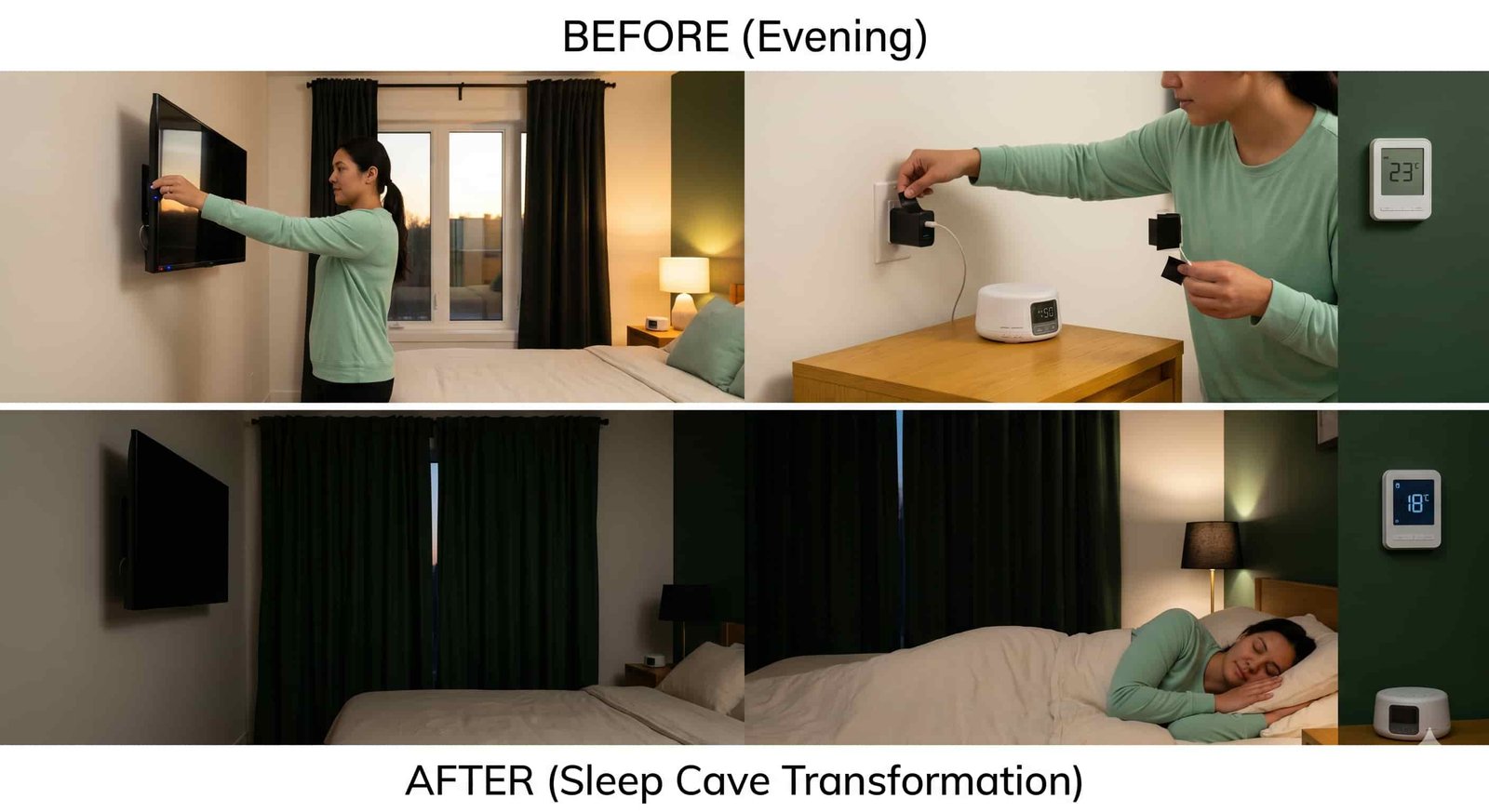
Better sleep tips & exclusive offers, straight to your inbox.

Curated sleep insights, early access to new products, and members-only deals.
No spam. You can unsubscribe anytime.