Natural Sleep Aids and Foods: Your Guide to Better Sleep Through Nutrition
Natural Sleep Aids Foods: Your Guide to Better Sleep Through Nutrition
When it comes to natural sleep aids foods, most people don’t realize their kitchen already contains a pharmacy of sleep-supporting compounds—if they know how to use them. If you’ve ever stared at the ceiling at 3 AM wondering why you can’t fall asleep, you’re not alone—and you don’t need another pill to fix it. Science shows that specific foods and nutrients can naturally boost your body’s sleep hormones, calm your nervous system, and reset your internal clock—without the grogginess, dependency, or side effects of prescription sleep aids. This isn’t folk wisdom; it’s backed by clinical research published in journals like Nutrients and the Journal of Research in Medical Sciences. In this guide, you’ll discover exactly which foods work, why they work, and how to build your own “Sleep Nutrition Protocol” that fits your lifestyle.
- The Tryptophan Pathway: How certain foods convert to melatonin in your brain—and the exact timing to eat them for maximum effect.
- 7 Science-Backed Sleep Foods: From tart cherries to kiwi fruit, clinically studied foods that actually improve sleep quality (with specific dosages).
- The Slumbelry Sleep Nutrition Protocol: A practical 5-step evening routine that combines nutrition, environment, and our “Subtraction Method” for optimal rest.

1) Why Your Kitchen Might Be the Best Sleep Aid You’re Not Using
Here’s something most sleep articles won’t tell you: your body already has a sophisticated sleep-production system. It doesn’t need to be forced asleep with chemicals—it needs the right nutritional building blocks to do its job. When you eat the right foods at the right time, you’re essentially handing your brain the raw materials it needs to produce melatonin, calm anxiety, and relax your muscles.
A comprehensive 2025 review in Food Science & Nutrition analyzed dozens of studies and concluded that nutritional interventions can significantly improve sleep quality by supporting your body’s natural mechanisms rather than overriding them. This is fundamentally different from sleeping pills, which force sedation but don’t produce natural, restorative sleep architecture.
The advantage of natural approaches is clear: no dependency risk, minimal side effects, and additional health benefits beyond sleep improvement. As we at Slumbelry emphasize in our “Subtraction Method”—the most effective sleep interventions often involve removing interference rather than adding chemicals. Nutrition is the ultimate form of this approach: you’re giving your body what it needs and getting out of the way.
2) The Science of Sleep Nutrition: How Food Becomes Sleep
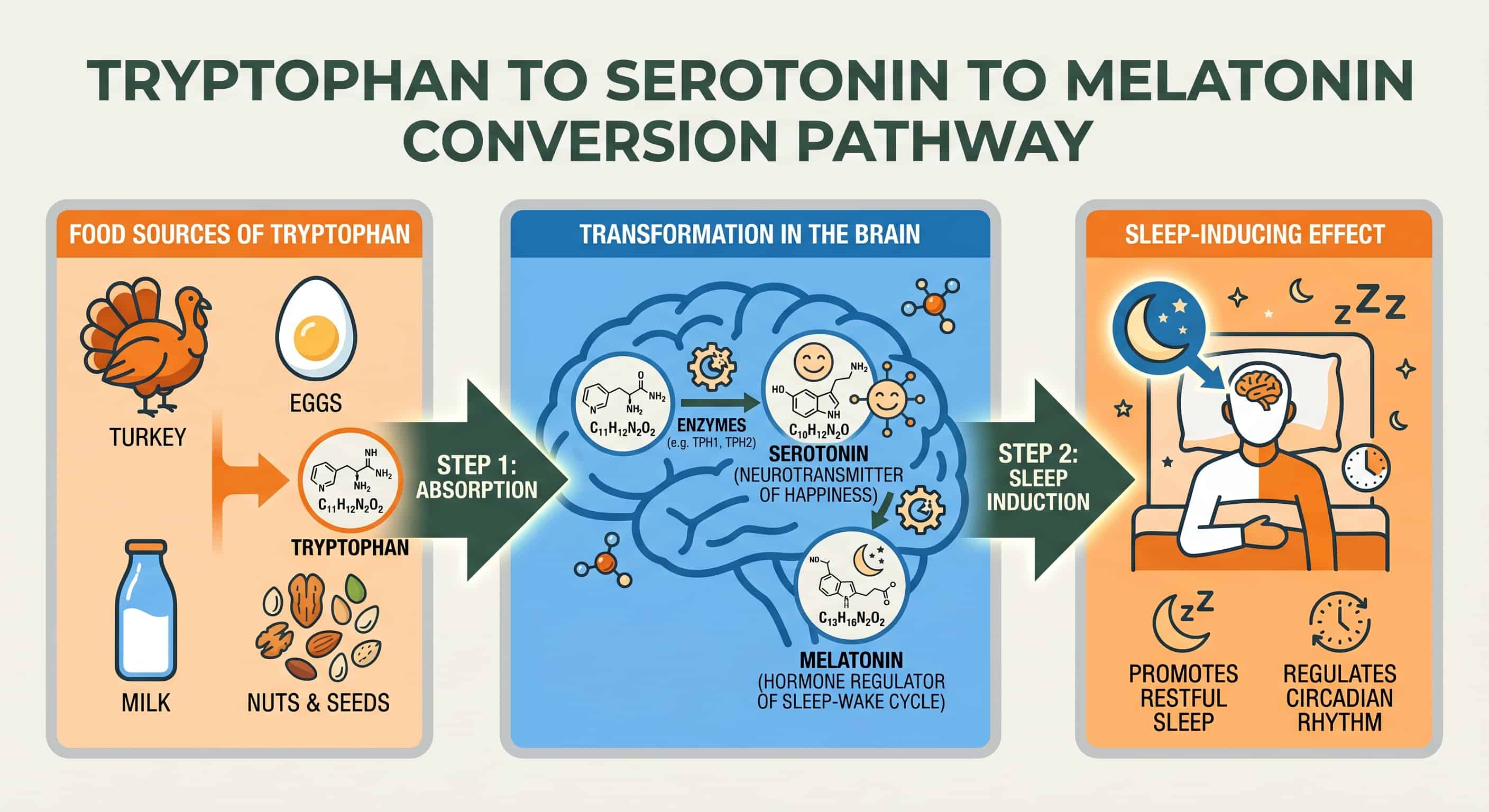
To understand why certain foods help you sleep, you need to know about tryptophan—an amino acid that’s the biological precursor to melatonin. Here’s the pathway:
- Tryptophan (from food) → crosses the blood-brain barrier
- Serotonin (neurotransmitter for calm and well-being)
- Melatonin (sleep hormone that signals “time to sleep”)
The trick? Combining tryptophan-rich foods with complex carbohydrates. Carbs help tryptophan cross the blood-brain barrier more efficiently. That’s why traditional sleep foods like warm milk with honey or turkey with stuffing actually work—they’re not just folk remedies; they’re biochemistry.
3) The 7 Best Foods for Sleep (Backed by Research)
Not all “sleep foods” are created equal. Here are seven that have actual clinical evidence behind them, with specific guidance on how to use them effectively.
1. Tart Cherry Juice — The Melatonin Booster
Tart cherries are one of the few natural food sources of melatonin. A 2026 clinical trial protocol published in Nutrients is currently testing tart cherry juice specifically for older adults with insomnia—a sign researchers take this seriously.
Your Action Plan: Drink 8 oz (240ml) of 100% tart cherry juice (no added sugar) 1-2 hours before bedtime. Look for Montmorency cherries specifically—they have the highest melatonin content. Consistency matters; effects build over 1-2 weeks of daily use.
2. Kiwi Fruit — The Serotonin Source
Kiwis are rich in serotonin, folate, and antioxidants. A frequently cited study found that eating 2 kiwis one hour before bedtime improved sleep onset, duration, and efficiency in adults with self-reported sleep problems.
Your Action Plan: Eat 2 medium kiwis 30-60 minutes before bed. The combination of serotonin, folate, and antioxidants makes kiwis a powerful sleep food. Bonus: they’re also excellent for digestion, which supports the “gut-sleep axis.”
3. Almonds and Walnuts — The Magnesium-Melatonin Duo
Almonds are rich in magnesium—a mineral that activates your parasympathetic nervous system (“rest and digest” mode). Walnuts contain natural melatonin and omega-3 fatty acids.
Your Action Plan: A small handful (about 1 oz / 23 almonds or 14 walnut halves) 1-2 hours before bed. Pair with a small piece of fruit for the carb-tryptophan synergy.
4. Fatty Fish — The Vitamin D Connection
Salmon, mackerel, and tuna combine tryptophan with vitamin D and omega-3s. Research suggests that people who eat fish regularly fall asleep faster and report better sleep quality.
Your Action Plan: Include fatty fish in dinner 2-3 times per week, ideally 3-4 hours before bedtime. Salmon is ideal—high in both omega-3s and vitamin D, which work together to regulate serotonin.
5. Turkey — The Classic Tryptophan Source
Turkey contains high levels of tryptophan, but the real magic happens when you combine it with complex carbohydrates (like whole grain bread or sweet potato). This is the science behind the “Thanksgiving drowsiness”—and you can harness it any night of the year.
Your Action Plan: Include turkey in dinner with complex carbs for optimal tryptophan absorption. A turkey sandwich on whole grain bread 3-4 hours before bed is a simple, effective sleep-promoting meal.
6. Warm Milk — More Than Folk Wisdom
Yes, there’s science behind warm milk. It contains both tryptophan and calcium (which helps your brain use tryptophan effectively). But the real benefit may be psychological—the warm, comforting ritual signals safety to your nervous system.
Your Action Plan: A cup of warm milk (or a milk alternative fortified with calcium) 30-60 minutes before bed. Add a teaspoon of honey to provide the carbs needed for tryptophan absorption.
7. Complex Carbohydrates — The Tryptophan Transporter
Oatmeal, whole grain bread, and brown rice don’t just contain sleep-supporting nutrients—they actively help tryptophan reach your brain more efficiently by triggering insulin release, which clears competing amino acids from your bloodstream.
Your Action Plan: A small bowl of oatmeal with sliced banana 2-3 hours before bed. The combination of complex carbs, natural melatonin (in oats), and potassium (in bananas) creates a sleep-promoting powerhouse.
4) Herbal Sleep Allies: Nature’s Calming Compounds
Beyond foods, certain herbs have centuries of traditional use backed by modern research. Here are the most effective:
Chamomile (with Apigenin)
Chamomile’s sleep effects come from apigenin, a compound that binds to GABA receptors in your brain—the same receptors targeted by anti-anxiety medications, but without the side effects. A 2024 review in Frontiers in Nutrition calls apigenin “a natural molecule at the intersection of sleep and aging.”
Valerian Root
Valerian has been used for over 2,000 years. A 2025 study in Molecules identified the specific compounds (valerenic acid and pinoresinol) that work as positive allosteric modulators of GABA receptors—essentially making your brain’s natural calming system work better.
L-Theanine
Found naturally in tea leaves, L-theanine promotes relaxation without sedation. A 2026 study found that combined GABA and L-theanine supplementation significantly improved sleep quality—and a separate 2026 study showed walnut peptide combined with theanine helped with sleep disorders.
5) The Slumbelry Sleep Nutrition Protocol: Your 5-Step Evening Routine
Knowing what to eat is only half the battle. Timing and integration with your environment matter just as much. Here’s our recommended 5-step protocol that combines nutrition with Slumbelry’s “Subtraction Method”—removing the barriers to natural sleep.
🍽️ The 5-Step Sleep Nutrition Protocol
- 3-4 Hours Before Bed: The Sleep Dinner
Include fatty fish (salmon/mackerel) or turkey with complex carbs (brown rice, sweet potato). Avoid heavy, spicy foods that raise core temperature. - 2 Hours Before Bed: The Calming Snack
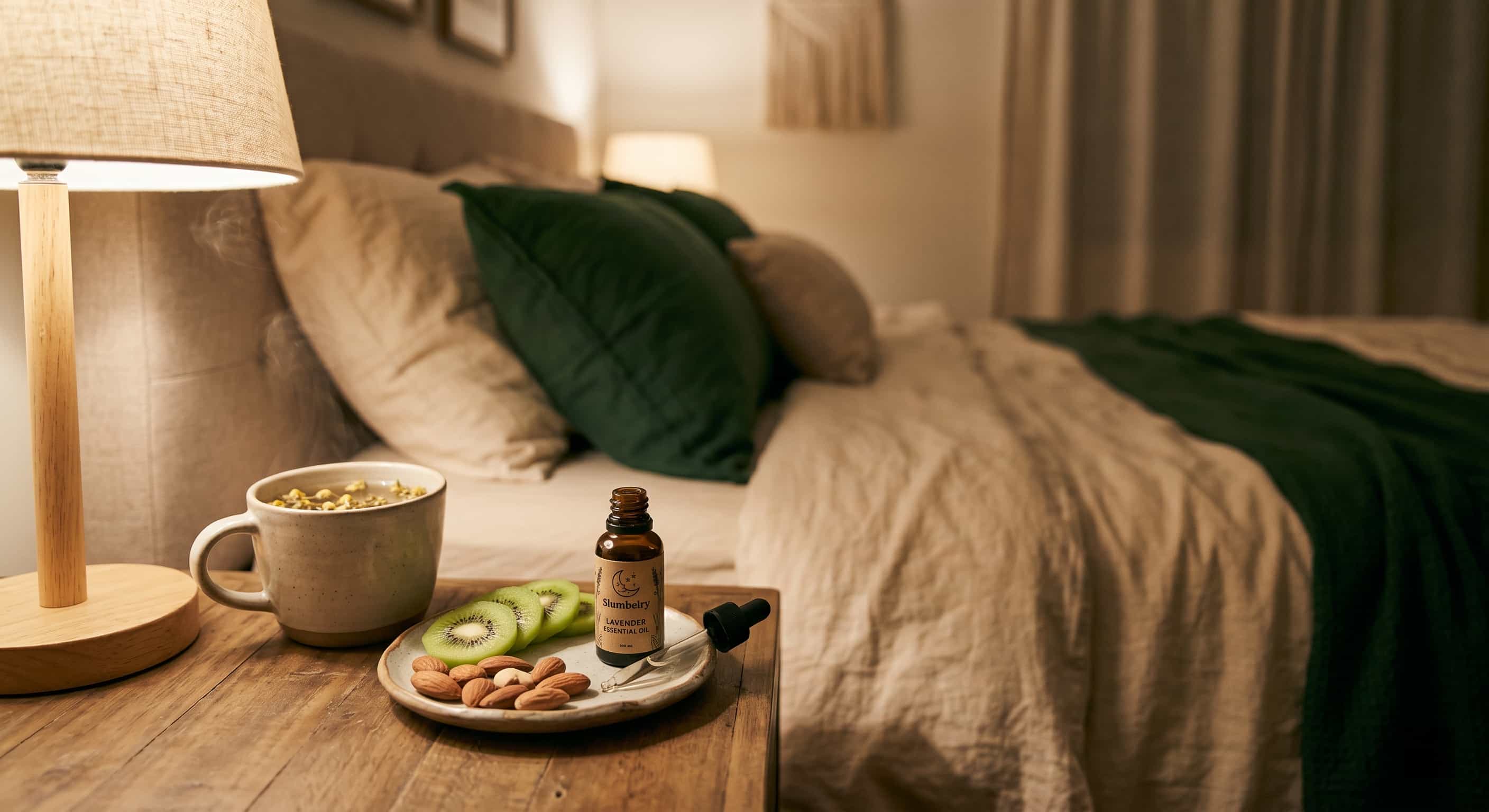
A small handful of almonds/walnuts + 1 kiwi or a small bowl of oatmeal. This provides tryptophan + carbs for optimal serotonin production. - 1 Hour Before Bed: The Herbal Ritual
Chamomile tea or L-theanine supplement. Begin your “Digital Sunset”—dim lights, no screens. This is where nutrition meets environment. - 30 Minutes Before Bed: The Sleep Environment
Ensure your bedroom is cool (65-68°F / 18-20°C), dark, and quiet. Use Slumbelry’s cooling mattress and breathable bedding to support your body’s natural temperature drop. - At Bedtime: The Final Touch
Lavender aromatherapy on your pillow. Lie down only when you feel genuinely sleepy (heavy eyes, not just tired).
“The most effective sleep interventions often involve removing interference rather than adding chemicals. Give your body what it needs, then get out of the way.”
6) Foods and Habits That Sabotage Your Sleep
Just as important as what you include is what you avoid, especially in the hours before bed:
- Caffeine: Stop all caffeine by 2 PM (or 8+ hours before bed). This includes “hidden” sources like chocolate, some teas, and certain medications.
- Alcohol: While initially sedating, alcohol fragments your sleep architecture and suppresses REM sleep. If you drink, finish at least 3-4 hours before bed.
- Heavy/Spicy Foods: These raise core body temperature and require significant digestive energy—both enemies of sleep onset.
- Sugar and Refined Carbs: Cause blood sugar spikes and crashes that can wake you at 2-3 AM. Choose complex carbs instead.
- Late-Night Fluids: Reduce liquid intake 2-3 hours before bed to minimize nighttime bathroom trips.
The Caffeine Half-Life Rule: Caffeine has a half-life of 5-8 hours. If you drink coffee at 4 PM, half of it is still in your system at 9-12 AM the next day. For sensitive sleepers, consider a “caffeine curfew” at noon.
7) Frequently Asked Questions
Q1: Do sleep foods actually work, or is it just placebo?
They work through real biological mechanisms. The tryptophan→serotonin→melatonin pathway is well-established science. A 2026 review in Nutrition Reviews analyzed multiple studies and confirmed that dietary interventions can meaningfully improve sleep quality, duration, and onset time. The effects are modest compared to prescription drugs—but without the side effects or dependency.
Q2: How long does it take for food-based sleep aids to work?
Unlike sleeping pills that work in 30 minutes, food-based approaches are cumulative. You’ll likely notice subtle improvements within 3-5 days, with more significant changes after 1-2 weeks of consistent use. Think of it as a “nutritional foundation” rather than a quick fix.
Q3: Can I combine multiple sleep foods together?
Absolutely—in fact, combinations often work better. The “tryptophan + carbs” combination (turkey + whole grain, milk + honey) is scientifically validated. Our Sleep Nutrition Protocol is designed around these synergies. Just introduce one new food at a time so you can identify what works best for you.
Q4: Are sleep supplements better than food sources?
Food sources are generally preferable because they provide nutrients in their natural context with co-factors that enhance absorption. However, supplements can be helpful for specific deficiencies (like magnesium) or situations (jet lag with melatonin). A 2025 review found that nutritional interventions work best when they include whole foods as the foundation.
Q5: I’m vegetarian/vegan—are there plant-based sleep foods?
Yes! Tofu, soy products, nuts (especially almonds and walnuts), seeds (pumpkin, sunflower), legumes, and whole grains all contain tryptophan. Pair them with complex carbs for optimal absorption. Plant-based milks fortified with calcium and magnesium are excellent alternatives to dairy.
Q6: Is warm milk really effective, or just a folk remedy?
It’s both. Milk contains tryptophan and calcium (which helps tryptophan absorption). But research also suggests the warm temperature and comforting ritual activate your parasympathetic nervous system. The psychological component—the association of warm milk with safety and bedtime—is itself therapeutic.
Q7: What’s the best time to eat sleep-promoting foods?
Timing depends on the food: complex carb meals (dinner) work best 3-4 hours before bed; light snacks (nuts, kiwi) 1-2 hours before; herbal teas and supplements 30-60 minutes before. The key is consistency—your body learns to associate these nutritional cues with approaching sleep time.
Q8: Can food really help with middle-of-the-night awakenings?
Often, yes. Nighttime awakenings can be caused by blood sugar crashes. A small bedtime snack containing complex carbs and protein (like a small bowl of oatmeal with almond butter) can stabilize blood sugar through the night. Avoid simple sugars, which cause the spikes and crashes that wake you up.
Q9: Will sleep foods make me groggy in the morning?
No—and that’s their biggest advantage over sleeping pills. Natural sleep foods support your body’s normal sleep architecture, including proper REM and deep sleep cycles. You wake up feeling refreshed, not chemically sedated. This is why the American College of Physicians recommends CBT-I and behavioral approaches before medication.
Q10: When should I see a doctor instead of trying food-based approaches?
See a doctor if: (1) Sleep problems persist for more than 3 months despite good nutrition and sleep hygiene, (2) You suspect sleep apnea (loud snoring, gasping), (3) You have significant daytime impairment, or (4) You’re taking medications that might interact with supplements. Food-based approaches are excellent for mild to moderate sleep issues, but they’re not a replacement for medical treatment of serious sleep disorders.
Transform your evenings with the Slumbelry Sleep Nutrition Protocol.
Take the Free Sleep Assessment Explore Our Cooling MattressThe Slumbelry Commitment
Sleep is the most vulnerable state of human existence. It is where we heal, reset, and grow.
At Slumbelry, we don’t just sell sleep products; we advocate for your physiological right to rest. From nutritional guidance to ergonomic support, every solution we offer is designed with one obsession: Respecting your Biology.
Science is our language, but your recovery is our purpose. You take care of everything else in your life—let us take care of your nights.
Rest Deeply,
The Slumbelry Team