
Shift Work Sleep Disorder: Why “Catching Up on Sleep” Fails
Shift Work Sleep Disorder: Why Catch-Up Sleep Fails (And How Anchor Sleep Resets Your Clock)
If you are a nurse, a police officer, a pilot, or anyone grinding through the 11 PM to 7 AM shift, you already know the brutal reality: the world is not built for you. The World Health Organization (WHO) has classified shift work as a probable carcinogen. It fights against every evolutionary rhythm hardwired into your DNA.
When you drag yourself home at 8 AM, the sun is blazing, the neighborhood is waking up, and despite feeling bone-tired, your brain refuses to shut down. The common advice—”just catch up on your sleep during the day”—is a biological lie. You cannot simply force a normal 8-hour sleep block into a daytime slot. Your circadian rhythm will violently reject it. But you can hack the system using a scientifically proven protocol: The Anchor Sleep Method.
⚡ Core Takeaway: The Survival Guide for Shift Workers
- The Core Problem: Your body’s temperature and cortisol naturally spike during the day, overriding your exhaustion and causing fragmented, low-quality day sleep.
- The Anchor Solution: Establishing a non-negotiable 4-hour sleep block at the exact same time every day—whether you are working or off—stabilizes your circadian clock.
- The Environment Hack: Because daytime sleep is biologically unnatural, your sleep environment (blackout, temperature, and mattress efficiency) must be flawless.
Why do I feel hungover after a night shift?
Direct Answer: You feel “hungover” because you are experiencing severe circadian misalignment, commonly known as Shift Work Sleep Disorder.
Mechanism: Your body operates on a 24-hour internal clock. Around 3:00 AM to 4:00 AM, your core body temperature hits its lowest point, and your brain is flooded with melatonin. By forcing yourself to stay awake, alert, and processing information during this biological nadir, you are effectively running an engine without oil. Moreover, when you commute home in the morning sunlight, the light hits your retinas and instantly halts melatonin production, destroying your ability to fall asleep.
Actionable Advice: Buy a pair of wrap-around dark sunglasses (or blue-light blocking glasses) and wear them the moment you leave your workplace. Do not let morning sunlight hit your eyes on the commute home.
What exactly is the Anchor Sleep Method?
Direct Answer: Anchor Sleep is the practice of dedicating a specific 4-hour block of time to sleep every single day, regardless of your shift schedule.
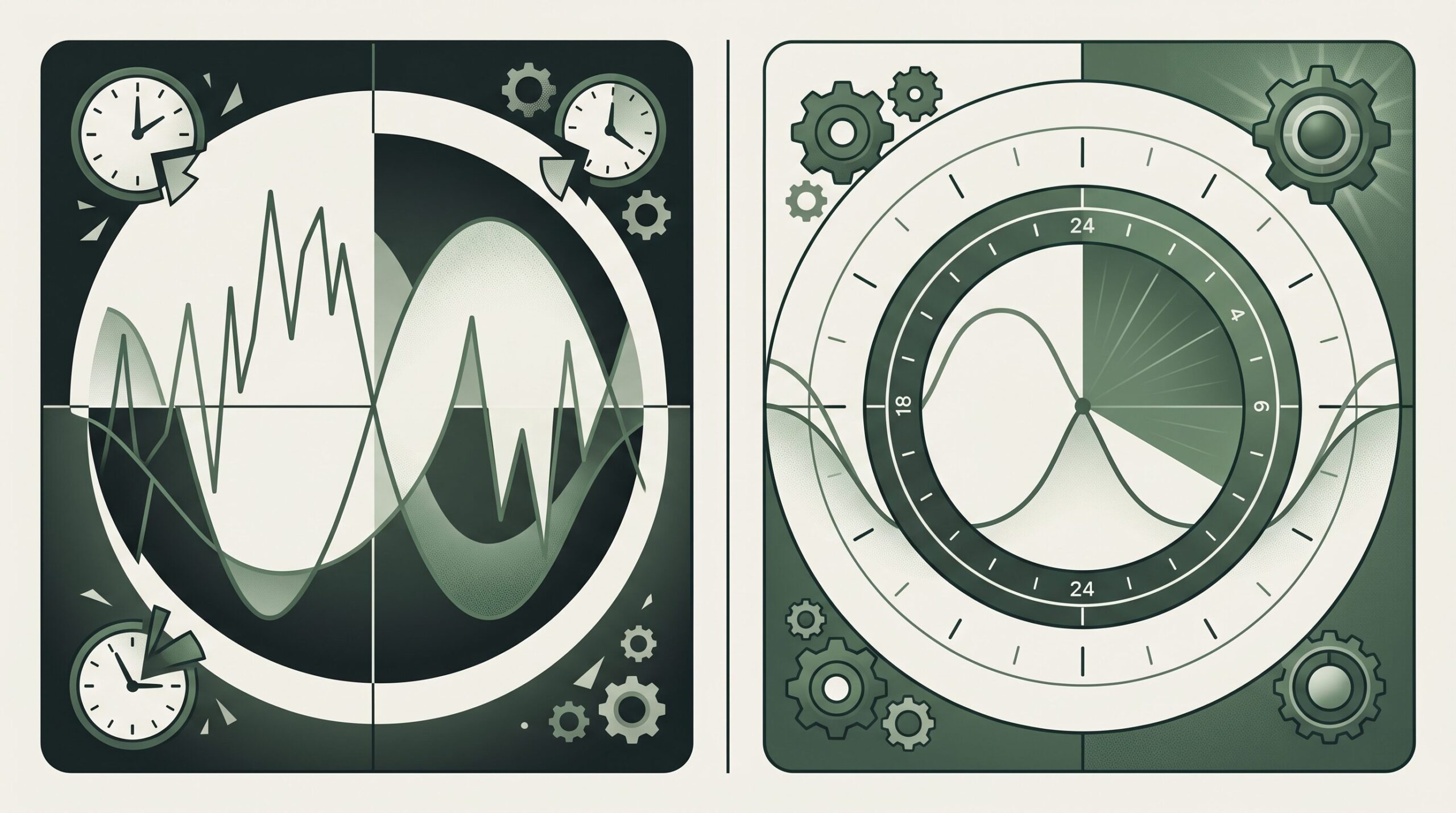
Mechanism: Minors and Waterhouse first proposed the ‘anchor sleep’ hypothesis. If you sleep at totally random times, your circadian rhythm goes into freefall, leading to chronic insomnia and metabolic issues. By maintaining just a 4-hour “anchor” of overlap every 24 hours, you give your brain a fixed guidepost. It stabilizes your circadian rhythm enough to make both workdays and days off survivable.
Actionable Advice: Identify a 4-hour window that you can protect every day. For example, if you finish nights at 7:00 AM, your Anchor Sleep could be 8:00 AM to 12:00 PM. Commit to sleeping (or resting in darkness) during these hours 7 days a week.
How do I get enough sleep with only a 4-hour Anchor?
Direct Answer: You don’t rely solely on the anchor. You use polyphasic sleep—splitting your sleep into the Anchor block plus Controlled Recovery Periods (CRPs) or naps.
Mechanism: A standard sleep cycle takes about 90 minutes. If your Anchor is 4 hours (roughly 2.5 to 3 cycles), you are still in sleep debt. To reach your required 6.5 to 7.5 hours, you must strategically add sleep cycles before your shift. Splitting sleep is biologically valid as long as the cycles are completed without interruption.
Actionable Advice: Sleep your 4-hour Anchor immediately after your night shift (e.g., 8 AM – 12 PM). Then, wake up and live your day. Right before your next night shift begins, take a strict 90-minute CRP (nap) to complete another full sleep cycle. Total sleep: 5.5 to 6 hours of highly efficient rest.
Why do I keep waking up after 3 hours of day sleep?
Direct Answer: Your biological clock is actively waking you up by raising your core temperature.
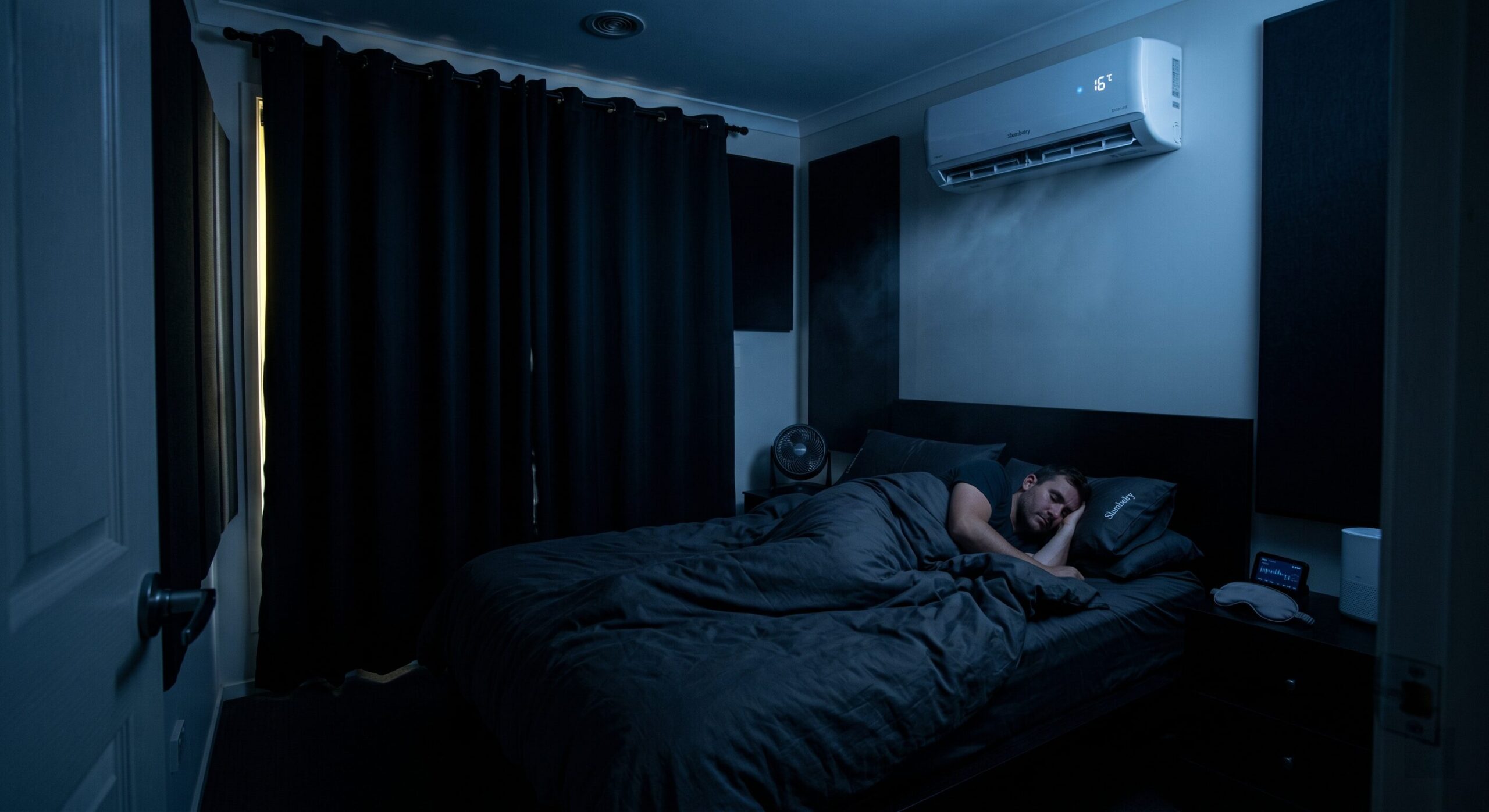
Mechanism: To stay asleep, your core body temperature must remain low. During the daytime, your circadian rhythm naturally forces your core temperature to rise, which triggers wakefulness, regardless of how exhausted your muscles are. Combined with the noise of daytime traffic and the leakage of sunlight, your brain assumes it is time to hunt and gather, not rest.
Actionable Advice: You must aggressively engineer your bedroom. Drop the AC to 65°F (18°C), install 100% blackout curtains (tape the edges if necessary), and use a white noise machine to drown out daytime frequencies.

The Slumbelry Factor: Why is mattress efficiency critical for shift workers?
Direct Answer: Shift workers have less time in bed, so every minute must be spent in restorative Deep Sleep, not tossing and turning.
Mechanism: When your Anchor Sleep window is only 4 hours long, you cannot afford to spend 45 minutes finding a comfortable position. A mattress that lacks pressure relief keeps your nervous system on high alert, while a mattress that traps heat prevents your core body temperature from dropping—the biological prerequisite for entering Deep Sleep.
Actionable Advice: Invest in a mattress engineered for instant pressure relief and aggressive thermal regulation. A Slumbelry Mattress actively pulls heat away from your core, forcing your body into the thermal state required for Deep Sleep even when the sun is blazing outside.
Shift Worker FAQ: Real Answers for Irregular Schedules
How to sleep during the day when working night shift?
Direct Conclusion: You must create a 100% blackout environment and stick to a consistent 4-hour Anchor Sleep window every day.
Why: Your circadian rhythm is dictated by light and temperature; blocking sunlight and dropping room temperature tricks your brain into melatonin production.
Action: Buy blackout curtains and go to sleep immediately after getting home, wearing dark sunglasses on the commute.
Is 4 hours of sleep enough for a night shift worker?
Direct Conclusion: No, 4 hours is not enough for total recovery, but it is enough to form an ‘Anchor’ for your circadian rhythm.
Why: Adults need 4-5 full 90-minute sleep cycles (6-7.5 hours) for cognitive repair and physical recovery.
Action: Supplement this 4-hour core block with an additional 90-minute nap before your shift to reach your total sleep requirement.
Why do I wake up after 3 hours of day sleep?
Direct Conclusion: You wake up because your circadian rhythm naturally spikes your core body temperature and cortisol levels during the day.
Why: This biological ‘wake-up’ signal overrides your muscular exhaustion, pulling you out of Deep Sleep prematurely.
Action: Keep your bedroom below 65°F (18°C) and wear an eye mask to prevent any ambient light from hitting your retinas.
What is the Anchor Sleep method?
Direct Conclusion: The Anchor Sleep method is a strategy where you sleep during the exact same 4-hour time block every single day.
Why: This consistency gives your brain a fixed guidepost, preventing your biological clock from constantly shifting and reducing Shift Work Sleep Disorder.
Action: Choose a 4-hour block (e.g., 8 AM – 12 PM) and sleep during those exact hours on both workdays and days off.
Should I stay on a night schedule on my days off?
Direct Conclusion: No, completely flipping your schedule causes severe ‘social jetlag,’ but you shouldn’t fully revert to a normal day schedule either.
Why: Constant 12-hour swings in your sleep schedule destroy insulin sensitivity and immune function.
Action: Use your Anchor Sleep window on days off (sleep 8 AM to 12 PM), wake up for the afternoon, and take your remaining sleep at night.
How long should I nap before a night shift?
Direct Conclusion: Aim for exactly a 90-minute nap before your night shift begins.
Why: Ninety minutes allows you to complete one full sleep cycle (Light Sleep -> Deep Sleep -> REM), so you wake up refreshed.
Action: Set your alarm for 95 minutes (giving you 5 minutes to fall asleep) to avoid waking up during Deep Sleep, which causes severe grogginess.
Why do I feel hungover after a night shift?
Direct Conclusion: This is Shift Work Sleep Disorder, caused by forcing your body to be awake during its biological nadir.
Why: At 3 AM, your core temperature is lowest and melatonin is highest. Being awake then is like running an engine without oil.
Action: Do not let morning sunlight hit your eyes on the commute home; wear wrap-around sunglasses immediately upon leaving work.
Can melatonin help night shift workers?
Direct Conclusion: Yes, but only if taken at the correct time right before your daytime sleep block.
Why: Melatonin is the “hormone of darkness”; supplementing it tricks your brain into thinking it is night time, overriding the daytime signals.
Action: Take a low dose (0.5mg to 3mg) 30 minutes before your daytime sleep. Never take it during your shift.
How does shift work affect my metabolism?
Direct Conclusion: Irregular sleep disrupts insulin sensitivity and spikes ghrelin (the hunger hormone).
Why: This hormonal imbalance causes intense cravings for sugar and carbohydrates during night shifts, leading to weight gain.
Action: Avoid heavy, carb-rich meals between midnight and 6:00 AM; stick to lean protein and healthy fats to prevent blood sugar crashes.
What is the best mattress for a shift worker?
Direct Conclusion: Shift workers require a mattress with active cooling technology and instant pressure relief.
Why: Because you sleep during the warmer daytime, your bed must actively pull heat away from your core to induce Deep Sleep.
Action: Invest in a thermally-regulating mattress like Slumbelry to maximize the efficiency of your limited Anchor Sleep window.
Ready to Transform Your Recovery?
If you are sacrificing your nights, do not sacrifice your health. Discover the cooling technology that shift workers rely on.
Take the Sleep Assessment Subscribe for Shift Worker TipsThe Slumbelry Commitment
Sleep is the most vulnerable state of human existence. It is where we heal, reset, and grow.
At Slumbelry, we don’t just sell sleep products; we advocate for your physiological right to rest. From ergonomic support to light management, every solution we offer is designed with one obsession: Respecting your Biology.
Science is our language, but your recovery is our purpose. You take care of everything else in your life—let us take care of your sleep.
Rest Deeply,
The Slumbelry Team