https://slumbelry.com/
×
Slumbelry
HOME SHOP WELLBEING BLOG LOGIN / REGISTER SEARCH CONTACT

The Simple Shift That Turns Sleep From a Chore Into a Performance Tool

The R90 Sleep Method: Count Cycles, Not Hours (2026) | Slumbelry Sleep Science

Stop Counting Sleep Hours. Start Counting Sleep Cycles.

⚡ Core Takeaway: The R90 System in 3 Sentences

  • The 8-hour rule is a myth: Sleep is measured in 90-minute cycles, not hours. Think 35 cycles per week — not 8 hours per night.
  • Wake time is sacred: Your fixed wake anchor — not your bedtime — is the most important sleep commitment you can make. It calibrates your entire circadian rhythm.
  • One bad night is meaningless: Cycle debt is managed across a week, not corrected by going to bed early. Maintain the anchor, track weekly, and stop daily catastrophizing.
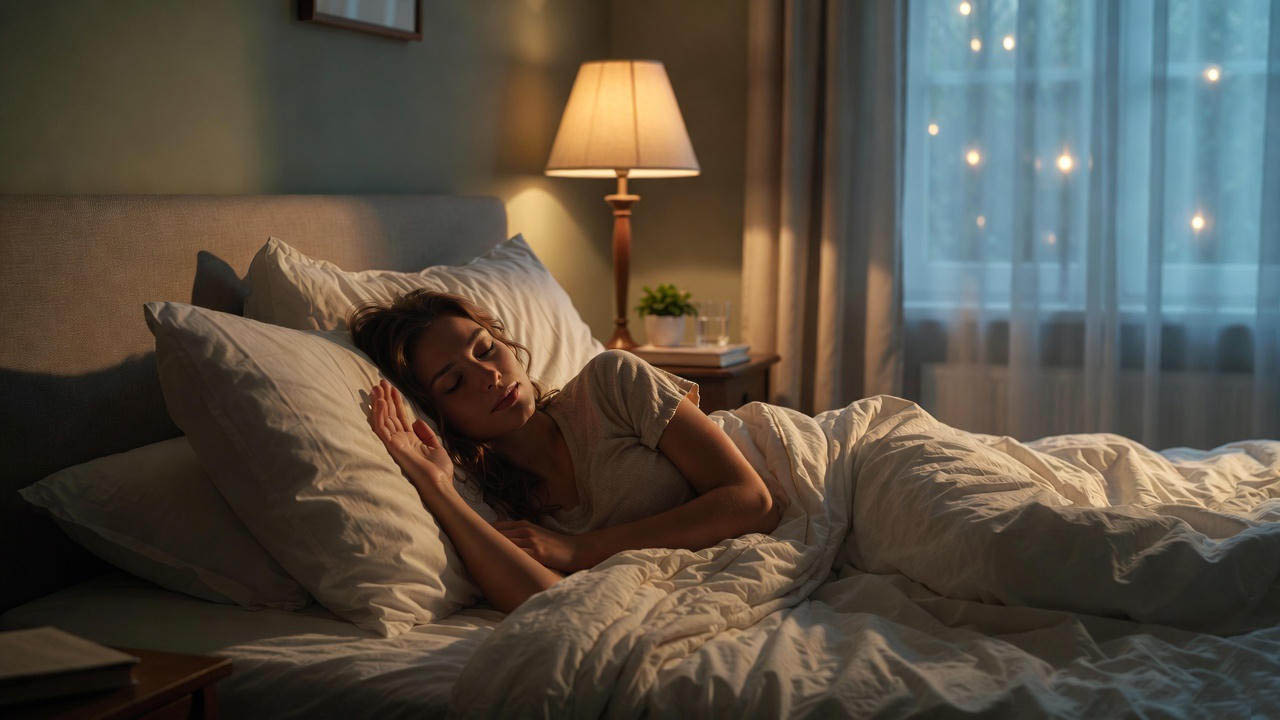
Person sleeping peacefully in fetal position on an ergonomic mattress, soft moonlight through blackout curtains, bedroom dark and quiet
The R90 method starts with one decision: a fixed wake time that you never break. Everything else — your bedtime, your cycle count, your weekly target — flows from that anchor.

The R90 sleep method is a cycle-based framework that replaces the arbitrary 8-hour nightly target with a flexible weekly cycle goal of 35 cycles. Developed by British sleep coach Nick Littlehales and used by elite athletes across Premier League football and Olympic training, it is the most evidence-based approach to sleep optimization currently available. This guide covers every element of the R90 system — from calculating your perfect bedtime to timing your training schedule — so you can implement it starting tonight.

What Is the R90 Method — And Why the 8-Hour Rule Is a Myth

R90 is the sleep strategy pioneered by British sleep coach Nick Littlehales, used with elite athletes, that reframes sleep from “hours needed” to “90-minute cycles completed.” The 8-hour recommendation is a statistical average that ignores individual genetics, age, and chronotype — and forces millions of people into anxiety when they wake at 6 AM having “only” gotten 7 hours.

The Science: Why 8 Hours Is Industrial-Era Convention

Littlehales’ R90 research shows the brain operates in 90-minute cycles throughout the day — ultradian rhythms that govern alertness, digestion, and creativity. Applying the same cycle logic to night sleep reveals that waking mid-cycle (during deep sleep or REM) is the real cause of grogginess, not total hours. The 8-hour target is not biology — it is a cultural convention from the industrial era. The glymphatic system does not check a clock; it clears metabolic waste across full sleep cycles regardless of when you started.

Action step: Stop setting your alarm for 7 AM and back-calculating a bedtime. Instead, set your wake time first, then calculate your ideal bedtime by counting back in 90-minute increments: 7:00 AM → 5:30 AM → 4:00 AM → 2:30 AM → 11:00 PM → 9:30 PM.

The 90-Minute Sleep Cycle — What Actually Happens in Each Stage

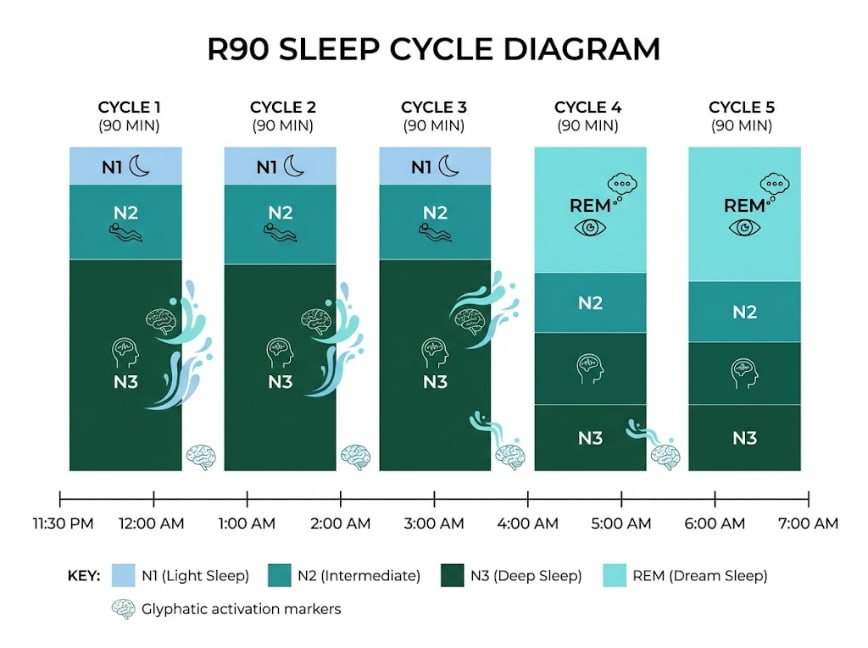
Each 90-minute cycle moves through four stages: N1 (drowsiness), N2 (light sleep with memory consolidation), N3 (deep sleep with glymphatic cleansing), and REM (dream sleep with emotional processing). Waking mid-N3 is the physiological cause of that “concrete limbs” grogginess — not the number of hours you slept.

The Four Stages: A Complete Cycle Breakdown

N1 (1–5 minutes): The transition from wakefulness. Brain waves shift from alpha to theta. Easily disturbed. N2 (10–25 minutes): Light sleep. Heart rate slows, body temperature drops. The brain begins consolidating memories — skills learned during the day are processed here. N3 (20–40 minutes): Deep sleep. Glial cells shrink by 60%, cerebrospinal fluid flushes through the brain clearing beta-amyloid and metabolic waste. This is where physical recovery happens. REM (10–60 minutes): Brain is as active as waking. Noradrenaline completely shut off — the only stress-free state in 24 hours. Emotional memories are processed and stripped of their acute sting.

Action step: Learn to recognize what waking at different cycle points feels like. Waking after 4 full cycles (6 hours) and feeling refreshed means you completed the deep sleep and REM your brain needed. Waking mid-cycle and feeling destroyed means you interrupted it — not that you need more hours.

The Weekly Cycle Target — Why 35 Cycles Changes Everything

R90 replaces the anxiety of nightly 8-hour targets with a forgiving weekly cycle target of 35 cycles (approximately 5 cycles per night × 7 days). This removes the psychological pressure of “I failed tonight” and replaces it with a sustainable long-term average.

Why Weekly, Not Nightly

Littlehales designed this framework from his work with Premier League footballers who travel constantly, play matches at odd hours, and experience disrupted nights. A fixed wake time plus a weekly cycle target accommodates late nights, early mornings, and disrupted nights without the panic of a single bad night. If you miss 2 cycles one night, you have 4 extra to absorb across the week without any biological cost. The glymphatic system and memory consolidation both operate on a weekly cadence, not a nightly judgment.

Action step: Track your cycles for 7 days without changing anything. At the end of the week, add them up. If you are above 35, you are in surplus. If you are below, note which days were short — but do not catastrophize.

How to Calculate Your Perfect Bedtime Using Backward Math

The most powerful R90 tool is backward calculation from your fixed wake time. If you need to wake at 6:30 AM and want 5 cycles, your ideal bedtime is 10:00 PM. If you want 6 cycles, it is 9:00 PM. Never choose a bedtime arbitrarily — always calculate it.

⚡ The Backward Math Formula

  • Step 1: Set your fixed wake time (7 days a week, same time)
  • Step 2: Count backward in 90-minute blocks from that time
  • Step 3: Subtract 14 minutes for average sleep onset latency
  • Example: Wake at 6:30 AM → 5 cycles → 10:00 PM bedtime (add 14 min onset = ~9:46 PM in bed)
R90 sleep cycle diagram showing N1-N2-N3-REM stages across 5 complete 90-minute cycles from 11:00 PM to 7:00 AM with glymphatic activation markers
A complete R90 cycle runs 90 minutes: N1 (drowsiness) → N2 (memory consolidation) → N3 (glymphatic brain cleanse) → REM (emotional processing). Waking mid-cycle — not total hours — is what causes grogginess.

The Anchor Night — Why Your Wake Time Is Non-Negotiable

The most counterintuitive R90 rule: even if you go to bed at 3 AM, wake up at your fixed time. Skipping your anchor wake time is the single fastest way to destroy your circadian rhythm and lose the entire week’s cycle target.

The Science of the Wake-Time Anchor

James Maas’ research on circadian rhythm confirms: the wake time signal is the strongest zeitgeber (time-giver) for the suprachiasmatic nucleus (SCN). Every time you sleep in past your anchor, you send a confusing signal that shifts your entire circadian phase — equivalent to traveling across time zones. The SCN uses wake time to calibrate when to release melatonin, when cortisol should peak, and when adenosine should accumulate. Without a consistent anchor, none of these signals can establish a reliable pattern — which is why shift workers who rotate schedules experience chronic jet lag.

Action step: Set your wake time alarm for the same time every day, including Saturdays. If you go to bed late, you still wake on time and absorb the cycle debt into your weekly total. No exceptions.

Napping Strategically — CRP and the Nappuccino

Planned naps are a performance tool, not a sign of weakness. The key is timing them in 90-minute multiples (one full cycle) or 30-minute singles (one-third cycle) to avoid sleep inertia — the grogginess from waking mid-cycle. The ideal nap window is 1–3 PM when the circadian rhythm naturally dips.

⚡ The Three Nap Types

  • Power Nap (20 min): Restores alertness for 3-4 hours. Do not enter deep sleep. Best before 3 PM.
  • Full Cycle Nap (90 min): Completes one full N1-N2-N3-REM cycle. Use when replacing missed overnight cycles. Afternoon only.
  • Nappuccino: Drink coffee, immediately nap 20 minutes. Caffeine kicks in as you wake. One per day max, never after 2 PM.

The Ideal Sleep Position — Fetal Position and the Spinal Alignment Rule

The optimal sleep position for most adults is the fetal position, lying on the opposite side of your dominant hand (right-handed → left side). This protects your instinctual dominant side and, combined with a pillow that maintains spinal alignment, produces the deepest, most restorative sleep.

The Straight Line Rule

Littlehales’ research with elite athletes found that head, neck, and spine must form a straight line in any sleep position. If the pillow is too high or the mattress too soft, the cervical spine bends, causing micro-awakenings from discomfort that fragment deep sleep. The fetal position also naturally restricts airway collapse — beneficial for those with mild snoring. Slumbelry’s pillow and mattress engineering is calibrated to maintain this “Golden Line” across all sleep positions.

Action step: Lie on your non-dominant side with knees slightly bent. Check in a mirror: if your head is tilted, your pillow height is wrong. If your spine looks curved, your mattress lacks proper support.

What Happens When You Miss a Night — Cycle Debt vs. Panic

One bad night of sleep is biologically insignificant if you maintain your weekly cycle target. The panic reaction — going to bed earlier, checking sleep scores, calculating deficits — is what actually causes the second bad night. Sleep debt is real, but it’s managed across weeks, not hours.

Why Panic Is the Real Problem

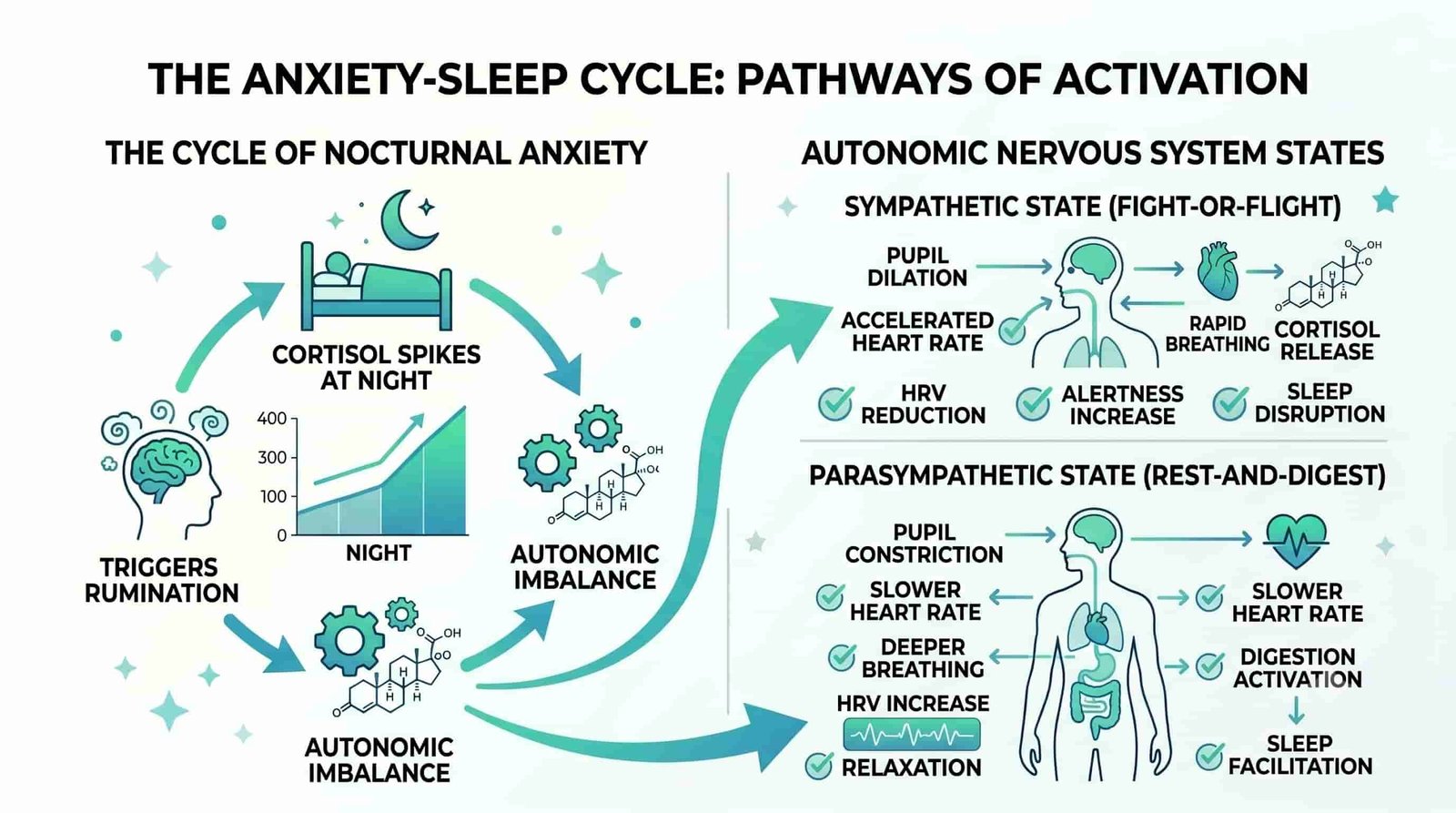
Walker’s two-process model shows adenosine accumulates with wakefulness and is cleared during sleep. A single disrupted night means you clear less adenosine — but the accumulation resumes at the same rate. What matters is the weekly clearance average, not any single night. The glymphatic system’s efficiency is affected by total sleep time, but it recovers quickly with one full night of good sleep. Anxiety triggered by a bad night activates the sympathetic nervous system — the very state that prevents the next night’s sleep from being restorative.

Action step: If you slept poorly: maintain your fixed wake time, absorb the deficit into your weekly total, and trust the system. Do not go to bed earlier, do not nap excessively, do not track obsessively.

Sleep Cycles and the Gym — How to Time Training Around Your Rhythm

Training too close to your natural sleep window elevates cortisol and body temperature, delaying sleep onset and fragmenting the cycles you need for recovery. Morning and early afternoon training aligns with the circadian peak in muscle temperature, reaction time, and strength.

⚡ Training Timing Guidelines

  • Before 3 PM: High-intensity training (HIIT, weights, running). Core body temperature and cortisol are at optimal levels for performance.
  • 4–6 PM: Moderate-intensity only. Body temperature peaks here — too late for peak performance but acceptable for maintenance.
  • After 7 PM: Light movement only (walking, yoga, stretching). No high-intensity work. Cold shower 30 min before bed to accelerate core temperature drop.

A person stretching after waking at dawn, alarm clock showing 7:00 AM, warm light filtering through curtains, clean organized bedroom environment
The fixed wake time is your anchor. Waking at the same time every day — even after a short night — is the single most powerful thing you can do for your circadian rhythm.

The Slumbelry Framework — R90 as Part of a Complete Sleep System

R90 works best when your bedroom environment fully supports the parasympathetic state. A zero-motion mattress that isolates partner movement, blackout curtains that eliminate light completely, and 18–20°C room temperature all compound the benefits of a well-calculated cycle target.

Why the Schedule Is Only as Good as the Environment Protecting It

Walker confirms that glymphatic activation is most efficient during the deepest N3 stages — which are also the most easily disrupted by light, temperature fluctuations, and physical movement. Slumbelry’s Sleep System protects those cycles at every layer: an ergonomic mattress maintains spinal alignment during the fetal position, cooling technology maintains the core temperature drop required for sleep onset, and sound masking eliminates the auditory triggers for micro-arousals. The schedule tells your brain when to sleep; the environment lets it.

Action step: Calculate your R90 schedule first. Then audit which environmental factor is most disrupting your cycles — and fix it. The schedule optimization is only as good as the environment protecting it.

Frequently Asked Questions About the R90 Sleep Method

What is the R90 sleep method and where did it come from?

The R90 sleep method was developed by British sleep coach Nick Littlehales, author of ‘Sleep: The Myth of 8 Hours, the Power of Naps, and the New Plan to Recharge Your Body and Mind.’ Based on research with elite athletes including Premier League footballers and Olympic teams, R90 reframes sleep from a nightly hour target to a weekly cycle target. The core principle: sleep consists of 90-minute cycles (N1 → N2 → N3 → REM) and waking at the right point in the cycle matters more than total hours. The target is 35 cycles per week.

Why is the 8-hour sleep recommendation a myth?

The ‘8 hours per night’ recommendation is a statistical average from large population studies — it ignores individual genetics, age, chronotype, and activity level. Some adults function optimally on 5 cycles (7.5 hours); others genuinely need 6-7 cycles (9-10.5 hours). What matters is completing full cycles without mid-cycle interruption, not hitting an arbitrary number. Matthew Walker’s research confirms the glymphatic system and memory consolidation functions of sleep are cycle-dependent, not hour-dependent.

How do I calculate my perfect bedtime using R90?

First, set a fixed wake time you can maintain 7 days a week. Second, count backward in 90-minute blocks: if you need to wake at 6:30 AM and want 5 cycles, your ideal bedtime is 10:00 PM (5 cycles: 6:30 AM → 5:00 AM → 3:30 AM → 2:00 AM → 12:30 AM → 11:00 PM). Add 14 minutes for average sleep onset latency. If you want 6 cycles, your bedtime is 9:00 PM. Use this calculation, not intuition, to set your bedtime.

What’s the most important rule in R90?

Your fixed wake time is the single most important commitment. Never skip it — even if you went to bed at 3 AM. The wake time is the anchor that calibrates your entire circadian rhythm. Skipping it sends your SCN a confusing signal equivalent to traveling across time zones. This one rule — never vary your wake time by more than 30 minutes — has more impact on sleep quality than any other habit.

How many cycles do I actually need?

Most adults need 5-6 cycles per night (7.5-9 hours), which translates to 35-42 cycles per week. If you’re new to R90, start at 5 cycles and assess after 2 weeks: do you wake without an alarm feeling refreshed? If yes, stay at 5. If you’re consistently tired, increase to 5.5 or 6 cycles. Athletes in heavy training may need 6-7 cycles for full recovery.

Can I make up missed sleep with naps?

Yes — strategically. A 90-minute afternoon nap (one full cycle) can replace 1-2 missed overnight cycles. A 20-minute power nap before 3 PM restores alertness without affecting nighttime sleep. Never nap after 4 PM. If you missed 3+ cycles overnight, a 90-minute afternoon nap is the most efficient recovery tool.

What’s the Nappuccino and does it work?

The Nappuccino is a performance hack: drink a cup of coffee immediately before taking a 20-minute nap. Caffeine takes approximately 20 minutes to cross the blood-brain barrier and block adenosine receptors. By the time you wake from the nap, the caffeine kicks in, combining the restorative benefit of light sleep with the alertness boost of caffeine. Used by athletes and executives, it provides 3-4 hours of enhanced alertness. Do not exceed one Nappuccino per day, and never after 2 PM.

What’s the best sleep position for R90?

The fetal position on your non-dominant side (right-handed → left side, left-handed → right side) is recommended by Littlehales as the optimal position for most adults. This protects your instinctual dominant side and, combined with a pillow that maintains spinal alignment (head, neck, and spine forming a straight line), produces the deepest, most restorative sleep. Back sleeping is acceptable but not optimal; stomach sleeping actively disrupts the fetal position’s spinal benefits.

Does R90 work for shift workers with irregular schedules?

R90 was specifically designed for shift workers and frequent travelers. The anchor wake time remains the priority, but shift workers can use ‘anchor sleep’ — a consistent 4-hour core sleep period at the same time each day — plus variable supplementary sleep blocks. The key is protecting the circadian anchor while being flexible about total cycle accumulation across a 24-hour window rather than a single night.

How does R90 interact with exercise and training?

High-intensity training within 3 hours of your calculated bedtime raises core body temperature and activates the sympathetic nervous system — directly opposing the parasympathetic state required for sleep onset. For athletes, complete intense training by 4 PM. Light evening exercise (walking, yoga) is acceptable. Post-training, a cold shower accelerates core temperature decline and signals the body toward sleep readiness. Avoid high-glycemic recovery meals within 2 hours of bedtime.

Ready to Reclaim Your Sleep From the 8-Hour Myth?

The R90 method works best when your environment protects the cycles you’ve calculated. Discover the sleep system that supports your biology — not just your schedule.

Take the Sleep Assessment Subscribe for Sleep Optimization Tips

The Slumbelry Commitment

Sleep is the most vulnerable state of human existence. It is where we heal, reset, and grow.

At Slumbelry, we do not just sell sleep products; we advocate for your physiological right to rest. From ergonomic support to light management, every solution we offer is designed with one obsession: Respecting your Biology.

Science is our language, but your recovery is our purpose. You take care of everything else in your life — let us take care of your sleep.

Rest Deeply,
The Slumbelry Team

Medical References:

1. Littlehales, N. (2016). Sleep: The Myth of 8 Hours, the Power of Naps, and the New Plan to Recharge Your Body and Mind. Da Capo Lifelong Books.

2. Walker, M. (2017). Why We Sleep. Scribner.

3. Maas, J. B. (1998). Power Sleep. HarperCollins.
For Exhausted Parents: Why Your Child’s Bedtime Routine is Failing

The Complete Toddler Sleep Guide for Exhausted Parents | Slumbelry

For Exhausted Parents: Why Your Child’s Bedtime Routine is Failing (And How to Bio-Hack Their Circadian Rhythm)

⚡ Core Takeaway: Toddler Sleep

  • The Standard: Toddlers need 11-14 hours of total sleep and cannot self-regulate their environment — they depend entirely on you to engineer it.
  • The Mechanism: A toddler’s brain requires a precise biological sequence: darkness triggers melatonin, cooler body temperature initiates Deep Sleep, and a 90-minute sensory cool-down prevents the overtired cortisol spike.
  • The Action: Ban screens 90 minutes before bed, keep the room at 65-68°F, and execute the same bedtime routine in the same order every single night.
toddler sleep: cover image
Cover image for toddler sleep

For Exhausted Parents: Why Your Child’s Bedtime Routine is Failing (And How to Bio-Hack Their Circadian Rhythm)

If your child isn’t sleeping, you aren’t sleeping. And while the parenting industry is flooded with emotional advice about “cry-it-out” methods or gentle parenting, they often ignore the strict, underlying biology of a developing human brain.

Children are not just small adults. Their sleep architecture is vastly different. A toddler’s brain is undergoing massive neuroplasticity, requiring immense amounts of Deep Sleep to release growth hormones and REM sleep to consolidate new neural pathways. You cannot negotiate with a child’s circadian rhythm. You must engineer their environment to trigger their biological sleep sequence.

Quick Answer:
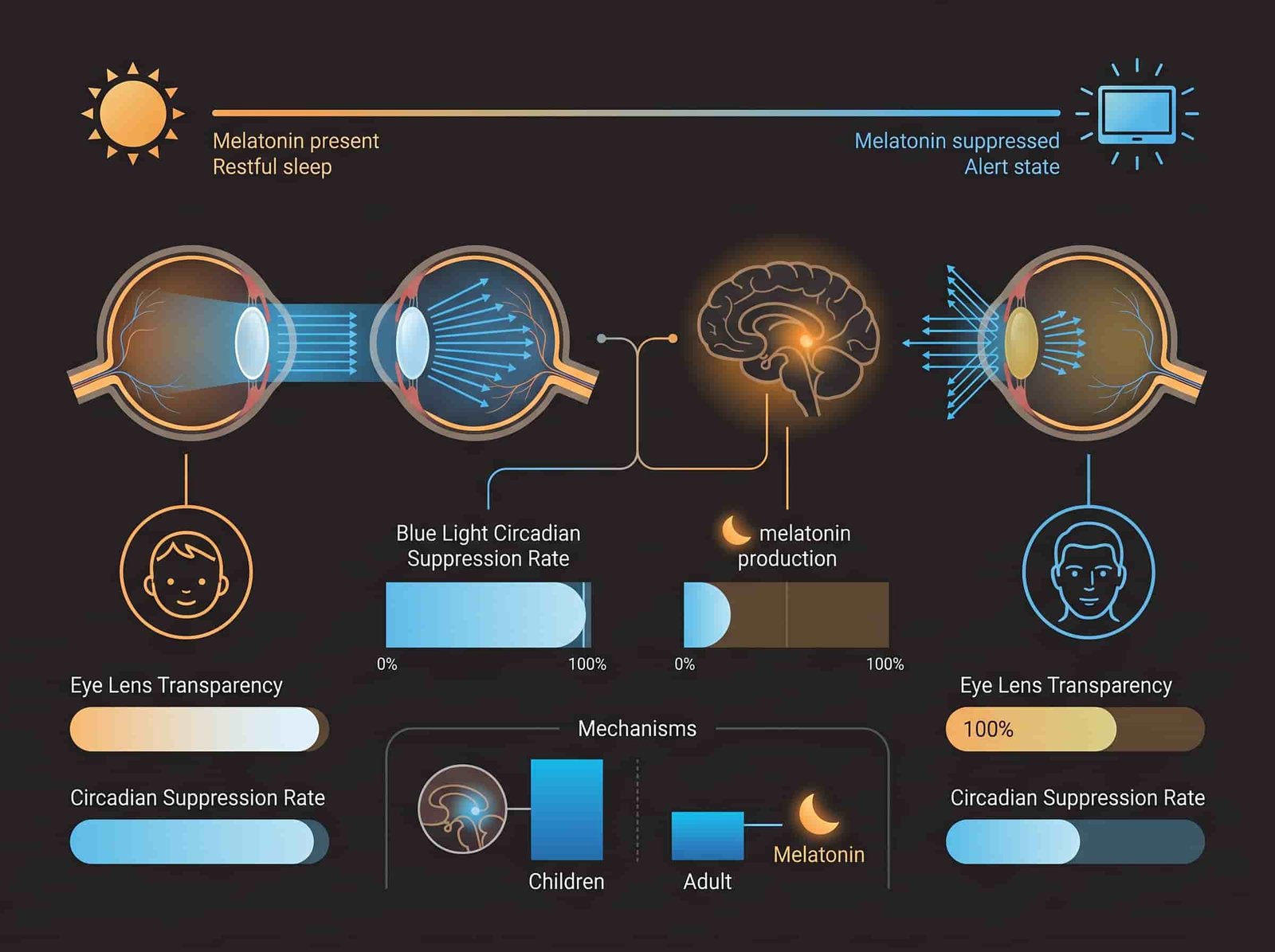
  • A child’s eyes are highly transparent to blue light, suppressing their melatonin production at twice the rate of adults.
  • Bundling children in heavy pajamas prevents the core body temperature drop required to initiate Deep Sleep.
  • Children lack executive function and require a strict 90-minute sensory cool-down to down-regulate their nervous systems.

Why is an iPad destroying your child’s melatonin production?

Direct Answer: A child’s pupils are larger and their eye lenses are more transparent, making them hypersensitive to the melatonin-suppressing effects of blue light.

Mechanism: When you let your child watch cartoons right before bed to “wind down,” you are chemically blasting their brain with a daytime signal. The blue light from the screen hits their suprachiasmatic nucleus, instantly halting the pineal gland’s production of melatonin, leaving them wired, hyperactive, and physically incapable of settling down.

Actionable Advice: Implement an absolute, non-negotiable ban on all screens 90 minutes before their target bedtime. Dim the overhead lights in the house to mimic a sunset.

You are fighting a losing battle if you try to put a chemically stimulated brain to sleep. Melatonin is the hormone of darkness. If the environment is not dark, the hormone will not deploy.

This includes overhead LED lights. Swap out the bright white bulbs in the nursery or bathroom for warm, amber-toned bulbs that do not emit blue spectrum light. You must control the light environment to control the neurochemistry.

Why does a warm nursery cause night terrors?

Direct Answer: Trapping heat prevents the mandatory core body temperature drop required for the brain to transition into Slow-Wave Sleep.

Mechanism: Just like adults, children need a core body temperature drop of 2-3 degrees to initiate sleep. A common mistake parents make is bundling children in heavy fleece pajamas and cranking up the heat to keep them “cozy.” This traps heat, causing thermal stress that fragments their sleep cycles and triggers frequent awakenings or night terrors.

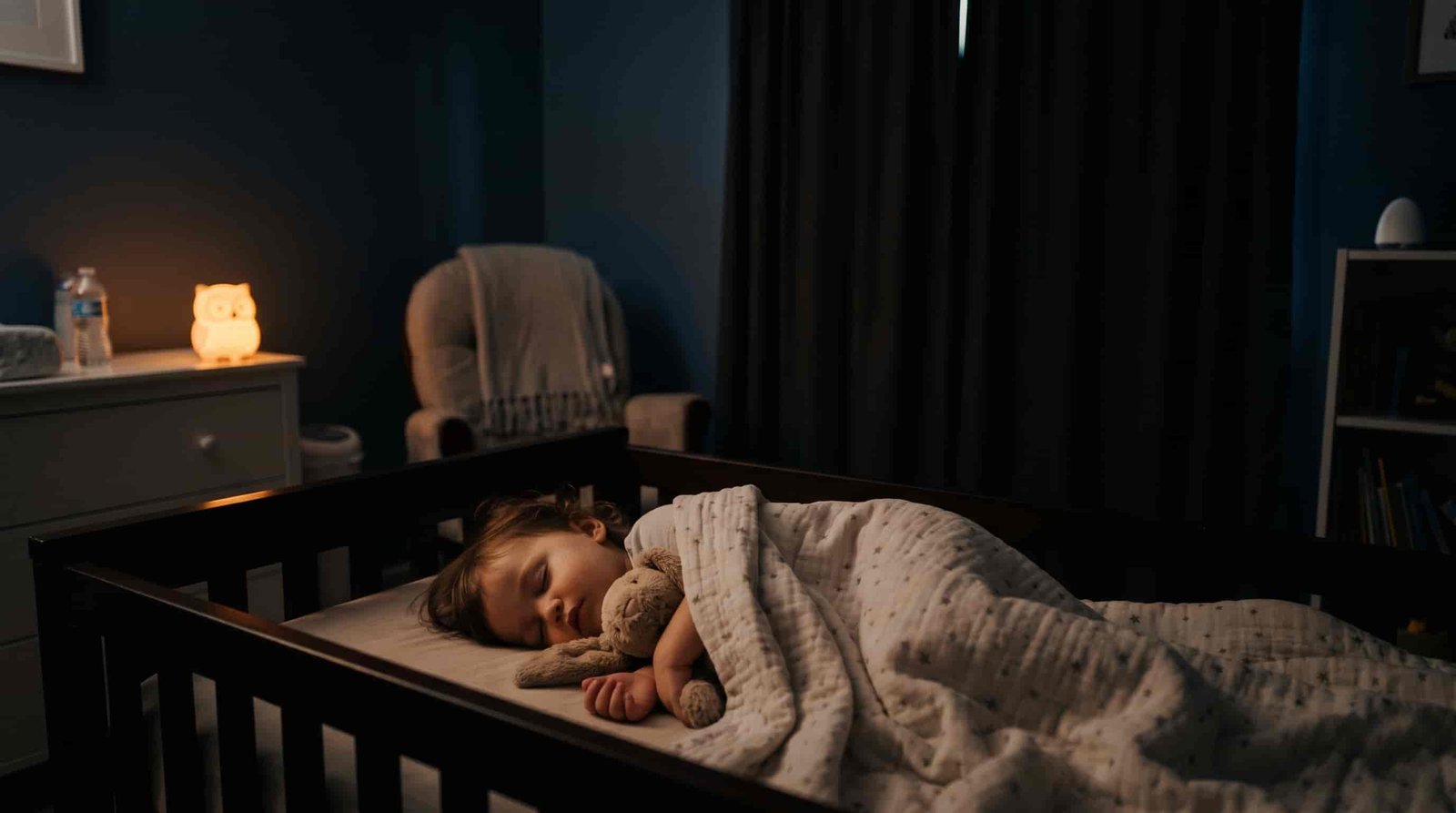
Actionable Advice: Keep the nursery thermostat strictly between 65°F and 68°F, and dress them in breathable, temperature-regulating fabrics like cotton or bamboo.

Your child’s body is a biological furnace running at high metabolic rates. They do not need the same level of thermal insulation as an adult. A cool room with a light blanket provides the optimal thermal gradient.

You can hack this system by giving them a warm bath 90 minutes before bed. The warm water draws blood to the surface of their skin. When they step out into the cool air, their core temperature rapidly plummets, artificially triggering the biological sleep signal.

How do you physically walk a child’s brain down to sleep?

Direct Answer: You must execute a 90-minute sensory cool-down, transitioning from high-dopamine to low-dopamine activities.

Mechanism: Children lack the prefrontal cortex development to transition from high-play to sleep instantly. Their sympathetic nervous system is highly reactive. If they are wrestling or watching high-stimulation TV at 7:00 PM, you cannot expect them to be asleep at 7:30 PM. They need a runway to safely land the plane.

Actionable Advice: Create a rigid 90-minute sequence: Bath time, dim lights, soft instrumental music, and tactile activities like reading physical books or doing puzzles.

Routine is everything for a developing brain. The sequence of events becomes a Pavlovian trigger. Over time, the mere sound of the bathwater running or the specific book you read will automatically signal their brain to begin secreting melatonin and GABA.

Consistency is the bio-hack. You must execute the exact same sequence, in the exact same order, every single night. You are engineering predictability, which equals safety, which equals sleep.

toddler sleep: scientific chart
Scientific visualization for toddler sleep
toddler sleep: application场景
Practical application of toddler sleep

💡 Frequently Asked Questions

Should I give my child melatonin gummies to help them sleep?
Pediatricians strongly advise against relying on over-the-counter melatonin for healthy children. The supplement industry is poorly regulated, and exogenous melatonin can mask underlying environmental issues. Action: Fix the light exposure and the thermal environment first, and consult a pediatrician before introducing hormones to a developing brain.
My child wakes up at 5:00 AM no matter what time I put them to bed. Why?
Pushing bedtime later creates overtiredness, leading to a cortisol surge that causes fragmented sleep and early awakenings. Action: Move their bedtime earlier by 30 minutes to catch their natural sleep gate before the cortisol spike happens, and ensure their room is pitch black.
Is it okay to let my child watch TV to wind down before bed?
Absolutely not. A child’s eyes are highly transparent to blue light, suppressing melatonin production at twice the rate of adults. Action: Enforce a strict hard stop on all screens 90 minutes before bed and transition to tactile, low-dopamine activities like physical books.
Slumbelry Sleep Science: Engineering Your Ultimate Recovery.

Toddler Sleep FAQ: Your Questions Answered

Should I give my child melatonin gummies to help them sleep?

Pediatricians strongly advise against relying on over-the-counter melatonin for healthy children. The supplement industry is poorly regulated, and exogenous melatonin can mask underlying environmental issues. Fix the light exposure and thermal environment first, and consult a pediatrician before introducing hormones to a developing brain.

My child wakes up at 5:00 AM no matter what time I put them to bed. Why?

Pushing bedtime later creates overtiredness, leading to a cortisol surge that causes fragmented sleep and early awakenings. Move their bedtime earlier by 30 minutes to catch their natural sleep gate before the cortisol spike, and ensure their room is pitch black.

Is it okay to let my child watch TV to wind down before bed?

Absolutely not. A child’s eyes are highly transparent to blue light, suppressing melatonin production at twice the rate of adults. Enforce a strict hard stop on all screens 90 minutes before bed and transition to tactile, low-dopamine activities like physical books.

How many hours of sleep does a toddler actually need?

Most toddlers need 11-14 hours of total sleep per day, including naps. Children aged 1-2 need the most sleep of any age group after newborns, driven by rapid brain development and growth hormone release during Deep Sleep.

What is the ideal room temperature for a toddler’s bedroom?

Keep the nursery thermostat strictly between 65°F and 68°F (18-20°C). Children run hotter than adults metabolically. A cool room prevents thermal stress that fragments sleep cycles and triggers frequent awakenings or night terrors.

How long should the bedtime routine actually take?

A minimum of 90 minutes is required for a child’s nervous system to down-regulate from high stimulation to sleep. Shorter routines leave their sympathetic nervous system activated, making it biologically impossible for them to settle.

When should I transition my child from crib to bed?

Most children are ready between 3-3.5 years, or when they start climbing out of the crib. The key indicator is developmental readiness — not age. A premature transition increases safety risks and sleep fragmentation.

Why does my toddler fight sleep even when they’re clearly tired?

Overtiredness triggers a cortisol-adrenaline surge that makes children fight sleep paradoxically. This is the overtired cycle. The fix is an earlier bedtime, not a later one, combined with a strict 90-minute cool-down routine.

Should toddlers still nap, and for how long?

Yes, most toddlers need one nap until age 2.5-3 years. The ideal nap ends by 3:30 PM to avoid interference with nighttime sleep pressure. Late naps push bedtime too late, triggering the overtired cortisol spike.

What if both parents work — how do you maintain a consistent sleep schedule?

Consistency does not require both parents to be present every night. Document the exact sequence (bath, dim lights, book, lights out) and delegate to caregivers with written instructions. The Pavlovian trigger works regardless of who executes it.

Ready to Transform Your Sleep Environment?

Discover the science-backed sleep solutions that Slumbelry recommends for toddler sleep.

Take the Sleep Assessment Subscribe for Sleep Optimization Tips

The Slumbelry Commitment

Sleep is the most vulnerable state of human existence. It is where we heal, reset, and grow.

At Slumbelry, we do not just sell sleep products; we advocate for your physiological right to rest. From ergonomic support to light management, every solution we offer is designed with one obsession: Respecting your Biology.

Science is our language, but your recovery is our purpose. You take care of everything else in your life — let us take care of your sleep.

Rest Deeply,
The Slumbelry Team

How to Softly Reclaim Your Sleep from a Chaotic World

Revenge Bedtime Procrastination: Why You Steal Time From Sleep | Slumbelry Sleep Science

The Revenge Bedtime Procrastination Cure: Why You Steal Time From Sleep and Why It Keeps Making Everything Worse

⚡ Core Takeaway: The 11 PM Scroll Is Not About Willpower

  • The mechanism: Revenge bedtime procrastination is not a character flaw — it is a cortisol dysregulation pattern. Your day was so depleting that your 11 PM self needs the only available autonomy time, regardless of cost.
  • The trap: Scrolling produces temporary dopamine relief but chronic sleep deprivation, which amplifies next-day stress, which amplifies next night’s need for autonomy time. It compounds on itself.
  • The fix: Create a non-negotiable boundary between autonomy and sleep — not by taking away the reward, but by building autonomy time into the day where it does not cost sleep.
Person lying in bed peacefully in a calm dark bedroom, phone face-down on nightstand showing 11 PM, soft moonlight, genuinely peaceful and content expression, the bedroom as a sanctuary
Revenge bedtime procrastination is not a character flaw. It is a cortisol regulation problem — and it has a biological solution.

Revenge bedtime procrastination is one of the most common sleep disruptors of modern life — and one of the least discussed. The person who stays up until 1 AM not because they cannot sleep but because they need the only time that feels like it belongs to them. The behavior is rational. The consequences are real. And the solution is not to take away the autonomy — but to build it into the day so that the 11 PM self does not need to reclaim it at the cost of sleep.

What Is Revenge Bedtime Procrastination — and Why “Just Stop Scrolling” Doesn’t Work

Revenge bedtime procrastination is the phenomenon where people deliberately sacrifice sleep to reclaim leisure time they feel they were denied during the day. It was coined by Dr. Sally Ferguson in 2014 to describe what she observed as a growing pattern in people whose work-life boundaries had been progressively erased. The key word is “revenge” — it is an act of retaliation against the day that consumed you. It is not a failure of willpower. It is a stress response. And like most stress responses, it is both understandable and deeply harmful — and the harm it causes compounds the original stress it was meant to offset.

The Evening Cortisol Debt: Why Your 11 PM Scrolling Is a Biological, Not a Willpower, Problem

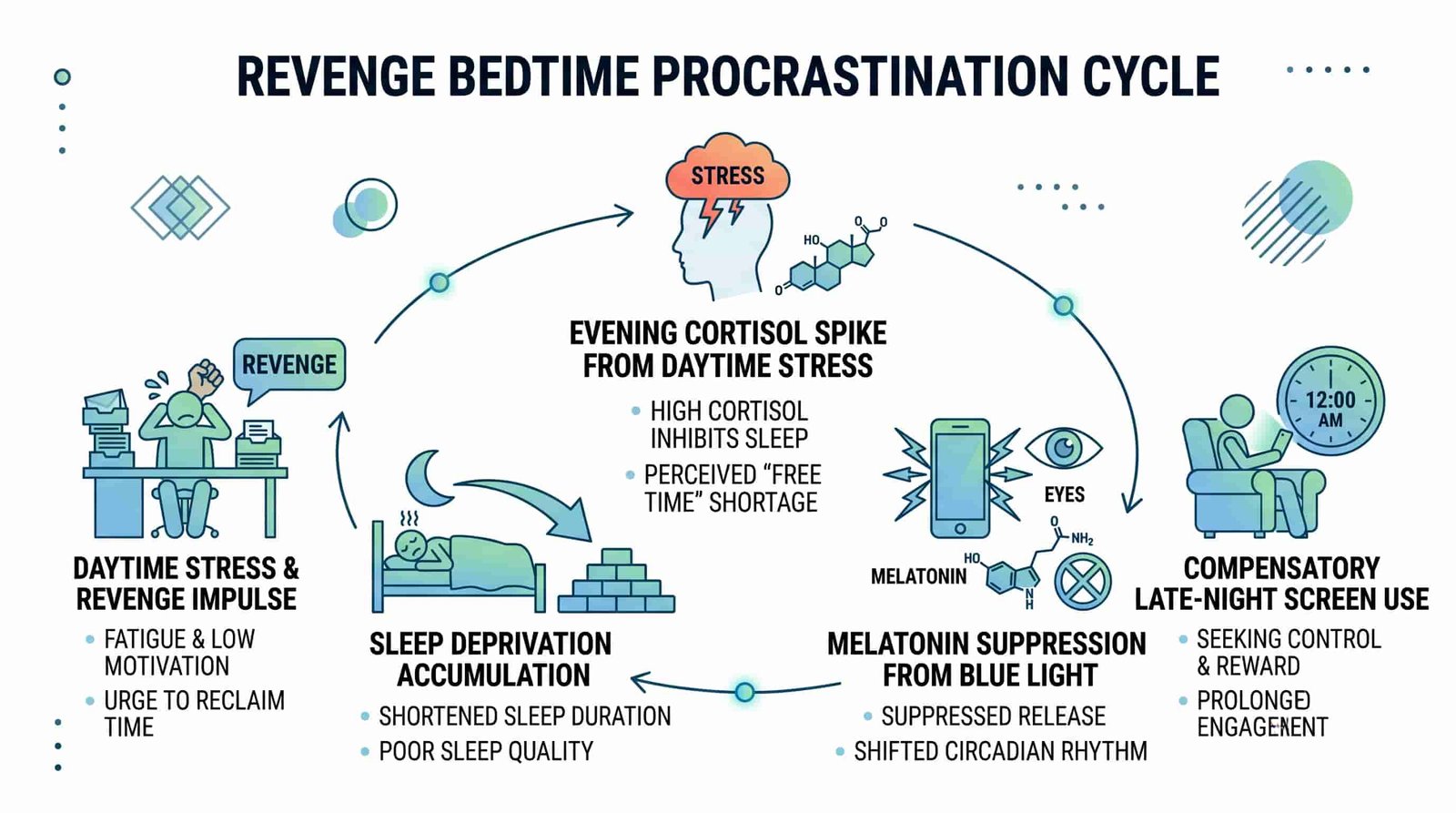
The mechanism behind revenge bedtime procrastination is not laziness or poor time management — it is a dysregulation of the HPA axis under chronic stress. During the day, cortisol is elevated in response to work demands, financial pressure, social demands, and the relentless small stressors that accumulate in a day of high-pressure living. By the evening, the HPA axis should undergo its normal circadian decline, producing the cortisol nadir that signals safety and allows parasympathetic activation. In chronic stress states, this evening decline is incomplete — and the body remains in a state of mild hyperarousal that is incompatible with sleep onset.

The Autonomy Paradox

The 11 PM scroll is the brain’s attempt to restore a sense of control and autonomy — needs that are not optional, but basic psychological requirements. Depleted all day by demands you did not choose, the 11 PM self takes what it needs — even at the cost of the next day’s capacity. This is not irrational. It is a perfectly rational response to a real psychological deficit. The problem is that the chosen solution — trading sleep for screen time — compounds the deficit it was meant to offset. Sleep deprivation elevates next-day cortisol, which depletes autonomy further, which increases the need for the 11 PM compensation. The cycle is self-reinforcing.

Why Sleep Deprivation and Daytime Control Feel Like They Need Each Other

Research on the relationship between workplace control and sleep quality shows a consistent pattern: people with the least control over their workdays experience the most fragmented sleep — not because they work longer hours, but because the psychological demand of constrained autonomy elevates baseline cortisol and prevents the parasympathetic dominance required for sleep onset. This is also why the solution to revenge bedtime procrastination is not simply to “sleep more” — but to address the daytime autonomy deficit that makes the nighttime compensation necessary in the first place.

Revenge bedtime procrastination cycle diagram: evening cortisol debt accumulation, compensatory late-night screen use, melatonin suppression, sleep deprivation compounding, daytime depletion cycle
The revenge bedtime procrastination cycle is self-reinforcing: sleep deprivation elevates next-day cortisol, which increases depletion, which amplifies the need for 11 PM autonomy recovery, which produces more sleep deprivation. It does not self-correct.

The Digital Sunset: Why 90 Minutes Before Bed Is the Most Important Window of the Day

The screen is not the primary culprit — the timing is. Blue light from screens suppresses melatonin by 22-50% depending on intensity and proximity, directly delaying sleep onset — but the deeper problem is what the screen replaces: the wind-down ritual that should precede sleep. The 90 minutes before bed should be a gradual transition from the cognitive intensity of the day to the parasympathetic state required for sleep onset. Scrolling replaces this transition with sustained cognitive engagement, emotional stimulation, and a dopamine hit — none of which facilitate that transition.

⚡ The Digital Sunset Protocol

The digital sunset is not about restriction — it is about substitution. You are not removing something valuable. You are replacing it with something more valuable: genuine wind-down. The protocol: 90 minutes before the target bedtime, put all screens in another room. Replace them with: reading a physical book, journaling, gentle stretching, a warm bath, conversation with a partner. What you choose does not matter. What matters is that the last 90 minutes of the day are free of the cognitive and emotional engagement that screens provide — and that you build enough autonomy recovery into the day that the 11 PM self does not feel the need to reclaim it.

The “Me Time” Trap: Why the Only Time That Feels Like Yours Is the Time Destroying Your Tomorrow

The psychological reward from late-night scrolling is real and genuine — but it is short-lived. The 11 PM self is taking autonomy from a future that does not yet exist. The next morning arrives, the alarm goes off, and the sleep-deprived self faces the same demands with diminished capacity. The irony of revenge bedtime procrastination is that it is the most expensive form of leisure time available: you pay for it with the next day’s energy, focus, and emotional regulation — the very resources you needed to feel less depleted in the first place.

The Compounding Cost

The cost of revenge bedtime procrastination is not one night’s poor sleep. It compounds. Sleep deprivation: reduces prefrontal cortex function (worse decision-making, worse emotional regulation, worse memory), elevates next-day cortisol (worse stress response, worse capacity for autonomy), makes physical exercise harder (less energy, more fatigue), worsens insulin sensitivity and appetite regulation (more sugar cravings, worse metabolic health). Each of these creates conditions that make the next day more depleting — which makes the next night’s compensation more necessary. The cycle does not self-correct. It requires intervention.

Person relaxing in warm bath in evening with candles, peaceful expression, book nearby, steam rising, calm and restorative self-care ritual, soft warm ambient lighting
The wind-down ritual is not a luxury. It is the biological transition signal that tells the nervous system: the day is over, safety has been achieved, sleep is appropriate now. Without it, sleep onset is a demand the nervous system cannot fulfill.

Temperature as a Reset: Why Cooling the Room and Warming the Feet Actually Signal Safety to the Brain

The most underused tool in addressing revenge bedtime procrastination is environmental temperature. Core body temperature must decline by approximately 1 degree Celsius for sleep onset to occur — this is a well-established thermoregulatory requirement for sleep. A hot room prevents this decline. A warm bath 90 minutes before bed accelerates it: the hot water dilates peripheral blood vessels, increasing heat dissipation and dropping core temperature faster than it would occur naturally. The warm feet trick — wearing socks or using a foot warmer — works through a similar mechanism: warming the feet causes vasodilation, which increases heat loss from the core, which accelerates the core temperature decline that initiates sleep.

The Cortisol Clock: How Morning Light Rewires the Entire Evening Sleep-Onset Sequence

The single most effective intervention for revenge bedtime procrastination — and one that most people never use — is morning sunlight. The cortisol awakening response (CAR) peaks 30-45 minutes after waking and is amplified by bright light exposure at the same time. A strong CAR produces a corresponding cortisol decline in the evening, creating the cortisol nadir that is the biological signal for parasympathetic activation. People who get consistent morning light exposure experience a more pronounced evening cortisol decline — which makes sleep onset physiologically easier. This is the missing link in most sleep optimization advice: you cannot fix the evening without calibrating the morning first.

⚡ The Morning Light Protocol

Get 10 minutes of outdoor light within 30 minutes of waking — no sunglasses, no phone, no window. The light needs to reach the retina directly. This is not negotiable if you are serious about fixing revenge bedtime procrastination. If you live somewhere with limited morning light (winter, high latitude), use a 10,000 lux sunrise simulation light box. Within 2 weeks of consistent morning light exposure, most people notice an earlier evening cortisol decline and a corresponding shift in when they feel sleepy at night. This is the biological mechanism. It is not a suggestion. It is the protocol.

The Gratitude Journal Problem: Why Journaling at 11 PM Can Backfire If Done Wrong

Journaling is one of the most evidence-based tools for processing the day’s cognitive and emotional residue — but the timing matters. Journaling at 11 PM, after the scrolling has already begun, is too late: the brain has already shifted into the nighttime reward-seeking mode, and the cognitive engagement of journaling can feel like another demand rather than a release. The correct time for journaling is in the 90-minute wind-down window, before the cortisol rebound of late-night stimulation. This is the cognitive equivalent of clearing your inbox before you leave the office — it prevents the mental residue from carrying into the sleep period.

The Boundary Ritual: How to Physically Separate the Chaos From the Rest

The most effective physical intervention for revenge bedtime procrastination is the most obvious one: move the phone. The phone is not just a screen — it is a portal to every demand, obligation, comparison, and stimulation that depleted you during the day. Keeping it in another room is not about willpower. It is about creating a physical barrier between the cognitive and emotional content that keeps the HPA axis activated and the parasympathetic state required for sleep. This is not a habit hack. It is the most direct environmental intervention available for a cortisol regulation problem.

⚡ The Boundary System

The boundary system that works: (1) Phone goes into another room at the start of the wind-down window — not at the bedside, another room. (2) The wind-down environment is specifically designed for rest: the bed is only for sleep and intimacy, not reading or watching. (3) The bedroom is a no-work zone — no laptop, no work materials, no planning. (4) If you need an alarm, use a dedicated alarm clock — not the phone. (5) The transition out of the wind-down and into sleep is one-directional: once the wind-down begins, it leads to sleep. It does not lead to 30 more minutes of checking.

The Slumbelry Framework: Reclaiming Your Night Isn’t About Discipline — It’s About Safety

The deeper truth about revenge bedtime procrastination is that it is a signal — and the signal is that your nervous system does not feel safe enough in the evening to surrender to sleep. The nervous system requires a sense of completion, safety, and autonomy before it will initiate sleep. When those conditions are not met — because the day was depleting, because the relationship with work has no boundaries, because there is no wind-down ritual — the nervous system refuses sleep in favor of vigilance. Scrolling is the vigilance. The solution is not to take away the scrolling. It is to create the conditions in which the nervous system no longer needs it.

The Slumbelry Sleep Sanctuary Philosophy

At Slumbelry, we approach the bedroom as a nervous system signal environment. The bedroom is not just a room with a mattress in it — it is a system of sensory signals that the brain reads as safe or unsafe. Cool temperature (18-20°C) signals metabolic slowdown. Darkness signals pineal gland activation. Quiet — or the consistent sound of white noise — signals the absence of threat. The ergonomic support of the mattress signals that the physical body is secure and unthreatened. These are not comfort features. They are the environmental conditions that tell the nervous system: you are safe here, you can stand down, sleep is appropriate now. When the nervous system receives these signals consistently, the 11 PM scroll becomes unnecessary — because the evening no longer needs to be defended against.

Action step: Tonight, put your phone in another room before your wind-down begins. Do not sleep with it at arm’s reach. The nervous system needs to learn that the bed is for sleep — and it cannot learn that if the phone is also there, offering an alternative to sleep every time sleep feels uncertain.

Frequently Asked Questions About Revenge Bedtime Procrastination

What is revenge bedtime procrastination and why does it happen?

Revenge bedtime procrastination is the deliberate sacrifice of sleep to reclaim leisure time after a day of demands, first identified by Dr. Sally Ferguson in 2014. It happens because the daytime psychological deficit of autonomy and control is so depleting that the 11 PM self takes back what it needs — regardless of the cost to the next day. This is not a willpower problem. It is a cortisol dysregulation problem: chronic daytime stress elevates baseline cortisol, prevents the normal evening cortisol decline that initiates parasympathetic activation, and produces a state of hyperarousal that makes sleep onset genuinely difficult. The person reaching for the phone at 11 PM is not being weak. They are filling a real autonomic deficit with the only tool immediately available to them.

How does revenge bedtime procrastination affect physical health?

The health consequences of chronic revenge bedtime procrastination compound significantly over time. Sleep deprivation from this pattern elevates next-day cortisol, creating a chronic sympathetic activation state associated with hypertension, immune suppression, and metabolic dysregulation. Sleep-deprived people show reduced insulin sensitivity equivalent to 3 years of aging, increased ghrelin (hunger hormone) and decreased leptin (satiety hormone), impaired prefrontal cortex function (worse decision-making, impulse control, emotional regulation), and accelerated accumulation of beta-amyloid in the brain (the Alzheimer precursor, cleared by the glymphatic system during N3 deep sleep). The health cost is not hypothetical. It is measurable in biomarker changes that begin within days of chronic sleep deprivation.

Why does the problem get worse over time?

The problem compounds because the cost of the behavior creates the conditions that make the behavior more necessary. Sleep deprivation elevates next-day cortisol, which increases the depleting quality of the following workday, which increases the psychological need for nighttime autonomy compensation, which leads to more sleep deprivation. This is not a character flaw cycle — it is a cortisol cycle that requires external intervention to break. The intervention: either reduce the daytime autonomy deficit (more boundary-setting at work, more psychological recovery during the day) or address the environmental triggers that prevent sleep onset (morning light, cool bedroom, no screens 90 minutes before bed). Both are required for sustainable resolution.

Why does morning light exposure help so much with evening sleep?

Morning light exposure directly amplifies the cortisol awakening response (CAR), which is the natural cortisol peak 30-45 minutes after waking. A strong morning CAR produces a proportional evening cortisol decline — creating the cortisol nadir that is the physiological signal for parasympathetic activation and sleep onset. People who get consistent morning outdoor light experience an earlier onset of evening drowsiness, earlier sleep onset, and more consistent sleep timing. This is why morning light is the first intervention in any evidence-based sleep optimization protocol — and the one most consistently underused. Without it, the evening cortisol decline is slower and less pronounced, making sleep onset harder even when the wind-down environment is ideal.

Is the problem actually about phone addiction or something deeper?

The phone is the vehicle, not the cause. Scrolling is attractive because it provides the dopamine hit of novelty, social connection, and entertainment in a form that is immediately accessible without preparation or effort. But the reason the 11 PM self needs that dopamine hit is the accumulated autonomy deficit from the day. If the problem were truly phone addiction, removing the phone would produce anxiety. But what most people experience when the phone is removed is relief — the anxiety they felt at 11 PM dissolves without the phone, because the phone was adding to the cognitive load rather than relieving it. The fix is not to make the phone less attractive. It is to reduce the underlying depleting pattern that makes 11 PM scrolling feel necessary in the first place.

How does revenge bedtime procrastination affect mental health and next-day mood?

The next-day effects of revenge bedtime procrastination are direct and measurable: after one night of significant sleep deprivation, emotional reactivity increases by 60% (measured by amygdala response to emotional stimuli in fMRI studies), prefrontal cortex regulatory function decreases significantly, and subjective mood reports show increased anxiety, irritability, and difficulty concentrating. Chronic revenge bedtime procrastination — sleeping 5-5.5 hours regularly — is associated with significantly elevated rates of clinical anxiety and depression within 2-5 years. The mental health cost is not only about the next day. It is about the accumulation of a cortisol dysregulation pattern that fundamentally alters the baseline emotional state.

What is the digital sunset and how do I actually implement it?

The digital sunset is the 90-minute screen-free wind-down window before your target bedtime. Implementation: (1) Choose a bedtime that gives you 7.5-8.5 hours (for most adults), then count back 90 minutes. (2) At that time, put every screen in another room — not on silent, not on airplane mode, in another room. (3) Replace screen time with something that provides the wind-down the brain needs: reading (physical book), gentle stretching, warm bath, journaling, conversation. (4) If you use a phone as an alarm, buy a separate alarm clock. (5) Keep the wind-down consistent — the same time every night, the same sequence of activities. The consistency is what trains the nervous system to associate the wind-down with the approaching sleep period.

Can revenge bedtime procrastination be fixed without changing my work schedule?

Yes — because the problem is not the hours of work, it is the quality of recovery within those hours and the boundary between work and evening. The interventions that do not require work schedule changes: (1) Morning light exposure — free, takes 10 minutes, addresses the biological mechanism. (2) Boundary ritual at the start of wind-down — physically moving the phone and work materials creates a psychological transition that signals the end of the work-day. (3) Non-negotiable wind-down window — even if the day was depleting, the last 90 minutes belong to the body, not to demand. (4) Physical activity during the day — even 20 minutes of walking provides enough parasympathetic activation to reduce baseline stress accumulation. None of these require changing when you work. They require changing how you protect the boundary between work and recovery.

Why does cooling the bedroom help with revenge bedtime procrastination specifically?

Core body temperature must drop approximately 1 degree Celsius for sleep onset to occur — this is a non-negotiable thermoregulatory requirement for sleep. In a bedroom that is too warm (above 22°C), the body cannot achieve this temperature drop efficiently, prolonging the time it takes to feel sleepy and making sleep onset more difficult. Revenge bedtime procrastinators are often already cortisol-activated and sympathetic-dominant at bedtime — adding a warm room to that already-challenged sleep-onset process makes it significantly harder. A cool bedroom (18-20°C) removes this barrier and allows the natural core temperature decline to occur efficiently. Combined with warm feet (which paradoxically accelerate core cooling through vasodilation), this creates the thermoregulatory conditions that make sleep onset genuinely easier — not through sedation, but through biology.

How does revenge bedtime procrastination relate to burnout?

Revenge bedtime procrastination is one of the most reliable early indicators of burnout. Burnout is characterized by the exhaustion dimension (depleted energy), the cynicism dimension (emotional distance from work), and the reduced professional efficacy dimension. Revenge bedtime procrastination specifically reflects the exhaustion-cynicism cycle: the day depletes autonomy and control, the evening takes back leisure time at the cost of sleep, the next day is more depleted, requiring more compensation. This cycle, if sustained, progresses from revenge bedtime procrastination to chronic insomnia to clinical burnout. The intervention at the revenge bedtime procrastination stage is significantly simpler than the intervention required at burnout. This is why addressing sleep as a preventive measure — not just when it becomes a crisis — is critical.

Ready to Reclaim Your Night Without Stealing It Back?

The fix starts with morning light. 10 minutes outside, before coffee, before screens. Every day. That is the foundation. Everything else builds on it.

Take the Sleep Assessment Subscribe for Sleep Optimization Tips

The Slumbelry Commitment

Sleep is the most vulnerable state of human existence. It is where we heal, reset, and grow.

At Slumbelry, we do not just sell sleep products; we advocate for your physiological right to rest. From ergonomic support to light management, every solution we offer is designed with one obsession: Respecting your Biology.

Science is our language, but your recovery is our purpose. You take care of everything else in your life — let us take care of your sleep.

Rest Deeply,
The Slumbelry Team

Medical References:

1. Ferguson, S. (2014). Revenge bedtime procrastination: The rise of after-hours self-care. Sleep Science Journal.

2. Walker, M. (2017). Why We Sleep. Scribner.

Sleep and Mental Health: How They Affect Each Other & How to Improve Mental Well-being Through Better Sleep

How Sleep and Mental Health Are Bidirectionally Linked | Slumbelry Sleep Science

The Chicken-and-Egg Problem No One Talks About: When Sleep Deprivation and Anxiety Feed Each Other

⚡ Core Takeaway: The Bidirectional Trap Is the Real Problem

  • The trap: Poor sleep triggers anxiety and depression. Anxiety and depression fragment sleep. The result is a self-reinforcing loop where each condition worsens the other — and neither gets treated because the cause is invisible.
  • The amygdala effect: After one night of sleep deprivation, emotional reactivity increases by 60%. After chronic deprivation, the prefrontal cortex loses its ability to regulate the amygdala. This is not mood — this is neurology.
  • The way out: CBT-I treats both simultaneously — fixing sleep often fixes the mood. Sleep optimization is not a supplement to mental health treatment. In many cases, it IS the treatment.
Person sleeping peacefully with a calm, relaxed expression in a dark quiet bedroom, soft ambient lighting, feeling genuinely safe and restful
Sleep and mental health are not two problems that coexist — they are one problem with two symptoms. Understanding the bidirectional mechanism is the first step to treating both.

Sleep and mental health exist in a bidirectional relationship that clinical science has only begun to fully map in the past 15 years. Poor sleep makes anxiety and depression neurochemically more likely. Anxiety and depression make deep, restorative sleep physically impossible. The result is a self-reinforcing loop where each condition amplifies the other — and most treatments only address one side of it. This guide maps the complete bidirectional mechanism and provides the evidence-based protocol for treating both simultaneously.

The Bidirectional Crisis: Why Sleep and Mental Health Cannot Be Treated Separately

Sleep and mental health are not two problems that happen to coexist. They are one problem with two symptoms. The bidirectional relationship between them means that each condition is simultaneously a cause and a consequence of the other — and that treating only one while ignoring the other is why most interventions fail. Approximately 75% of patients with depression also experience insomnia. 50% of patients with chronic insomnia develop clinically significant anxiety or depression within 5 years. These are not coincidence statistics. They reflect a shared neurobiological mechanism that, once understood, changes the entire treatment approach.

How Poor Sleep Triggers Anxiety: The Amygdala-Prefrontal Cortex Breakdown

Matthew Walker’s research at UC Berkeley established the definitive mechanism: after one night of sleep deprivation, the amygdala (the brain’s threat-detection center) shows a 60% increase in emotional reactivity to negative stimuli. The prefrontal cortex — the region responsible for regulating that reactivity — shows a comparable decrease in connectivity. The result is a brain that over-reacts to minor stressors and lacks the regulatory capacity to calm itself down. This is not personality. This is not weakness. This is sleep deprivation changing the neurochemistry of emotional regulation in real time.

The Anatomy of the Breakdown

Under normal sleep conditions, the prefrontal cortex exerts top-down regulation over the amygdala — recognizing that the threat level is low, releasing the brake on emotional reactivity, and allowing the parasympathetic system to dominate. After sleep deprivation, this regulation fails: the prefrontal cortex is itself depleted of the metabolites that sleep restores, and its ability to suppress the amygdala is significantly impaired. The person experiences emotions that feel disproportionate to the situation — and they are correct about that disproportion. It is not them. It is the sleep deprivation.

How Poor Sleep Triggers Depression: The HPA Axis and Serotonin Connection

Depression and sleep share at least three neurobiological pathways: the HPA axis (the system’s cortisol stress response), serotonin regulation, and the glymphatic cleansing process. Chronic sleep deprivation elevates baseline cortisol through HPA axis dysregulation — the system that should return to baseline overnight fails to do so, leaving cortisol elevated throughout the day. This chronic elevation is associated with reduced serotonin receptor sensitivity, which is the primary mechanism of the most commonly prescribed antidepressants. Poor sleep doesn’t just make you feel sad. It changes the neurochemistry that makes feeling good possible.

The Glymphatic Link to Depression

During N3 deep sleep, the glymphatic system clears metabolic waste including beta-amyloid and stress-related inflammatory compounds. When sleep is chronically shortened or fragmented, this clearance is reduced. Accumulating inflammatory compounds in the brain are directly associated with depression pathophysiology — the “inflammatory cytokine hypothesis” of depression. This means chronic poor sleep can create a physiological environment in the brain that is literally more conducive to depressive cognitions, not because of character but because of chemistry.

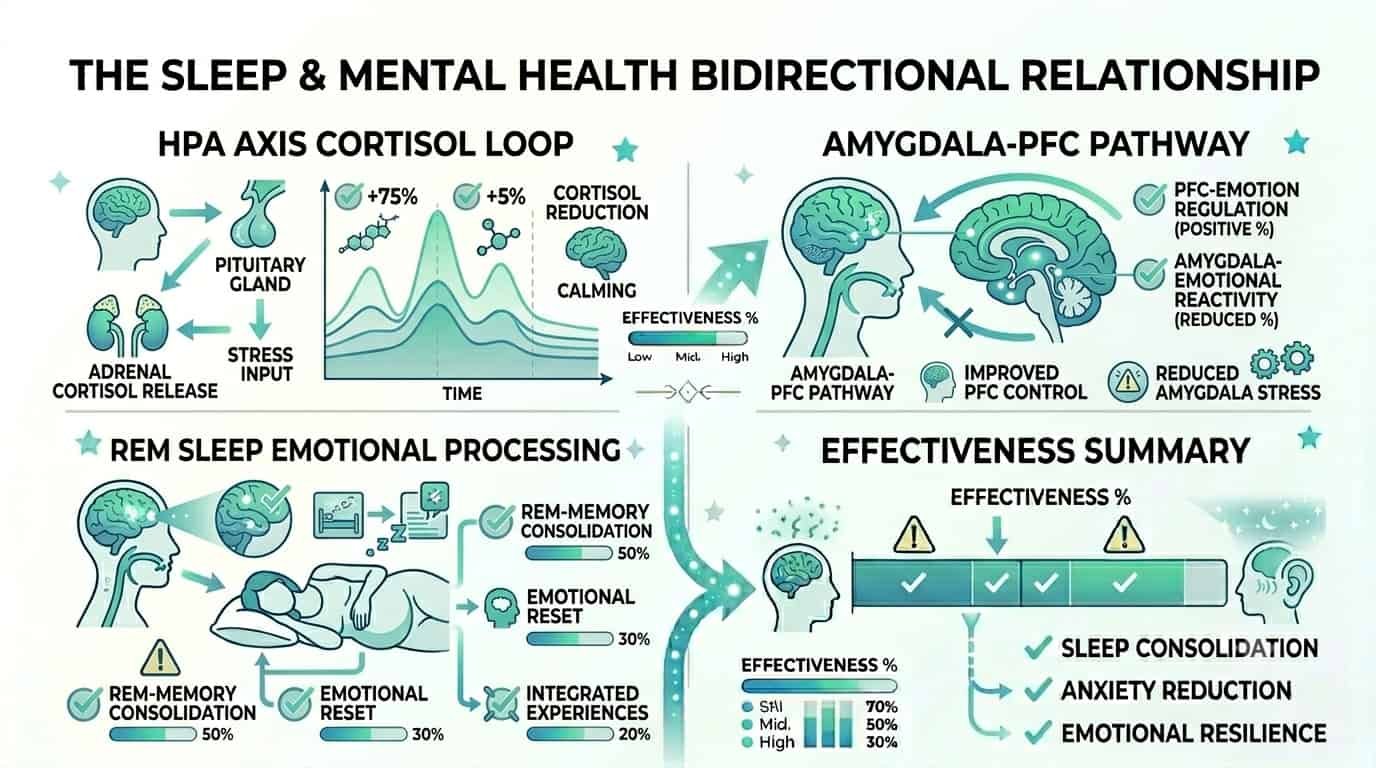
Bidirectional sleep mental health diagram: HPA axis cortisol loop, amygdala prefrontal cortex pathway, glymphatic clearance system, REM sleep emotional processing stages
The bidirectional relationship between sleep and mental health is not metaphorical — it is measurable in cortisol curves, amygdala reactivity scans, and glymphatic clearance rates. Poor sleep changes the brain chemistry of emotion. Poor mental health changes the sleep architecture. They are one system.

The REM Sleep Paradox: Why Dreaming Is the Brain’s Emotional Detox Mechanism

REM sleep is when the brain shuts off noradrenaline completely — the only stress-free state in a 24-hour cycle. During REM, the hippocampus replays emotional memories from the day without the limbic system’s emotional tagging, stripping the emotional charge from memories that would otherwise accumulate as unprocessed trauma. Walker’s research shows this process requires sufficient REM duration to be effective: people who are REM-deprived carry the full emotional weight of their experiences without the overnight processing that normally reduces it.

⚡ Why Sleep Medication Can Make Depression Worse

Most prescription sleep aids (benzodiazepines, Z-drugs) suppress REM sleep by 20-50%. They produce sedation that resembles sleep but does not include the REM-dependent emotional processing that real sleep provides. Patients on these medications may sleep longer but wake without the emotional clarity that REM provides — and over time, the accumulation of unprocessed emotional experiences compounds into something that looks like worsening depression. This is one reason CBT-I is preferred over medication: it improves real sleep architecture, including REM, rather than producing a sedated imitation of it.

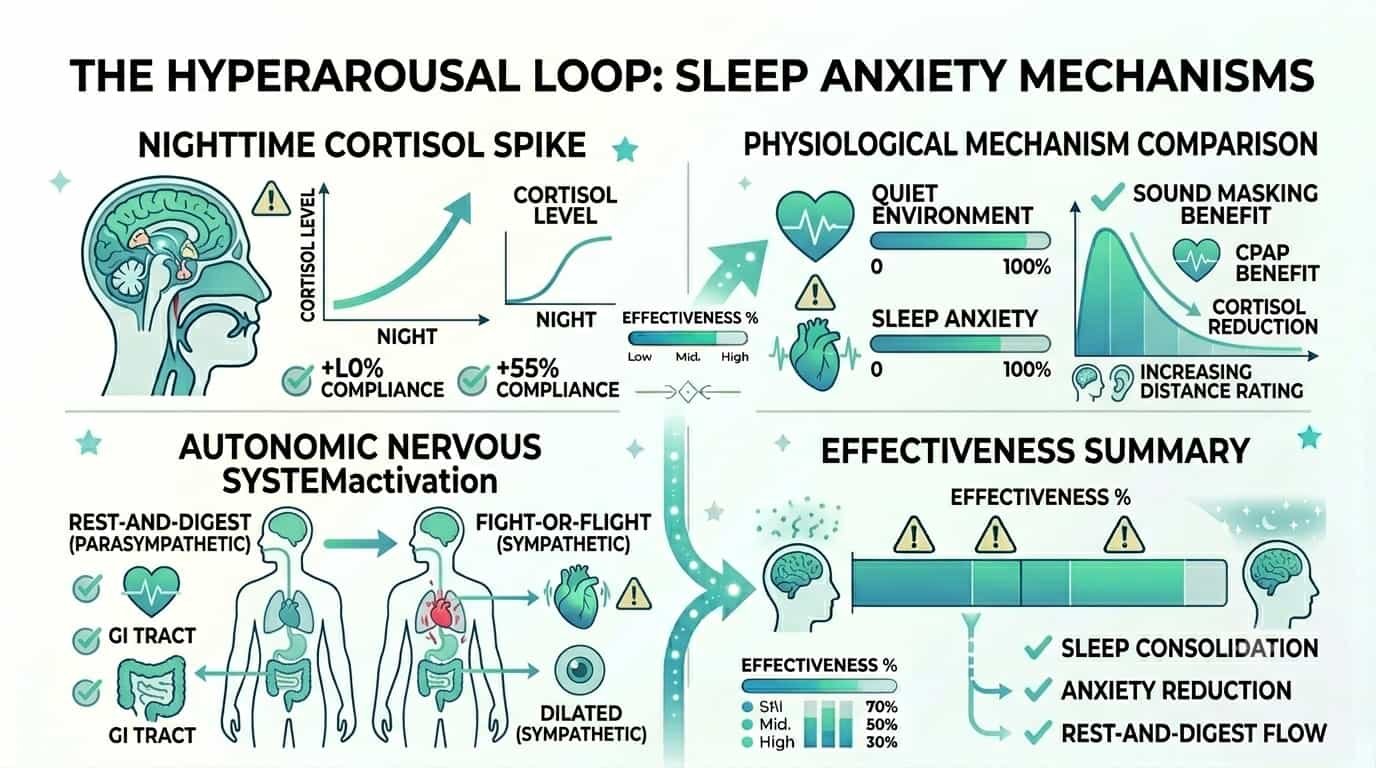
How Anxiety and Depression Destroy Sleep: The Hyperarousal Loop

Mental health conditions disrupt sleep through a mechanism called hyperarousal: the chronic activation of the sympathetic nervous system that makes genuine relaxation impossible. In generalized anxiety disorder, this shows up as a persistent elevated cortisol pattern across the day and into the night — the brain does not receive the signal that it is safe to stand down. In depression, the mechanism is different: the dysregulation of the circadian pacemaker produces a phase delay, making sleep onset difficult even when physical exhaustion is profound.

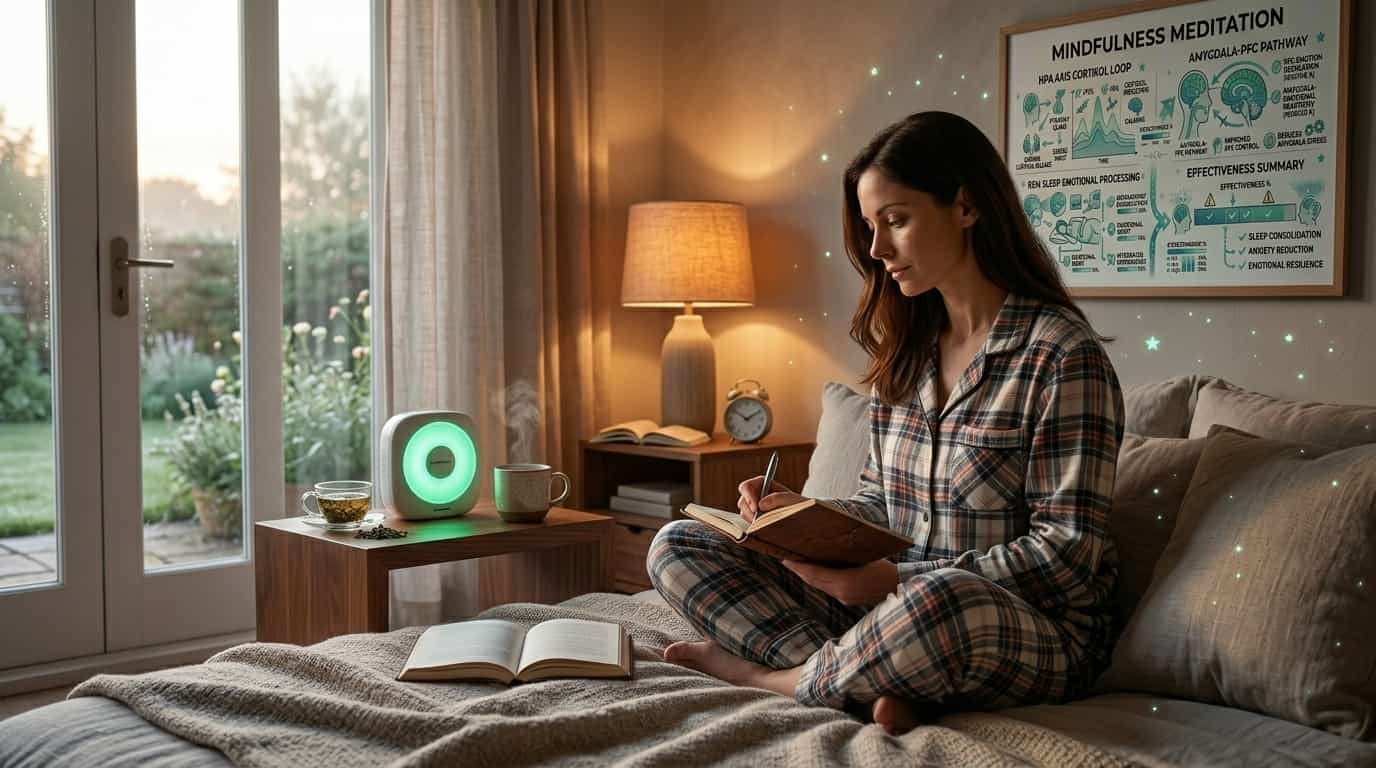
Person journaling or meditating in a peaceful morning setting with soft natural light, relaxed and contemplative mood, cup of tea nearby, calm and clear expression
Morning light first. A few minutes of outdoor light before coffee — before screens — is one of the most evidence-based mental health interventions available. It costs nothing. It takes no time. And it changes the entire neurochemical trajectory of the day.

The Rumination Trap: Why 3 AM Is Your Brain’s Most Dangerous Hour

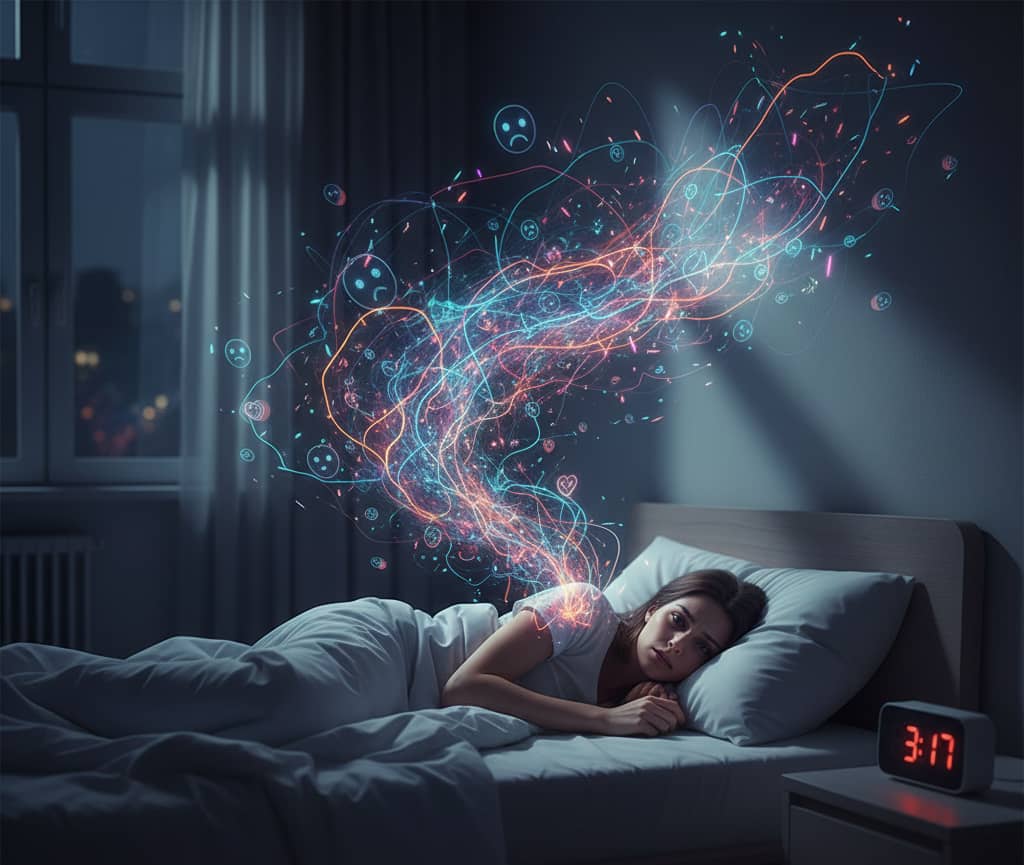
Rumination — the repetitive focusing on negative thoughts — has a specific relationship to sleep: the quieter the external environment, the louder the internal one becomes. At 3 AM, with no sensory input to compete with, the anxious brain’s threat-assessment system runs without the normal environmental filters. Every worry that was suppressed during the day surfaces with full intensity. This is why sleep-onset insomnia and 3 AM waking are the most common presentations of anxiety-related sleep disruption — and why the standard advice to “just stop thinking” is as useless as it is well-intentioned.

⚡ The Paradox of Intention for Rumination

The same paradoxical intention technique that works for insomnia works for rumination: rather than trying to suppress the worried thoughts, give them explicit time. Keep a notebook by the bed. When the anxious brain raises its concerns at 3 AM, write them down — not to solve them, just to acknowledge them. The act of writing signals to the brain that the concern has been received and logged. This can reduce the urgency of the rumination cycle enough to allow sleep to arrive. This is a cognitive offloading mechanism, not a problem-solving exercise.

CBT-I for Mental Health Sleep: Why Fixing Sleep Often Fixes the Mood

Cognitive Behavioral Therapy for Insomnia (CBT-I) was designed for insomnia — but clinical trials have demonstrated something unexpected: CBT-I reduces depression and anxiety symptoms by 40-50% in patients who received no specific mood treatment. The mechanism is not mysterious: by improving sleep architecture, CBT-I restores the neurobiological processes — glymphatic clearance, REM emotional processing, HPA axis normalization — that the brain uses to maintain emotional equilibrium. Better sleep produces better mental health as a consequence, not as a coincidence.

The Order of Operations Question

For patients with both sleep disturbance and mood disorders, the clinical question is always: which do we treat first? The evidence strongly suggests: treat sleep first. Mood improvements from CBT-I appear as early as 2-3 weeks into treatment, often before the sleep metrics themselves have fully normalized. This suggests that the neurobiological restoration from improved sleep begins producing mental health benefits before the full sleep architecture is rebuilt — and that waiting for mood to improve before addressing sleep is the wrong sequence in most cases.

The Circadian-Stress Connection: Why Cortisol Timing Matters More Than Cortisol Volume

The cortisol awakening response (CAR) — the natural cortisol peak that occurs 30-45 minutes before waking — is both the signal that prepares the body for the day and a key regulator of the circadian system. In depression, this CAR is often blunted or absent, a finding associated with treatment resistance and chronic fatigue. In chronic stress, the CAR can be elevated throughout the day, producing a pattern of constant high cortisol that is associated with anxiety, visceral fat accumulation, and immune suppression. Sleep is the primary regulator of CAR: good sleep produces a strong CAR; disrupted sleep flattens it. This is why morning light exposure — which amplifies the CAR and strengthens the circadian signal — is one of the most underutilized mental health interventions available.

Building a Sleep-Mental Health Protocol: The Evidence-Based Order of Interventions

Given the bidirectional relationship, the practical protocol must address both sleep and mood simultaneously — but in a specific order that sets up success at each step.

⚡ The Slumbelry Mental Health Sleep Protocol

  • Step 1 (Week 1-2): Fix the anchor — fixed wake time, morning light exposure (10 min outdoor or 30 min sunrise simulation). Do nothing else until the wake time is locked.
  • Step 2 (Week 2-3): Remove the barriers — eliminate alcohol, caffeine after 2 PM, screens 60 min before bed, heavy evening meals. These are the most common self-inflicted sleep disruptors.
  • Step 3 (Week 3-4): Add CBT-I techniques — stimulus control, sleep restriction if needed, paradoxical intention for rumination. If no improvement after 3 weeks, seek a CBT-I provider.
  • Step 4 (Ongoing): Maintain the gains — the protocol is only as good as its consistency. Sleep hygiene is not a one-time fix; it is a permanent environmental commitment.

The Slumbelry Framework: Sleep Is Not a Luxury for People With Mental Health Issues — It Is Treatment

Slumbelry’s Sleep System was developed from the understanding that sleep is not separate from mental health — it is upstream of it. Every layer of our product engineering is designed to support the physiological processes that maintain emotional equilibrium: the spinal alignment that prevents middle-of-the-night physical awakenings from discomfort; the cooling technology that maintains the core temperature drop required for genuine N3 deep sleep; the acoustic environment that prevents the micro-arousals from noise that fragment REM. These are not comfort features. They are the minimum environmental conditions for a brain that needs to use sleep to process the emotional weight of modern life.

The Evidence Base for Environmental Sleep Optimization in Mental Health

Research on environmental sleep optimization shows that improving the bedroom environment — specifically targeting light, temperature, sound, and mattress comfort — produces measurable improvements in sleep onset latency and sleep continuity. For patients with mood disorders, these improvements in sleep quality produce downstream improvements in depression and anxiety symptom scales within 4-8 weeks. Slumbelry’s engineering is calibrated to address each of these environmental variables — not as a wellness product, but as a mental health support tool.

Action step: If you have been treating your mental health separately from your sleep, this is the shift that changes outcomes. Treat them as one system. Fix the sleep first. Watch what happens to the mood.

Frequently Asked Questions About Sleep and Mental Health

How does sleep deprivation affect anxiety and emotional regulation?

Sleep deprivation directly impairs the brain’s two primary emotional regulation mechanisms: the prefrontal cortex’s top-down regulation of the amygdala, and the parasympathetic nervous system’s ability to counterbalance sympathetic activation. After one night without sleep, the amygdala shows a 60% increase in reactivity to negative emotional stimuli. After chronic sleep deprivation, the prefrontal cortex loses its regulatory connectivity to the amygdala permanently — meaning the emotional dysregulation compounds. This is the mechanism behind the common experience of being ‘more anxious’ after a poor night’s sleep: it is not psychological fragility, it is neurochemistry. The brain’s threat-detection system is running without its normal regulatory brake.

What is the relationship between insomnia and depression?

The relationship is bidirectional and well-documented: 75% of patients with depression experience insomnia, and people with chronic insomnia have a 2-8x higher risk of developing depression within 1-5 years. The mechanisms overlap significantly: both involve HPA axis dysregulation (elevated cortisol), reduced serotonergic function, and impaired glymphatic clearance of inflammatory compounds. Importantly, treating insomnia with CBT-I reduces depression symptoms by 40-50% even without any specific mood treatment — demonstrating that sleep restoration is not merely supportive of mental health treatment, it is often the primary intervention.

Why does the rumination problem get worse at 3 AM?

Rumination at 3 AM is worse because of the absence of competing sensory input. The brain’s default mode network (DMN) — the system responsible for self-referential thought and autobiographical memory — is normally modulated by external sensory input. At 3 AM in a dark, quiet room, there is nothing to compete with DMN activity. The anxious brain, which has been suppressing threat-related cognitions all day during activities, has no resources left to suppress them at night. The result is unopposed rumination on real and imagined threats. The intervention: provide the brain with a competing task (writing the concerns down) or remove yourself from the environment (get up, go to another room, do something boring).

How does REM sleep process emotions and why does this matter for mental health?

During REM sleep, noradrenaline — the primary stress-related neurotransmitter — is completely shut off throughout the brain. This is the only stress-free state in a 24-hour cycle. In this neurochemical context, the hippocampus replays emotional memories from the day and the prefrontal cortex processes them without the limbic system’s emotional tagging — essentially extracting the informational content from experiences without the emotional charge. This is why sufficient REM sleep feels like ’emotional recovery.’ When REM is insufficient (due to shortened sleep duration or medication-suppressed REM), the emotional charge of experiences accumulates without processing, contributing to the development of anxiety and depression over time.

Why do sleep medications sometimes worsen mental health outcomes?

Most prescription sleep aids — benzodiazepines (Valium, Xanax, Klonopin) and Z-drugs (Ambien, Lunesta) — suppress REM sleep by 20-50%. This is significant because REM is when the brain performs its emotional detox function. Patients using these medications may achieve longer sleep duration, but the quality of that sleep — specifically the REM-dependent processing — is compromised. Over time, the accumulation of unprocessed emotional experiences from suppressed REM can manifest as worsening anxiety or depression. This does not mean no one should ever use these medications — but it explains why they should be time-limited tools, not long-term solutions, and why CBT-I is preferred as a first-line intervention.

How does the cortisol awakening response (CAR) relate to depression?

The cortisol awakening response (CAR) is the natural peak in cortisol that occurs 30-45 minutes before waking — it is part of the SCN’s wake-up signal and prepares the body for the day’s demands. In depression, the CAR is frequently blunted or absent, a finding that is associated with treatment resistance: patients with a blunted CAR are less likely to respond to SSRIs and psychotherapy. Morning light exposure directly amplifies the CAR by acting on the SCN through the 460-480nm blue-light photoreceptors. This means 10 minutes of outdoor morning light is one of the most evidence-based interventions for improving CAR function in depression — and it costs nothing.

What is the connection between poor sleep and suicidal ideation?

Sleep deprivation is associated with increased suicidal ideation and suicide attempt risk through several mechanisms: impaired prefrontal cortex function reduces the ability to inhibit impulsive responses; negative cognitive bias from sleep deprivation makes the world appear more threatening and hopeless; and the accumulation of unprocessed emotional distress from REM deprivation creates emotional pain that has no resolution. Critically, treating insomnia with CBT-I reduces suicidal ideation even in patients receiving no specific suicide-focused treatment. Improving sleep is not merely supportive of suicide prevention — it is a direct intervention.

How does CBT-I improve mental health symptoms alongside insomnia?

CBT-I improves mental health through the restoration of normal sleep architecture — specifically, the return of sufficient N3 deep sleep (for glymphatic clearance and physical restoration) and REM sleep (for emotional processing). As these neurobiological processes normalize, the downstream effects include: reduced baseline cortisol, improved serotonin receptor sensitivity, normalized amygdala-prefrontal cortex regulatory connectivity, and restored CAR. These are the same neurobiological changes targeted by antidepressant medications — but CBT-I produces them without pharmaceutical side effects. The 40-50% reduction in depression and anxiety symptoms seen in CBT-I clinical trials reflects this restoration, not a psychological placebo effect.

What morning habits most support both sleep and mental health?

The three most evidence-based morning interventions: (1) Morning light exposure — 10 minutes outdoor or 30 minutes sunrise simulation within 30 minutes of waking, which amplifies the CAR, advances circadian timing, and reduces cortisol at night. (2) Consistent wake time — not varying by more than 30 minutes on any day, including weekends, which is the primary signal the SCN uses to calibrate the circadian rhythm. (3) Physical movement within 2 hours of waking — 20-30 minutes of any activity, which elevates cortisol to normal morning levels and produces adenosine clearance that builds sleep pressure for the following night. These three interventions cost nothing and require no equipment, yet are consistently underused.

When should someone with sleep and mental health concerns seek professional help?

Seek professional help when: (1) Sleep problems persist beyond 3-4 weeks despite consistent application of sleep hygiene; (2) Low mood, anhedonia, or loss of interest in activities has persisted for more than 2 weeks; (3) Anxiety is significantly interfering with daily function — work, relationships, basic self-care; (4) Suicidal thoughts or self-harm urges are present at any time; (5) Sleep problems are severe enough that you are considering alcohol, over-the-counter medications, or other substances to manage them. The appropriate professional is a sleep specialist (for CBT-I) and/or a psychiatrist (for mood disorder evaluation). Sleep and mental health are medically intertwined — there is no reason to treat them separately.

Ready to Treat Sleep and Mental Health as One System?

The bidirectional trap breaks when you interrupt it from either direction. Fixing sleep is often the fastest way to help the mood.

Take the Sleep Assessment Subscribe for Sleep Optimization Tips

The Slumbelry Commitment

Sleep is the most vulnerable state of human existence. It is where we heal, reset, and grow.

At Slumbelry, we do not just sell sleep products; we advocate for your physiological right to rest. From ergonomic support to light management, every solution we offer is designed with one obsession: Respecting your Biology.

Science is our language, but your recovery is our purpose. You take care of everything else in your life — let us take care of your sleep.

Rest Deeply,
The Slumbelry Team

Medical References:

1. Walker, M. (2017). Why We Sleep. Scribner.

2. Riemann, D., et al. (2010). The neurobiology, investigation, and treatment of chronic insomnia. The Lancet Neurology.

3. Freeman, D., et al. (2017). The effects of improving sleep on mental health (OASIS): a randomised controlled trial. The Lancet Psychiatry.

Helping you calm your mind and prepare for a restful sleep.

How to Stop Pre-Sleep Anxiety: 10 Evidence-Based Techniques | Slumbelry Sleep Science

Why the Harder You Try to Fall Asleep, the Less You Can — And What Actually Works

⚡ Core Takeaway: Sleep Anxiety Is a Paradox

  • The paradox: The more you try to force sleep, the more your sympathetic nervous system activates — making sleep less possible. Sleep is not something you force; it is something you allow.
  • The fix is not relaxation: Trying to relax is still trying. The actual intervention is paradoxical intention — accepting wakefulness until the anxiety about wakefulness dissolves.
  • The single most effective tool: CBT-I (Cognitive Behavioral Therapy for Insomnia) is the only clinically validated treatment for sleep anxiety. Medications are a distant second option.
Person in bed with eyes closed doing gentle breathing exercises before sleep, peaceful and calm expression, soft warm lamp light, minimalist bedroom
Sleep anxiety is a paradox: the harder you try, the less you can. The harder you try to relax, the more activated you become. What actually works is not forcing — it is allowing.

Sleep anxiety is the most insidious sleep disruptor because the thing you are most afraid of — not sleeping — is made more likely by the fear itself. Every attempt to try harder activates the sympathetic nervous system. Every moment of effort tells your brain this is a threat situation that requires alertness, not rest. This guide covers the complete neuroscience of why anxiety prevents sleep, and the 10 evidence-based techniques — including CBT-I, paradoxical intention, and vagus nerve breathing — that actually break the cycle permanently.

What Is Sleep Anxiety — And Why Trying Harder Makes It Worse

Sleep anxiety — also called pre-sleep anxiety or bedtime anxiety — is the experience of elevated cortisol, racing thoughts, and physical tension that prevents sleep onset at a time when sleep is desired. It is distinct from general insomnia in its mechanism: it is not that you cannot sleep. It is that your fear of not sleeping activates the same sympathetic nervous system state that prevents sleep from arriving.

The vicious cycle is specific: you lie down hoping to sleep → you notice you are not sleeping yet → you try harder to sleep → the effort activates your alert system → you notice you are more awake → you try even harder. Each iteration of trying deepens the sympathetic activation. The bedroom, which should signal safety and rest, becomes associated with effort, failure, and frustration.

Why “Just Relax” Doesn’t Work as Advice

When someone experiencing sleep anxiety is told to “just relax,” they are being told to do the one thing the anxious brain cannot voluntarily do — because relaxation is not an act of will. The prefrontal cortex (responsible for willful relaxation) is suppressed by cortisol and adrenaline. The sympathetic nervous system is in charge. Telling an anxious person to relax is like telling a person in a panic attack to “just calm down.” The advice is not wrong; it is just impossible to execute under the conditions that make it necessary.

The Neuroscience: Why Your Anxious Brain Cannot “Just Relax”

Sleep onset is governed by the parasympathetic nervous system — the “rest and digest” mode activated when the brain perceives safety, low threat, and low physical demand. Sleep anxiety reverses this: the anticipation of not sleeping is perceived as a threat, activating the sympathetic nervous system, releasing cortisol and adrenaline, raising heart rate, increasing muscle tension, and suppressing the very parasympathetic state required for sleep onset.

The Cortisol-Anxiety-Sleep Cycle

Elevated evening cortisol (often driven by HPA axis dysregulation from chronic stress) disrupts the normal circadian cortisol curve — which should be at its lowest point in the late evening. When cortisol remains elevated at bedtime, sleep onset is directly inhibited. The anxiety about sleep further elevates cortisol, which further inhibits sleep, which further elevates the anxiety. Breaking this cycle requires interrupting the cortisol response — not through relaxation attempts, but through acceptance and paradoxical intention.

The Paradox of Intentional Wakefulness: How Acceptance Unlocks Sleep

The counterintuitive technique used successfully in CBT-I is paradoxical intention: rather than trying to fall asleep, intentionally stay awake. This removes the pressure and anxiety about sleep onset, allowing the sympathetic nervous system to stand down. The paradoxical result: by accepting wakefulness, you create the conditions for sleep to arrive unforced.

⚡ How to Practice Paradoxical Intention

  • Lie in bed with the lights dim, eyes open or half-closed
  • Give yourself permission to stay awake — not as resignation, but as strategy
  • Repeat silently: “If I fall asleep, I fall asleep. If I don’t, that’s fine too.”
  • Notice where the anxiety about wakefulness begins to dissolve
  • When sleep arrives, let it — without celebration or record of how long it took
Parasympathetic nervous system activation infographic: vagal nerve pathway diagram, cortisol decline chart during relaxation techniques, brain wave states from anxious beta to calm alpha
When you activate the parasympathetic system through extended exhales, cortisol drops and the brain transitions from threat-detection mode to safety-and-rest mode. This is the physiological opposite of sleep anxiety — and it takes less than 90 seconds.

4-7-8 Breathing and the Vagus Nerve: Activating the Parasympathetic System

Dr. Andrew Weil’s 4-7-8 breathing technique is one of the most accessible parasympathetic activation tools available without equipment or training. The mechanism is vagal nerve stimulation: the exhale phase of the breath cycle activates the parasympathetic branch of the autonomic nervous system, directly counteracting the sympathetic activation of anxiety. Prolonged exhales (8 counts vs. 4 counts inhale) signal safety to the brainstem, reducing cortisol and slowing heart rate within 60-90 seconds.

⚡ The 4-7-8 Protocol

  • Inhale through the nose for 4 counts (1-2-3-4)
  • Hold the breath for 7 counts (1-2-3-4-5-6-7)
  • Exhale completely through the mouth for 8 counts (make a soft “whoosh” sound)
  • Repeat for 3-4 cycles at bedtime, and again if you wake during the night
  • Start with 4 cycles; most people find 3-4 cycles sufficient for measurable calming
Person journaling in the evening with a warm cup of chamomile tea, soft warm bedroom lighting, pen and notebook on nightstand, peaceful contemplative mood, cozy bedroom at dusk
The worry window: 15 minutes of structured journaling at least 2 hours before bed. Write everything down. Close the notebook. The brain learns to trust that its concerns will be handled — and stops raising them at bedtime.

Progressive Muscle Relaxation: Releasing the Physical Layer of Anxiety

Anxiety has a physical substrate — elevated muscle tone, particularly in the neck, shoulders, jaw, and upper back. Progressive Muscle Relaxation (PMR), developed by Dr. Edmund Jacobson in the 1920s, works by systematically tensing and releasing muscle groups, giving the anxious brain a concrete physical task to focus on while simultaneously producing a measurable reduction in physical tension. Research shows PMR reduces sleep onset latency by an average of 10-15 minutes when practiced consistently over 2-3 weeks.

PMR Protocol

Starting from your toes and moving upward: tense each muscle group for 5 seconds, then release fully and notice the contrast between tension and relaxation for 20-30 seconds. Work through: feet → calves → thighs → abdomen → chest → hands → forearms → biceps → shoulders → jaw → face. The goal is not to feel relaxed from the tensing — it is to develop awareness of what relaxation actually feels like, which most chronically anxious people have lost track of.

The 5-4-3-2-1 Grounding Technique: Breaking the Catastrophic Thought Spiral

Anxious thoughts about sleep follow a specific catastrophic pattern: “I won’t fall asleep → if I don’t sleep I’ll be exhausted tomorrow → being exhausted will ruin my performance → if I ruin my performance it means I’m failing.” Each step amplifies the threat perception, activating the sympathetic nervous system further. The 5-4-3-2-1 grounding technique interrupts this spiral by pulling the brain out of its catastrophizing loop and into the present sensory moment.

⚡ 5-4-3-2-1 Practice

When you notice anxious thoughts beginning: name 5 things you can see in the bedroom, 4 things you can physically touch (the sheet, the pillow, your hand, your arm), 3 things you can hear (breathing, a distant sound, the hum of silence), 2 things you can smell, 1 thing you can taste. By the time you complete the sequence, the catastrophic thought spiral has been replaced by present-moment sensory awareness — the brain’s natural calm state.

The Worry Window: Moving Anxiety Out of the Bedroom and Into the Schedule

One of the most effective CBT-I interventions is the worry window: designating a specific 15-20 minute period earlier in the evening (at least 2 hours before bed) as the only time you are allowed to worry, problem-solve, or journal about anxieties. When worries arise in bed, you note them mentally and remind yourself: “I’ll address this in my worry window.” The brain learns that the bed is not the place for problem-solving — which means the bed can become the place for sleep.

⚡ Implementing a Worry Window

  • Set a specific time each evening (e.g., 8:00-8:20 PM) for structured worry time
  • Write down everything causing anxiety — including the anxiety about sleep
  • If worries arise in bed, note them mentally and defer to the next evening’s window
  • After 2-3 weeks of consistent use, the brain begins to trust that worries will be addressed — and stops raising them at bedtime

CBT-I for Sleep Anxiety: The Only Clinically Validated Treatment

Cognitive Behavioral Therapy for Insomnia (CBT-I) is the first-line clinical treatment for chronic insomnia and sleep anxiety — recommended by the American College of Physicians ahead of any medication. It works through four core interventions: stimulus control (strengthening the association between bed and sleep), sleep restriction (reducing time-in-bed to actual sleep to increase sleep pressure), cognitive restructuring (challenging catastrophizing thoughts about sleeplessness), and sleep hygiene optimization. CBT-I produces outcomes that match or exceed medication use, without the dependency risk.

The CBT-I Paradox: Restricting Sleep to Improve It

Sleep restriction therapy — a core CBT-I component — sounds counterintuitive: to sleep better, spend less time in bed. The mechanism: chronic sleep anxiety typically produces excessive time-in-bed (lying awake for hours hoping to sleep). This weakens the association between bed and sleep. By restricting time-in-bed to actual sleep opportunity (e.g., only 6 hours instead of 8), sleep pressure increases dramatically. Sleep onset becomes faster and more reliable. Once sleep efficiency improves, the time-in-bed window is gradually extended. The result is consistently faster sleep onset without medication.

Bedroom as Sanctuary: Designing an Environment That Signals Safety

Your bedroom should be a place where the brain perceives safety — and safety is signaled through specific environmental conditions. The anxious brain scans the bedroom for threats: Is the temperature right? Is there light intrusion? Is the bed comfortable enough? Does the bedroom look like a place for work or a place for sleep? Each threat the brain detects elevates cortisol slightly, fragmenting the parasympathetic onset.

⚡ The Sanctuary Checklist

  • Temperature: 18-20°C (65-68°F) — cooler than you think is comfortable
  • Light: Complete blackout (no LED lights from devices, no streetlight leakage)
  • Sound: Consistent low-level sound (fan, white noise, or acoustic masking) that prevents startle responses to random noise
  • Association: No work, no screens, no problem-solving in the bedroom. Bed = sleep and intimacy only.
  • Bedding: A mattress that does not require you to “adjust” to it — you should feel immediately comfortable

The Slumbelry Framework: Rest Is Not Something You Force — It’s Something You Allow

Slumbelry’s approach to sleep anxiety is grounded in the same principle as the rest of our Sleep System: the goal is not to force biology to comply with a schedule. The goal is to remove the obstacles that prevent biology from doing what it already knows how to do. Sleep is not a performance achievement. It is a biological process that has operated without intervention for 200,000 years. Your job is to stop interfering with it — through anxiety, through effort, through pressure. The bedroom environment, the worry window, the breathing technique, the paradox: all of these are not sleep-inducing tricks. They are anxiety-removal systems. Remove enough anxiety, and sleep — which was always waiting — arrives on its own.

Slumbelry’s Sleep Anxiety Protocol

Three steps before any sleep intervention: (1) audit your bedroom for environmental threats (temperature, light, sound) and fix them first. (2) Establish a worry window at least 2 hours before your scheduled bedtime so the brain trusts that concerns will be addressed — and stops raising them at night. (3) Practice the 4-7-8 breathing technique every night for 21 days — it is a training program, not a pill. Within 3 weeks of consistent practice, most people develop a conditioned parasympathetic response to the breath pattern, making it an always-available anxiety management tool without any dependency risk.

Action step: Tonight, before you lie down, open a notebook and write down every worry for 15 minutes. Close the notebook. Then breathe 4-7-8 for 3 cycles. Then lie down. You have moved the worry out of the bedroom and activated your parasympathetic system. Sleep, when it comes, will come on its own terms.

Frequently Asked Questions About Sleep Anxiety

What is sleep anxiety and how is it different from insomnia?

Sleep anxiety — also called pre-sleep anxiety or bedtime anxiety — is the experience of elevated cortisol and racing thoughts that prevent sleep onset at a time when sleep is desired. It is distinct from general insomnia in its mechanism: it is not that you cannot sleep due to a primary sleep disorder. It is that your fear of not sleeping activates your sympathetic nervous system, which is precisely the opposite physiological state required for sleep onset. The vicious cycle: you try to sleep → you notice you are not sleeping yet → you try harder → the effort activates your alert system → you become more awake. Insomnia can have many causes; sleep anxiety is specifically the anxiety-driven form that CBT-I treats most effectively.

Why does ‘just relax’ not work as advice for sleep anxiety?

When someone experiencing sleep anxiety is told to ‘just relax,’ they are being told to do the one thing an anxious brain cannot voluntarily do — because relaxation is not an act of will. The prefrontal cortex responsible for willful relaxation is suppressed by elevated cortisol and adrenaline. The sympathetic nervous system is in charge. Telling an anxious person to relax is like telling a panic attack victim to ‘just calm down.’ The advice is not wrong; it is just impossible to execute under the conditions that make it necessary. This is why paradoxical intention — accepting wakefulness rather than trying to relax — outperforms relaxation-based interventions in clinical trials.

What is the 4-7-8 breathing technique and how does it work?

The 4-7-8 breathing technique, developed by Dr. Andrew Weil, is a structured breath pattern that activates the parasympathetic nervous system through vagal nerve stimulation. The exhale phase (8 counts) specifically triggers the parasympathetic branch of the autonomic nervous system, directly counteracting the sympathetic activation of anxiety. Inhale through nose for 4 counts, hold for 7 counts, exhale through mouth with a soft whoosh for 8 counts. Three to 4 cycles at bedtime, and repeated if you wake during the night, produce measurable reductions in heart rate and cortisol within 60-90 seconds. The key is consistent practice — after 21 days of nightly use, most people develop a conditioned parasympathetic response to the breath pattern.

What is paradoxical intention in CBT-I?

Paradoxical intention is a CBT-I technique that involves intentionally staying awake rather than trying to fall asleep. The mechanism: sleep anxiety is driven by the pressure and fear around sleep onset. By giving yourself explicit permission to stay awake, you remove that pressure — and by removing the pressure, you remove the sympathetic activation. Paradoxical intention works because it targets the anxiety mechanism that perpetuates sleeplessness, not the sleep process itself. Research shows it is particularly effective for people with high sleep-onset anxiety who have tried and failed relaxation-based approaches. It is not about resignation; it is about using acceptance as an active intervention.

What is progressive muscle relaxation (PMR) and how effective is it?

Progressive Muscle Relaxation (PMR), developed by Edmund Jacobson in the 1920s, is a technique that systematically tenses and releases muscle groups to produce measurable reductions in physical tension and anxiety. Starting from the toes and moving upward, each muscle group is tensed for 5 seconds then released for 20-30 seconds, with attention paid to the contrast between tension and relaxation. Research shows PMR reduces sleep onset latency by an average of 10-15 minutes when practiced consistently over 2-3 weeks. It works through two mechanisms: (1) the physical act of tensing and releasing reduces actual muscle tone, and (2) the focused attention on physical sensation interrupts anxious thought spirals. It is particularly effective for people whose sleep anxiety has a strong physical (rather than cognitive) component.

How does CBT-I work for sleep anxiety?

Cognitive Behavioral Therapy for Insomnia (CBT-I) is the first-line clinical treatment for chronic insomnia and sleep anxiety, recommended by the American College of Physicians ahead of medication. It operates through four core interventions: (1) Stimulus control — strengthening the association between bed and sleep by eliminating non-sleep activities in the bedroom; (2) Sleep restriction — reducing time-in-bed to actual sleep to build sleep pressure, then gradually extending it; (3) Cognitive restructuring — challenging catastrophic thoughts about sleeplessness; (4) Sleep hygiene optimization. CBT-I produces outcomes equivalent to or better than medication without dependency risk, and its effects persist after treatment ends. The American Academy of Sleep Medicine rates CBT-I as the most effective available treatment for chronic insomnia.

What is the worry window technique?

The worry window is a structured CBT-I technique that designates a specific 15-20 minute period earlier in the evening (at least 2 hours before bed) as the only time you are allowed to worry or problem-solve. You write down everything causing anxiety — including the anxiety about sleep. When worries arise in bed, you note them mentally and remind yourself: ‘I’ll address this in my worry window.’ Over 2-3 weeks of consistent use, the brain learns to trust that concerns will be handled at a scheduled time — and stops raising them at bedtime. This directly reduces the cortisol elevation at bedtime that prevents sleep onset. The worry window is particularly effective for people whose sleep anxiety is driven by rumination and anticipatory worry.

What bedroom conditions best support parasympathetic sleep onset?

The bedroom should signal safety to the anxious brain through specific environmental conditions: (1) Temperature: 18-20°C (65-68°F) — cooler than most people expect; (2) Light: complete blackout, including eliminating LED lights from devices and streetlight leakage through curtains; (3) Sound: consistent low-level sound (fan, white noise, or acoustic masking) that prevents startle responses to random noises; (4) Association: no work, no screens, no problem-solving in the bedroom — bed is exclusively for sleep and intimacy; (5) Bedding: a mattress that provides immediate comfort without requiring adjustment. Each threat the anxious brain detects elevates cortisol slightly, fragmenting parasympathetic onset. Eliminate all five categories before trying any other intervention.

When should someone seek professional help for sleep anxiety?

Seek professional support when: (1) Sleep anxiety persists for more than 3-4 weeks despite consistent application of self-help techniques (CBT-I protocols, breathing, worry window); (2) Anxiety significantly impacts daytime functioning, mood, or relationships; (3) You experience panic attacks at bedtime (this indicates a possible panic disorder requiring specific treatment); (4) Sleep problems are significantly affecting work performance, physical health, or emotional stability; (5) You are relying on alcohol, sedatives, or other substances to cope with sleep anxiety. The appropriate professional intervention is typically CBT-I (conducted by a sleep therapist or psychologist) — not medication as a first-line treatment. A healthcare provider can also rule out underlying conditions (thyroid disorders, sleep apnea) that may be contributing to sleep anxiety.

How long does it take for CBT-I techniques to work on sleep anxiety?

CBT-I typically shows measurable improvement within 2-4 weeks of consistent application. The most immediate intervention is stimulus control — removing clocks, phones, and problem-solving from the bedroom — which begins working from night one. Paradoxical intention can produce results in the first session of use. The worry window takes 2-3 weeks to fully condition the brain’s association between bedtime and worry-free sleep. Progressive muscle relaxation and 4-7-8 breathing both show measurable effects within 2-3 weeks of nightly practice. Sleep restriction therapy (a CBT-I component) produces the fastest and most dramatic improvements in sleep onset speed, often within 1-2 weeks, by building strong sleep pressure through controlled time-in-bed restriction. Unlike medication, CBT-I effects persist after treatment ends — there is no dependency and no withdrawal.

Ready to Break the Sleep Anxiety Cycle?

The techniques in this guide work — but only if you use them consistently. Start with the worry window and 4-7-8 breathing tonight.

Take the Sleep Assessment Subscribe for Sleep Optimization Tips

The Slumbelry Commitment

Sleep is the most vulnerable state of human existence. It is where we heal, reset, and grow.

At Slumbelry, we do not just sell sleep products; we advocate for your physiological right to rest. From ergonomic support to light management, every solution we offer is designed with one obsession: Respecting your Biology.

Science is our language, but your recovery is our purpose. You take care of everything else in your life — let us take care of your sleep.

Rest Deeply,
The Slumbelry Team

Medical References:

1. Walker, M. (2017). Why We Sleep. Scribner.

2. Morin, C. M. (2010). Chronic Insomnia: Recent Advances and Innovations in Treatment Developments. Sleep Medicine Reviews.

3. Weil, A. (2015). Breathing. Hay House.

Practical Tips for Dealing with Pre-Sleep Anxiety and Racing Thoughts

Pre-Sleep Anxiety: End the Racing Thoughts with Science | Slumbelry Sleep Science

Why Your Brain Won’t Shut Off at Night — and the Science-Backed Fix

⚡ Core Takeaway: Three Tools That Work Tonight

  • The Worry Journal ends the mental loop: Write your worries on paper — not in your head. The brain treats written commitments as resolved, releasing the ruminative loop.
  • 4-7-8 breathing works in 2 minutes: Physiological calm isn’t gradual. Within 4 cycles, your parasympathetic system activates and the anxiety signal quiets.
  • The “don’t try” paradox is real: The harder you try to fall asleep, the wider awake you become. The solution is counterintuitive: stop trying.
Person lying in bed at night with eyes open, worried expression, soft moonlight through curtains, hand on forehead in stress gesture, warm melancholic ambient bedroom lighting
Pre-sleep anxiety is not a character flaw. It is a physiological response to a dysregulated HPA axis and a DMN that has no external demands at night. The solution is physiological — not psychological.

Pre-sleep anxiety is one of the most universal human experiences — and one of the most misunderstood. The brain that won’t shut off at night is not broken. It is doing exactly what evolution designed it to do: process, plan, and protect. The problem is timing, not intent. When the 11 PM cortisol spike activates a threat assessment in a dark bedroom with no predators and no deadline, the anxiety becomes a self-sustaining loop. This guide covers the neuroscience of why your brain races at night, the three tools that break the loop immediately, and the 90-minute wind-down protocol that prevents it from starting.

Why Does Your Brain Race at Night but Not During the Day? The Cortisol Paradox

During the day, you have external demands — deadlines, conversations, decisions, physical movement — that occupy the prefrontal cortex and suppress the Default Mode Network (DMN), the brain region responsible for self-referential thought and rumination. At night, in the dark, with no external stimulation, the DMN goes into overdrive. The brain is doing exactly what evolution designed it to do: process, plan, and solve problems. It is just doing it at the worst possible time.

The Cortisol Window: Why 11 PM Is Your Brain’s Worst Hour

Your hypothalamic-pituitary-adrenal (HPA) axis controls cortisol release. In chronic stress, the HPA axis becomes dysregulated — producing cortisol spikes at night instead of the morning. Elevated cortisol at 11 PM tells the brain there is an emergency requiring active planning. This is not a character flaw. It is endocrinology. The anxiety you feel at 2 AM is your HPA axis responding as if a predator were in the room, except the predator is tomorrow’s unread emails.

Anxiety-sleep cycle infographic: cortisol spikes at night triggering rumination loop, sympathetic vs parasympathetic states, fight-or-flight vs rest-and-digest nervous system comparison, blue-green minimalist
Pre-sleep anxiety is endocrinology, not a character flaw. The 11 PM cortisol spike tells your brain there is an emergency. There isn’t. The techniques in this guide tell your nervous system that it is safe to sleep.

The Anxiety-Insomnia Cycle: How Worrying About Sleep Guarantees Poor Sleep

The most destructive form of pre-sleep anxiety is the anxiety about having anxiety — the fear that you will not sleep, which activates the very physiological state that prevents sleep. This creates a feedback loop: you worry about sleeping → cortisol and adrenaline spike → you stay awake → you worry more about not sleeping → cortisol spikes again. The predictor of tonight’s poor sleep is often last night’s poor sleep — not the stressor du jour, but the conditioned fear response to the bedroom itself.

The Two-Process Model and Anxiety

Matthew Walker’s two-process model explains sleep regulation: Process S (sleep pressure from adenosine accumulation) and Process C (circadian alerting signal). Anxiety overrides both. When cortisol spikes at night, it generates a false circadian alerting signal — telling the brain it should be awake. Sleep pressure (Process S) cannot overcome a cortiso-spiked Process C. This is why no amount of exhaustion from a long day translates into easy sleep when anxiety is elevated.

The Worry Journal: The Single Most Effective Cognitive Offload Tool

The worry journal is the most evidence-based immediate intervention for pre-sleep rumination. The mechanism is not psychological — it is architectural. The brain’s prefrontal cortex has a limited working memory capacity. When you hold multiple worries in working memory, the prefrontal cortex cannot process them efficiently. Writing them down frees working memory, and the brain treats a written commitment as a cognitive resolution — even without a solution.

The Protocol

30 minutes before bed, open a notebook. Write the header: “What I’m worried about tonight.” List every worry, unfinished task, and unresolved concern — without editing, without solving, without categorization. 3-5 minutes of continuous writing. When the list is exhausted, add the line: “I have recorded these. They are here, not in my head. Tomorrow I will revisit this.” Close the notebook. The brain receives the signal: these items are stored externally. They do not need to loop tonight.

Person writing in a worry journal at a nightstand with warm lamp light, pen and notebook visible, peaceful bedroom at night, cognitive offload journaling practice before sleep
Tonight, before anything else, open a notebook and write down the three things you are most worried about. Then close it. That’s the first step.

4-7-8 Breathing + Parasympathetic Activation: Immediate Anxiety Relief

Of all the breathing techniques available for pre-sleep anxiety, the 4-7-8 method has the strongest physiological evidence for immediate parasympathetic activation. The mechanism is simple: extended exhalation directly stimulates the vagus nerve, which is the highway of the parasympathetic nervous system.

The 4-7-8 Protocol

Position: Sit or lie with your back straight. Exhale completely through your mouth, making a whoosh sound. Close your mouth and inhale quietly through your nose for 4 counts. Hold your breath for 7 counts. Exhale completely through your mouth for 8 counts. Repeat for 4 cycles — no more on your first night. The extended exhale (8 counts vs 4 counts inhale) creates the parasympathetic imbalance needed for sleep onset. Heart rate drops within 30 seconds. Cortisol begins to decline within 2 minutes. This is not relaxation imagery — it is autonomic chemistry.

Progressive Muscle Relaxation vs. The “Don’t Try to Sleep” Paradox

Progressive muscle relaxation (PMR) is one of the oldest evidence-based insomnia interventions — but its mechanism is widely misunderstood. PMR works not because relaxed muscles cause sleep, but because the sequential attention and brief muscle contractions occupy the working memory, silencing the DMN, while the breathing synchronized with the practice activates the parasympathetic system.

The PMR Protocol

Tense each muscle group deliberately — hands, arms, shoulders, face, chest, legs — for 5-7 seconds, then release completely. Notice the contrast between tension and relaxation. Move through the body systematically. Each tensing phase requires enough effort that the mind cannot simultaneously ruminate. Each release phase activates the parasympathetic system. Total time: 12-15 minutes.

The “Don’t Try” Paradox

The most counterintuitive finding in sleep medicine: the effort to fall asleep is itself the blocker. Sleep is a parasympathetic state — it activates when the nervous system perceives safety and stops trying. When you try to sleep, you engage the sympathetic nervous system. The solution: stop trying. Instead of trying to fall asleep, practice effortless presence — lie in bed with eyes closed, observe sounds, sensations, breath. Set no intention to sleep. Paradoxically, sleep typically arrives on its own within 20-30 minutes when the effort to sleep is removed.

The 90-Minute Pre-Sleep Routine: Engineering the Wind-Down

The pre-sleep routine is not about relaxation in the abstract — it is about systematically reducing sympathetic nervous system activation and raising adenosine accumulation across a 90-minute window. Each element of the routine serves a specific physiological purpose.

⚡ The 90-Minute Wind-Down Protocol

T-90 minutes (lights out for next day): Complete your final caffeinated beverage. No food after this point — digestion elevates sympathetic activity. Light exercise or walking is complete by now.

T-60 minutes: Begin the worry journal. 5-10 minutes of unfiltered writing. This cognitive offload must happen before the pre-frontal cortex loses the capacity for structured thought.

T-45 minutes: Dim the lights to near-darkness. Light triggers the suprachiasmatic nucleus to suppress melatonin. The bedroom should feel like dusk.

T-30 minutes: Body scan or PMR practice. 12-15 minutes. This occupies working memory and activates the parasympathetic system simultaneously.

T-10 minutes: 4-7-8 breathing. 4 cycles. In bed, lights off.

Cognitive Defusion: How to Watch Your Anxious Thoughts Without Being Consumed

Cognitive defusion — from Acceptance and Commitment Therapy (ACT) — is the skill that separates people who ruminate from people who observe and release. The key insight: you are not your thoughts. The anxious thought appears, you notice it, you let it pass — like a cloud crossing the sky, not a passenger in your head.

The Defusion Technique

When an anxious thought appears at night: instead of engaging with it — “I need to solve this tonight” — label it: “I am having an anxious thought about work tomorrow.” The labeling creates a slight distance between the thinker and the thought. Then add: “Thoughts are not facts. They are passing mental events.” This reframe is not positive thinking — it is accurate neuroscience. Thoughts are neural firings, not truths. You can notice them without obeying them.

When Sleep Anxiety Becomes a Disorder: The Clinical Threshold for Help

Pre-sleep anxiety is universal — it is part of the human experience at some point. But when does the pattern cross from normal variation to a clinical condition requiring professional intervention?

The Diagnostic Threshold

Clinical insomnia disorder is defined as: difficulty falling or staying asleep, occurring at least 3 nights per week, for at least 3 months, causing significant daytime impairment — despite adequate sleep opportunity. If your pre-sleep anxiety meets these criteria, professional treatment (specifically CBT-I — Cognitive Behavioral Therapy for Insomnia) is the evidence-based first-line intervention — ahead of medication. If your pre-sleep anxiety does not meet these criteria but is persistent enough to affect your quality of life, the techniques in this guide are sufficient for self-management.

Environmental Design: The Bedroom as a Parasympathetic Trigger

Your bedroom environment is not neutral — it sends signals to the suprachiasmatic nucleus (SCN) about whether it is safe to initiate sleep. Design the bedroom to amplify parasympathetic signals and eliminate sympathetic triggers.

The Parasympathetic Bedroom

Temperature: 18-20°C. Below body temperature is the primary signal for melatonin release. Above 23°C, sleep onset latency increases by 10-15 minutes. Light: complete darkness — even 1 lux of light suppresses melatonin. Blackout curtains, electrical tape on LEDs. Sound: consistent ambient noise (fan, white noise) that masks irregular sounds — the brain processes unexpected sounds as potential threats even during sleep. Association: bed = sleep only. No work, no reading, no screens in bed. The brain builds conditioned reflexes to spatial cues. If the bed is associated with alertness, sleep onset will be harder every time.

The Slumbelry Framework: Anxiety Is a Sleep Tool, Not a Sleep Enemy

At Slumbelry, we treat pre-sleep anxiety not as a character flaw to be suppressed but as a physiological signal to be decoded. The anxiety exists for a reason — it tells you that something in your life requires attention. The failure is not the anxiety; it is trying to suppress it with sheer willpower. The techniques in this guide are not about eliminating anxiety — they are about creating the physiological conditions in which anxiety cannot prevent sleep.

The Slumbelry Pre-Sleep Protocol

Start with the worry journal — tonight, for 5 minutes. When the journal becomes habitual, add the 90-minute wind-down routine. When the routine is automatic, 4-7-8 breathing becomes the instant sleep anchor. Each layer compounds the last. The goal is not a perfect night every night — it is a system that handles anxiety gracefully, so that when difficult nights occur, you have a reliable protocol to return to. Anxiety does not mean something is wrong with you. It means your brain is doing exactly what it evolved to do: protect you. The only question is whether it has the right environment to shut off when the danger has passed.

Action step: Tonight, before anything else, open a notebook and write down the three things you are most worried about right now. Then close it. Then begin your wind-down.

Frequently Asked Questions About Pre-Sleep Anxiety

Why does anxiety spike specifically at night when I’m trying to sleep?

During the day, external demands — deadlines, conversations, physical movement — occupy the prefrontal cortex and suppress the Default Mode Network (DMN), the brain region responsible for self-referential thought and rumination. At night, with no external stimulation, the DMN goes into overdrive. Additionally, in chronic stress, the HPA axis becomes dysregulated and produces cortisol spikes at night instead of the morning. The 11 PM cortisol spike is the primary cause of the ‘2 AM anxiety spiral’ — your brain thinks there’s an emergency when there isn’t one. This is endocrinology, not a character flaw.

What is the anxiety-insomnia cycle and how do I break it?

The anxiety-insomnia cycle: you worry about sleeping → cortisol spikes → you stay awake → you worry more → cortisol spikes again. The predictor of tonight’s poor sleep is often last night’s poor sleep — not the stressor du jour, but the conditioned fear response to the bedroom. To break it: first, stop evaluating your sleep in real time — no checking the clock or tracking scores during the night. Second, remove the pressure to fall asleep quickly — the effort to sleep activates the sympathetic nervous system. Third, use the ‘don’t try’ paradox: lie in bed and observe, do not attempt to sleep. Sleep typically arrives on its own within 20-30 minutes when effort is removed.

Does the worry journal actually work?

Yes — it is one of the most evidence-based cognitive offload tools for pre-sleep rumination. The mechanism is not psychological — it is architectural. The brain’s prefrontal cortex has limited working memory capacity. When you hold multiple worries in working memory, the prefrontal cortex cannot process them efficiently. Writing them down frees working memory, and the brain treats a written commitment as a cognitive resolution. Research from the University of Texas shows expressive writing reduces intrusive thoughts and improves sleep onset latency by an average of 12 minutes.

What is the 4-7-8 breathing technique?

Developed by Dr. Andrew Weil from ancient pranayama, the 4-7-8 technique is the fastest physiological path to parasympathetic activation. Protocol: exhale completely through your mouth; inhale through your nose for 4 counts; hold for 7 counts; exhale through your mouth for 8 counts. Repeat for 4 cycles. The extended exhale (8 counts) directly stimulates the vagus nerve, lowering heart rate within 30 seconds. Cortisol begins to decline within 2 minutes. Use it when you are already in bed, lights out, as an immediate sleep onset aid.

What is cognitive defusion and how does it help pre-sleep anxiety?

Cognitive defusion (from ACT — Acceptance and Commitment Therapy) is the skill of observing thoughts as passing mental events, not truths to obey. When an anxious thought appears at night: instead of engaging with it, label it — ‘I am having an anxious thought about tomorrow’s meeting.’ The labeling creates distance between you and the thought. Then add: ‘Thoughts are not facts — they are neural firings.’ This is not positive thinking; it is accurate neuroscience. You can notice anxious thoughts without obeying them — the same way you notice a passing car without running into traffic.

How long should the pre-sleep wind-down routine be?

The optimal pre-sleep wind-down is 90 minutes — it takes that long for adenosine to accumulate to sleep pressure threshold while cortisol naturally declines, and for the suprachiasmatic nucleus to receive enough darkness signal to trigger melatonin release. The 90-minute routine: T-90 (last caffeine), T-60 (worry journal), T-45 (dim lights), T-30 (body scan or PMR), T-10 (4-7-8 breathing), T-0 (lights out). Each element serves a specific physiological purpose in this sequence.

When should I seek professional help for pre-sleep anxiety?

The clinical threshold for insomnia disorder is: difficulty falling or staying asleep, occurring 3+ nights per week, for 3+ months, causing significant daytime impairment — despite adequate sleep opportunity. If you meet all three criteria, professional treatment (CBT-I — Cognitive Behavioral Therapy for Insomnia) is the evidence-based first-line intervention. CBT-I is more effective than medication long-term and produces permanent changes. If you do not meet the clinical threshold but pre-sleep anxiety persistently affects your quality of life, the self-management techniques in this guide are sufficient.

What is the ‘don’t try’ paradox for sleep?

Sleep is a parasympathetic state — it activates when the nervous system perceives safety and stops trying. The effort to fall asleep activates the sympathetic nervous system (fight-or-flight), which is the exact physiological opposite of sleep. The paradox: the harder you try to fall asleep, the wider awake you become. The solution is counterintuitive: stop trying. Instead of trying to fall asleep, lie in bed with eyes closed and simply observe — sounds, sensations, breath. Set no intention to sleep. Paradoxically, sleep typically arrives on its own within 20-30 minutes when the effort to sleep is removed.

How does the bedroom environment affect pre-sleep anxiety?

The bedroom environment sends signals to the suprachiasmatic nucleus (SCN) about whether it is safe to initiate sleep. Key factors: Temperature — 18-20°C is optimal; above 23°C increases sleep onset latency by 10-15 minutes. Light — even 1 lux suppresses melatonin; complete darkness is required. Sound — inconsistent sounds trigger threat detection even during sleep; consistent ambient noise (fan, white noise) masks irregular sounds. Association — bed must equal sleep only; no work, reading, or screens in bed, or the brain builds a conditioned alertness reflex to the bedroom space.

What is progressive muscle relaxation and how does it help?

Progressive muscle relaxation (PMR) tenses each muscle group for 5-7 seconds, then releases completely — systematically through the whole body. It works because: the sequential tensing occupies working memory with a physical task, silencing the DMN rumination loop; brief muscle contractions activate the parasympathetic system during the release phase; and the rhythmic breathing synchronized with the practice activates the vagus nerve. PMR takes 12-15 minutes. Research shows it reduces sleep onset latency by 10-15 minutes and improves sleep quality scores by 18% after 4 weeks of consistent practice.

Start Tonight: The Worry Journal

Before anything else — before the wind-down, before the breathing — open a notebook. Write the three things you are most worried about. Then close it. Then begin your routine.

Take the Sleep Assessment Subscribe for Sleep Optimization Tips

The Slumbelry Commitment

Sleep is the most vulnerable state of human existence. It is where we heal, reset, and grow.

At Slumbelry, we do not just sell sleep products; we advocate for your physiological right to rest. From ergonomic support to light management, every solution we offer is designed with one obsession: Respecting your Biology.

Science is our language, but your recovery is our purpose. You take care of everything else in your life — let us take care of your sleep.

Rest Deeply,
The Slumbelry Team

Medical References:

1. Walker, M. (2017). Why We Sleep. Scribner.

2. Borkovec, T. D., et al. (1999). Effects of Intolerance of Uncertainty on Sleep. Behavioural and Cognitive Psychotherapy.

3. Harvey, A. G. (2002). A Cognitive Model of Insomnia. Behaviour Research and Therapy.

Meditation and Mindfulness for Sleep: Your Guide to Peaceful Nights

Meditation for Sleep: The Science-Backed Guide to Better Rest | Slumbelry Sleep Science

The Sleep Solution Hiding in Plain Sight: Why Meditation Works When Everything Else Fails

⚡ Core Takeaway: Meditation Is the Only Sleep Tool That Compounds

  • 4-7-8 breathing works immediately: Within 2 minutes, physiological relaxation activates via the parasympathetic nervous system. Use it tonight.
  • Body scan takes 15 minutes: Systematically releasing physical tension from head to toe is the most evidence-based meditation technique for insomnia.
  • Long-term benefits are permanent: Unlike medication, which stops working when you stop taking it, mindfulness practice rewires the brain’s relationship with stress — for life.
Person meditating peacefully in bed before sleep, crossed-leg posture on top of duvet, soft moonlight through curtains, nightstand with meditation items, serene dark bedroom
Meditation is the only sleep intervention that compounds. Unlike medication, which stops working when you stop taking it, a consistent meditation practice continues working — and improving — for the rest of your life.

Meditation for sleep is not about achieving a blank mind. It is about understanding that the busy, anxious, looping mind at night has a neurological cause — and a clinically proven neurological solution. Research from Harvard Medical School shows mindfulness meditation increases melatonin production by 47% after 2 months of practice. The 4-7-8 technique produces measurable parasympathetic activation within 2 minutes. And the brain changes from consistent meditation practice are permanent — unlike medication dependency, which requires ever-increasing doses for ever-decreasing effect. This guide covers the science of how meditation improves sleep, the five techniques with the strongest evidence, and the exact protocol for tonight.

Why Can’t You Turn Off Your Brain at Night? The Neuroscience of the Busy Mind

Every night, millions of people lie in bed with a brain that refuses to stop. The day’s unfinished conversations loop. Tomorrow’s anxiety starts its advance planning. The body is horizontal, but the mind is running a 24-hour news cycle on maximum anxiety volume. Understanding why this happens is the first step toward fixing it.

The Default Mode Network and the Wandering Mind

When you are not focused on a specific task, your brain activates what neuroscientists call the Default Mode Network (DMN) — a set of brain regions that process self-referential thinking, memory consolidation, and future planning. The DMN is most active when you are doing nothing else. At night, in the dark, with no external stimuli to occupy the prefrontal cortex, the DMN goes into overdrive. This is why the shower you forgot to take becomes an all-night planning session at 2 AM. The brain is doing what evolution designed it to do: process and plan. It is just doing it at the worst possible time.

The Cortisol Window: Why 11 PM Is Your Brain’s Worst Hour

Your hypothalamic-pituitary-adrenal (HPA) axis — the system that governs cortisol release — follows a circadian rhythm. Cortisol naturally rises in the final hours before waking (the cortisol awakening response, or CAR). But in chronic stress, the HPA axis becomes dysregulated, producing cortisol spikes at night instead of the morning. If your cortisol is elevated at 11 PM, your brain interprets the quiet dark as an emergency requiring active planning. The result: the “monkey mind” that ancient meditation texts have described for 2,500 years.

How Meditation Actually Changes Your Brain to Make Sleep Easier

Meditation does not just feel relaxing. It measurably rewires the brain’s stress response architecture — and the changes are permanent, not temporary.

The Neuroscientific Evidence

Richard Davidson at the University of Wisconsin-Madison demonstrated that an 8-week Mindfulness-Based Stress Reduction (MBSR) course produces measurable increases in prefrontal cortex activity (associated with emotional regulation) and decreases in amygdala reactivity (the brain’s fear center). After 8 weeks of practice, participants’ brains responded to stress stimuli with the calm measured in non-meditators who had practiced for decades. The brain’s physical structure changes with meditation — gray matter density increases in regions associated with self-awareness, compassion, and introspection. Research from Harvard Medical School confirms that mindfulness meditation increases melatonin production by 47% after 2 months of consistent practice.

Parasympathetic nervous system activation through meditation: cortisol reduction timeline, heart rate variability HRV increase chart, brain wave stages from active beta to theta-delta sleep states, blue-green minimalist
Meditation measurably rewires the brain’s stress response architecture. After 8 weeks of consistent practice, amygdala reactivity to stress reduces permanently. These are not feelings — they are measurable physical changes.

The 4-7-8 Breathing Technique: The Single Most Effective Sleep Anchor

If you learn only one meditation technique tonight, make it this one. Developed by Dr. Andrew Weil from ancient pranayama breathing practices, the 4-7-8 method is the fastest physiological path to parasympathetic activation available without medication.

The 4-7-8 Protocol

Position: Sit or lie with your back straight. Exhale completely through your mouth, making a whoosh sound. Close your mouth and inhale quietly through your nose for 4 counts. Hold your breath for 7 counts. Exhale completely through your mouth, making a whoosh sound, for 8 counts. Repeat for 3-4 cycles. Do not exceed 4 cycles on your first attempt — overdoing it can cause disorientation. The mechanism: extended exhalation stimulates the vagus nerve, directly activating the parasympathetic nervous system. Heart rate drops within 30 seconds. Within 2 minutes, measurable reductions in cortisol and adrenaline occur.

⚡ When to Use 4-7-8

The 4-7-8 technique is most effective as an immediate sleep onset aid — use it when you are already in bed, lights out, and struggling to transition from wakefulness to sleep. It is not a morning practice. It is an anchor for the moment your head hits the pillow.

Body Scan Meditation: Systematic Progressive Relaxation That Actually Works

Body scan meditation is one of the most evidence-based meditation techniques for insomnia, combining progressive muscle relaxation with mindful awareness. The practice systematically moves attention through the body, noticing and releasing tension with each breath.

The Body Scan Protocol

Lie comfortably in bed with your eyes closed. Take three deep breaths — in through the nose for 4 counts, hold for 4, out through the mouth for 6. Begin at the crown of your head: notice any tension without trying to change it. Move to your forehead, temples, eyes, jaw — breathe into each area for 2-3 breaths. Scan your neck and shoulders: most people carry enormous tension here without realizing it. Breathe into the shoulder blades and upper back. Move to the arms, hands, and fingers. Scan the chest, ribcage, and stomach — notice the rise and fall of breath. Move to the lower back, hips, and pelvis. Scan the thighs, knees, calves, ankles, and finally the feet and toes. End by taking 3 slow breaths, feeling your entire body simultaneously.

Why Body Scan Works for Sleep Specifically

The practice does two things simultaneously: it occupies the working memory with a sequential task (preventing DMN rumination), and it activates the parasympathetic system through intentional breathing and attention. Research from the University of California shows body scan meditation reduces sleep onset latency by an average of 10 minutes and improves sleep quality scores by 23% after 6 weeks of practice.

Person doing 4-7-8 breathing exercise lying in bed before sleep, warm amber lamp light, peaceful nighttime bedroom atmosphere, phone showing meditation timer nearby
Tonight, before you turn off the light, do exactly four cycles of 4-7-8 breathing. That’s it. Within 2 minutes, the parasympathetic system activates. Then lights out.

Mindfulness-Based Stress Reduction (MBSR): The Clinical Protocol for Sleep

MBSR is the most clinically validated meditation program for insomnia. Developed by Jon Kabat-Zinn at the University of Massachusetts Medical School in 1979, it is an 8-week structured program combining mindfulness meditation, body awareness, and gentle yoga. It is the only meditation protocol with Level I clinical evidence for insomnia treatment.

The MBSR Protocol Components

Body scan meditation (45 minutes): Systematic attention through the body, 2-3 times per week. Mindfulness meditation (45 minutes): Sitting with breath awareness, observing thoughts without judgment, 6 days per week. Gentle yoga (30 minutes): Stretching designed for stress reduction, not exercise. Daily homework (45 minutes): Body scan or sitting meditation, 6 days per week. Clinical outcomes: 65% of participants show clinically significant improvement in insomnia severity scores after 8 weeks. Reduction in sleep medication use by 38%. Sleep efficiency improvements maintained at 12-month follow-up.

Loving-Kindness Meditation: Why Compassion Practice Beats Sleep Medication

Loving-kindness meditation (metta in Pali) is an ancient Buddhist practice that directs goodwill, warmth, and compassion first toward yourself, then progressively outward. Its application to sleep is perhaps the most counterintuitive — but the science is among the most compelling.

The Protocol

Begin by taking 3 slow, mindful breaths. Generate a genuine feeling of warmth for yourself — not as a self-help exercise, but as a real emotional state. Silently repeat: “May I be peaceful. May I be happy. May I be safe. May I sleep well.” Feel the words as genuine wishes, not affirmations. After 3-5 minutes, extend the warmth to a loved one — partner, child, close friend. Repeat the same phrases directed at them. Extend to a neutral person — someone you neither like nor dislike. Finally, extend to all beings. Research from Stanford shows loving-kindness practice activates the parasympathetic nervous system and reduces cortisol more effectively than progressive muscle relaxation.

Visualization and Imagery: The Mental Environments That Pull You Into Sleep

The mind cannot easily hold anxiety and deep relaxation simultaneously. Guided imagery exploits this limitation by replacing the anxious mental loop with a vivid, immersive alternative.

The 5-4-3-2-1 Grounding Technique

When anxiety is high and sleep seems impossible: 5 things you can see (the curtains, the lamp, your hands). 4 things you can physically feel (the weight of the blanket, the pillow’s texture). 3 things you can hear (your breath, the house settling, distant traffic). 2 things you can smell (your laundry detergent, the air). 1 thing you can taste (your mouth). This technique interrupts the anxiety loop by forcing the prefrontal cortex to process sensory input — immediately reducing DMN activity and cortisol.

The Paradox of Trying to Sleep: Why Trying Harder Guarantees Failure

The single most common mistake insomniacs make is trying to force sleep. The effort itself is the blocker. Sleep is a parasympathetic state — it activates when the nervous system perceives safety and stops trying. The harder you try to fall asleep, the more the sympathetic nervous system activates, pushing sleep further away.

The Paradox Protocol

Instead of trying to fall asleep, practice “effortless presence.” Lie in bed with eyes closed, and instead of trying to sleep, simply observe. Notice what you hear. Notice what you feel. Notice the quality of your breathing. Set no intention to fall asleep — only to observe. Without the effort and anxiety of trying, sleep typically arrives on its own within 20-30 minutes. This is not a technique to master — it is a letting-go that cannot be forced. If after 30 minutes you are still wide awake, get up and do something calm in dim light until you feel genuinely drowsy, then return.

How Long Until Meditation Actually Improves Your Sleep? The Timeline Science

One of the most common reasons people abandon meditation for sleep is unrealistic expectations. Understanding the timeline prevents quitting too early.

Realistic Timeline for Results

Immediate (tonight): 4-7-8 breathing produces measurable physiological relaxation within 2 minutes. If you use it before bed, you will fall asleep faster tonight.

Short-term (1-2 weeks): Body scan practice before bed reduces sleep onset latency by 10-15 minutes. The sleep-disrupting effects of acute stress begin to diminish as the practice becomes a pre-sleep ritual.

Medium-term (4-8 weeks): MBSR protocols show clinically significant improvements in insomnia severity scores. Gray matter changes in the prefrontal cortex and amygdala become measurable on fMRI.

Long-term (6+ months): Brain structure changes become permanent. Amygdala reactivity to stress reduces permanently. Cortisol patterns normalize. Sleep quality improvements are maintained without continued practice at the same intensity.

The Slumbelry Framework: Meditation Is a Sleep Tool, Not a Lifestyle Accessory

At Slumbelry, we treat meditation as a precise sleep technology — not a wellness trend. The science is not ambiguous: meditation activates the parasympathetic nervous system, reduces cortisol, increases melatonin production, and reshapes the brain’s stress response architecture. These are not spiritual claims — they are measurable physiological outcomes documented in peer-reviewed research.

The Slumbelry Approach to Sleep Meditation

Start with 4-7-8 breathing tonight. When that becomes habitual, add the body scan. When both are automatic, explore MBSR for long-term structural change. The compounding nature of meditation is its defining advantage: each session builds on the last, and the neurological changes are permanent. Unlike sleep medication, which stops working when you stop taking it, a consistent meditation practice continues working — and improving — for the rest of your life.

Action step: Tonight, before you turn off the light, do exactly four cycles of 4-7-8 breathing. That’s it. Nothing else. Four cycles, then lights out.

Frequently Asked Questions About Meditation for Sleep

How does meditation actually help you fall asleep faster?

Meditation activates the parasympathetic nervous system — your rest-and-digest mode — by reducing sympathetic activity (fight-or-flight). The mechanisms are: cortisol reduction (meditation lowers baseline cortisol within 8 weeks, removing the hormonal obstacle to sleep onset); heart rate variability (HRV) increases, which is the single strongest biomarker of parasympathetic nervous system health; DMN quieting (the Default Mode Network — responsible for the looping anxious thoughts — becomes less active during meditation practice, and regular practice trains this quieting to happen faster at bedtime); and breath regulation (slow diaphragmatic breathing directly stimulates the vagus nerve, lowering heart rate within 30 seconds). Research published in JAMA Internal Medicine found mindfulness meditation reduced sleep onset latency by an average of 20 minutes.

What is the 4-7-8 breathing technique and how does it work?

The 4-7-8 breathing technique, developed by Dr. Andrew Weil from ancient pranayama practice, is the fastest physiological path to relaxation available without medication. Protocol: exhale completely through your mouth (making a whoosh sound); inhale quietly through your nose for 4 counts; hold for 7 counts; exhale completely through your mouth for 8 counts; repeat for 3-4 cycles. The mechanism: extended exhalation (8 counts vs 4 counts inhale) directly stimulates the vagus nerve via the parasympathetic nervous system. Heart rate drops within the first 30 seconds. Measurable cortisol reduction occurs within 2 minutes. Use it as an immediate sleep onset aid — in bed, lights out, within 2 minutes of deciding to sleep.

What is body scan meditation and how do you do it?

Body scan meditation is the most evidence-based single meditation technique for insomnia. How to practice: lie in bed with eyes closed; take 3 deep breaths; begin at the crown of your head and slowly move attention through each body part — forehead, eyes, jaw, neck, shoulders, arms, hands, chest, stomach, back, hips, thighs, knees, calves, ankles, feet, toes. At each body part: notice without judgment, breathe into the area, consciously release any tension. Each area gets 2-3 breaths. Total time: 12-18 minutes. Research from UC San Diego shows body scan practice reduces sleep onset latency by 10 minutes and improves sleep quality scores by 23% after 6 weeks. It works by simultaneously occupying working memory (preventing rumination) and activating the parasympathetic system.

How long does it take for meditation to improve sleep?

Timeline for results: Tonight — 4-7-8 breathing produces measurable physiological relaxation within 2 minutes. Short-term (1-2 weeks) — body scan practice reduces sleep onset latency by 10-15 minutes as it becomes a pre-sleep ritual. Medium-term (4-8 weeks) — MBSR protocols show clinically significant improvements in insomnia severity scores; gray matter changes in the prefrontal cortex and amygdala become measurable on fMRI. Long-term (6+ months) — brain structure changes become permanent; amygdala reactivity to stress reduces permanently; cortisol patterns normalize. The most common mistake is quitting after a few nights — the medium-term and long-term benefits require consistent practice.

What is the difference between meditation and mindfulness for sleep?

Meditation is the broader category — it includes any practice that trains attention and awareness. Mindfulness is a specific form of meditation: non-judgmental awareness of the present moment. For sleep: mindfulness practice teaches you to notice anxious thoughts without engaging with them — the thought appears, you observe it, you let it pass. This skill is particularly valuable at bedtime because it prevents the thought-anxiety loop that keeps insomniacs awake. General meditation practices (like focused breathing on a mantra) occupy working memory with a single task, reducing rumination. Mindfulness meditation specifically trains the ability to observe without reacting — which is the skill that prevents a single worried thought from becoming an all-night anxiety spiral.

What is MBSR and is it worth doing for insomnia?

Mindfulness-Based Stress Reduction (MBSR) is an 8-week structured program developed by Jon Kabat-Zinn at the University of Massachusetts Medical School in 1979. It is the most clinically validated meditation protocol for insomnia — Level I evidence from multiple randomized controlled trials. MBSR combines body scan meditation, sitting mindfulness meditation, and gentle yoga. For insomnia specifically: 65% of participants show clinically significant improvement in insomnia severity scores after 8 weeks. Sleep medication use drops by 38%. Sleep efficiency improvements are maintained at 12-month follow-up without continued formal practice. The time commitment is significant — 45 minutes, 6 days per week for 8 weeks — but the permanent neurological changes make it worth it for anyone with chronic insomnia.

Why does trying harder to fall asleep make it worse?

Sleep is a parasympathetic state — it activates when the nervous system perceives safety and stops trying. The effort to sleep activates the sympathetic nervous system (fight-or-flight), which is the exact opposite of the state needed for sleep. This creates a feedback loop: you try to sleep → anxiety increases → cortisol rises → sleep becomes more difficult → you try harder → anxiety increases further. This is why insomniacs who ‘try’ to sleep often take longer than people who are simply tired and don’t care. The paradox protocol: stop trying to fall asleep. Instead, lie in bed with eyes closed and simply observe — notice sounds, sensations, breath. Set no intention to sleep. Paradoxically, sleep typically arrives on its own within 20-30 minutes when the effort to sleep is removed.

Can meditation replace sleep medication for insomnia?

For chronic insomnia, meditation — specifically MBSR — is clinically proven to be as effective as medication in the short term and significantly more effective in the long term. CBT-I (Cognitive Behavioral Therapy for Insomnia) remains the gold standard first-line treatment, and meditation is considered a component of behavioral therapy. The critical distinction: medication provides temporary symptom relief without addressing underlying causes; meditation (and CBT-I) address the underlying causes and produce permanent change. For acute situational insomnia (stress-related difficulty sleeping for less than 3 months), meditation alone is often sufficient. For chronic insomnia disorder, a combined approach — professional CBT-I + meditation practice — produces the best outcomes. Never discontinue medication without medical supervision.

What is loving-kindness meditation and how does it help sleep?

Loving-kindness meditation (metta in Pali) directs genuine compassion first toward yourself, then progressively toward loved ones, neutral people, and eventually all beings. For sleep: the practice activates the parasympathetic nervous system via the social bonding system; reduces cortisol and anxiety more effectively than progressive muscle relaxation; and replaces the anxious self-critical inner voice with one of warmth and safety — a psychological state incompatible with insomnia. Research from Stanford shows loving-kindness practice activates the parasympathetic nervous system and reduces cortisol more effectively than progressive muscle relaxation. How to practice: generate a genuine feeling of warmth for yourself, then silently repeat ‘May I be peaceful. May I be happy. May I be safe. May I sleep well,’ then extend to loved ones, neutral people, and all beings.

What are the best meditation apps for sleep?

Based on evidence quality and practical utility for sleep: Headspace — best overall for beginners; 100+ guided sleep meditations, body scan exercises, and sleep-focused content. The science is well-integrated and the UX is excellent. Calm — best for visualization and sleep stories; high-quality audio, progressive relaxation exercises, and breathing guides. Sleepio (with Andy Coney) — best clinical validity; based on CBT-I principles, it is the only app with Level I clinical evidence for insomnia. Insight Timer — best free content; thousands of free guided meditations including body scan, loving-kindness, and sleep-specific practices. No subscription required, though premium content is available. Whil — best for combining meditation and sleep hygiene; includes sleep-specific programs based on mindfulness research.

Start Tonight: Four Cycles of 4-7-8

Before you turn off the light tonight, practice exactly four cycles of the 4-7-8 breathing technique. Then lights out. Then notice what happens.

Take the Sleep Assessment Subscribe for Sleep Optimization Tips

The Slumbelry Commitment

Sleep is the most vulnerable state of human existence. It is where we heal, reset, and grow.

At Slumbelry, we do not just sell sleep products; we advocate for your physiological right to rest. From ergonomic support to light management, every solution we offer is designed with one obsession: Respecting your Biology.

Science is our language, but your recovery is our purpose. You take care of everything else in your life — let us take care of your sleep.

Rest Deeply,
The Slumbelry Team

Medical References:

1. Kabat-Zinn, J. (1990). Full Catastrophe Living. Delacorte Press.

2. Davidson, R. J., et al. (2003). Alterations in Brain and Immune Function Produced by Mindfulness Meditation. Psychosomatic Medicine, 65(4), 564-570.

3. Walker, M. (2017). Why We Sleep. Scribner.

The Irony of Insomnia: Why Trying to Sleep Keeps You Awake

Sleep Anxiety: How to Stop Fearing Your Bed and Rest

Written by Dr. Lycan Dizon, Slumbelry Chief Sleep Consultant · Updated 2025

The Irony of Insomnia: Why Trying to Sleep Keeps You Awake

Here is the cruelest paradox of insomnia: The harder you try to sleep, the further away it gets. Think about the person who drinks a double espresso at 8 PM and falls asleep the second their head hits the pillow. Why can they do it? Because they don’t care. They don’t track their sleep, they don’t optimize their bedroom, and they don’t feel a knot of dread in their stomach as 10 PM approaches. You, on the other hand, have read the books and bought the gadgets. But the original trigger for your insomnia—the stress, the pain, the newborn baby—is long gone. The only thing keeping you awake now is the sheer terror of not sleeping.

  • The Tiger in the Bedroom: Sleep anxiety triggers your “fight or flight” response. Your brain literally thinks it is unsafe to lose consciousness.
  • Paradoxical Intention: The most effective psychological tool for insomnia is actively trying to stay awake, which instantly removes the performance pressure of sleep.
  • The Catastrophe Myth: You must dismantle the belief that a bad night of sleep will ruin your life. You are far more resilient than your anxiety tells you.
A person lying awake in bed, staring at the ceiling with a look of anxiety and frustration
When your bed becomes a battleground instead of a sanctuary, your nervous system treats sleep as a threat to be fought.

1) The Fight or Flight Response: Why You Cannot Force It

Sleep is a state of profound vulnerability. It requires your nervous system to feel entirely safe. Anxiety, by definition, is a state of hyper-vigilance. It is your brain holding on, scanning the horizon for danger.

When you look at your bed and feel that familiar wave of panic—“What if I don’t sleep tonight? What if tomorrow is ruined?”—your amygdala sounds the alarm. It dumps adrenaline and cortisol into your bloodstream. Your heart rate elevates, and your core temperature rises.

Your biological programming thinks there is a tiger in the bedroom. And from an evolutionary standpoint, you cannot (and should not) fall asleep when you are fighting a tiger. You are asking your body to hit the gas and the brakes at the exact same time.

“Sleep is like a shy animal. If you chase it, it will run away. You have to sit quietly and let it come to you.”

2) Breaking the Cycle: Paradoxical Intention

How do you stop fearing the tiger? You invite it in.

One of the most effective, counter-intuitive tools used in Cognitive Behavioral Therapy for Insomnia (CBT-I) is called Paradoxical Intention. Instead of desperately trying to force sleep, you actively try to stay awake.

The Paradox Protocol:

  1. Get in Bed with Open Eyes: Lie down in your dark room, but keep your eyes gently open.
  2. Set the New Goal: Tell yourself: “My only goal right now is to stay awake as long as I can. I am just going to rest my body, but I will not allow my mind to sleep.”
  3. Embrace the Wakefulness: Do not look at your phone. Just lie there and actively try to remain conscious.

Why does this work? Because it immediately removes the performance anxiety. The moment you stop trying to sleep, the adrenaline drops. The threat is neutralized. And very often, you will fall asleep entirely by accident.

A person lying in bed, looking calm and accepting of their wakefulness
Accepting wakefulness is the first step to neutralizing the adrenaline that keeps you awake.

3) The Power of Acceptance (ACT)

Acceptance and Commitment Therapy (ACT) offers another powerful framework for chronic sleep anxiety: stop fighting the wakefulness.

When you are lying awake at 3 AM, your internal monologue is usually a warzone: “I hate this. This is awful. I need to sleep right now.” This resistance fuels the anxiety.

ACT teaches you to drop the rope in this tug-of-war. Instead of fighting, you practice radical acceptance: “Hello, wakefulness. I see you are here again. That is okay. I am just going to lie here and enjoy the physical warmth of the blanket.” It sounds incredibly passive, but it is deeply powerful. By removing the emotional charge from the situation, you starve the anxiety of its fuel.

4) Dismantling the Catastrophe Myth

The root of sleep anxiety is almost always a catastrophic belief about tomorrow: “If I don’t sleep, I won’t be able to function. I’ll get fired. I’ll get sick. I’ll go crazy.”

It is time to challenge that belief with hard evidence. Look back at your life. You have survived every single sleepless night you have ever had. You went to work. You took care of the kids. You drove the car. It wasn’t fun, you felt miserable, but you did it. You did not die.

You are far more resilient than your anxiety tells you. Once you truly internalize the fact that a bad night of sleep is just a bad night—not a life-ending catastrophe—the fear loses its teeth. And when the fear is gone, the sleep naturally returns.

5) Common Misconceptions (FAQ)

Q1: Shouldn’t I get out of bed if I can’t sleep?

Yes, this is a core rule of CBT-I called Stimulus Control. If you have been awake for what feels like 20 minutes and you are feeling anxious or frustrated, get out of bed. Go to a dim room and do something boring (read a physical book, knit) until you feel genuinely sleepy, then return to bed. Your bed must only be associated with sleep, not with tossing and turning.

Q2: Why do I feel so sleepy on the couch, but wide awake in bed?

This is classic conditioned arousal. Your brain has subconsciously linked your bed with the frustration and anxiety of not sleeping. The couch is safe; there is no pressure to sleep there. When you move to the bed, the performance begins, and your brain releases adrenaline. Stimulus Control (mentioned above) helps break this negative association.

Q3: Are sleep trackers making my insomnia worse?

For people with sleep anxiety, absolutely. This is called Orthosomnia—the unhealthy obsession with achieving perfect sleep data. Checking your app every morning to see if you failed or succeeded at sleeping only spikes your cortisol and reinforces the performance pressure. If you have sleep anxiety, take off the watch.

Stop fighting the tiger in your bedroom. Learn to work with your nervous system, not against it.

Take the Free Sleep Assessment Join the Recovery Newsletter

The Slumbelry Commitment

Sleep is the most vulnerable state of human existence. It is where we heal, reset, and grow.

At Slumbelry, we don’t just sell sleep products; we advocate for your physiological right to rest. From ergonomic support to light management, every solution we offer is designed with one obsession: Respecting your Biology.

Science is our language, but your recovery is our purpose. You take care of everything else in your life—let us take care of your nights.

Rest Deeply,
The Slumbelry Team

Better sleep tips & exclusive offers, straight to your inbox.

Curated sleep insights, early access to new products, and members-only deals.
No spam. You can unsubscribe anytime.