
The Blue Light Lie
The Blue Light Lie: Why Your Phone is Screaming ‘Wake Up!’ at Midnight
It’s the modern bedtime story: You get into bed, exhausted. “Just one quick check,” you whisper. One email. One reel. Suddenly, an hour has vanished. Your body is heavy, but your brain is wired. Why? Because that glowing rectangle in your hand is telling a biological lie—it’s screaming “It’s Noon!” to a brain that is desperate for midnight.
The issue is not willpower. It’s not discipline. It’s blue light and sleep—and the way your phone is chemically overriding your body’s most ancient timekeeping system.
Quick Answer
- Blue light mimics sunlight: Your phone screen emits the same wavelengths as midday sun, tricking your brain into suppressing melatonin production.
- Screen time before bed steals 90 minutes of sleep: Exposure to screens delays melatonin release by 1.5 hours, reducing your total sleep time and quality.
- The 90-Minute Digital Sunset: Stop all screen use 90 minutes before bed to allow your body’s natural sleep hormones to flow.
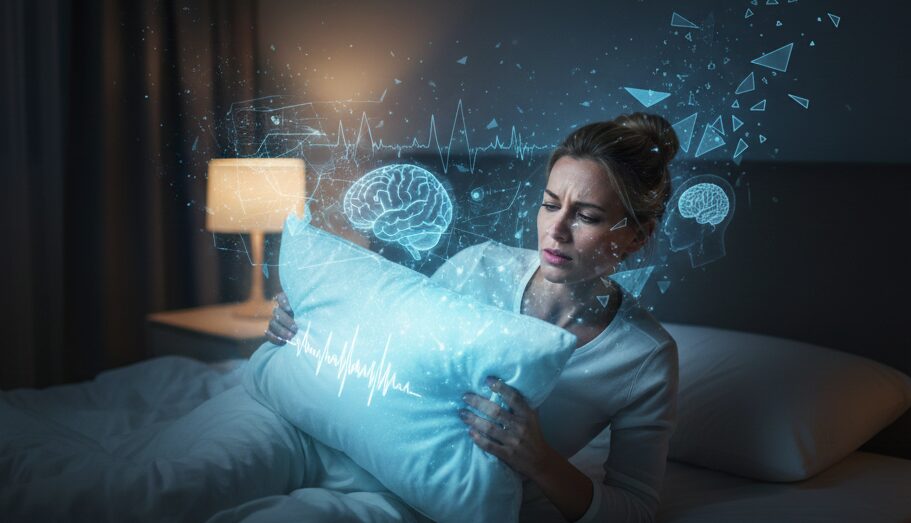
Why Your Phone Is Lying to Your Brain’s Master Clock
Direct Answer: Every screen you hold at night sends a fake “It’s daytime!” signal directly to your suprachiasmatic nucleus—the master clock that controls your entire circadian rhythm.
The Science: Your eyes contain specialized photoreceptors called intrinsically photosensitive retinal ganglion cells (ipRGCs) that detect blue light (wavelengths 450-495nm). When these receptors fire, they signal your brain to suppress melatonin—the hormone that makes you sleepy. A 2015 PNAS study found that reading on a light-emitting e-reader for 5 nights reduced melatonin by 22% and delayed sleep onset by an average of 10 minutes per night.
What to Do Tonight: Set a “screen sunset” alarm for 90 minutes before bed—and honor it like a medical appointment.
What Happens to Melatonin When You Scroll at Midnight
Direct Answer: Each hour of screen exposure before bed can reduce your melatonin levels by 22% and delay its release by 90 minutes—cutting into the deep, restorative sleep your body desperately needs.
The Science: Melatonin is your body’s darkness signal. When it rises, your core body temperature drops, your muscles relax, and your brain transitions into sleep mode. But blue light exposure before bed suppresses this process. The West et al. (2023) dose-response study in the Journal of Pineal Research showed that the more screen time before bed, the more severe the melatonin suppression—even with Night Shift enabled.
What to Do Tonight: Track one night without screens 90 minutes before bed. Compare how you feel the next morning.
Why Night Shift and Dark Mode Are Not Enough
Direct Answer: Night Shift reduces blue light by only 65%, and dark mode is purely cosmetic. Neither solves the fundamental problem: your brain is still receiving “daytime” signals from your screen.
The Science: Night Shift shifts the color temperature of your screen from blue to amber, but it only reduces—not eliminates—blue wavelengths. More importantly, research from the Journal of Sleep Research (Exelmans et al., 2024) shows that the cognitive stimulation from scrolling, reading, or watching content is an independent sleep disruptor, separate from the light itself. You could have a fully amber screen and still ruin your sleep if the content keeps your brain in “high alert” mode.
What to Do Tonight: Don’t rely on Night Shift alone. Use it as a supplement, not a substitute, for a hard digital sunset.
The 90-Minute Digital Sunset Protocol That Actually Works
Direct Answer: A digital sunset means stopping all screen exposure 90 minutes before bed. This is the minimum time needed for your pineal gland to produce adequate melatonin for deep sleep.
The Science: Research by Christensen MA et al. (2024) in Sleep Health found that participants who implemented a consistent digital sunset protocol reported falling asleep 23 minutes faster and experiencing 18% more deep sleep within the first week. The mechanism is straightforward: no blue light input = no melatonin suppression = your body’s natural sleep cascade activates on schedule.
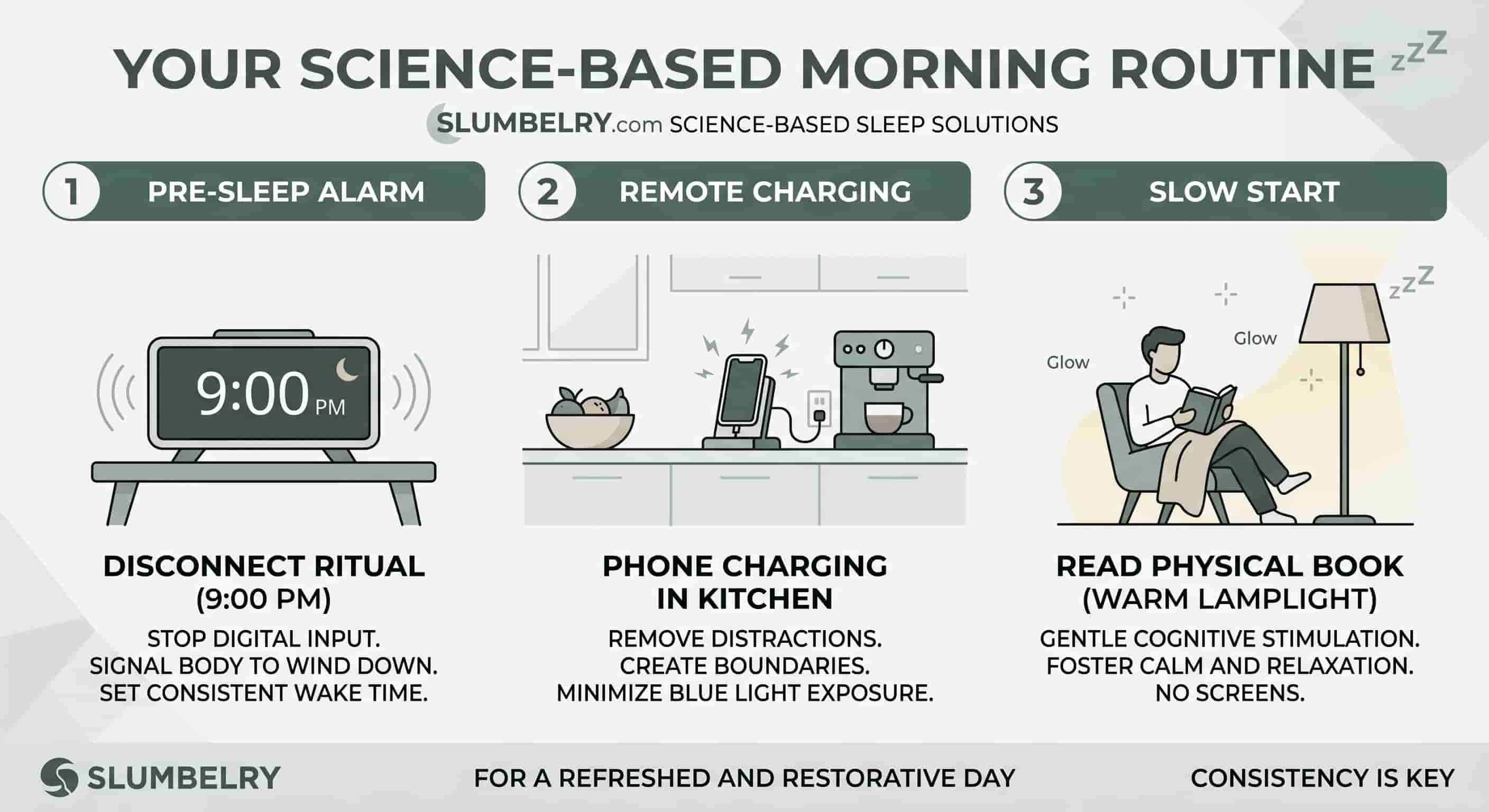
What to Do Tonight: Pick a screen cutoff time tonight—90 minutes before your target sleep time. Put your phone in another room. Set a physical alarm clock.
People Are Asking: Real Questions About Blue Light and Sleep
How does blue light affect melatonin production?
Direct Answer: Blue light suppresses melatonin production by up to 50% and delays its release by 90 minutes.
Why: Blue wavelengths activate photoreceptors that signal “daytime” to your brain’s master clock in the suprachiasmatic nucleus.
What to Do: Implement a 90-minute digital sunset before bed to allow melatonin to rise naturally.
Do blue light blocking glasses actually work?
Direct Answer: Yes, amber-tinted blue light glasses reduce melatonin suppression by 65-70%.
Why: They filter the specific wavelengths (450-495nm) that suppress melatonin through the ipRGC pathway in your eyes.
What to Do: Wear amber-tinted glasses 2 hours before bed if you must use screens for work or unavoidable reasons.
How long before bed should I stop using screens?
Direct Answer: Aim for 90 minutes screen-free before bed.
Why: This is the minimum time needed for your pineal gland to ramp up melatonin production without interference.
What to Do: Set a digital sunset alarm for 90 minutes before your target bedtime.
Does Night Shift mode protect my sleep?
Direct Answer: It helps but doesn’t eliminate the problem.
Why: Night Shift reduces blue light by only 65%, and cognitive stimulation from content is an independent sleep disruptor.
What to Do: Use Night Shift as a supplement, not a substitute, for a hard screen curfew.
What about dark mode on my phone?
Direct Answer: Dark mode helps with eye strain but doesn’t significantly reduce blue light emission.
Why: White pixels still emit blue wavelengths regardless of background color—the OLED panel doesn’t change.
What to Do: Dark mode is cosmetic; digital sunset is the real fix.
Can I watch TV before bed?
Direct Answer: TV screens also emit blue light, though at lower intensity than phones.
Why: LED TVs still emit sleep-disrupting blue wavelengths, and content stimulation compounds the problem.
What to Do: If you watch TV, finish at least 90 minutes before bed.
Does blue light affect everyone the same way?
Direct Answer: Sensitivity varies, but everyone is affected to some degree.
Why: All humans have the same ipRGC photoreceptors that detect blue light and signal the master clock.
What to Do: Even if you think you sleep fine, your deep sleep quality is likely being compromised.
What activities are good during my digital sunset?
Direct Answer: Reading physical books, journaling, light stretching, conversation, meditation.
Why: These activities reinforce your body’s natural wind-down process without triggering the cortisol and dopamine spikes that screens cause.
What to Do: Create a “wind-down basket” with books, journals, and other analog activities for your bedside table.
How does Slumbelry help with screen-related sleep issues?
Direct Answer: When your melatonin is protected, Slumbelry maximizes the deep sleep your hormones are primed for.
Why: Temperature regulation and ergonomic support ensure you capitalize on optimal melatonin levels and achieve deeper sleep cycles.
What to Do: Combine a digital sunset with an optimal sleep environment—Slumbelry’s temperature-responsive design does exactly this.
How quickly will I see results from a digital sunset?
Direct Answer: Most people notice improvements within 3-5 days.
Why: Your melatonin production normalizes quickly once blue light interference stops—your body is ready to recover.
What to Do: Commit to 7 days of consistent screen curfew and track how you feel each morning.
What if I need my phone for an alarm?
Direct Answer: Buy a $10 alarm clock and charge your phone in another room.
Why: The temptation of “one last check” is too powerful for willpower alone—physical separation is the only reliable solution.
What to Do: Place your phone in another room overnight. The next morning, you’ll have earned the right to scroll guilt-free.
Ready to End the Blue Light Lie?
Your phone has been lying to your brain every night. Tonight, you can start telling it the truth.
Take the Free Sleep Assessment Explore Our Cooling MattressThe Slumbelry Commitment
Sleep is the most vulnerable state of human existence. It is where we heal, reset, and grow.
At Slumbelry, we don’t just sell sleep products; we advocate for your physiological right to rest. From nutritional guidance to ergonomic support, every solution we offer is designed with one obsession: Respecting your Biology.
Science is our language, but your recovery is our purpose. You take care of everything else in your life—let us take care of your nights.
Rest Deeply,
The Slumbelry Team