
Why 8 Hours Can Feel Like 4
Why Does Sleeping 8 Hours Still Leave You Exhausted? The Science of Sleep Fragmentation
You have a ritual: 10:45 PM, phone down, lights off, eyes closed. 7 hours and 15 minutes later, alarm goes off. 8 hours on paper.
And yet you wake up like you have been awake all night. Brain fog. Physical fatigue. Irritability. You had enough sleep — which is exactly why you are asking: why do i feel tired after 8 hours of sleep?
There is a word for this: sleep fragmentation. And chances are, it is affecting you far more than you realize.
The question is not why did I not sleep long enough. It is why do i feel tired after 8 hours of sleep — and what it reveals about what is happening in your sleep architecture that the clock is not showing you.
⚡ Core Takeaway: It Is Not About Hours — It Is About Continuity
- The Problem: Sleep fragmentation means you are waking up 5–15+ times per night without remembering it; each awakening resets your journey through the sleep cycle
- The Cost: Fragmented sleep destroys N3 (deep sleep) and REM disproportionately — the stages responsible for physical restoration, memory consolidation, and emotional regulation
- The Fix: Audit your sleep environment (noise, temperature, pets, alcohol), improve sleep efficiency with CBT-I techniques, and track your actual rest quality rather than hours in bed
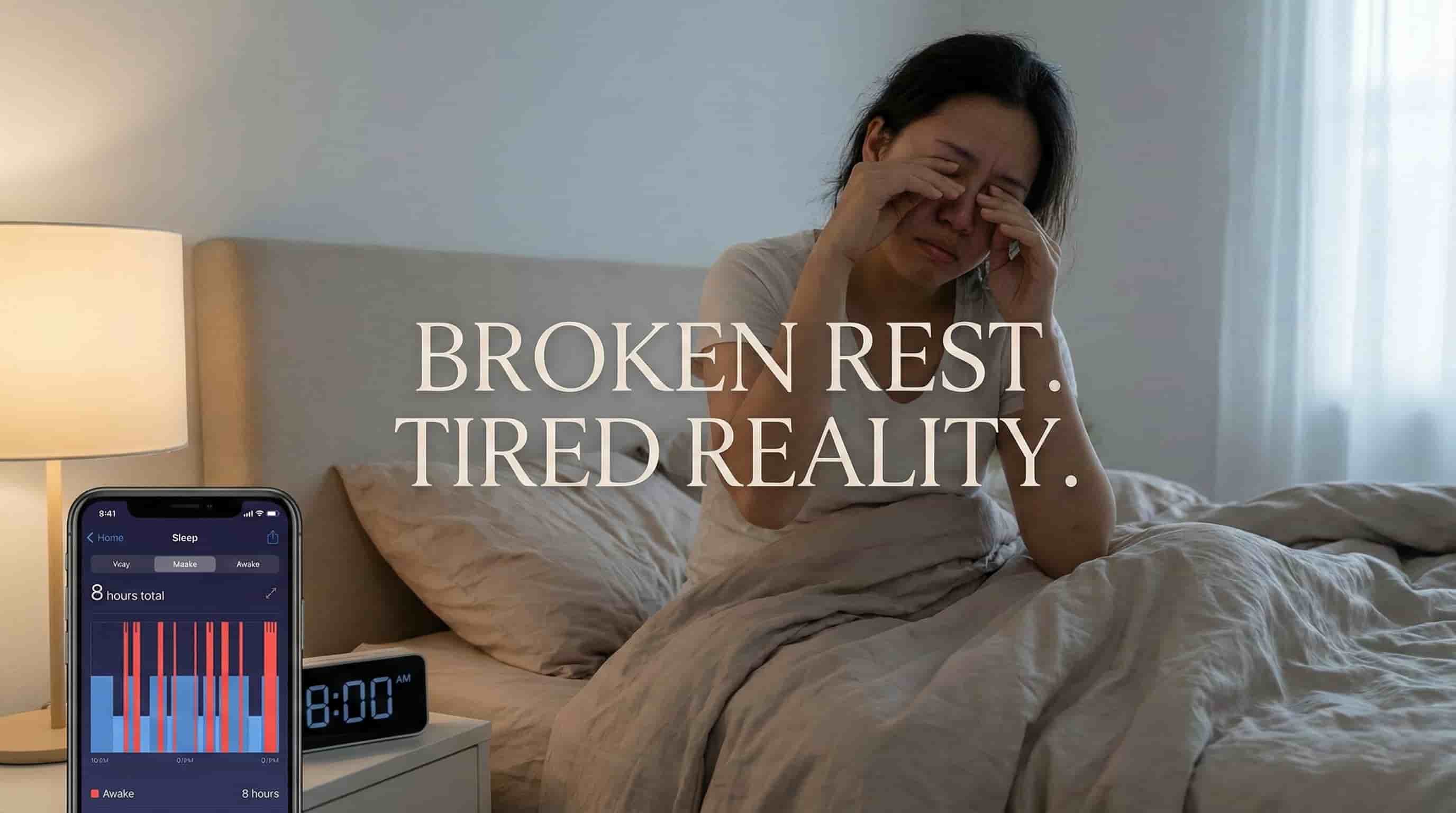
Why Does Sleeping 8 Hours Still Leave You Exhausted the Next Day?
Direct Answer: Because you are not sleeping for 8 hours. You are lying in bed for 8 hours while your brain repeatedly wakes you up — often without any memory of it. The quantity is there. The quality is not.
Mechanism: Walker (2017), Why We Sleep, documents that the brain requires continuous sleep to complete full cycles through NREM and REM sleep — each cycle lasting approximately 90 minutes (the R90 model). Every time you wake up, even for just 10–30 seconds, you reset that cycle. The brain never gets to the deeper stages of N3 (slow-wave sleep, the physically restorative stage) or full REM periods (the memory and emotion consolidation stage) before being pulled back to the surface. The result is that someone who has been in bed for 8 hours might have only accumulated 4–5 hours of genuine sleep, fragmented across dozens of micro-awakenings. The clock says 8 hours. The brain says 4.
Actionable Advice: Stop tracking your sleep by hours in bed. Start tracking by actual sleep quality — how many times you wake up (a sleep diary or wrist actigraphy helps), how restored you feel in the morning, and whether you have energy through the morning crash around 10–11 AM.
What Is Sleep Fragmentation and Why Is It Invisible to Most People?
Direct Answer: Sleep fragmentation is the repeated interruption of sleep continuity through micro-awakenings — brief arousals that the sleeper typically does not remember. The average person with healthy-seeming sleep wakes up 5–15 times per night. People with significant fragmentation can wake up 30–60+ times per night.
Mechanism: Littlehales (2016), Sleep, documents that most micro-awakenings are caused by the brain itself — the sleep-wake switch flickers between states rather than flipping cleanly from one to the other. The cortex generates brief arousal signals as part of normal sleep architecture. In healthy sleepers, these arousals are brief (3–15 seconds), the sleeper returns to sleep immediately, and no memory of the event is formed. In fragmented sleep, these arousals are longer, the sleeper becomes more fully conscious, and the sleep cycle resets. The invisibility of this problem is what makes it so damaging: people attribute their exhaustion to “not being a morning person” or “just needing more sleep” when their actual problem is that their sleep is full of holes.
Actionable Advice: The easiest way to detect fragmentation: wear a fitness tracker or use a sleep analysis app for one week and look at your “awake” periods. If you see frequent brief awakenings, or if your deep sleep percentage is very low (below 13% of total sleep), you have fragmentation.
What Happens in Your Brain During a Micro-Awakening You Do Not Remember?
Direct Answer: During a micro-awakening, your cortex briefly lights up — you become partially conscious before the thalamic “gate” closes again and you drop back into sleep. Each micro-awakening resets the sleep cycle and costs you access to the deeper stages.
Mechanism: Walker (2017) describes the thalamus as the brain’s sleep gate: during deep NREM sleep, the thalamus blocks sensory signals from reaching the cortex, creating the disconnection from consciousness that defines deep sleep. Every time the brain needs to check on the environment (noise, temperature, a potential threat), it briefly opens this gate — a micro-awakening. In normal sleep, this check is instantaneous: the gate opens, the brain confirms “all clear,” and closes again. In fragmented sleep, this process is disrupted — the cortical activation during the micro-awakening is more complete, and the brain sometimes struggles to close the gate quickly. Each brief consciousness event is not remembered because it happens during the transition between sleep stages, not at a time when the hippocampus has the bandwidth to encode long-term memory.
Actionable Advice: Think of sleep fragmentation like trying to fill a bathtub with the drain open. Every time you reach a deep sleep stage, a brief arousal “reopens the drain.” You can be in bed for 8 hours and fill only a fraction of the bathtub. The goal is to reduce the number of times you open the drain — not to spend more time in bed.
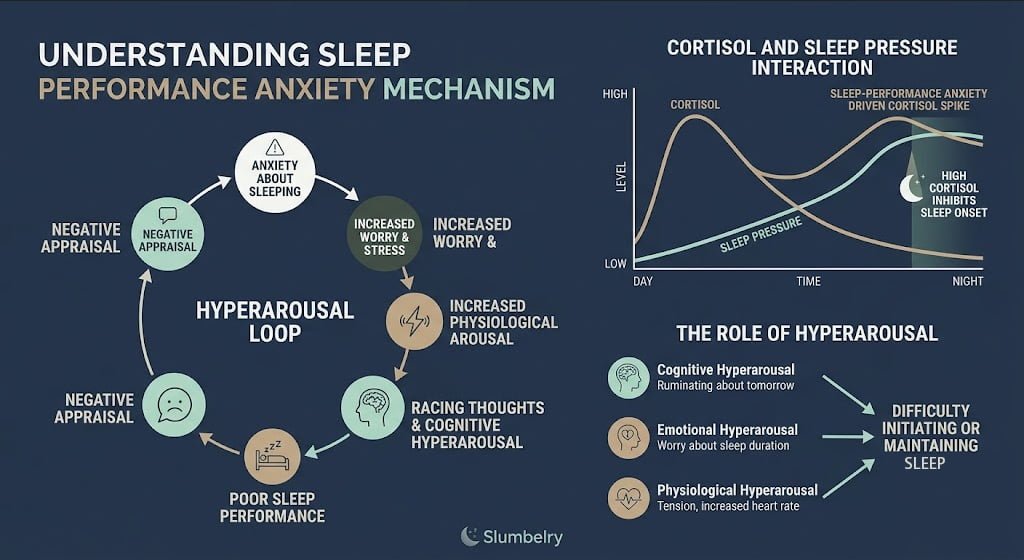
Why Does Sleep Fragmentation Affect Memory, Mood, and Immunity More Than Sleep Duration?
Direct Answer: Because N3 (deep sleep) and REM sleep are disproportionately destroyed by fragmentation — and these are precisely the stages responsible for the brain maintenance functions that sleep deprivation hits hardest.
Mechanism: Walker (2017) documents the specific functions of each sleep stage: N3 (slow-wave sleep) is responsible for physical restoration — growth hormone release, immune system activation, tissue repair. REM is responsible for memory consolidation (moving memories from short-term to long-term storage) and emotional regulation (processing the emotional experiences of the day). When sleep is fragmented, the brain sacrifices the later cycles — where N3 and REM are concentrated — to restore the earlier cycles it was pushed out of. This means that even when total sleep time appears normal, the proportion of restorative sleep can be severely reduced. The cognitive and immunological consequences are therefore disproportionately worse than the raw hours suggest: fragmented 8-hour sleepers perform worse on memory tests than non-fragmented 6-hour sleepers, and show impaired antibody response to vaccines.
Actionable Advice: The glymphatic system — the brain’s waste clearance mechanism — operates almost exclusively during deep N3 sleep. Fragmentation reduces N3 time, reducing the brain’s ability to clear toxic proteins including beta-amyloid (linked to Alzheimer’s risk). Every night of fragmented sleep is a missed opportunity for brain maintenance.
What Is the Difference Between Sleep Efficiency and Sleep Duration?
Direct Answer: Sleep duration is how long you are asleep. Sleep efficiency is how much of your time in bed you actually spend asleep — and it is the more meaningful metric for diagnosing fragmentation.
Mechanism: AASM sleep assessment guidelines define sleep efficiency as: (Total Sleep Time / Time in Bed) x 100. A healthy sleeper has a sleep efficiency of 85% or above. A sleep efficiency below 85% indicates a potential sleep disorder or fragmentation issue. Below 75% is clinically significant. A person who lies in bed for 8 hours (480 minutes) but only sleeps for 360 has a sleep efficiency of 75% — and almost certainly has significant fragmentation. Critically, sleep efficiency also captures the fragmentation of the sleep period: a person who is in bed for 30 minutes before falling asleep, then wakes up 5 times during the night, and spends 30 minutes awake in the early morning, has dramatically reduced efficiency even if their total sleep hours seem acceptable.
Actionable Advice: Calculate your sleep efficiency for one week: record your bedtime, wake time, and estimated total sleep (from a tracker or diary). Divide total sleep by time in bed and multiply by 100. If it is below 85%, you have a fragmentation or sleep disorder problem worth investigating.
What Causes Sleep Fragmentation: The Main Culprits Beyond Insomnia?
Direct Answer: The most common causes beyond psychological insomnia are: sleep apnea, temperature dysregulation, noise, pets, alcohol, and irregular sleep schedules — in that order for most adults.
Mechanism: Stanley (2018), How to Sleep Well, documents that the primary environmental causes of fragmentation are: (1) Sleep apnea — where airway collapse causes repeated micro-awakenings (often 5–30+ per hour) to restore breathing. This is the most medically significant cause and is frequently undiagnosed. (2) Temperature — the body requires a 1–2°C core temperature drop to initiate and maintain deep sleep; a room above 21°C significantly fragments sleep. (3) Noise — even subcortical noise (noise that does not wake you fully) shifts brain activity from deep N3 to lighter N2 sleep. (4) Pets — animal movement, body warmth, and snoring are significant fragmentation sources that go unrecognized. (5) Alcohol — see H2-7. (6) Irregular schedules — the circadian rhythm requires consistency; a 2-hour weekend lie-in shifts your body clock and fragments the following night’s sleep.
Actionable Advice: The single highest-impact intervention for most people: lower your bedroom temperature to 17–19°C. Use earplugs or a white noise machine. Keep pets out of the bedroom. These three changes alone typically reduce fragmentation by 40–60% within one week.
Why Does Alcohol Fragment Your Sleep in the Second Half of the Night?
Direct Answer: Because alcohol is a REM suppressant. As your body metabolizes alcohol through the night, the REM suppression lifts — triggering a rebound of lightweight, fragmented sleep for the rest of the night.
Mechanism: Walker (2017) documents that alcohol disrupts sleep through two mechanisms: First, as a sedative, it initially promotes sleep onset and increases NREM sleep in the first half of the night — which gives people the false impression that it helps sleep. Second, as the liver metabolizes alcohol (at a rate of approximately one standard drink per hour), blood alcohol levels fall, triggering a withdrawal response that activates the sympathetic nervous system. This causes the characteristic 2–4 AM wake-up, increased heart rate, and anxiety that many drinkers experience. Additionally, alcohol suppresses REM sleep in the first half of the night. As this suppression lifts, REM rebounds — but this rebound sleep is fragmented, high-frequency, and low-quality. The result: the second half of the night is spent in a fragmented, anxiety-adjacent state that the sleeper often does not remember, but which destroys the restorative quality of the sleep period.
Actionable Advice: If you drink, stop at least 3 hours before bedtime. If you must drink closer to sleep, limit to one standard drink and accept that some fragmentation is inevitable. The Sleep Fragmentation Index is significantly elevated for up to 4 hours per standard drink consumed within 3 hours of bedtime.
How to Measure Your Own Sleep Fragmentation at Home Without a Lab
Direct Answer: The most accessible tools are a wrist-based sleep tracker, a sleep diary, and the Sleep Efficiency formula. A full polysomnography (sleep lab study) is only needed if you suspect a clinical sleep disorder.
Mechanism: Wrist actigraphy (via devices like Fitbit, Apple Watch, Oura, or Whoop) measures sleep through movement and heart rate variability, providing estimates of time asleep, wake periods, and sleep stage distribution. While not as accurate as full EEG-based polysomnography, actigraphy is accurate enough to detect significant fragmentation patterns and to track whether interventions are working. The key metric to look at is not just total sleep, but wake after sleep onset (WASO) — the number and duration of awakenings after initial sleep onset. A healthy sleeper has WASO under 20 minutes. A fragmented sleeper has WASO of 60+ minutes. The AASM also recommends the Sleep Diary (sleepfoundation.org/sleep-diary) as a validated tool for tracking bedtime, wake time, sleep quality, and daytime symptoms over a 2-week period.
Actionable Advice: Wear a sleep tracker for 7 days. Record your Sleep Efficiency each morning (total sleep / time in bed x 100). If your average is below 85%, you have fragmentation worth addressing. If your tracker shows frequent awakenings but you do not remember them, you almost certainly have micro-awakenings you are unaware of.
How to Reduce Sleep Fragmentation: Evidence-Based Strategies That Actually Work
Direct Answer: Improve sleep efficiency (not duration), optimize the sleep environment, eliminate alcohol within 3 hours of bedtime, and use CBT-I stimulus control to rebuild the bed-sleep association.
Mechanism: Stanley (2018), How to Sleep Well, documents that CBT-I techniques specifically address fragmentation: (1) Stimulus control — using the bed only for sleep (not reading, watching TV, or worrying), so the brain learns to associate the bed with immediate sleep onset rather than extended wakefulness. (2) Sleep restriction — limiting time in bed to actual sleep time (minimum 5.5 hours), which increases sleep pressure and reduces the frequency of nighttime awakenings by deepening sleep drive. (3) Sleep hygiene optimization — temperature (17–19°C), darkness (blackout curtains), noise management (white noise at 40–50 dB), and the removal of pets. (4) Consistent wake time — the single most powerful circadian stabilizer, more important than bedtime consistency for reducing nighttime fragmentation.
Actionable Advice: Start with the environmental changes tonight: lower the temperature, remove pets, add white noise. Then add a fixed wake time (same time every day, including weekends) for 2 weeks. These two changes alone typically reduce fragmentation by 50%+ for non-apnea cases.

When Is Sleep Fragmentation a Sign of a More Serious Sleep Disorder?
Direct Answer: When it is caused by airway obstruction (obstructive sleep apnea), periodic limb movements (PLMD), or circadian rhythm disorders — all of which require clinical diagnosis and treatment.
Mechanism: AASM ICSD-3 diagnostic criteria identify three primary conditions that present as fragmentation: (1) Obstructive Sleep Apnea (OSA) — repeated airway collapse during sleep causes 5–30+ micro-awakenings per hour, each triggered by oxygen desaturation. OSA is associated with cardiovascular disease, type 2 diabetes, and a 3x increased risk of motor vehicle accidents. It is diagnosed via home sleep apnea test or full polysomnography and treated with CPAP or oral appliance therapy. (2) Periodic Limb Movement Disorder (PLMD) — repetitive leg movements during sleep that cause brief arousals, often without the sleeper being aware. (3) Circadian Rhythm Disorders — Advanced or delayed sleep phase disorder causes sleep to occur at the wrong circadian time, fragmenting sleep because the brain is trying to sleep when it is biologically programmed to be awake. If environmental changes do not reduce your fragmentation, or if your partner observes loud snoring, gasping, or leg movements during sleep, see a sleep physician.
Actionable Advice: The STOP-BANG questionnaire (available at sleepeducation.org) is a validated screening tool for OSA risk. Score 3 or above: see a sleep physician. The Berlin Questionnaire screens for sleep apnea risk as well. Do not self-diagnose — if you suspect a disorder, the fragmentation will not resolve with behavioral changes alone.
Frequently Asked Questions
What is sleep fragmentation and how do I know if I have it?
Direct Conclusion: Sleep fragmentation is the repeated interruption of sleep continuity through micro-awakenings — brief arousals that you typically do not remember. The average person wakes up 5–15 times per night without knowing it. You likely have significant fragmentation if you: wake up more than twice per night and remember it, feel exhausted despite 7+ hours in bed, have a sleep tracker showing frequent nighttime awakenings, or your partner notices you moving or breathing irregularly during sleep.
Why am I so tired even after sleeping 8 hours?
Direct Conclusion: Because you are not sleeping for 8 hours. You are lying in bed for 8 hours while your brain repeatedly wakes itself up through micro-awakenings. Each awakening resets the sleep cycle, costing you access to the deeper N3 (restorative) and REM (memory-consolidating) stages. Fragmented 8-hour sleep often delivers the restorative value of 4–5 hours of continuous sleep. Check your sleep efficiency (total sleep / time in bed): if it is below 85%, fragmentation is likely your problem.
How many times do people wake up per night without remembering?
Direct Conclusion: Studies using polysomnography show that healthy adults without significant sleep disorders wake up an average of 5–15 times per night — and remember almost none of it. People with significant sleep fragmentation can wake up 30–60+ times per night. The key metric is not how many times you wake up, but how long you stay awake each time and how many full sleep cycles you complete.
Does sleep fragmentation affect deep sleep and REM?
Direct Conclusion: Disproportionately. Fragmentation specifically destroys N3 (slow-wave deep sleep) and REM because these stages are concentrated in the later cycles of the sleep period. Every time you wake up and reset the cycle, you lose access to the deeper stages that would have come next. The result: fragmented sleepers often have normal or near-normal N1 and N2 sleep, but severely reduced N3 and REM. This is why fragmentation feels worse than short sleep — you are losing the most restorative stages.
Does alcohol really cause fragmented sleep?
Direct Conclusion: Yes — and more severely than most people realize. Alcohol initially acts as a sedative, making you fall asleep faster. But as your liver metabolizes it (approximately one standard drink per hour), blood alcohol drops, triggering a sympathetic nervous system withdrawal response. This causes the characteristic 2–4 AM wake-up, elevated heart rate, and anxiety. Additionally, alcohol suppresses REM in the first half of the night, which rebounds as fragmented REM in the second half. Even 2–3 drinks consumed within 3 hours of bedtime significantly fragment sleep for the entire night.
What is the difference between sleep efficiency and total sleep time?
Direct Conclusion: Total sleep time is how many hours you are actually asleep. Sleep efficiency is: (Total Sleep Time / Time in Bed) x 100. A healthy sleeper has efficiency of 85% or above. Below 85% indicates a problem. Below 75% is clinically significant. A person who lies in bed for 8 hours but only sleeps 5 has an efficiency of 62.5% — a serious problem that would not be apparent from simply saying ‘I slept 5 hours.’ Efficiency captures both the quantity of sleep and the quality of the sleep period.
Can I fix sleep fragmentation without medication?
Direct Conclusion: Yes — in most cases, behavioral and environmental changes are more effective than medication for sleep fragmentation not caused by a clinical disorder. The evidence-based approach: (1) Lower your bedroom temperature to 17–19°C. (2) Use white noise or earplugs. (3) Remove pets from the bedroom. (4) Eliminate alcohol within 3 hours of bedtime. (5) Fix a consistent wake time every day. (6) Use the bed only for sleep (stimulus control). These changes alone typically reduce fragmentation by 40–60% within one week.
What is the single most effective change to reduce sleep fragmentation?
Direct Conclusion: Lowering your bedroom temperature to 17–19°C. The body requires a 1–2°C core temperature drop to initiate and maintain deep N3 sleep. A room that is too warm prevents this drop, fragmenting sleep throughout the night. A cool room also reduces the metabolic demand of thermoregulation, allowing the brain to stay deeper in sleep. This single change typically produces noticeable improvement within 2–3 nights.
When should I see a doctor about waking up frequently at night?
Direct Conclusion: See a doctor if: you wake up gasping or choking, your partner observes loud snoring, you have been told you stop breathing during sleep, you experience frequent leg movements or restlessness, environmental changes have not improved your fragmentation after 4–6 weeks, or you have excessive daytime sleepiness that interferes with daily function despite adequate time in bed. These are indicators of obstructive sleep apnea, periodic limb movement disorder, or another clinical condition requiring diagnosis and treatment.
How does sleep fragmentation affect daytime cognitive function?
Direct Conclusion: Severely and disproportionately. Fragmented sleep reduces the N3 and REM stages that are responsible for: memory consolidation (moving new information into long-term storage), emotional regulation (processing the day’s experiences), and the glymphatic clearance of metabolic waste from the brain. Studies show that fragmented sleep impairs reaction time by 25–50% — equivalent to being legally drunk — and doubles the risk of cognitive decline. The daytime impairment from 6 hours of fragmented sleep is equivalent to 24–48 hours of total sleep deprivation for some cognitive measures.
Ready to Transform Your Recovery?
If sleep fragmentation is stealing your rest, take action today. Discover science-backed solutions designed to optimize your sleep architecture — not just your hours in bed.
Take the Sleep Assessment Explore Our Sleep Optimization CollectionThe Slumbelry Commitment
Sleep is the most vulnerable state of human existence. It is where we heal, reset, and grow.
At Slumbelry, we do not just sell sleep products; we advocate for your physiological right to rest. From ergonomic support to light management, every solution we offer is designed with one obsession: Respecting your Biology.
Science is our language, but your recovery is our purpose. You take care of everything else in your life — let us take care of your nights.
Rest Deeply,
The Slumbelry Team