
Why a Warm Bedroom is Killing Your Deep Sleep
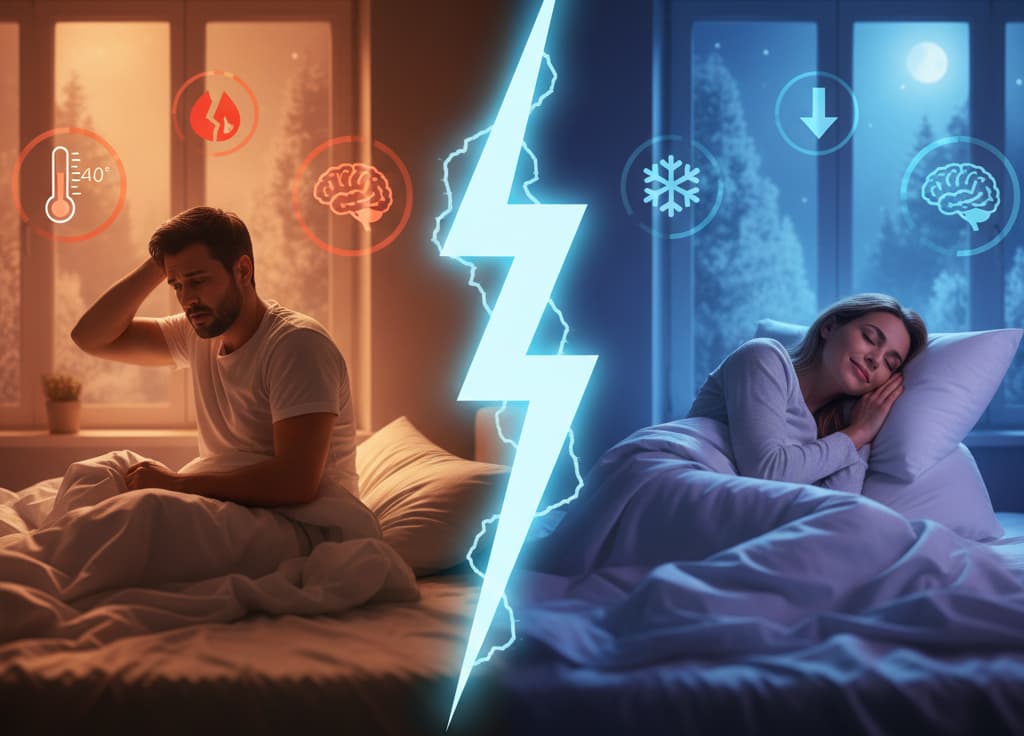
It is the classic battle played out in bedrooms across the world: One partner wants the AC blasting like a meat locker; the other is bundled up like they are surviving a polar expedition. But when it comes to sleep quality, this isn’t a matter of personal preference. Biology takes a definitive side. Cold wins. If you are tossing, turning, and waking up with damp sheets, you aren’t just uncomfortable—you are actively sabotaging your body’s ability to enter deep, restorative sleep.
- The Thermal Trigger: Your core body temperature must drop by 2 to 3 degrees Fahrenheit to initiate and maintain deep sleep.
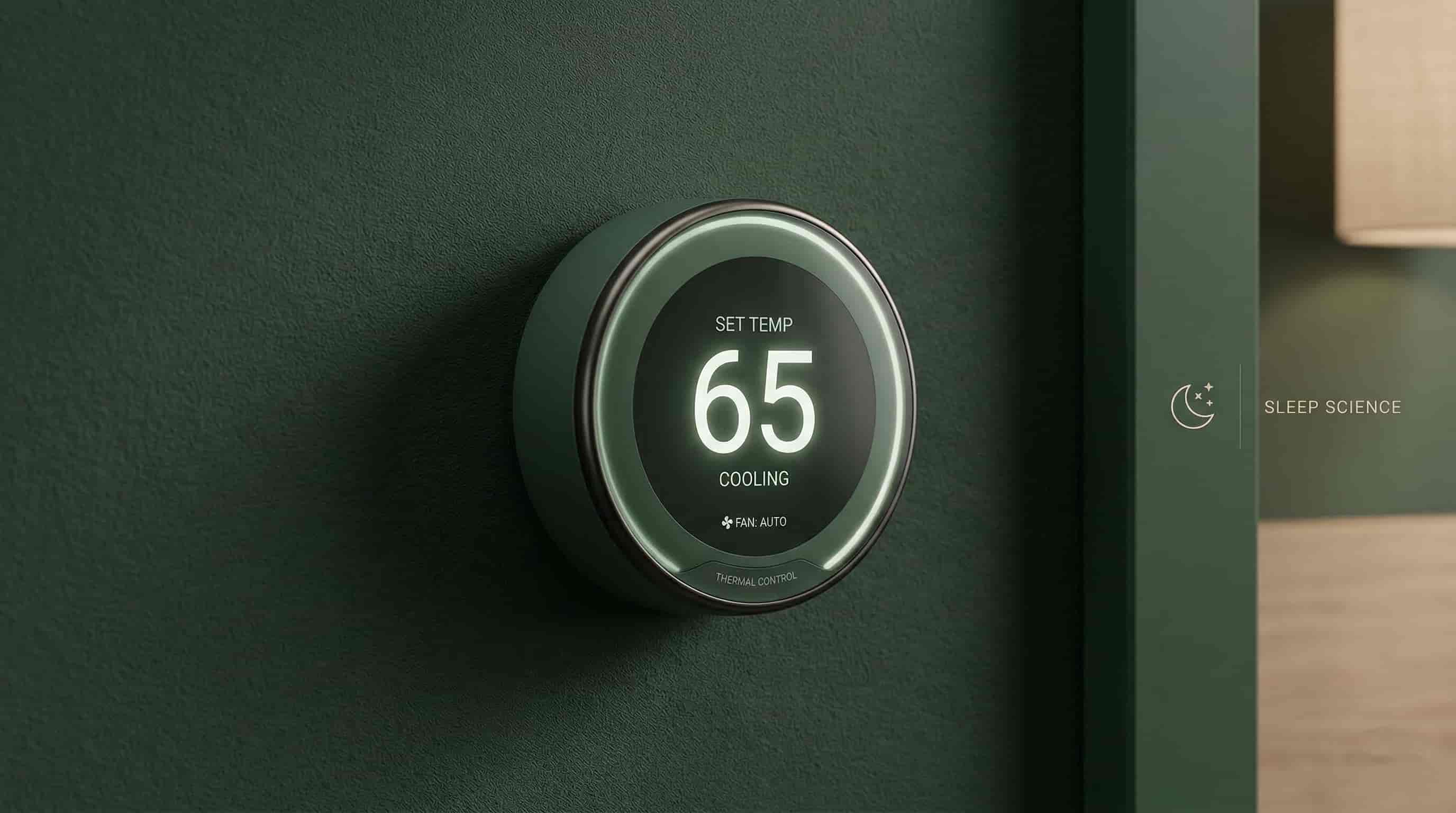
- The 65°F Rule: Sleep scientists universally recommend an ambient bedroom temperature around 65°F (18.3°C) for optimal recovery.
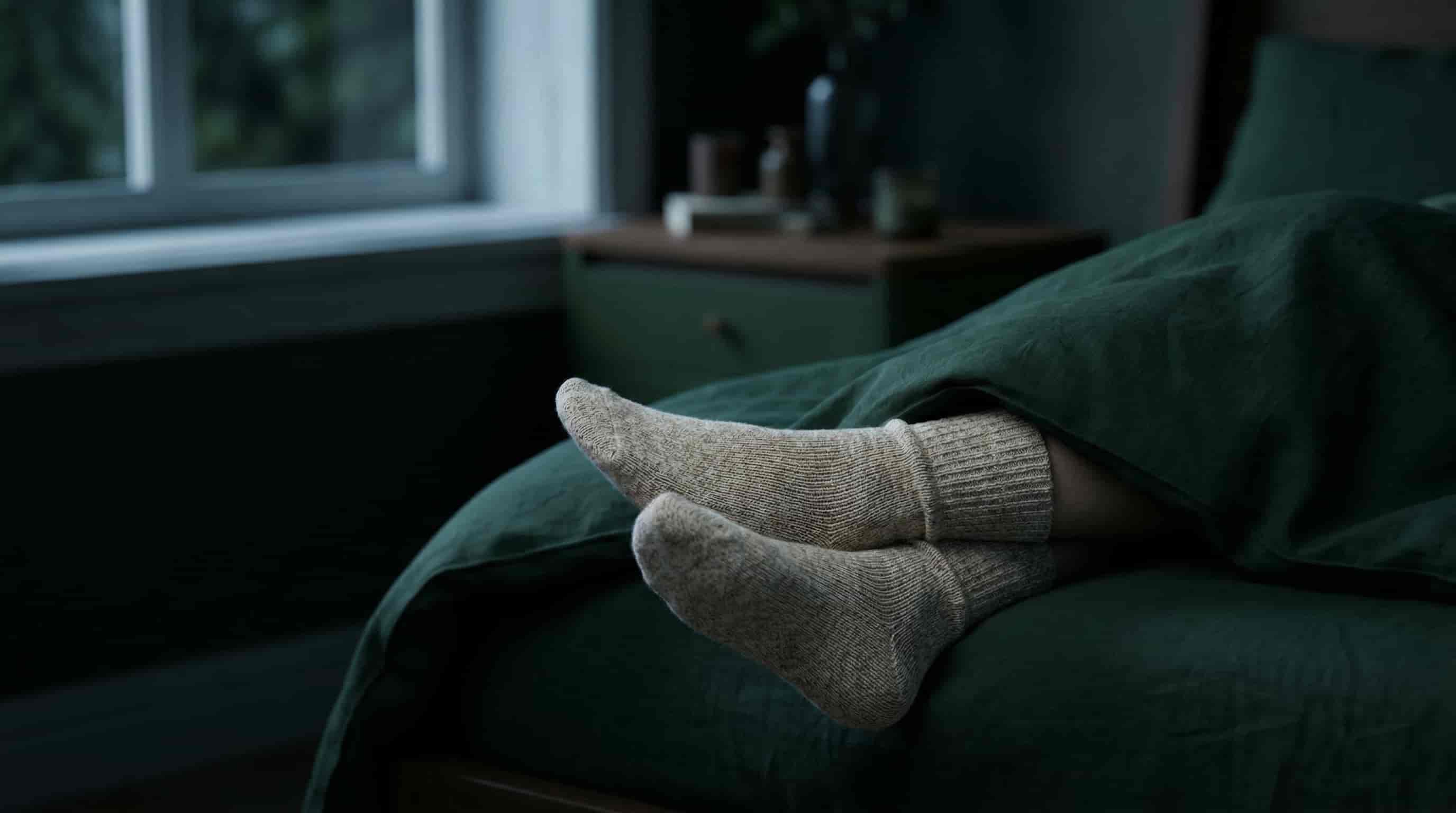
- The Extremity Paradox: To cool your core, your hands and feet must be warm. Cold feet trap heat inside your body, causing insomnia.
1) The Biology of the Thermal Drop
To understand why a hot room destroys your rest, you have to understand how your circadian rhythm operates. Your internal body clock isn’t just controlled by light; it is tightly coupled with your core body temperature.
During the day, your core temperature rises, peaking in the late afternoon. This elevation keeps you alert, focused, and physically primed. But as evening approaches, your body prepares for rest by aggressively dumping heat. To initiate sleep—and specifically to cross the threshold into Deep Sleep (Slow-Wave Sleep)—your core temperature needs to drop by about 2 to 3 degrees Fahrenheit.
If your room is a sauna, your body hits a wall. It cannot dump that internal heat into the surrounding environment. Your heart rate stays elevated, your brain remains hyper-vigilant, and you stay awake. You are asking your body to hit the brakes while you are pressing the thermal gas pedal.
“If you are sweating in bed, you are not in deep sleep. Your body cannot simultaneously fight to thermoregulate and perform the cellular repair necessary for recovery.”
2) The Magic Number: 65°F (18°C)
When you ask a sleep scientist for the ideal bedroom temperature, you won’t get a vague answer. The consensus is incredibly specific: aim for 65°F (18.3°C). For some, this feels shockingly cold, but the physiological benefits are undeniable.
- Melatonin Release: The physical sensation of a cooling environment is a primary trigger for your pineal gland to release melatonin, the hormone that orchestrates your sleep cycle.
- Frontal Cortex Cooling: Have a racing mind? Studies show that cooling the frontal cortex (the “thinking” part of the brain) drastically reduces sleep latency for chronic insomniacs. This is why flipping to the “cool side of the pillow” feels so universally satisfying.
- REM Preservation: During REM sleep (the dream state), your body actually loses its ability to thermoregulate efficiently. If the room is too hot, your brain will pull you out of REM sleep just to wake you up and cool you down, destroying your emotional processing for the night.
3) The Extremity Paradox: Warm Feet, Cool Body
Here is where people get it wrong. They blast the AC, strip off the blankets, and end up with freezing cold feet. And then they can’t sleep. Why?
Your body dumps its core heat through the blood vessels in your extremities—specifically, the palms of your hands and the soles of your feet. These areas act as your body’s radiators. However, if the ambient air makes your feet too cold, your nervous system panics. It triggers vasoconstriction, shrinking those blood vessels to conserve heat. The radiator valves slam shut, and the heat gets trapped in your core.
The Protocol: You want a cold room, but warm hands and feet. This is why taking a warm bath an hour before bed works so well—it brings blood to the surface of the skin (vasodilation), allowing massive heat dump when you step into the cooler bedroom air. Alternatively, simply wearing a pair of breathable socks to bed in a 65°F room can cut the time it takes to fall asleep in half.
4) Hacking the Heat (Without Freezing Your Partner)
What if you don’t have central AC, refuse to pay a massive electric bill, or sleep next to someone who runs notoriously cold? You have to engineer your micro-climate.
The Micro-Climate Protocol:
- Ditch the Plastic Wrap: Check your sheets. If they contain polyester or synthetic microfiber, you are sleeping in a plastic bag. Switch immediately to highly breathable, moisture-wicking natural fibers: Bamboo, Tencel, or Percale cotton.
- Strategic Airflow: A fan does not lower the temperature of a room. It cools you by constantly moving air over your skin, accelerating the evaporation of sweat. Position the fan to cross over the bed, not directly at your face.
- The “Separate Blankets” Rule: The Scandinavian sleep method is brilliant. Share the mattress, but use separate duvets. The “hot sleeper” gets a thin, breathable quilt, while the “cold sleeper” gets the heavy down comforter. It saves marriages and saves sleep.
Stop fighting your biology. Sleep is a cool sport. If you want to wake up feeling sharp, recovered, and ready to perform, you need to turn the dial down.
5) Common Misconceptions (FAQ)
Q1: Won’t sleeping in a cold room make me sick?
No. You catch a cold from viruses, not from a drop in ambient temperature. In fact, sleeping in a cooler environment promotes deeper sleep, which is the exact time your immune system releases cytokines to fight off infections. Good sleep prevents sickness; a hot room prevents good sleep.
Q2: I wake up sweating, but my room is cold. What is wrong?
If your room is 65°F and you are still suffering from night sweats, the issue is likely internal or environmental micro-climate. First, check your bedding—memory foam mattresses and polyester sheets trap massive amounts of heat. Second, evaluate your late-night habits; alcohol and heavy meals right before bed spike your metabolic rate. Finally, for women, perimenopause and hormonal fluctuations are major drivers of vasomotor symptoms (hot flashes).
Q3: Does a hot shower before bed wake you up?
It seems counterintuitive, but a warm shower or bath 60-90 minutes before bed actually helps you sleep. The warm water dilates the blood vessels on the surface of your skin. When you step out of the shower into a cooler room, your body rapidly radiates that heat away, causing a steep drop in your core temperature that mimics the natural onset of sleep.
Stop guessing about your recovery. Build a sleep protocol that works as hard as you do.
Take the Free Sleep Assessment Join the Recovery NewsletterThe Slumbelry Commitment
Sleep is the most vulnerable state of human existence. It is where we heal, reset, and grow.
At Slumbelry, we don’t just sell sleep products; we advocate for your physiological right to rest. From ergonomic support to light management, every solution we offer is designed with one obsession: Respecting your Biology.
Science is our language, but your recovery is our purpose. You take care of everything else in your life—let us take care of your nights.
Rest Deeply,
The Slumbelry Team