
Suffocating in Your Sleep: How Sleep Apnea Is Destroying Your Heart
We joke about snoring. We elbow our partners in the ribs. We buy useless nose strips from the pharmacy and laugh about the “chainsaw” noises the next morning. But for millions of people, snoring is not a punchline—it is the desperate sound of their body struggling to survive. Behind the heavy breathing lies the terrifying reality of Obstructive Sleep Apnea (OSA), a condition where your airway physically collapses, cutting off your oxygen supply completely. You are suffocating in your own bed, and your brain is fighting a war every single night just to keep you alive.
- Suffocation Cycle: Sleep apnea causes your airway to collapse, forcing your brain to trigger a panic response to wake you up and breathe—sometimes over 100 times an hour.
- Systemic Destruction: It is not just about feeling tired; severe OSA is directly linked to heart failure, stroke, treatment-resistant weight gain, and profound depression.
- Beyond the Stereotype: Apnea does not only affect older, overweight men. Women (especially post-menopause), thin individuals with narrow jaw structures, and even children are highly susceptible.
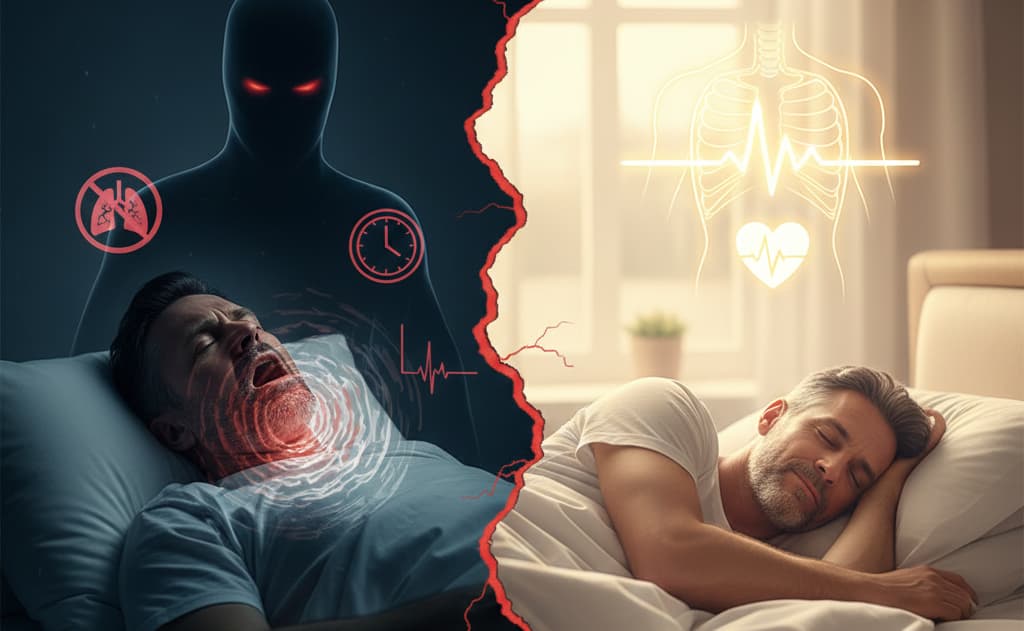
1) The Anatomy of Suffocation
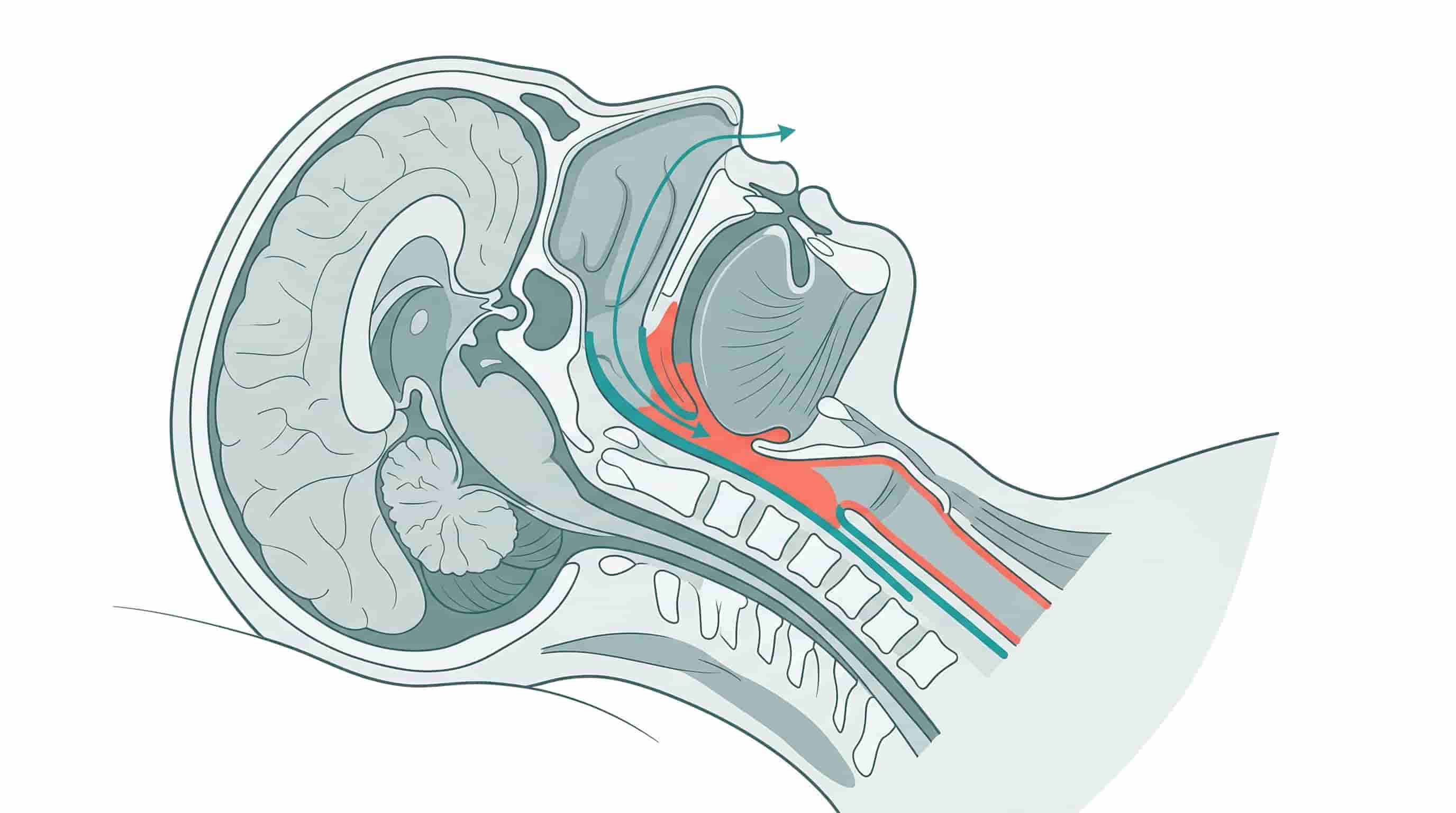
To understand the danger of Obstructive Sleep Apnea, you have to understand the mechanics of the throat. When you fall asleep, the muscles in your body naturally relax—including the muscles in the back of your throat that hold your airway open. For most people, this isn’t an issue. Air flows freely.
But if you have OSA, gravity wins. Your tongue falls backward, your soft palate sags, and the airway completely shuts. Your lungs are trying to pull air in, but the pipe is blocked. Your blood oxygen levels begin to plummet. Your heart rate accelerates. Your brain registers a life-or-death emergency.
To save you from suffocating, your brain floods your nervous system with adrenaline, jolting you out of deep, restorative sleep into a lighter stage of sleep, or waking you up completely, just long enough to gasp, snort, and force the airway open. You take a breath, fall back asleep, and the cycle repeats.
“Imagine someone holding a pillow over your face for 10 seconds, waiting for you to gasp for air, and then doing it again. Every minute. All night long. That is the physical toll Apnea takes on your heart.”
2) The Red Flags You Are Ignoring
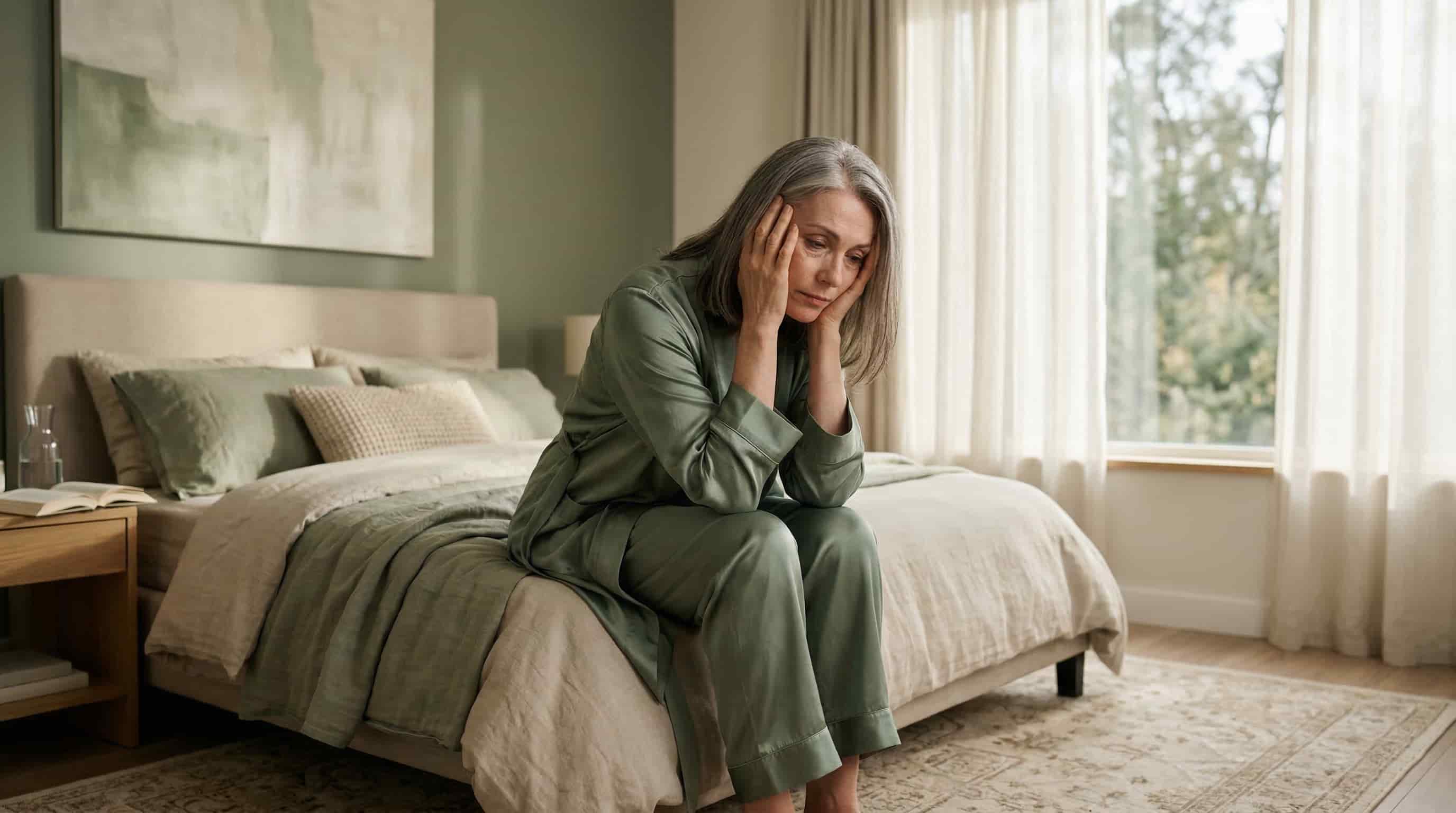
The cruelest part of sleep apnea is the amnesia. Because the micro-awakenings are so brief, you rarely remember them. You might think you slept solidly for eight hours, completely unaware that you stopped breathing 40 times an hour. You just know you are exhausted. Look for these hidden signs:
- Loud, Irregular Snoring: It isn’t a steady rhythm. It is characterized by loud snoring, followed by eerie, silent pauses (when breathing stops), ending with a violent snort or gasp.
- Morning Headaches: You wake up with a dull throbbing in the front of your head. This is the direct result of severe oxygen deprivation and carbon dioxide buildup in your bloodstream overnight.
- The “Desert” Mouth: Waking up with a mouth so dry it feels like sandpaper, caused by desperate mouth-breathing as your body fights for air.
- Excessive Nighttime Urination (Nocturia): You think you have a weak bladder, but it is actually your heart. The extreme pressure shifts in your chest caused by struggling to breathe trigger the release of a hormone (ANP) that signals your kidneys to produce urine.
- Crushing Daytime Fatigue: You could drink three cups of coffee and still fall asleep at a red light. You aren’t lazy; you are severely sleep-deprived because your brain never reaches the Deep Sleep or REM stages.
3) The Wrecking Ball: Systemic Health Costs
Sleep apnea is not a sleep disorder; it is a cardiovascular and metabolic crisis masquerading as a sleep disorder. Leaving it untreated is like driving a car with a flashing check-engine light and hoping the engine doesn’t explode.
Heart Disease and Stroke: Every time your brain panics and releases adrenaline to wake you up, your blood pressure spikes violently. Over years, this constant nighttime cardiovascular stress leads to hypertension, irregular heartbeats (atrial fibrillation), and a massively increased risk of heart attacks and stroke.
Metabolic Chaos and Weight Gain: It is a vicious cycle. Weight gain can worsen apnea, but apnea also makes it biologically impossible to lose weight. The severe sleep deprivation destroys your insulin sensitivity and elevates Ghrelin (the hunger hormone) while suppressing Leptin (the fullness hormone). Your body is literally craving high-calorie junk food to stay awake.
Cognitive and Emotional Collapse: Chronic hypoxia (low oxygen to the brain) damages the hippocampus and prefrontal cortex. This manifests as severe memory loss, inability to concentrate, extreme irritability, and profound, treatment-resistant depression.
4) Shattering the Stereotype
There is a dangerous medical stereotype that only overweight, middle-aged men get sleep apnea. This bias leaves millions of people undiagnosed and suffering.
- Women in Menopause: Estrogen and progesterone help maintain airway muscle tone. When these hormones drop during perimenopause and menopause, the risk of apnea skyrockets. Women’s symptoms also present differently—often as insomnia, anxiety, or morning headaches, leading to frequent misdiagnoses of depression.
- The “Skinny” Apnea: You do not need a thick neck to have apnea. Many thin individuals suffer from it due to craniofacial anatomy—a narrow upper jaw, a receding chin (retrognathia), a high arched palate, or a large tongue base.
- Children and ADHD: Kids who snore loudly, grind their teeth, or sleep in strange positions often have enlarged tonsils or adenoids blocking their airway. Because kids respond to sleep deprivation with hyperactivity rather than lethargy, they are frequently misdiagnosed with ADHD when they actually just need an ENT specialist.
5) The Fix: Escaping the Suffocation
If any of this sounds familiar, you cannot fix it with a new mattress or a sleep tea. You need medical intervention. The absolute first step is to demand a Sleep Study (Polysomnography) from your doctor. With modern technology, this can often be done comfortably in your own home.
If you are diagnosed, the treatments available today are life-changing. It is no longer just about the bulky “Darth Vader” masks.
Modern Treatment Protocols:
- CPAP Therapy: Continuous Positive Airway Pressure is still the gold standard. Modern machines are whisper-quiet, and the masks have become incredibly minimalist and comfortable.
- Mandibular Advancement Devices (MAD): Custom-fitted by a specialized dentist, these oral appliances look like sports mouthguards and gently pull your lower jaw forward to keep the airway open. Excellent for mild to moderate apnea.
- Positional Therapy: Since gravity is the enemy, forcing yourself to sleep on your side rather than your back can drastically reduce apneic events.
Treating sleep apnea is the closest thing to a medical miracle. Patients who finally get oxygen to their brains overnight often wake up crying, stating, “I didn’t know I could feel this alive.” Don’t ignore the snore. It is your body asking for help.
6) Common Misconceptions (FAQ)
Q1: Can I cure my sleep apnea just by losing weight?
Weight loss is highly recommended and can significantly reduce the severity of OSA, especially if the apnea is primarily driven by neck fat. However, it is not a guaranteed cure. If your apnea is driven by a narrow jaw structure or a floppy soft palate, you will still experience airway collapse even at your ideal body weight.
Q2: Are those over-the-counter anti-snoring chin straps effective?
No. Chin straps and nasal strips might slightly reduce the volume of the snoring, but they do absolutely nothing to prevent the throat from collapsing internally. They mask the noise while allowing the silent suffocation to continue. You must treat the internal airway, not just the external sound.
Q3: I have a CPAP, but I take it off in my sleep. What should I do?
This is incredibly common. Do not give up. Work with your sleep technician to try a different mask style (nasal pillows instead of full-face), adjust the pressure settings, or use the machine’s “ramp” feature. If you truly cannot tolerate CPAP after months of trying, consult a sleep dentist about a custom oral appliance.
Stop guessing about your recovery. Build a sleep protocol that works as hard as you do.
Take the Free Sleep Assessment Join the Recovery NewsletterThe Slumbelry Commitment
Sleep is the most vulnerable state of human existence. It is where we heal, reset, and grow.
At Slumbelry, we don’t just sell sleep products; we advocate for your physiological right to rest. From ergonomic support to light management, every solution we offer is designed with one obsession: Respecting your Biology.
Science is our language, but your recovery is our purpose. You take care of everything else in your life—let us take care of your nights.
Rest Deeply,
The Slumbelry Team