
Sleep Hygiene is for “Dirty” People: Why the Rules Fail Insomniacs
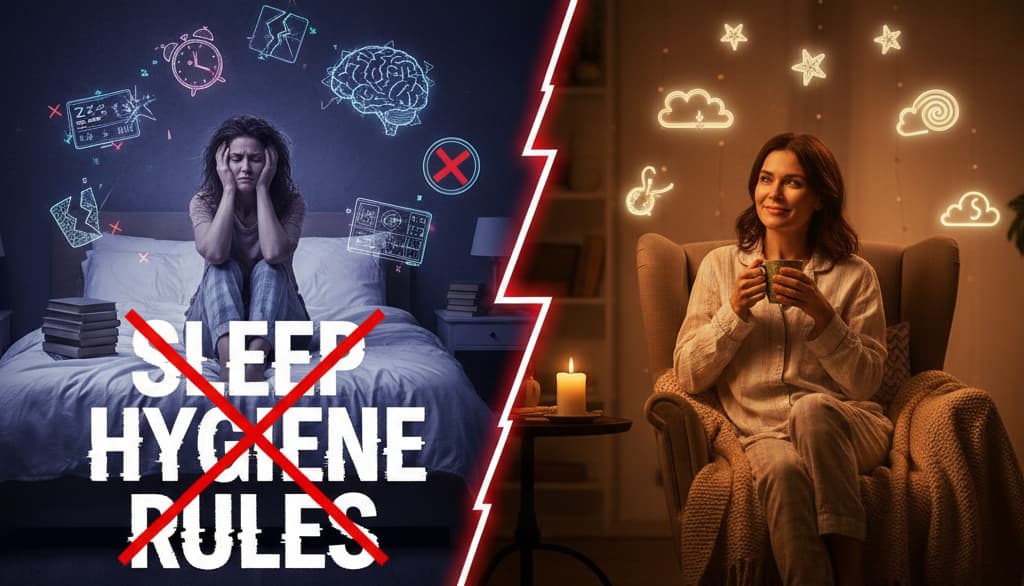
If you have ever Googled “how to sleep better,” you already know the list by heart. No caffeine after 2 PM. Keep the room at exactly 65 degrees. No screens an hour before bed. Diffuse lavender oil. Take a warm bath. This is the gospel of Sleep Hygiene. And if you are suffering from chronic insomnia, I am willing to bet you follow these rules with religious obsession—and you still spend hours staring at the ceiling. Meanwhile, your partner drinks an espresso at dinner, falls asleep with the TV blaring, and snores happily for eight hours. Why? Because the internet lied to you. Sleep hygiene is for prevention, not for the cure.
- The Dental Metaphor: Sleep hygiene is like brushing your teeth to prevent cavities. If you already have a painful cavity (insomnia), brushing harder won’t fix it.
- The Performance Trap: Obsessing over perfect sleep rules creates “Sleep Effort,” which spikes adrenaline and actively blocks your brain from relaxing.
- Stimulus Control: For chronic insomnia, breaking the psychological association between the bed and frustration is vastly more effective than lavender spray.
1) The Broken Promise of Sleep Hygiene
The concept of “sleep hygiene” was originally designed for people with mild, occasional sleep disruptions caused by bad habits—the “dirty” sleepers who drink a Red Bull at 10 PM and wonder why they feel wired. For them, cleaning up their habits works wonders.
But for someone with conditioned, chronic insomnia, the problem isn’t caffeine or a warm room. The problem is a hyperactive nervous system that perceives the bed itself as a threat. Telling an insomniac to “drink chamomile tea” to cure their insomnia is like telling someone with a broken leg to put a band-aid on it. It is biologically insufficient.
“You cannot perform a ritual to force sleep. The more you ‘try’ to sleep, the further away it gets.”
2) The “Perfect Sleep” Trap
Here is what happens when you weaponize sleep hygiene against yourself. You start performing a rigid nightly ritual.
You dim the lights at exactly 8:00 PM. You drink the magnesium tea. You put on the blue-light-blocking glasses. You adjust the thermostat to the perfect micro-climate. You are no longer just going to bed; you are performing a highly choreographed routine.
When you finally get into bed, the psychological pressure is immense. Your brain thinks: “I did everything perfectly. I followed all the rules. I MUST sleep now.”
This performance anxiety is a direct trigger for your sympathetic nervous system. It spikes your adrenaline and cortisol. The harder you try to craft the perfect sleep environment, the more fragile your sleep becomes. You turn into the Princess and the Pea—if one single thing is off (a dog barks outside, the room is one degree too warm), your entire night crumbles.

3) Moving Beyond Hygiene (The Real Fix)
If the basic rules haven’t worked for you, it is time to stop obsessing over them and pivot to the tools used in Cognitive Behavioral Therapy for Insomnia (CBT-I).
The Advanced Insomnia Protocol:
- Stop “Trying”: Sleep is a passive biological process. You cannot “do” sleep. You can only “allow” it. Drop the rigid routines and go to bed only when you feel physically heavy and sleepy, regardless of what the clock says.
- Anchor Your Wake Time: Focus on consistency at the end of the night, not the beginning. Waking up at the exact same time every single day (even weekends) is 10x more powerful for your circadian rhythm than avoiding blue light.
- Practice Stimulus Control: This is your ultimate weapon. If you are in bed and haven’t fallen asleep in about 20 minutes (or if you feel frustrated), get out. Go to another room. Do something boring. Do not return to bed until your eyelids are heavy. Your bed must be a trigger for unconsciousness, not a torture chamber.
Clean up your worst habits, yes. But do not worship them. You do not need a flawless, perfectly optimized sanctuary to sleep. You just need to teach your brain that the bed is a safe place to let go.
4) Common Misconceptions (FAQ)
Q1: Are you saying I should drink coffee before bed?
Not at all. Basic sleep hygiene is still good common sense. Caffeine has a half-life of 5-7 hours and will absolutely fragment your sleep architecture. The point is that eliminating caffeine won’t magically cure chronic insomnia on its own. You need behavioral changes, not just habit tweaks.
Q2: Why do screens actually keep me awake?
It is a two-part problem. First, the blue light from screens suppresses the natural release of melatonin, delaying your biological sleep signal. Second, and often more impactful, the content on the screen (news, emails, doomscrolling) causes psychological arousal, keeping your brain’s “threat detector” turned on.
Q3: What if I don’t want to get out of bed because it’s cold?
This is a common hurdle with Stimulus Control. If you absolutely cannot leave the bed, you must at least change your physical orientation. Sit up, turn on a dim bedside lamp, and read a physical book. The goal is to stop the act of “tossing and turning in the dark,” which trains your brain to associate the bed with frustration.
Stop performing sleep rituals that don’t work. Discover the biological protocols that actually cure insomnia.
Take the Free Sleep Assessment Join the Recovery NewsletterThe Slumbelry Commitment
Sleep is the most vulnerable state of human existence. It is where we heal, reset, and grow.
At Slumbelry, we don’t just sell sleep products; we advocate for your physiological right to rest. From ergonomic support to light management, every solution we offer is designed with one obsession: Respecting your Biology.
Science is our language, but your recovery is our purpose. You take care of everything else in your life—let us take care of your nights.
Rest Deeply,
The Slumbelry Team