
Tired But Can’t Sleep? The Mistake You Make Every Night
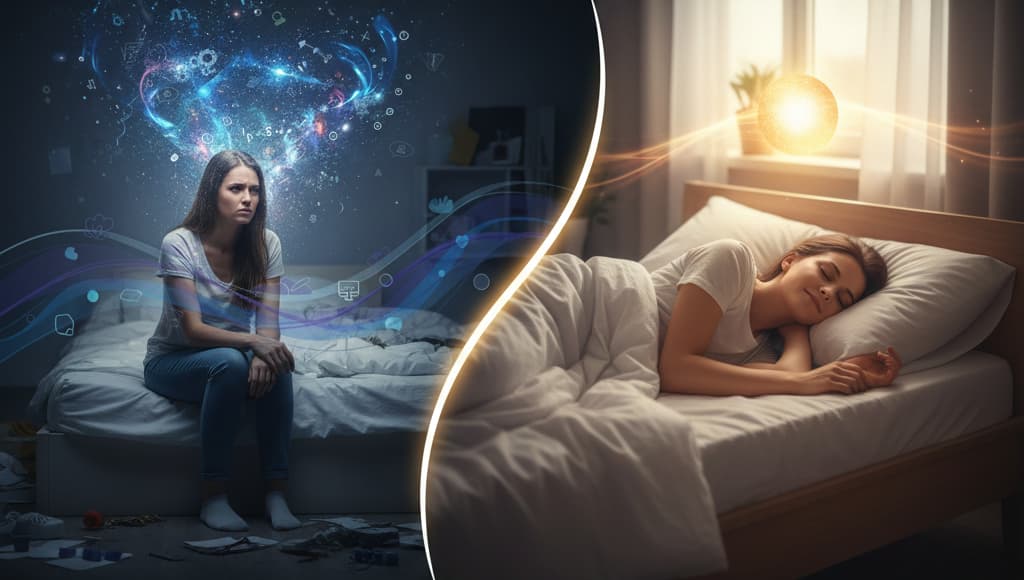
You drag yourself through the front door. Your back aches, your brain is fried from back-to-back meetings, and you feel completely shattered. You think, “I’m so exhausted, I’m going to bed at 9 PM to catch up on sleep.” So you wash your face, climb under the covers, and… nothing. You lie there for two hours, staring at the ceiling, feeling totally wired and incredibly frustrated. How can you be so tired but unable to sleep? The answer lies in a fundamental misunderstanding of your biology. You are confusing two completely different states: Fatigue and Sleepiness.
- The Biological Difference: Fatigue is a lack of physical or mental energy. Sleepiness is the biological inability to stay awake (driven by adenosine buildup).
- The Early Bedtime Trap: Going to bed when you are fatigued but not sleepy is the leading cause of conditioned insomnia.
- The Fix: Treat fatigue with passive rest (reading, meditating) on the couch. Only get into bed when you experience the physical signs of sleepiness (heavy eyelids).
1) The Crucial Distinction
We use the words interchangeably in daily life. We say, “I’m so tired,” or “I’m exhausted,” or “I’m sleepy.” But to a sleep specialist, these are entirely different physiological states. Mixing them up is the number one reason people struggle with sleep onset insomnia.
Fatigue is a state of energy depletion. It happens after you run a marathon (physical fatigue), after you study for an exam for six hours (mental fatigue), or after a massive argument with your spouse (emotional fatigue). Your body feels heavy. Your bones ache. You desperately want to lie down and stop moving.
Sleepiness, on the other hand, is a biological drive, exactly like hunger or thirst. It is driven by a chemical in your brain called Adenosine, which builds up the longer you are awake. Sleepiness is the inability to stay awake. It is the heavy eyelids. It is the “head bob” during a boring movie. It is the physical sensation of your brain forcing you into unconsciousness.
“You can be profoundly fatigued without having a single drop of sleepiness in your system. And you cannot sleep until the sleepiness arrives.”
2) The Mistake: Going to Bed When “Fatigued”
Here is the classic trap that ruins your night:
You come home from a brutal day at work. You are shattered (Fatigued). You decide to be “good” and go to bed at 9:30 PM to recover. But because you haven’t been awake long enough to build up sufficient Adenosine, you aren’t actually Sleepy.
So you lie there. Your body is resting (which addresses the fatigue), but your brain is wide awake. Because you are awake in a dark room with nothing to do, your mind starts to race. “Why can’t I sleep? I was so tired five minutes ago! If I don’t fall asleep soon, tomorrow is going to be a disaster.”
Suddenly, you are anxious. Your brain releases adrenaline. Now, you have accidentally trained your nervous system to associate your bed with frustration and wakefulness, rather than peace and sleep.

3) The Solution: Wait for the “Sleep Wave”
You generally cannot force yourself to sleep if you are only fatigued. You must wait for sleepiness to wash over you. Here is how to break the cycle.
The Fatigue Management Protocol:
- The “Heavy Eyelid” Test: Do not go to bed because the clock says 10:00 PM. Do not go to bed because your legs hurt. Go to bed only when your eyelids feel physically heavy and you are struggling to keep them open.
- Treat Fatigue with Rest, Not Sleep: If you are exhausted at 8 PM but not sleepy, do “active rest.” Sit in a comfortable chair in the living room. Listen to a podcast, knit, or do light stretching. Allow your physical energy to recharge without demanding unconsciousness from your brain.
- The “Sleep Restriction” Concept: It sounds counterintuitive, but sometimes the cure for insomnia is staying up later. By delaying your bedtime until you are truly, undeniably sleepy, you build up massive “Sleep Drive.” When you finally hit the pillow, you pass out instantly.
Stop chasing sleep. Stop trying to cure a tired body with an awake brain. Let the sleepiness come and find you.
4) Common Misconceptions (FAQ)
Q1: Why do I feel so sleepy on the couch, but wide awake as soon as I get into bed?
This is called Conditioned Arousal. Because you have spent so many nights lying in bed feeling frustrated and fatigued, your brain now associates the physical bed with stress. The couch feels safe because there is no pressure to “perform” sleep there. You need to rebuild the bed-sleep connection by only getting into bed when your eyes are literally closing.
Q2: Does exercising right before bed make me too fatigued to sleep?
Heavy exercise right before bed doesn’t just cause physical fatigue; it raises your core body temperature and spikes your cortisol and adrenaline. Your body needs to cool down by 2-3 degrees to initiate sleep. Exercise is great for building sleep drive, but try to finish intense workouts at least 3 hours before your target bedtime.
Q3: If I’m fatigued all day, shouldn’t I take a nap?
If you struggle with falling asleep at night, avoid naps. Napping acts like a “release valve” for the Adenosine (sleep pressure) you have built up during the day. If you take a 2-hour nap at 3 PM, you will not have enough sleepiness left in your system to fall asleep at 11 PM. Push through the fatigue with light activity so you can sleep deeply at night.
Stop lying awake in frustration. Discover your true sleep drive and rebuild your rest.
Take the Free Sleep Assessment Join the Recovery NewsletterThe Slumbelry Commitment
Sleep is the most vulnerable state of human existence. It is where we heal, reset, and grow.
At Slumbelry, we don’t just sell sleep products; we advocate for your physiological right to rest. From ergonomic support to light management, every solution we offer is designed with one obsession: Respecting your Biology.
Science is our language, but your recovery is our purpose. You take care of everything else in your life—let us take care of your nights.
Rest Deeply,
The Slumbelry Team