
×
Slumbelry
HOME SHOP WELLBEING BLOG LOGIN / REGISTER SEARCH CONTACT

Shift Work Survival: Anchoring Your Sleep in a 24/7 World
Article Image

Written by Dr. Lycan Dizon, Slumbelry Chief Sleep Consultant

title: “Shift Work Survival: Anchoring Your Sleep in a 24/7 World” description: “Shift work is classified as a carcinogen. If you work nights, you need a strategy. Learn the ‘Anchor Sleep’ method to protect your health.” keywords: “shift work sleep disorder, anchor sleep technique, night shift sleep tips, circadian disruption, survive shift work” author: “Dr. Lycan Dizon” date: “2026-01-01” —

![Shift Work Survival: Anchoring Your Sleep in a 24/7 World](https://slumbelry.com/wp-content/uploads/placeholder.jpg)

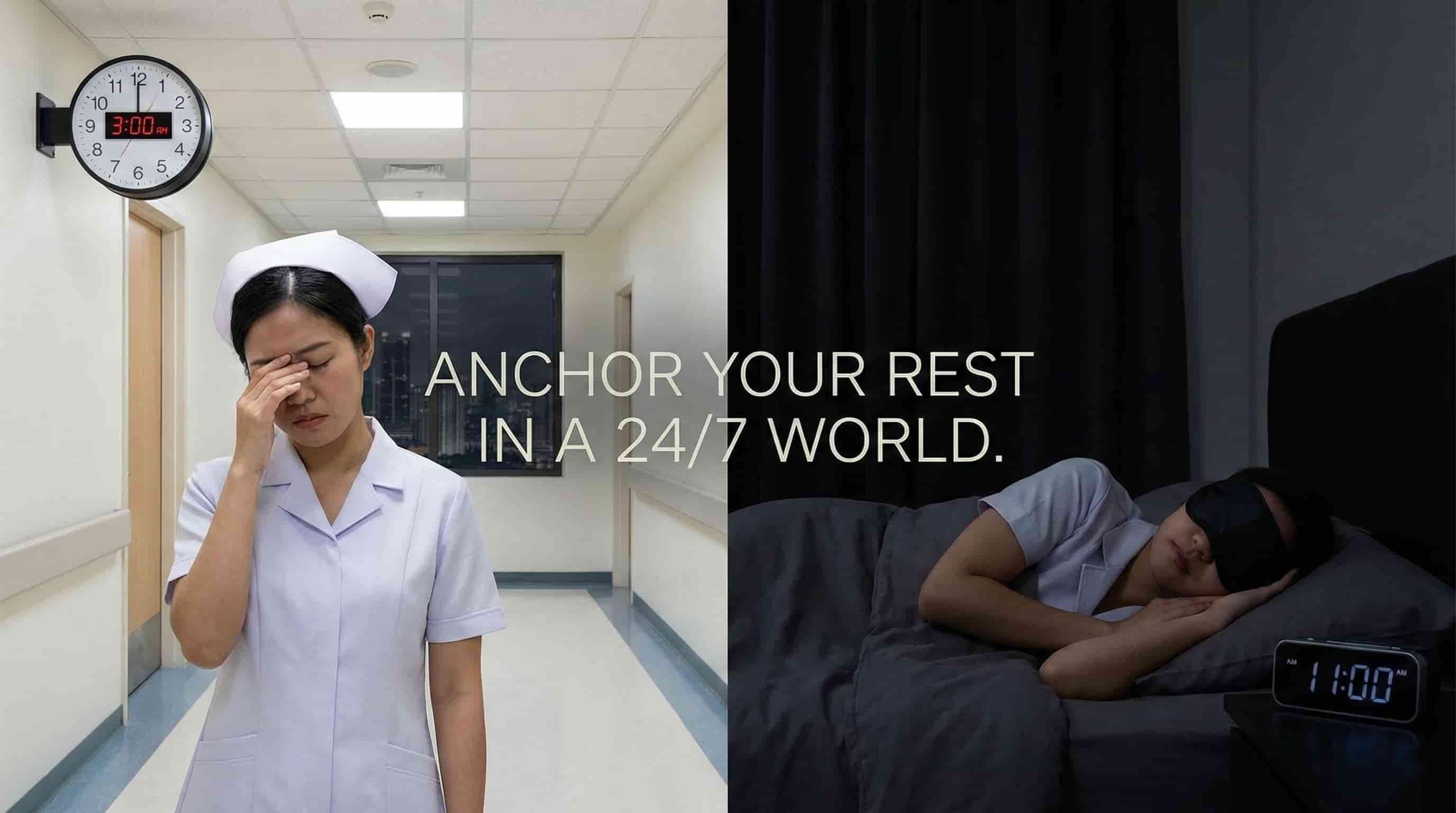
Society runs 24/7, but your body does not. Nurses, police officers, factory workers—shift workers are the heroes of the economy, but they pay a heavy price. Shift work is linked to heart disease, obesity, and depression.

It’s a battle against biology. But if you can’t change your schedule, you must change your strategy. You need ‘Anchor Sleep’.

The Science: Circadian Desynchrony

Your body wants to sleep at night. When you force it to be awake, you are fighting millions of years of evolution. The hormones (cortisol, melatonin, insulin) get out of sync. ‘Anchor Sleep’ is a technique to keep the biological clock somewhat tethered to reality.

The Strategy: The Anchor Sleep Method

1. The Anchor. Identify a 4-hour block of time that you can sleep every single day, regardless of whether you are on a shift or off. 2. Overlap. Usually, this is 8 AM – 12 PM (after a night shift) or consistent morning hours. 3. Split Sleep. On work days, sleep your anchor + a nap before work. On off days, sleep your anchor + extra sleep at night. 4. Darkness. Wear sunglasses on the drive home. Light is the enemy.

Why It Works (The Maas Method)

By keeping one part of your sleep schedule constant, you prevent your circadian rhythm from ‘free-running’ (drifting chaotically). It gives your body a predictable window for repair.

Common Mistakes to Avoid

Don’t flip-flop completely on weekends. Trying to be a ‘day person’ for two days and a ‘night person’ for five is like flying from New York to Tokyo every week. Keep the anchor.

The Slumbelry Connection: Daytime Darkness

Sleeping during the day requires military-grade darkness. Slumbelry Blackout Curtains are essential. Combine with a Slumbelry Eye Mask and earplugs to convince your brain it is midnight at noon.

Final Thoughts

Shift work is tough. Be gentle with yourself. Anchor your sleep, protect your rest, and treat sleep like the medicine it is.

The Slumbelry Commitment

Sleep is the most vulnerable state of human existence. It is where we heal, reset, and grow.

At Slumbelry, we don’t just sell sleep products; we advocate for your physiological right to rest. From ergonomic support to light management, every solution we offer is designed with one obsession: Respecting your Biology.

Science is our language, but your recovery is our purpose. You take care of everything else in your life—let us take care of your nights.

Rest Deeply,
The Slumbelry Team
Driving Drowsy: The Hidden Killer (Worse Than Drunk Driving?)

Article Image

Written by Dr. Lycan Dizon, Slumbelry Chief Sleep Consultant

title: “Driving Drowsy: The Hidden Killer (Worse Than Drunk Driving?)” description: “Drowsy driving kills. Learn the subtle signs of microsleeps and why ‘rolling down the window’ doesn’t work.” keywords: “drowsy driving dangers, microsleeps driving, driving tired vs drunk, stay awake driving, sleep safety” author: “Dr. Lycan Dizon” date: “2026-01-01” —

![Driving Drowsy: The Hidden Killer (Worse Than Drunk Driving?)](https://slumbelry.com/wp-content/uploads/placeholder.jpg)

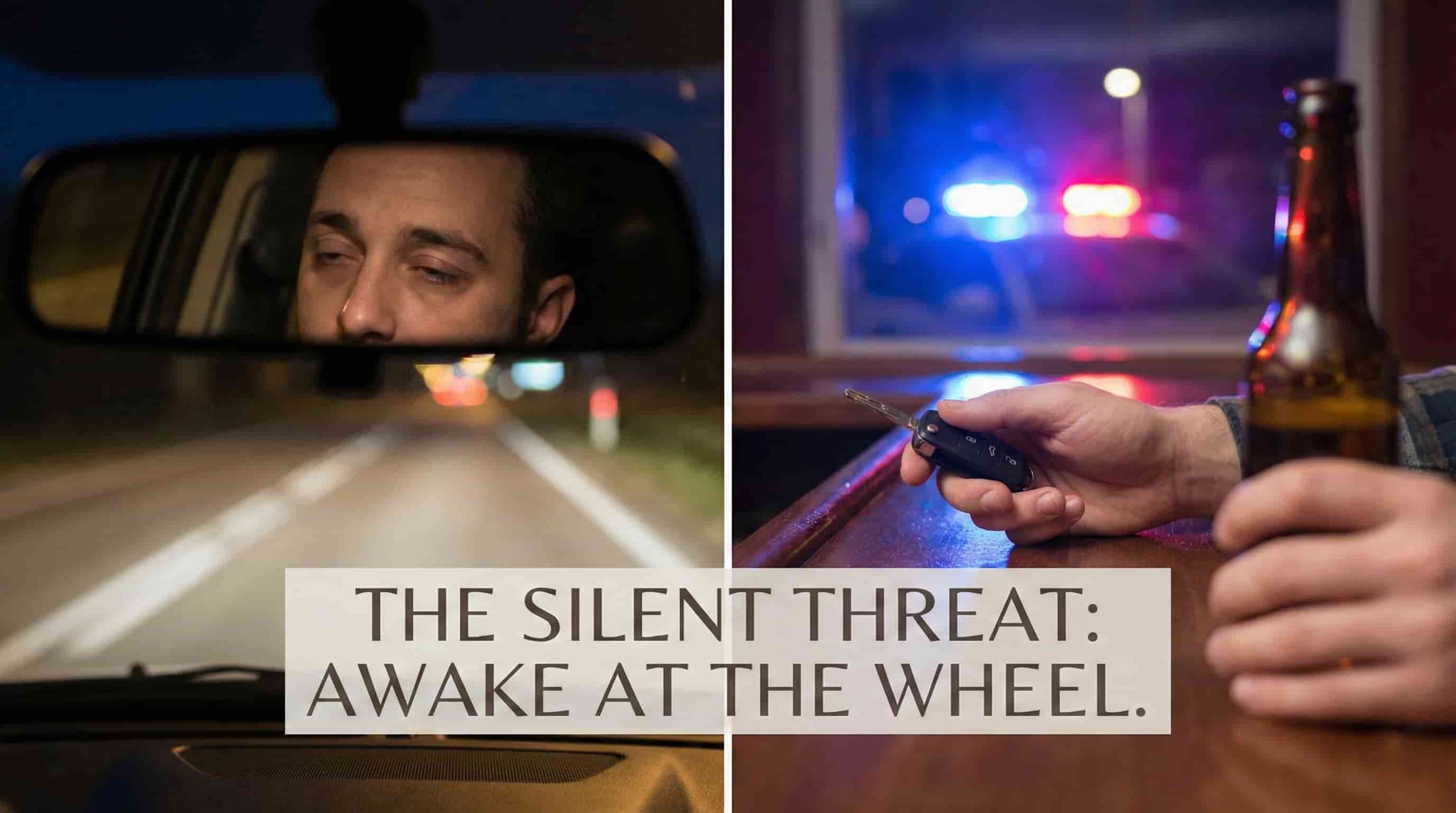
We wouldn’t dream of drinking three beers and getting behind the wheel. Yet, we routinely drive after 18 hours of being awake.

Studies show that 18 hours awake equals a blood alcohol concentration of 0.05%. 24 hours equals 0.10% (legally drunk). Drowsy driving is a silent epidemic, causing thousands of accidents every year. The scary part? You don’t know when you fall asleep.

The Science: Microsleeps

A microsleep is a brief, uncontrollable moment of unconsciousness. It can last 2-30 seconds. Your eyes might remain open. The brain goes ‘offline.’ At 60 mph, a 3-second microsleep means you travel the length of a football field blind.

The Strategy: The Safety Check

1. The Signs. Yawning, missing an exit, drifting in the lane, not remembering the last few miles. These are not warnings; they are failures. 2. The Only Cure. Stop. Pull over. 3. Nappuccino. Drink a coffee, then take a 20-minute nap. The caffeine wakes you up as the nap ends. 4. Myths. Opening the window, blasting music, or chewing gum DOES NOT WORK.

Why It Works (The Maas Method)

Sleepiness is a biological drive. You cannot fight it with willpower any more than you can fight the need to breathe. Only sleep cures sleepiness.

Common Mistakes to Avoid

Thinking ‘I’m almost there.’ Most accidents happen within 5 miles of home. That comfort creates complacency.

The Slumbelry Connection: Prevention

The best prevention is a well-rested driver. Prioritize your sleep hygiene on a Slumbelry Mattress before a long road trip. Don’t start a journey in debt.

Final Thoughts

Arrive alive. If you nod, pull over. It’s better to be late than to never arrive at all.

The Slumbelry Commitment

Sleep is the most vulnerable state of human existence. It is where we heal, reset, and grow.

At Slumbelry, we don’t just sell sleep products; we advocate for your physiological right to rest. From ergonomic support to light management, every solution we offer is designed with one obsession: Respecting your Biology.

Science is our language, but your recovery is our purpose. You take care of everything else in your life—let us take care of your nights.

Rest Deeply,
The Slumbelry Team
Sleep for Students: The Ultimate Study Hack

Article Image

Written by Dr. Lycan Dizon, Slumbelry Chief Sleep Consultant

title: “Sleep for Students: The Ultimate Study Hack” description: “Pulling an all-nighter? You just deleted your memory. How sleep consolidates learning and why ‘sleeping on it’ gets you the A.” keywords: “sleep and learning, all-nighter effects, memory consolidation sleep, study hacks, sleep for students” author: “Dr. Lycan Dizon” date: “2026-01-01” —

![Sleep for Students: The Ultimate Study Hack](https://slumbelry.com/wp-content/uploads/placeholder.jpg)

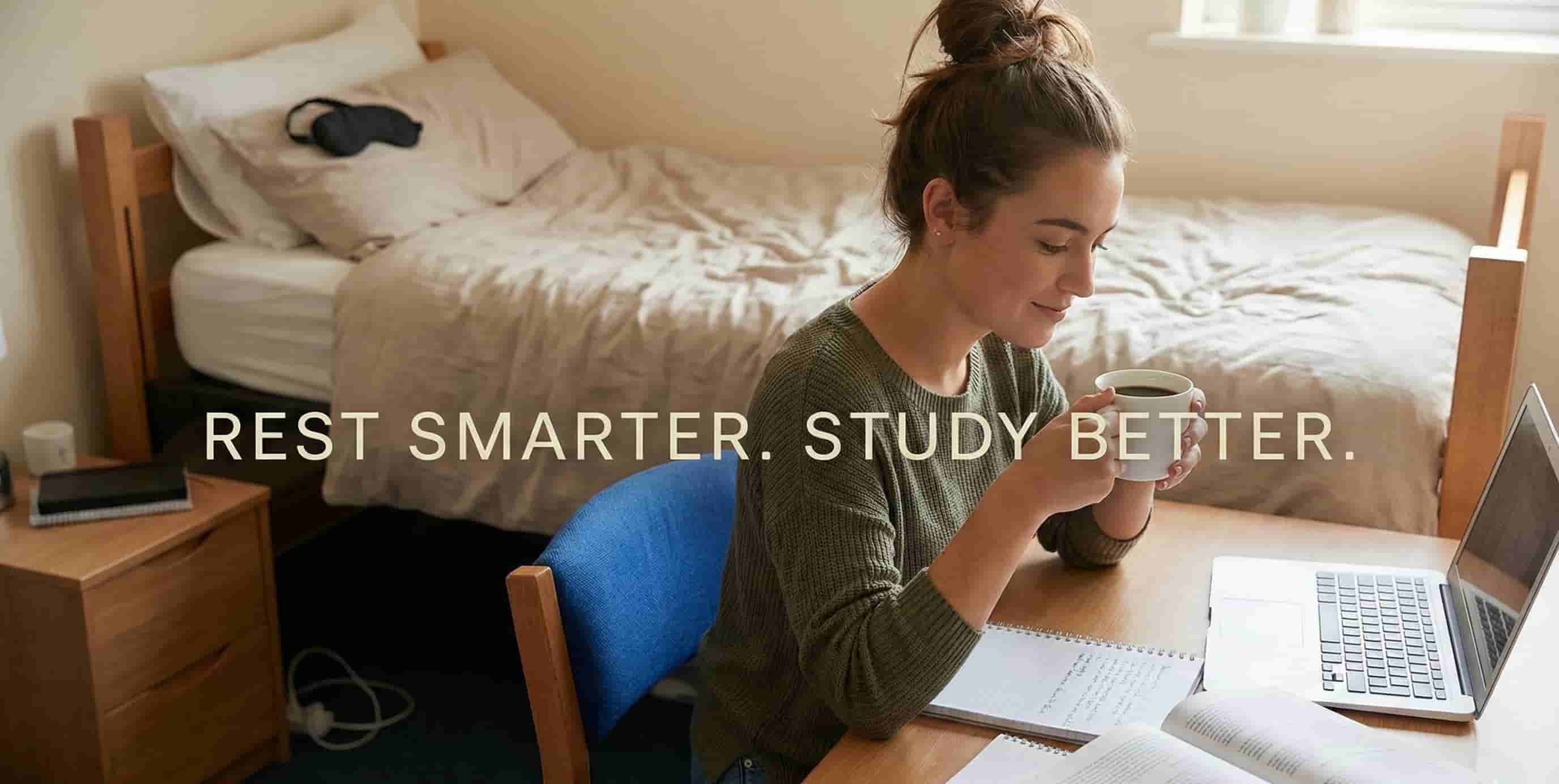
The library is full of students at 2 AM, chugging energy drinks, highlighting textbooks. They wear their sleep deprivation like a badge of honor.

But neuroscience has news for them: The all-nighter is academic suicide. You might read the information, but without sleep, you cannot save it. Sleep is the Save button.

The Science: Memory Consolidation

Learning happens in three stages: Acquisition (studying), Consolidation (stabilizing), and Recall.

Consolidation happens exclusively during sleep. During REM and Deep Sleep, the hippocampus (short-term storage) transfers data to the cortex (long-term hard drive). If you don’t sleep, the data in the hippocampus is overwritten and lost.

The Strategy: The Study-Sleep Sandwich

1. Study. Focus for 45-90 minutes. 2. Sleep. Get a full night’s rest (no cutting REM). 3. Review. Review the material in the morning. 4. Nap. A 20-minute nap after learning can improve retention by 20%.

Why It Works (The Maas Method)

The brain strengthens neural connections during sleep. It cleans up the noise and strengthens the signal. ‘Sleeping on it’ literally rewires your brain to understand the problem.

Common Mistakes to Avoid

Cramming. Spaced repetition combined with sleep is 300% more effective than massed practice (cramming).

The Slumbelry Connection: Dorm Room Comfort

Dorm mattresses are notoriously terrible. A Slumbelry Mattress Topper is a student’s best investment. It turns a plastic slab into a sleep surface, allowing for the deep sleep needed to ace the exam.

Final Thoughts

Don’t trade sleep for study time. Sleep is study time. Put the book down and go to bed.

The Slumbelry Commitment

Sleep is the most vulnerable state of human existence. It is where we heal, reset, and grow.

At Slumbelry, we don’t just sell sleep products; we advocate for your physiological right to rest. From ergonomic support to light management, every solution we offer is designed with one obsession: Respecting your Biology.

Science is our language, but your recovery is our purpose. You take care of everything else in your life—let us take care of your nights.

Rest Deeply,
The Slumbelry Team
Sleep for Seniors: Aging Doesn’t Mean Less Sleep

Article Image

Written by Dr. Lycan Dizon, Slumbelry Chief Sleep Consultant

title: “Sleep for Seniors: Aging Doesn’t Mean Less Sleep” description: “It’s a myth that we need less sleep as we age. We just lose the ability to generate it. How to combat fragmented sleep in later years.” keywords: “sleep and aging, elderly sleep problems, need less sleep myth, sleep fragmentation aging, melatonin production age” author: “Dr. Lycan Dizon” date: “2026-01-01” —

![Sleep for Seniors: Aging Doesn’t Mean Less Sleep](https://slumbelry.com/wp-content/uploads/placeholder.jpg)

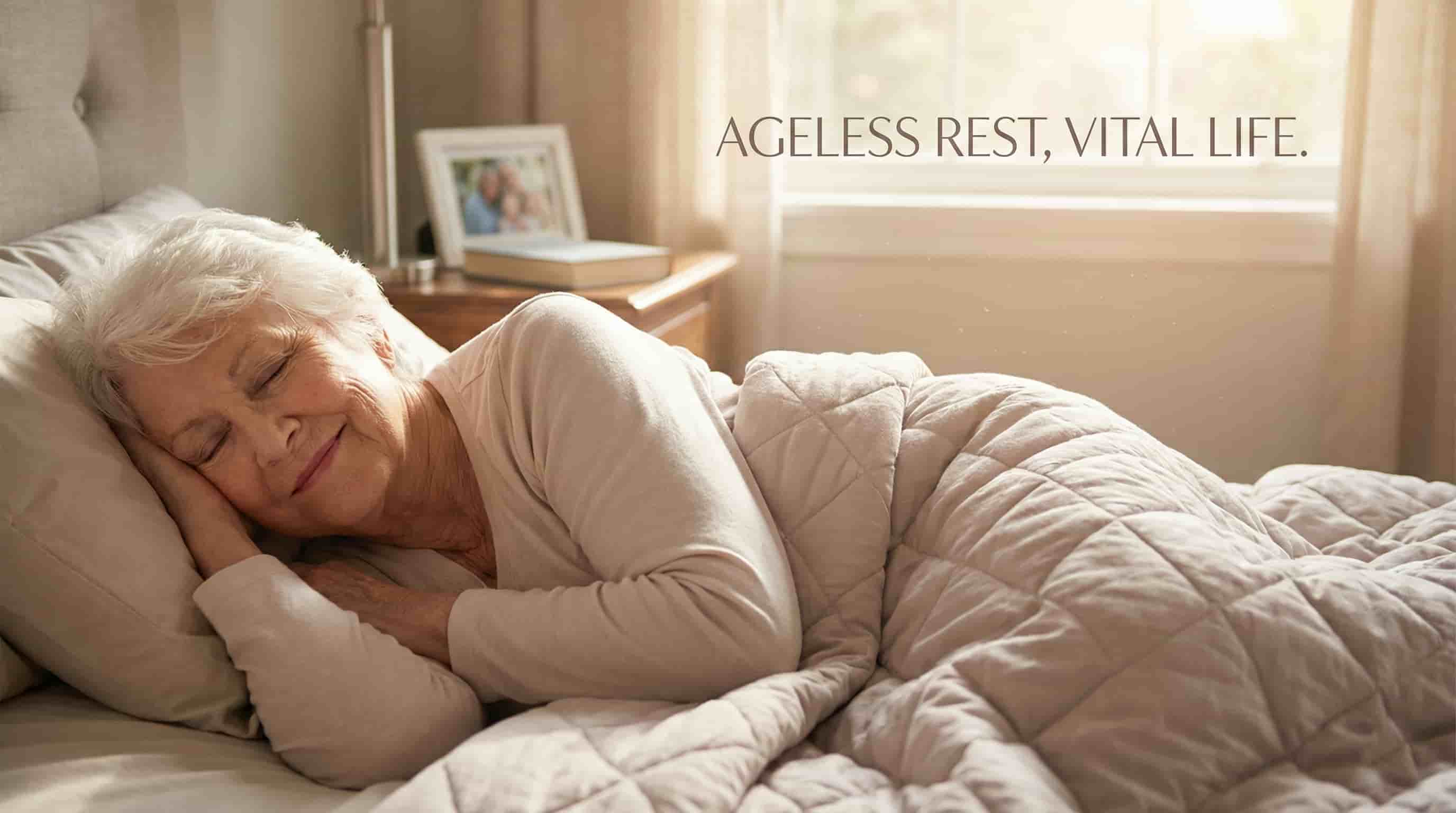
Ask anyone over 65, and they’ll tell you: sleep gets harder. We wake up earlier. We wake up more often.

There is a pervasive myth that we ‘need’ less sleep as we get older. This is false. Our need remains constant (7-8 hours), but our ability to generate that sleep deteriorates. It’s not a preference; it’s a physiological challenge.

The Science: The Degradation of the Clock

As we age: 1. Melatonin: Production decreases and the timing shifts earlier (advanced sleep phase). 2. Deep Sleep: We lose up to 70% of our deep sleep compared to teenagers. 3. Bladder: Nocturia (nighttime urination) fragments sleep.

The Strategy: The Senior Sleep Strategy

1. Light. Get massive amounts of morning light to anchor the circadian rhythm and prevent it from drifting too early. 2. Melatonin. Low-dose supplementation can help mimic the youthful signal. 3. Warmth. Peripheral circulation decreases. Wear socks to bed to help thermoregulation. 4. Exercise. Gentle walking helps build sleep pressure.

Why It Works (The Maas Method)

We can’t stop aging, but we can strengthen the ‘zeitgebers’ (time cues). Stronger light and stronger routine help compensate for the weaker internal signal.

Common Mistakes to Avoid

Napping too much. Boredom often leads to daytime dozing, which destroys nighttime sleep pressure. Stay active.

The Slumbelry Connection: Joint Support

Aging bodies are more sensitive to pressure. A firm mattress might cause hip or shoulder pain that wakes you up. The Slumbelry Orthopedic Series offers pressure relief for sensitive joints, reducing pain-induced awakenings.

Final Thoughts

You don’t have to accept poor sleep as a tax for aging. With the right support and routine, you can rest easy at any age.

The Slumbelry Commitment

Sleep is the most vulnerable state of human existence. It is where we heal, reset, and grow.

At Slumbelry, we don’t just sell sleep products; we advocate for your physiological right to rest. From ergonomic support to light management, every solution we offer is designed with one obsession: Respecting your Biology.

Science is our language, but your recovery is our purpose. You take care of everything else in your life—let us take care of your nights.

Rest Deeply,
The Slumbelry Team

Better sleep tips & exclusive offers, straight to your inbox.

Curated sleep insights, early access to new products, and members-only deals.
No spam. You can unsubscribe anytime.