
×
Slumbelry
HOME SHOP WELLBEING BLOG LOGIN / REGISTER SEARCH CONTACT

The ‘Nightcap’ Trap: Why That Glass of Wine is Ruining Your Recovery

Article Image

Written by Dr. Lycan Dizon, Slumbelry Chief Sleep Consultant

It’s been a long, stressful week. You get home, kick off your shoes, and pour yourself a glass of wine (or whiskey). You take that first sip, and you feel the tension melt from your shoulders. “I just need this to unwind,” you tell yourself. “It helps me sleep.”

It’s one of the most pervasive myths in our culture: the “Nightcap.” We view alcohol as a sleep aid because, well, it makes us sleepy. It knocks us out. But there is a massive difference between sedation and sleep.

Shawn Stevenson puts it bluntly in Sleep Smarter: “Alcohol is not a sleep aid; it is a metabolic disruptor.” When you drink before bed, you aren’t sleeping deeply—you are essentially under mild anesthesia.

The Science: The Rebound Effect

Alcohol is a central nervous system depressant. It slows down brain activity, which is why you fall asleep faster (reduced sleep latency). But once you are asleep, chaos ensues.

1. The REM Robber

Sleep consists of cycles, alternating between Deep NREM (physical repair) and REM (mental repair/dreaming). Alcohol severely suppresses REM sleep. This is the stage responsible for memory consolidation and emotional regulation. When you skip REM, you wake up feeling groggy, irritable, and unfocused. It’s why you can sleep for 10 hours after a night out and still feel exhausted.

2. The Rebound Effect

As your body metabolizes the alcohol, it experiences a withdrawal symptom known as the “rebound effect.” Your blood sugar crashes, your cortisol spikes, and your sympathetic nervous system (fight-or-flight) wakes up. This usually happens around 3:00 AM. You jolt awake, heart pounding, sweating, mind racing. The sedative has worn off, and now your body is in panic mode.

3. The Bathroom Run

Alcohol is a diuretic. It inhibits vasopressin (the anti-diuretic hormone). This means your kidneys pump out water straight to your bladder. You will wake up dehydrated and needing to use the bathroom multiple times, fragmenting your sleep even further.

The Strategy: The 3-Hour Rule

You don’t have to become a monk. You can still enjoy a drink. You just need to be smarter about the timing.

1. The 3-Hour Buffer

Stop drinking alcohol at least 3 hours before bed. This gives your liver time to metabolize the bulk of the toxin before you sleep. If you go to bed at 11:00 PM, your last drink should be finished by 8:00 PM. Happy hour is better for your sleep than a nightcap.

2. The Hydration Sandwich

For every alcoholic drink you consume, drink one large glass of water. This combats the diuretic effect and helps your kidneys flush out the metabolites faster.

3. Avoid the “Sugar Bomb”

Sugary cocktails (margaritas, mojitos) are a double whammy. You get the alcohol disruption plus a blood sugar crash in the middle of the night. Stick to cleaner drinks like dry wine or clear spirits on the rocks.

Rethink the “Unwind”

We often use alcohol to transition from “work mode” to “home mode.” But there are better ways to downshift. Try a warm bath (thermal regulation!), some light stretching, or just deep breathing. Respect your sleep enough to protect it from the bottle. Real relaxation doesn’t come from a drink; it comes from waking up truly rested.

The Slumbelry Commitment

Sleep is the most vulnerable state of human existence. It is where we heal, reset, and grow.

At Slumbelry, we don’t just sell sleep products; we advocate for your physiological right to rest. From ergonomic support to light management, every solution we offer is designed with one obsession: Respecting your Biology.

Science is our language, but your recovery is our purpose. You take care of everything else in your life—let us take care of your nights.

Rest Deeply,
The Slumbelry Team
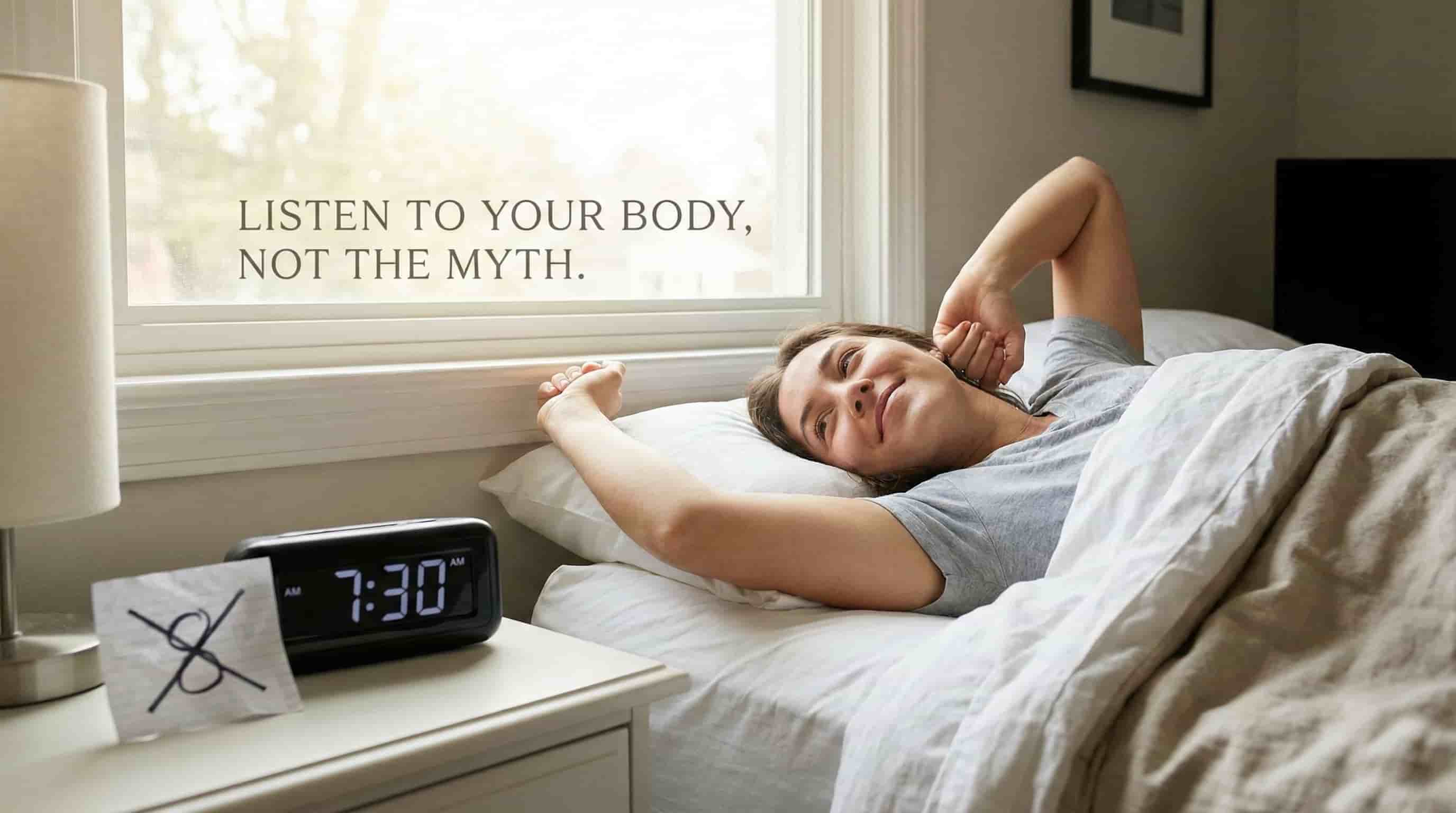
The Golden Rule of Sleep: Why ‘8 Hours’ is a Myth (And What You Actually Need)

Article Image

Written by Dr. Lycan Dizon, Slumbelry Chief Sleep Consultant

title: “The Golden Rule of Sleep: Why ‘8 Hours’ is a Myth (And What You Actually Need)” description: “Stop aiming for 8 hours. Dr. James Maas’s ‘Golden Rule’ reveals how to find your personal sleep requirement for peak performance.” keywords: “sleep duration myth, 8 hours sleep rule, personal sleep requirement, sleep needs by age, peak performance sleep” author: “Dr. Lycan Dizon” date: “2026-01-01” —

![The Golden Rule of Sleep: Why ‘8 Hours’ is a Myth (And What You Actually Need)](https://slumbelry.com/wp-content/uploads/placeholder.jpg)

For decades, we’ve been told that ‘8 hours’ is the magic number. If you get 8 hours, you’re healthy. If you get 6, you’re doomed. But Dr. James Maas, author of Power Sleep, argues that this one-size-fits-all approach is not only inaccurate but dangerous.

Some people are genetically wired for 6.5 hours; others need 9.5 to function. Forcing yourself into an 8-hour box can lead to sleep anxiety or chronic deprivation. The goal isn’t a number; it’s alertness.

The Science: Individual Biological Variability

Sleep need is a biological trait, much like height or shoe size. It follows a bell curve distribution. While the average is indeed around 7.5 to 8 hours, the standard deviation means a significant portion of the population falls outside this range. Your ‘sleep need’ is defined as the amount of sleep required to remain fully alert throughout the day without caffeine or stimulation.

The Strategy: Finding Your Number

1. The Vacation Test. During a week off, go to bed at the same time every night. 2. No Alarm. Allow yourself to wake up naturally. 3. Track It. After the first few days (which pay off sleep debt), record how many hours you sleep naturally. 4. The Feeling. Do you wake up refreshed? That number is your biological requirement.

Why It Works (The Maas Method)

By honoring your biology rather than a statistic, you remove the pressure to perform. If you are a 9-hour sleeper, you stop feeling guilty for ‘oversleeping.’ If you are a 7-hour sleeper, you stop lying in bed awake for that extra hour, which only breeds insomnia.

Common Mistakes to Avoid

Don’t confuse ‘ability to function’ with ‘peak performance.’ You might survive on 6 hours, but are you thriving? If you need an alarm to wake up, you are, by definition, sleep-deprived.

The Slumbelry Connection: Supporting Your Number

Whether you sleep 6 hours or 10, the quality of those hours is non-negotiable. A Slumbelry Memory Foam Mattress ensures that every minute you spend in bed contributes to physical recovery, maximizing the efficiency of your personal sleep window.

Final Thoughts

Stop chasing the average. Find your number, respect it, and protect it. Your personal sleep requirement is the foundation of your energy, your mood, and your life.

The Slumbelry Commitment

Sleep is the most vulnerable state of human existence. It is where we heal, reset, and grow.

At Slumbelry, we don’t just sell sleep products; we advocate for your physiological right to rest. From ergonomic support to light management, every solution we offer is designed with one obsession: Respecting your Biology.

Science is our language, but your recovery is our purpose. You take care of everything else in your life—let us take care of your nights.

Rest Deeply,
The Slumbelry Team
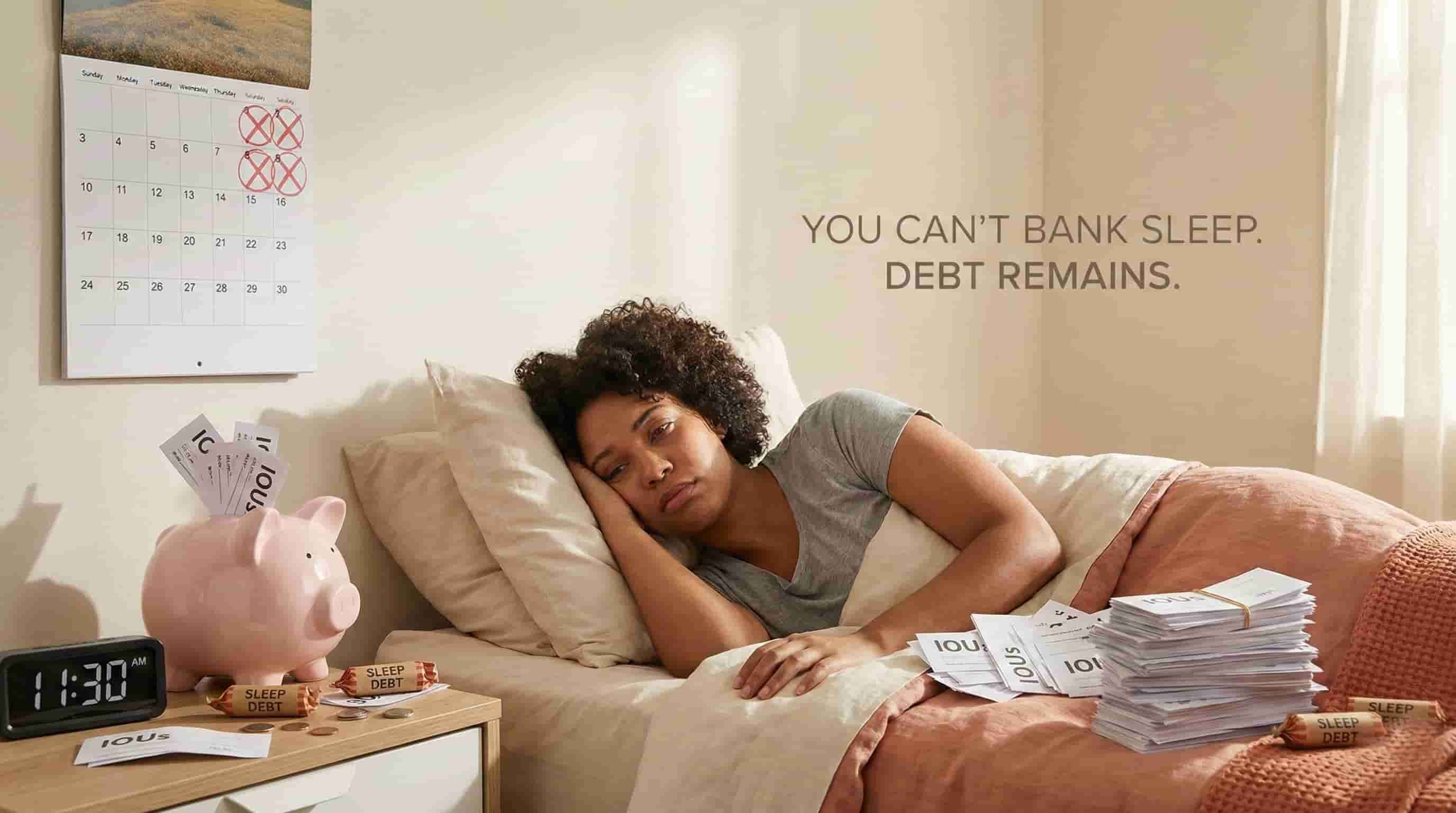
The Sleep Debt Bank: Why You Can’t ‘Catch Up’ on Weekends

Article Image

Written by Dr. Lycan Dizon, Slumbelry Chief Sleep Consultant

title: “The Sleep Debt Bank: Why You Can’t ‘Catch Up’ on Weekends” description: “Think you can sleep 5 hours a night and binge on Sunday? Think again. The concept of ‘Sleep Debt’ explains why your brain keeps a strict ledger.” keywords: “sleep debt, catch up on sleep, weekend sleep binge, chronic sleep deprivation, sleep deficit recovery” author: “Dr. Lycan Dizon” date: “2026-01-01” —

![The Sleep Debt Bank: Why You Can’t ‘Catch Up’ on Weekends](https://slumbelry.com/wp-content/uploads/placeholder.jpg)

Imagine your energy is a bank account. Every hour of sleep you need but don’t get is a withdrawal. Miss one hour on Monday? You’re in the red. Miss another on Tuesday? The debt grows. By Friday, you’re bankrupt.

Many of us believe we can ‘pay back’ this loan on the weekend. We binge-sleep until noon on Saturday. But Dr. Maas warns: the brain charges high interest. You cannot fully erase a week of abuse in two days.

The Science: Cumulative Neurobehavioral Deficit

Research shows that chronic restriction (e.g., 6 hours/night for two weeks) results in cognitive performance deficits equivalent to staying awake for 24-48 hours straight. While weekend recovery sleep can help reduce sleepiness, it does not fully restore attention span, reaction time, or metabolic health. The damage to your cells and neural pathways accumulates.

The Strategy: The Debt Repayment Plan

1. Stop Borrowing. The first step is to stop losing sleep. Go to bed earlier tonight. 2. Add 15 Minutes. Go to bed 15 minutes earlier than usual every night until you wake up naturally. 3. Nap Strategically. Use short power naps (20 mins) to bridge the gap without disrupting your night sleep. 4. Patience. It can take weeks to fully repay a large sleep debt.

Why It Works (The Maas Method)

Consistency is key. The brain thrives on rhythm. Massive swings in sleep duration (sleeping 5 hours then 12 hours) confuse your circadian clock, leading to ‘Social Jet Lag.’ Gradual repayment stabilizes your rhythm while restoring your energy.

Common Mistakes to Avoid

Don’t sleep until 2 PM on Sunday. This pushes your biological clock forward, making it impossible to sleep Sunday night, triggering the ‘Sunday Scaries’ and starting a new cycle of debt on Monday.

The Slumbelry Connection: Comfort for Early Nights

Going to bed earlier is hard if your bed is uncomfortable. Create a Slumbelry Sleep Sanctuary with breathable sheets and a supportive pillow that invites you in. Making your bed the most comfortable place in your house makes the ‘early bedtime’ a reward, not a chore.

Final Thoughts

You can’t cheat biology. The ledger must be balanced. Start paying down your debt tonight, one hour at a time.

The Slumbelry Commitment

Sleep is the most vulnerable state of human existence. It is where we heal, reset, and grow.

At Slumbelry, we don’t just sell sleep products; we advocate for your physiological right to rest. From ergonomic support to light management, every solution we offer is designed with one obsession: Respecting your Biology.

Science is our language, but your recovery is our purpose. You take care of everything else in your life—let us take care of your nights.

Rest Deeply,
The Slumbelry Team
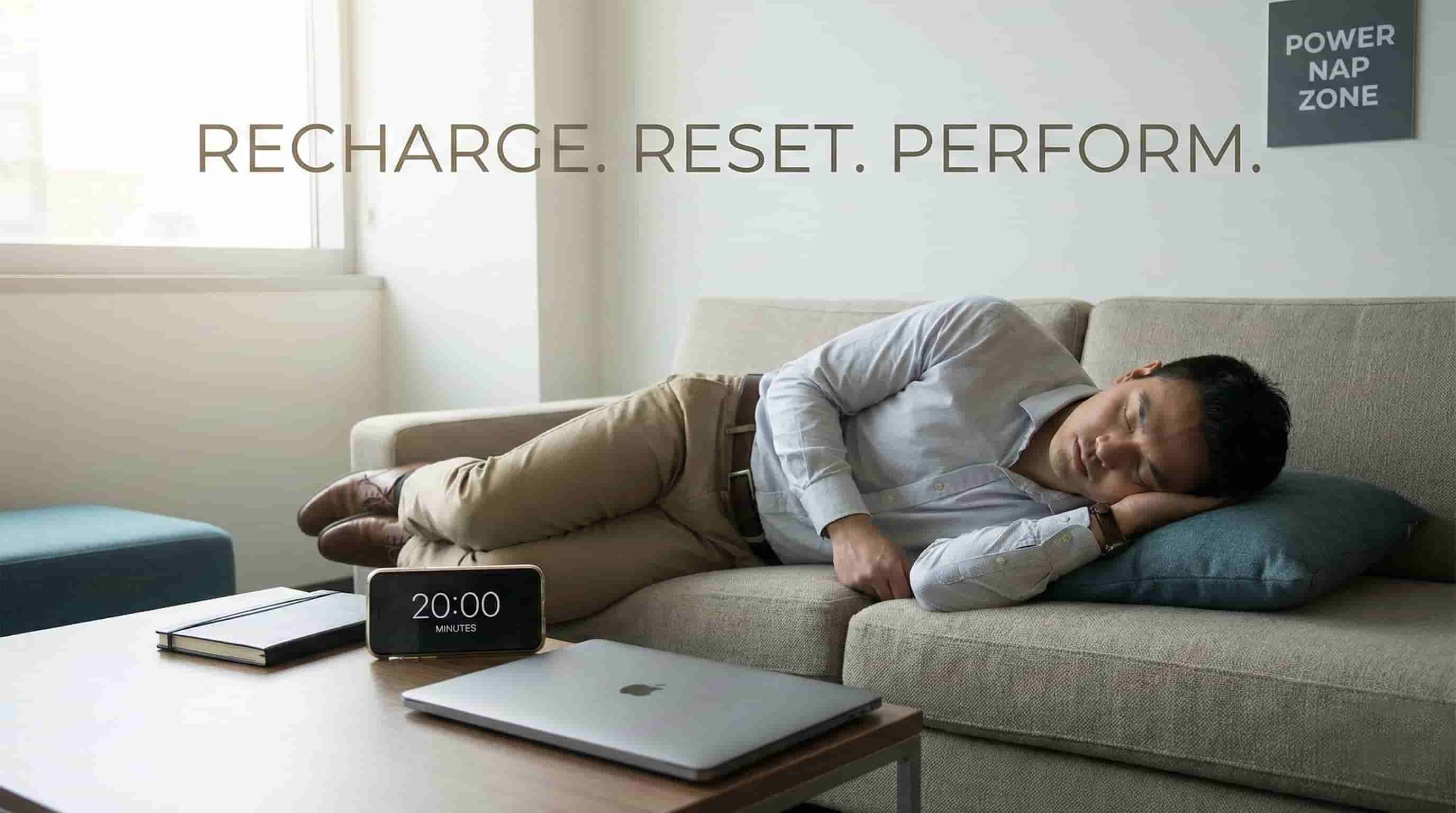
The Power Nap: The 20-Minute Performance Enhancer

Article Image

Written by Dr. Lycan Dizon, Slumbelry Chief Sleep Consultant

title: “The Power Nap: The 20-Minute Performance Enhancer (Coined by Dr. Maas)” description: “Dr. James Maas coined the term ‘Power Nap.’ Learn the strict rules of napping to boost alertness without grogginess.” keywords: “power nap benefits, how to power nap, 20 minute nap, nap duration, boost alertness” author: “Dr. Lycan Dizon” date: “2026-01-01” —

![The Power Nap: The 20-Minute Performance Enhancer (Coined by Dr. Maas)](https://slumbelry.com/wp-content/uploads/placeholder.jpg)

Napping has a branding problem. We associate it with laziness, toddlers, or the elderly. But in the world of high performance—from NASA pilots to Olympic athletes—napping is a strategic tool.

Dr. James Maas coined the term ‘Power Nap’ to redefine it. It’s not about ‘sleeping on the job’; it’s about refueling the brain. But there is a catch: you have to do it right, or you’ll wake up feeling worse.

The Science: Sleep Inertia vs. Stage 2 Sleep

A 20-minute nap keeps you in Stage 1 and Stage 2 sleep (light sleep). This restores alertness and motor skills. If you sleep longer than 30 minutes, you risk entering Slow Wave Sleep (deep sleep). Waking up from deep sleep causes ‘sleep inertia’—that groggy, disoriented feeling that ruins your afternoon.

The Strategy: The Perfect Power Nap

1. Time It. Set an alarm for 20 minutes. No more. 2. The Zone. Find a dark, quiet place. Use an eye mask. 3. The Coffee Nap (Optional). Drink a coffee right before. The caffeine hits in 20 minutes, just as you wake up. 4. Timing. Do it between 1 PM and 3 PM, coinciding with your circadian dip.

Why It Works (The Maas Method)

It respects the sleep cycle. You get the restorative benefits of ‘checking out’ without the heaviness of deep sleep. It’s a system reboot, not a full shutdown. It boosts performance by up to 34% and alertness by 100%.

Common Mistakes to Avoid

Don’t nap after 4 PM. This steals ‘sleep pressure’ from your nighttime sleep, causing insomnia. And don’t nap in bed if you can avoid it—use a couch or chair to prevent the temptation to sleep for hours.

The Slumbelry Connection: The Napping Station

You don’t need a bed to nap. A Slumbelry Travel Pillow or neck support can turn your office chair or car seat into a viable napping station. Keep a kit ready: eye mask, earplugs, and pillow.

Final Thoughts

Stop powering through. Start powering up. A 20-minute investment yields hours of productivity. Close your eyes to open your mind.

The Slumbelry Commitment

Sleep is the most vulnerable state of human existence. It is where we heal, reset, and grow.

At Slumbelry, we don’t just sell sleep products; we advocate for your physiological right to rest. From ergonomic support to light management, every solution we offer is designed with one obsession: Respecting your Biology.

Science is our language, but your recovery is our purpose. You take care of everything else in your life—let us take care of your nights.

Rest Deeply,
The Slumbelry Team
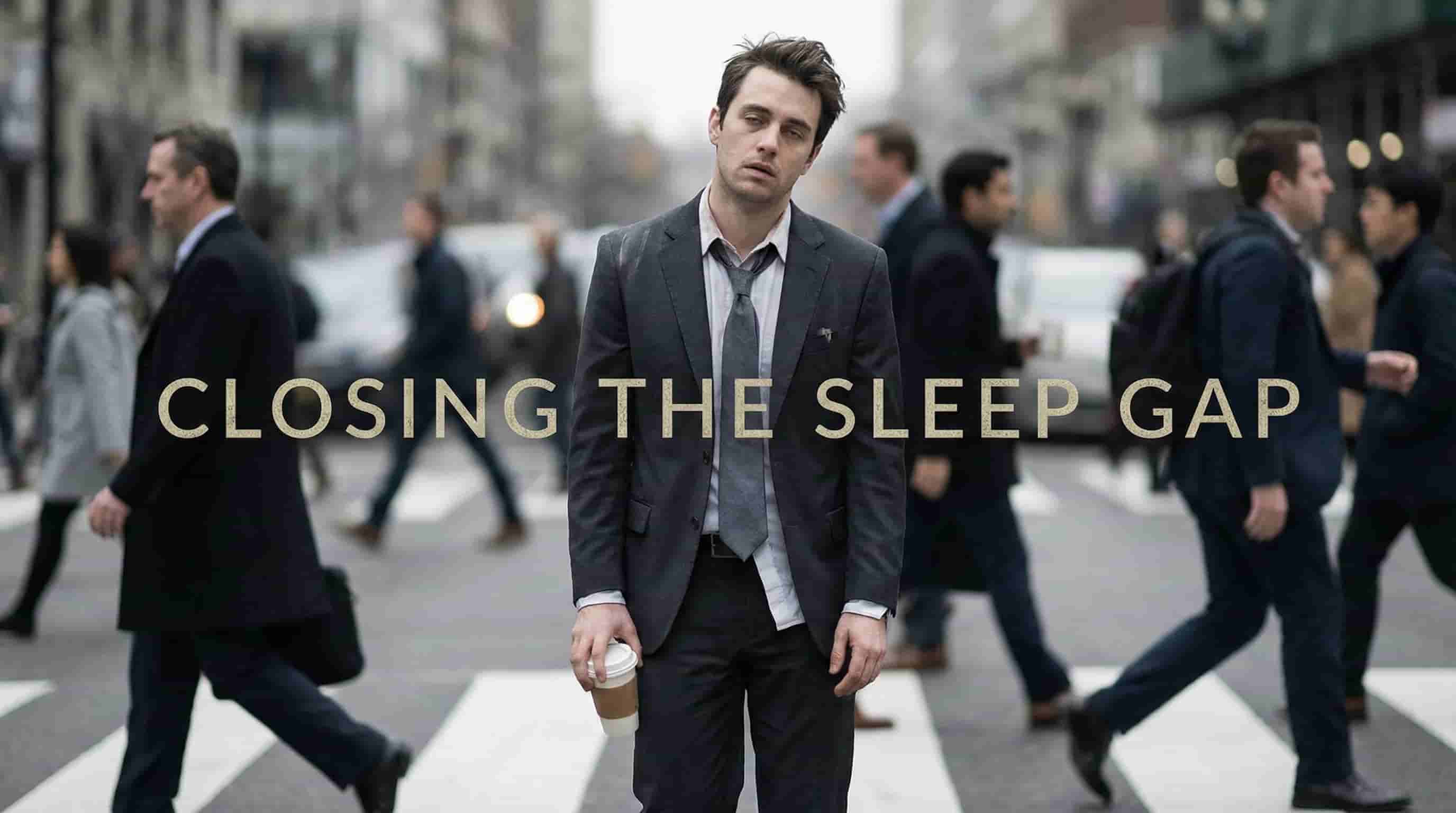
The ‘Maas Gap’: Are You a Walking Zombie?

Article Image

Written by Dr. Lycan Dizon, Slumbelry Chief Sleep Consultant

title: “The ‘Maas Gap’: Are You a Walking Zombie?” description: “The discrepancy between the sleep you need and the sleep you get is the ‘Maas Gap.’ Discover the signs that you are functioning below your potential.” keywords: “sleep deprivation signs, sleep gap, functioning tired, alertness test, sleep need vs actual” author: “Dr. Lycan Dizon” date: “2026-01-01” —

![The ‘Maas Gap’: Are You a Walking Zombie?](https://slumbelry.com/wp-content/uploads/placeholder.jpg)

Most of us think we are ‘fine.’ We drink our coffee, we get through the workday, we watch TV. But Dr. Maas argues that ‘fine’ is the enemy of ‘great.’ We have normalized a state of semi-exhaustion.

This is the ‘Maas Gap’: the chasm between the alertness you could have and the fog you actually live in. You might not be falling asleep at the wheel, but you are likely operating at 60% of your cognitive capacity.

The Science: Microsleeps and Cognitive Drag

When the brain is tired, it begins to shut down non-essential sectors. Creativity, empathy, and complex problem-solving are the first to go. You experience ‘microsleeps’—momentary lapses in focus that last seconds. You don’t realize they happen, but you miss information. Your brain is buffering.

The Strategy: The Alertness Audit

1. The Meeting Test. Do you struggle to keep your eyes open in boring meetings? 2. The TV Test. Do you fall asleep watching TV in the evening? 3. The Alarm Test. Do you need a snooze button? 4. The Weekend Test. Do you sleep in on weekends? If you answered ‘Yes’ to any of these, the Gap exists.

Why It Works (The Maas Method)

Awareness is the first step. By recognizing these signs not as ‘normal life’ but as symptoms of deprivation, you can start to prioritize sleep as a performance drug.

Common Mistakes to Avoid

Don’t use caffeine to mask the Gap. Caffeine blocks adenosine (sleep pressure signals), but it doesn’t fix the underlying fatigue. It’s like putting tape over the ‘Check Engine’ light.

The Slumbelry Connection: Closing the Gap

The only way to close the gap is better sleep efficiency. A Slumbelry Mattress Topper can improve comfort and reduce tossing and turning, helping you get more restorative sleep in the same amount of time.

Final Thoughts

You don’t know how good you can feel until you are truly rested. Close the Maas Gap and meet the best version of yourself.

The Slumbelry Commitment

Sleep is the most vulnerable state of human existence. It is where we heal, reset, and grow.

At Slumbelry, we don’t just sell sleep products; we advocate for your physiological right to rest. From ergonomic support to light management, every solution we offer is designed with one obsession: Respecting your Biology.

Science is our language, but your recovery is our purpose. You take care of everything else in your life—let us take care of your nights.

Rest Deeply,
The Slumbelry Team
Sleep Architecture: Why ‘Deep Sleep’ and ‘REM’ Are Non-Negotiable

Article Image

Written by Dr. Lycan Dizon, Slumbelry Chief Sleep Consultant

title: “Sleep Architecture: Why ‘Deep Sleep’ and ‘REM’ Are Non-Negotiable” description: “Sleep isn’t a flat line. It’s a rollercoaster of cycles. Understand the architecture of sleep to maximize physical repair and mental clarity.” keywords: “sleep stages, REM sleep benefits, deep sleep importance, sleep cycle explanation, sleep architecture” author: “Dr. Lycan Dizon” date: “2026-01-01” —

![Sleep Architecture: Why ‘Deep Sleep’ and ‘REM’ Are Non-Negotiable](https://slumbelry.com/wp-content/uploads/placeholder.jpg)

Sleep is not a uniform state of unconsciousness. It is a complex, active process with a distinct structure, or ‘architecture.’

Your brain cycles through different stages every 90 minutes. If you cut your sleep short, you aren’t just losing ‘time’—you are deleting specific, critical functions. Missing the last hour of sleep can mean missing 50% of your REM (dream) sleep.

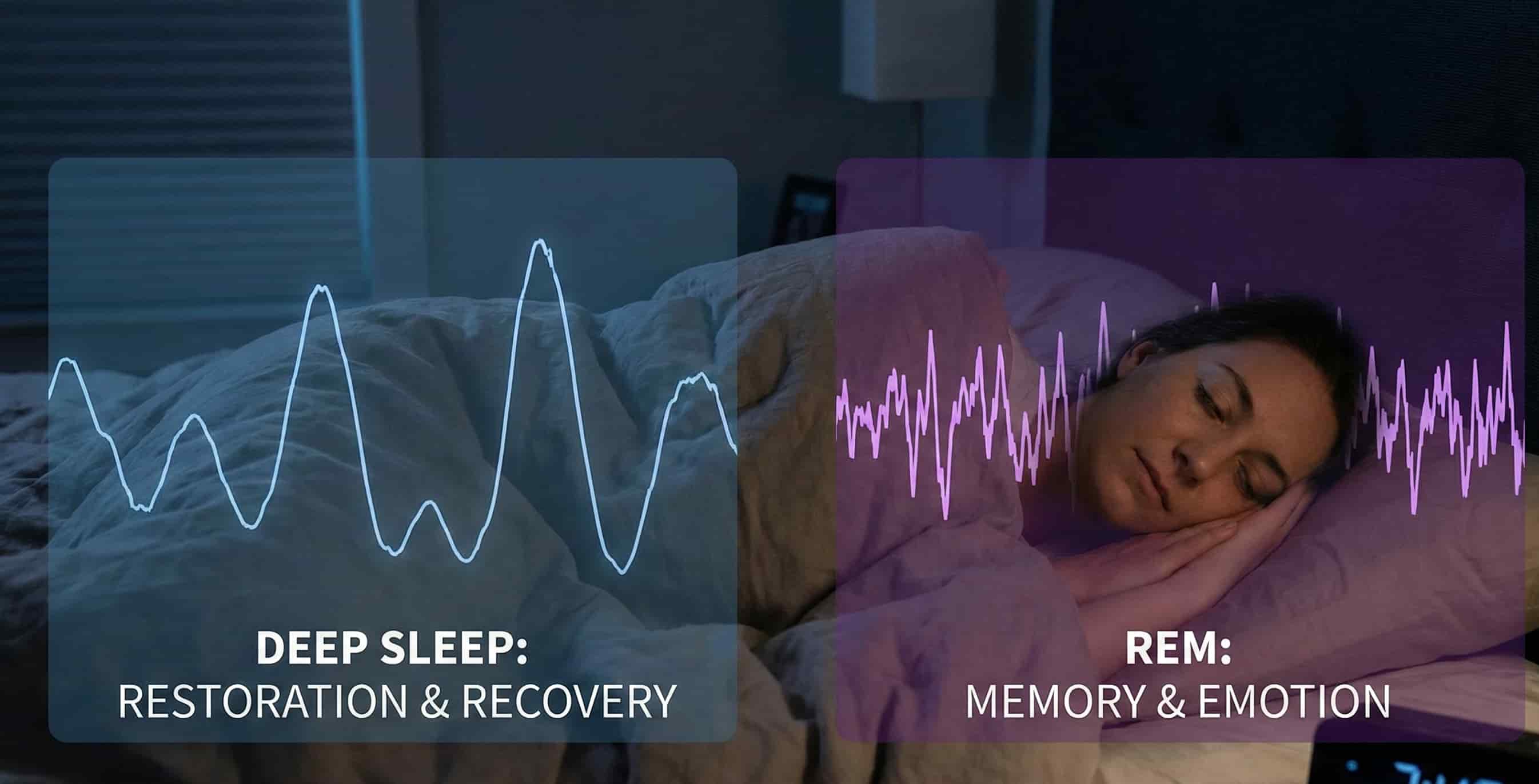
The Science: NREM vs. REM

Sleep is divided into NREM (Non-Rapid Eye Movement) and REM.

  • NREM Stage 3 (Deep Sleep): This is physical restoration. Growth hormone is released, tissues are repaired, immune system is boosted. This happens mostly in the first half of the night.
  • REM (Dream Sleep): This is mental restoration. Memory consolidation, emotional processing, and creativity happen here. This happens mostly in the second half of the night.

The Strategy: Protecting the Cycles

1. Respect the 90. Think of sleep in 90-minute blocks. 7.5 hours (5 cycles) is often better than 8 hours (mid-cycle). 2. Don’t Cut the End. Since REM is back-loaded, waking up 2 hours early devastates your mental clarity. 3. Consistency. Going to bed at the same time keeps the architecture stable.

Why It Works (The Maas Method)

Understanding the stages explains why you can sleep 6 hours and feel physically okay (you got your Deep Sleep) but mentally anxious and foggy (you missed your REM). You need both.

Common Mistakes to Avoid

Alcohol destroys REM sleep. It might help you fall asleep (sedation), but it fragments the architecture, suppressing the critical dream stages needed for emotional health.

The Slumbelry Connection: Uninterrupted Cycles

To move seamlessly through these stages, you need to stay asleep. Motion transfer from a partner can jolt you out of deep sleep. Slumbelry’s Motion Isolation Technology in our mattresses ensures your cycles remain unbroken, even if your partner tosses and turns.

Final Thoughts

You are the architect of your own rest. Build a strong foundation with Deep Sleep and finish with the creative flourish of REM. Don’t leave the building unfinished.

The Slumbelry Commitment

Sleep is the most vulnerable state of human existence. It is where we heal, reset, and grow.

At Slumbelry, we don’t just sell sleep products; we advocate for your physiological right to rest. From ergonomic support to light management, every solution we offer is designed with one obsession: Respecting your Biology.

Science is our language, but your recovery is our purpose. You take care of everything else in your life—let us take care of your nights.

Rest Deeply,
The Slumbelry Team
The Afternoon Dip: Why You Crash at 2 PM (And It’s Not Lunch)

Article Image

Written by Dr. Lycan Dizon, Slumbelry Chief Sleep Consultant

title: “The Afternoon Dip: Why You Crash at 2 PM (And It’s Not Lunch)” description: “The post-lunch slump is biological, not gluttonous. Learn how to manage the circadian dip without drowning in coffee.” keywords: “afternoon slump, circadian rhythm dip, post lunch tired, energy crash 2pm, circadian low” author: “Dr. Lycan Dizon” date: “2026-01-01” —

![The Afternoon Dip: Why You Crash at 2 PM (And It’s Not Lunch)](https://slumbelry.com/wp-content/uploads/placeholder.jpg)

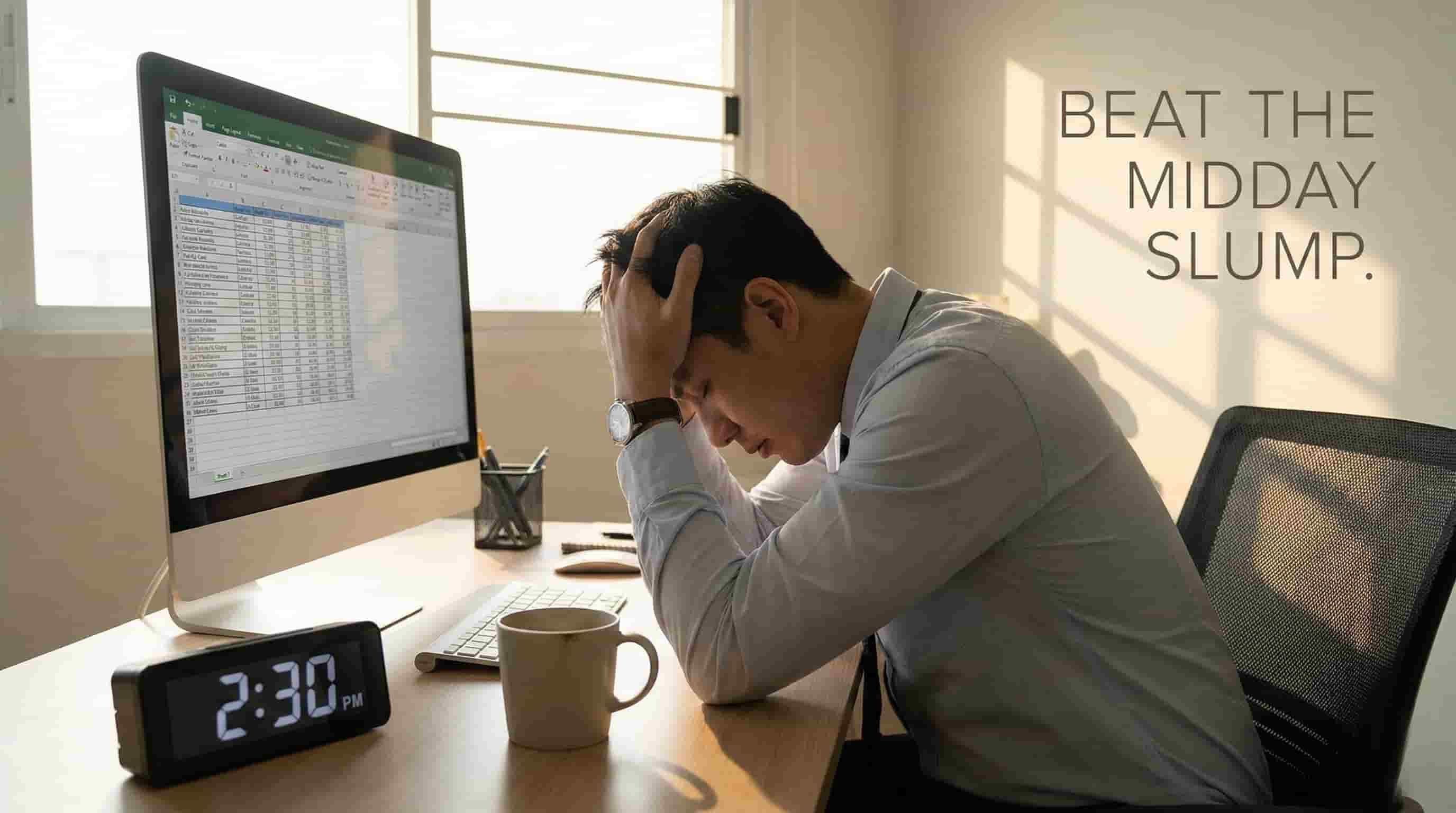
It hits like clockwork. 2:00 PM. Your eyelids get heavy. Your focus blurs. You reach for a sugary snack or a double espresso. You blame the heavy lunch you ate.

But the ‘Afternoon Dip’ happens even if you skip lunch. It is a hardwired feature of your circadian rhythm. Your body temperature drops, and your sleep drive spikes. You aren’t lazy; you’re human.

The Science: The Biphasic Sleep Pattern

Humans are naturally biphasic sleepers. We are designed to have a long sleep at night and a short rest in the mid-afternoon. In many cultures (siesta), this is respected. In ours, we fight it. The dip is a biological window for recovery, caused by a harmonic beat in the circadian clock.

The Strategy: Surfing the Dip

1. Anticipate It. Schedule less demanding tasks for 2-3 PM. Don’t book critical strategy meetings. 2. Move. If you can’t nap, move. A 10-minute walk raises body temperature and counteracts the dip. 3. Light. Expose yourself to bright light. Go outside. It signals ‘daytime’ to the brain. 4. Hydrate. Fatigue is often masked dehydration.

Why It Works (The Maas Method)

Fighting biology is exhausting. By acknowledging the dip, you can work with your energy levels rather than against them. Movement and light are natural antidotes to the temperature drop that causes sleepiness.

Common Mistakes to Avoid

Don’t rely on sugar. The sugar spike is followed by an insulin crash that compounds the circadian dip, leaving you comatose by 3:30 PM.

The Slumbelry Connection: Nighttime Prep

How you handle the dip affects your night. If you consume caffeine now, it will be in your system at 10 PM. Instead, focus on recovery. A good night’s sleep on a Slumbelry Mattress reduces the severity of the afternoon dip, making it a gentle wave rather than a tsunami.

Final Thoughts

The dip is natural. The crash is optional. Ride the wave with movement and light, and save the sleep for tonight.

The Slumbelry Commitment

Sleep is the most vulnerable state of human existence. It is where we heal, reset, and grow.

At Slumbelry, we don’t just sell sleep products; we advocate for your physiological right to rest. From ergonomic support to light management, every solution we offer is designed with one obsession: Respecting your Biology.

Science is our language, but your recovery is our purpose. You take care of everything else in your life—let us take care of your nights.

Rest Deeply,
The Slumbelry Team
The Caffeine Curfew: Why Your 2 PM Coffee Ruins Your 10 PM Sleep

Article Image

Written by Dr. Lycan Dizon, Slumbelry Chief Sleep Consultant

title: “The Caffeine Curfew: Why Your 2 PM Coffee Ruins Your 10 PM Sleep” description: “Caffeine has a 6-hour half-life. Learn the math of metabolism and why your afternoon pick-me-up is the architect of your insomnia.” keywords: “caffeine half life, coffee sleep disruption, caffeine curfew, adenosine blocker, insomnia causes” author: “Dr. Lycan Dizon” date: “2026-01-01” —

![The Caffeine Curfew: Why Your 2 PM Coffee Ruins Your 10 PM Sleep](https://slumbelry.com/wp-content/uploads/placeholder.jpg)

We love coffee. It’s the fuel of the modern world. But caffeine is a misunderstood drug. We think that if we can fall asleep, the coffee didn’t affect us.

Wrong. Caffeine stays in your system long after the buzz wears off. It is a silent saboteur of deep sleep. If you are drinking coffee after 2 PM, you are stealing from tomorrow’s energy.

The Science: Adenosine Blocking & Half-Life

Caffeine works by blocking adenosine receptors. Adenosine is the chemical that makes you feel tired. Caffeine doesn’t give you energy; it just masks fatigue.

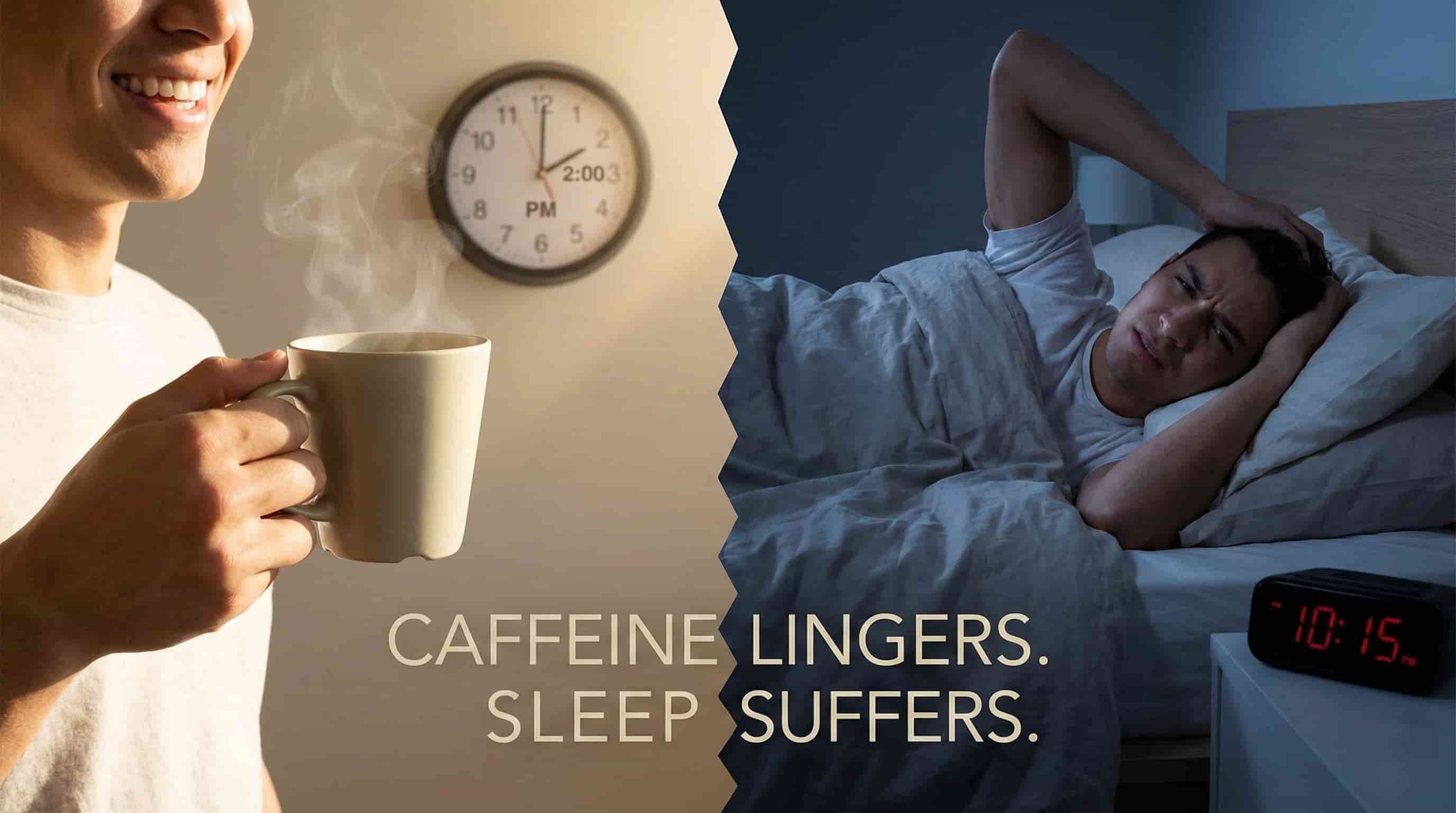
Crucially, caffeine has a half-life of 5-7 hours. If you drink 200mg at 4 PM, you still have 100mg (a full cup) in your blood at 10 PM. This residual caffeine prevents the brain from entering deep, restorative sleep.

The Strategy: The Caffeine Protocol

1. The Cutoff. Stop all caffeine intake by 2 PM (or 8-10 hours before bed). 2. The Taper. Switch to decaf or herbal tea in the afternoon. 3. Quantity Control. Limit intake to 300-400mg per day (3-4 cups). 4. Morning Delay. Wait 90 minutes after waking before your first cup to allow cortisol to clear naturally.

Why It Works (The Maas Method)

By clearing caffeine from your system before bedtime, you allow natural adenosine pressure to build up. This ensures you fall asleep faster and, more importantly, stay in deep sleep longer.

Common Mistakes to Avoid

Don’t be fooled by ‘tolerance.’ Just because you can fall asleep after an espresso doesn’t mean your sleep is good. Your brain is still fighting the stimulant, resulting in ‘light’ sleep and a groggy morning.

The Slumbelry Connection: Natural Energy

If you need an afternoon boost, look at your sleep quality. Waking up on a Slumbelry Pillow that supports your neck and airway ensures better oxygenation and natural energy, reducing the craving for artificial stimulants.

Final Thoughts

Enjoy your morning brew. But respect the half-life. Let your body run on its own fuel, not borrowed chemical time.

The Slumbelry Commitment

Sleep is the most vulnerable state of human existence. It is where we heal, reset, and grow.

At Slumbelry, we don’t just sell sleep products; we advocate for your physiological right to rest. From ergonomic support to light management, every solution we offer is designed with one obsession: Respecting your Biology.

Science is our language, but your recovery is our purpose. You take care of everything else in your life—let us take care of your nights.

Rest Deeply,
The Slumbelry Team

Sweat to Sleep: How Exercise Timing Impacts Your Rest

Article Image

Written by Dr. Lycan Dizon, Slumbelry Chief Sleep Consultant

title: “Sweat to Sleep: How Exercise Timing Impacts Your Rest” description: “Exercise is the best sleeping pill, but timing is everything. Learn when to work out to maximize deep sleep and avoid late-night alertness.” keywords: “exercise and sleep, best time to workout for sleep, deep sleep booster, body temperature sleep, workout timing” author: “Dr. Lycan Dizon” date: “2026-01-01” —

![Sweat to Sleep: How Exercise Timing Impacts Your Rest](https://slumbelry.com/wp-content/uploads/placeholder.jpg)

We know exercise is good for us. But did you know it is the single most effective way to increase Deep Sleep (Stage 3)?

However, timing matters. Exercise raises cortisol and body temperature—two things that are the enemy of sleep onset. If you hit the gym at 9 PM, you might be sabotaging your 10 PM bedtime.

The Science: The Thermogenic Effect

Sleep requires a drop in core body temperature (approx. 2-3 degrees Fahrenheit). Exercise spikes temperature. It takes 4-6 hours for this temperature to drop back down.

However, the drop itself is a sleep trigger. Exercising in the late afternoon (4-6 PM) creates a temperature spike that is followed by a compensatory drop right at bedtime, signaling the body to sleep.

The Strategy: The Workout Schedule

1. Morning/Afternoon. The best times. Morning light sets the clock; afternoon heat sets the temperature drop. 2. The 3-Hour Buffer. Avoid high-intensity cardio within 3 hours of bed. 3. Evening Option. If you must exercise at night, choose Yoga or stretching. These cool the body and relax muscles. 4. Consistency. Daily movement is better than weekend warrior bursts.

Why It Works (The Maas Method)

Physical fatigue (adenosine build-up) combined with the thermal drop creates a powerful sleep drive. Your body needs deep sleep to repair the muscle tissues you broke down.

Common Mistakes to Avoid

Don’t skip exercise because you’re tired. It’s a paradox: expending energy creates energy. Sedentary days often lead to ‘tired but wired’ nights.

The Slumbelry Connection: Recovery Surface

Athletes know that recovery happens in bed. A Slumbelry Hybrid Mattress provides the pressure relief needed for sore muscles while maintaining the support required for spinal alignment. Turn your bed into a recovery tool.

Final Thoughts

Move your body to rest your mind. Time it right, sweat it out, and sleep like a champion.

The Slumbelry Commitment

Sleep is the most vulnerable state of human existence. It is where we heal, reset, and grow.

At Slumbelry, we don’t just sell sleep products; we advocate for your physiological right to rest. From ergonomic support to light management, every solution we offer is designed with one obsession: Respecting your Biology.

Science is our language, but your recovery is our purpose. You take care of everything else in your life—let us take care of your nights.

Rest Deeply,
The Slumbelry Team
The Bedroom Cave: Engineering the Perfect Sleep Environment

Article Image

Written by Dr. Lycan Dizon, Slumbelry Chief Sleep Consultant

title: “The Bedroom Cave: Engineering the Perfect Sleep Environment” description: “Your bedroom should be a cave: Dark, Cool, and Quiet. How to optimize your environment for uninterrupted hibernation.” keywords: “sleep environment, bedroom temperature for sleep, blackout curtains, sleep sanctuary, dark cool quiet” author: “Dr. Lycan Dizon” date: “2026-01-01” —

![The Bedroom Cave: Engineering the Perfect Sleep Environment](https://slumbelry.com/wp-content/uploads/placeholder.jpg)

Look at your bedroom. Is it a sanctuary? Or is it an entertainment center/office/gym?

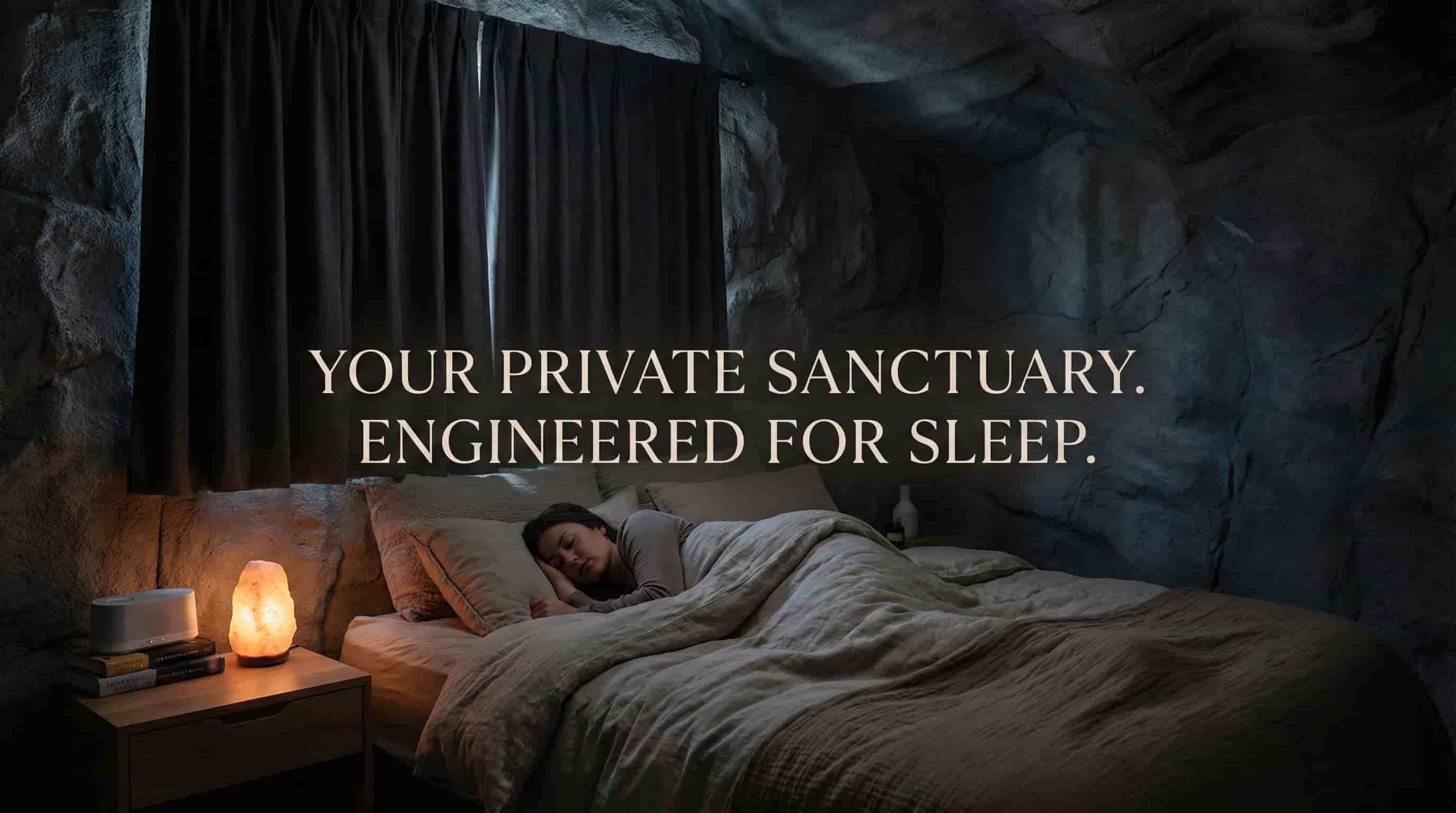
For millions of years, humans slept in caves. Dark. Cool. Quiet. Safe. Our biology still expects this. Modern bedrooms—filled with blinking LEDs, streetlights, and warm central heating—are anti-sleep environments. To sleep like an ancestor, you need to rebuild the cave.

The Science: Environmental Triggers

1. Darkness: Melatonin (the vampire hormone) only comes out in the dark. Even dim light suppresses it. 2. Temperature: The body needs to cool down to sleep. The ideal room temp is 65°F (18°C). 3. Silence: The brain processes sound even while asleep. Sudden noises trigger ‘cortisol arousals.’

The Strategy: Cave Construction

1. Blackout. Install heavy curtains or wear a high-quality eye mask. Tape over LEDs on TVs and chargers. 2. Chill. Set the thermostat to 65-68°F. Use breathable bedding. 3. Hush. Use white noise (fan or machine) to mask sudden sounds. It creates a ‘sound blanket.’ 4. Purge. Remove work desks, treadmills, and TVs. The bedroom is for sleep and sex only.

Why It Works (The Maas Method)

It removes the ‘threats’ to sleep. By controlling the inputs (light, heat, sound), you allow the nervous system to downregulate without distraction.

Common Mistakes to Avoid

Don’t overheat the room in winter. It feels cozy to get into a hot room, but it will wake you up at 3 AM. Warm the bed (hot water bottle), keep the room cool.

The Slumbelry Connection: The Centerpiece

The most important rock in your cave is the bed. A Slumbelry Mattress is designed with cooling technology to regulate your temperature, working with your environment to maintain that deep-sleep state.

Final Thoughts

Reclaim your territory. Turn off the lights, drop the temp, and retreat into your cave. The world can wait outside.

The Slumbelry Commitment

Sleep is the most vulnerable state of human existence. It is where we heal, reset, and grow.

At Slumbelry, we don’t just sell sleep products; we advocate for your physiological right to rest. From ergonomic support to light management, every solution we offer is designed with one obsession: Respecting your Biology.

Science is our language, but your recovery is our purpose. You take care of everything else in your life—let us take care of your nights.

Rest Deeply,
The Slumbelry Team

Better sleep tips & exclusive offers, straight to your inbox.

Curated sleep insights, early access to new products, and members-only deals.
No spam. You can unsubscribe anytime.