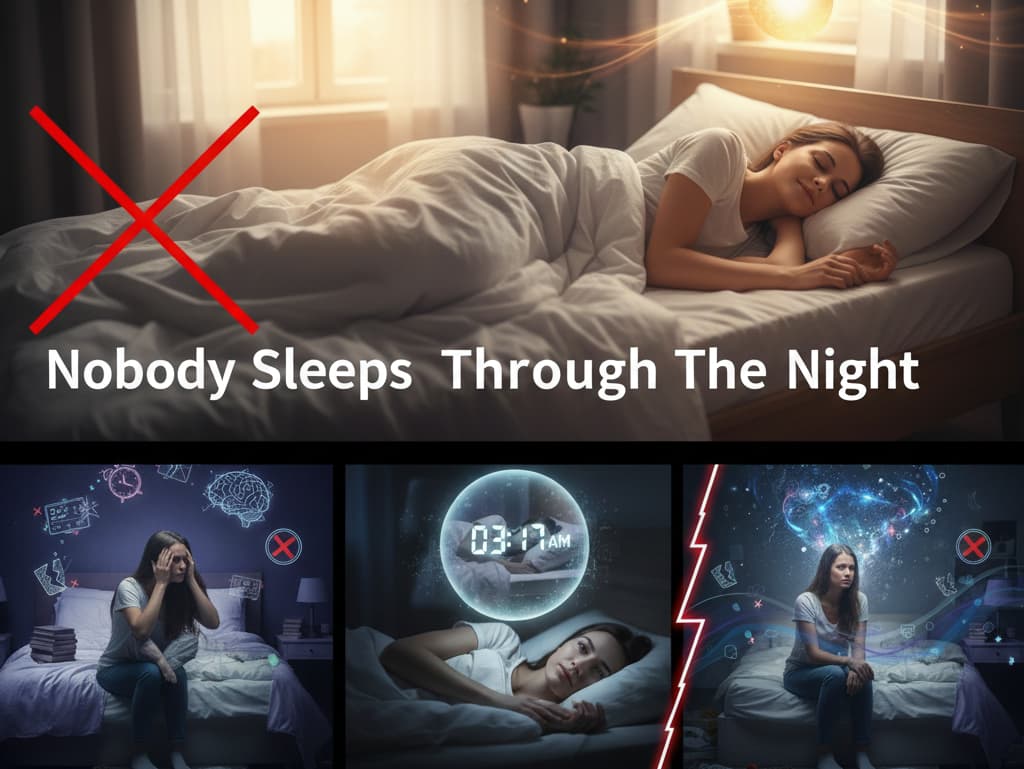
The “Perfect Sleeper” Myth: Nobody Sleeps Through the Night
Written by Dr. Lycan Dizon, Slumbelry Chief Sleep Consultant
We have a Disneyfied idea of sleep. We imagine putting our head on the pillow, blacking out instantly, and waking up 8 hours later with birds singing.
If you wake up at 3:00 AM, you panic. “Something is wrong with me.”
Let me reassure you: Nobody sleeps through the night. Not me. Not your doctor. Not even the best sleepers in the world.
The Biology of Awakening
Human sleep is designed in cycles of approximately 90 minutes. We go from Light Sleep -> Deep Sleep -> REM Sleep.
Between these cycles, there is often a brief “micro-awakening.” We might shift position, fix the blanket, or check for danger (an evolutionary holdover). Most “good” sleepers fall back asleep so quickly they don’t remember it in the morning (retrograde amnesia).
“Bad” sleepers simply remember waking up. And then they start thinking about it.
The Historical “Second Sleep”
For most of human history, sleeping in one 8-hour block was weird. Historian Roger Ekirch found that before the industrial revolution, humans slept in two shifts.
1. First Sleep: Sunset to around 2:00 AM.
2. The Watch: A 1-2 hour waking period used for reading, praying, or intimacy.
3. Second Sleep: Until dawn.
Waking up in the middle of the night is not a disorder; it is our natural state.
How to Handle the Awakening
The problem isn’t the waking up; it’s the reaction.
Bad Reaction: Look at clock -> “It’s 3 AM!” -> “If I don’t sleep now, I’ll be tired” -> Heart rate spikes -> Awake for 2 hours.
Good Reaction: Wake up -> “Oh, just a cycle change” -> “It feels nice to be in this warm bed” -> Do nothing -> Asleep in 5 minutes.
Tips for the 3 AM Club:
1. Don’t Check the Time: Knowing it is 3:14 AM helps you in no way. It only adds math anxiety (“I have 3 hours left”).
2. Stay in the Dark: Light is the enemy.
3. Enjoy the Rest: If you can’t sleep, just enjoy the sensation of the mattress. It is quiet. No one needs anything from you. It is your private time.
Embrace the wakefulness. It usually goes away the moment you stop fighting it.
The Slumbelry Commitment
Sleep is the most vulnerable state of human existence. It is where we heal, reset, and grow.
At Slumbelry, we don’t just sell sleep products; we advocate for your physiological right to rest. From ergonomic support to light management, every solution we offer is designed with one obsession: Respecting your Biology.
Science is our language, but your recovery is our purpose. You take care of everything else in your life—let us take care of your nights.
Rest Deeply, The Slumbelry Team
The 8-Hour Myth: Why You’re Still Tired After a Full Night
Written by Dr. Lycan Dizon, Slumbelry Chief Sleep Consultant
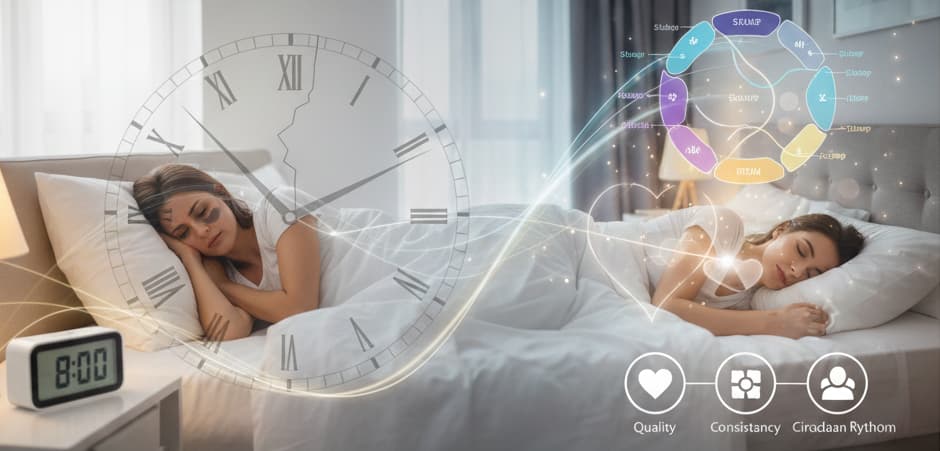
You do the math. You go to bed at 11:00 PM. You set your alarm for 7:00 AM.
“Perfect,” you think. “That’s exactly 8 hours. I’m going to feel amazing.”
But when the alarm screams at 7:00 AM, you don’t feel amazing. You feel like you’ve been hit by a truck. Your eyes are heavy, your brain is foggy, and you’re hitting snooze before you’re even fully conscious.
“What happened?” you ask yourself. “I got my 8 hours!”
Welcome to the 8-Hour Myth.
For decades, we’ve been told that sleep is a block of time. Get 8 hours, and you’re good.
But Nick Littlehales, the elite sleep coach who transformed the recovery habits of Manchester United and Cristiano Ronaldo, argues that this approach is fundamentally flawed.
Your body doesn’t run on hours; it runs on cycles.
The Science: It’s Not a Block, It’s a Wave
Sleep is not a uniform state of unconsciousness. It is a dynamic journey through different stages.
A typical sleep cycle lasts approximately 90 minutes.
During this time, you move through:
1. Light Sleep (NREM 1 & 2): The transition phase.
2. Deep Sleep (NREM 3 & 4): Physical restoration (muscle repair, growth hormone release).
3. REM Sleep: Mental restoration (dreaming, memory consolidation).
After about 90 minutes, the cycle ends, and you briefly enter a lighter state (or even wake up for a micro-second) before starting the next cycle.
The “Crash Landing”
Here is why you feel groggy at 7:00 AM.
If you wake up in the middle of a Deep Sleep phase, your brain is disoriented. It’s suffering from Sleep Inertia.
Imagine a diver deep underwater. If you yank them to the surface instantly, they get “the bends.” Waking up from deep sleep is the neurological equivalent.
If you wake up at the end of a 90-minute cycle, you are naturally in a lighter state. You wake up feeling refreshed, alert, and ready to go.
The Strategy: Think in 90s
Nick Littlehales’ R90 Technique suggests we stop counting hours and start counting cycles.
Instead of aiming for 8 hours (which is 480 minutes—a weird number biologically), aim for multiples of 90 minutes.
5 Cycles: 7.5 Hours (The Standard Goal)
4 Cycles: 6 Hours (The Minimum for Functionality)
6 Cycles: 9 Hours (The Athlete/Recovery Mode)
Why 8 Hours Fails
8 hours is 5.3 cycles.
That means you are setting your alarm to ring right in the middle of your 6th cycle—likely during Deep Sleep.
By trying to get “more” sleep (8 hours vs 7.5), you actually make yourself feel worse.
Quality Over Quantity
It’s not just about the math; it’s about the continuity.
A 90-minute cycle only works if it’s uninterrupted. If you toss and turn, or if your partner wakes you up, you break the cycle and have to restart.
This is where your sleep surface matters. A mattress that isolates motion and relieves pressure points ensures that once you enter a cycle, you stay in it until the end.
The Takeaway
Tonight, try a little experiment.
If you need to wake up at 7:00 AM, count back in 90-minute increments.
7:00 AM minus 7.5 hours = 11:30 PM.
Try going to sleep at 11:30 PM instead of 11:00 PM. Yes, that’s less sleep, but it might just be better timing.
Stop chasing a number. Start riding the wave.
The Slumbelry Commitment
Sleep is the most vulnerable state of human existence. It is where we heal, reset, and grow.
At Slumbelry, we don’t just sell sleep products; we advocate for your physiological right to rest. From ergonomic support to light management, every solution we offer is designed with one obsession: Respecting your Biology.
Science is our language, but your recovery is our purpose. You take care of everything else in your life—let us take care of your nights.
Rest Deeply, The Slumbelry Team
Why Coffee Can’t Fix You: The ‘Sunlight Anchor’ Ritual to Finally Wake Up
Written by Dr. Lycan Dizon, Slumbelry Chief Sleep Consultant
The alarm screams. You drag yourself out of bed, your eyes heavy, your mind foggy. You shuffle to the kitchen like a zombie, operating on pure instinct. Coffee. Now. It feels less like a beverage and more like a survival tool.
We treat that first cup as a lifeline, believing it has the magical power to wash away the exhaustion of a broken night. But an hour later, the fog hasn’t really lifted. You’re just… wired and tired. Your heart is racing, but your brain is still stuck in neutral.
Why does this happen? Because coffee is a loan, not income. It borrows energy from your future self without actually replenishing your reserves. And right now, your body doesn’t need a stimulant; it needs a signal.
Shawn Stevenson, author of Sleep Smarter, reveals a biological truth that changed my mornings forever: The secret to deep sleep tonight isn’t in your evening tea—it’s in your morning sky.
The Science: It’s All About Timing
Your body runs on a strict 24-hour internal clock called the circadian rhythm. This master clock, located in the suprachiasmatic nucleus (SCN) of your brain, dictates when you feel alert and when you feel tired. But like any old mechanical clock, it tends to drift. If left unchecked, your body’s “day” would actually be slightly longer than 24 hours. It needs to be reset, every single morning.
The “reset button” isn’t caffeine. It’s sunlight.
When sunlight hits your eyes (specifically the photoreceptors in your retina), it triggers a beautiful biological chain reaction that sets the stage for your entire day—and your night.
1. The Cortisol Switch
Morning light tells your body to stop producing melatonin (the sleep hormone) and release cortisol (the get-up-and-go hormone) naturally. We often demonize cortisol as the “stress hormone,” but in the morning, it is essential. It is the spark plug that ignites your energy and focus. Without this light signal, your melatonin levels stay elevated, leaving you with that heavy, groggy “sleep inertia” that no amount of espresso can cure.
2. The Serotonin Battery
Here is the most critical part: Sunlight stimulates the production of serotonin. Think of serotonin as the “battery” for your sleep later tonight. Through a complex enzymatic process, your body converts this stored serotonin into melatonin when darkness falls.
The Problem: We Live in “Dark Caves”
The problem is that most of us are suffering from a “light deficiency.”
Light intensity is measured in lux.
Typical office lighting: 300 – 500 lux.
A cloudy day outside: 10,000 lux.
Direct sunlight: 100,000+ lux.
Do you see the difference? Sitting in your kitchen or office is biologically equivalent to sitting in a cave. Your brain never gets a strong enough signal to say, “The day has started!” So, your circadian rhythm drifts, your energy lags, and your sleep cycle becomes fragmented.
The Strategy: The “Sunlight Anchor”
You don’t need a medical degree or expensive gadgets to fix this. You just need to change your relationship with the morning sky. I call this the Sunlight Anchor ritual.
Step 1: Get Outside Immediately
Try to get natural sunlight within 30 minutes of waking up. This critical window helps “anchor” your cortisol peak to the start of the day. Even on a gray, overcast day, the light intensity outside is vastly superior to anything inside your home.
Step 2: The 20-Minute Rule
Aim for at least 20 minutes of exposure. This is the minimum effective dose to trigger the full hormonal cascade.
Pro Tip: Combine this with movement. Drink your morning water on your patio, walk the dog, or simply sit by an open window. Let the neighbors see you in your robe. It’s for science.
Step 3: Ditch the Sunglasses (Briefly)
Allow natural light to hit your retinas directly. (Safety Note: Never stare directly at the sun!) Sunglasses block the very spectrum of blue light your brain needs to wake up. Wear them later in the day, but give your eyes raw light first thing in the morning.
Why This Changes Everything
When you implement the Sunlight Anchor, you aren’t just waking up faster; you are protecting your night. You are front-loading your energy production so that by the time 10 PM rolls around, your body is chemically primed for sleep.
If you stay in the dim kitchen drinking coffee, your biological clock drifts. You feel groggy, so you drink more coffee, which disrupts your sleep later. It’s a vicious cycle. Break it with light.
Tonight’s sleep begins the moment you open your eyes this morning. Step outside, take a deep breath, and let the light in. Your body knows what to do.
The Slumbelry Commitment
Sleep is the most vulnerable state of human existence. It is where we heal, reset, and grow.
At Slumbelry, we don’t just sell sleep products; we advocate for your physiological right to rest. From ergonomic support to light management, every solution we offer is designed with one obsession: Respecting your Biology.
Science is our language, but your recovery is our purpose. You take care of everything else in your life—let us take care of your nights.
Rest Deeply, The Slumbelry Team
The Myth of the “Perfect 8 Hours
Written by Dr. Lycan Dizon, Slumbelry Chief Sleep Consultant
“I only got 7 hours last night. I’m going to die early.”
The anxiety in my patient’s voice is palpable. We have been brainwashed by a single number: 8.
We are told that if we don’t get 8 hours, we will get Alzheimer’s, get fat, and crash our cars.
Here is the prescription I give these patients: Stop counting.
The “Goldilocks” Genetics
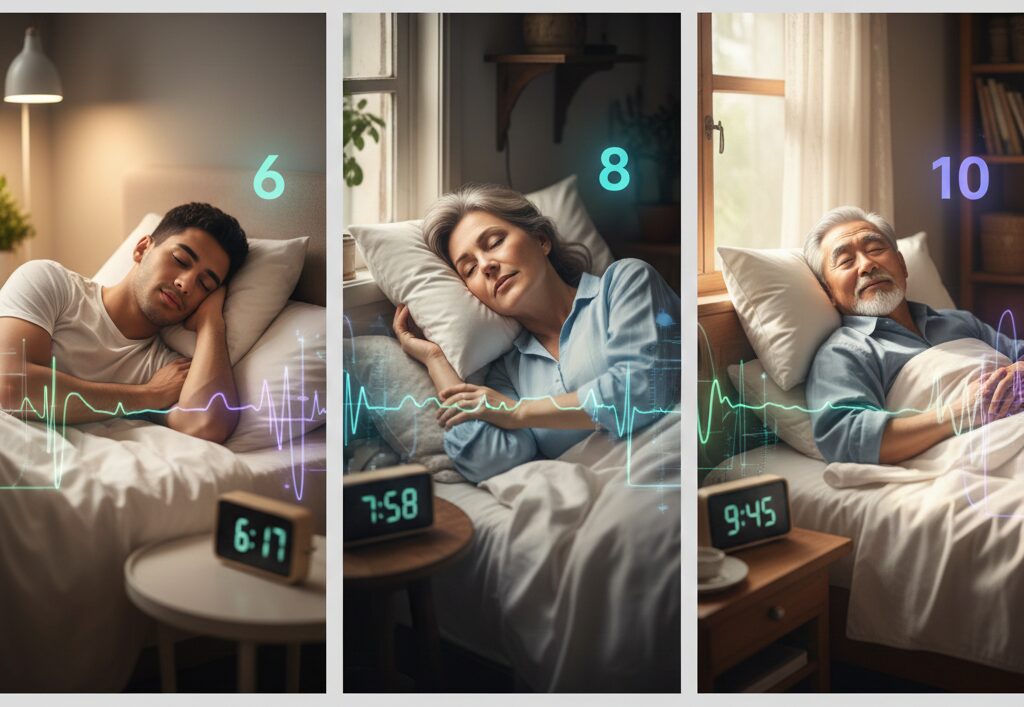
There is no “Magic Number” for the human species. Sleep duration is largely genetic, like shoe size.
* The Bell Curve: Most people need between 7-9 hours. But the “Normal” range is anywhere from 4 hours to 11 hours.
* The Thatcher Gene: Some people (Short Sleepers) have a genetic mutation allowing them to thrive on 4-6 hours. Margaret Thatcher was famous for this.
* The Long Sleepers: Others naturally need 10 hours to function.
As the old proverb cited in How To Sleep Well says: “Six hours for a man, seven for a woman, and eight for a fool.” While not scientifically accurate, it highlights that “8” has never been a hard rule.
The Danger of “Procrustean” Sleep
In Greek mythology, Procrustes stretched or cut people’s legs to fit his bed.
We do this with sleep.
* The Scenario: You naturally need 7 hours. You go to bed at 10 PM and wake up at 5 AM feeling great.
The Mistake: You read a magazine saying you need* 8 hours. So you force yourself to stay in bed until 6 AM.
* The Result: You spend that last hour tossing, turning, and worrying. You develop Psychophysiological Insomnia (worrying about sleep prevents sleep).
Quality > Quantity
The book makes a shocking point: “Sleeping >8 hours can actually increase your risk of dying.”
Now, this is correlation, not causation (sick people sleep more). But it proves that more is not always better.
We need to shift the metric from Time to Quality.
6 hours of deep, unbroken sleep is infinitely better than 8 hours of fragmented, light sleep.
How to Find Your Number
Don’t use an app. Use your body.
1. The Vacation Test: On your next holiday (after the first few days of catch-up sleep), see when you wake up naturally without an alarm. That is your biological number.
2. The 15-Minute Rule: If you wake up and can’t fall back asleep in 15 minutes, get up. Do not lie there trying to “hit the number.” You are just training your brain to associate the bed with frustration.
3. Optimize the Environment: Since you can’t always control duration (kids, work), control the depth.
Use Slumbelry Ergonomic Support to ensure the hours you do* get are pain-free and physically restorative.
* Use Slumbelry Light Management to ensure your melatonin onset is rapid, maximizing the efficiency of your sleep window.
The Slumbelry Commitment
Sleep is the most vulnerable state of human existence. It is where we heal, reset, and grow.
At Slumbelry, we don’t just sell sleep products; we advocate for your physiological right to rest. From ergonomic support to light management, every solution we offer is designed with one obsession: Respecting your Biology.
Science is our language, but your recovery is our purpose. You take care of everything else in your life—let us take care of your nights.
Rest Deeply, The Slumbelry Team
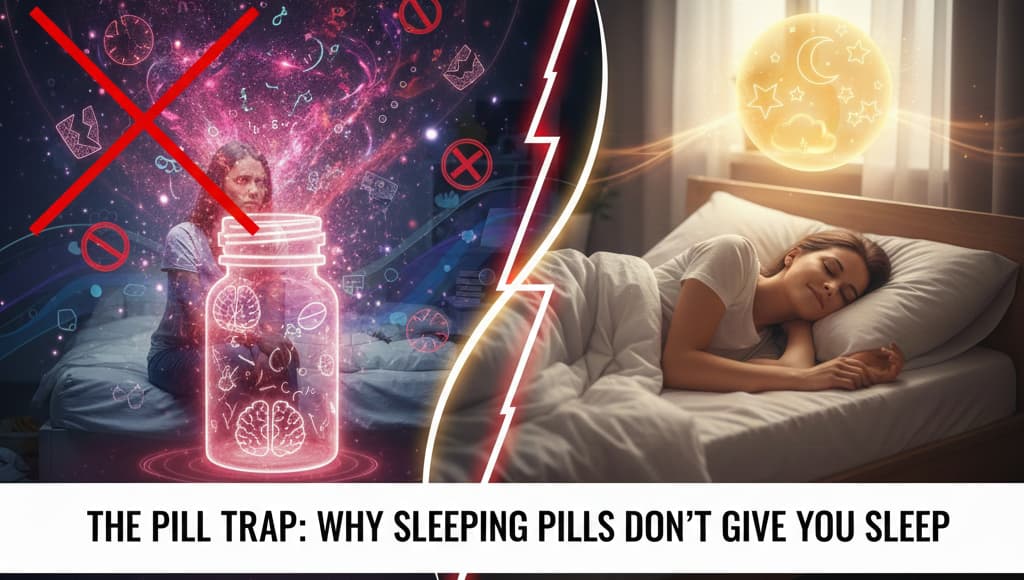
The Pill Trap: Why Sleeping Pills Don’t Give You Sleep
The Pill Trap: Why Sleeping Pills Don’t Give You Sleep (And Cause Rebound Insomnia) | Slumbelry
Written by Dr. Lycan Dizon, Slumbelry Chief Sleep Consultant · Updated 2025
The Pill Trap: Why Sleeping Pills Don’t Give You Sleep
Disclaimer: I am a sleep consultant, not your doctor. Never stop prescription medication abruptly without medical supervision.
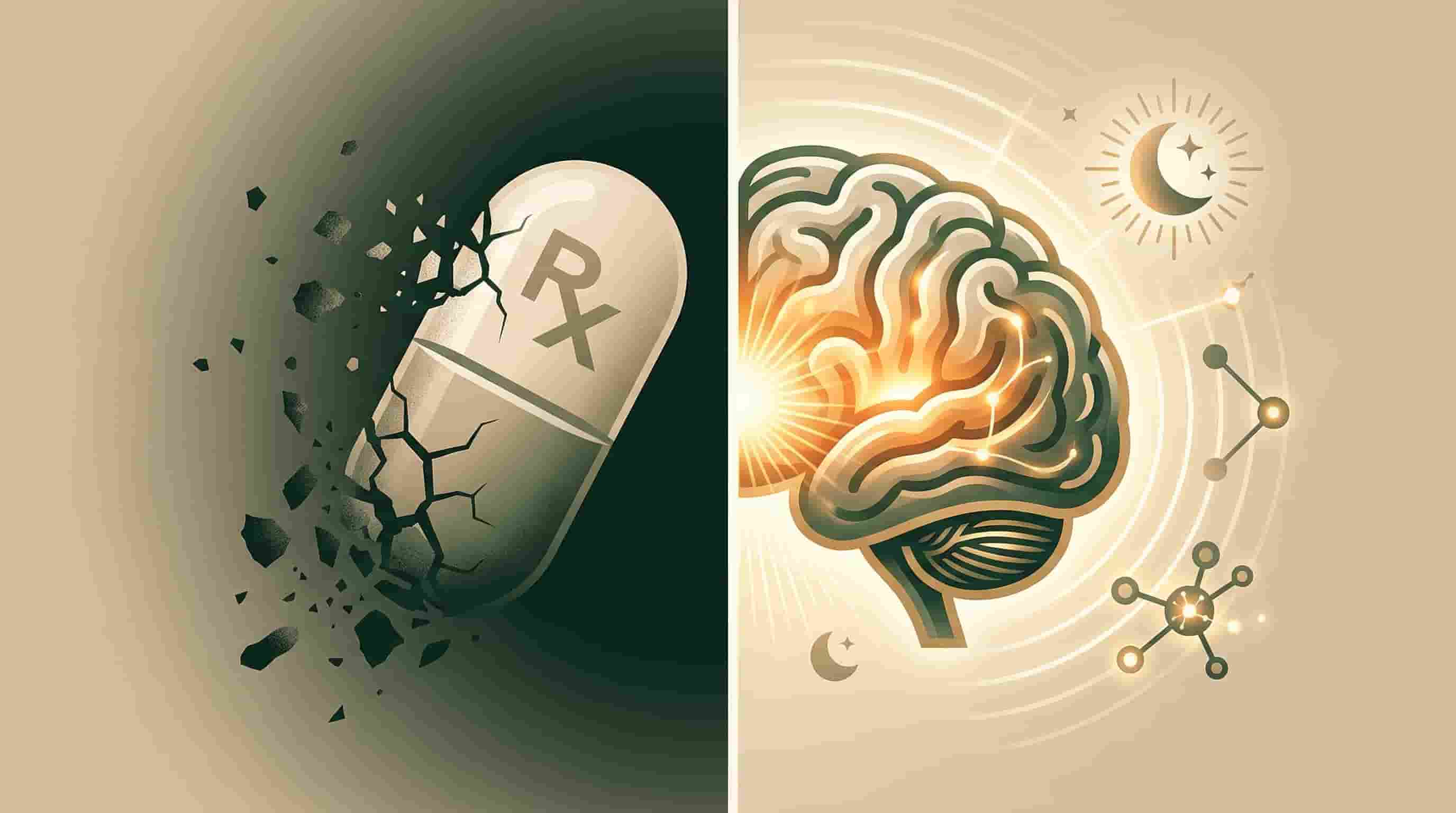
It is the most common, desperate plea I hear in my practice: “I haven’t slept in weeks. I just need something strong to knock me out.” We treat chronic insomnia the same way we treat a headache. Take a pill, the pain vanishes. Take a sleeping pill, and sleep magically happens. But human biology doesn’t work that way. The harsh, counter-intuitive truth the pharmaceutical industry rarely advertises is this: sedation is not sleep. You are buying unconsciousness, but you are sacrificing the restorative architecture your brain needs, ultimately setting yourself up for severe rebound insomnia when you try to stop.
Prescription sleeping pills and Z-drugs act as sedative-hypnotics; they knock out the cerebral cortex but destroy the natural architecture of Deep Sleep and REM sleep.
Many patients experience “anterograde amnesia”—they still wake up multiple times at night, but the drug prevents their brain from remembering the awakenings.
Quitting pills cold turkey triggers “Rebound Insomnia,” a vicious withdrawal cycle that convinces you that you are physically incapable of sleeping without medication.
Relying on sedative-hypnotics treats the symptom (wakefulness) while actively ignoring the root cause (hyperarousal).
1) The Knockout vs. The Biological Cycle
Natural sleep is not a passive “off” switch. It is a highly active, complex dance of brain waves. Throughout a healthy night, your brain cycles through light sleep, slow-wave deep sleep (where physical repair, immune strengthening, and cellular detox happen), and REM sleep (where emotional processing and memory consolidation occur). This precise architecture is non-negotiable for human health.
Most common prescription sleep aids—specifically Benzodiazepines and Z-drugs (like Ambien or Zopiclone)—belong to a class of drugs called sedative-hypnotics. They work by targeting the GABA receptors in your brain, essentially flooding your central nervous system with an inhibitory neurotransmitter that shuts down neuronal firing.
They do not induce natural sleep cycles. They induce a synthetic state that is neurologically closer to mild anesthesia or a light coma than actual sleep. You are unconscious, yes. But your brain is not performing the vital maintenance work it requires.
2) The Missing REM and The Zombie Effect
If you have ever taken a strong sleeping pill, slept for a full nine hours, but still woke up feeling like you were hit by a truck, you have experienced the destruction of your sleep architecture firsthand.
Sedative-hypnotics are notorious for suppressing both Slow-Wave Deep Sleep and Rapid Eye Movement (REM) sleep. Here is what that actually does to your body:
When Deep Sleep is Blocked: Your pituitary gland fails to release the necessary surge of Human Growth Hormone (HGH). Micro-tears in your muscles aren’t repaired. Your immune system isn’t fortified. You wake up feeling physically heavy, aching, and unrefreshed.
When REM Sleep is Blocked: Your brain’s amygdala (the emotion center) doesn’t get to properly process the stress of the previous day. You wake up feeling emotionally fragile, highly irritable, anxious, and suffering from severe brain fog.
“You can spend 9 hours unconscious on a sedative, but if you strip away the REM and Deep Sleep, you are starving your brain of recovery. You get the quantity of time in bed, but absolutely zero quality.”
3) The Amnesia Illusion: Did You Actually Sleep?
Here is perhaps the most unsettling mechanism behind how some of these drugs appear to “work.” Often, the pill doesn’t actually significantly increase the total amount of time you spend asleep. Instead, it triggers a side effect called anterograde amnesia.
Under the influence of the drug, you might still wake up four or five times in the middle of the night. You might toss, turn, and stare at the ceiling. However, the chemical prevents your hippocampus from forming new short-term memories. When your alarm goes off the next morning, you look at the clock and think you slept solidly through the night, simply because your brain deleted the memories of the awakenings.
We have to ask ourselves a fundamental question: Is chemically erasing the memory of your misery the same thing as actually curing your insomnia?
4) The Vicious Cycle of Rebound Insomnia
The true trap of the sleeping pill snaps shut not when you take it, but when you try to stop. The human brain is incredibly adaptive. When you flood it with synthetic GABA to force sedation every night, it responds by down-regulating its own natural GABA receptors. It essentially thinks, “Well, if you are going to provide the chemical from the outside, I don’t need to produce it internally anymore.”
When you decide to stop taking the pill, your brain goes into sudden, severe withdrawal. Your nervous system, now lacking its natural inhibitory brakes, shifts into massive overdrive. This triggers Rebound Insomnia.
For a period of days or even weeks after stopping the medication, your sleep will be significantly worse, more fractured, and more anxiety-inducing than it was before you ever touched the pill. In a state of sheer panic and exhaustion, most people logically conclude, “See? I am completely broken. I physically cannot sleep without my medication.” They refill the prescription, and the psychological dependence is cemented. You are hooked.
Withdrawal Protocol: If you have been taking prescription sleep aids for months or years, never quit cold turkey. Work with your prescribing physician to create a gradual tapering schedule, slowly reducing the dosage over several weeks to allow your brain’s GABA receptors time to up-regulate naturally.
5) The Exit Strategy: Rebuilding the Foundation
Are sleeping pills entirely evil? No. In cases of acute, severe trauma—a sudden death in the family, a violent crisis, a massive localized stressor—a short-term prescription (2 to 4 days) can prevent a total psychological breakdown. But for chronic, long-term insomnia, they are a dead-end street.
If you want to escape the pill trap, you have to stop treating the symptom (wakefulness) and start treating the root cause (hyperarousal and broken sleep associations).
The absolute gold standard treatment for chronic insomnia, recommended by the American College of Physicians, is not a pill. It is CBT-I (Cognitive Behavioral Therapy for Insomnia). CBT-I is hard work. It involves restricting your time in bed, changing your core beliefs about sleep anxiety, and rigidly resetting your circadian rhythms. But unlike a sedative, CBT-I actually fixes the neurological root of the problem.
Sleep is a fundamental, natural biological function. It is built into your DNA. You cannot buy it in a plastic orange bottle at the pharmacy. You have to rebuild the environment and the habits that allow it to happen.
Rebuilding your sleep drive through behavioral changes is harder than taking a pill, but it provides a permanent, biological cure rather than a temporary chemical band-aid.
6) Common Mistakes and FAQ
Q1: Are over-the-counter (OTC) sleep aids like Benadryl or ZzzQuil safer?
Most OTC sleep aids rely on antihistamines (like diphenhydramine). While they aren’t as addictive as Z-drugs, they cause severe next-day grogginess and build tolerance incredibly quickly—often within three days. Long-term use of antihistamines is also being studied for potential links to cognitive decline.
Q2: Does Melatonin count as a sleeping pill?
Melatonin is a hormone, not a sedative. It does not “knock you out.” It simply signals to your brain that it is nighttime. While safer than sedatives, most people take drastically incorrect doses (10mg instead of the optimal 0.3mg-1mg) at the wrong time, which actually disrupts their circadian rhythm further.
Q3: How long does Rebound Insomnia last?
Depending on how long you were on the medication and how quickly you tapered off, the acute phase of rebound insomnia typically lasts anywhere from 3 to 14 days. Knowing that this is a normal, temporary biological withdrawal symptom—and not a permanent failure of your brain—is crucial for getting through it.
Stop masking the problem. Start rebuilding your natural sleep drive.
Sleep is the most vulnerable state of human existence. It is where we heal, reset, and grow.
At Slumbelry, we don’t just sell sleep products; we advocate for your physiological right to rest. From ergonomic support to light management, every solution we offer is designed with one obsession: Respecting your Biology.
Science is our language, but your recovery is our purpose. You take care of everything else in your life—let us take care of your nights.
Rest Deeply, The Slumbelry Team
Slumbelry™ Sleep System – Science-Backed. Chronotype-Optimized. Author: Slumbelry Research Team.
The “I Didn’t Sleep a Wink” Lie: Why Your Brain is Deceiving You
Paradoxical Insomnia: Why You Slept More Than You Think
Written by Dr. Lycan Dizon, Slumbelry Chief Sleep Consultant · Updated 2026
The “I Didn’t Sleep a Wink” Lie: Why Your Brain is Deceiving You
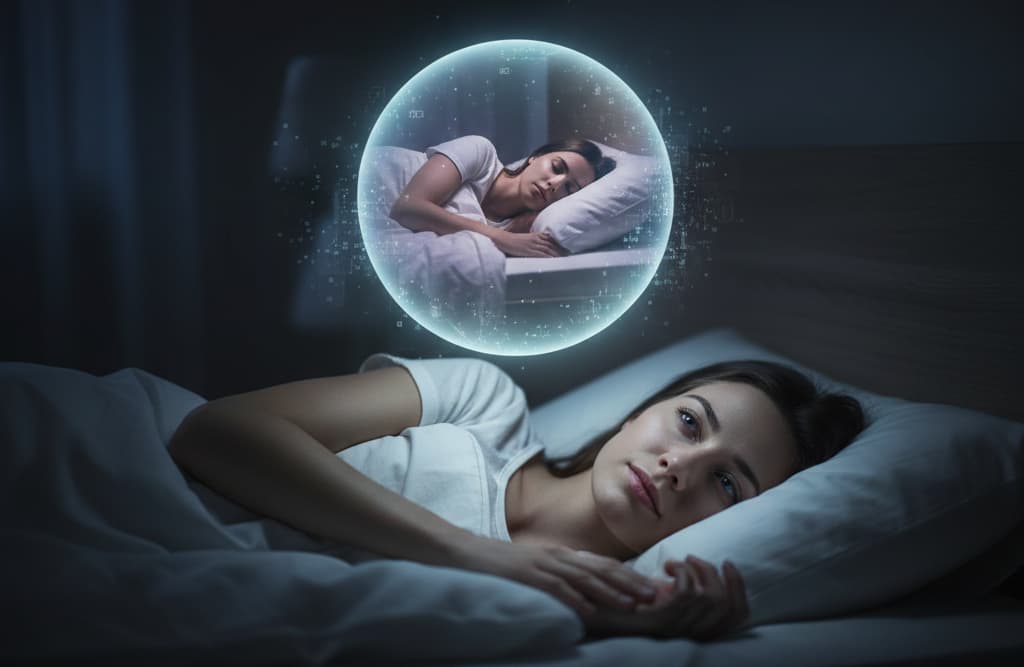
It is the most frustrating feeling in the world. You lie in bed. You stare at the ceiling. You see the clock change from 1:00 to 2:00 to 3:00. Finally, the alarm goes off. You drag yourself out of bed, feeling like you went 12 rounds in a boxing ring, and you tell your partner, “I didn’t sleep a single minute last night.” But here is the controversial, biologically proven truth from modern sleep medicine: You almost certainly did. You are experiencing a glitch in your nervous system known as Sleep State Misperception.
The Broken Sensor: Sleep State Misperception (Paradoxical Insomnia) happens when you are biologically asleep, but your brain’s awareness sensor remains turned on.
Light Sleep Deception: During Stage 1 and Stage 2 sleep, you can still process external sounds (like a dog barking), tricking your memory into logging the time as “awake.”
The “Rest” Reframe: Dropping the obsession with unconsciousness and focusing on physical rest is the key to fixing your broken sleep perception.
Your memory of the night is often completely disconnected from your actual biological sleep data.
1) The Broken Sleep Sensor
If you go to a sleep clinic, you will witness this phenomenon constantly. Patients will wake up in the morning, look the neurologist in the eye, and swear on their lives they were awake for 8 straight hours. However, their EEG (brain wave) data tells a completely different story. The machines prove they slept for 6 or 7 hours.
Are they lying? No. Their perception is just broken.
This usually stems from a state of Hyperarousal. Because of stress or chronic anxiety, your nervous system refuses to fully power down. Your body enters sleep, but a small part of your brain remains on guard duty. You drift in and out of “Stage 1” or “Stage 2” light sleep. In these stages, you maintain a fuzzy awareness of your surroundings. You hear the fridge hum. You notice your partner turn over. Because your brain processed this sensory input, it mistakenly logs the entire block of time as “awake.”
“You are not a broken sleeper. You are simply experiencing a disconnect between your biological state and your conscious memory.”
2) The Danger of the “Insomnia Identity”
The real danger of Sleep State Misperception isn’t the light sleep itself; it is the story you tell yourself the next morning. When you believe you didn’t sleep a wink, you adopt an Insomnia Identity.
You start labeling yourself as a “bad sleeper.” You think, “I am broken. If I don’t sleep tonight, I will crash and ruin tomorrow.”
This psychological label creates massive performance anxiety before you even get into bed. That anxiety releases a flood of cortisol and adrenaline, which actively prevents you from reaching deep sleep the next night. The false perception creates a very real, self-fulfilling prophecy of insomnia.
The bedside clock is the primary tool your brain uses to build the false narrative that you are awake all night.
3) How to Fix Your Perception (The Protocol)
To break out of Paradoxical Insomnia, you have to stop trusting your memory of the night and start changing how you evaluate your rest.
The Perception Reset Protocol:
Ditch the Clock: If you are prone to misperception, looking at the clock is poison. It provides the exact data points (“It is 3:14 AM”) that your brain uses to build the “I’m awake” narrative. Turn the clock around, put it in a drawer, or cover it.
Redefine “Rest”: Stop judging your night purely by unconsciousness. If you are lying comfortably in a dark room, your body is getting up to 80% of the physical benefits of sleep (muscle recovery, energy conservation). Tell yourself: “I am resting. If I sleep, great. If not, I am still resting.”
Trust Your Day, Not Your Night: Do not judge your sleep by how you felt the night went. Judge it by how you function today. Did you fall asleep at the wheel? Did you collapse at noon? If you made it through the day relatively fine, you absolutely got more core sleep than your brain told you.
Your sensor is just a bit sensitive right now. Stop fighting the wakefulness, remove the pressure to perform, and let the biology take over.
4) Common Misconceptions (FAQ)
Q1: Can a sleep tracker (like an Apple Watch or Oura Ring) fix this?
Usually, no. In fact, for people with Sleep State Misperception, trackers often make it worse. This leads to “Orthosomnia”—an unhealthy obsession with sleep data. Furthermore, commercial wrist trackers are notoriously bad at distinguishing between lying completely still and light Stage 1 sleep, so they might confirm your false belief that you were awake.
Q2: Why do I feel like I’m thinking the whole time I’m asleep?
This is a hallmark of Stage 1 and Stage 2 sleep. Your brain is transitioning, and “dreaming” in these light stages often feels exactly like conscious, anxious thinking or problem-solving. You are asleep, but your brain is narrating the experience as if you are awake.
Q3: Does taking a sleeping pill cure paradoxical insomnia?
No. Sleeping pills are sedatives; they knock you out, but they do not produce natural, restorative sleep architecture. They might force you into unconsciousness, but they do not fix the underlying hyperarousal or the anxiety that is causing the misperception in the first place.
Stop letting sleep anxiety ruin your days. Discover your true sleep profile and learn how to trust your body again.
Sleep is the most vulnerable state of human existence. It is where we heal, reset, and grow.
At Slumbelry, we don’t just sell sleep products; we advocate for your physiological right to rest. From ergonomic support to light management, every solution we offer is designed with one obsession: Respecting your Biology.
Science is our language, but your recovery is our purpose. You take care of everything else in your life—let us take care of your nights.
Rest Deeply, The Slumbelry Team
Tired But Can’t Sleep? The Mistake You Make Every Night
Tired But Can’t Sleep? The Difference Between Fatigue and Sleepiness
Written by Dr. Lycan Dizon, Slumbelry Chief Sleep Consultant · Updated 2026
Tired But Can’t Sleep? The Mistake You Make Every Night
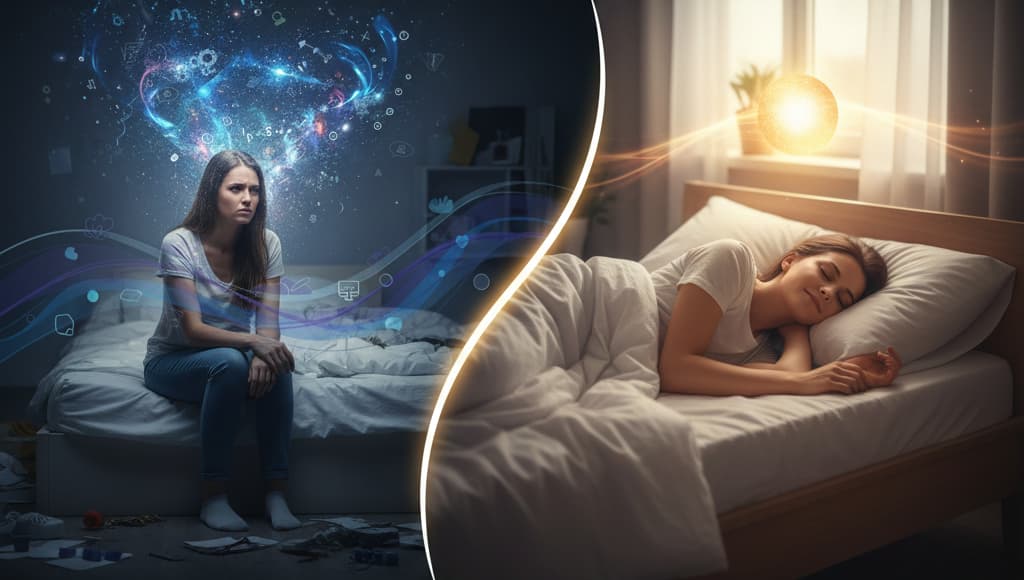
You drag yourself through the front door. Your back aches, your brain is fried from back-to-back meetings, and you feel completely shattered. You think, “I’m so exhausted, I’m going to bed at 9 PM to catch up on sleep.” So you wash your face, climb under the covers, and… nothing. You lie there for two hours, staring at the ceiling, feeling totally wired and incredibly frustrated. How can you be so tired but unable to sleep? The answer lies in a fundamental misunderstanding of your biology. You are confusing two completely different states: Fatigue and Sleepiness.
The Biological Difference: Fatigue is a lack of physical or mental energy. Sleepiness is the biological inability to stay awake (driven by adenosine buildup).
The Early Bedtime Trap: Going to bed when you are fatigued but not sleepy is the leading cause of conditioned insomnia.
The Fix: Treat fatigue with passive rest (reading, meditating) on the couch. Only get into bed when you experience the physical signs of sleepiness (heavy eyelids).
Treating fatigue by forcing yourself into bed too early is a guaranteed recipe for a sleepless night.
1) The Crucial Distinction
We use the words interchangeably in daily life. We say, “I’m so tired,” or “I’m exhausted,” or “I’m sleepy.” But to a sleep specialist, these are entirely different physiological states. Mixing them up is the number one reason people struggle with sleep onset insomnia.
Fatigue is a state of energy depletion. It happens after you run a marathon (physical fatigue), after you study for an exam for six hours (mental fatigue), or after a massive argument with your spouse (emotional fatigue). Your body feels heavy. Your bones ache. You desperately want to lie down and stop moving.
Sleepiness, on the other hand, is a biological drive, exactly like hunger or thirst. It is driven by a chemical in your brain called Adenosine, which builds up the longer you are awake. Sleepiness is the inability to stay awake. It is the heavy eyelids. It is the “head bob” during a boring movie. It is the physical sensation of your brain forcing you into unconsciousness.
“You can be profoundly fatigued without having a single drop of sleepiness in your system. And you cannot sleep until the sleepiness arrives.”
2) The Mistake: Going to Bed When “Fatigued”
Here is the classic trap that ruins your night:
You come home from a brutal day at work. You are shattered (Fatigued). You decide to be “good” and go to bed at 9:30 PM to recover. But because you haven’t been awake long enough to build up sufficient Adenosine, you aren’t actually Sleepy.
So you lie there. Your body is resting (which addresses the fatigue), but your brain is wide awake. Because you are awake in a dark room with nothing to do, your mind starts to race. “Why can’t I sleep? I was so tired five minutes ago! If I don’t fall asleep soon, tomorrow is going to be a disaster.”
Suddenly, you are anxious. Your brain releases adrenaline. Now, you have accidentally trained your nervous system to associate your bed with frustration and wakefulness, rather than peace and sleep.
Active rest outside of the bedroom is how you cure fatigue without ruining your sleep drive.
3) The Solution: Wait for the “Sleep Wave”
You generally cannot force yourself to sleep if you are only fatigued. You must wait for sleepiness to wash over you. Here is how to break the cycle.
The Fatigue Management Protocol:
The “Heavy Eyelid” Test: Do not go to bed because the clock says 10:00 PM. Do not go to bed because your legs hurt. Go to bed only when your eyelids feel physically heavy and you are struggling to keep them open.
Treat Fatigue with Rest, Not Sleep: If you are exhausted at 8 PM but not sleepy, do “active rest.” Sit in a comfortable chair in the living room. Listen to a podcast, knit, or do light stretching. Allow your physical energy to recharge without demanding unconsciousness from your brain.
The “Sleep Restriction” Concept: It sounds counterintuitive, but sometimes the cure for insomnia is staying up later. By delaying your bedtime until you are truly, undeniably sleepy, you build up massive “Sleep Drive.” When you finally hit the pillow, you pass out instantly.
Stop chasing sleep. Stop trying to cure a tired body with an awake brain. Let the sleepiness come and find you.
4) Common Misconceptions (FAQ)
Q1: Why do I feel so sleepy on the couch, but wide awake as soon as I get into bed?
This is called Conditioned Arousal. Because you have spent so many nights lying in bed feeling frustrated and fatigued, your brain now associates the physical bed with stress. The couch feels safe because there is no pressure to “perform” sleep there. You need to rebuild the bed-sleep connection by only getting into bed when your eyes are literally closing.
Q2: Does exercising right before bed make me too fatigued to sleep?
Heavy exercise right before bed doesn’t just cause physical fatigue; it raises your core body temperature and spikes your cortisol and adrenaline. Your body needs to cool down by 2-3 degrees to initiate sleep. Exercise is great for building sleep drive, but try to finish intense workouts at least 3 hours before your target bedtime.
Q3: If I’m fatigued all day, shouldn’t I take a nap?
If you struggle with falling asleep at night, avoid naps. Napping acts like a “release valve” for the Adenosine (sleep pressure) you have built up during the day. If you take a 2-hour nap at 3 PM, you will not have enough sleepiness left in your system to fall asleep at 11 PM. Push through the fatigue with light activity so you can sleep deeply at night.
Stop lying awake in frustration. Discover your true sleep drive and rebuild your rest.
Sleep is the most vulnerable state of human existence. It is where we heal, reset, and grow.
At Slumbelry, we don’t just sell sleep products; we advocate for your physiological right to rest. From ergonomic support to light management, every solution we offer is designed with one obsession: Respecting your Biology.
Science is our language, but your recovery is our purpose. You take care of everything else in your life—let us take care of your nights.
Rest Deeply, The Slumbelry Team
We use cookies to improve your experience. Manage preferences or learn more in our Cookie Policy.