
×
Slumbelry
HOME SHOP WELLBEING BLOG LOGIN / REGISTER SEARCH CONTACT

Sleeping Together: How to Share a Bed Without Ruining Your Sleep
Article Image

Written by Dr. Lycan Dizon, Slumbelry Chief Sleep Consultant

Humans are the only species that voluntarily delays sleep to watch Netflix. We are also one of the few species that insists on sleeping in the same small rectangle as another adult human, purely for romantic symbolism.

Biologically, sleeping alone is superior. You have total control over temperature, movement, and noise. But emotionally, we want to be close. So, we end up in The Couple’s Dilemma:

  • He snores.
  • She steals the duvet.
  • He gets up at 5 AM.
  • She reads until midnight.
Result: Two exhausted people who love each other but hate sharing a bed.

You don’t need a “Sleep Divorce” (sleeping in separate rooms). You just need better logistics.

1. The Size Matter

If you are two adults sleeping in a Double (Full) bed, you each have less width than a baby in a crib. That is insane. Upgrade immediately.

  • Queen: The bare minimum.
  • King (or Super King): The R90 Standard. A King size gives you enough space to move without touching. In sleep, distance is love.

2. The Scandinavian Method (Two Duvets)

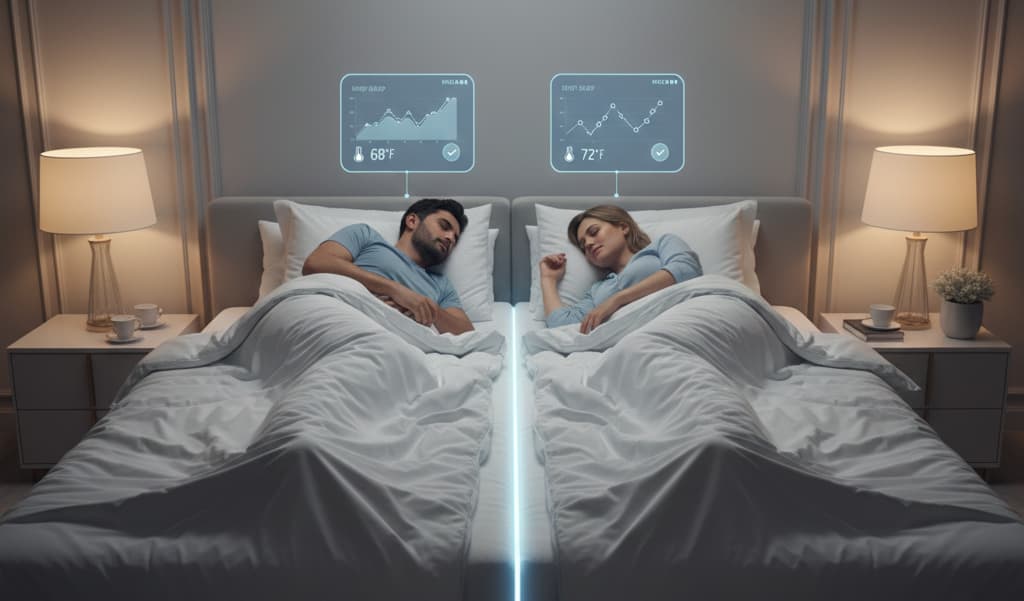
This is a game-changer. In Scandinavia, couples sleep on one mattress but use two separate single duvets.

  • No more tug-of-war: You have your own cocoon.
  • Temperature Control: He can have a thin cool duvet; she can have a thick warm one. Everyone wins.
It looks messy? Just throw a large bedspread over the top in the morning. Problem solved.

3. Motion Isolation

If your partner moves and you bounce, your mattress is failing you. Old-school spring mattresses are like trampolines. One person jumps, the other flies. Slumbelry’s Hybrid Foam technology absorbs energy. You could set a glass of wine on one side and jump on the other (please don’t actually do this, but you get the point). Motion isolation means their tossing and turning doesn’t become your wake-up call.

4. Respect the Chronotype

If he is an AMer (up at 5 AM) and she is a PMer (up until midnight):

  • The Rule: Whoever comes to bed last must be a ninja. Use a flashlight (red light), not the main light.
  • The Rule: Whoever wakes up first must leave the room immediately. Do your “Post-Sleep Upload” in the living room, not in the bedroom while rustling clothes.

Intimacy vs. Sleep

Remember, the bed is for two things: Sleep and Intimacy. They don’t have to happen at the same time. You can cuddle, be intimate, and connect. But when it’s time to sleep, retreat to your side (or your own duvet). Prioritizing your sleep isn’t selfish; it’s the best thing you can do for your relationship. A well-rested partner is a patient, loving partner.

The Slumbelry Commitment

Sleep is the most vulnerable state of human existence. It is where we heal, reset, and grow.

At Slumbelry, we don’t just sell sleep products; we advocate for your physiological right to rest. From ergonomic support to light management, every solution we offer is designed with one obsession: Respecting your Biology.

Science is our language, but your recovery is our purpose. You take care of everything else in your life—let us take care of your nights.

Rest Deeply,
The Slumbelry Team

The Fetal Position: Why It’s The Only Way You Should Sleep

Article Image

Written by Dr. Lycan Dizon, Slumbelry Chief Sleep Consultant

If you ask 10 people how they sleep, you’ll get 10 different answers. “I’m a starfish.” “I’m a log.” “I sleep on my stomach with one leg out.”

Nick Littlehales is not a fan of this variety. In the R90 method, there is really only one approved sleeping position. The Fetal Position. On your non-dominant side.

Why Not the Stomach?

We’ve covered this before, but it bears repeating. Stomach sleeping is orthopedic suicide. It twists the neck, hyperextends the spine, and compresses internal organs. Just don’t do it.

Why Not the Back?

Back sleeping is okay for alignment, but it is a disaster for breathing. Gravity pulls the soft tissue of the throat backward, narrowing the airway. This causes snoring and is the primary cause of Sleep Apnea. If you want to breathe freely (which is kinda important for recovery), get off your back.

The Case for Fetal

The Fetal Position (lying on your side, knees gently pulled up) is our primal posture. It is how we developed in the womb. 1. Spinal Neutrality: With the right pillow, the spine stays perfectly straight. 2. Open Airways: The throat remains open, reducing snoring. 3. Brain Cleaning: Recent studies suggest that the Glymphatic System (the brain’s waste clearance system) works most efficiently when we are on our side. It literally cleans your brain better.

Why Non-Dominant?

This is the R90 secret sauce. If you are right-handed, you should sleep on your left side. If you are left-handed, sleep on your right side.

Why? Your dominant side is your “fighting” side. It’s the side you use to throw a ball, write, or defend yourself. It tends to be tighter, more muscular, and more sensitive. By sleeping on your non-dominant side, you are protecting your “weapon.” You are letting your active side rest on top, uncompressed. It also feels psychologically safer for the brain to have its dominant hand free to “defend” (a primal instinct).

The Pillow Check

The Fetal Position only works if you fill the Neck Gap. Lie on your side. There is a space between your ear and the mattress.

  • If your pillow is too thin: Your head drops down. Neck strain.
  • If your pillow is too thick: Your head is pushed up. Neck strain.
  • The Goldilocks Zone: Your head should be perfectly aligned with the center of your chest.

How to Switch

“But I can only fall asleep on my stomach!” Habits are hard to break. But you can retrain your body. 1. Start in the Fetal Position. 2. Use a body pillow (or hug a regular pillow). This prevents you from rolling onto your stomach. 3. Persist. It takes about 10 days to reprogram the habit.

Your body wants to be in the Fetal Position. It’s natural. It’s safe. It’s restorative. Stop fighting gravity. Curl up, roll to your non-dominant side, and let recovery happen.

The Slumbelry Commitment

Sleep is the most vulnerable state of human existence. It is where we heal, reset, and grow.

At Slumbelry, we don’t just sell sleep products; we advocate for your physiological right to rest. From ergonomic support to light management, every solution we offer is designed with one obsession: Respecting your Biology.

Science is our language, but your recovery is our purpose. You take care of everything else in your life—let us take care of your nights.

Rest Deeply,
The Slumbelry Team

The Post-Sleep Upload: How to Wake Up Winning

Article Image

Written by Dr. Lycan Dizon, Slumbelry Chief Sleep Consultant

We spend so much time talking about how to fall asleep. But according to Nick Littlehales, the process of waking up is just as critical. He calls it The Post-Sleep Upload. Everything you do in the first 90 minutes of your day sets the stage for the next 16 hours—and determines how well you will sleep tonight.

The Snooze Button Trap

Let’s start with the enemy. When you hit snooze, you are not getting “5 more minutes of sleep.” You are confusing your brain. You drift back into a fragmented sleep state, only to be yanked out again. This drastically increases Sleep Inertia (that zombie feeling). The Rule: If the alarm goes off, you get up. No negotiation.

The 4 Pillars of the Upload

1. Light (The Trigger)

Light is the “On” switch for your brain. It suppresses melatonin and spikes cortisol (the good kind that wakes you up).
  • Action: Open the curtains immediately.
  • Better Action: Go outside. Natural sunlight is 100x more powerful than indoor bulbs. Even on a cloudy day, the lux intensity is sufficient to reset your clock.
  • Why: This “Morning Anchor” of light is what starts the timer for melatonin release 16 hours later.

2. Hydrate (The Fuel)

You just went 8 hours without water. You breathed out moisture all night. You are dehydrated. Dehydration causes fatigue and brain fog.
  • Action: Drink a large glass of water before you drink coffee.
  • Why: Rehydrating your cells jumpstarts your metabolism and cognitive function faster than caffeine.

3. Move (The Pump)

You don’t need to run a marathon. But you need to mobilize your system.
  • Action: Walk the dog. Do 10 pushups. Stretch. Yoga.
  • Why: Movement increases core body temperature (which signals wakefulness) and pumps blood to the brain.

4. Fuel (The Breakfast)

This is controversial (hello, intermittent fasters). But for most people, eating signals to the body that “resources are available” and it’s safe to expend energy.
  • Action: Eat something nutrient-dense. Avoid a sugar bomb (donuts/cereal) that will cause a crash later.

The Tech Delay

Just like the Digital Sunset at night, try a Digital Sunrise. Do not check your phone while you are still in bed. When you open email or social media instantly, you flood your brain with other people’s demands and dopamine hits before you have even brushed your teeth. It puts you in a reactive state. Give yourself 15 minutes. Drink your water. Open the window. Then check the world.

Winning the Morning

If you execute the Upload correctly, you won’t need 3 coffees to function. You will feel alert, focused, and calm. And most importantly, you have set the biological timer for tonight. By anchoring your morning correctly, you have already started preparing for a great night’s sleep.

The Slumbelry Commitment

Sleep is the most vulnerable state of human existence. It is where we heal, reset, and grow.

At Slumbelry, we don’t just sell sleep products; we advocate for your physiological right to rest. From ergonomic support to light management, every solution we offer is designed with one obsession: Respecting your Biology.

Science is our language, but your recovery is our purpose. You take care of everything else in your life—let us take care of your nights.

Rest Deeply,
The Slumbelry Team

The 90-Minute Download: Your Essential Pre-Sleep Ritual

Article Image

Written by Dr. Lycan Dizon, Slumbelry Chief Sleep Consultant

Imagine a pilot landing a plane. They don’t just dive from 30,000 feet and slam onto the runway. They descend. They reduce speed. They check the flaps. They communicate with the tower. It is a calculated, gradual process.

Going to sleep is a biological landing. You cannot go from the high-altitude stress of work, emails, and Netflix straight into deep sleep. You need to descend. In the R90 method, this descent is called The 90-Minute Download.

Why 90 Minutes?

Because that is the length of one cycle. It is the natural rhythm of the body. If your target bedtime is 11:00 PM, your Download begins at 9:30 PM. During this time, your goal is to transition from the Sympathetic Nervous System (Fight/Flight) to the Parasympathetic Nervous System (Rest/Digest).

The 4 Pillars of the Download

1. The Digital Sunset (Technology)

This is the non-negotiable one. Blue light from screens suppresses melatonin. We know this. But it’s also about the content. An email from your boss or a distressing news headline spikes your cortisol.
  • The Rule: at 9:30 PM, the phone goes away. Ideally, leave it in another room (buy an old-school alarm clock).
  • The Hack: If you must use a device, use aggressive blue-light blocking glasses.

2. The Temperature Drop (Environment)

Your body temperature needs to drop by about 2°F (1°C) to initiate sleep.
  • Action: Turn down the thermostat.
  • Action: Take a warm shower or bath. When you step out of the warm water into the cooler air, your body heat dumps rapidly, mimicking the natural sleep trigger.

3. The Mental Trash Can (Mind)

Do you lie in bed worrying about tomorrow’s to-do list? That’s because you didn’t “download” it. Your brain is holding onto the data because it’s afraid of losing it.
  • The Ritual: Take a physical notebook. Write down everything you need to do tomorrow. Write down anything that is worrying you.
  • The Psychology: By writing it down, you are telling your brain, “It is safe. It is recorded. You can let go now.”

4. The Physical Prep (Body)

Don’t leave morning tasks for the morning. Pack your gym bag. Lay out your clothes. Grind the coffee beans. This serves two purposes: 1. It makes your morning smoother (Post-Sleep Routine). 2. It acts as a ritual signal to your body that “the day is done.”

What To Do Instead?

“If I can’t watch TV or scroll my phone, what do I do for 90 minutes?” This is the most common question. It shows how addicted we are to stimulation.

  • Read a book (fiction): Fiction engages the imagination, not the analytical brain.
  • Listen to a podcast/audiobook: But nothing too intense.
  • Stretch/Yoga: Light movement releases tension.
  • Talk: Actually have a conversation with your partner (novel concept, I know).
  • Meditate: Do a body scan.

Protect the Buffer

This 90 minutes is sacred. It is the moat around your castle. If you let stress cross the moat, it will invade your sleep. Treat the Download as part of your sleep. It’s not “time wasted”; it’s the runway that ensures a smooth landing.

The Slumbelry Commitment

Sleep is the most vulnerable state of human existence. It is where we heal, reset, and grow.

At Slumbelry, we don’t just sell sleep products; we advocate for your physiological right to rest. From ergonomic support to light management, every solution we offer is designed with one obsession: Respecting your Biology.

Science is our language, but your recovery is our purpose. You take care of everything else in your life—let us take care of your nights.

Rest Deeply,
The Slumbelry Team
The Art of the CRP: Why Napping Isn’t Lazy (It’s Performance)

Article Image

Written by Dr. Lycan Dizon, Slumbelry Chief Sleep Consultant

“I’ll sleep when I’m dead.” “Napping is for toddlers.” In our hustle culture, napping is viewed as a weakness. It’s seen as a sign that you can’t hack the pace.

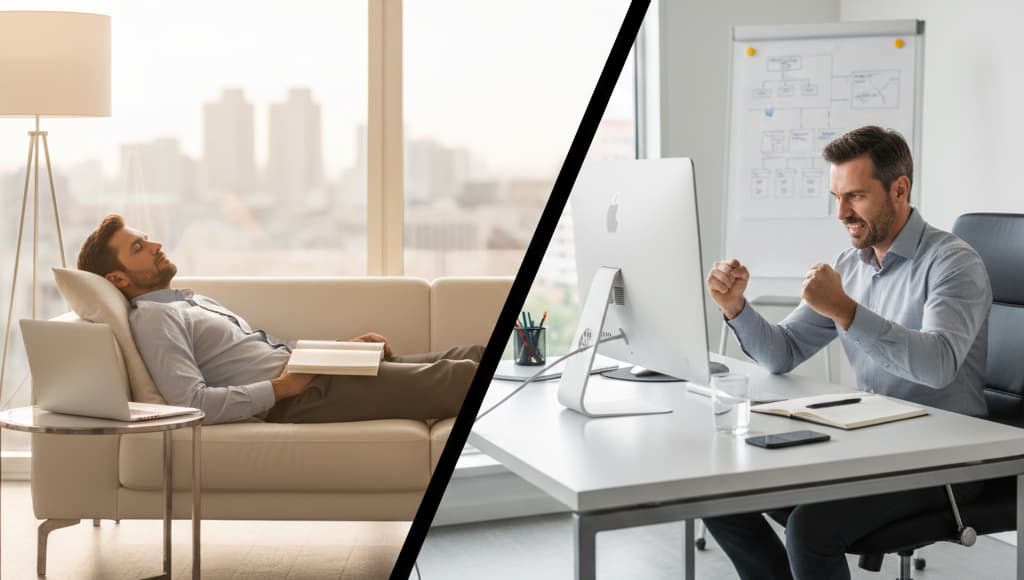
Nick Littlehales wants to rebrand the nap. He doesn’t call it a nap. He calls it a CRP (Controlled Recovery Period). It sounds technical because it is technical. It’s a strategic tool used by Formula 1 drivers, elite footballers, and CEOs to reset their adenosine levels and boost cognitive function. It’s not about being lazy; it’s about performance enhancement.

The Biology of the Afternoon Dip

Have you noticed that around 2:00 PM or 3:00 PM, your brain just… stops? You stare at your screen. You read the same email three times. You crave sugar. This isn’t just because you had a heavy lunch. It’s a natural dip in your circadian rhythm. Your body is practically begging for a recovery period. Instead of listening, we usually drown the signal with a double espresso. The R90 method suggests a better way: The CRP.

The Two Types of CRP

There are only two valid durations for a nap. Anything in between is dangerous (hello, sleep inertia).

1. The 30-Minute Refresh (The Nappuccino)

This is for a quick energy boost.
  • Duration: 30 Minutes (max).
  • The Goal: Stay in Light Sleep (NREM 1 & 2). Do not enter Deep Sleep.
  • The Technique:
1. Drink a cup of coffee (black/espresso) immediately before. 2. Set an alarm for 20-30 minutes. 3. Close your eyes. 4. The Magic: It takes about 20 minutes for the caffeine to hit your bloodstream. Just as you wake up from your light sleep, the caffeine kicks in. You get the double benefit of the rest plus the stimulant. You wake up superhuman.

2. The 90-Minute Reboot (The Full Cycle)

This is for when you are severely sleep-deprived (missed a cycle last night).
  • Duration: 90 Minutes.
  • The Goal: Complete one full sleep cycle (Light -> Deep -> REM -> Light).
  • The Warning: You must have the full 90 minutes. If you wake up at 60 minutes, you will be in deep sleep and feel terrible.

How to CRP Like a Pro

You don’t need a bed to CRP. In fact, Littlehales advises against using your bed during the day (keep the bed for night sleep).

  • Location: A quiet corner, a parked car, a comfortable chair, or even under your desk (Costanza style).
  • Posture: You don’t need to be flat. Just reclining slightly is enough.
  • Environment: Use a Slumbelry Eye Mask and Earplugs. Sensory deprivation is key to dropping into the state quickly.
  • Mindset: Don’t stress if you don’t “fall asleep.” Just closing your eyes and zoning out for 20 minutes offers 80% of the benefit. It’s about “shutting down the engine” to let it cool, not necessarily turning it off completely.

The 5 PM Rule

Crucial rule: No CRPs after 5:00 PM. (Or 6:30 PM if you are a severe Night Owl). Napping too late eats into your “sleep pressure” for the night, making it hard to fall asleep at your anchor time.

Permission to Pause

Next time you feel that afternoon crash, don’t fight it. Set your timer. Close your eyes. Take a CRP. You aren’t slacking off. You are rebooting your system so you can crush the rest of the day.

The Slumbelry Commitment

Sleep is the most vulnerable state of human existence. It is where we heal, reset, and grow.

At Slumbelry, we don’t just sell sleep products; we advocate for your physiological right to rest. From ergonomic support to light management, every solution we offer is designed with one obsession: Respecting your Biology.

Science is our language, but your recovery is our purpose. You take care of everything else in your life—let us take care of your nights.

Rest Deeply,
The Slumbelry Team

Are You an AMer or PMer? Why You Can’t Fight Your Biology

Article Image

Written by Dr. Lycan Dizon, Slumbelry Chief Sleep Consultant

” The early bird catches the worm.” “Early to bed, early to rise…” Society loves morning people. We equate waking up at 5 AM with success, discipline, and virtue. And we treat night owls as lazy, undisciplined, or disorganized.

This is not just unfair; it is biologically incorrect. Your preference for mornings or evenings is not a habit. It is written in your DNA. It is your Chronotype. Nick Littlehales simplifies the clinical terms (Lark/Owl/Hummingbird) into two practical categories: AMers and PMers.

The Science: The PER3 Gene

Research has identified specific genes, such as the PER3 gene, that determine your circadian length.

  • AMers (Larks): Have a faster internal clock. They wake up naturally early, peak in energy around noon, and crash early in the evening.
  • PMers (Owls): Have a slower internal clock. They struggle to wake up, feel groggy in the morning, but come alive at 9:00 PM.

Trying to force a PMer to live an AMer lifestyle is like trying to force a left-handed person to write with their right hand. You can do it, but it will be messy, inefficient, and exhausting.

Identifying Your Type

You probably already know what you are, but let’s test it. Imagine you have zero commitments. No work, no kids, no alarm.

  • Scenario A: You wake up at 7:00 AM anyway, hungry for breakfast. You feel your best before lunch. By 9:00 PM, you are looking for your pajamas. -> AMer.
  • Scenario B: You sleep until 10:00 AM (or noon). You skip breakfast. You feel “meh” until 4:00 PM. At 11:00 PM, you get a burst of creative energy and want to clean the house. -> PMer.
  • In Between: Most people fall somewhere in the middle, but usually lean one way.

Strategies for the “Wrong” World

The modern corporate world (9-to-5) is designed for AMers. If you are a PMer, you are living with permanent “Social Jetlag.” You are waking up hours before your brain is ready. You can’t change your genes, but you can hack your environment.

For the PMer Living in an AM World:

1. Light is Your Drug: You need massive amounts of light immediately upon waking to suppress your lingering melatonin. Buy a Sad Lamp (Light Therapy Lamp) and sit in front of it while you drink your coffee. 2. Delay Coffee: Don’t drink coffee immediately. Wait 90 minutes until your cortisol naturally starts to rise. 3. Night Prep: Your energy peaks at night, which makes it hard to sleep. You need a strict Digital Sunset. Use Blue Light Blocking glasses and blackout curtains to simulate the darkness your brain ignores.

For the AMer:

You have it easier, but be careful of the “Evening Crash.” 1. Nap Power: An afternoon nap (CRP) is crucial for you to survive social events in the evening. 2. Respect the Fade: Don’t schedule high-focus tasks after 4:00 PM. Use that time for admin or low-energy work.

Stop the Guilt

If you are a PMer, stop feeling guilty for hitting snooze. You aren’t lazy; you are just fighting a timezone that doesn’t match your internal clock. Accept your biology. Adjust your schedule where you can. And optimize your recovery so you can thrive in either zone.

The Slumbelry Commitment

Sleep is the most vulnerable state of human existence. It is where we heal, reset, and grow.

At Slumbelry, we don’t just sell sleep products; we advocate for your physiological right to rest. From ergonomic support to light management, every solution we offer is designed with one obsession: Respecting your Biology.

Science is our language, but your recovery is our purpose. You take care of everything else in your life—let us take care of your nights.

Rest Deeply,
The Slumbelry Team

Calculating Your Perfect Bedtime: The Backward Math

Article Image

Written by Dr. Lycan Dizon, Slumbelry Chief Sleep Consultant

“I’ll go to bed early tonight.” We’ve all said it. Usually, we say it around 4:00 PM when we are chugging coffee. But then 9:00 PM rolls around, and we watch one episode. Then another. Then we scroll Instagram. Suddenly, it’s midnight. “I’ll go to bed early tomorrow,” we promise.

The problem isn’t your willpower; it’s your lack of a plan. You can’t just “hope” to sleep better. You need a schedule. And contrary to popular belief, you don’t start with your bedtime. You start with your Wake Time.

Step 1: The Anchor (Fixed Wake Time)

The most important variable in the R90 equation is a consistent wake-up time. This is your Anchor. It should be the time you need to be up for work/school/life. Let’s say it’s 6:30 AM. This time must be non-negotiable. Monday through Sunday. 6:30 AM.

Step 2: The Backward Math

Now, we calculate backwards using 90-minute cycles. We want to aim for the ideal 5 Cycles (7.5 hours).

  • Anchor: 6:30 AM
  • Minus 90 mins (Cycle 5) -> 5:00 AM
  • Minus 90 mins (Cycle 4) -> 3:30 AM
  • Minus 90 mins (Cycle 3) -> 2:00 AM
  • Minus 90 mins (Cycle 2) -> 12:30 AM
  • Minus 90 mins (Cycle 1) -> 11:00 PM

So, your ideal sleep time is 11:00 PM.

Step 3: The Pre-Sleep Buffer

But you can’t just dive into bed at 11:00 PM and expect to switch off instantly. You need the 15-minute “wind down” to actually fall asleep. So, you need to be in bed, lights out, eyes closed by 11:00 PM. This means your bedtime routine starts at 10:45 PM.

What If I Miss the Bus?

Life happens. You’re out at dinner. You get stuck working late. It’s 11:15 PM, and you missed your 11:00 PM slot. Do not go to sleep. If you go to sleep now, you will wake up mid-cycle at 6:30 AM and feel groggy. Instead, wait for the next cycle bus. Wait until 12:30 AM (the start of the 4-cycle window). Use that extra 90 minutes to read, prep for tomorrow, or relax. You will get less sleep (6 hours), but you will wake up at the end of a cycle, feeling surprisingly refreshed.

The Power of Precision

This approach turns sleep into a logistical strategy rather than a vague hope.

  • 6:30 AM Wake Up:
  • Target 1: 11:00 PM (5 Cycles – Ideal)
  • Target 2: 12:30 AM (4 Cycles – Acceptable)
  • Target 3: 2:00 AM (3 Cycles – Survival Mode)

Knowing these “buses” gives you control. If you miss the first one, you know exactly when the next one arrives. Stop guessing. Do the math. And let your biology run on time.

The Slumbelry Commitment

Sleep is the most vulnerable state of human existence. It is where we heal, reset, and grow.

At Slumbelry, we don’t just sell sleep products; we advocate for your physiological right to rest. From ergonomic support to light management, every solution we offer is designed with one obsession: Respecting your Biology.

Science is our language, but your recovery is our purpose. You take care of everything else in your life—let us take care of your nights.

Rest Deeply,
The Slumbelry Team

The R90 Method: How to Sleep Like an Elite Athlete

Article Image

Written by Dr. Lycan Dizon, Slumbelry Chief Sleep Consultant

When we think of elite performance, we think of training. We think of Cristiano Ronaldo doing sprints, or an Olympic swimmer in the pool at 4 AM. But Nick Littlehales, the world’s first “Sleep Coach,” argues that the most critical part of training is the part where you do nothing at all. Recovery.

Littlehales redefined sleep for the world of professional sports. He stopped calling it “sleep” and started calling it “recovery.” And he introduced a system called R90 (Recovery in 90 Minutes). You don’t have to be a Manchester United striker to benefit from this. Whether you’re a CEO, a parent, or a student, you are a “mental athlete.” And you need a recovery strategy.

The Paradigm Shift: From Nightly to Weekly

Most of us judge our sleep night by night. “I slept bad last night; today is ruined.” “I need to catch up tonight.” This creates immense pressure. If you have one bad night, you feel like a failure.

The R90 method zooms out. Instead of looking at 24 hours, look at 7 days. Your goal is to hit a target number of cycles per week.

  • Ideal: 35 Cycles per week (5 cycles x 7 days).
  • Acceptable: 28-30 Cycles per week.

The Freedom of Flexibility

If you have a late dinner on Tuesday and only get 4 cycles (6 hours), don’t panic. You haven’t “ruined” your sleep. You just have a deficit of 1 cycle. You can make that up later in the week with a “Controlled Recovery Period” (a nap) or by adding a cycle on the weekend. This mindset removes the anxiety around sleep. It treats recovery as a bank account—as long as you balance the books by Sunday, you’re fine.

The “Pre-Game” and “Post-Game” Routine

Athletes don’t just sprint onto the field. They warm up. They cool down. Littlehales insists on the same for sleep. You cannot go from 100 mph (answering emails) to 0 mph (sleeping) instantly.

  • Pre-Sleep Routine (90 Mins): The warm-down. Dim lights, cool temperature, no tech. Prepare your kit (clothes/bag) for tomorrow so your brain can offload the responsibility.
  • Post-Sleep Routine (90 Mins): The warm-up. Hydrate immediately. Get sunlight. Move. Do not look at your phone for the first 15 minutes.

Consistency is King

The human body loves rhythm. Our circadian clocks are synchronized by consistency. The R90 method demands a Fixed Wake Time. No matter when you go to sleep, you wake up at the same time. Every day. Even Sunday.

  • If you go to bed late, you don’t sleep in. You wake up at your fixed time to preserve your rhythm, and you take a nap later if needed.
Sleeping in on weekends is like giving yourself jetlag every week (Social Jetlag). It destroys your performance for Monday.

Your Equipment Matters

You wouldn’t run a marathon in flip-flops. Why would you try to recover on a lumpy, 10-year-old mattress? In the R90 philosophy, your bed is your Recovery System. It needs to be consistent, supportive, and hygienic. At Slumbelry, we design our products with this exact philosophy. We aren’t selling “comfort”; we are selling “performance recovery.”

The Challenge

This week, try counting cycles, not hours. Aim for 35. If you miss one, shrug it off and make it up. Treat your sleep with the same respect an athlete treats their training. Because in the game of life, the best sleeper usually wins.

The Slumbelry Commitment

Sleep is the most vulnerable state of human existence. It is where we heal, reset, and grow.

At Slumbelry, we don’t just sell sleep products; we advocate for your physiological right to rest. From ergonomic support to light management, every solution we offer is designed with one obsession: Respecting your Biology.

Science is our language, but your recovery is our purpose. You take care of everything else in your life—let us take care of your nights.

Rest Deeply,
The Slumbelry Team
The ‘Anchor Sleep’ Technique: How to Survive Shift Work

Article Image

Written by Dr. Lycan Dizon, Slumbelry Chief Sleep Consultant

Nurses. Police officers. Pilots. Factory workers. Our society runs 24/7 because of you. But biology runs on the sun. Shift work is classified by the WHO as a probable carcinogen. It fights every natural rhythm in your body. If you work shifts, the standard “sleep 8 hours at night” advice is useless. It’s insulting. You need a survival strategy. Enter Polyphasic Sleep and the Anchor Sleep method.

The Challenge: Rotating Chaos

The hardest schedule isn’t the permanent night shift (the body can eventually adapt to that). It’s the Rotating Shift. Two days on, two days off. Days, then nights. Your body never knows what timezone it’s in.

The Strategy: Anchor Sleep

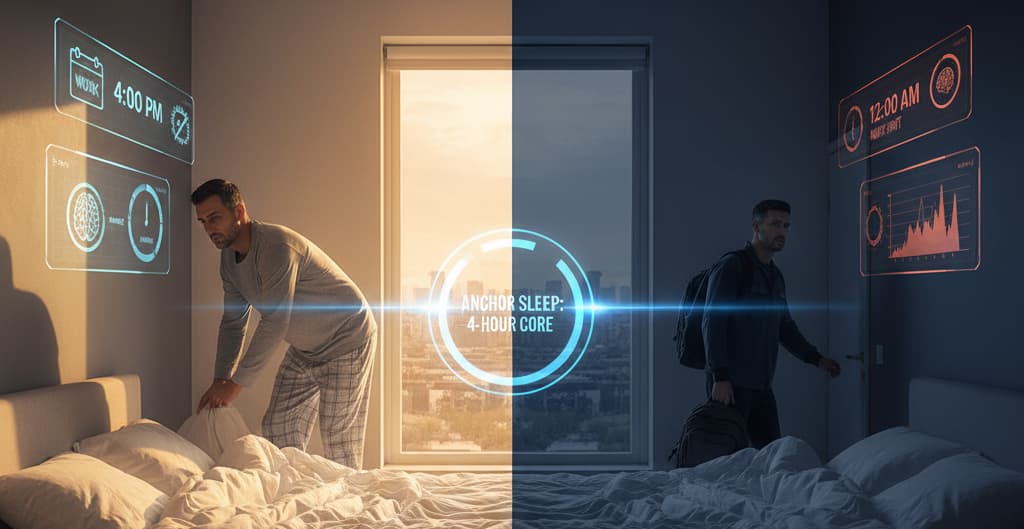
You cannot keep shifting your entire sleep block. Instead, try to keep a 4-hour block consistent.

  • The Concept: Identify a 4-hour window (approx 2-3 cycles) that you can sleep during every single day, whether you are working or off.
  • Example: 8:00 AM – 12:00 PM.
  • On Work Days (Night Shift): You come home at 7 AM. You sleep 8 AM – 12 PM (Anchor). Then you wake up, do life, and nap (CRP) before your next shift.
  • On Off Days: You go to sleep late (say, 4 AM) and sleep 8 AM – 12 PM. Then you get up and have a “normal” afternoon.

This anchors your circadian rhythm to at least some consistency.

The Polyphasic Approach

Since you can’t get 5 cycles (7.5 hours) in one go, you must break them up.

  • Main Sleep: 4 Cycles (6 Hours) after shift.
  • Recovery Nap: 1 Cycle (90 Minutes) before shift.
Total: 5 Cycles. You are getting the same amount of recovery, just distributed differently.

Survival Kit for Day Sleepers

Sleeping during the day is a war against biology. You need weapons. 1. Total Blackout: Foil on the windows. Blackout curtains. Eye mask. If you can see sunlight, you will wake up. 2. Sunglasses: Wear dark sunglasses on your way home from the shift. Do not let the morning sun hit your retina, or it will wake you up just when you need to crash. 3. Melatonin: Consult your doctor, but small doses of melatonin can help signal “night” to your body at 8:00 AM. 4. Do Not Disturb: Phone off. Doorbell off. Sign on the door: “Night Shift Worker Sleeping. Do Not Knock.”

Respect the Recovery

Shift work is hard. It ages you. You have to treat recovery as your second job. Don’t try to be a superhero and run errands all day after a night shift. Sleep is your fuel. Without it, you are dangerous to yourself and others. Anchor your sleep, and hold on tight.

The Slumbelry Commitment

Sleep is the most vulnerable state of human existence. It is where we heal, reset, and grow.

At Slumbelry, we don’t just sell sleep products; we advocate for your physiological right to rest. From ergonomic support to light management, every solution we offer is designed with one obsession: Respecting your Biology.

Science is our language, but your recovery is our purpose. You take care of everything else in your life—let us take care of your nights.

Rest Deeply,
The Slumbelry Team

Caffeine and Alcohol: The Recovery Killers (And How to Enjoy Them Safely)

Article Image

Written by Dr. Lycan Dizon, Slumbelry Chief Sleep Consultant

We love our drugs. Caffeine to get us up. Alcohol to bring us down. They are the bookends of the modern day. And honestly? They are great. Coffee is delicious and productive. A glass of wine is relaxing and social. The goal of the R90 method isn’t to make you a monk. It’s to make you smart. You can enjoy both, as long as you respect the Timing.

Caffeine: The False Energy

Caffeine doesn’t give you energy. It masks fatigue. It blocks Adenosine receptors in the brain. Adenosine is the chemical that makes you feel tired. Think of it like putting a piece of tape over your car’s “Check Engine” light. The engine is still overheating; you just can’t see the warning.

The Half-Life Rule

Caffeine has a half-life of about 6 hours. If you drink a double espresso (200mg) at 4:00 PM:
  • At 10:00 PM, you still have 100mg in your system.
  • At 4:00 AM, you still have 50mg.
You are trying to sleep while chemically wired.

The Strategy

1. The Cut-Off: No caffeine after 2:00 PM. (Or noon if you are sensitive). 2. Quality over Quantity: Drink good coffee. Enjoy it. But treat it as a morning performance tool, not an all-day IV drip.

Alcohol: The Fake Sleep

“I need a drink to help me sleep.” False. Alcohol helps you sedate. Sedation is not sleep. Alcohol is a CNS depressant. It knocks out your cortex faster, so you lose consciousness quickly. But once you are “out”: 1. REM Block: Alcohol suppresses REM sleep (mental recovery). 2. Dehydration: It is a diuretic. You will wake up thirsty and needing the toilet. 3. The Rebound: As the alcohol wears off (around 3 AM), your sympathetic nervous system spikes. You wake up hot, anxious, and heart pounding.

The Strategy

1. The Buffer: Stop drinking 3 hours before bed. Give your liver time to process the toxin. 2. Hydration Sandwich: One glass of water for every glass of alcohol. 3. Day Drinking: Unironically, having a drink at lunch or early evening is infinitely better for your sleep than a “nightcap.”

Balance

Life is for living. If you are at a wedding, drink the champagne. Stay up late. Have fun. Just know that you will incur a “Recovery Debt.” Don’t beat yourself up. Just plan to pay it back the next day with a CRP (nap) and an early night. Control the substances; don’t let them control your recovery.

The Slumbelry Commitment

Sleep is the most vulnerable state of human existence. It is where we heal, reset, and grow.

At Slumbelry, we don’t just sell sleep products; we advocate for your physiological right to rest. From ergonomic support to light management, every solution we offer is designed with one obsession: Respecting your Biology.

Science is our language, but your recovery is our purpose. You take care of everything else in your life—let us take care of your nights.

Rest Deeply,
The Slumbelry Team

Better sleep tips & exclusive offers, straight to your inbox.

Curated sleep insights, early access to new products, and members-only deals.
No spam. You can unsubscribe anytime.