The CEO’s Delusion: Why Your “Stamina” is Actually Intoxication
Written by Dr. Lycan Dizon, Slumbelry Chief Sleep Consultant
In my years consulting with high-performance leaders, I’ve noticed a recurring pathology. It usually starts with a humblebrag over coffee: “I don’t know how you do eight hours. Give me four hours and a double espresso, and I’m ready to run the empire.”
They wear their dark circles like war paint. They view sleep as a budget line item they can slash to increase the bottom line of their productivity.
As a specialist, I don’t see “dedication” in these statements. I see biological arrogance. And frankly, I see a liability.
The Napoleon Propaganda
We need to dismantle the foundational myth of the sleepless genius. Whenever a client cites Napoleon Bonaparte—the supposed conqueror of Europe who ran on catnaps—I point them to the memoirs of Louis Antoine Fauvelet de Bourrienne, Napoleon’s private secretary.
Bourrienne didn’t describe a superman. He described a man who slept when he needed to, often collapsing into naps multiple times a day to compensate for his erratic schedule. The “four-hour” narrative wasn’t biology; it was branding. It was, to use a clinical term, self-glorifying propaganda. Napoleon understood that portraying himself as tireless made him seem invincible.
Today’s CEOs are doing the same. But while you can fool your shareholders, you cannot fool your physiology.
The “Functional Drunk” in the Boardroom
Let’s look at the data, not the anecdotes. When you strip away the bravado, the neurological impact of sleep deprivation is indistinguishable from alcohol intoxication.
We have quantified this precisely:
* 6 Hours of Sleep: Your cognitive reaction times align with a Blood Alcohol Concentration (BAC) of 0.05% (roughly 2 beers).
* 4 Hours of Sleep: You are operating at 0.10% BAC (4 beers).
* The “All-Nighter”: You are functionally at 0.19% BAC (nearly 7 beers).
I ask my clients this: Would you trust a surgeon to open your chest after they’ve downed four beers? Would you let your CFO restructure your debt while legally drunk?
Of course not. Yet, we celebrate leaders who make million-dollar decisions in this exact state of cognitive impairment. You might feel fine—just as a drunk driver often feels capable of driving—but your prefrontal cortex, the center of judgment and impulse control, is offline. You aren’t “pushing through”; you are simply managing under the influence.
Recovery is a Professional Discipline
It is time to reframe sleep. It is not a luxury for the weak; it is a performance protocol for the elite.
Elite athletes understand this. They don’t train 24 hours a day because they know that growth happens during recovery. If an Olympian treated their body the way most founders treat theirs, their career would end in injury within a season.
So, here is my prescription: Stop viewing your exhaustion as a badge of honor. It is a warning sign. If you want to build a legacy that lasts, you need the biological infrastructure to support it. That doesn’t mean working less; it means recovering better.
Don’t emulate the myth of Napoleon. Emulate the reality: Take the nap. Protect your nights. And stop negotiating with your biology—you will always lose.
The Slumbelry Commitment
Sleep is the most vulnerable state of human existence. It is where we heal, reset, and grow.
At Slumbelry, we don’t just sell sleep products; we advocate for your physiological right to rest. From ergonomic support to light management, every solution we offer is designed with one obsession: Respecting your Biology.
Science is our language, but your recovery is our purpose. You take care of everything else in your life—let us take care of your nights.
Rest Deeply, The Slumbelry Team
Muscle Recovery Sleep: Why Training Harder Makes You Slower
Muscle Recovery Sleep: Why Training Harder Makes You Slower | Slumbelry
Written by Dr. Lycan Dizon, Slumbelry Chief Sleep Consultant · Updated 2025
Muscle Recovery Sleep: Why Training Harder Makes You Slower
You buy the most expensive protein powder. You analyze your macro splits. You follow the perfect periodized training program. But if you are sleeping six hours a night, you are training with one hand tied behind your back. The “grind culture” in fitness has normalized sleep deprivation, but human biology tells a different story. Muscle recovery sleep is not a passive state of rest; it is the ultimate, legal performance-enhancing drug that dictates whether your gym time actually translates into results.
You do not build muscle in the gym; you break it down. Muscle is rebuilt during N3 Deep Sleep when Human Growth Hormone (HGH) floods your system.
Athletes who sleep less than 8 hours are 1.7 times more likely to suffer a severe sports injury due to fatigued stabilizer muscles.
Strategic “sleep banking” before a competition acts as a buffer against race-day insomnia and anxiety.
In elite sports, sleep is categorized as an active recovery block, not optional downtime.
1) The Science of Recovery: What Happens When an Athlete Sleeps?
The misconception that sleep is simply “turning off” the body is completely backwards. When you finally turn the lights out, your body doesn’t shut down—it goes to work. You shift from a catabolic state (breaking muscle down during that heavy lifting session) to an anabolic state (building it back up). This crucial repair process is entirely dictated by your sleep architecture, specifically the delicate balance between Slow-Wave Sleep (N3) and Rapid Eye Movement (REM) sleep.
The HGH Flood in Deep Sleep: Here is a fact that should change how you view bedtime: up to 70% of your daily Human Growth Hormone (HGH) is pumped into your system during the first few cycles of deep, slow-wave sleep. HGH is the master builder. It repairs those micro-tears in your muscle tissue, strengthens your bone density, and even helps oxidize fat. If you cut your sleep short to hit a 5 AM spin class, you are actively blocking your body’s heaviest HGH release. You are literally leaving your gains in bed.
Motor Skill Consolidation in REM: Have you ever struggled for hours with a complex movement—like a tennis serve, a snatch, or a golf swing—only to wake up the next day and perform it effortlessly? That isn’t magic; that is REM sleep doing its job. REM is the phase where your brain transfers short-term motor memory into the long-term motor cortex. You might practice the movement on the court, but your brain actually “learns” and hardwires it while you dream.
2) The Stanford Sleep Extension Study: Proof in the Data
If you need hard numbers, look no further than the famous study conducted on the Stanford University men’s basketball team. Researchers didn’t give them new shoes or a different diet. They simply mandated a “Sleep Extension” protocol, requiring the athletes to stay in bed for a minimum of 10 hours a night for several weeks.
The results were nothing short of paradigm-shifting. Without changing a single thing about their physical training, the players saw massive gains across the board. Sprint times dropped. Reaction times got noticeably sharper. But here is the kicker: free-throw accuracy increased by 9%, and three-point accuracy jumped by 9.2%. If a pharmaceutical company invented a supplement that legally improved your shooting accuracy by 9% without any extra practice, it would be banned immediately. Sleep does it for free.
Performance Metric
Standard Sleep (7-8 hours)
Sleep Extension (10 hours)
Reaction Time
Baseline
Significantly Faster
Free Throw Accuracy
Baseline
+ 9.0% Increase
3-Point Accuracy
Baseline
+ 9.2% Increase
Sprint Speed (282 ft)
16.2 seconds
15.5 seconds
“When you are tired, your reaction times slow. Your stabilizer muscles fatigue. Your biomechanics get sloppy. That is when the ACL tears happen. Sleep is the primary defense against season-ending injuries.”
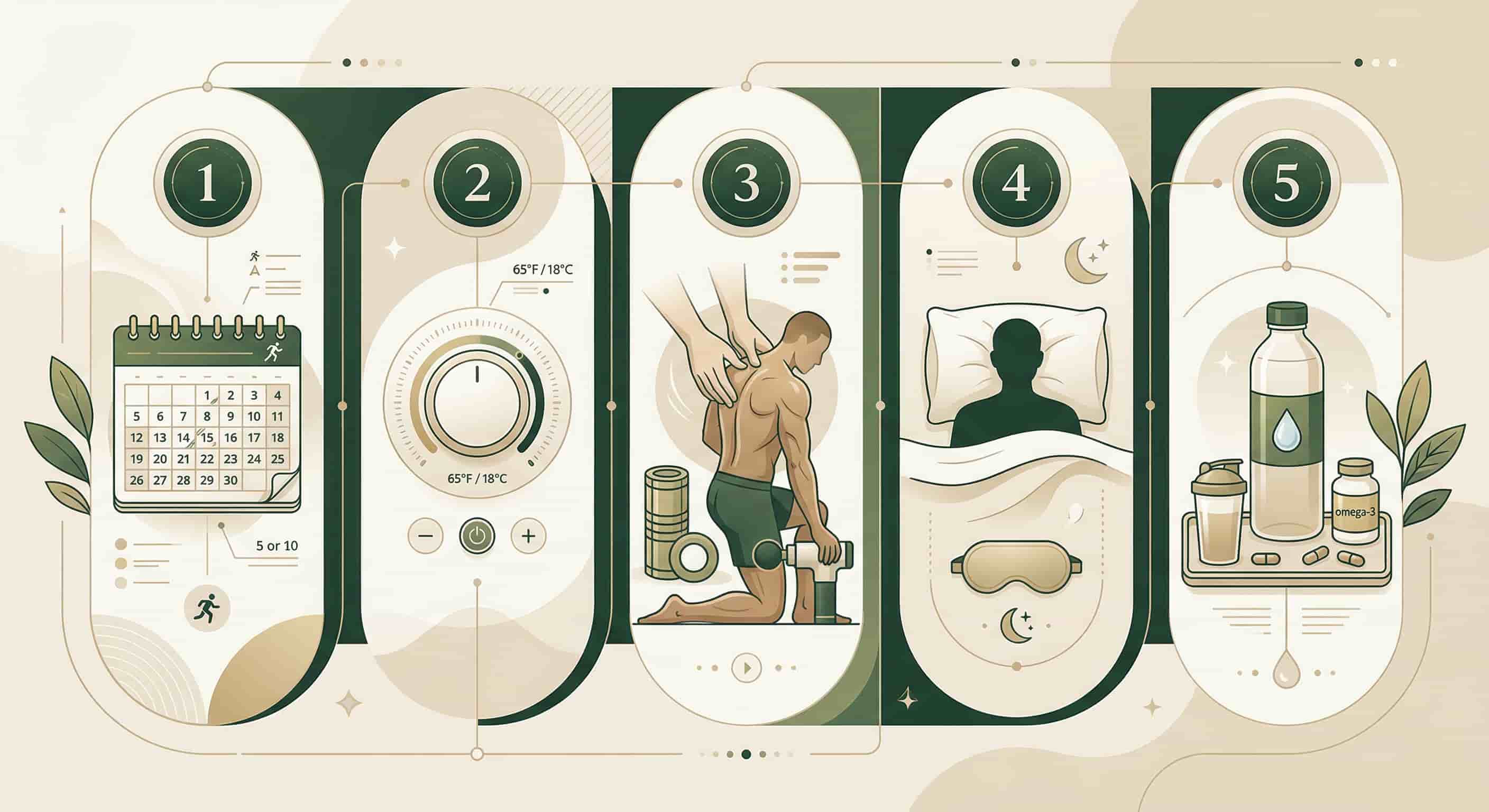
3) The Athlete’s Recovery Protocol: 5 Steps to Sleep Like a Pro
You cannot hack your way around biology, no matter how many supplements you take. If you want to perform like an elite athlete, you need to recover like one. Implement this structured protocol to optimize your sleep architecture for athletic performance.
Treat Sleep as a Training Block: Stop viewing sleep as whatever time happens to be left over at the end of a busy day. You wouldn’t skip a heavy leg day, so don’t skip your recovery window. Block it out on your calendar and protect that time ruthlessly.
Implement “Sleep Banking”: Pre-competition anxiety is real, and it often ruins sleep the night before a big race or game. You can offset this by “banking” extra sleep in the week leading up to the event. Adding just 1-2 hours of sleep per night for 5 days creates a physiological buffer, meaning one bad night before game day won’t destroy your performance.
Strategic Napping (The 20 or 90 Rule): Naps add to your total volume of recovery, but timing is everything. Stick to a 20-minute power nap (which keeps you in light sleep and avoids grogginess) or a full 90-minute nap (to complete an entire sleep cycle). Avoid napping after 3:00 PM so you don’t ruin your nighttime sleep drive.
Drop the Core Temperature: Your core body temperature needs to drop by 1 to 2 degrees to initiate and sustain deep sleep. Keep your bedroom between 60-67°F (15-19°C). A great trick is taking a warm shower 90 minutes before bed; as the water evaporates off your skin, it pulls heat away and rapidly cools your core.
Optimize Spinal and Joint Alignment: Hard training compresses your spine and stresses your joints. Sleeping on a mattress that sags or a pillow that throws your cervical spine out of alignment actively counteracts your recovery. Ensure your sleep surface provides neutral alignment. If you wake up with a stiff neck, check out the Slumbelry Butterfly Pillow for proper cervical support during the night.
A structured pre-sleep routine acts as a neurological cooldown, signaling the body to shift from sympathetic (fight or flight) to parasympathetic (rest and digest).
Nutrition Tip: Avoid heavy, high-fat meals or large amounts of liquid right before bed. Digestion requires energy and raises core body temperature, which actively competes against the biological processes needed to enter deep sleep.
4) The Silent Threat: Injury Prevention and Stabilizer Fatigue
When athletes think about injury prevention, they usually focus on dynamic warm-ups, foam rolling, and mobility work. While those are important, they miss the biggest variable. A comprehensive study of high school and collegiate athletes found that the single biggest predictor of sports injuries was not the number of hours practiced, the type of shoes worn, or the training surface. It was hours slept.
Athletes who slept less than eight hours per night were 1.7 times more likely to get injured compared to those who hit the eight-hour mark. But why does this happen? It comes down to neurological fatigue.
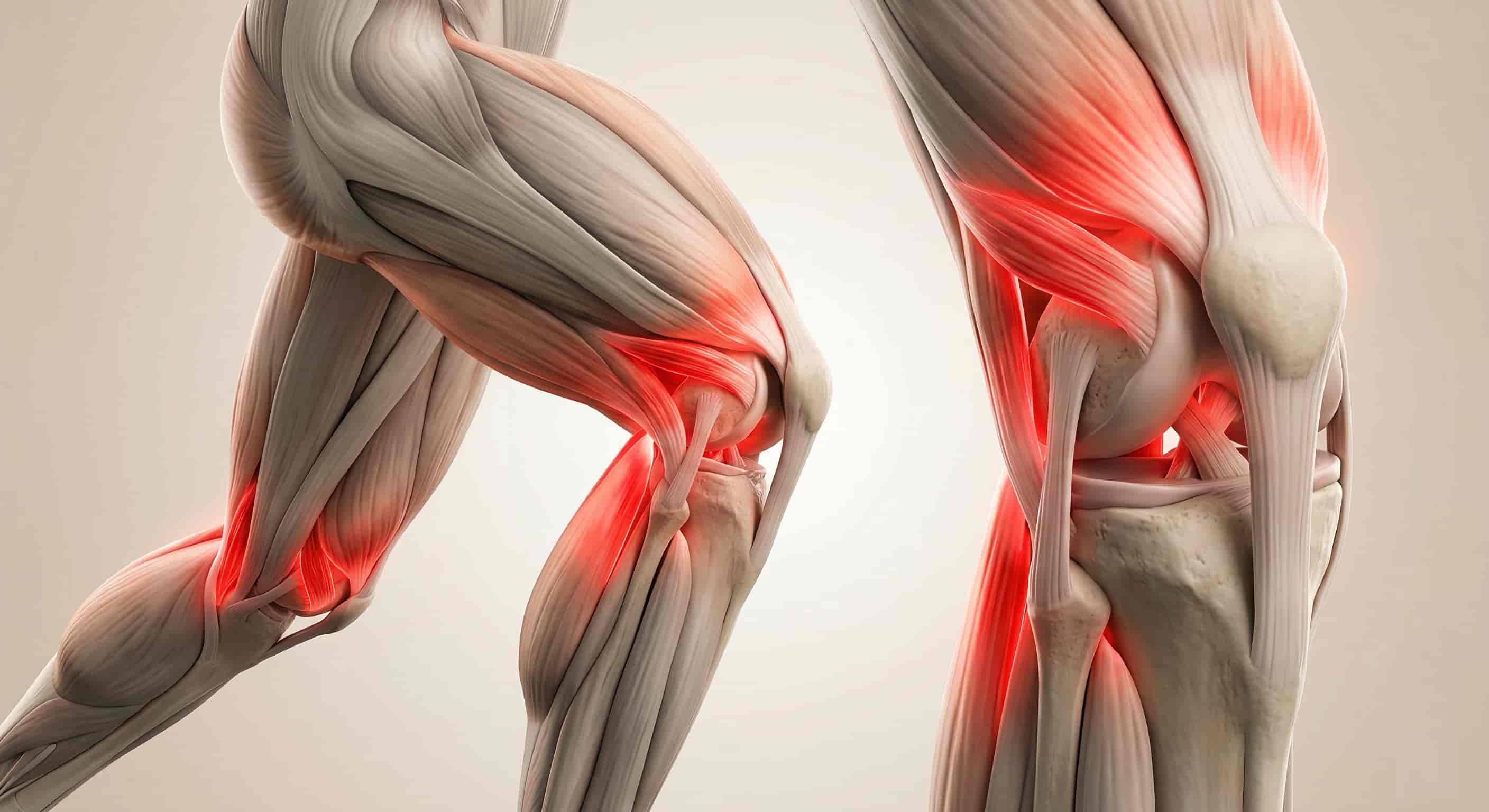
Sleep deprivation impairs the central nervous system’s ability to fire stabilizer muscles quickly, drastically increasing the risk of ligament and joint injuries.
When you are sleep-deprived, your central nervous system cannot recruit muscle fibers as quickly or efficiently. Your gross motor movements might look fine, but the tiny, unseen stabilizer muscles around your knees, ankles, and shoulders fatigue much faster. Your biomechanics get slightly sloppy. You land from a jump just a fraction of a second late, or your knee caves inward just a millimeter too far during a heavy squat. Snap. An ACL tear. A blown rotator cuff. Your season is over, all because your nervous system was too tired to fire the stabilizer muscles in time.
5) Common Mistakes and FAQ
Q1: Does more sleep automatically mean more muscle growth?
Not exactly. Sleep provides the biological environment (HGH release, protein synthesis) for muscle growth, but you still need the stimulus (training) and the building blocks (protein/calories). Sleep is the catalyst, not the creator.
Q2: I am too anxious to sleep the night before a big competition. What should I do?
Do not panic. Research shows that one single night of poor sleep before an event rarely impacts gross motor performance or strength, provided you have been sleeping well in the days prior (Sleep Banking). Focus on resting quietly, even if you are not fully asleep.
Q3: Are late-night workouts ruining my sleep?
High-intensity exercise raises cortisol, adrenaline, and core body temperature. For many people, working out within 2-3 hours of bedtime severely delays the onset of N3 deep sleep. If you must train late, incorporate a dedicated 20-minute cool-down protocol to downshift the nervous system.
6) Next Steps: Measure What Matters
Stop guessing about your recovery. The most elite athletes track their subjective feeling of rest alongside objective data. Start treating your bedroom like a high-performance recovery chamber, not just a place to crash after a hard day.
If you are serious about upgrading your sleep environment and protocols, begin with our Sleep Assessment, and join the Slumbelry newsletter for science-backed recovery strategies.
Stop guessing about your recovery. Build a sleep protocol that works as hard as you do.
Sleep is the most vulnerable state of human existence. It is where we heal, reset, and grow.
At Slumbelry, we don’t just sell sleep products; we advocate for your physiological right to rest. From ergonomic support to light management, every solution we offer is designed with one obsession: Respecting your Biology.
Science is our language, but your recovery is our purpose. You take care of everything else in your life—let us take care of your nights.
Rest Deeply, The Slumbelry Team
Slumbelry™ Sleep System – Science-Backed. Chronotype-Optimized. Author: Slumbelry Research Team.
We use cookies to improve your experience. Manage preferences or learn more in our Cookie Policy.