The Melatonin Trap: Why More Is Not Better
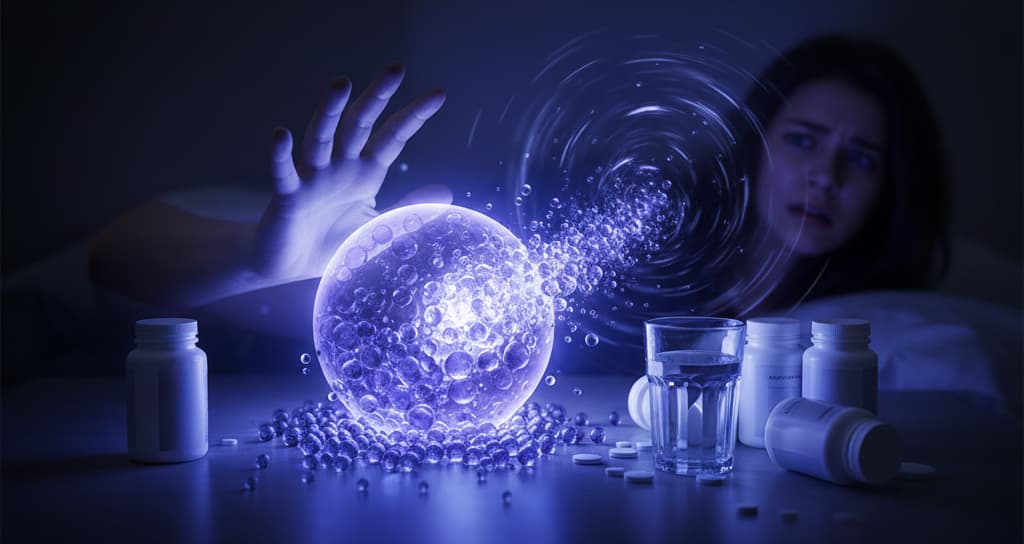
Walk into any pharmacy, and you’ll see them: shelves lined with purple bottles promising “Natural Sleep” in the form of gummies, chocolates, and pills. Melatonin has become the aspirin of the sleep world—the go-to quick fix for anyone tossing and turning.
But here is the uncomfortable truth: Melatonin is not a sedative. It is a hormone. And treating a hormone like a sleeping pill is a recipe for biological confusion.
The “Vampire Hormone”
Melatonin is naturally produced by your pineal gland in response to darkness. Its job is not to knock you out like a tranquilizer. Its job is to tell your body: “It is dark now. Prepare for rest.” It is the starter pistol for the race, not the finish line.
When you take a supplement, you are artificially signaling darkness. But unlike other vitamins, “more” is definitely not better.
The Overdose Epidemic
Your body naturally produces about 0.3 mg of melatonin per night.
Look at the bottle on your nightstand. Does it say 3mg? 5mg? 10mg?
If you are taking 5mg, you are ingesting nearly 16 times the amount your body naturally produces. At 10mg, you are flooding your system with 33 times the physiological dose.
This “supraphysiological” dosage leads to several issues: 1. Receptor Desensitization: Over time, your brain’s receptors may become less sensitive to the hormone, meaning you need more to feel the same effect. You are essentially training your body to ignore its own natural sleep signal. 2. The “Melatonin Hangover”: High doses often stay in your system well into the morning. This leads to that groggy, zombie-like feeling when you wake up—the exact opposite of the refreshed feeling you wanted. 3. Vivid Nightmares: Excess melatonin is linked to intense, often disturbing REM activity. If you’ve started taking gummies and suddenly have movie-quality nightmares, this is likely the culprit.
When Melatonin Actually Works
I am not saying melatonin is useless. It is a powerful chronobiotic tool (a time-shifter) when used correctly. It is effective for:
- Jet Lag: Helping your body adjust to a new time zone.
- Shift Work: resetting your clock when you must sleep during the day.
- Delayed Sleep Phase Syndrome: For “night owls” trying to shift their schedule earlier.
But for general insomnia—waking up in the middle of the night or racing thoughts—it is often ineffective because it doesn’t address the root cause (stress, temperature, or caffeine).
The Natural Alternative: Darkness
The best way to boost your melatonin isn’t a pill; it’s darkness.
Blue light from your phone and harsh overhead LEDs suppress your natural melatonin production instantly. Instead of reaching for a gummy, try this: 1. Dim the lights by 50% one hour before bed. 2. Use blue-light blocking glasses if you must look at screens. 3. Sleep in total darkness. Even a small standby light from a TV can interfere with production. Use a high-quality blackout sleep mask.
Trust your body’s own chemistry. It knows how to sleep; you just need to stop blinding it with light and then confusing it with synthetic hormones. Let the darkness do the work.

The Slumbelry Commitment
Sleep is the most vulnerable state of human existence. It is where we heal, reset, and grow.
At Slumbelry, we don’t just sell sleep products; we advocate for your physiological right to rest. From ergonomic support to light management, every solution we offer is designed with one obsession: Respecting your Biology.
Science is our language, but your recovery is our purpose. You take care of everything else in your life—let us take care of your nights.
Rest Deeply,
The Slumbelry Team