The Gut-Sleep Connection: Eat Your Way to Better Rest
Written by Dr. Lycan Dizon, Slumbelry Chief Sleep Consultant
We tend to think of sleep as a “brain thing.” It happens in our head, right?
So when we can’t sleep, we try to fix our brain. We meditate, we count sheep, we stress about our thoughts.
But what if the real problem isn’t in your head? What if it’s in your stomach?
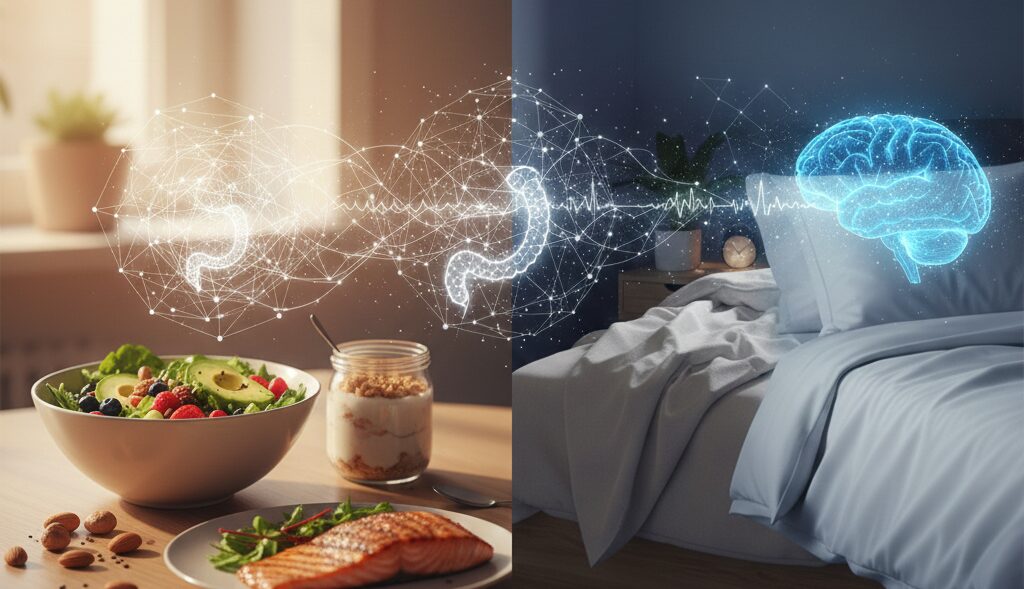
Emerging science is revealing a powerful link between your microbiome (the trillions of bacteria living in your gut) and your sleep quality. It’s called the Gut-Brain Axis.
The Science: The Second Brain
Your gut is often called your “second brain.” It contains over 100 million neurons—more than your spinal cord. And it is a chemical factory.
Here is the mind-blowing statistic from Sleep Smarter: Approximately 95% of your body’s serotonin is produced in your gut, not your brain.
Why does this matter?
Serotonin is the precursor to Melatonin (the sleep hormone).
The equation is simple:
Healthy Gut Bacteria -> More Serotonin -> More Melatonin -> Better Sleep.
If your gut health is compromised (due to processed food, antibiotics, or stress), you cannot produce the raw materials needed for sleep. You are chemically deficient.
The Sleep Stealers (What to Avoid)
Before we talk about what to eat, let’s talk about what destroys your gut flora.
1. Sugar: Bad bacteria and yeast (like Candida) feed on sugar. When they overgrow, they crowd out the good bacteria that produce serotonin.
2. Processed Foods: Emulsifiers and artificial sweeteners can damage the intestinal lining (leaky gut), leading to systemic inflammation that disrupts sleep.
3. Agricultural Chemicals: Pesticides like glyphosate (Roundup) act as antibiotics, killing off beneficial microbiome diversity.
The Sleep Superfoods (What to Eat)
To hack your sleep from the inside out, you need to feed the good guys.
1. Fermented Foods (Probiotics)
These are foods that contain live beneficial bacteria.
Kimchi & Sauerkraut: Rich in Lactobacillus, which has been shown to reduce cortisol.
Probiotics are the seeds; prebiotics are the fertilizer. They are the fibers that good bacteria eat.
Garlic & Onions
Asparagus
Bananas (also rich in magnesium!)
Oats
3. Resistant Starch
When you cook potatoes or rice and let them cool, the starch changes structure and becomes “resistant.” It bypasses digestion and feeds your gut bacteria directly. Potato salad is actually a sleep superfood (if made healthily)!
Trust Your Gut
If you have tried every sleep hack in the book—blackout curtains, cold room, no blue light—and you still struggle, look at your plate.
Your dinner isn’t just fuel; it’s information. It tells your gut what hormones to build. By nourishing your microbiome, you are building the biological foundation for a restful night.
Tonight, trust your gut. It knows how to sleep.
The Slumbelry Commitment
Sleep is the most vulnerable state of human existence. It is where we heal, reset, and grow.
At Slumbelry, we don’t just sell sleep products; we advocate for your physiological right to rest. From ergonomic support to light management, every solution we offer is designed with one obsession: Respecting your Biology.
Science is our language, but your recovery is our purpose. You take care of everything else in your life—let us take care of your nights.
Rest Deeply, The Slumbelry Team
The Intimacy Connection: The Most Fun Way to Hack Your Sleep
Written by Dr. Lycan Dizon, Slumbelry Chief Sleep Consultant
We have talked about diet, light, temperature, and exercise. We have optimized every variable of your life.
But we haven’t talked about the one thing that happens (or should happen) in the bedroom besides sleep.
Yes, we are going there. Let’s talk about Sex.
In the quest for better health, we often get too clinical. We obsess over milligrams of magnesium and lux of light. But Shawn Stevenson dedicates an entire chapter in Sleep Smarter to the power of intimacy.
Why? Because an orgasm is arguably nature’s most powerful sedative.
The Science: The Hormonal Cocktail
When you engage in intimacy (and specifically when you reach climax), your brain releases a potent cocktail of neurochemicals that are perfectly designed to induce sleep.
1. Oxytocin (The Cuddle Hormone)
This is the bonding hormone. It reduces cortisol (stress) and induces a feeling of safety, trust, and relaxation. You cannot sleep if you feel threatened or anxious. Oxytocin melts those walls.
2. Endorphins (The Pain Killers)
These are natural opiates. They have a sedative effect and reduce physical pain (headaches, muscle aches) that might otherwise keep you awake.
3. Prolactin (The Satisfaction Hormone)
This is the big one. Orgasm releases prolactin, a hormone that is directly linked to sleepiness. Levels of prolactin are naturally higher during sleep. A surge of it signals to the body: “The mission is accomplished. You are safe. You can rest.”
Interesting Fact: Prolactin levels are significantly higher after intercourse with a partner compared to solitary release. The biological component of connection matters.
The Barrier: Stress and Exhaustion
Here is the cruel irony: Sleep deprivation kills your libido.
When you are tired, your testosterone drops, your energy tanks, and sex becomes a chore. You are “too tired” to do the one thing that would help you sleep better.
It’s a vicious cycle.
No sleep -> Low libido -> No intimacy -> High stress -> No sleep.
The Strategy: Schedule It (Yes, Really)
It sounds unromantic, but if you are busy parents or working professionals, spontaneity is a myth.
Prioritize intimacy just like you prioritize your workout.
1. Go to bed 30 minutes early. Don’t wait until you are passing out.
2. Ban the TV. Remember our Sleep Sanctuary rule? The bedroom is for Sleep and Intimacy only. If you are watching Netflix, you aren’t connecting.
3. Touch. Even if it doesn’t lead to sex, physical touch (cuddling, massage) releases oxytocin.
Love and Rest
Sleep is a vulnerable state. To sleep deeply, you need to feel safe.
There is no better way to cultivate that safety than through connection with your partner. It lowers your defenses, quiets your mind, and floods your body with peace.
So, put down the phone. Turn off the lights. And turn to the person next to you. It’s the best sleep medicine money can’t buy.
The Slumbelry Commitment
Sleep is the most vulnerable state of human existence. It is where we heal, reset, and grow.
At Slumbelry, we don’t just sell sleep products; we advocate for your physiological right to rest. From ergonomic support to light management, every solution we offer is designed with one obsession: Respecting your Biology.
Science is our language, but your recovery is our purpose. You take care of everything else in your life—let us take care of your nights.
Rest Deeply, The Slumbelry Team
The 2 AM Sweat: How to Beat Menopause Insomnia
Menopause Insomnia: How to Stop Hot Flashes and Sleep Again | Slumbelry
Written by Dr. Lycan Dizon, Slumbelry Chief Sleep Consultant · Updated 2025
The 2 AM Sweat: How to Beat Menopause Insomnia
You used to be a champion sleeper. You could sleep on a plane, in a noisy car, or through a thunderstorm. Now, you wake up at 2:00 AM, your sheets are soaked, your heart is racing, and your mind is buzzing with a million anxious thoughts. Welcome to the club. Studies show up to 61% of menopausal women report insomnia. It is not “all in your head,” and you are not just getting older. You are going through a massive biological shift. But it doesn’t mean you have to suffer in the dark for a decade.
The Adrenaline Spike: Hot flashes are often preceded by a surge of adrenaline, which is why you wake up feeling panicked before the heat even hits.
The Hormone Crash: Losing estrogen breaks your internal thermostat, while losing progesterone robs you of your brain’s natural calming agent.
Actionable Relief: From micro-climate layering to Hormone Replacement Therapy (HRT), menopause insomnia is highly treatable when you stop fighting it and start managing it.
Menopause insomnia isn’t a lack of willpower; it is a profound hormonal disruption that requires biological, not just psychological, solutions.
1) The Hormonal Culprits: Why Your Body is Rebelling
To fix the problem, you have to understand the mechanics of the storm. Menopause isn’t just the cessation of your reproductive cycle; it is the withdrawal of two critical sleep-regulating hormones.
The Estrogen Drop: Estrogen does more than regulate your cycle; it helps manage cortisol (the stress hormone) and controls your body’s internal thermostat. When estrogen plummets, your hypothalamus gets confused. It suddenly thinks you are overheating, triggering a massive, emergency cool-down response—the dreaded hot flash.
The Progesterone Drop: Progesterone is often called “nature’s Valium.” It interacts with GABA receptors in the brain to promote calm, relaxation, and deep sleep. Losing it is like losing the brakes on your nervous system. This is why menopause insomnia is so often accompanied by racing, anxious thoughts.
2) The Vicious Cycle of the Hot Flash
If you have ever wondered why you wake up before you start sweating, you aren’t crazy. The hot flash is a multi-stage event that actively sabotages your sleep architecture.
Here is the classic 2 AM pattern:
The Chemical Alarm: A surge of adrenaline wakes you up. Your heart pounds. You feel a sudden sense of dread.
The Furnace: The heat wave hits (vasodilation). Blood rushes to your skin to dump the “excess” heat your brain thinks you have.
The Flood: You sweat profusely, soaking your pajamas.
The Freeze: You throw off the covers. The sweat evaporates rapidly, and suddenly, you are freezing and shivering.
The Aftermath: You are now wide awake, physically uncomfortable, and frustrated. Your brain starts calculating how tired you will be tomorrow, triggering more cortisol and making it impossible to fall back asleep.
Managing your micro-climate with breathable, moisture-wicking fabrics is the first line of defense against night sweats.
3) Strategies for Survival (Reclaiming Your Rest)
You cannot simply “think positive” your way out of a hot flash. You need concrete, biological interventions to cool the furnace and calm the nervous system.
Thermal Management: Your Micro-Climate
Your bedroom environment is your first line of defense. You need to engineer a space that allows heat to escape instantly.
The Layering Protocol: Do not use one thick, heavy duvet. Use a breathable sheet, a light blanket, and a throw at the foot of the bed. You need to be able to peel layers off and pull them back on in seconds.
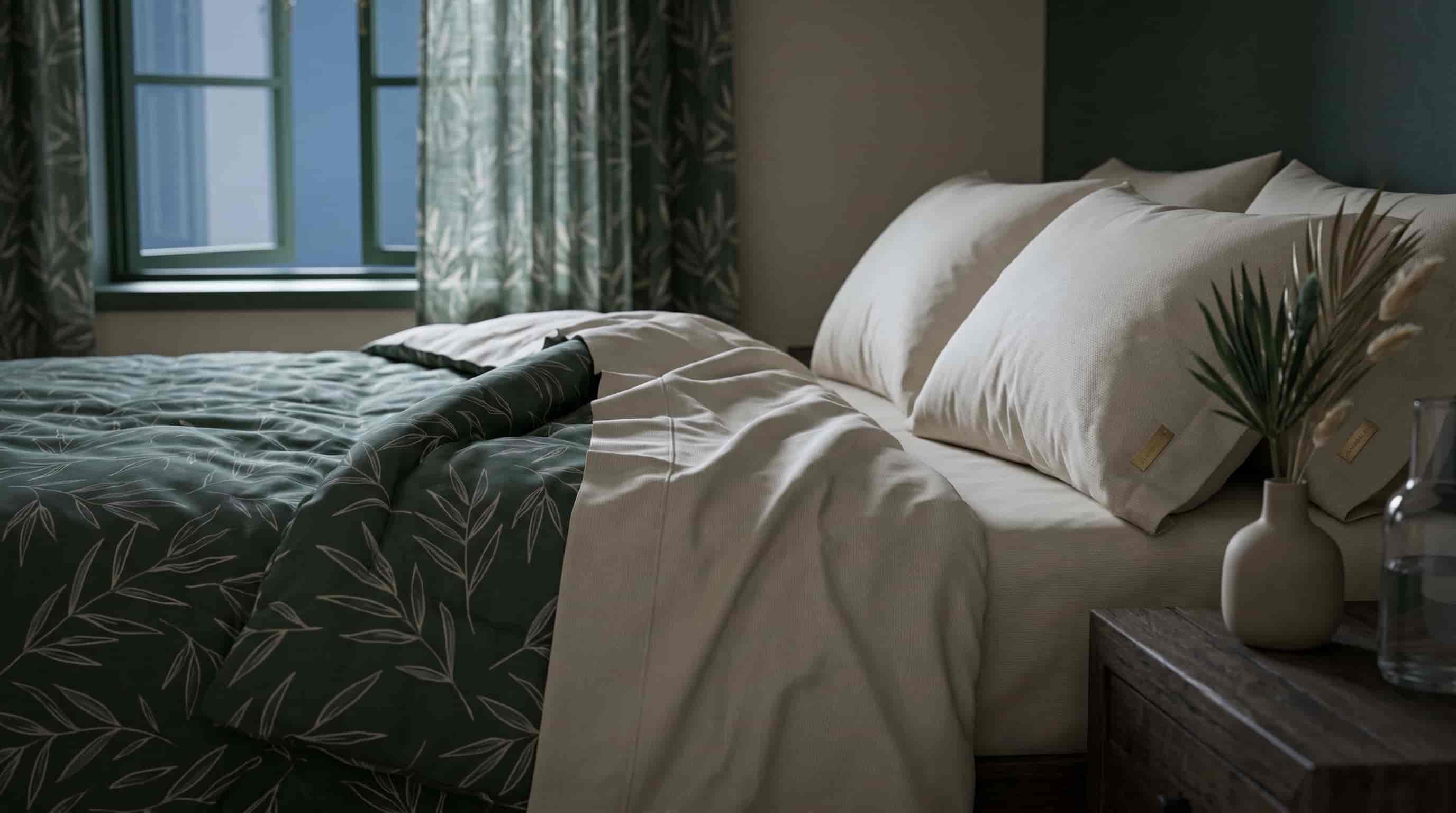
Ditch the Plastic: If your sheets contain polyester or synthetic microfiber, throw them away. They trap heat and moisture. Switch exclusively to Bamboo, Tencel, or Percale cotton, which actively wick sweat away from your body.
Cool the Brain: Keep a cooling gel pad inside your pillowcase. Cooling the frontal cortex is a scientifically proven way to trick the rest of the body into feeling comfortable, reducing sleep latency.
Medical Intervention: HRT
Talk to your doctor about Hormone Replacement Therapy (HRT). For years, a flawed study made women terrified of HRT. However, modern research shows that for many women, the benefits—protecting bone density, cardiovascular health, and saving your sleep—far outweigh the risks. Transdermal estrogen (patches or gels) can often stop hot flashes in their tracks within days.
Cognitive Restructuring: CBT-I
Often, the physical awakening of a hot flash triggers a psychological worry loop. You think, “I’m awake again. I’m going to look terrible tomorrow. I can’t function like this.” Cognitive Behavioral Therapy for Insomnia (CBT-I) helps you separate the physical flash from the emotional reaction. It trains your brain to accept the wakefulness without panic, helping you fall back asleep significantly faster once the heat passes.
This is a season of life. It is turbulent, and it is unfair, but it is deeply manageable. Stop fighting your body, give it the cooling tools it needs, and seek medical support if the storm becomes too much to bear.
4) Common Misconceptions (FAQ)
Q1: Will taking Melatonin help with menopause insomnia?
Melatonin is a hormone that tells your brain it is time to sleep; it is not a sedative. While it might help you fall asleep initially, it does nothing to prevent the adrenaline surges or hot flashes that wake you up at 2 AM. For menopause, temperature regulation and anxiety management are far more effective than melatonin.
Q2: Does drinking a glass of wine before bed help?
Absolutely not. Alcohol is one of the worst triggers for hot flashes. It causes vasodilation (expanding blood vessels) and spikes your core body temperature. Furthermore, as the alcohol wears off in the middle of the night, it causes a rebound effect that fragments your sleep and guarantees you will wake up.
Q3: Are there natural supplements that work for hot flashes?
Some women find mild relief with supplements like Black Cohosh, Maca root, or Magnesium Glycinate (which helps calm the nervous system). However, clinical trials show mixed results. Supplements can take the edge off, but they rarely eliminate severe vasomotor symptoms the way medical HRT can. Always consult your doctor before starting new supplements.
Stop suffering in the dark. Build a sleep environment that supports your changing biology.
Sleep is the most vulnerable state of human existence. It is where we heal, reset, and grow.
At Slumbelry, we don’t just sell sleep products; we advocate for your physiological right to rest. From ergonomic support to light management, every solution we offer is designed with one obsession: Respecting your Biology.
Science is our language, but your recovery is our purpose. You take care of everything else in your life—let us take care of your nights.
Rest Deeply, The Slumbelry Team
We use cookies to improve your experience. Manage preferences or learn more in our Cookie Policy.