
×
Slumbelry
HOME SHOP WELLBEING BLOG LOGIN / REGISTER SEARCH CONTACT

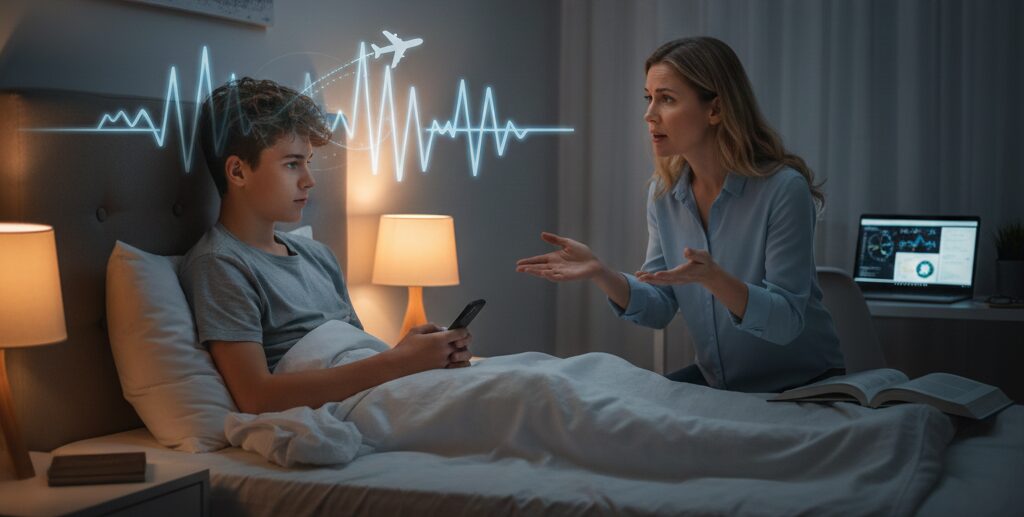
Stop Fighting Biology: Why Your “Lazy” Teenager is Actually Jet-Lagged
Article Image

Written by Dr. Lycan Dizon, Slumbelry Chief Sleep Consultant

The scenario is always the same. A parent sits in my office, exhausted and frustrated. “He’s impossible,” they say. “It’s like World War III every morning just to get him out of bed. He’s up all night on that phone, and then he’s a zombie at 7 AM. Why is he so undisciplined?”

I usually pause here and ask a question that catches them off guard: “If I flew you from New York to London every single night, and then demanded you perform complex calculus at 3 AM, would you call yourself undisciplined when you failed?”

Because biologically, that is exactly what you are asking your teenager to do.

The Diagnosis: Social Jetlag

We need to stop viewing teenage sleep patterns as a behavioral problem and start treating them as a physiological reality. During adolescence, the circadian rhythm—the internal body clock—undergoes a massive, hormonally driven shift. It delays by approximately two hours.

This isn’t a preference; it’s a biological imperative.

When you drag a teenager out of bed at 7:00 AM for school, their body temperature is still at its nocturnal low. Their melatonin levels (the vampire hormone that signals sleep) are still peaking. To their brain, it is 5:00 AM. They aren’t “refusing” to wake up; they are in a state of social jetlag. They are living in a time zone that doesn’t exist on their school schedule.

The Cost of the Morning War

The “morning battle” you are fighting isn’t just annoying; it is damaging. By forcing them awake during this critical window, you are robbing them of REM sleep—the final stage of the sleep cycle which is crucial for emotional regulation and memory consolidation.

The clinical fallout is predictable:

  • Emotional Volatility: That “moodiness” isn’t just teenage angst; it’s the neurological equivalent of an exhausted toddler having a meltdown, but in a 15-year-old’s body.
  • Metabolic Disruption: We see direct links between chronic sleep debt and weight gain, acne, and insulin resistance.
  • Cognitive Decline: Sleep deprivation impairs executive function. You are sending them to school to learn, but their brain’s “save button” is broken.

A Prescription for Parents

So, what is the treatment plan? We cannot change the school system overnight (though the science says we should), but we can change the home environment.

Stop using the word “lazy.” It is medically inaccurate and emotionally corrosive. Acknowledge the biology: “I know your body thinks it’s the middle of the night, but we have to get going.” This shift in language reduces conflict immediately.

I often hear parents say, “I wake him up at 8 AM on Saturday to keep his routine.” Stop. If a patient is malnourished, you feed them. Your teenager is sleep-malnourished. Let them sleep until 11 AM or noon on weekends. This “catch-up” sleep is essential for their developing brain.

Since they are fighting a losing battle with early mornings, the quality of the sleep they do get must be impeccable. Their room needs to be a sanctuary. Blackout curtains are non-negotiable. Cool temperatures are mandatory.

Your teenager isn’t fighting you. They are fighting a biological mismatch that they didn’t choose. Your job isn’t to be their drill sergeant; it’s to be their ally in a world that refuses to let them sleep.

The Slumbelry Commitment

Sleep is the most vulnerable state of human existence. It is where we heal, reset, and grow.

At Slumbelry, we don’t just sell sleep products; we advocate for your physiological right to rest. From ergonomic support to light management, every solution we offer is designed with one obsession: Respecting your Biology.

Science is our language, but your recovery is our purpose. You take care of everything else in your life—let us take care of your nights.

Rest Deeply,
The Slumbelry Team

Stop Forcing Bedtime: The Real Reason Your Child Won’t Sleep

Toddler Sleep Regression: Stop Stressing Over the Charts | Slumbelry

Written by Dr. Lycan Dizon, Slumbelry Chief Sleep Consultant · Updated 2025

Stop Forcing Bedtime: The Real Reason Your Child Won’t Sleep

There is no tired like “Parent Tired.” In a desperate bid for a quiet evening, we turn to the internet. We stare at baby sleep charts, trying to decipher wake windows. When a toddler sleep regression hits, we panic. We treat children like programmable robots, convinced that if they aren’t logging exactly 12 hours a night, we are failing them. But here is the truth that will set you free: those charts are averages, not laws. If you try to force a naturally short-sleeping child to stay in bed, you don’t get more rest—you get a nightly war.

  • The “Average” Trap: Sleep charts represent statistical averages, not biological requirements. Just like shoe sizes, sleep needs vary wildly from child to child.
  • Real Deprivation Signs: A truly sleep-deprived child doesn’t look lethargic; they look wired. Look for hyperactivity, emotional meltdowns, and instant car-napping.
  • The Shift in Teens: When puberty hits, a 2-to-3-hour circadian shift is biological, not rebellious. Forcing an early bedtime on a teenager is biologically futile.
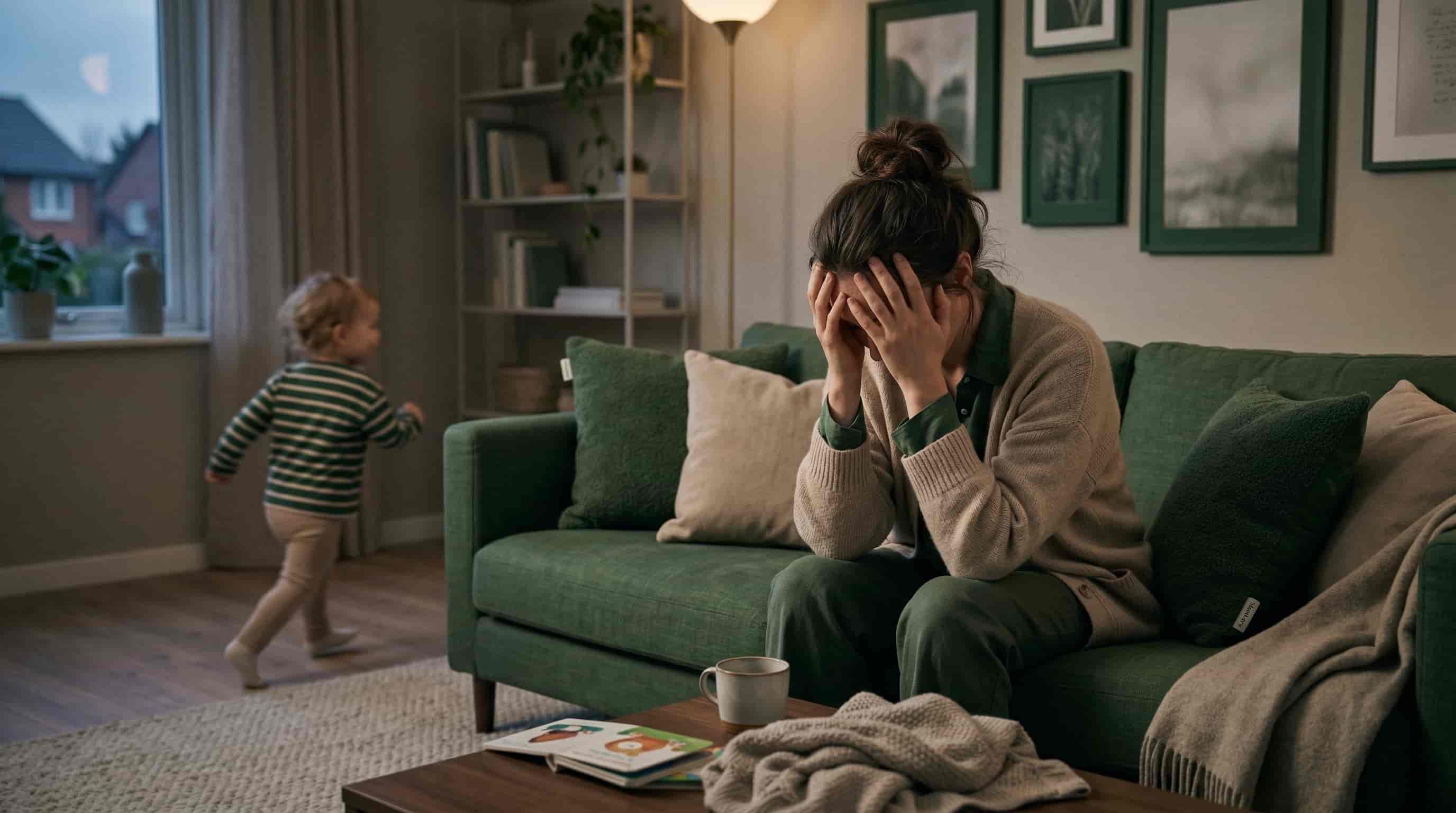
A stressed parent looking at a clock while their toddler refuses to sleep
If you are battling your child every night to hit an arbitrary number on a chart, you are fighting a losing war against their biology.

1) The Tyranny of the Sleep Chart

The modern parenting landscape is obsessed with optimization. We track ounces of milk, developmental milestones, and, most aggressively, sleep. A quick Google search will tell you that a 2-year-old “MUST” sleep 11 to 14 hours. It warns that skipping a 10 AM nap will trigger a disastrous toddler sleep regression.

But let’s look at the math. If the average shoe size for an adult man is a size 10, and you wear a size 8, do you have a foot disease? Of course not. You just have smaller feet. Sleep works the exact same way.

There are children who are naturally “Short Sleepers.” They are vibrant, energetic, hitting all their cognitive milestones, and thriving on 9 hours of sleep. Meanwhile, the chart insists they need 11. If you lock a 9-hour sleeper in a dark room for 11 hours, what happens? They don’t magically sleep more. They bounce off the walls, cry, and eventually develop a deep, conditioned anxiety around the bedroom. You are trying to fit a square peg into a round hole.

“Your job is not to make them sleep—you physically cannot force consciousness to end. Your job is simply to provide the calm, safe opportunity for sleep.”

2) Spotting Actual Sleep Deprivation

So, if we throw away the charts, how do we know if our kids are actually suffering from a lack of sleep? You have to stop watching the clock and start watching the child.

Adults respond to sleep deprivation by slowing down. We yawn, we reach for coffee, we slump at our desks. Children, particularly toddlers, respond to sleep deprivation by speeding up. Their brains release adrenaline and cortisol to fight off the exhaustion.

The Real Red Flags:

  • The “Wired” Effect: Manic hyperactivity, especially right before bedtime. They look like they drank an espresso.
  • Emotional Fragility: Massive meltdowns over microscopic issues (e.g., their toast was cut into the wrong shape).
  • The Car Test: Falling asleep the absolute second the car engine turns on, even outside of normal nap windows.
  • Inability to Focus: Difficulty engaging in quiet play or following simple, multi-step instructions they usually master.

If your child is happy, learning, and emotionally stable, they are getting enough sleep. Period.

A hyperactive toddler running around the living room while the parents look exhausted
Unlike adults, a sleep-deprived toddler doesn’t look tired; they look completely wired and hyperactive.

3) Surviving the Toddler Sleep Regression

Around 18 months to 2 years, many parents hit a wall. A previously perfect sleeper suddenly refuses to go down, wakes up screaming at 2 AM, or drops their nap entirely. Welcome to the toddler sleep regression.

This isn’t a failure of your parenting. It is a massive developmental leap. Their brains are suddenly processing complex language, separation anxiety, and a newfound sense of independence (“I want to do it!”).

The Regression Protocol:

  1. Hold the Boundary, Release the Outcome: Maintain your consistent bedtime routine (Bath, Book, Bed). Say goodnight, leave the room. If they sing to their teddy bear for an hour, let them. You control the environment; they control the sleep.
  2. Evaluate the Nap: Many regressions are actually a sign that the child is ready to drop their daytime nap. If they nap for 2 hours at noon, they simply may not possess enough “sleep pressure” to fall asleep at 7 PM.
  3. Don’t Build New Bad Habits: In a moment of desperation at 3 AM, you might pull them into your bed or start rocking them again. Be careful—toddlers learn quickly. A temporary regression can become a permanent habit if you change the rules.

4) The Teenage Circadian Shift

The sleep battles don’t end in childhood; they just change form. When puberty hits, a massive biological shift occurs. The teenager’s circadian rhythm naturally shifts forward by 2 to 3 hours.

Going to bed at 11:30 PM and wanting to wake up at 8:30 AM is not an act of rebellion. It is a physiological imperative. Their brains literally do not release melatonin early enough to fall asleep at 9 PM. If you force a 15-year-old into bed at 9 PM, they will simply stare at the ceiling, feeling frustrated and misunderstood.

Instead of fighting biology, advocate for them. Support later school start times. Let them sleep in on the weekends to clear their sleep debt. And keep screens out of the bedroom, as blue light delays an already-delayed melatonin release.

5) Common Misconceptions (FAQ)

Q1: Is it bad if my 3-year-old drops their nap completely?

Not necessarily. While some children nap until age 4 or 5, many drop it around age 3. If dropping the nap results in a much smoother, earlier bedtime and they can make it through the late afternoon without a massive meltdown, they are ready to consolidate their sleep into one nighttime block.

Q2: How do I handle night terrors vs. nightmares?

They are entirely different. A nightmare happens during REM sleep (usually early morning); the child wakes up scared and can be comforted. A night terror happens during deep sleep (usually early in the night). The child appears awake, screams, and thrashes, but is actually still asleep. Do not try to wake a child from a night terror; simply make sure they are safe until they lie back down.

Q3: Does giving them a warm bath really help them sleep?

Yes, but it is about the temperature drop, not just the water. A warm bath dilates the blood vessels. When they step out into a cool room, their core body temperature rapidly drops, which biologically signals the brain to release melatonin and initiate sleep.

Stop guessing about your family’s rest. Build a sleep protocol that works with biology, not against it.

Take the Free Sleep Assessment Join the Recovery Newsletter

The Slumbelry Commitment

Sleep is the most vulnerable state of human existence. It is where we heal, reset, and grow.

At Slumbelry, we don’t just sell sleep products; we advocate for your physiological right to rest. From ergonomic support to light management, every solution we offer is designed with one obsession: Respecting your Biology.

Science is our language, but your recovery is our purpose. You take care of everything else in your life—let us take care of your nights.

Rest Deeply,
The Slumbelry Team
Better sleep tips & exclusive offers, straight to your inbox.

Curated sleep insights, early access to new products, and members-only deals.
No spam. You can unsubscribe anytime.