
The “I Didn’t Sleep a Wink” Lie: Why Your Brain is Deceiving You
It is the most frustrating feeling in the world. You lie in bed. You stare at the ceiling. You see the clock change from 1:00 to 2:00 to 3:00. Finally, the alarm goes off. You drag yourself out of bed, feeling like you went 12 rounds in a boxing ring, and you tell your partner, “I didn’t sleep a single minute last night.” But here is the controversial, biologically proven truth from modern sleep medicine: You almost certainly did. You are experiencing a glitch in your nervous system known as Sleep State Misperception.
- The Broken Sensor: Sleep State Misperception (Paradoxical Insomnia) happens when you are biologically asleep, but your brain’s awareness sensor remains turned on.
- Light Sleep Deception: During Stage 1 and Stage 2 sleep, you can still process external sounds (like a dog barking), tricking your memory into logging the time as “awake.”
- The “Rest” Reframe: Dropping the obsession with unconsciousness and focusing on physical rest is the key to fixing your broken sleep perception.

1) The Broken Sleep Sensor
If you go to a sleep clinic, you will witness this phenomenon constantly. Patients will wake up in the morning, look the neurologist in the eye, and swear on their lives they were awake for 8 straight hours. However, their EEG (brain wave) data tells a completely different story. The machines prove they slept for 6 or 7 hours.
Are they lying? No. Their perception is just broken.
This usually stems from a state of Hyperarousal. Because of stress or chronic anxiety, your nervous system refuses to fully power down. Your body enters sleep, but a small part of your brain remains on guard duty. You drift in and out of “Stage 1” or “Stage 2” light sleep. In these stages, you maintain a fuzzy awareness of your surroundings. You hear the fridge hum. You notice your partner turn over. Because your brain processed this sensory input, it mistakenly logs the entire block of time as “awake.”
“You are not a broken sleeper. You are simply experiencing a disconnect between your biological state and your conscious memory.”
2) The Danger of the “Insomnia Identity”
The real danger of Sleep State Misperception isn’t the light sleep itself; it is the story you tell yourself the next morning. When you believe you didn’t sleep a wink, you adopt an Insomnia Identity.
You start labeling yourself as a “bad sleeper.” You think, “I am broken. If I don’t sleep tonight, I will crash and ruin tomorrow.”
This psychological label creates massive performance anxiety before you even get into bed. That anxiety releases a flood of cortisol and adrenaline, which actively prevents you from reaching deep sleep the next night. The false perception creates a very real, self-fulfilling prophecy of insomnia.
3) How to Fix Your Perception (The Protocol)
To break out of Paradoxical Insomnia, you have to stop trusting your memory of the night and start changing how you evaluate your rest.
The Perception Reset Protocol:
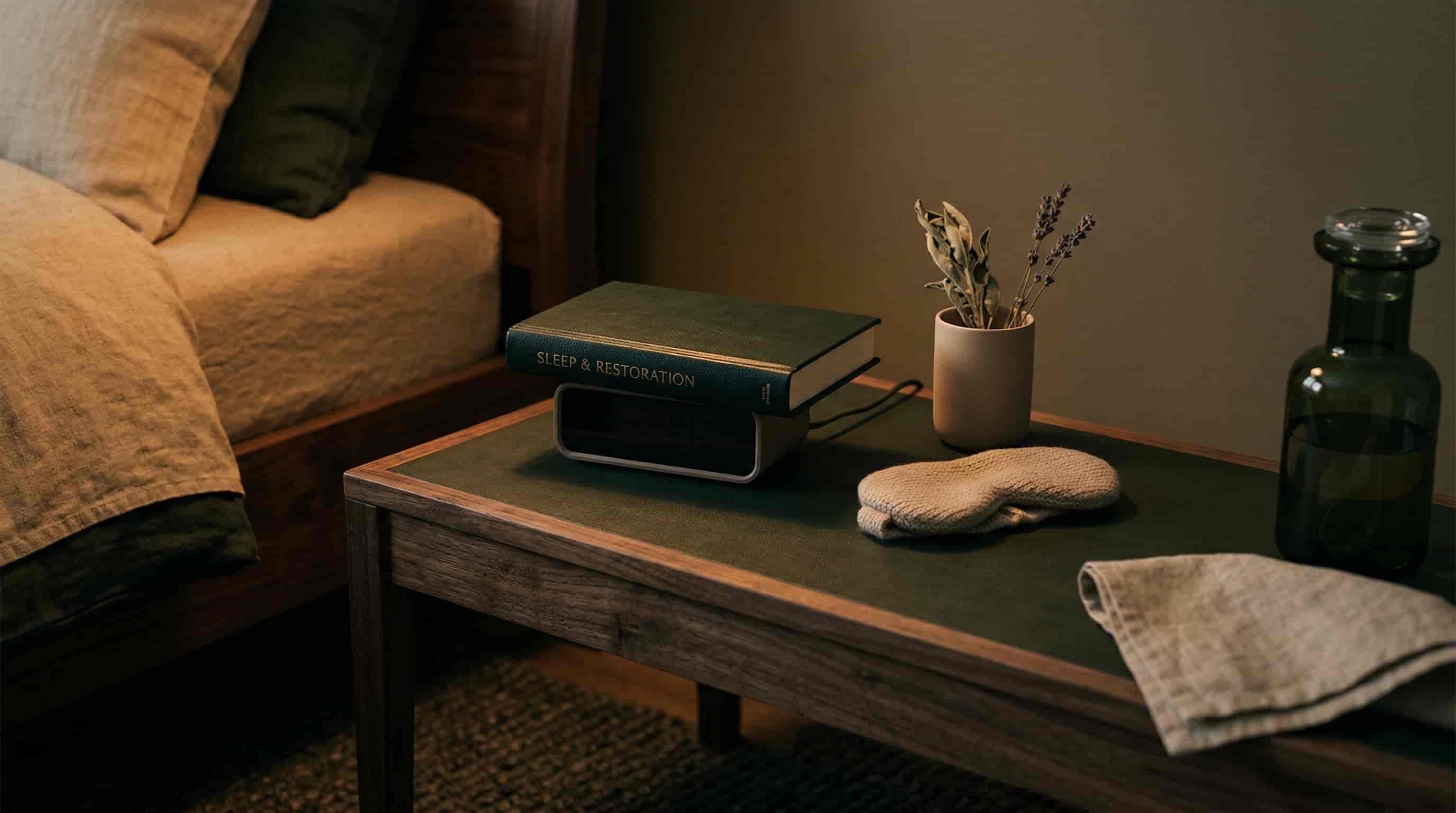
- Ditch the Clock: If you are prone to misperception, looking at the clock is poison. It provides the exact data points (“It is 3:14 AM”) that your brain uses to build the “I’m awake” narrative. Turn the clock around, put it in a drawer, or cover it.
- Redefine “Rest”: Stop judging your night purely by unconsciousness. If you are lying comfortably in a dark room, your body is getting up to 80% of the physical benefits of sleep (muscle recovery, energy conservation). Tell yourself: “I am resting. If I sleep, great. If not, I am still resting.”
- Trust Your Day, Not Your Night: Do not judge your sleep by how you felt the night went. Judge it by how you function today. Did you fall asleep at the wheel? Did you collapse at noon? If you made it through the day relatively fine, you absolutely got more core sleep than your brain told you.
Your sensor is just a bit sensitive right now. Stop fighting the wakefulness, remove the pressure to perform, and let the biology take over.
4) Common Misconceptions (FAQ)
Q1: Can a sleep tracker (like an Apple Watch or Oura Ring) fix this?
Usually, no. In fact, for people with Sleep State Misperception, trackers often make it worse. This leads to “Orthosomnia”—an unhealthy obsession with sleep data. Furthermore, commercial wrist trackers are notoriously bad at distinguishing between lying completely still and light Stage 1 sleep, so they might confirm your false belief that you were awake.
Q2: Why do I feel like I’m thinking the whole time I’m asleep?
This is a hallmark of Stage 1 and Stage 2 sleep. Your brain is transitioning, and “dreaming” in these light stages often feels exactly like conscious, anxious thinking or problem-solving. You are asleep, but your brain is narrating the experience as if you are awake.
Q3: Does taking a sleeping pill cure paradoxical insomnia?
No. Sleeping pills are sedatives; they knock you out, but they do not produce natural, restorative sleep architecture. They might force you into unconsciousness, but they do not fix the underlying hyperarousal or the anxiety that is causing the misperception in the first place.
Stop letting sleep anxiety ruin your days. Discover your true sleep profile and learn how to trust your body again.
Take the Free Sleep Assessment Join the Recovery NewsletterThe Slumbelry Commitment
Sleep is the most vulnerable state of human existence. It is where we heal, reset, and grow.
At Slumbelry, we don’t just sell sleep products; we advocate for your physiological right to rest. From ergonomic support to light management, every solution we offer is designed with one obsession: Respecting your Biology.
Science is our language, but your recovery is our purpose. You take care of everything else in your life—let us take care of your nights.
Rest Deeply,
The Slumbelry Team