
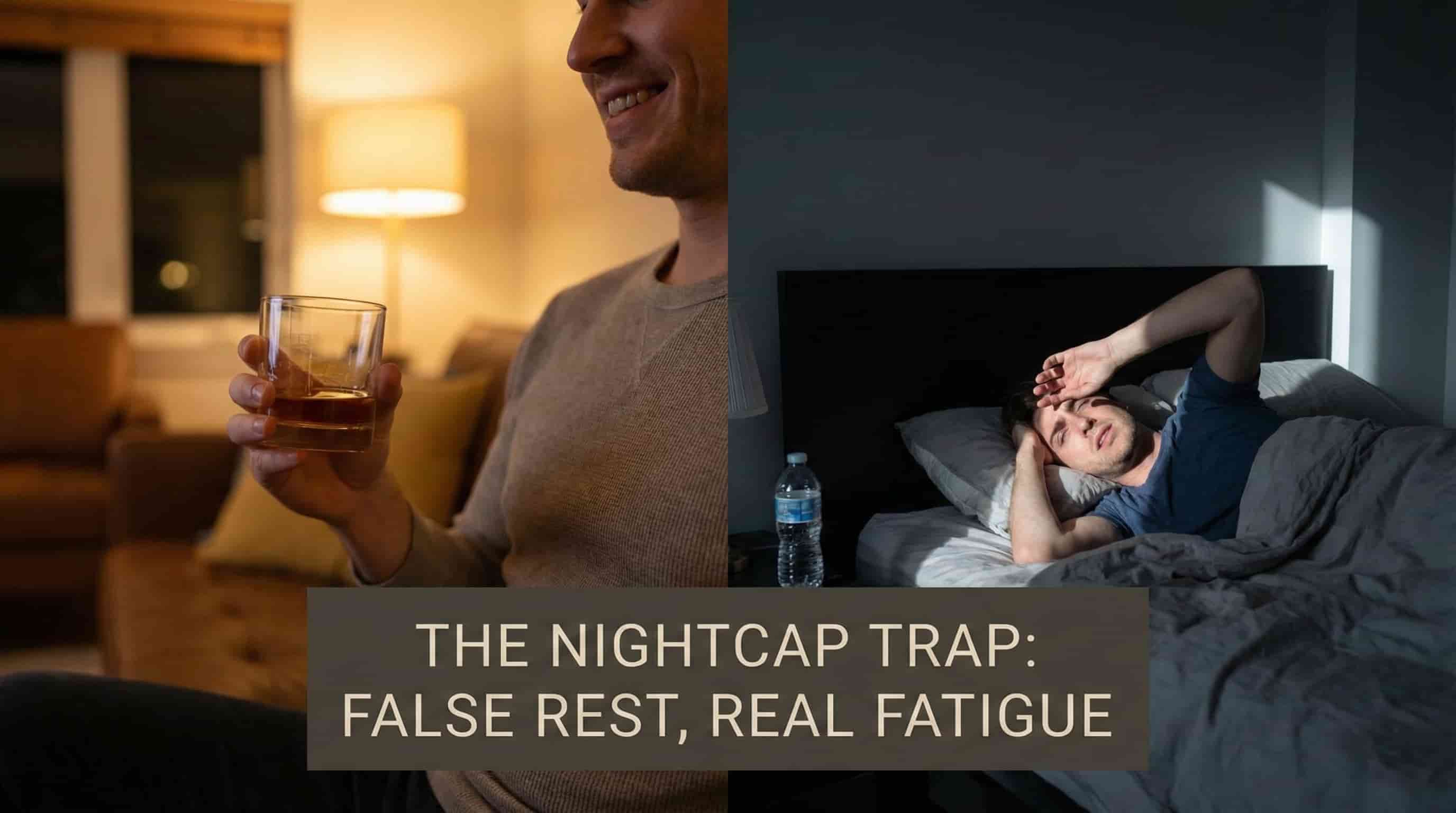
title: “Alcohol: The Sedative Trap (Why a Nightcap Ruins Recovery)” description: “Alcohol helps you fall asleep, but it destroys your sleep quality. Understanding the difference between sedation and sleep.” keywords: “alcohol and sleep, nightcap myth, alcohol REM sleep, sleep fragmentation, sedation vs sleep” author: “Dr. Lycan Dizon” date: “2026-01-01” —

It’s a common ritual: a glass of wine to wind down. A ‘nightcap’ to help you sleep. And it works—you pass out quickly.
But let’s be clear: Alcohol does not induce sleep. It induces sedation. And the difference between the two is the difference between waking up refreshed and waking up exhausted. Alcohol is the most efficient way to destroy your sleep architecture.
The Science: The Rebound Effect
Alcohol is a CNS depressant. It knocks out your cortex (sedation). But as your body metabolizes the alcohol, it triggers a ‘sympathetic rebound.’ Your fight-or-flight system activates.
1. REM Blockade: Alcohol suppresses REM sleep (dreaming/emotional processing). 2. Fragmentation: In the second half of the night, you experience multiple micro-awakenings. 3. Dehydration: It acts as a diuretic, forcing you to wake up.
The Strategy: The Drinking Strategy
1. The 3-Hour Rule. Stop drinking 3 hours before bed. 2. Hydrate. Drink one glass of water for every alcoholic drink. 3. The Swap. Replace the nightcap with tea or magnesium. 4. Observation. Track your sleep after drinking. The data will scare you straight.
Why It Works (The Maas Method)
Giving your liver time to metabolize the alcohol before sleep prevents the rebound effect from happening during the critical REM cycles. You get the social benefit without the physiological cost.
Common Mistakes to Avoid
Don’t use alcohol to treat insomnia. It creates a dependency loop. You drink to sleep, sleep poorly, wake up anxious, and drink again to calm down.
The Slumbelry Connection: True Relaxation
You don’t need wine to relax; you need a routine. A warm bath, a book, and the comfort of Slumbelry Bedding can trigger the same relaxation response without the toxicity. Let comfort be your sedative.
Final Thoughts
Sleep is a biological process; sedation is a chemical coma. Choose sleep. Your brain will thank you in the morning.

The Slumbelry Commitment
Sleep is the most vulnerable state of human existence. It is where we heal, reset, and grow.
At Slumbelry, we don’t just sell sleep products; we advocate for your physiological right to rest. From ergonomic support to light management, every solution we offer is designed with one obsession: Respecting your Biology.
Science is our language, but your recovery is our purpose. You take care of everything else in your life—let us take care of your nights.
Rest Deeply,
The Slumbelry Team